When someone searches for 'aku bird meaning,' they are almost always asking about one of two very different things: a Hawaiian seabird called the Noio that fishermen historically called the 'aku bird,' or the cuckoo-family bird known as the 'ani' (Crotophaga), which is sometimes misspelled or mispronounced as 'aku.' Both are real birds with genuine cultural and symbolic weight, but they come from completely different parts of the world. The fastest way to figure out which one applies to you is to ask where you first heard or saw the phrase, because the answer almost entirely determines the meaning.
Aku Bird Meaning: Aku vs Ani and Symbolism Explained

Marcus Winters
23 Mar 2026
What 'Aku' Actually Means in Bird Contexts
The word 'aku' itself is not originally a bird name in English ornithology. In Malay languages, including both Perak Malay and Pontianak Malay, 'aku' is a casual first-person pronoun meaning 'I' or 'me.' The word for bird in those languages is 'burung' or 'burong.' So 'aku' alone does not name a bird in that linguistic tradition; it simply means the speaker is referring to themselves. That distinction matters because it rules out a direct Malay bird-name origin for the phrase.
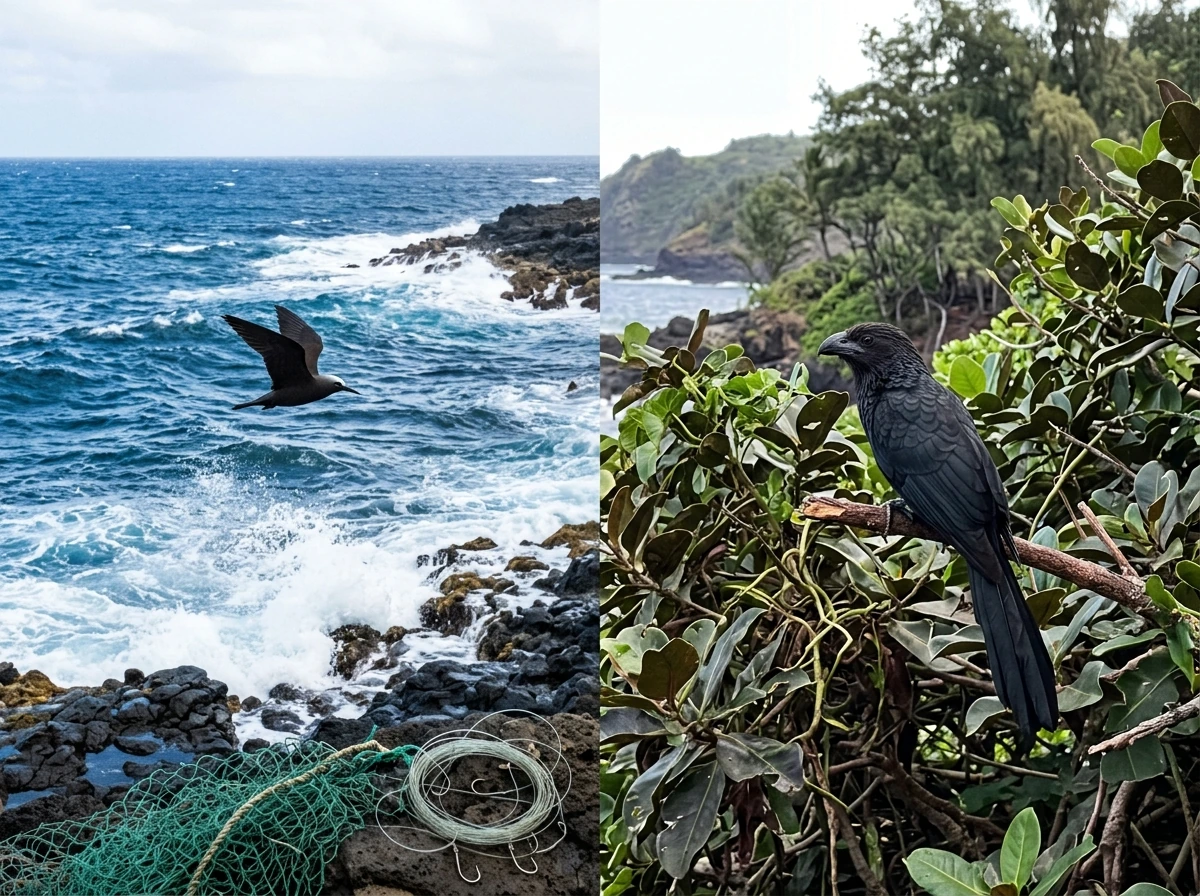
In Hawaiian, the story is different and much more specific. 'Aku' in Hawaiian refers to skipjack tuna, a fish that was enormously important to Hawaiian fishing culture. Because of that, any seabird that reliably appeared above schools of aku became known colloquially as an 'aku bird. This is the core idea behind the emu bird meaning confusion people sometimes run into online. ' It is a functional label, not a formal species name, and it points squarely at one bird in particular: the Noio.
Which Bird 'Aku' Actually Refers To (and Why There's Confusion)
There are two main birds that come up when people search for 'aku bird meaning,' and the confusion between them is real and understandable.
The Noio: Hawaii's True Aku Bird

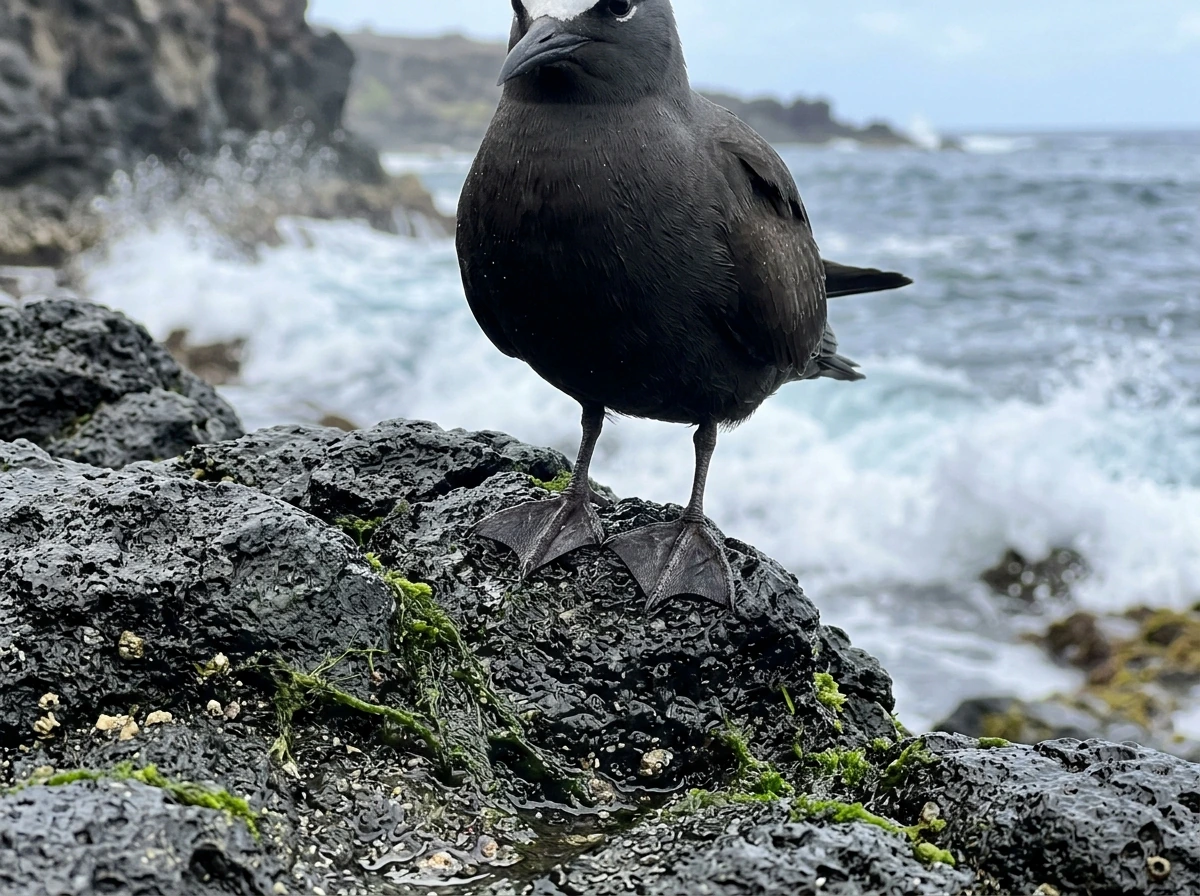
Hawaii Public Radio's 'Manu Minute' series specifically calls the Noio 'the aku bird,' and for good reason. The Noio (Anous minutus), also known as the black noddy tern, is a seabird native to Hawaiʻi that earned this nickname because it gathers above schools of aku (skipjack tuna) and dives for the small fish that the tuna push up to the surface. Experienced Hawaiian fishermen considered the Noio the most reliable of all the aku birds, meaning the one that pinpointed the exact location of a tuna school. A NOAA fisherman's guide to Hawaii's seabirds groups noddy terns including the Noio under the category of 'Aku (Skipjack Tuna) Birds,' confirming this is an established ecological and cultural term, not informal slang.
The Ani: The Bird Behind the 'Aku' Spelling Confusion
The other bird connected to 'aku bird' searches is the ani (Crotophaga), a cuckoo-family bird native to the Americas. The smooth-billed ani (Crotophaga ani) is the species most people encounter, and its name comes from Tupi via Portuguese and Spanish, not from any bird behavior in Hawaii. The word is spelled 'ani,' not 'aku,' but the two look and sound similar enough that online searches, regional pronunciations, and handwritten notes can blur the two together. If someone heard 'aku bird' in a South American, Caribbean, or North American wildlife context, the ani is almost certainly the bird they mean.
| Feature | Noio (Aku Bird, Hawaii) | Ani (Crotophaga, Americas) |
|---|---|---|
| Scientific name | Anous minutus | Crotophaga ani (smooth-billed) |
| Bird family | Tern / Laridae | Cuckoo / Cuculidae |
| Origin of name | Hawaiian fishing tradition | Tupi language via Portuguese/Spanish |
| Common spelling | Aku bird (Hawaiian context) | Ani (English ornithology) |
| Where you'd hear it | Hawaii, Pacific fishing culture | Americas, Caribbean, wildlife guides |
| Core symbolism | Navigation, abundance, wisdom | Community, cooperative behavior |
The short recommendation: if you encountered 'aku bird' in a Hawaiian, Pacific, or fishing context, you are looking at the Noio. If you encountered it in a wildlife, nature, or Central/South American context and the spelling might be 'ani,' you are looking at Crotophaga. Both are worth understanding, so read on for both.
Cultural Symbolism of the Aku Bird in Language and Folklore
The Noio in Hawaiian Culture
The Noio carries a remarkable amount of cultural significance in Hawaiʻi that goes well beyond its nickname. It appears in the Kumulipo, the Hawaiian creation chant, one of the most important genealogical and cosmological texts in Hawaiian culture. Being named in the Kumulipo is not a minor detail: it places the Noio within the foundational story of Hawaiian existence, alongside the origins of people, plants, and sea creatures.
Hawaiian cultural and metaphorical traditions also use the Noio as a symbol of wisdom. University of Hawaiʻi’s ʻŌlelo Noʻeau reference page also compiles Hawaiian proverb resources (ʻŌlelo Noʻeau) that can help interpret these wisdom metaphors. The Kealopiko cultural resource states directly: 'In metaphor, a wise person is likened to the Noio' (see ʻŌlelo Noʻeau 844). This makes sense when you think about what the bird does: it reads the ocean, tracks movement beneath the surface, and leads others to what they need. That behavior maps naturally onto the qualities of a wise guide or advisor.
Beyond wisdom, Hawaiian navigators used the Noio as a wayfinding sign. Spotting a Noio during a long Pacific voyage was understood to mean land was nearby. In a world of open ocean with no instruments, a single bird's appearance could mean survival, which gives you a sense of how deeply trusted the Noio was as a guide.
The Ani in Cultural Context
The ani bird (Crotophaga) is not associated with the same depth of ancient mythological tradition, but it has its own culturally recognized qualities. Anis are known for cooperative nesting: multiple females sometimes share a single nest and raise chicks communally. In parts of the Caribbean and tropical Americas, this cooperative behavior has made the ani a symbol of community, shared responsibility, and collective effort. It is the kind of bird that, once you know its habits, you start to read differently in a folk or spiritual context.
Spiritual and Folklore Interpretations of the Aku Bird
The Noio's role as an aku bird takes on a layer of meaning that goes beyond fishing utility. In Hawaiian spiritual tradition, the Noio's role as an aku bird takes on a layer of meaning that goes beyond fishing utility. av i d bird-watcher meaning A Hawaiian historical account documented in the University of Hawaii at Manoa's IHLRT database describes a story in which a Noio bird is associated with a spirit or spiritual possession in the context of aku fishing, with the bird's presence above a tuna school interpreted as a sign with spiritual weight, not just practical information. emu bird meaning
This layering is common in Hawaiian bird symbolism: birds that perform specific, reliable natural behaviors often accumulate spiritual interpretations because their accuracy feels uncanny. The Noio's ability to locate aku with what seemed like certainty made it easy to understand as a spiritually connected guide rather than a purely biological one. If you have read anything on this site about the owl bird meaning, you will recognize the pattern: birds that navigate, hunt, or appear at critical moments tend to accumulate the deepest spiritual associations across cultures.
The Noio also carries the symbolic meaning of safe return, because its appearance near the end of a Pacific voyage signaled that the canoe was approaching land. In a spiritual sense, that translates to hope, homecoming, and the reassurance that a journey is nearing its end. That is a powerful symbolic package for a small seabird.
How 'Aku Bird' Shows Up in Conversation and Figurative Use

In everyday conversation, 'aku bird' is most commonly used in Hawaiian fishing communities as a practical description: a bird that indicates where the aku are. But the figurative uses are worth knowing, especially if you are trying to interpret a piece of Hawaiian literature, a song, or a cultural reference.
- Calling someone an 'aku bird' in a Hawaiian cultural context can be a compliment, suggesting they are a reliable guide who leads others to what they need.
- The phrase can imply sharp observational skill, the ability to read a situation that others cannot see clearly.
- In navigation metaphors, 'seeing an aku bird' can mean spotting a sign that the destination is close, either literally or figuratively in the sense of a goal being within reach.
- In traditional chants and oral literature, references to Noio can signal abundance, successful fishing, or a blessed journey.
- Some modern Hawaiian cultural writers use 'aku bird' to evoke ancestral knowledge and the deep ecological literacy of their predecessors.
If you encountered 'aku bird' in a more casual online context, it is worth checking whether the phrase was actually 'ani bird' with a spelling variation, or whether it appeared in a phrase shaped by social media slang. Internet bird-related phrases like 'yer bird' (a UK slang term meaning 'your girlfriend') and TikTok's 'bird theory' trends can pollute search results and make it seem like 'aku bird' has a viral slang meaning when it usually does not. yer bird meaning There is a separate article on 'yer bird meaning' on this site if that is the trail you are actually following.
How to Figure Out Exactly Which 'Aku Bird' Meaning You Need
The most useful thing you can do right now is run through a few quick questions about where and how you encountered the phrase. The answers will narrow things down almost immediately.
- Where did you see or hear 'aku bird'? If it was in a Hawaiian context, a Pacific fishing story, a nature documentary about Hawaii, or Hawaiian literature, you are looking at the Noio and its fishing/navigation/wisdom symbolism.
- Was the spelling possibly 'ani' rather than 'aku'? If you read it in a wildlife guide, a nature article about the Americas or Caribbean, or heard it described as a cuckoo-type bird, the correct bird is the ani (Crotophaga), not the Noio.
- Was the phrase used as a name or label for a person? In Hawaiian cultural metaphor, being called like a Noio implies wisdom and reliable guidance. In other regional traditions, 'ani bird' comparisons might reference communal behavior.
- Did you find it in a spiritual, chant, or oral history context? Hawaiian spiritual texts that reference the Noio as an aku bird carry the layered meaning of natural sign plus spiritual confirmation.
- Was it in a casual, online, or slang-heavy context? If so, double-check that the phrase is not a variant of 'yer bird,' 'odd bird,' or another bird-based slang expression that is entirely unrelated to any actual bird species.
Example Rewrites to Test Your Context
Try substituting what you know into the phrase to see which interpretation fits. If the sentence was 'the fishermen followed the aku bird to find the school,' that is a literal Hawaiian fishing reference: the Noio led them to skipjack tuna. If the sentence was 'he spotted an aku bird on his way home,' and this is a Hawaiian story, the meaning shifts toward navigation and the nearness of land or goal. If the sentence was 'the ani bird nested communally,' you are in Crotophaga territory and can look up the smooth-billed ani's biology and Caribbean cultural context for the full picture.
The key takeaway is that 'aku bird' is not a single universal phrase with one locked meaning. It is a culturally specific term rooted most deeply in Hawaiian fishing tradition, where it names the Noio as the bird that leads people to aku (tuna). Outside that context, it is almost certainly a spelling or pronunciation variation of 'ani bird,' pointing to the Crotophaga birds of the Americas. Once you know which one applies to your situation, both the literal identification and the symbolic meaning become clear and genuinely rich.
FAQ
How can I tell quickly whether “aku bird” means Noio or the ani bird?
Use the context word “tuna,” “Hawaiʻi,” “skipjack,” or “fishing” to confirm Noio. If the context is “Caribbean,” “tropical America,” or “cuckoo-family,” and the spelling looks like “ani,” it is almost certainly Crotophaga (smooth-billed ani is the most common species people mean).
Does “aku bird” come from Malay bird naming?
In Malay usage, “aku” is “I/me,” so “aku bird” would not be a natural native bird name combination. If the phrase appears in a Malay-speaking setting, treat it as a translation artifact, a nickname someone coined, or a misheard “ani” rather than a standard bird term.
What search terms prevent me from getting the wrong bird (Noio vs Crotophaga)?
When searching, try both “aku bird Noio,” “Aku (Skipjack Tuna) Birds,” and “ani bird Crotophaga.” If you only search “aku bird meaning,” you will often hit pronunciation mistakes where “ani” gets typed as “aku,” especially in user-generated content.
If someone writes “Noio” or “black noddy tern,” is that still the “aku bird”?
If you see “Noio” or “black noddy tern,” it is the same bird being referred to, with “aku bird” being a nickname tied to fishing behavior. Species names and nicknames can coexist, so the literal species label does not change just because the nickname shows up.
What behavior descriptions should I look for to avoid mixing up the birds?
Watch for “foraging above tuna schools” or “diving for small fish pushed up by tuna.” Those behavior clues match the Noio nickname. The ani, by contrast, is more known for cooperative nesting, so descriptions like communal nests and shared chick-rearing point away from Noio.
Can “aku bird” be used metaphorically, and how do I know it is actually Noio in that metaphor?
Yes. People often use “aku bird” figuratively in Hawaiian-inspired writing to mean guidance, wisdom, safe return, or hope. But if the text is not clearly Hawaiian or fishing-related, the figurative meaning can be a loose retelling, not a culturally grounded reference to Noio specifically.
What clues in a quote or story indicate it’s drawing on Hawaiian Noio symbolism?
If the text includes “Kumulipo,” creation chant themes, or navigational homecoming references, it is almost certainly intended as Noio symbolism. Ani symbolism usually centers on cooperative nesting and community, not Hawaiian creation chant placement.
What should I do if the source spells it “aku,” but the region or species suggests “ani”?
Handwritten notes and regional pronunciation do matter. A practical decision rule is spelling plus region: “ani” plus Americas often equals Crotophaga, “aku” plus Hawaiʻi or tuna equals Noio. If both are present in the same source, assume the author may be mixing terms and verify by identifying the species name mentioned.
How do I filter out TikTok or slang results when searching for the real “aku bird meaning”?
Because “aku bird” can be confused with unrelated internet slang and bird “trend” phrases, look for signals of authenticity: references to Hawaiʻi fishing, tuna, seabirds, or known species names. If it is only framed as social media humor with no ecological or regional anchor, treat it as noise.
Next Article
Odd Bird Meaning: Idiom vs Symbolic Omen Explained
Learn odd bird meaning: idiom for a strange person, plus how to interpret a real bird omen by species and context.