
An albatross is one of the world's largest seabirds, famous for its enormous wingspan and life spent gliding over open oceans. In figurative language, it most commonly means a heavy psychological burden, especially one tied to guilt, and that meaning comes almost entirely from a single 18th-century poem. Depending on where you encountered the word, it could refer to the actual bird, a well-known English idiom, a spiritual symbol, or a dream interpretation. Here is what each of those uses actually means.
Albatross Bird Meaning: Literal, Idiom, Symbolism Guide

Marcus Winters
26 Apr 2026
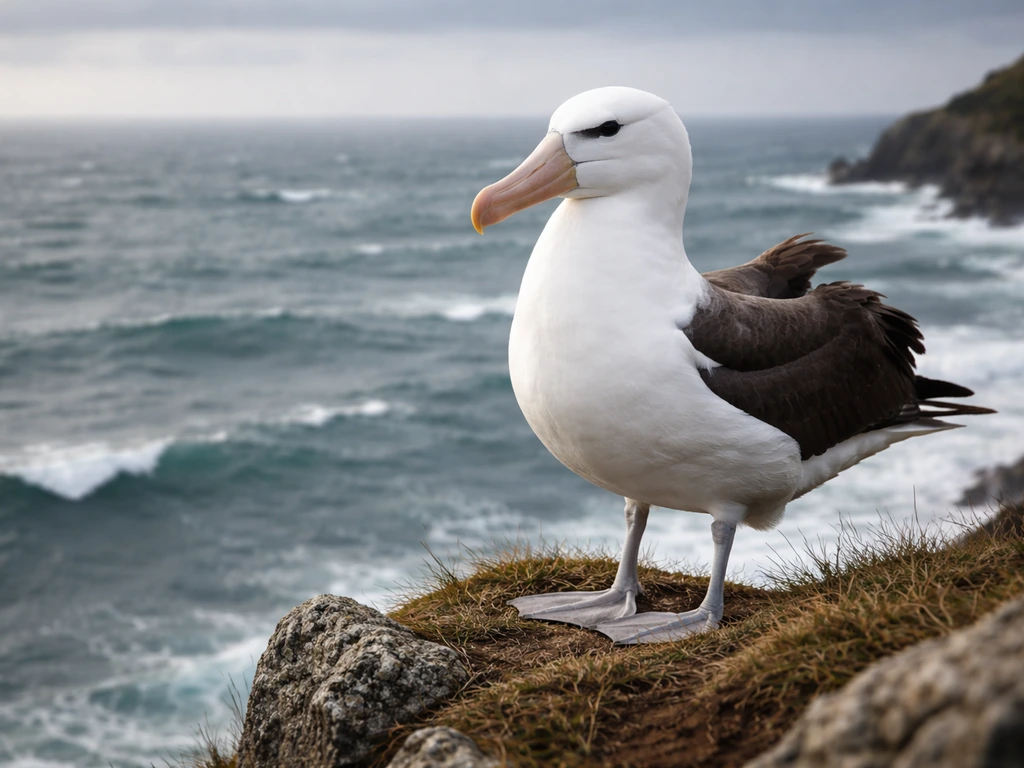
The albatross bird: what it actually is
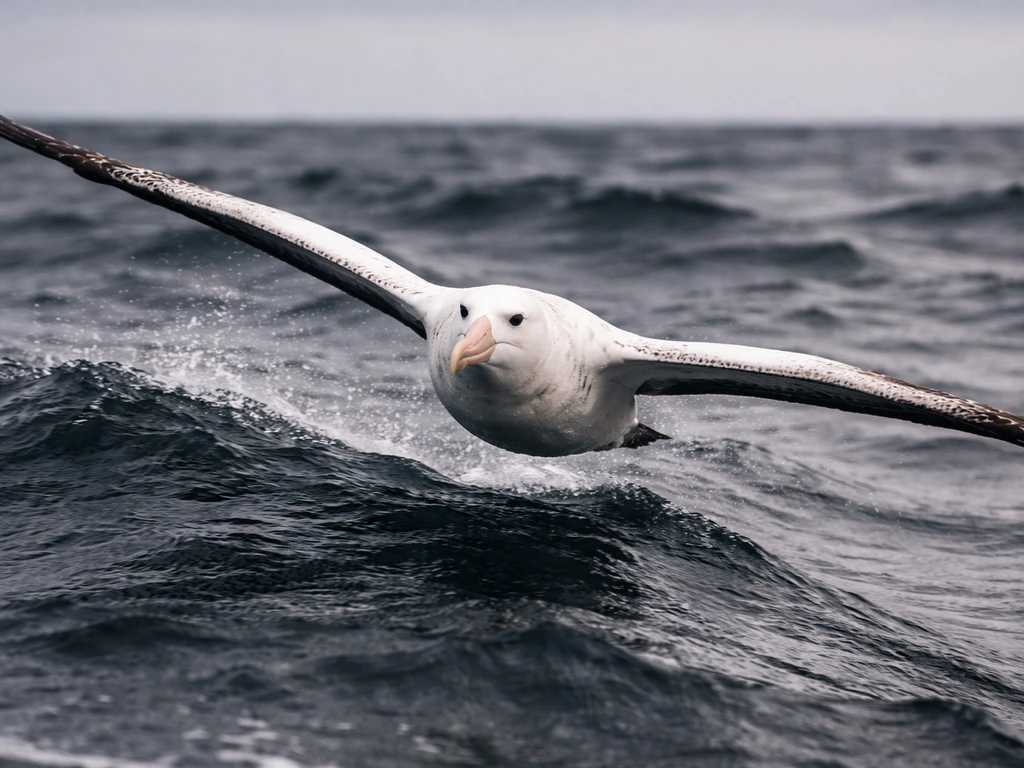
Albatrosses belong to the family Diomedeidae and are among the most impressive birds on the planet in purely physical terms. The wandering albatross (Diomedea exulans) holds the record for the largest wingspan of any living bird, reaching more than 340 cm (about 11 feet) from tip to tip. These birds nest in remote colonies on oceanic islands near the Antarctic Circle and in the South Atlantic, but outside breeding season they roam the southern oceans continuously, sometimes ranging north to around 30 degrees south latitude.
Their life cycle is remarkably slow. Younger birds spend five to ten years at sea before they ever come ashore to find a mate. They form long-term pair bonds, raise chicks slowly, and return to the same nesting sites year after year. That lifestyle, an existence defined by long, solitary journeys across vast water with occasional returns to land, is a huge part of why people have attached so much symbolic weight to the bird.
One practical note: albatrosses are in serious trouble conservation-wise. Of the 22 recognized species, 15 are currently threatened with extinction according to IUCN assessments, primarily because of accidental capture (bycatch) in commercial fishing gear, particularly longlines. The Amsterdam albatross and Tristan albatross are listed as Critically Endangered. If you are researching albatrosses for conservation reasons rather than symbolic ones, that context matters a great deal.
What the albatross symbolizes at its core
Before the famous idiom took over, the albatross already carried a rich symbolic life. Sailors who spent months at sea genuinely found comfort in seeing albatrosses. Early explorers reportedly felt cheered by the birds' company during long, lonely ocean passages. From that direct experience came a cluster of related themes that have attached themselves to albatross symbolism ever since.
- Freedom and endurance: an albatross can stay aloft for hours using dynamic soaring, barely flapping its wings. That image maps naturally onto ideas of effortless strength and the freedom of wide-open space.
- Long journeys and navigation: because albatrosses cross entire ocean basins, they became associated with travel, wandering, and the ability to find one's way across vast distances.
- Good luck at sea: sailors widely believed an albatross sighting brought favorable winds and safe passage. The bird was seen as a protective presence on the water.
- The souls of sailors: a persistent folk belief held that albatrosses carried the souls of dead mariners, which made harming one feel especially taboo.
- Loyalty and return: their habit of returning to the same mate and the same nesting island year after year gave them an association with faithfulness and homecoming.
In Māori culture, the albatross appeared in material and spiritual life in a more direct way. Albatross bones were used to craft kōauau (small flutes), which were considered taonga (treasures) and carried chiefly status. That physical use of the bird connects it to Māori concepts of prestige, craft, and spiritual resonance in traditional practice, a very different cultural lens than the European sailor tradition but equally meaningful.
"An albatross around your neck": what the idiom means today
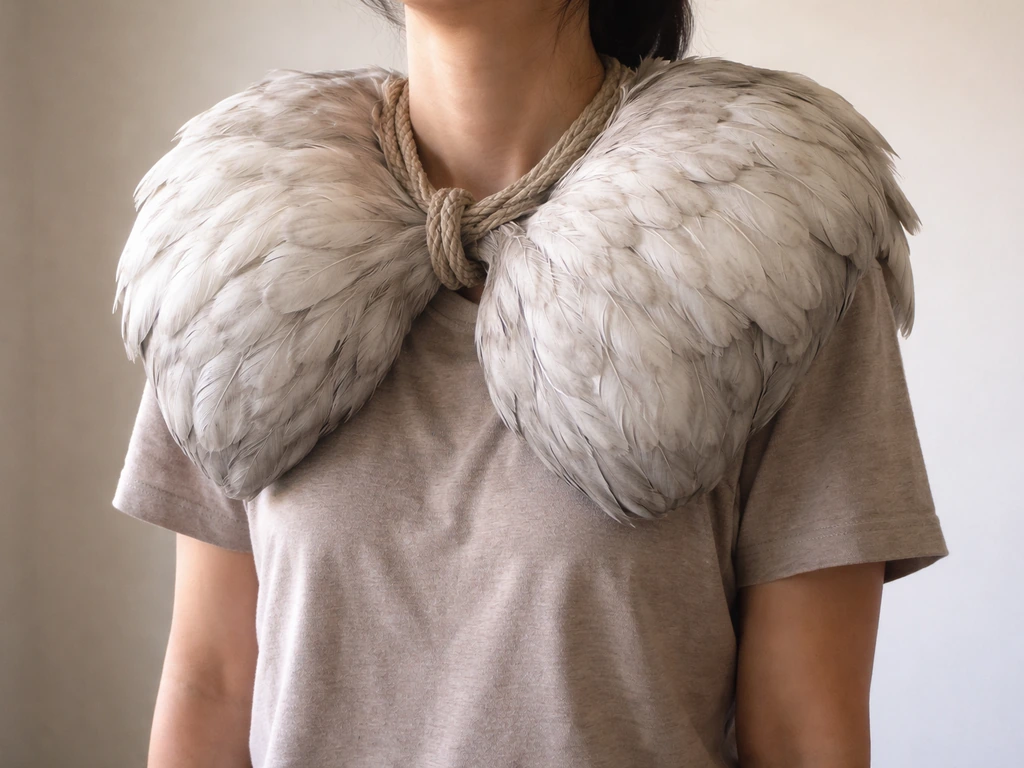
If someone tells you that something is "an albatross around your neck," they mean it is a persistent, unwanted burden you cannot easily shake, usually one that causes ongoing anxiety, guilt, or embarrassment. Merriam-Webster defines the metaphorical sense of albatross as something that causes anxiety or guilt and that burdens or encumbers a person. Dictionary.com calls it simply an "annoying burden," with the example: "That old car is an albatross around my neck."
The idiom gets used in practical, everyday situations all the time. Psychology Today has used the framing in job-search contexts, describing a damaging professional reputation as something hung around a person's neck like a dead bird. You will also hear it in finance ("this mortgage is an albatross around my neck"), politics ("the scandal became an albatross for the party"), and relationships ("that grudge is just an albatross you're carrying"). The common thread is always a burden that is hard to put down and that follows you.
Where the idiom comes from: Coleridge and the Rime
The idiom traces almost entirely to one literary source: "The Rime of the Ancient Mariner" by Samuel Taylor Coleridge, published in 1798. In the poem, a sailor (the mariner) shoots and kills an albatross that had been following his ship. The rest of the crew, who had seen the bird as a good omen, turns against him when disaster follows.
As punishment and as an act of expiation, the crew forces the mariner to wear the dead albatross around his neck, a physical and symbolic display of his guilt. LitCharts also highlights the poem's specific moments when the shipmates decide to hang the dead Albatross around the Mariner’s neck and later when it falls from him [wear the dead albatross around his neck](https://www.
litcharts. com/lit/rime-of-the-ancient-mariner/symbols/the-albatross).
Coleridge's AQA overview frames the poem's central emotional logic clearly: after the killing, the mariner's recurring need to tell his story and unburden his guilt drives the entire narrative. The dead bird around his neck is the guilt made visible and inescapable. That image was so vivid and so widely read over the following two centuries that it essentially created the modern idiom. Today, when someone says "albatross around your neck," they are invoking that image whether they know it or not.
The poem also reinforced and popularized the sailor superstition that killing an albatross brings terrible luck. While historians note that sailors did sometimes kill and eat albatrosses, meaning the taboo was not universally practiced, Coleridge's version of events became the dominant cultural reference point. The superstition and the literary metaphor fed each other until they became nearly inseparable in English-speaking culture.
Albatross in folklore, spirituality, and dreams

Maritime folklore and omens
The core folklore around albatrosses has two sides that are easy to hold in your head at once. Seeing a live albatross was considered lucky and was believed to bring favorable winds. Killing an albatross was one of the worst omens a sailor could bring on himself, associated with storms, disasters, and death. One historical superstition record (transcribed on Project Gutenberg) states it plainly: "An albatross brings good luck and creates favorable winds" and "To kill an albatross is an omen of very bad luck." So in traditional maritime folk belief, the albatross is powerful in both directions, a protective force when alive and a curse when killed.
Spiritual symbolism
In a broader spiritual reading, the albatross is often associated with the soul's journey, endurance through hardship, and the wisdom that comes from long experience. Because the bird spends so much of its life in solitary flight over the ocean (which itself carries spiritual associations with the unconscious, the infinite, and transitions between states), it gets read as a guide or messenger figure in many folk spiritual traditions. The themes of return, faithfulness, and surviving extreme conditions all feed into that reading.
Dream interpretations
Dream dictionaries approach the albatross from multiple angles depending on what happens in the dream. Seeing an albatross flying is typically interpreted as a symbol of spiritual elevation, freedom, and release from burdens. Dreaming of a flock of albatrosses often gets read as a sign that someone important is about to enter your life.
Dreaming of a dead albatross or one that is trapped commonly maps onto the idiom's symbolism: navigating the weight of consequence, guilt, or long-term commitments piling up. If you are looking for the albs bird meaning in dream form, the most common thread is how the dream reflects burdens, guilt, or long-term commitments albatross dream meaning.
If you are also looking for what an adjutant bird means, you can use the same context-checking approach to find the right definition adjutant bird meaning. These are folk and symbolic interpretations rather than anything scientific, but they are consistent with the bird's broader cultural meanings, so they are worth knowing if you are trying to understand what your dream was processing.
How to figure out what "albatross" means in the context you found it
The word "albatross" can mean genuinely different things depending on where you encountered it. Here is a quick framework for reading the context.
| Context clue | Most likely meaning | What to do with it |
|---|---|---|
| "An albatross around my/your neck" | Idiom: a persistent burden or source of guilt | Take it as figurative. Ask: what can't this person let go of? |
| A sentence about someone being 'haunted' by a decision or past mistake | Literary/metaphorical allusion to Coleridge's mariner | The albatross = the consequence they cannot escape |
| A nature article, wildlife documentary, or conservation piece | Literal bird: Diomedeidae, large seabird | Take it at face value as ornithology or ecology |
| A dream description | Symbolic interpretation varies by dream detail | Flying = freedom/elevation; dead = burden; flock = important new connection |
| A sailor story, historical account, or folklore discussion | Omen: good luck alive, terrible luck if killed | Read it in the traditional maritime superstition frame |
| A spiritual or cultural text | Soul symbol, guide figure, endurance, long journey | Look for themes of navigation, return, or transformation |
The fastest disambiguation test: if the sentence includes the words "around your neck" or echoes a burden/guilt theme without mentioning an actual bird, it is almost certainly the idiom or a Coleridge allusion. If the sentence is talking about real ocean wildlife, wingspan, or nesting habits, it is the literal bird. If you are in a dream interpretation or spiritual context, the symbolic frame applies.
Why the albatross carries so much symbolic weight
Not every bird ends up with this much meaning packed into it. The albatross earned its symbolic position through a combination of genuine biological impressiveness (the wingspan alone stops people cold), centuries of sailors depending on the open ocean and watching these birds as their only animal companions for weeks at a time, and then one poem that crystallized all the guilt and consequence themes into a single unforgettable image. That combination of lived experience and literary power is rare, and it explains why, even today, if you want to say someone is carrying an impossible psychological weight, "albatross around the neck" is still the phrase most people reach for. If you are specifically looking for a related bird-meaning question, you may also want to check the alondra bird meaning for another symbolic-angle reference albatross around the neck.
If you are exploring other bird meanings and symbolism in this space, you may find it useful to look at how different birds carry very different kinds of cultural weight. If you came here wondering “avis meaning bird,” that’s a different linguistic thread from the albatross idiom and symbolism discussed above. If you meant "andril bird meaning," that would be another separate bird-meaning thread from the albatross idiom and symbolism discussed here avis meaning bird.
If you were searching for “actuary bird meaning,” that phrase points to a separate interpretation from the albatross idiom and symbolism discussed here. An actuarial bird meaning is different from the albatross idiom and is typically tied to specific symbolism, naming, or professional context rather than the Coleridge poem actuary bird meaning. Some are associated with specific professional or social roles, others with place names or personal names (like alondra, which means lark in Spanish), and others with entirely different symbolic traditions. If you are actually looking for the alondra bird meaning, it helps to start from the word’s language roots and the specific folklore or symbolism you mean.
The albatross sits at an interesting intersection of real natural history, maritime tradition, and literary canon, which makes it one of the richest single-bird symbols in the English language. In a small town, this phrase can be interpreted as linking everyday “bird” symbolism to professional meaning around a legal expert small town bird lawyer meaning. This is where understanding the small town bird lawyer meaning can help clarify what “albatross” is pointing to in that kind of context professional meaning around a legal expert.
FAQ
Is “albatross bird meaning” the same as the idiom “albatross around your neck”?
Not always. The literal bird meaning is about a large seabird, while the idiom is a figure of speech for a persistent burden (often guilt or anxiety). If the sentence does not include a burden cue like “around your neck,” “burden,” “guilt,” or “can’t get rid of,” it is usually not the idiom.
Can “albatross” be used as a compliment, not just a negative burden?
Yes, but less commonly in everyday English. In maritime folklore, an albatross seen alive was often treated as a good sign, and spiritual readings sometimes emphasize release, endurance, and guidance. In modern conversation, though, most uses of the phrase “around your neck” lean negative.
What does it mean if someone says, “I have an albatross,” without the neck phrase?
That typically still invokes the idiom concept, but in shorthand. The missing “around your neck” does not remove the meaning if the context is clearly about an ongoing constraint, embarrassment, regret, or a consequence you cannot easily escape.
If I dream about an albatross, does it always mean guilt or a heavy obligation?
Not always. Folk dream interpretations vary by action and outcome in the dream. For example, flying can be read as freedom or release, while a dead or trapped bird more often maps to consequence or long-term weight. The “burden” theme is common, but dream meaning depends heavily on what happens.
How should I interpret an albatross in writing if the context is poetry or literature?
Look for cues that the author is echoing “The Rime of the Ancient Mariner,” especially themes like expiation, recurring guilt, or a physical token of wrongdoing. In literary contexts, “albatross” can function as a symbol of moral consequence even when the phrase “around your neck” is not used.
Is it accurate to say the idiom comes from sailors universally believing albatrosses bring bad luck?
That is an oversimplification. Maritime belief was mixed, some people ate or killed albatrosses, and the taboo was not perfectly uniform. The dominant modern association with bad luck and guilt became especially strong because of Coleridge’s portrayal, which shaped how readers remembered the superstition.
What is the safest way to disambiguate the word in a sentence I read online?
Use the context test: if the sentence refers to ocean life, wings, nesting, or real-world wildlife, it is literal. If it references guilt, embarrassment, anxiety, or an inescapable burden, it is idiomatic or a literary allusion. If it mentions dreaming, spirits, or inner journeys, it is symbolic or spiritual.
Does the conservation status of albatrosses affect the phrase “albatross around your neck”?
Usually no. The idiom is about metaphorical weight, not wildlife ethics. However, if you are researching or writing for conservation audiences, you can add relevant factual context about threats like longline bycatch, but you should not assume the idiom itself is connected to conservation.
Next Article
Amber Bird Meaning: Symbolism, Interpretations, and How to Use It
Learn amber bird meaning: disambiguate the phrase and interpret it using amber and bird symbolism, grounded steps includ