A "boo bird" most commonly means a fan at a sporting event who boos their own home team, a term with roots going back to 1933. But depending on where you encountered it, it can also carry a looser figurative meaning (anyone who jeers or criticizes publicly) or, in a more folkloric context, connect to birds associated with eerie nighttime calls and omen-like vibes. The right interpretation depends almost entirely on the context where you saw or heard it.
Boo Bird Meaning: Slang vs Literal Bird Call

Marcus Winters
27 Jun 2026

Quick meaning: slang nickname vs. bird reference
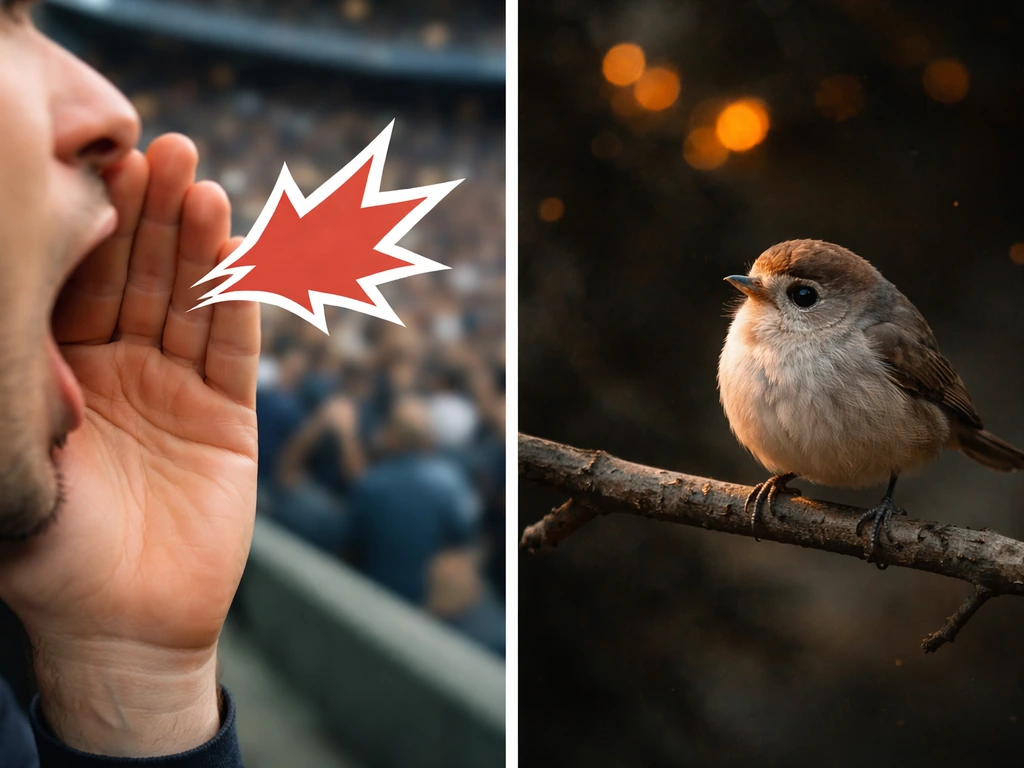
If you saw "boo bird" in a sports article, social media post about a game, or a conversation about a celebrity getting criticized, it almost certainly means the slang interpretation: a person (or group of people) who vocally boos and jeers. Merriam-Webster actually spells it as one word, "boobird," and defines it specifically as "a home fan at a sporting event who boos one or more members of the home team." That's the clearest, most established meaning.
If you found "boo bird" in a piece about wildlife, folklore, Halloween symbolism, or nighttime omens, the phrase is being used more figuratively to describe birds that make haunting or "booing"-style sounds, or birds that carry supernatural associations. In that case, you're looking at a descriptive label rather than a dictionary entry. No single bird species is officially named the "boo bird" in ornithology, but the phrase gets applied loosely to owls, nightjars, and similar nocturnal birds in popular writing.
What "boo" means and how "boo bird" works as a nickname
The word "boo" does two distinct jobs in English. Cambridge defines it both as a shout used to startle someone who doesn't know you're nearby, and as a verbal expression of disapproval, the kind you hear when a crowd turns on a performer. Collins adds the verb dimension: to "boo" someone is to actively shout disapproval at them. That double meaning (fright vs. disapproval) is exactly why "boo bird" can drift into two different territory zones.
In the sports and entertainment world, the "disapproval" meaning is dominant. Baseball Almanac, drawing from the Dickson Baseball Dictionary, describes a boo bird as "a fan given to jeers, boos, and catcalls when the home team falters. YourIdioms also describes boo birds as people who boo or jeer at sports or events. " The first recorded use in print dates to 1933, which tells you this isn't modern internet slang. It's a genuine, durable piece of sports vocabulary. The "bird" part of the compound works the way it does in many English nicknames: it marks the person as a type, a character, a recognizable role. You're not just someone who occasionally boos; you're a boo bird. It's your thing.
Outside sports, the label gets applied more broadly. A music critic who only tears things down, a social media account known for dunking on celebrities, a coworker who always finds fault in every plan: any of these could colloquially be called a boo bird. The core implication is consistent: someone whose defining behavior is public disapproval, jeering, or negativity.
When "boo bird" points to actual birds, calls, and folklore
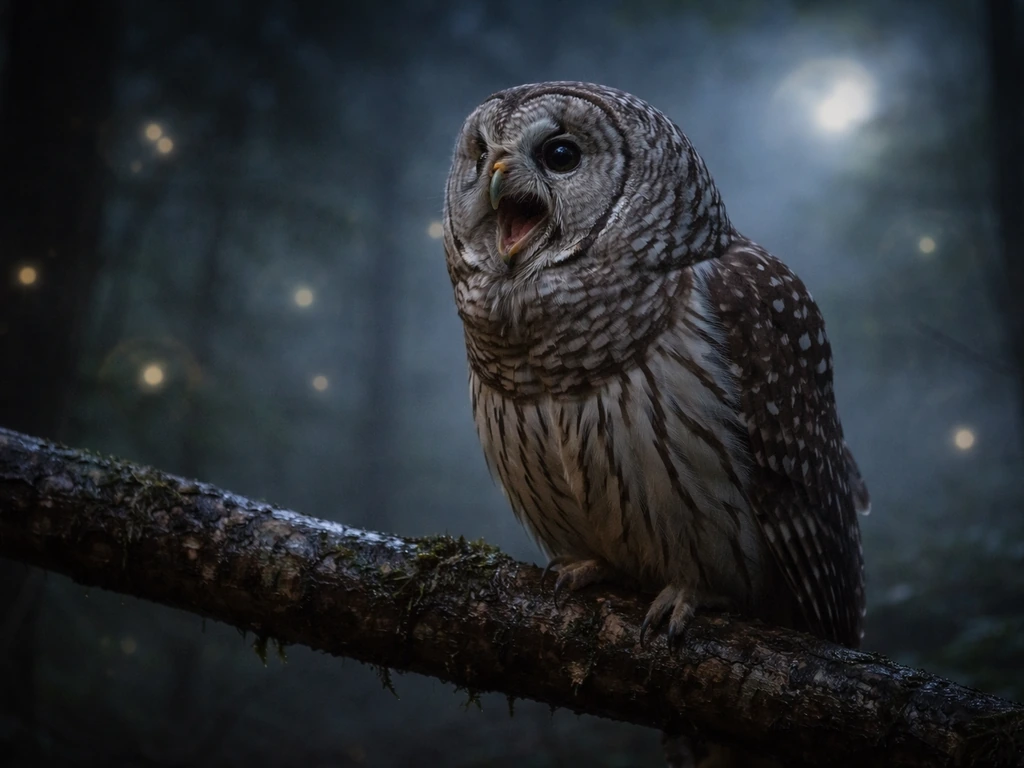
Here's where it gets more interesting for anyone visiting a site focused on bird symbolism. In that same bird-symbolism context, people also connect “boo bird” to the broader idea of an avian meaning bird symbolism. Some writers and storytellers use "boo bird" to describe birds whose calls sound uncannily like the word "boo," or whose nocturnal habits and eerie sounds have made them figures of fear or supernatural warning across many cultures.
Owls are the most obvious candidate. The barred owl, for instance, produces a low, resonant hoot that some people genuinely describe as sounding like a drawn-out "boo." Owls have been associated with omens, death, and the spirit world in cultures ranging from ancient Rome to Indigenous North American traditions to West African folklore. When a writer calls an owl a "boo bird," they're leaning on both the sound and the symbolism. The phrase pulls double duty: it describes what you hear and what you feel when you hear it. Bat bird meaning can vary a lot depending on whether you're talking about slang or a description of nocturnal birds in folklore.
Nightjars (also called whip-poor-wills in North America) are another bird that fits the "boo bird" frame in folklore. If you're trying to understand the new bird meaning in this phrase, look at whether the context points to nocturnal bird calls and folklore Nightjars. They call repetitively through the night, and in multiple traditions they were seen as messengers between the living and the dead, birds whose call near a house signaled someone inside was about to die. Their eerie persistence made them easy targets for supernatural interpretation. Neither owls nor nightjars are officially named "boo birds" in any scientific or ornithological catalog, but in folklore-focused writing, that label fits them well.
How to tell which meaning applies: context clues that give it away
Reading the surrounding sentence usually settles it within seconds. Here's what to look for:
- Sports or performance context: If the sentence mentions a game, a team, a stadium, fans, or a public figure being criticized, you're reading the slang meaning. "The boo birds came out in force during the third quarter" is pure sports idiom.
- Critical/negative behavior context: If someone is described as "being a boo bird" about a movie, a coworker's idea, or a political candidate, it means chronic critic or vocal detractor.
- Nature, night, or folklore context: If the sentence mentions forests, darkness, Halloween, omens, or supernatural themes alongside "boo bird," you're in the figurative bird-symbolism territory.
- Tone and register: Sports commentary and entertainment writing use "boo bird" casually and often plural ("the boo birds"). Folklore and symbolism writing tends to use it more poetically, as a label for a specific type of bird or bird behavior.
- Who's saying it: A sports journalist, a social media commenter discussing a concert or game, or someone complaining about critics at work is almost always using the slang. A nature writer, a folklore blog, or a Halloween content creator may be leaning into the bird-call and omen angle.
Bird symbolism woven into the "boo" and "bird" pairing
Birds have carried the weight of human judgment, warning, and omen-reading for as long as people have been watching the sky. The Romans practiced augury: watching bird flight and behavior to predict whether an action would succeed or fail. A bird that showed up at the wrong moment, called at night, or flew in the wrong direction was a bad omen, effectively nature's way of booing your plans. That's not a huge conceptual leap from what a "boo bird" does in the stands. This helps explain the native bird meaning behind the phrase when it is tied to nocturnal calls and omen-like symbolism.
In many folk traditions, birds that call after dark are treated with the same mix of awe and unease that modern sports fans feel when the crowd turns on their own team. There's a communal judgment happening. The bird isn't neutral; it's expressing something that affects everyone nearby. That's why pairing "boo" with "bird" works so naturally in both slang and folklore: both uses are about a creature or person whose voice carries a verdict.
If you're interested in how bird calls get interpreted as messages or warnings, this connects to broader themes in bird-language symbolism. Similar patterns appear in how people talk about other birds with eerie or ambiguous associations, and you'll find that same interpretive tension in discussions around birds like the foo bird, which carries its own distinct folkloric baggage, or in the way certain bat-bird comparisons blur the line between omen creature and actual bird in folklore traditions. The foo bird meaning is similar in that it depends heavily on the cultural context and how the phrase is being used.
Examples and sentence patterns to recognize
Seeing a few real-world sentence patterns makes the meanings much easier to lock in. Here's how "boo bird" actually gets used in writing and conversation:
| Example sentence | Meaning in context |
|---|---|
| "The boo birds were loud at the stadium tonight." | Slang: fans jeering their own home team |
| "She's become the office boo bird, criticizing every new initiative." | Figurative slang: a habitual critic or detractor |
| "Don't be a boo bird, give the new album a fair listen." | Slang: an instruction not to be reflexively negative |
| "The boo bird called from the dark tree line all night." | Folklore/nature: a nocturnal bird with an eerie, omen-linked call |
| "In local legend, the boo bird was spotted before every disaster." | Folkloric: a bird treated as a supernatural warning sign |
| "Boo birds have plagued this franchise since they traded their star player." | Sports idiom: a pattern of fan disapproval, used collectively |
How to dig deeper if you need a more specific answer
If you came across "boo bird" in a specific piece of writing and still aren't sure which interpretation applies, the fastest approach is to search with added context terms rather than just the phrase alone. Here are the keyword combinations that will actually get you useful results:
- "boo bird sports meaning" or "boo bird baseball" to confirm the slang definition and its history
- "boo bird fan jeering" if you're reading something about audience behavior at events
- "boo bird folklore" or "boo bird omen" if you found it in a cultural or supernatural context
- "birds that sound like boo" or "nocturnal bird calls that sound like words" if you're specifically curious about which real bird species might be called this
- "boobird Merriam-Webster" to pull the official dictionary entry quickly
- The name of the source you found it in alongside "boo bird" (e.g., "boo bird [name of show or article]") to find discussion threads that explain that specific usage
"Boo bird" shows up in sports journalism (especially baseball and basketball coverage), entertainment criticism, social media commentary about public figures, and, more loosely, in folklore-adjacent writing about nocturnal birds and omens. Knowing which of those worlds you're in when you read it is really all you need to land on the right interpretation every time.
FAQ
Is a “boo bird” ever an actual named bird species?
In standard English slang, “boo bird” is overwhelmingly about a person doing the booing, not about a specific species. If you see it in a game recap, crowd report, or reaction clip, treat it as a role label (the booing home fan) rather than an animal reference.
Why do I see “boobird” spelled differently from “boo bird”?
Yes, sometimes it appears as “boobird” as a single compound, especially in dictionary-style entries. If you are searching and only get sports results, try both spellings and add words like “home fan” or “sporting event” to narrow it.
How can I tell whether “boo bird” means slang or a nocturnal bird call in a sentence?
Check the speaker’s target. If the sentence centers on an audience member disapproving of a performer or the home team, it is the slang meaning. If it centers on an owl, night call, or eerie sound “like booing,” then it is being used as a folklore-style descriptive label.
Does “boo bird” describe one person or a group?
It often functions like a character type, similar to “fan,” “heckler,” or “hater.” For example, “the boo birds were loud tonight” means there were multiple people doing the booing, not that multiple birds were present.
What if the crowd is booing the away team instead of the home team, is it still a “boo bird”?
In everyday sports talk, “boo bird” is usually about booing the home team at a venue. If you see “boo bird” used with a different setting (like a neutral crowd booing a player), it can still carry the general “public disapproval” sense, but you should infer the exact target from the surrounding words.
Is “boo bird” ever used positively?
Don’t assume it is a compliment. In both slang and folklore-adjacent uses, the implied attitude is negative or unsettling: either active jeering toward someone, or an ominous association tied to night sounds.
Why is “boo bird” sometimes confusing because “boo” can mean more than one thing?
Because “boo” can mean either a startled sound or a disapproval shout, “boo bird” can occasionally be ambiguous when used in creative writing. The fastest disambiguation is to look for crowd cues (stands, game, performer, cheers) versus bird cues (owl, nightjars, call, near the house).
How should I use “boo bird” correctly in my own writing?
If you are writing, keep it consistent with your intended meaning. For slang, use it as a noun for a person or crowd (for example, “the boo birds in the stands”). For wildlife, treat it as an informal nickname and add the bird it refers to (for example, “an owl described as a boo bird”).
What search terms should I use if I keep getting mixed results for “boo bird meaning”?
When searching, add one or two context anchors. Sports intent: “boo bird” + “home team” or “stands.” Folklore intent: “boo bird” + “owl” or “nightjars” or “whip-poor-will.” This prevents the results from mixing unrelated uses.
Does “boo bird” mean someone who booed once, or someone who repeatedly criticizes publicly?
If “boo bird” appears in a quote about a celebrity, musician, or influencer, it usually means a heckler or critic crowd. In that entertainment context, the phrase typically emphasizes repeated public disapproval rather than a single isolated heckle.
What clues suggest the folklore or omen interpretation rather than modern slang?
In folklore-flavored writing, you may encounter the phrase alongside omen language like “warning,” “death,” “messenger,” or “near a house.” If those cues are present, the meaning is symbolic and auditory (night calls), not ornithological taxonomy.
Next Article
New Bird Meaning: What It Usually Signifies in Practice
Understand new bird meaning across symbolism, dreams, first sightings, and social slang, with safe context checks.