There is no single, universally agreed-upon bird called the 'wedding bird.' When someone searches for 'wedding bird meaning,' they are most likely looking for one of several things: the symbolism behind birds commonly used at weddings (doves being the most frequent), a folk or regional term they heard in a story or custom, a spiritual omen involving a bird sighting near a wedding, or a love-bird idiom that brushes up against wedding symbolism. Which one applies depends entirely on where you heard or saw the phrase. This article will walk you through the most common meanings, help you figure out which one fits your situation, and tell you what the symbolism actually means once you nail it down.
Wedding Bird Meaning: Symbolism, Birds, and How to Identify It

Marcus Winters
17 May 2026
What 'wedding bird' usually refers to (and why it's ambiguous)
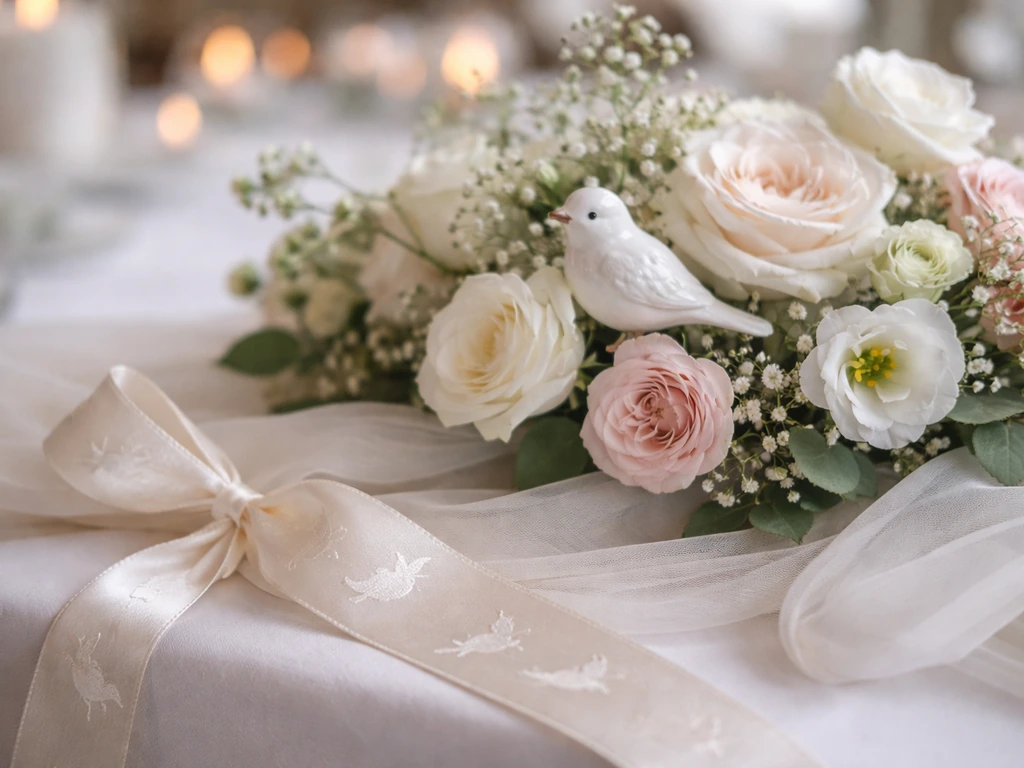
The phrase 'wedding bird' is not a fixed dictionary entry the way 'lovebird' or 'dove of peace' is. It functions more like a descriptive shorthand that different people use to point at different things. In branding and decor, you will find 'wedding bird' used to label crane-shaped centerpieces, dove-release services, and even peacock feather arrangements. In folk tradition, certain regions have specific birds tied to weddings, but those birds go by their local names rather than the generic label 'wedding bird.' In spiritual circles, any bird that appears unexpectedly at or around a wedding ceremony can get labeled the 'wedding bird' of that occasion, carrying whatever omen that bird traditionally represents. Because the phrase is essentially a container that different traditions fill with different content, the first step is always figuring out which tradition or context is actually being referenced.
It is also worth noting that English already has a long history of using the word 'bird' in figurative ways that have nothing to do with actual birds or weddings. British theatrical slang uses 'blank" rel="noopener noreferrer">getting the bird' to mean being booed off stage, and 'bird' has been slang for a woman or girlfriend in British English for generations. So when someone says 'wedding bird' in a casual or British-influenced context, they may be combining two figurative meanings rather than referring to a literal species. Keeping that in mind stops you from over-interpreting a phrase that might just be colorful informal language.
Most common wedding-related bird meanings and the symbolism they carry
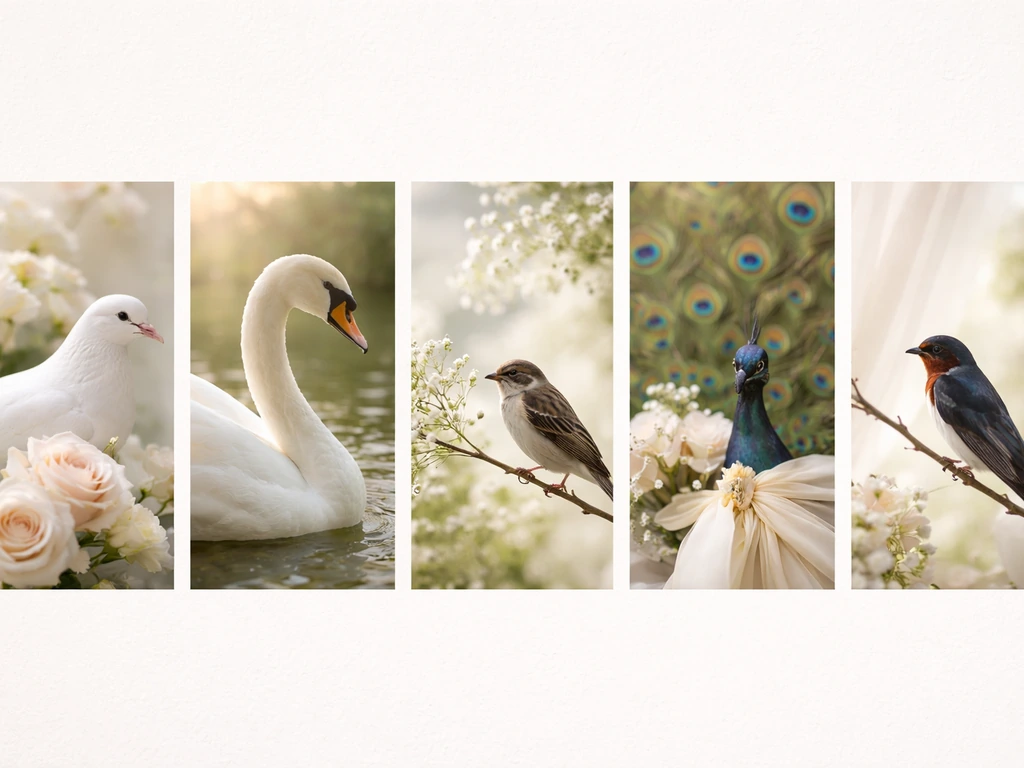
Across cultures and traditions, a handful of birds show up repeatedly in wedding symbolism. Each one carries a distinct meaning, and knowing which bird is being referenced tells you a lot about the message behind the phrase.
| Bird | Core Wedding Symbolism | Where It Appears Most |
|---|---|---|
| Dove | Peace, purity, new beginnings, faithful love | Western weddings, Christian tradition, release ceremonies |
| Crane | Longevity, fidelity, good fortune for the couple | Japanese, Chinese, and Korean wedding traditions |
| Swallow | Safe return, loyalty, enduring partnership | Maritime cultures, European folk tradition |
| Peacock | Beauty, prosperity, royalty, abundance | South Asian weddings, Hindu tradition, decorative use |
| Robin | New beginnings, spring, hope | British and Irish folk custom |
| Owl | Wisdom (sometimes an omen, positive or negative depending on culture) | Various folklore traditions |
| Lovebird (parrot species) | Romantic devotion, inseparability | Modern symbolic use, gift-giving tradition |
The dove is by far the most commonly intended bird when people say or search 'wedding bird' in English-speaking contexts. White doves released at a wedding ceremony are meant to symbolize the couple's pure intentions, the peace of their union, and the idea that love, like a dove, is free. The practice has roots in early Christian iconography where the dove represented the Holy Spirit, and it merged with older Roman and Greek customs of offering birds as gifts to goddesses of love. Today the dove release is a commercially packaged ritual, but the underlying symbolism is ancient and consistent.
The crane is the 'wedding bird' most firmly embedded in a specific cultural tradition. In Japan, folding 1,000 origami cranes (senbazuru) is a wedding custom meant to grant the couple a long, happy life together. The crane in East Asian cultures represents longevity and fidelity precisely because cranes are known to mate for life. If you are reading 'wedding bird' in an East Asian cultural context, the crane is almost certainly what is meant. Similarly, the swallow shows up as a wedding symbol in European maritime regions, tied to the idea of a partner who always finds their way home.
How to identify the specific tradition or bird behind the phrase
When you come across 'wedding bird' and you are not sure which bird or tradition is meant, ask three questions about the source. First, what is the cultural or regional background of the person or text using it? A Japanese ceremony, a British poem, a Hindu wedding celebration, and an American dove-release company are all going to point to completely different birds. Second, what is the context in which the phrase appears? A decorative or commercial context almost always means a dove. A folk rhyme, story, or superstition is more likely to mean a swallow, robin, or owl depending on the region. A spiritual or omen context means any bird that appeared unexpectedly and is being interpreted through local beliefs. Third, is there a specific bird name mentioned nearby, or is 'wedding bird' being used as a standalone phrase? Standalone use usually signals either the dove (in Western contexts) or the crane (in East Asian contexts) because those are the two most culturally entrenched wedding birds globally.
If you heard the phrase in speech rather than reading it, accent and dialect matter too. In British English, 'bird' carries informal connotations that might change the register entirely, shifting the phrase away from symbolic meaning toward everyday slang. In American English, 'wedding bird' is almost always meant literally or decoratively. Knowing the speaker's background can cut your disambiguation time in half.
Good luck vs bad omen: what people typically expect the 'wedding bird' to mean
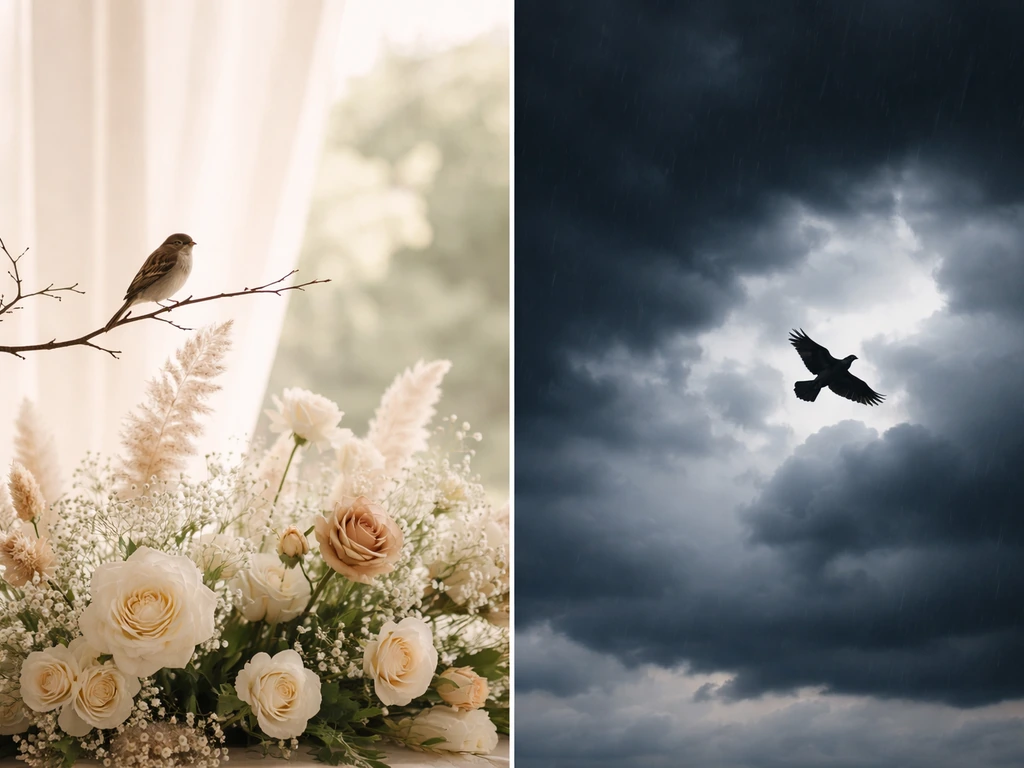
Most people who search 'wedding bird meaning' are hoping for a positive sign, and the majority of wedding bird traditions do lean toward good luck. Seeing a dove near a wedding is almost universally read as auspicious. A crane sighting or a crane gift carries blessing and longevity. A swallow arriving at a wedding venue is considered lucky in many coastal European traditions because swallows return home reliably every year, a quality people admire in a spouse. A robin appearing at a winter wedding is read in British folk culture as a sign of hope and new beginnings.
That said, certain birds carry ambiguous or negative associations depending on the cultural lens you use. An owl at a wedding, for instance, is a positive omen in some Native American traditions (wisdom and protection) but a death omen in parts of East Africa and some European folk beliefs. A crow or raven sighting splits sharply by culture: Celtic traditions associate crows with transformation and even protective magic, while mainstream Western superstition leans toward seeing a crow at a wedding as a bad sign. A peacock, beloved in South Asian wedding decor, was historically considered unlucky to bring into a home in some parts of Britain. The key rule is that no bird carries a universal meaning across all cultures, so you always need to know the cultural frame before interpreting the omen. If you are specifically looking up turkey bird meaning, use the same approach: confirm the cultural context and the bird involved before trusting the interpretation.
- Dove: almost universally positive, purity and faithful love
- Crane: positive in East Asian traditions, longevity and fidelity
- Swallow: positive in European maritime folk belief, loyal return
- Robin: positive in British and Irish folk custom, hope and new beginnings
- Peacock: positive in South Asian tradition, mixed in European folklore
- Owl: wisdom (positive in some), death or bad luck (in others)
- Crow or raven: transformation and protection (Celtic), negative omen (mainstream Western)
How 'wedding bird' fits into broader wedding and lovebird symbolism
The phrase 'wedding bird' sits inside a much larger cluster of bird-and-love idioms in English and other languages. The word 'lovebird' is probably the most familiar: it refers both to the small African parrot species (Agapornis) that genuinely does bond intensely with its mate, and to any affectionate couple in everyday speech. The idiom 'birds of a feather flock together' gets applied to couples who share values. 'Free as a bird' comes up in the context of single life versus married life. And the old expression about two doves representing a new couple is so embedded in Western wedding culture that the dove has effectively become the default mental image behind 'wedding bird' for most English speakers today.
Wedding bird symbolism also connects to the broader folk and spiritual tradition of reading omens from bird behavior near important life events. Wedding bird symbolism also connects to the broader folk and spiritual tradition of reading omens from bird behavior near important life events, including folk bird meaning interpretations in some regions. This is not unique to weddings: births, funerals, and journeys all have associated bird omens in many cultures. Weddings attract a particularly dense cluster of bird symbolism because they sit at the intersection of love, fertility, family, and fate, which are exactly the domains birds have been symbolic guardians of for thousands of years across virtually every major civilization. The folk bird traditions explored in related topics on this site (such as the symbolism behind folk birds generally, or the rich symbolic weight of specific birds like the turul) all feed into the same deep human instinct to read meaning into the natural world during pivotal moments.
Practical next steps: how to confirm the meaning in your situation and use it wisely
If you are trying to figure out what 'wedding bird' means in a specific situation you have encountered, here is a straightforward process to follow.
- Identify the cultural or geographic origin of the phrase or event. This single step resolves the ambiguity in most cases.
- Pinpoint the bird species if one is mentioned or implied. If a specific bird is named, look up that bird's symbolism within the relevant cultural tradition, not just its general meaning in Western folklore.
- Determine whether the context is literal (a bird sighting or release), symbolic (decor, gifts, or ceremony elements), or figurative (idiom, slang, or metaphor). Each requires a different interpretive lens.
- If it is an omen context (a bird appeared unexpectedly), note the bird's behavior as well as its species. A singing bird carries different weight than a bird that flies into a window.
- Cross-check with someone from the specific cultural tradition if the meaning matters practically, for example if you are planning a ceremony and want to incorporate authentic bird symbolism.
- If you want to use bird symbolism actively in a wedding (decor, vows, gifts), choose the bird whose meaning aligns with what the couple values: doves for peace and purity, cranes for longevity, swallows for faithful return, peacocks for prosperity and beauty.
Using bird symbolism well in a wedding context is less about getting the 'right' bird and more about being intentional and consistent. A crane motif that runs through the invitations, centerpieces, and ceremony program tells a coherent story about longevity and devotion. A dove release that the couple has researched (and that uses homing doves rather than white pigeons that cannot survive in the wild, which is a genuine animal welfare concern) becomes a meaningful moment rather than an empty gesture. The symbolism lands when the people involved understand what it means.
Related phrases and common mix-ups to avoid
Several phrases get tangled up with 'wedding bird' in searches and conversation, and it is worth knowing which is which so you do not conflate them.
- 'Lovebird': refers to the Agapornis parrot species or to an affectionate couple. Not a wedding-specific term, though widely used in wedding contexts.
- 'Bird at a wedding': a general descriptive phrase that can mean any bird sighting at a wedding event, not a fixed idiom with a single meaning.
- 'Wedding dove': the most specific and commercially established version of 'wedding bird.' Refers specifically to dove-release ceremonies.
- 'Getting the bird' (British slang): means being booed or rejected. Nothing to do with weddings, but the word 'bird' in a wedding context can occasionally create confusion for British English speakers.
- 'Bird of paradise': a flower often used in wedding arrangements, and also the name of an exotic bird associated with beauty and freedom. Mixing the two up is easy but they carry different symbolic weight.
- 'Show bird': a term used for birds bred and exhibited for competitive display, occasionally referenced in wedding contexts for decorative live birds, but distinct from the symbolic meanings attached to wedding bird traditions.
- 'Folk bird': a broader category of birds embedded in regional folk tradition, which often overlaps with wedding symbolism but covers birth, death, and seasonal omens as well.
The biggest practical mistake people make is assuming that because doves are the most common 'wedding bird' in Western culture, a dove automatically means the same thing in every other tradition. It does not. Similarly, looking up a bird's general symbolism without anchoring it to the specific cultural tradition of the wedding in question will give you a muddled answer. Always start with the culture, then the bird, then the specific context. That sequence will get you to the right meaning almost every time.
FAQ
If “wedding bird” could mean multiple birds, how do I know whether it means dove or crane?
In Western settings, “wedding bird” usually points to doves, but when the wording comes from an East Asian tradition, it is commonly a stand-in for the crane (often linked to long life and fidelity). If you want to be confident, look for nearby cues like “origami cranes,” “senbazuru,” “dove release,” or “peace.”
What if I heard “wedding bird” from a wedding planner or a decor vendor, not from a story or tradition?
Yes. If the source is a decoration or event service, it is often marketing language rather than folklore. In that case, the safest interpretation is the one tied to the actual decor item you saw (for example, dove releases usually correspond to dove symbolism, while crane motifs correspond to longevity symbolism).
How can I tell whether “wedding bird meaning” refers to decor symbolism, a regional folk saying, or an omen?
Start by checking whether you are dealing with (1) an ornamental label, (2) a folk phrase, or (3) an omen from a bird sighting. The article’s pattern is that ornament and commercial usage skew toward dove, folk rhymes skew to region-specific species, and omen interpretations depend on local beliefs about that exact species.
Does it change the meaning if the bird showed up naturally versus it being part of a planned ritual?
Bird behavior matters. A single unexpected bird is usually treated like an omen in folk contexts, while a staged release or planned centerpiece is symbolism by design. If the bird appears during the ceremony but is clearly part of a service, interpret it as the ritual’s symbolism, not as a spontaneous sign.
What should I do if I do not know the exact bird species mentioned or seen?
For omen-style interpretations, focus on the bird species and the culture of the couple or the community holding the wedding. A pigeon, dove, and pigeon-dove are not always interchangeable in folk readings, and “bird” might also include nonstandard local species. When uncertain, ask what exact species it was (or what the source text specifically names).
Could “wedding bird” be slang rather than a bird symbol?
If you are reading older sources, remember “bird” can be figurative in some contexts, especially in British English. To avoid misreading, verify whether the surrounding text is discussing animals, ceremony customs, or instead uses “bird” as slang or theatrical phrasing.
How should I interpret “wedding bird” if the internet gives conflicting meanings for the same bird?
Yes, especially with birds that have strongly different cultural associations (like owl, crow, or raven). The practical move is to map the bird to the specific tradition used by the couple or the text, not to a general internet “meaning.” If you do not know the tradition, treat the symbolism as “potential” rather than “certain,” or ask for the intended frame.
What quick checklist can I use to disambiguate “wedding bird meaning” in a specific text?
A good way to reduce confusion is to collect three details: (1) region or cultural background of the source, (2) where the phrase appears (program, poem, superstition, ad copy), and (3) whether a bird name is given elsewhere. If the phrase is standalone with no bird name, Western sources most often map it to dove, while East Asian sources most often map it to crane.
If I want to use wedding bird symbolism in my ceremony, how do I avoid it feeling random or misleading?
If you are using symbolism in your own wedding, consistency matters more than “finding the perfect universal meaning.” For example, keep the motif aligned across invitations, ceremony scripts, and any planned release, and confirm the practical and ethical details (such as whether the release is appropriate and survivable for the birds being used).
Does the same approach apply if I see related phrases like “turkey bird meaning”?
When you see “wedding bird meaning” tied to another search term, like “turkey bird meaning,” do the same disambiguation work: identify the culture, confirm the exact bird referred to, then interpret within that framework. Do not reuse the dove or crane logic unless the new term explicitly belongs to the same tradition and context.
Next Article
Amber Bird Meaning: Symbolism, Interpretations, and How to Use It
Learn amber bird meaning: disambiguate the phrase and interpret it using amber and bird symbolism, grounded steps includ