"Being a bird" most often means embodying freedom, lightness, or a perspective that rises above ordinary constraints. But depending on the context, it can also be British slang for being a woman or girlfriend, a spiritual metaphor for the soul, or even a reference to doing time in prison. The phrase shifts meaning dramatically based on who says it, where, and how. If you've heard it in a song, a quote, a conversation, or a spiritual text and you're not sure which version you're dealing with, this guide will walk you through it step by step.
Being a Bird Meaning: Definition, Metaphors, and Context Check

Marcus Winters
30 Apr 2026
What "being a bird" actually means in everyday language
At its most literal, "being a bird" just describes the state of being an actual bird. But almost nobody uses the phrase that way in conversation. In practice, it shows up as a metaphor, a slang identifier, or a poetic statement about someone's character or inner state. The most common everyday interpretation is figurative: saying someone is "like a bird" or "being a bird" usually points to qualities associated with birds in general, things like freedom of movement, a light touch, quick instinct, or the ability to see things from a higher vantage point.
In British and Australian slang, though, "bird" has a well-documented second life as a term for a young woman or girlfriend. So "being a bird" in that register just means being a girl or a woman, particularly a young one. Collins English Dictionary includes this sense explicitly, tracing it through British working-class and youth slang. If someone says "she's being a proper bird about it" in that dialect context, they almost certainly mean she's behaving in a typically feminine or girlfriend-coded way, not that she's sprouting feathers.
There's also a third, much narrower meaning worth knowing: in Cockney rhyming slang, "bird" is short for "bird-lime," which rhymes with "time," so "doing bird" means serving a prison sentence. blank" rel="noopener noreferrer">Cockney rhyming slang typically works by using a phrase substitution and dropping the rhyme tail, which is why “bird” can be understood via “bird-lime” and then as “time.”. In Cockney rhyming slang, the “bird” trap meaning is tied to “bird-lime” rhyming with “time,” so “doing bird” points to serving a prison sentence. This one rarely appears in the exact phrasing "being a bird," but it's worth flagging because it shows how layered a single word can get.
Where you'll actually hear or see this phrase
The phrase "being a bird" turns up in a surprisingly wide range of places. In song lyrics and poetry, it's almost always a metaphor for freedom, escape, or transcendence. In spiritual writing, it tends to represent the soul, intuition, or divine messenger energy. In casual British or Irish conversation, it can simply be someone describing a woman or using the word affectionately. In philosophical or self-help contexts, "being a bird" or "to be a bird" often signals a thought experiment about perspective, as in imagining yourself above the situation looking down.
Related phrases from sibling topics on this site, like "she's a bird," "you're a bird," or "you're my bird," each carry this same layered ambiguity. Because similar wording like “you’re my bird” is also used affectionately in British slang, its meaning depends heavily on tone and relationship context you're my bird. “She’s a bird” is often decoded the same way, with the exact meaning shifting based on tone and region she's a bird meaning.
"You're my bird" is almost always affectionate British slang for a girlfriend or partner, while "you're a bird" can either be an insult (calling someone ditzy or flighty), a compliment (calling someone free-spirited), or a straightforward slang identifier depending entirely on tone and region. Keeping that range in mind helps you pin down the specific phrase you're trying to decode.
The most common interpretations: freedom, perspective, identity, and spirit
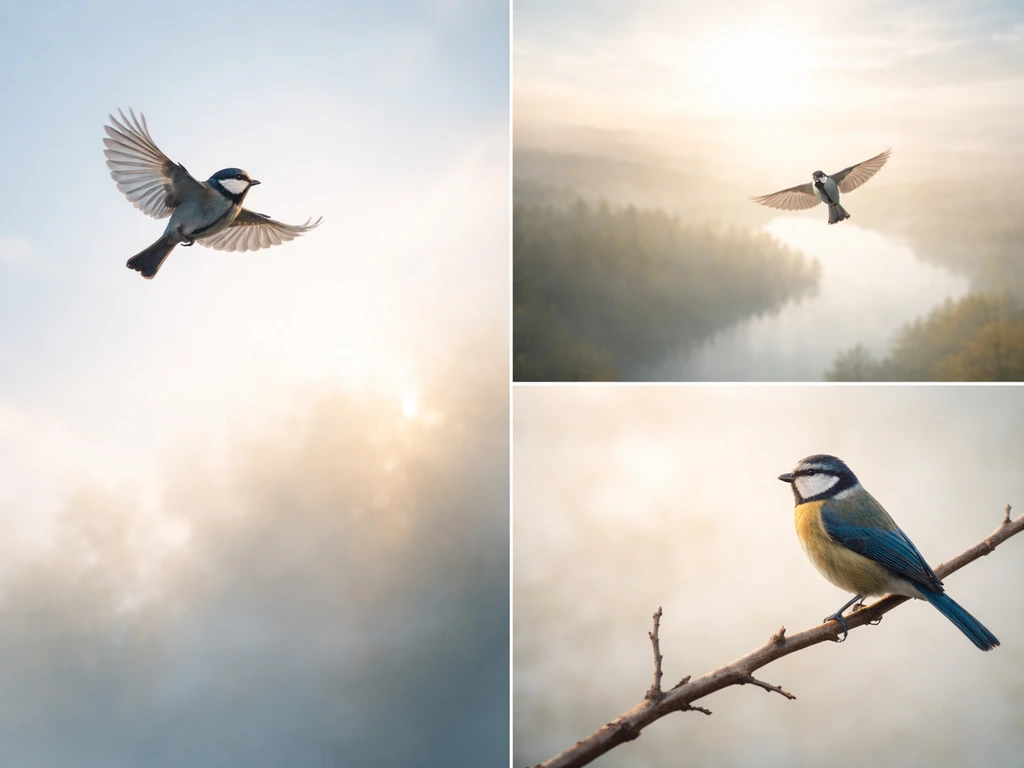
Across most contexts where "being a bird" is used metaphorically, four core meanings dominate.
- Freedom and escape: Birds are untethered by ground-level limitations. Saying someone is "being a bird" or "like a bird" often captures a longing for or embodiment of freedom, the ability to leave, to rise, to not be pinned down by circumstance.
- Elevated perspective: Birds literally see from above. The phrase can describe someone who thinks big-picture, stays above petty conflicts, or has a rare vantage point others lack.
- Identity and self-expression: In slang use, especially British and Irish, "bird" is a social identity marker. Being a bird means being a woman, a girlfriend, or sometimes specifically a certain type of woman (fun, carefree, youthful).
- Spiritual and soul-level meaning: In many traditions, birds represent the soul's movement between worlds. "Being a bird" in a spiritual context often means being in a liminal, transitional, or elevated spiritual state.
Bird symbolism that shapes all of this
You can't fully understand what "being a bird" means without knowing what birds symbolize in the cultures most likely to produce the phrase. In Western European and Celtic traditions, birds have long been seen as messengers between the human world and the divine. The idea that a bird carries your prayers upward, or arrives as an omen, runs deep in folklore across the British Isles, where the slang use of "bird" for a woman also developed.
In Greek and Roman mythology, birds were associated with gods (the eagle with Zeus, the dove with Aphrodite), reinforcing their role as symbols of power, peace, and higher knowledge. In many Indigenous American traditions, birds are spirit guides or carriers of vision, which aligns closely with the modern spiritual use of bird language. In East Asian traditions, birds like the crane represent longevity, grace, and good fortune, adding a different flavor to what "being a bird" might suggest in those cultural contexts.
The common thread across almost every tradition is that birds exist between worlds: between earth and sky, between human and divine, between the ordinary and the transcendent. That's exactly why the phrase "being a bird" resonates so powerfully as a metaphor. It's not random imagery. It's tapping into thousands of years of collective meaning.
How to figure out which meaning applies in your specific situation
The fastest way to decode the phrase is to ask yourself a few targeted questions about the context you encountered it in.
- Who said it, and where are they from? If the speaker or writer is British, Irish, or Australian, the slang meaning (woman/girlfriend) is immediately in play alongside any metaphorical reading.
- What's the surrounding tone? Is it poetic and introspective? Then it's almost certainly a metaphor for freedom or spirit. Is it casual and conversational? Slang is more likely.
- Is there a spiritual or religious framing nearby? Words like soul, transcendence, vision, or prayer nearby point strongly toward the spiritual interpretation.
- Is it about a specific person or a feeling? "Being a bird" applied to a named person often carries the slang or identity meaning. Applied to a state of mind or moment, it's usually metaphorical.
- Is there any music, literary, or lyrical context? Song lyrics and poetry almost always use bird language metaphorically, rarely in slang mode.
Quick examples to test your interpretation
| Example phrase | Most likely meaning | Why |
|---|---|---|
| "She's just being a bird, she'll fly off eventually" | Metaphor for being free-spirited or uncommitted | Figurative tone, behavior-focused |
| "My bird's coming out with us tonight" | British slang for girlfriend | Possessive phrasing, casual British register |
| "In that moment, being a bird felt possible" | Spiritual or imaginative metaphor for freedom | Introspective, emotion-focused framing |
| "He's been doing bird for two years" | Cockney rhyming slang for serving prison time | "Doing bird" phrasing, not "being a bird" |
| "To be a bird is to know no boundaries" | Philosophical metaphor for freedom/perspective | Abstract, declarative framing |
Cultural, folklore, and spiritual angles worth knowing
In Celtic and British folklore, specific birds carried specific powers. The wren was the king of birds. The robin was a soul-carrier. The raven was an omen-bearer. When someone in a folkloric or literary context says "being a bird," they may be invoking one of these specific bird archetypes without naming the species. The phrase becomes a shorthand for a whole symbolic tradition.
In contemporary spirituality, particularly in shamanic and new-age frameworks, "being a bird" or having a bird as a spirit animal means accessing qualities like vision, freedom, communication, and the ability to move between states of consciousness. If someone says "in that meditation, I was being a bird," they're describing a guided visualization or out-of-body-type experience rooted in these traditions.
The metaphorical use in literature and music follows the same symbolic logic. When poets from Keats to Maya Angelou use bird imagery to describe the self, they're drawing on this deep well of meaning. blank" rel="noopener noreferrer">Maya Angelou's "I Know Why the Caged Bird Sings" uses the caged bird explicitly as a metaphor for oppression and denied freedom. "Being a bird," in that tradition, is being something that should be free but may not always be.
How this compares to classic bird idioms
"Being a bird" sits in a different category from the fixed bird idioms most people know. Compare it to a few common ones to see where the differences lie.
| Idiom or phrase | What it means | How it differs from "being a bird" |
|---|---|---|
| A bird in the hand is worth two in the bush | It's better to keep what you have than risk it for something bigger | A fixed proverb with one stable meaning; no ambiguity |
| A little bird told me | I heard it from an unnamed source | Idiomatic, fixed meaning; bird is just a vague informant |
| Free as a bird | Completely unencumbered or free | Closest in spirit to the freedom meaning of "being a bird" |
| You're my bird | British slang: you're my girlfriend/partner | More relational and affectionate; bird-as-person rather than bird-as-metaphor |
| She's a bird | British slang for she's a woman; or she's attractive | Person-identifier rather than state-of-being metaphor |
The key difference between "being a bird" and most fixed idioms is flexibility. Idioms like "a bird in the hand" have locked-in meanings most speakers agree on. "Being a bird" is open-ended enough that its meaning genuinely depends on context, which is what makes it interesting and occasionally confusing to decode.
Your quick checklist for decoding the phrase
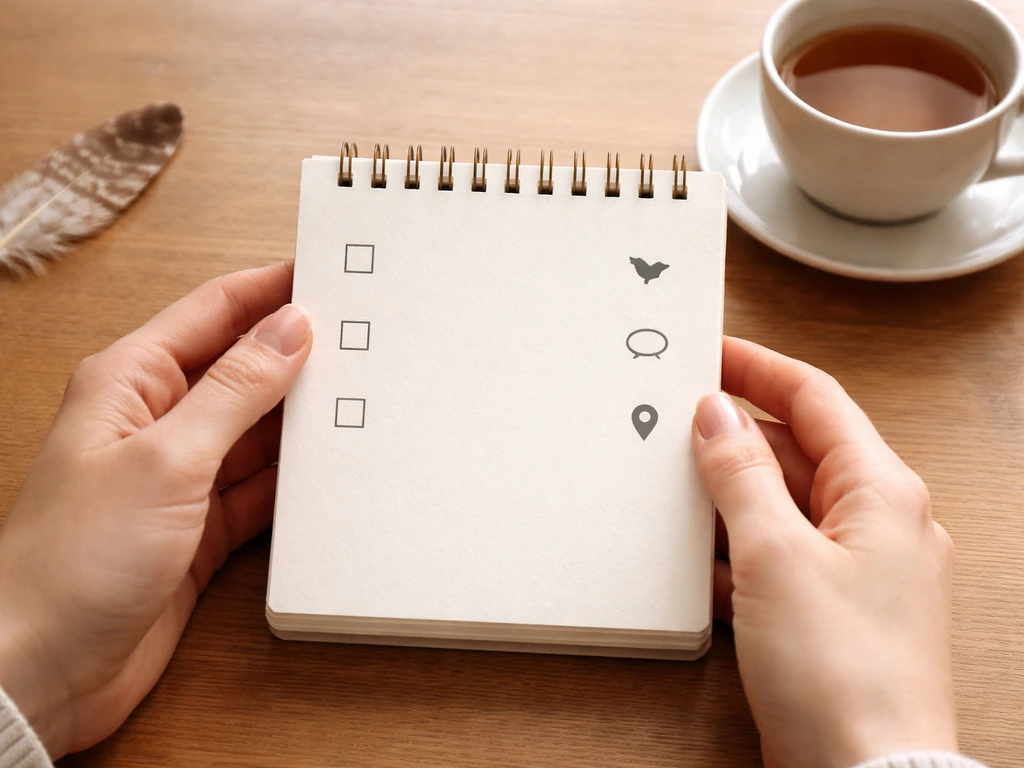
If you've come across "being a bird" or a close variant and you want to pin down the meaning fast, run through this checklist. If you're also wondering what how's your bird meaning.
- Check the dialect: British, Irish, or Australian context puts slang meanings (woman, girlfriend) on the table immediately.
- Check the genre: Poetry, lyrics, or spiritual text almost always signals metaphor. Casual conversation signals slang.
- Look at what follows: If emotions, states of mind, or abstract qualities are described next, it's metaphorical. If a person or relationship is the subject, it's likely slang.
- Look for spirit or soul language nearby: Words like transcendence, vision, meditation, or soul confirm a spiritual reading.
- Compare to sibling phrases: "You're my bird," "she's a bird," and "how's your bird" all lean slang. "Being a bird" alone leans more metaphorical or spiritual in most cases.
- When in doubt, favor freedom: Across cultures and centuries, the single most consistent symbolic meaning of bird imagery applied to a person is freedom. That's your safest default interpretation if context gives you nothing else.
FAQ
How can I tell whether “being a bird” is slang (woman/girlfriend) or metaphor (freedom)?
Tone is usually the fastest clue in British slang. If “being a bird” is said softly, playfully, or as part of teasing, it likely means girlfriend or a young woman. If it is said with irritation or in a bullying way, it may be using a different register (for example, “bird” as an insult in some regions).
If someone says “being a bird” in daily conversation, should I assume they mean spiritual stuff?
In most everyday uses, the phrase is not treated as an identity claim in a literal way. If you hear it in a real-life conversation about someone’s behavior, the safest default is figurative or affectionate slang, not spiritual language, unless the speaker explicitly mentions meditation, the soul, or guides.
What word pairings strongly signal Cockney rhyming slang versus British relationship slang?
Look for accompanying words. “Bird” linked with phrases like “time,” “doing,” or “serving” points toward Cockney rhyming slang (bird-lime, time). If it is paired with romantic or dating language, it more likely uses the slang “bird” meaning young woman or girlfriend.
When “being a bird” appears in lyrics, how do I avoid misunderstanding it literally?
In many song lyrics, bird language is poetic, not literal. If the lyrics also mention cages, flight, chains, distance, or escape, then “being a bird” is probably about freedom or denied freedom, even if no “cage” is mentioned. Quick check: ask what emotional state the bird imagery is trying to create.
Why do dictionaries sometimes not match what I hear in real conversations?
Don’t rely on one-off dictionary-style meanings alone. The phrase can shift based on who is speaking (British vs Irish vs elsewhere), when (older youth slang vs modern usage), and how it is framed (joke, insult, or sincere compliment). If you are unsure, treat it as ambiguous until you confirm with context.
Does “being a bird” mean the same thing as “you’re my bird” or “you’re a bird”?
If the speaker says “you’re a bird” or “you’re my bird,” the relationship usually matters more than the single phrase. “You’re my bird” is commonly affectionate toward a partner in British slang, while “you’re a bird” can be playful or rude depending on regional norms and delivery.
How do I know whether “being a bird” is metaphorical symbolism or a true “spirit animal” reference?
If a writer uses “bird” in a spiritual or shamanic way, they often connect it to practices like meditation, visualization, or spirit guides. If the text instead focuses on social behavior, flirtation, or personality traits, it is more likely using symbolism or slang rather than a literal “spirit animal” claim.
What is the quickest practical checklist to decode “being a bird” correctly?
A common mistake is decoding it as a single fixed meaning, like freedom only. The phrase can also be used as a short coded reference to women, girlfriends, or prison time (rare). The decision aid is to classify the surrounding theme first: romance, poetry, spirituality, or punishment.
Next Article
You a Bird Meaning: Real Ways People Use It
Decode you a bird meaning in texts and jokes: flirt, praise, teasing, or insult, plus what to reply.