
When someone puts 'speak now' and 'bird cage' together, the most likely meaning is this: use your voice while you still can, because silence has a cost and the window to speak is closing. It's a call to break out of a kind of self-imposed or externally enforced silence before the moment passes. Whether it shows up in a relationship, a social situation, or a spiritual/poetic context, the combined image is almost always about voice, urgency, and the tension between staying quiet and finally saying something that matters.
Speak Now Bird Cage Meaning: Literal and Symbolic Insights

Marcus Winters
6 May 2026

What 'speak now' actually means
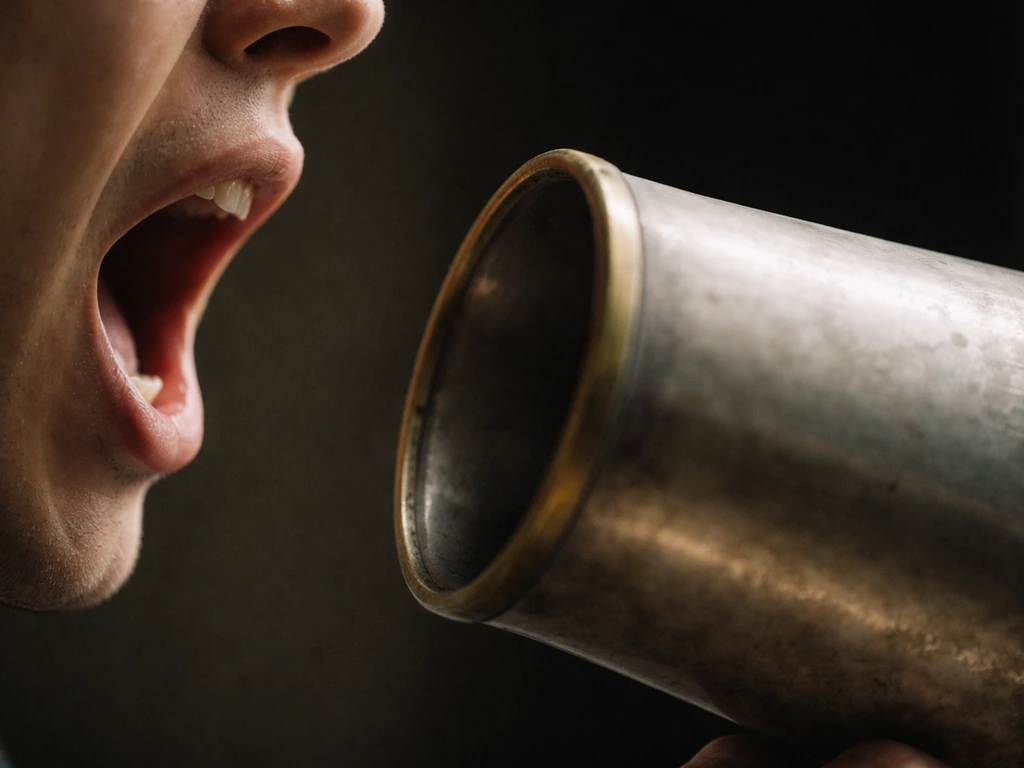
The phrase 'speak now' carries a clear, built-in sense of urgency. It means: this is your moment, and it won't come again. The most famous version is the wedding clause 'speak now or forever hold your peace,' which blank" rel="noopener noreferrer">traces back to the 1549 Book of Common Prayer. The original wording was 'Let him now speak... or else hereafter forever hold his peace.' The structure is deliberate: you are being given explicit permission to speak, but only inside a narrow window. Once the window closes, your silence is taken as consent or acceptance.
That structure is exactly what makes 'speak now' powerful as a phrase. It's not just an invitation. It's a warning. The implied second half always involves some form of permanent silence or forfeiture. You speak now, or you lose the right to speak later. That's the emotional engine behind it, whether it's used in a wedding, a courtroom, a conversation, or a piece of poetry.
What the bird cage symbolizes
At its most literal, a birdcage is exactly what Merriam-Webster says it is: a cage for confining birds. But in figurative language, a birdcage has carried heavy symbolic weight for centuries. It represents confinement, restriction, and the suppression of something that naturally wants to be free. The bars don't just hold a body in place. They silence a voice.
Maya Angelou's caged bird motif is the most culturally powerful version of this. The caged bird in her work sings not because it is free, but because singing is the only form of agency it has left. The cage restricts the body but cannot fully kill the voice. That's the layered meaning the image carries: the cage as oppression, the song as resistance, and the tension between captivity and the persistent desire to be heard. When someone invokes a bird cage symbolically, they're almost always tapping into that tradition, whether they know it or not.
It's worth noting that 'bird cage' can also be completely literal. If someone is talking about an actual cage for an actual pet bird, the symbolism doesn't automatically apply. Context matters, and the literal meaning (physical confinement of a bird) is still the first, default definition. The symbolic reading only kicks in when the phrasing or setting makes it clear that metaphor is in play.
Putting it together: what 'speak now bird cage' most likely means
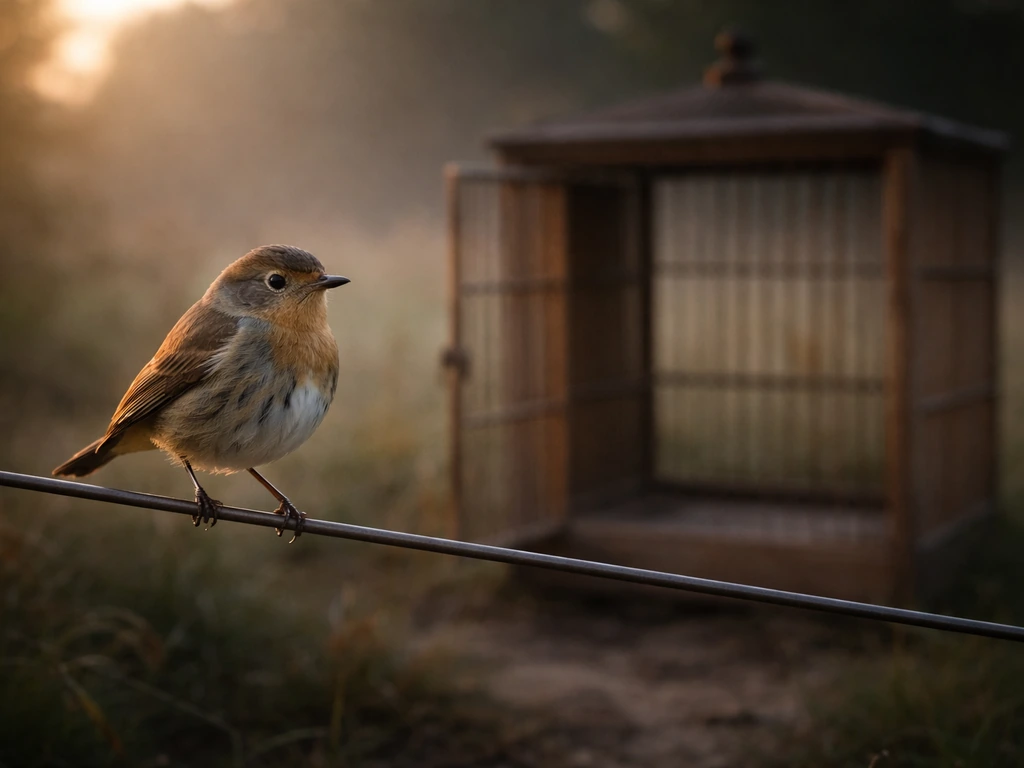
When you combine 'speak now' with 'bird cage,' the image that emerges is about voice, confinement, and a deadline. That simple "bird on a wire" image also shows up in slang and memes as a shorthand for a deeper meaning about tension, timing, and self-expression bird on a wire rat in a pocket meaning. The bird cage represents a state of silence or suppression. 'Speak now' is the challenge or invitation to break out of that silence before the door closes. Together, the phrase is essentially saying: you are in a cage of your own silence (or someone else's restrictions), and this is your last, best chance to use your voice. People sometimes connect this idea with the prison bird meaning, using the metaphor of confinement to highlight how a voice can still fight to be heard.
The phrase can work in two directions. It can be something said to you, as a form of encouragement or urgency: stop staying quiet, stop letting yourself be caged, speak before it's too late. Or it can be something you say to yourself, recognizing that you've been holding back and that the window to act is narrowing. Either way, the core message is the same: silence is a choice with consequences, the cage is self-imposed or circumstantial rather than permanent, and the moment to break it is now.
Where this kind of phrasing actually shows up
The contexts where 'speak now' and 'bird cage' imagery collide are more varied than you'd expect.
- Relationship communication: One of the most common real-world uses. Someone is urged to speak up before a relationship ends, before a difficult conversation becomes impossible, or before resentment calcifies into permanent silence. The message is: don't stay trapped in your own cage of unexpressed feelings.
- Social pressure and advocacy: In activist or social justice contexts, caged bird imagery and 'speak now' urgency combine as a call to action. Silence is framed as complicity, and the phrase challenges people to raise their voices while there's still a public audience or a window of influence.
- Formal occasions and ceremony: Rooted in the wedding clause tradition, 'speak now' can appear in any ceremonial or legal moment where there's a formal, time-limited opportunity to object, testify, or assert a claim. After that window, the person's silence is treated as acceptance.
- Spiritual and poetic contexts: In sermons, poetry, and spiritual writing, the caged bird metaphor is used to describe a soul, a community, or a person who has been silenced by fear, oppression, or circumstance. 'Speak now' in this context becomes a call toward liberation, authenticity, and claiming one's voice.
- Pop culture and merchandise: It's also worth knowing that 'Speak Now' paired with a birdcage image has a specific pop-culture meaning as well. Taylor Swift's 'Speak Now (Taylor's Version)' album has official merchandise featuring a bronze birdcage ornament with the words 'Speak Now' imprinted on it. If someone is searching in a fan context, this literal product connection is a real possibility.
Related idioms and how they differ
The 'speak now bird cage' idea sits within a cluster of related expressions about voice, confinement, and freedom. Understanding how they differ helps you pin down which meaning fits your situation. You may also see the phrase “jail bird,” which is a slang idiom meaning a person who has been in prison jail bird idiom meaning.
| Expression | Core idea | Key difference from 'speak now bird cage' |
|---|---|---|
| Speak now or forever hold your peace | Time-limited permission to object; silence after this point is final | Formal, legal/ceremonial register; the silence is imposed from outside, not self-chosen |
| A bird in a cage with the door open | Freedom is available but not yet taken; the choice to leave or stay is yours | Focuses on opportunity and hesitation, not urgency or a closing window |
| The caged bird sings | Voice as resistance within confinement; the song persists despite the bars | About persistence and endurance rather than a one-time deadline to speak |
| Bird on a wire | Perched between freedom and captivity; an in-between, uncertain state | About ambiguity and position, not a call to act or speak within a time limit |
| Jailbird | A person who has been imprisoned or repeatedly in trouble with the law | Literal human confinement, no voice/speech metaphor involved |
| Forever hold your peace | The post-window silence; permanent forfeiture of the right to speak | The consequence of not speaking now; the opposite end of the same phrase |
The closest sibling idea is the open-cage image: if someone describes a bird in a cage with the door open, they're pointing at available freedom that hasn't been claimed yet. A related idea is the bird in a cage with the door open, which points to freedom that is available but still waiting to be chosen. That's a gentler version of the same theme. 'Speak now bird cage' adds urgency because the implication is that the door won't stay open indefinitely.
The cultural and spiritual weight behind caged birds and voice
Across cultures, the caged bird has almost universally represented suppressed voice and constrained freedom. In African American literary tradition, the caged bird became one of the most resonant metaphors for systemic oppression and the endurance of the human spirit through song and speech. A Reddit r/bookclub thread about Maya Angelou's "Caged Bird" discusses themes like the contrast between free and caged birds, and the implications of slavery or racism as well as the poem's form and cadence [\[Scheduled\] Poetry Corner](https://www.reddit.com/r/Poetry/comments/10cmy4f). In Maya Angelou's work specifically, the caged bird doesn't go silent. It sings, and that song becomes the loudest thing in the poem. The point isn't that the cage wins. The point is that the voice persists anyway.
In spiritual traditions, particularly those rooted in liberation theology and contemplative practice, the bird cage image is used to represent the soul in a state of fear, conformity, or self-censorship. The 'speak now' injunction in these contexts is a call toward authenticity and spiritual courage, the idea that you were not meant to silence yourself, and that your voice has a purpose beyond staying safe inside the bars.
Victor Hugo used bird imagery in similar ways, linking the bird's willingness to perch on a precarious branch to the power of trusting one's voice despite uncertainty. Be like the bird, a Victor Hugo idea, is often used to mean trusting your voice and acting even when conditions feel uncertain. That tradition of linking birds with voice, courage, and freedom from restraint runs deep across Western and non-Western literary and spiritual thought alike. When someone reaches for a birdcage in a sentence about speaking, they're drawing on all of that, whether consciously or not.
How to figure out which meaning fits your situation

Here's a quick way to read the phrase for your specific context. Ask yourself three questions: Who said it, in what setting, and what's at stake if no one speaks?
- If it came up in a relationship or personal conversation, the meaning is almost certainly 'stop staying silent, say what you need to say before it's too late.' The cage is your own hesitation or fear, and 'speak now' is the push to act.
- If it came up in a formal, ceremonial, or legal setting, you're looking at the traditional 'speak now or forever hold your peace' structure. There's a literal window of time, and silence after it closes has real consequences.
- If it appeared in poetry, spiritual writing, or activist language, the meaning is about liberation and voice as resistance. The cage is systemic, social, or emotional, and 'speak now' is a call to reclaim agency.
- If it's tied to Taylor Swift's 'Speak Now' album or related fan content, the birdcage is likely a visual/brand element from that era, and the meaning is a mix of the album's themes (speaking up in relationships, taking a chance on honesty) and the literal ornament aesthetic.
- If someone literally said it about a physical birdcage and a bird inside it, don't over-symbolize. Sometimes a birdcage is a birdcage, and 'speak now' is just a playful or instructional note about timing.
The common thread across almost every real context is this: silence has a cost, the moment to break it is now, and the cage (whatever it represents for you) is not permanent unless you let it be. If you're trying to figure out how to respond to someone who used this phrase with you, take it as a genuine invitation to say the thing you've been holding back. The phrase is almost never meant to intimidate. It's meant to open a door.
FAQ
Does “speak now bird cage meaning” always refer to a metaphor about silence and freedom?
Usually, yes. The “bird cage” part signals suppression or restriction, so “speak now” is typically urging you to use your voice before the opportunity or permission runs out. In rare cases it can be literal about a pet bird, but that will show up with concrete details like the cage door, a pet’s safety, or animal care.
How can I tell whether “speak now bird cage” is encouragement versus a warning?
If the speaker is talking to you directly, it is often encouragement mixed with urgency, meaning, “Say it now before you lose your chance.” If it sounds like it is about you speaking at a later date, that is a stronger warning, “If you do not speak during this window, you will be shut out.”
What does it mean if the “cage” feels internal versus something someone else imposed?
Check who controls the “cage.” If the restriction seems external (a controlling partner, a workplace rule, social pressure), the message is often about breaking through barriers. If it seems internal (fear, self-doubt, avoidance), then it reads like, “Stop choosing silence, even if the cage is mostly psychological.”
Is “speak now” meant to be literal timing, or just emotional urgency?
The “speak now” urgency is usually rhetorical, but it can be time-bound. If the context includes deadlines (a meeting vote, court date, relationship decision), treat it literally as a timing issue. If there is no timeline, it is more about emotional timing, “act while your courage is available.”
What should I say if someone tells me “speak now” in a “bird cage” context?
If you are trying to respond, a safe approach is to address the unspoken concern first, for example, “I hear that you want me to speak up. What exactly are you asking me to say?” This reduces pressure while still honoring the message.
What if the phrase is used to pressure me or intimidate me?
If you are dealing with someone who uses it as intimidation, the “open door” framing in the article still suggests a boundary: clarify stakes and consent, for example, “I want to talk, but I need this to be respectful, not threatening.” If their wording comes with coercion, prioritize safety and avoid engaging in high-pressure conflict alone.
Can “speak now bird cage” be a message I give myself, not something said to me?
Yes, it can flip meanings depending on direction. “Speak now” can be addressed to you (you should stop being quiet), or it can be self-directed (you recognize you have been holding back). The “bird cage” will match whichever side is controlling the silence.
How does it differ from an “open-cage door” type message?
A door-left-open image is usually more forgiving, while a “speak now” cage image implies the opening is narrowing or might close. So if the message includes words like “deadline,” “before it’s too late,” or “no more chances,” expect it to be the harsher, time-sensitive version.
What is a common mistake people make when interpreting this meaning?
Common misread: treating it as “speak even when it’s unsafe.” The better reading is, speak when it is right and responsible to speak, especially when silence is costing you. If your safety, legal risk, or well-being is threatened, “speak” may mean “get support or plan a safer way to speak.”
Next Article
Bird in a Cage With Door Open Meaning and What It Shows
Meaning of bird in a cage with door open: freedom and choice, yet restraint, fear, or inaction keeps you stuck
