
An origami bird most commonly symbolizes peace, hope, healing, and the act of making a wish. The meaning gets more specific depending on the bird species, the context it appears in, and whether you're looking at a folded paper gift or a tattoo. The crane is far and away the dominant origami bird in symbolic terms, tied directly to the Japanese senbazuru tradition of folding 1,000 paper cranes to grant a wish. But a dove, swallow, or even a generic folded-bird shape each carry their own layered meanings that are worth knowing before you decide what your origami bird is really saying.
Origami Bird Meaning: Symbolism, Tattoo Meanings, and How to Decode It

Marcus Winters
23 Apr 2026
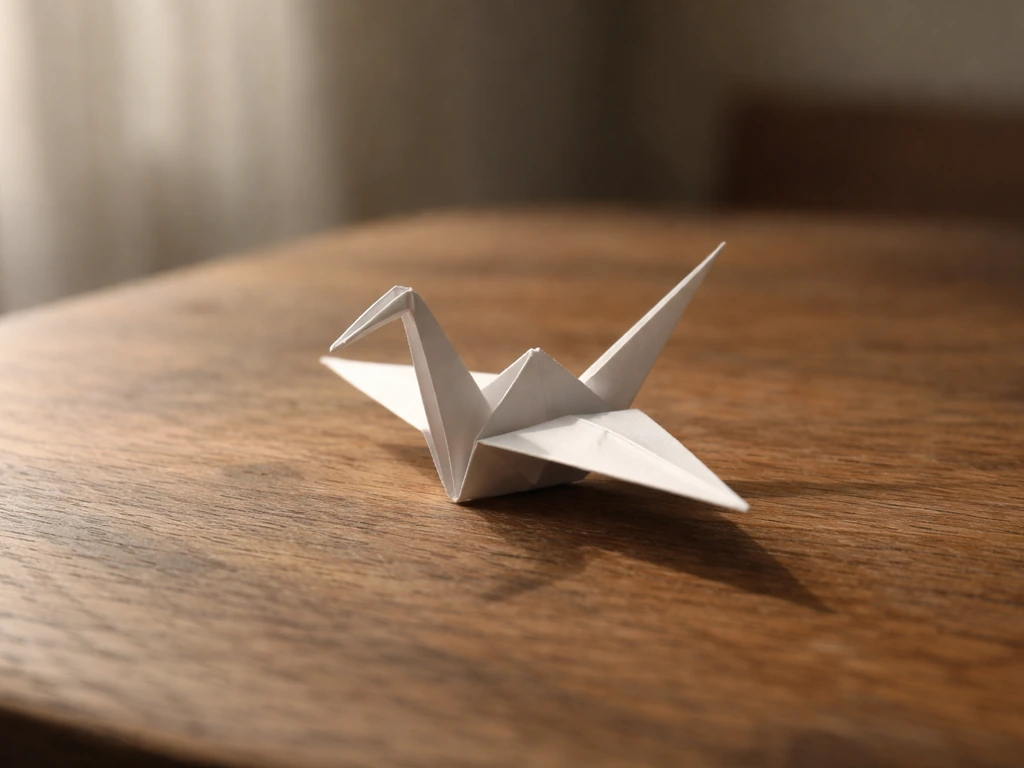
What an origami bird generally symbolizes
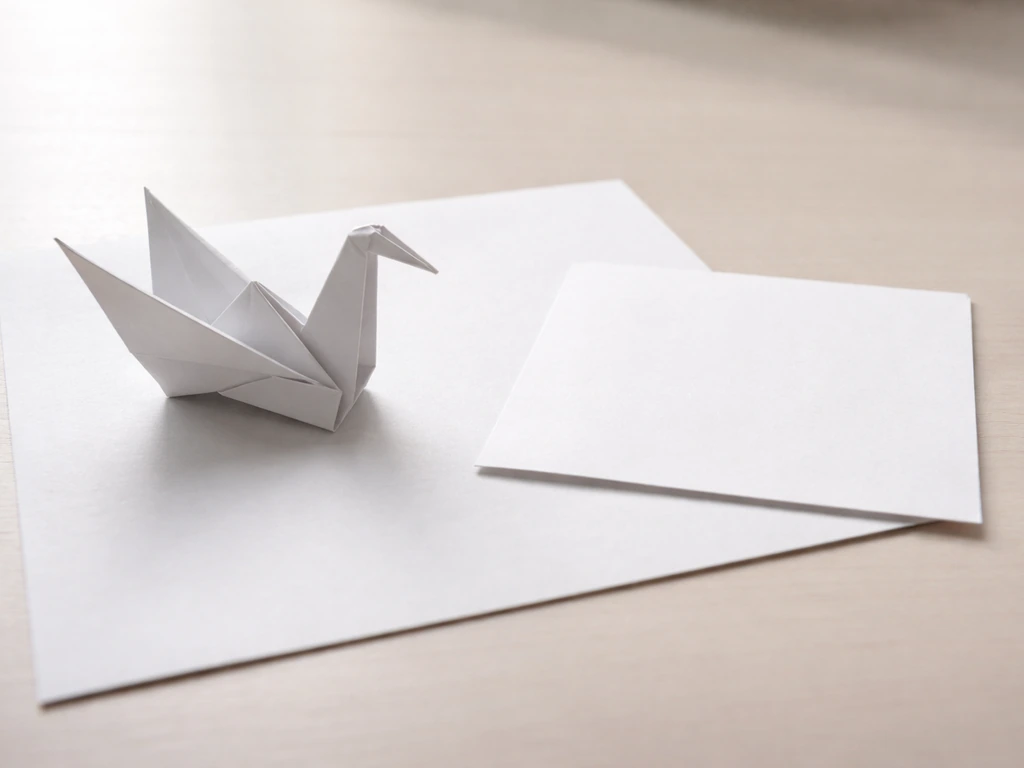
At its broadest, an origami bird represents transformation and intentionality. You start with a flat, plain sheet of paper and end up with something that looks like it could take flight. That process of careful, patient folding is itself part of the message: the maker put time and focus into creating something from nothing. This is why origami birds are rarely seen as casual or throwaway objects, even when they're made from cheap notebook paper. A quick way to decode the trash bird meaning is to look at the exact bird type and the tone of the quote or meme it comes from.
The core ideas that most people associate with origami birds are peace, freedom, hope, luck, renewal, and patience. These aren't random associations. They trace back to a specific tradition: the Japanese belief that folding paper cranes is a wish-making act. According to the Orizuru (folded crane) entry, orizuru is the origami paper crane, and folding a thousand cranes is said to grant a wish [folding paper cranes is a wish-making act](https://en.
wikipedia. org/wiki/Orizuru). According to Japanese legend, folding 1,000 paper cranes (called senbazuru) brings peace and long life. That tradition became internationally recognized partly because of Sadako Sasaki, a young girl who began folding cranes in Hiroshima while ill with leukemia following the atomic bomb.
Hiroshima City’s official materials also note that after Sadako’s leukemia diagnosis, she was admitted to the Hiroshima Red Cross Hospital [Sadako Sasaki, a young girl who began folding cranes in Hiroshima while ill with leukemia](https://www. city. hiroshima. lg.
jp/site/english/158105. html). Since 1958, the Sadako statue at Hiroshima Peace Memorial Park has depicted her holding a large paper crane, and the image has made the folded bird one of the most recognizable symbols of hope and healing worldwide.
So when someone gives you a folded paper bird, or you see one in art or tattooing, the baseline interpretation almost always runs through those themes: a wish being made, hope being offered, or transformation being honored. The exact weight of those themes depends on context, which is what the rest of this article unpacks.
How the meaning changes depending on the bird
Not every origami bird is a crane, and the species matters a lot for meaning. Here is how the most common origami bird types typically read symbolically.
The crane (orizuru)
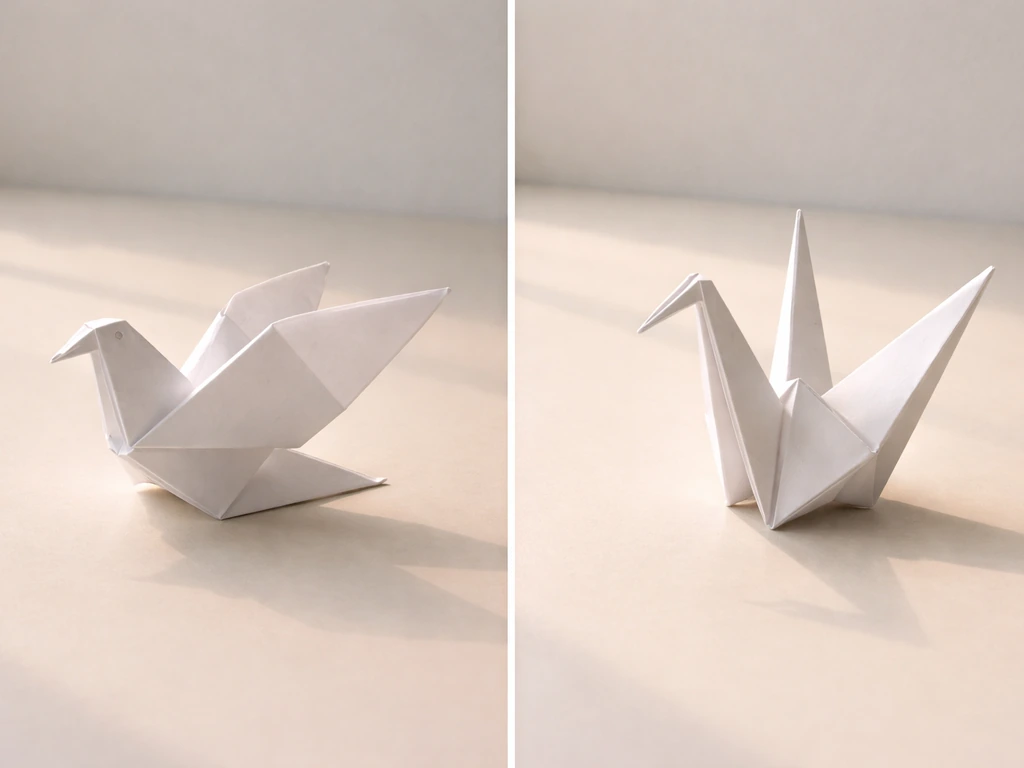
The origami crane, called orizuru in Japanese, is the classic. It carries the fullest symbolic load of any folded bird: peace, long life, good health, healing, hope, and wish-making. In East Asian cultures broadly, cranes are considered sacred birds tied to longevity and in Taoist tradition the red-crowned crane is linked to immortality. When you see a paper crane in a gift, memorial, or tattoo, you're almost always looking at an intentional peace or healing message, not just decoration.
The dove
An origami dove pulls from different symbolism. Doves are the most widely recognized peace symbol in Western culture and are tied in Christian tradition to the Holy Spirit, baptism, and spiritual transformation. An origami dove often signals faith, purity, or spiritual meaning more strongly than a crane does. If someone gives you an origami dove or has one tattooed in a devotional context, it's usually pointing toward personal faith or spiritual renewal rather than the East Asian wish-making tradition.
The swallow
Swallows in bird symbolism have historically meant safe return, loyalty, and navigation. A sailor's swallow tattoo traditionally meant they had logged 5,000 nautical miles. An origami swallow (or a tattoo of one in an origami style) often carries those older themes of homecoming and loyalty alongside the added layer of transformation that the origami aesthetic brings.
Generic or abstract folded birds
Sometimes the origami bird is intentionally vague: a simple folded triangle shape that is clearly a bird but not identifiably a specific species. These lean on the broad origami-bird meaning of freedom, lightness, and hope. They're popular in minimalist tattoos and paper art precisely because they don't pin the viewer to one specific cultural tradition. The meaning stays open and personal.
Cultural and spiritual traditions behind folded bird imagery
To really understand why origami birds carry the meaning they do, it helps to know the cultural layers stacked underneath them. Birds in general are among the oldest symbolic objects in human culture because they can fly, which made them natural metaphors for the soul, for freedom, and for communication between the earthly and divine.
In Japanese tradition specifically, the crane is sacred. It was associated with longevity and good fortune long before folded paper cranes existed. The origami crane inherited all of that symbolism and then amplified it through the senbazuru practice. Folding 1,000 cranes became a collective wish-making ritual: the patience and repetition involved made the act itself a form of prayer. Groups of people fold cranes together for someone who is ill, for peace events, and for memorial occasions. The crane is not just a pretty shape; it is a carrier of intention.
In Chinese mythology, cranes are linked to happiness, good luck, and immortality, particularly the red-crowned crane which appears in Taoist imagery as a mount for immortals. Korean and Vietnamese cultures share similar crane-as-longevity symbolism. So across East Asia, the crane in any form (including folded paper) tends to read as a positive, auspicious, long-life symbol.
In Western traditions, the dove became the dominant peace-and-spirit bird, particularly through Christian iconography. The bird described descending like a dove at Jesus's baptism in the New Testament cemented the dove as a symbol of divine presence, peace, and purity. That symbolism now operates across both religious and secular contexts: Olympic peace doves, white dove releases at weddings and memorials, and origami doves all draw on this accumulated meaning.
The overlap between these traditions is what makes origami birds feel universally meaningful even across cultures. Whether someone is drawing on East Asian crane traditions or Western dove traditions, the folded bird reads as a positive, hopeful, intentional symbol. This is also why concepts like the paper bird (as a symbol in its own right) and fragile bird imagery both tap into this same emotional register of vulnerability, hope, and delicate beauty.
How origami birds are used today in gifting and personal messaging
In modern practice, giving someone an origami bird is almost always a warm, intentional gesture. The folding itself is part of the gift: it communicates that the giver spent time and care on this specific person. Here are the most common modern uses and what they typically communicate.
- Illness or recovery support: A paper crane or string of cranes is one of the most recognized gestures for someone going through a health challenge. It says: I am wishing for your healing. The senbazuru tradition is the direct source here.
- Sympathy and grief: Paper cranes appear at memorials and in sympathy gifts, especially when someone wants to express collective hope or peace for the bereaved. They show up at Hiroshima commemorations globally.
- Graduation and new beginnings: A folded bird given at a milestone transition communicates freedom, new flight, and hope for what comes next.
- Wedding and anniversary: Cranes in particular are popular in East Asian wedding traditions because of the longevity association. A thousand cranes at a wedding wishes the couple a long, happy life together.
- Simple encouragement: A single paper crane left on someone's desk or tucked into a card is often just an everyday wish: I'm thinking of you and hoping things go well.
- Peace activism and memorial: In public contexts, paper cranes are brought to peace memorials, war remembrance sites, and anti-violence events as living symbols of the senbazuru tradition.
The key thing about gifting an origami bird is that the meaning is almost always positive and caring. If you’re comparing that to a different bird theme, you can also look up worry bird meaning to see how anxiety or worry changes the symbolism. Unlike some bird symbols (a broken bird or a sorrow bird, for example, which tend to represent pain or vulnerability), an origami bird leans toward hope and forward motion. If you're curious about the sorrow bird meaning, that symbol typically points to pain, grief, or vulnerability rather than hope. Even when it appears in a grief context, the message is about wishing for peace rather than dwelling in loss.
Origami bird tattoo meaning
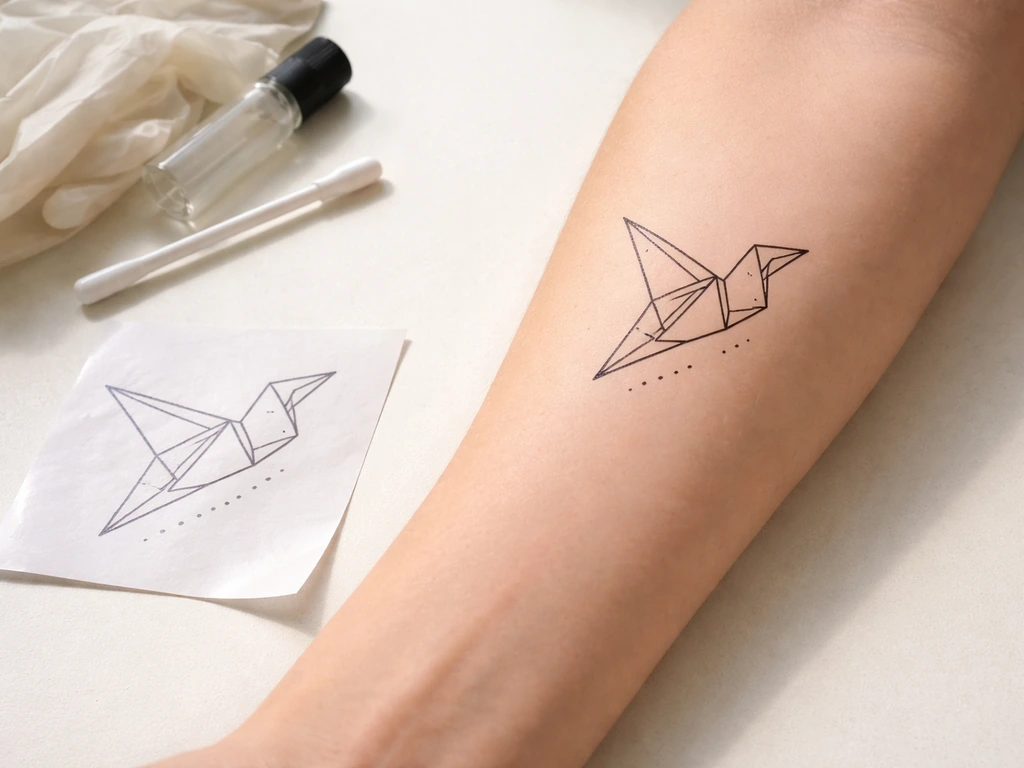
Origami bird tattoos are a distinct category worth unpacking separately. The choice to tattoo an origami bird rather than a realistic bird is itself meaningful: it signals that the person is drawn to the idea of the bird, the symbol and the craft of it, rather than the literal creature. Origami tattoos occupy a space between geometric art and intentional symbolism.
What people usually mean by an origami bird tattoo
The most common interpretations for origami bird tattoos are: peace and hope (especially crane tattoos with senbazuru references), personal transformation (the idea that you started somewhere flat and folded yourself into something capable of flight), creative identity (origami as craft and patience), tribute or memorial (particularly when tied to a date, a name, or explicit Hiroshima/Sadako imagery), and longevity or good fortune (drawing on the East Asian crane tradition).
Crane tattoos specifically, when they take an origami or orizuru form, are strongly associated with the peace and healing meaning. Tattoo guides consistently list longevity, good health, and luck as core crane tattoo meanings, with the peace and hope layer added specifically when the design references senbazuru or the paper-crane tradition. If the tattoo includes 1,000 cranes, stringing or bundling motifs, or a date that references Hiroshima Peace Day, the interpretation almost certainly points to the Sadako/peace narrative.
Decorative versus commemorative versus intention-based tattoos
There's a meaningful difference between an origami bird tattoo that is primarily aesthetic and one that is tied to a specific event or intention. A clean, minimalist folded-bird outline on a wrist or collarbone is often decorative with loose symbolic resonance. A crane tattoo with a name, date, or senbazuru count is almost always commemorative or tribute-based. An origami bird paired with other symbolic elements (lotus flowers, waves, specific kanji) starts to build a more layered personal narrative. Asking the wearer, or asking yourself if you're designing one, whether the tattoo is meant to commemorate something specific is the fastest way to determine which category it falls into.
Placement and what it suggests
Placement in origami bird tattoos tends to reflect how public or private the meaning is. Wrist, forearm, and collarbone placements are visible and often indicate that the wearer wants the symbol to be seen and possibly explained, suggesting that the meaning is something they actively want to share or carry publicly. Crane tattoos on the ankle or calf allow the full silhouette (long neck, extended wings) to read clearly, which is why leg placement is often recommended for crane designs specifically. Chest and ribcage placements for origami birds tend to signal deeply personal or memorial meaning, kept close to the body but not constantly visible.
How to figure out what a specific origami bird means
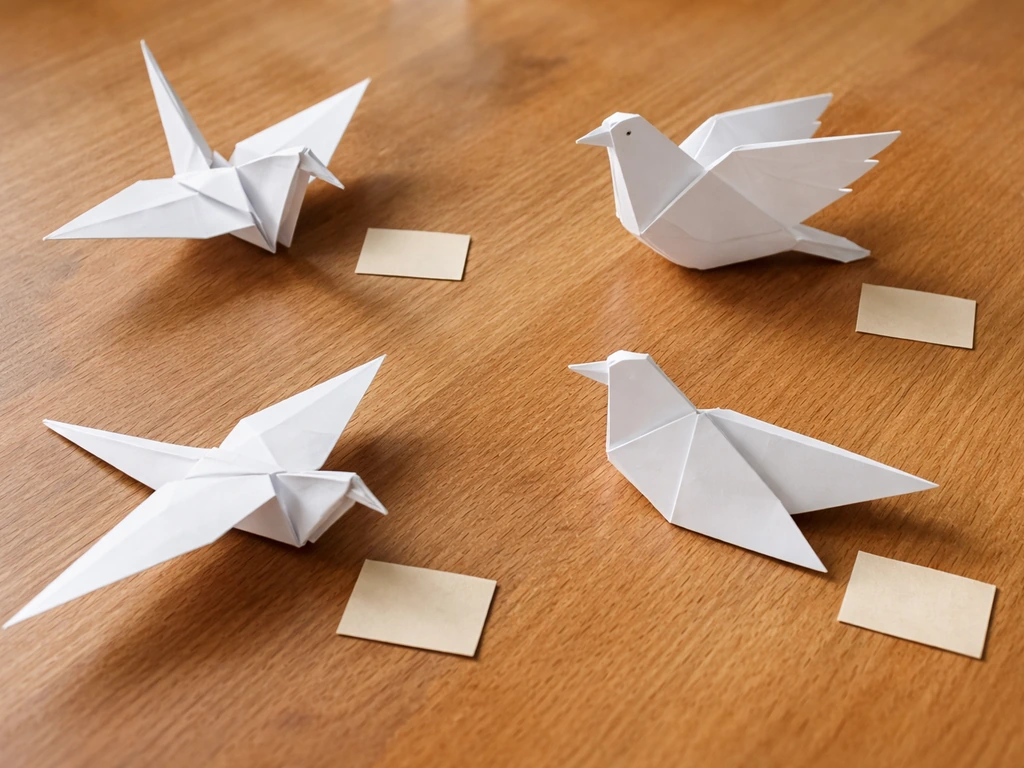
If you're trying to interpret an origami bird someone gave you, one you saw somewhere, or one you're considering for a tattoo, these are the four key identifiers to run through.
| Identifier | What to look for | What it suggests |
|---|---|---|
| Bird species | Does it look like a crane (long neck, triangular beak, folded wing posture)? A dove (rounded, plump)? A swallow (forked tail)? Generic abstract bird? | Crane = peace/wish/longevity; Dove = peace/faith/spirit; Swallow = homecoming/loyalty; Generic = freedom/hope/transformation |
| Color | Is it white, red, gold, multicolored, or black? | White = peace/purity; Red = luck/passion (especially in East Asian contexts); Gold = prosperity; Black = memorial or rebellion; Multicolored = joy/celebration |
| Quantity or grouping | Single bird, a pair, or many (especially 1,000)? | Single = individual wish or tribute; Pair = relationship/partnership; 1,000 = senbazuru/healing/peace tradition |
| Context or occasion | Given at a hospital, wedding, graduation, memorial, or with a personal note? | Hospital/illness = healing wish; Wedding = longevity; Graduation = new freedom; Memorial = tribute/peace; Personal note = individual wish or affection |
| Accompanying elements | Includes a date, name, kanji, or other symbols? | Date + name = commemoration; Kanji for peace/life = intentional East Asian tradition; Lotus/waves = spiritual transformation |
Running an origami bird through these five identifiers will give you a clear picture of what it most likely means. In most cases you will quickly land on one dominant interpretation rather than needing to weigh multiple equal options.
Practical next steps: lock in your meaning and use it
Whether you are writing a caption, adding a note to a gift, or finalizing a tattoo concept, here are the questions to answer first, followed by ready-to-use phrasing once you know your intent.
Questions to answer
- What bird species is this? (crane, dove, swallow, or abstract) This is your single most important question because it determines the primary symbolic tradition you are drawing from.
- Is this for a person going through something specific? (illness, loss, a new chapter, a milestone) If yes, the meaning almost certainly centers on healing/hope/new freedom rather than generic decoration.
- Is this commemorating someone or something? If yes, add a date or name to anchor the meaning and let the senbazuru/tribute layer carry forward.
- Are you drawing on a specific cultural tradition intentionally? If you want the East Asian peace and longevity meaning, lean into crane imagery and warm colors. If you want Western spiritual or faith meaning, lean into dove imagery.
- Is the message personal or public? For a tattoo, this affects placement. For a gift, this affects how much you explain in the note.
Ready-to-use phrasing
Once you have answered those questions, here are some direct phrasing options you can adapt for a card, caption, or tattoo concept note.
- For a healing gift: 'Folded with hope for your recovery. One crane for every wish I'm sending your way.'
- For a peace or memorial context: 'In the tradition of Sadako's cranes: a wish for peace, and a reminder that hope is something we make with our own hands.'
- For a new beginning: 'Every fold is a choice. Here's to the flight ahead.'
- For a tattoo caption or artist brief: 'Origami crane in the orizuru style, representing a personal wish for [healing/peace/transformation]. Placement: [forearm/collarbone/ankle]. Style: clean linework, no shading, single color.'
- For a wedding or anniversary: 'A thousand years of good fortune folded into one.'
- For a personal note with a dove: 'Peace and grace, folded just for you.'
The origami bird is one of those symbols that works both as a universal shorthand (everyone reads it as hopeful and peaceful) and as a deeply personal object when you tie it to a specific intention. If you're wondering about the lost bird meaning, the same idea of context and bird type usually changes what the symbol is trying to communicate.
If you are looking for the paper bird meaning behind an origami design, focus on the bird type and the context it appears in. If you're also wondering about the trash bird meaning, use the same approach: focus on the bird type and the context it appears in paper bird meaning.
The more clearly you can name what you want the bird to carry, the more powerfully it lands, whether it ends up in someone's hands, on their wall, or on their skin.
FAQ
If an origami crane is given to me, does it always mean senbazuru or a specific wish?
Not necessarily. Many people interpret origami birds as hopeful and peaceful by default, but the “wish” layer is most literal when the design points to senbazuru (for example, multiple cranes, a 1,000 count, stringing, or Hiroshima-specific references). A single minimalist crane without those cues usually reads more like general peace or personal transformation.
Does the color of the origami bird change the meaning?
Color can shift the emotional tone. White cranes commonly lean toward purity, peace, and memorial themes. Red accents often evoke luck and auspiciousness in East Asian crane imagery, while darker or black-and-grey paper can make the piece feel more solemn, reflective, or funerary.
What if the origami bird looks imperfect or unfinished?
Yes, construction details matter. Notes about paper source and finish (handmade paper, handmade deckle edges, or crisp geometric paper) add “effort” meaning, while visible errors, unfinished folds, or a partially collapsed bird can be read as a metaphor for resilience or an ongoing process rather than a completed wish.
How does the situation it was given in (birthday vs memorial vs illness) affect the origami bird meaning?
The receiver context changes interpretation. If it was made for a celebration, it will likely be read as luck, renewal, and a forward-looking wish. If it was made for illness, loss, or a remembrance setting, people often read it as healing, peace, and support for someone going through something hard.
If my origami bird is combined with other symbols (lotus, waves, text), what does that usually signal?
Common pairing elements act like “meaning amplifiers.” Lotus flowers often point to resilience and spiritual growth. Waves can suggest travel, emotional tides, or safe return themes. Adding a specific date, name, or script makes the tattoo or gift feel commemorative rather than purely symbolic.
Does the bird’s orientation (flying vs standing still) change the meaning?
Orientation and posture can subtly reframe the message. A bird shown “in flight” often emphasizes freedom and moving forward, while a bird held closer to the ground or presented as a static emblem can feel more like protection, remembrance, or steadiness.
Why do tattoo placement choices matter for origami bird meanings?
Placement does not just control visibility, it changes how the meaning is used day to day. A wrist or forearm tattoo is typically easier to reference during conversations, so it often reads as an “intent you want to explain.” Chest or rib placements are more private, commonly read as a personal vow, tribute, or inner healing.
What’s a respectful way to ask someone what their origami bird tattoo means?
If you are unsure, ask a targeted question that does not put words in their mouth. For example, “Did you connect it to a particular tradition or event, like senbazuru, or is it more about general peace and transformation for you?” Their answer usually clarifies whether it is commemorative or general symbolism.
Is an origami bird meaning the same as “paper bird” meaning?
There is overlap, but the meaning is not automatically identical. A “paper bird” (often generic) can be about fragile beauty, vulnerability, or creativity, while an “origami bird” specifically carries craft, patience, and (often) peace or wish-making themes tied to the folded-bird tradition. If the design is explicitly crane-like, that pushes the interpretation toward peace and longevity.
Can an origami bird meaning be different in grief or political memorial contexts?
Scenarios like war memorials or illness support can make the symbol feel especially solemn, even when it is still fundamentally hopeful. In those cases, people may interpret it as solidarity and healing rather than a personal, romantic, or luck-only message.
How can I tell whether a folded bird is meant to be generic or a specific species with specific symbolism?
Yes. A generic folded-bird silhouette usually reads as personal hope, lightness, or freedom. If the shape is clearly identifiable as a crane or dove (long neck, distinct wing proportions, or dove-specific body shape), then the species-level meanings become much more reliable.
Next Article
Amber Bird Meaning: Symbolism, Interpretations, and How to Use It
Learn amber bird meaning: disambiguate the phrase and interpret it using amber and bird symbolism, grounded steps includ