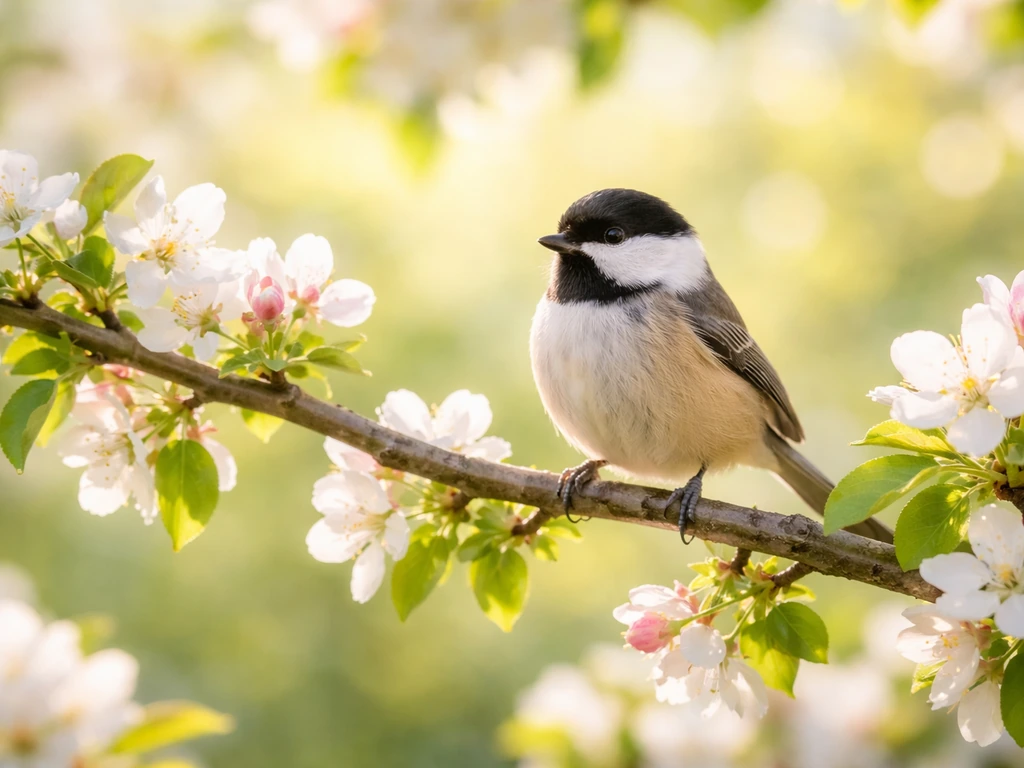
A 'screaming bird' can mean two very different things depending on your situation: either you heard or saw a real bird making a startling, loud call and want to know what species it was, or you came across the phrase used figuratively in symbolism, poetry, or slang and want to understand what it represents. Most of the time, people searching this phrase are dealing with one of those two scenarios, and the answer you need is completely different for each. This guide walks you through both, so you can land on the right explanation quickly.
Screaming Bird Meaning: Phrase, Symbolism, and Real Calls

Marcus Winters
27 Jun 2026
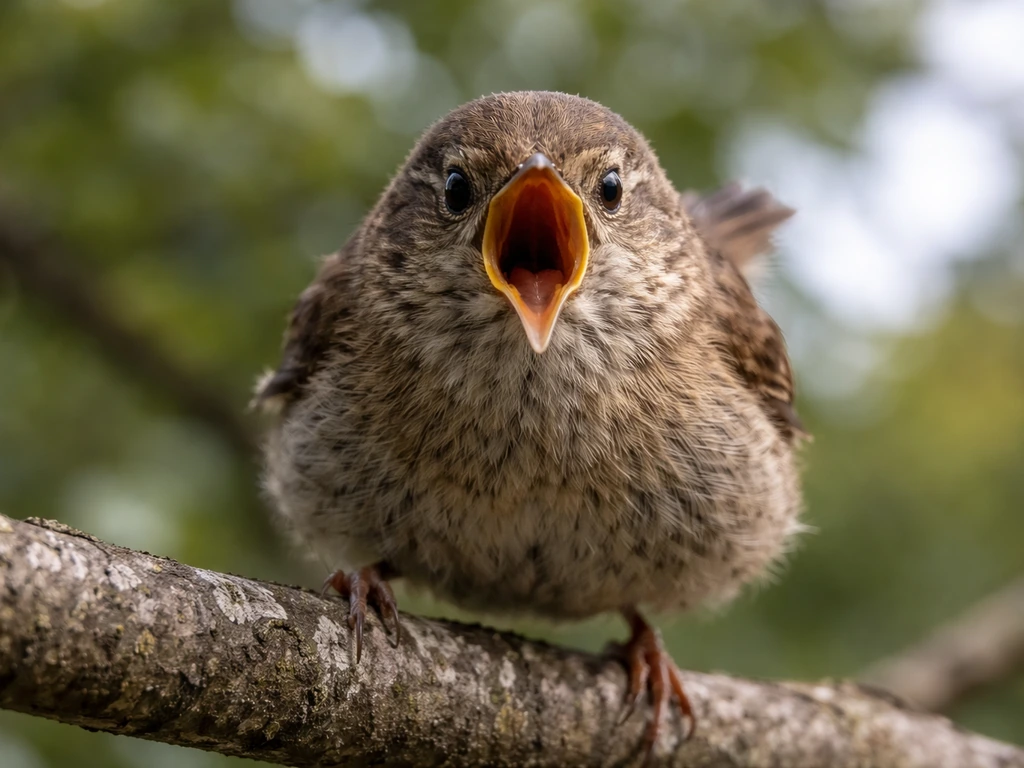
Literal scream or figurative phrase? Start here
The fastest way to figure out which meaning applies to you is to ask yourself a simple question: did you actually hear or see a bird, or did you read or hear the phrase used to describe something else entirely? If a bird woke you up at 3 a.m., startled you on a trail, or keeps going off in your backyard, you're dealing with the literal side. If you saw 'screaming bird' used in a poem, a song, a dream interpretation article, or a conversation about omens, you're in symbolic territory.
There's also a third, smaller category worth naming: people who own parrots or other pet birds and are trying to understand why their bird screams at them. That situation is genuinely its own thing. A parrot that screams for attention is communicating a need, and research from bird owner communities consistently shows that responding to screaming with cuddles or attention can reinforce the behavior, making it louder and more frequent over time. But for the purposes of this guide, the main focus is wild birds and figurative meanings.
How to quickly identify a bird by its loud call
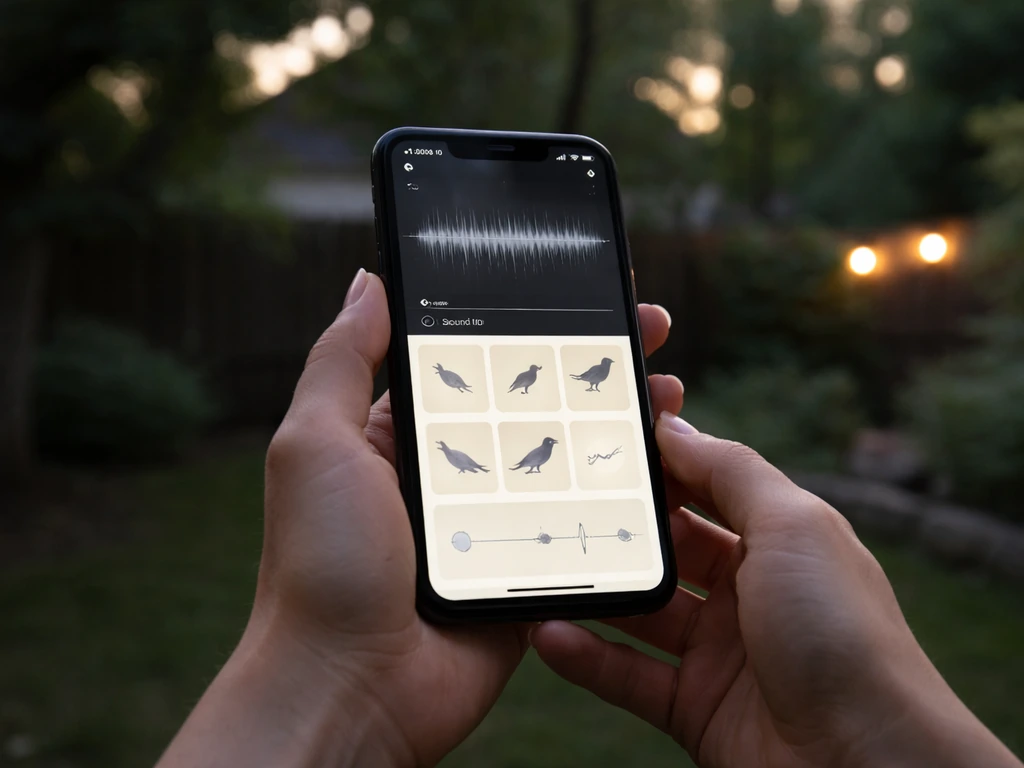
If you're trying to pin down what bird you actually heard, a few quick observations narrow the list dramatically. Note the time of day, your general habitat (suburban backyard, deep woods, wetland, open field), and whether the sound was a single sharp cry, a repeating series, or a long wailing note. Also think about whether you saw the bird at all, and if so, its rough size and any color details.
The single most useful free tool for this right now is Merlin Sound ID from the Cornell Lab of Ornithology. Open the app, hit record, and it will attempt to match the call in real time. It works well for common species but does have limits: if the call type for that species isn't yet in the training data, or your audio is muffled, it may not return a result. In those cases, watching the spectrogram display (the visual graph of the sound's pitch and rhythm) can still help you describe what you're hearing more precisely when you post in birding forums for help.
Beyond apps, a few behavioral clues are worth noting. Is the sound alarm-like and repeating? Many birds scream specifically as a threat display or when they feel cornered. Is it coming from a nest site or a tree cavity? That shifts the candidates significantly. Is it happening only at night? That points strongly toward owls or nightjars rather than daytime species.
Common 'screaming' birds and what they actually sound like
Here's something worth knowing upfront: one of the most famous 'screaming' birds, the Eastern Screech-Owl, doesn't actually screech at all. Despite its name, this species produces soft whinnies and descending trills, sometimes described as a mournful, quavering wail. The Pennsylvania Game Commission describes it as a quavering whistle repeated at irregular intervals. Both the Maine Department of Inland Fisheries and Audubon's field guide point this out specifically, which is a useful reminder that bird names don't always match their sounds. When a screech-owl does get aggressive, it will snap and clack its bill as a threat display, which can sound alarming up close, but its everyday voice is far gentler than the name implies.
The Barn Owl is a much more legitimate candidate for a genuinely screaming bird. The Missouri Department of Conservation describes its call as a harsh, raspy scream, and many people who hear it at night for the first time find it deeply unsettling. It's the bird most often behind those 'what was that terrifying sound in the dark?' moments.
For sheer volume, the Screaming Piha of South American rainforests holds a place near the top of the charts. Its call has been measured at around 111.5 dB at one metre distance, roughly comparable to standing near a pneumatic drill. The White Bellbird, also from South America, has been recorded even louder at around 125 dB. Neither of these will be in a North American backyard, but they explain why 'screaming bird' as a concept is so globally recognizable. Closer to home, the Bush Stone-Curlew of Australia is frequently described as sounding like a human yelling or a woman screaming, especially at night, which makes it a notorious source of alarm for people new to Australian rural areas.
| Bird | Region | Sound Description | When You'll Hear It |
|---|---|---|---|
| Eastern Screech-Owl | Eastern North America | Soft whinny and descending trill, not an actual screech | Nights, year-round |
| Barn Owl | Widespread globally | Harsh, raspy scream | Nights, especially near farms |
| Screaming Piha | South American rainforest | Explosive, very loud piercing call (~111.5 dB) | Day, in dense forest |
| Bush Stone-Curlew | Australia | Wailing cry resembling a human scream | Nights, open woodland |
| Common Loon | North America/Canada | Haunting wail and yodel | Nights, near lakes |
| Red-tailed Hawk | North America | Sharp, raspy descending scream (the classic 'eagle sound' in films) | Day, open country |
| Blue Jay | Eastern North America | Sharp, loud alarm screams | Day, woodland edges |
What a 'screaming bird' means figuratively
When 'screaming bird' shows up as a phrase rather than a description of a real animal, it almost always carries emotional weight tied to urgency, alarm, or raw expression. If you meant a different phrase, you may also be looking for the flaming bird meaning in symbolism and folklore. Birds that scream in nature are doing so for specific reasons: to warn others of danger, to defend territory, to express distress, or to communicate across distance. Those same meanings get borrowed when people use the phrase figuratively.
In poetry and creative writing, a screaming bird tends to stand in for uncontrolled emotion, a voice that can't be silenced, or a warning that's being ignored. It occupies similar symbolic space to other vivid bird phrases. Related ideas, like the flaming bird or burning bird, tend to carry transformative or passionate overtones, while the screaming bird is more specifically associated with alarm, raw truth, or a cry for attention that pierces through noise.
The feelings bird concept leans into emotional expression more gently, but the screaming bird pushes that into something more urgent and unrestrained. People sometimes search for the feelings bird meaning as a softer way of describing how a screaming bird reflects emotions like alarm, urgency, or a cry for attention.
In more casual, slang-level use, calling something a 'screaming bird' can simply emphasize intensity or chaos. It's used in the same spirit as saying something is 'wild' or 'out of control.' The imagery of a bird's scream, sharp and impossible to ignore, makes it a natural metaphor for anything that demands immediate attention.
Cultural, folklore, and spiritual takes on screaming birds
Across many cultures, birds with loud, unsettling calls have historically been treated as omens rather than just animals. This isn't surprising: before electric light and modern explanations, a shrieking sound in the dark was genuinely frightening, and humans needed frameworks to understand it. Those frameworks usually ran in one of two directions: the bird is warning you, or the bird is predicting something.
The 'Devil Bird' concept in Sri Lankan folklore is one of the clearest examples: a bird whose cry is believed to portend death. Similar ideas appear across South Asian traditions, where certain owl calls heard near a home were taken as a bad omen. In many Western traditions, the Raven carries a comparable weight. Wikipedia's entry on the Common Raven notes that in Western cultural tradition the raven has long been considered a bird of ill omen, associated with death and misfortune, partly because of its harsh, croaking call and its association with battlefields and carrion.
Not all screaming-bird symbolism is negative, though. In some Native American traditions, bird calls, including loud or piercing ones, are interpreted as messages from the spirit world or ancestors, carrying guidance rather than doom. The specific meaning depends heavily on the tradition, the bird species, and the context of the encounter. A hawk's scream heard at the start of a journey might be read as encouragement or a protective sign rather than a warning.
In modern spiritual and symbolic interpretation circles, a screaming bird encountered in real life is sometimes read as a prompt to pay attention, to listen to something you've been avoiding, or to act on a warning you've been ignoring. The blooming bird meaning is often discussed in symbolism, where intense calls are linked to messages, emotions, and attention screaming bird. The core idea maps back to the bird's biological behavior: when a bird screams, something has triggered its alarm system. Symbolically, the suggestion is that your own internal alarm might be trying to get your attention too.
It's worth noting that interpretation varies enormously by region and tradition. The same call that signals death in one folklore system might be a blessing in another. If you're exploring screaming bird symbolism for spiritual reasons, it's worth grounding your interpretation in the specific tradition you're working with rather than assuming a universal meaning.
What to actually do if you're dealing with a real screaming bird
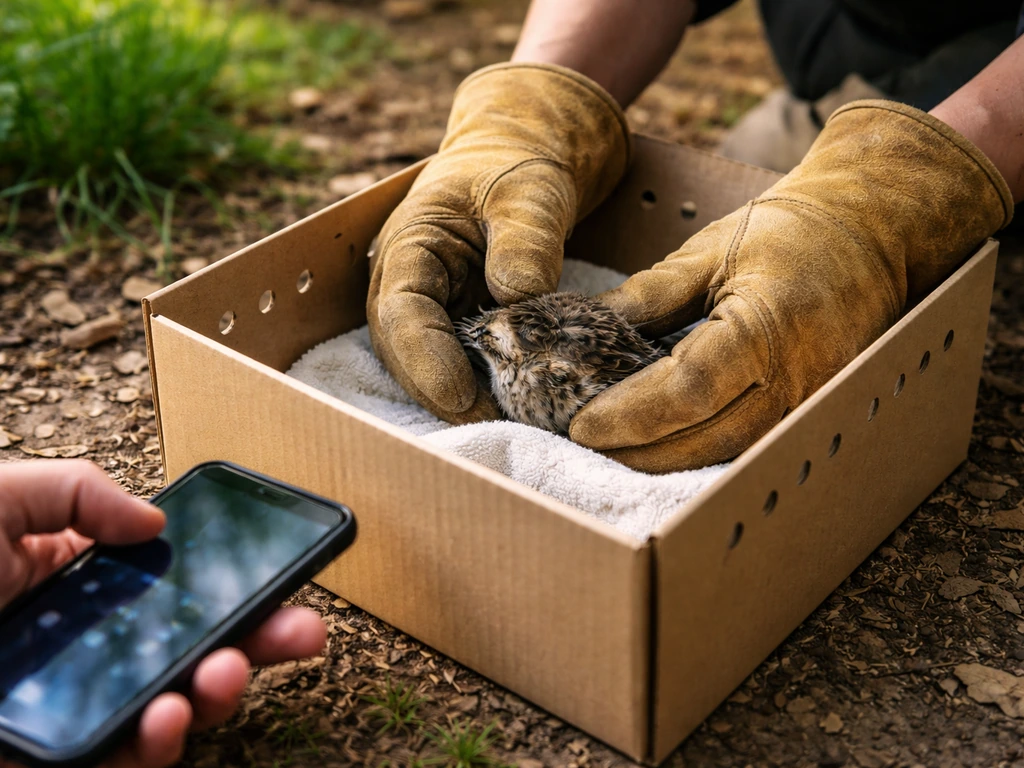
If a real bird is the issue and you're worried about it, the first and most important piece of advice from both the U.S. Fish and Wildlife Service and the RSPB is the same: observe before you intervene. Most of the time, leaving the bird alone is the right call. A bird that's vocalizing loudly near a nest site is usually defending it, not in distress. A fledgling on the ground making noise is likely communicating with its parents, who are probably close by and monitoring the situation.
There are specific signs that do indicate a bird needs help: visible broken limb, active bleeding, shivering, or a dead parent nearby. If you see any of those, that's when you move from observing to acting. Audubon and the USFWS both recommend contacting a licensed wildlife rehabilitator or your local animal services rather than attempting to handle or care for the bird yourself. Many species are federally protected, so even well-intentioned handling without a license can create legal complications.
If the screaming bird is near your home and you're concerned about safety, Audubon specifically flags larger birds like American Crows, Common Ravens, Cooper's Hawks, Red-tailed Hawks, and Great Horned Owls as species where some caution is warranted, particularly if they're nesting nearby and acting defensively. In those cases, keeping pets and children away from the nesting area and waiting out the nesting season is usually the practical solution.
- Observe from a distance first before doing anything. Most birds that scream near humans are defending a nest or territory, not in distress.
- Use Merlin Sound ID (free app, Cornell Lab) to record and identify the call in real time.
- Note the time of day, habitat, and any visual details to help narrow down the species.
- If the bird shows clear injury signs (bleeding, broken limb, shivering), contact a licensed wildlife rehabilitator or local animal services. Do not attempt to handle it yourself unless directed.
- If the bird is a fledgling on the ground, keep pets and people away and let the parents locate it by its calls. RSPB explicitly advises not to 'rescue' a fledgling that is not injured.
- If you're in a location with large, potentially territorial birds (hawks, owls, ravens), maintain a safe distance from any active nest site during breeding season.
- For symbolic or spiritual meaning, ground your interpretation in the specific tradition or context where you encountered the phrase rather than applying a one-size-fits-all definition.
FAQ
How can I tell if “screaming bird” is something I should identify, or just a phrase people use?
If you want to identify a real “screaming bird,” start with timing and location: note whether it was daytime or after dark, and whether you were in woods, wetland, open field, or a dense suburban block. Then focus on call structure (single sharp cry versus repeating series versus long wail) and whether you saw the bird at rest, perched, or in flight, since many species only use the loudest calls from specific positions.
What if I can’t match the loud sound to the bird I’m seeing?
Sometimes you are hearing one species and seeing another, especially around neighborhoods where calls overlap. Use a short recording (even 10 to 20 seconds) and compare the call pattern, not just the species name. Also check whether the sound is coming from the same direction as the bird you’re looking at, because echoes and wind can make you mislocate the source.
How do I know if a loud “screaming” call is defense versus a bird that is hurt?
If the call is steady and strongly tied to a specific spot, it often means territory or defense, not distress. A nest-site vocalizer will usually increase calls when you approach and reduce them once you step back, while distress calls often sound irregular and can persist even when you move away.
Is it normal for fledglings on the ground to make loud “screaming” noises?
Look for signs that indicate you should act: visible injury (broken limb, bleeding), obvious weakness (can’t perch or stand), shivering, or a dead bird nearby with live fledglings still begging. A common wrong assumption is that a vocal fledgling on the ground is abandoned, many are fed by parents nearby and may keep calling for attention.
What should I do first if I think the screaming bird needs help?
Avoid direct handling if the bird is protected or if you are unsure it is an abandoned youngster. Even if you feel it is urgent, the safest next step is to contact a licensed wildlife rehabilitator or local animal services for guidance, especially for owls and raptors where defense behavior and legal protections commonly apply.
How can I get better results with Merlin Sound ID or similar tools?
For bird-identification apps, audio quality matters. Use an app like Merlin with your phone held steady near the sound source, reduce background noise as much as possible, and try again a second time if you missed the peak part of the call. If you get no match, capture a longer clip and include a few seconds of silence before and after for better pattern recognition.
Why does my sound not match the bird name I expected (for example, “screech-owl”)?“
If the call sounds “screechy” at night, don’t assume it is an actual screech-owl. The Eastern Screech-Owl is named for its name, not its loudness, and it can sound more like trills and quavering whistles. Conversely, truly harsh raspy nocturnal screams more often point toward larger night predators like barn owls.
How do I identify the right bird when there are many calls at once?
If multiple birds are calling, your best decision aid is to describe what each one is doing rather than forcing a single conclusion. Try to identify whether the sound you mean is from a stationary perch, a nest cavity, or something moving through the air, because that changes likely candidates and also helps you avoid attributing distress to normal territorial calling.
What’s a practical way to interpret “screaming bird meaning” spiritually without over-guessing?
If you encounter the phrase “screaming bird” in spiritual or symbolic contexts, treat it as a prompt tied to your tradition and your personal situation. A practical approach is to write down what was happening right before the interpretation you read (decision, conflict, fear, change), then map that to the symbolism you’re exploring, alarm, urgency, or a warning being ignored, rather than assuming one universal omen.
When “screaming bird” is used in conversation, what does it usually mean?
If “screaming bird” seems to be slang for intensity or chaos, ask yourself what aspect the speaker wanted to emphasize, for example noise, urgency, emotional outburst, or a situation “demanding attention.” That prevents the common mistake of interpreting a casual insult or exaggeration as an omen or a literal reference to a bird.
What should I do if a loud “screaming” bird is nesting near my home?
If you’re worried about safety near a loud nesting site, the safest general rule is to keep pets and children away from the immediate nesting area and avoid lingering. Defensive behavior is most common during nesting and fledgling periods, and waiting it out usually reduces escalation compared with confronting the bird or trying to move it.
Next Article
Blooming Bird Meaning: Symbolism, Spiritual Reads, and Context Guide
Understand blooming bird meaning in captions and spiritual quotes: growth, renewal, love, creativity, plus a context che