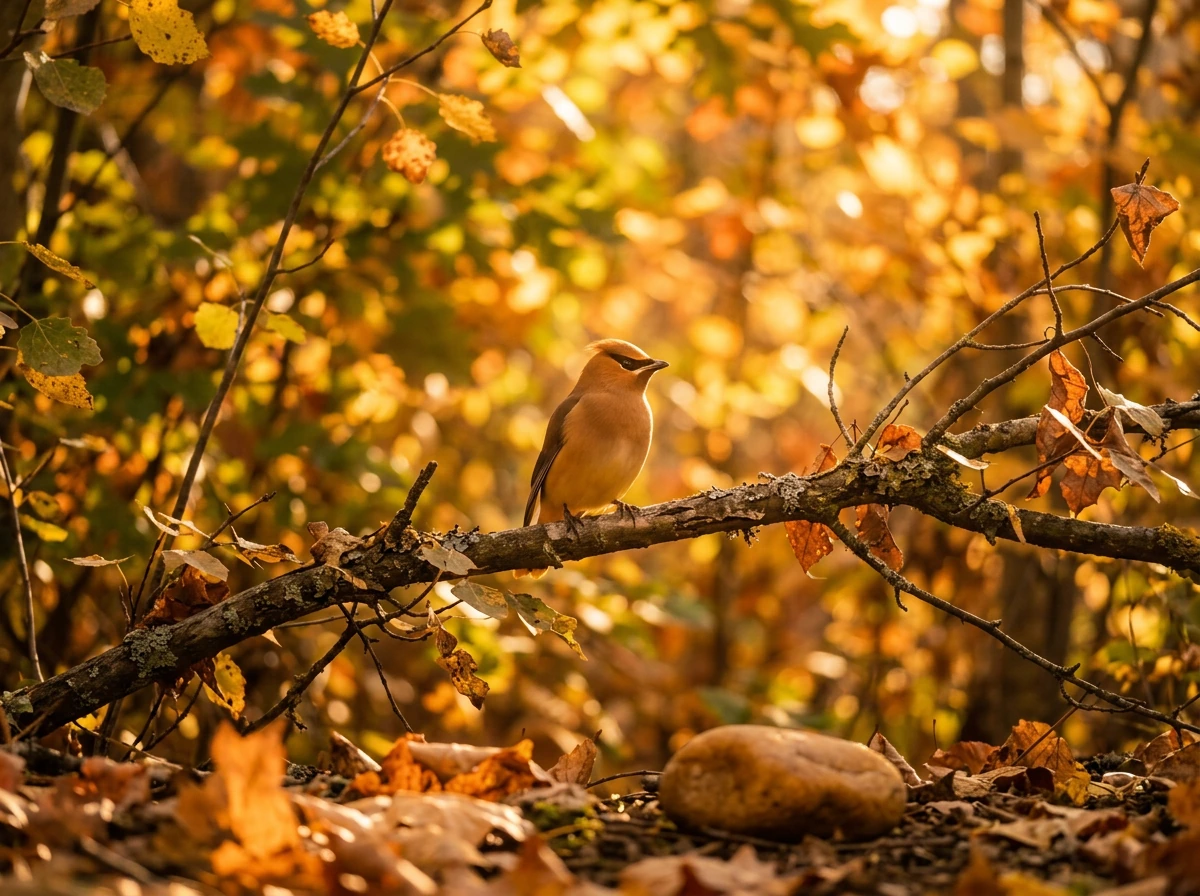
When people search for 'the oven bird meaning,' they almost always mean one of two things: the cultural or spiritual symbolism attached to the ovenbird as a real species, or the meaning of Robert Frost's 1916 sonnet simply titled 'The Oven Bird. If you're looking for the oven bird Robert Frost meaning, focus on the poem's central question about what you make of decline and loss of peak beauty Robert Frost's 1916 sonnet 'The Oven Bird'. ' The poem is by far the more common reason for the search. Frost's poem uses the ovenbird's loud, persistent call as a metaphor for asking what survives when beauty and abundance fade, and its central question, 'what to make of a diminished thing,' is one of the most quoted lines in American poetry. If you're here for the poem, you're in the right place. If you're here for the bird's symbolic meaning in folklore or spirituality, that's covered too.
The Oven Bird Meaning: Symbolism and Poem Explained

Poem or bird symbol? Figuring out which one you're looking for
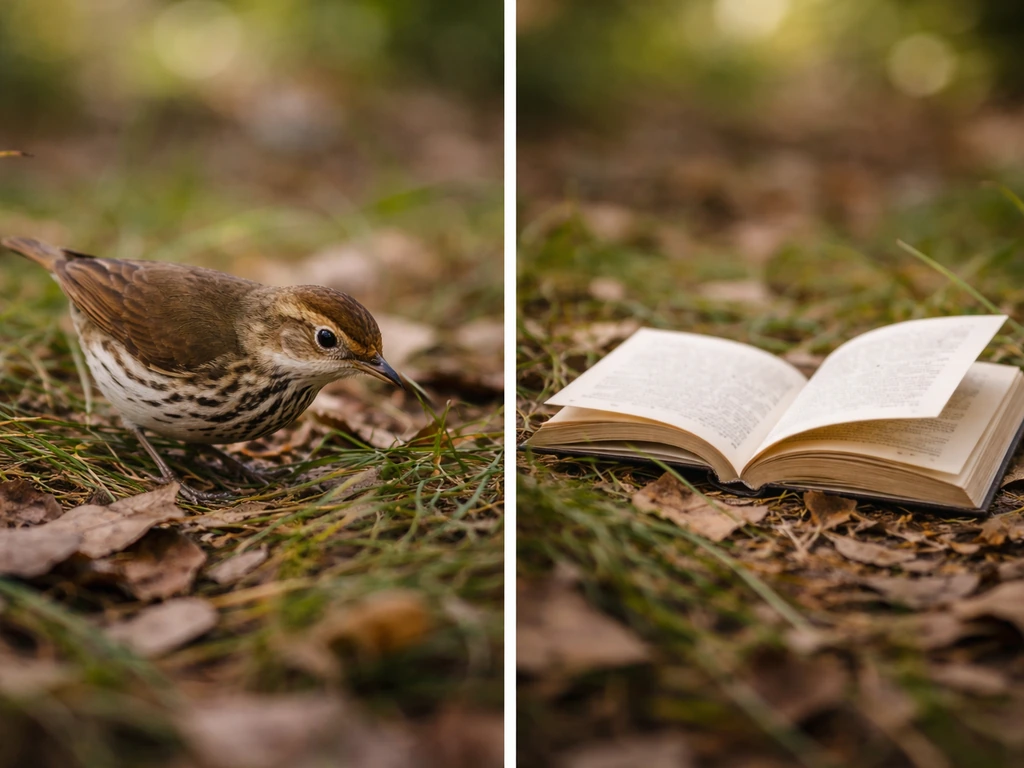
The confusion is understandable. 'Ovenbird meaning' could send you in two directions. The first is purely symbolic: what does this bird represent in culture, spirituality, or folklore? The second is literary: what is Frost's poem actually saying? In practice, most people searching this phrase have encountered the Frost poem in school, in a quote, or in an article and want to understand what it means in plain English. A smaller group are curious about the bird itself, maybe after spotting one in the woods or seeing it referenced in a nature or spiritual context. The sections below handle both, starting with the real bird so the poem's imagery makes more sense when you get there.
What is an ovenbird, actually
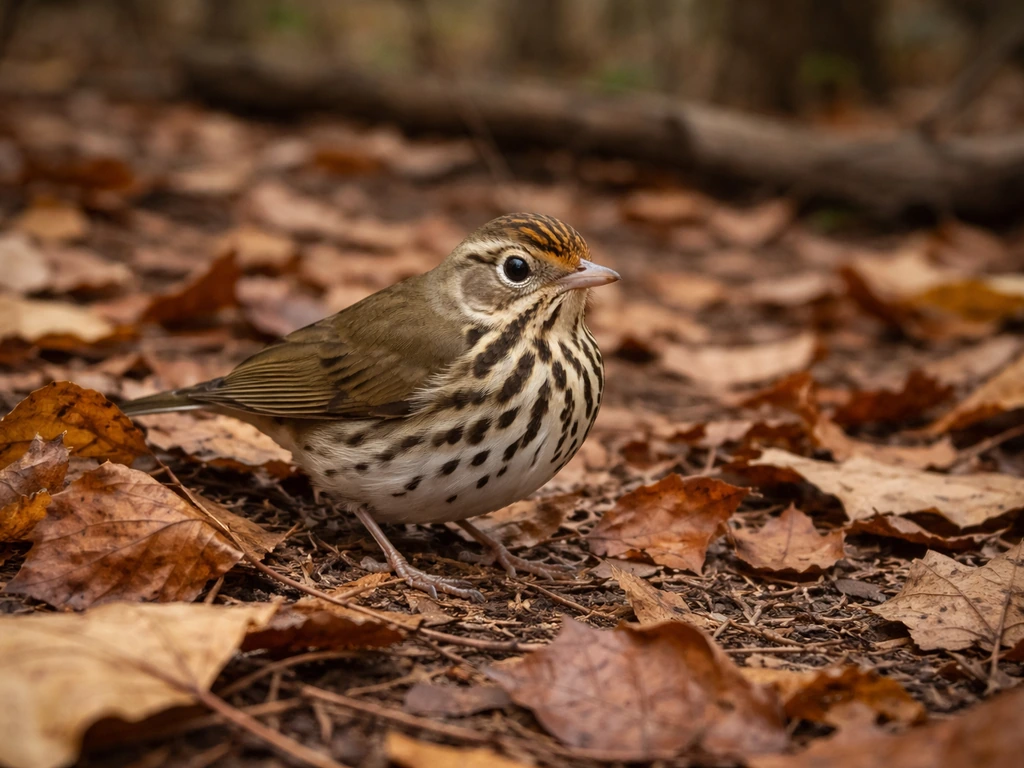
The ovenbird (Seiurus aurocapilla) is a small North American warbler in the family Parulidae. It's a ground-dwelling bird, brownish on the back with a streaked white and brown breast, and it has a distinctive orange crown stripe bordered by dark lines. Despite its small size, it produces a remarkably loud, rising call that sounds unmistakably like the word 'teacher' repeated over and over: teacher, TEACHER, TEACHER, building in volume. That voice is central to everything the bird symbolizes and everything Frost's poem is built around.
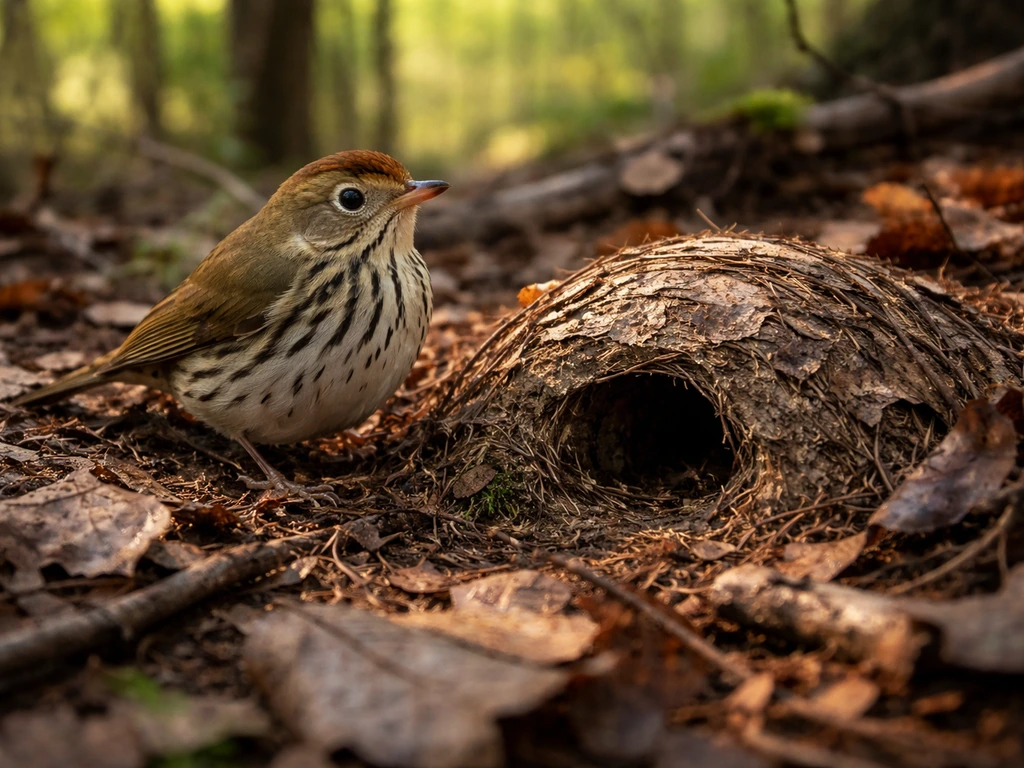
The 'oven' in its name comes not from cooking but from its nest. The ovenbird builds a domed, oven-shaped nest on the forest floor out of grass and leaves, with a side entrance that looks like the door of an old clay bread oven. Animal Diversity Web describes Seiurus aurocapilla’s nest as shaped like a Dutch oven and notes that this is the source of the common name “ovenbird.” blank" rel="noopener noreferrer">domed, oven-shaped nest. It's an unusual nesting strategy for a warbler, and it's part of what makes the bird feel distinctive and grounded, literally and figuratively. You'll find ovenbirds in deciduous and mixed forests across eastern North America during the breeding season, and they winter in Central America and the Caribbean.
Ovenbird symbolism: what the bird means culturally and spiritually
The ovenbird doesn't carry the same weight of mythology as ravens or owls, but its symbolic associations are clear and consistent once you look at its behavior. Its most prominent symbolic quality is persistence. That escalating, repetitive 'teacher teacher teacher' call delivered from deep inside the forest, often invisible, is the sound of something that keeps going regardless of who's listening. In spiritual and nature symbolism, the ovenbird is associated with endurance, with raising your voice even when no one responds, and with finding strength in routine and repetition.
The ground-nesting habit adds another layer of meaning. Where most songbirds nest high in branches, the ovenbird stays close to the earth, building something durable and protected rather than elevated and exposed. This gives it associations with groundedness, humility, and quiet resilience. In some nature-based spiritual frameworks, finding or hearing an ovenbird is taken as encouragement to keep working steadily on something hidden, something that doesn't need public validation to matter. The dome-shaped nest itself, a small enclosed structure built with care on the forest floor, has been read as a symbol of safe creative work done in private.
How 'oven bird' shows up in everyday language and writing
Outside of Frost's poem, 'ovenbird' doesn't appear in common idioms or household phrases the way 'early bird' or 'a bird in the hand' do. When you see it referenced in modern writing, it's almost always in one of three contexts: a birding or nature essay describing the actual bird, a literary or academic discussion of Frost's poem, or a metaphorical reference borrowing from the poem's central image of the bird as a voice that keeps calling even as things decline around it. If someone calls a person 'an ovenbird' in conversation, they're almost certainly drawing on the Frost connection, meaning someone who persists and asks hard questions even when the moment seems past its prime.
What Frost's 'The Oven Bird' poem is actually about
Robert Frost published 'The Oven Bird' in his 1916 collection 'Mountain Interval.' It's a Shakespearean sonnet, fourteen lines in iambic pentameter, which is already a deliberate formal choice. Frost takes a classic, prestigious poetic form and fills it with the voice of a small, loud, unglamorous forest bird. That tension between form and subject is part of the poem's argument.
The poem is set in midsummer, past the peak of spring. The ovenbird sings loudly from the trees as the lush early-season world begins its slow fade, flowers are past their bloom, leaves have lost their freshness, and the year has moved past its moment of greatest beauty. The bird, unlike spring songbirds who celebrate arrival and abundance, sings in the middle of decline. Frost frames the ovenbird as the bird 'that knows in singing not to sing,' meaning it speaks plainly rather than lyrically, it announces rather than ornaments. The poem ends with the question that Frost leaves deliberately open: 'The question that he frames in all but words / Is what to make of a diminished thing.'
That final phrase is the heart of the poem. Frost is asking how you respond, as a person and as an artist, when the best moment has passed, when the world around you is no longer new or full of promise, when you are operating in the middle of things rather than the beginning. The ovenbird doesn't stop calling. It adapts. It keeps making something. That's Frost's answer, even if he refuses to state it outright.
Breaking down the poem's key images and what they mean
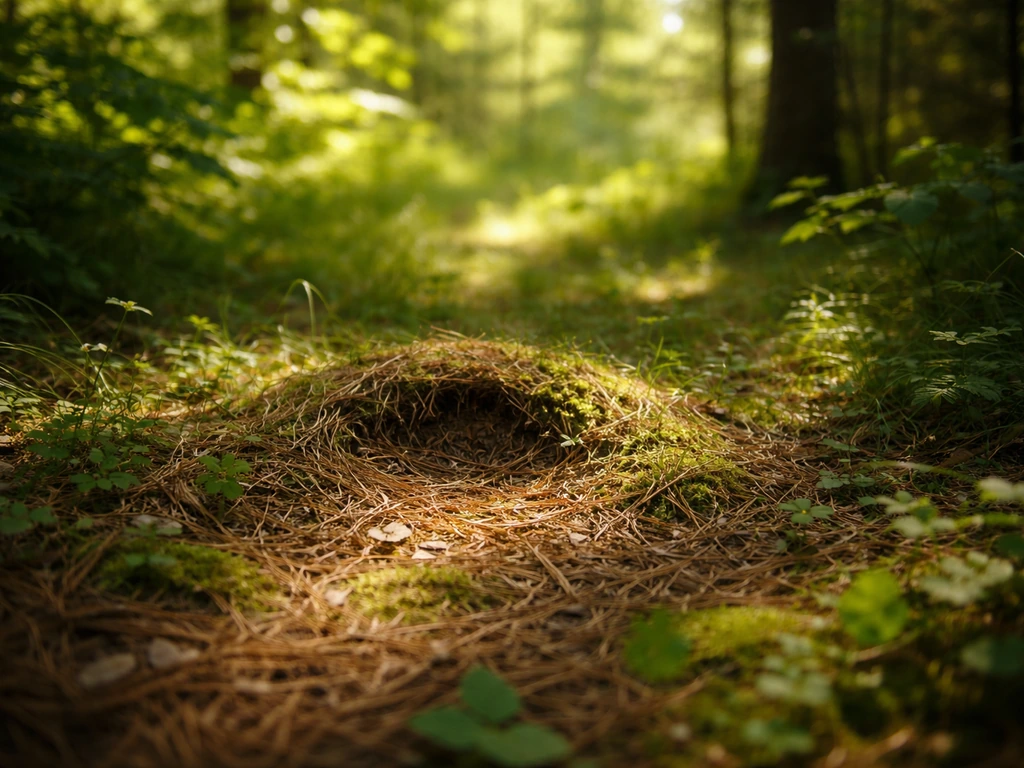
The midsummer setting
Frost sets the poem in high summer deliberately. Spring is when most lyric poems about birds are written, full of renewal and hope. By choosing midsummer, Frost picks the moment after the peak, the long stretch where the year is turning even if you can't see it yet. This is a metaphor for middle age, for a civilization past its golden era, for any point in life where you're past the first flush of enthusiasm and have to figure out how to keep going anyway.
The bird that 'knows in singing not to sing'
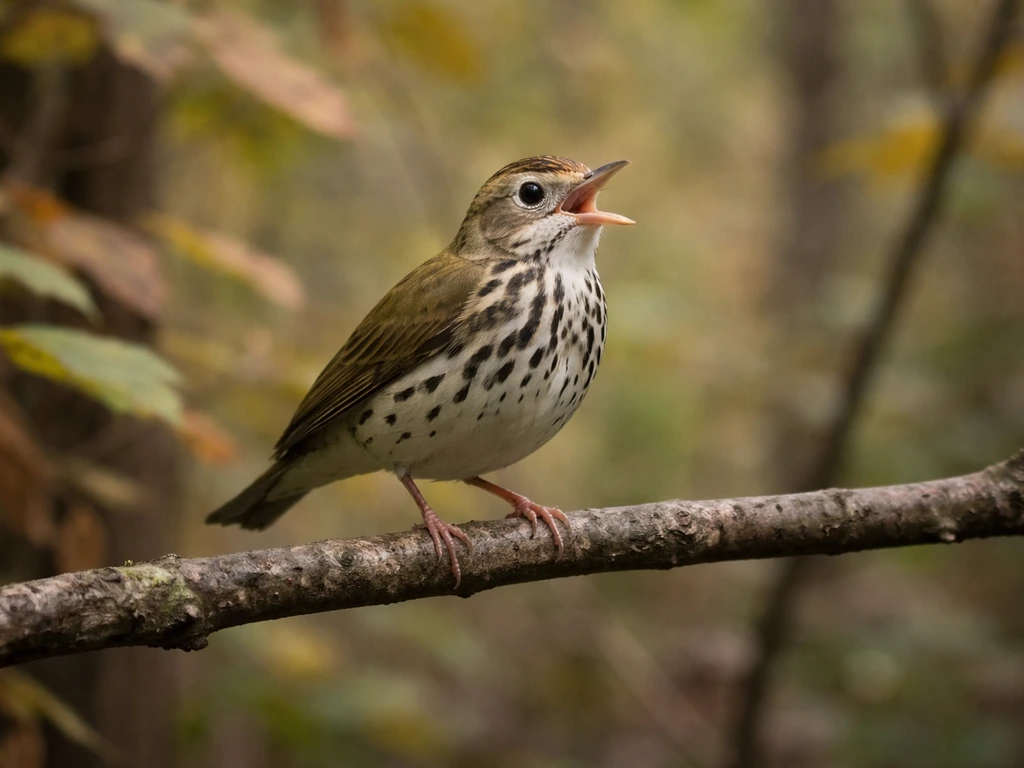
This is one of Frost's cleverest lines. The ovenbird's call is not melodious in the way that a thrush or a wood warbler's song is. It's loud, insistent, almost harsh. Frost uses this to say the bird has abandoned ornamental prettiness in favor of honest declaration. It 'frames its question in all but words,' meaning it communicates something real and serious without dressing it up. For Frost, this is a model for a certain kind of poetry and a certain kind of speech: plain, direct, and undeniably present.
Petal-fall and the diminished world
Frost references 'that other fall we name the fall,' connecting summer's slow decline to autumn and by extension to the Fall in the theological sense, the loss of an original perfect state. The flowers are gone, the petals have dropped, and what's left is ordinary green and the slow work of the season. This image of petal-fall is about the loss of peak beauty, whether that's personal, cultural, or spiritual. The world is 'diminished' not ruined, not dead, but less than it was.
The open question: what to make of a diminished thing
Frost ends without answering the question, and that's intentional. 'What to make of a diminished thing' works on multiple levels: what do you create from reduced circumstances, what meaning do you construct when the world has lost its shine, and what do you 'make' in the sense of understand or interpret about decline itself? If you are here because you also wonder about what bird-related signs or objects mean, you might be interested in finding a bird egg meaning as a related topic to explore. The ovenbird's answer, demonstrated rather than stated, is that you keep singing. You adjust your song to the season you're in rather than the one you wish you were in. That's the practical, unsentimental wisdom at the poem's core.
Themes at a glance
| Theme | What it means in the poem | Real-world application |
|---|---|---|
| Decline and persistence | The bird sings past the season of peak beauty | Continuing creative or personal work after early promise fades |
| Honest speech over ornament | The ovenbird calls plainly rather than melodically | Valuing directness and authenticity over polished performance |
| The middle of things | Poem is set in midsummer, not spring or autumn | Life lived in the long, unromantic middle stretch |
| Making meaning from loss | 'What to make of a diminished thing' | Finding purpose and craft even in reduced circumstances |
| Nature as philosophical model | The bird demonstrates rather than argues its point | Observing the natural world as a guide for human behavior |
How to confirm you have the right poem and what to look for
If you've seen a reference to 'the oven bird' and aren't sure whether it's Frost's poem or a different use, here's how to check quickly. Frost's poem is exactly fourteen lines, written in iambic pentameter, and ends with the phrase 'what to make of a diminished thing.' If that phrase appears, you have the Frost poem. The poem was published in 1916 in 'Mountain Interval' and is sometimes also referenced in discussions of Frost's broader pastoral and metaphysical themes, often alongside 'Birches' or 'After Apple-Picking.' If the reference you're looking at doesn't include that closing question and isn't set in midsummer, it's likely a general reference to the bird's symbolism rather than the poem.
There is also a South American bird family called Furnariidae whose members are sometimes called ovenbirds, named for the same dome-nest reason. If you see 'ovenbird' in a South American or tropical birding context, it's almost certainly a Furnariidae species, not the North American warbler Frost wrote about. blank" rel="noopener noreferrer">The two are unrelated beyond the shared nickname.
Where to go from here
If you want to go deeper on the Frost poem specifically, reading the full fourteen lines alongside a line-by-line commentary is the most useful next step. Pay particular attention to the volta, the turn that happens around line nine, where Frost shifts from describing the bird to framing the philosophical question. That shift is where the poem's argument crystallizes. For anyone interested in how birds carry meaning in literary and cultural contexts more broadly, the ovenbird sits in a rich tradition of birds as symbols of voice, persistence, and seasonal change. The imagery of nesting and eggs in particular connects to related symbolism around new beginnings, protection, and what gets left behind, themes that run through everything from folklore about finding a bird's nest to the spiritual significance of abandoned or broken eggs discovered in the wild. People also connect the poem's nesting and egg imagery to folk interpretations of finding a broken bird egg meaning in the wild. If you're wondering about an empty bird nest meaning in folklore, that same idea of loss and adaptation often shows up alongside nest-finding and what it symbolizes bird's nest meaning.
The short version, for anyone who needs it fast: Frost's ovenbird is a metaphor for how to live and create honestly in a world past its moment of peak beauty. The bird keeps calling. The poem asks what you'll do in the diminished season you find yourself in. That's a question worth sitting with, whether you're analyzing the poem for class or just found it quoted somewhere and wondered what the fuss was about.
FAQ
Does “the oven bird meaning” mean the bird’s symbolism, or Frost’s poem? How do I know which one I’m looking at?
In Frost’s poem, the “ovenbird” is a real species used as a metaphor, but the meaning is not about literal cooking or prophecy. If you want the poem’s meaning, center on the final question about responding to decline, and read the bird’s call as a model for continuing to create, speak, or act in a “past peak” season.
What does it usually mean when someone calls a person “an ovenbird”?
If someone says “an ovenbird” in conversation, it’s usually shorthand for the Frost idea of persistence, plain speech, and asking hard questions without needing an audience. It is much rarer in everyday idioms than phrases like “early bird,” so context usually points back to the poem when people use it.
How can I tell if a reference to “ovenbird” is Frost, the North American warbler, or the South American birds?
Because the search phrase overlaps two different birds and two different meanings, the fastest check is the text you’re reading. If it includes the line “what to make of a diminished thing” or the fourteen-line iambic pentameter structure, it’s Frost. If it’s in a South American birding context, it’s likely the Furnariidae “ovenbirds,” which are unrelated to the poem beyond the dome-nest nickname.
Does “diminished thing” mean the situation is ruined, or just past its prime?
A key edge case is mixing up “diminished” with “destroyed.” Frost treats diminished as reduced, past its peak, not dead or ruined. That matters because the poem pushes adaptation and continued effort, rather than despair or withdrawal.
Why does Frost ask the question but not answer it, what is the “point” of the open ending?
The poem does not give a direct, one-sentence answer to what you should “make” of decline. Instead, it models an approach: continue the song, but let it fit the season you are in. Treat the “answer” as enacted through the bird’s behavior and the poem’s insistence, not as a stated moral.
How can I apply the poem without turning it into a cliché? What should I actually ask myself?
If you’re using the poem as a personal reflection, a practical mistake is forcing it to become a motivational slogan. A better use is to ask what “plain, serious declaration” would look like for you right now, meaning what you can keep doing honestly even when it is no longer thrilling or new.
What part of the poem should I focus on to understand the main argument?
Pay attention to the volta, around line nine, where the poem shifts from describing the bird’s midsummer calling to framing the broader philosophical problem. If your interpretation makes the entire poem only about nature description, you may be missing the turn that carries the argument.
Is the poem’s message “everything will work out,” or is it more about endurance?
If you’re interpreting “persistence” spiritually, avoid assuming it guarantees rescue or happy endings. In the poem, persistence is about continuing the work and speaking truth despite lack of renewal, the comfort is endurance rather than immediate reward.
Why does Frost set “The Oven Bird” in midsummer instead of spring or autumn?
If you’re comparing seasons, note Frost’s deliberate timing. By setting the scene in midsummer, he positions the speaker in the long middle period after spring’s vividness, where “decline” is slow and sometimes unnoticed, not a dramatic collapse.
Amber Bird Meaning: Symbolism, Interpretations, and How to Use It
Learn amber bird meaning: disambiguate the phrase and interpret it using amber and bird symbolism, grounded steps includ