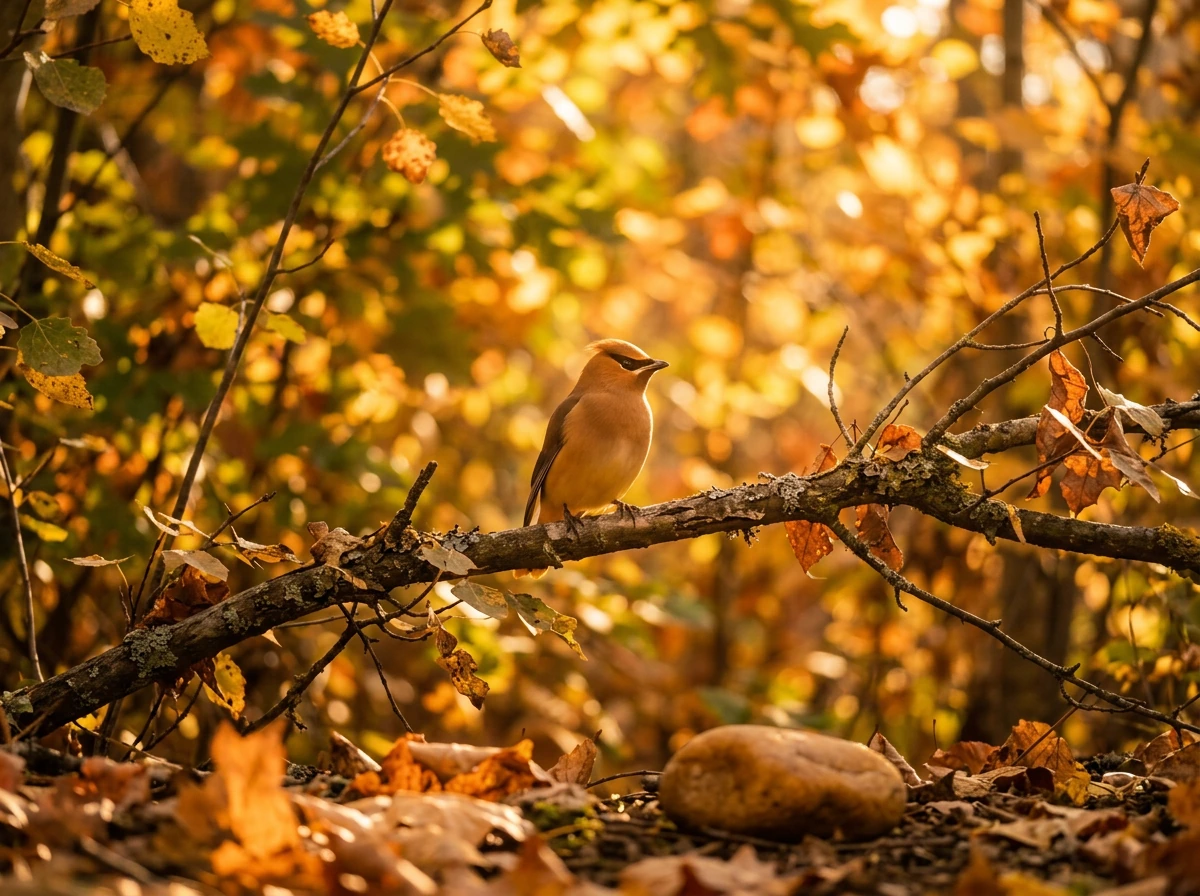
A fledgling bird is a young bird that has grown most or all of its feathers and has left (or is in the process of leaving) the nest, but is not yet fully independent. It can hop around, may attempt short flights, and still relies on its parents for food and protection for days to several weeks. Finding one on the ground is completely normal, and in the vast majority of cases, the right move is to leave it alone.
Fledgling Bird Meaning: Definition, Nestling vs Fledgling

Marcus Winters
27 Apr 2026
What 'fledgling' literally means for birds
The word comes from an Old English root meaning 'to take flight,' and that origin tells you everything. A fledgling is a bird in the in-between stage: past the helpless, featherless phase of early life, but not yet capable of sustained flight or surviving on its own. Cambridge Dictionary captures it cleanly: 'a young bird that has grown feathers and is learning to fly.' Merriam-Webster echoes this, defining a fledgling as a young bird that has recently acquired its flight feathers.
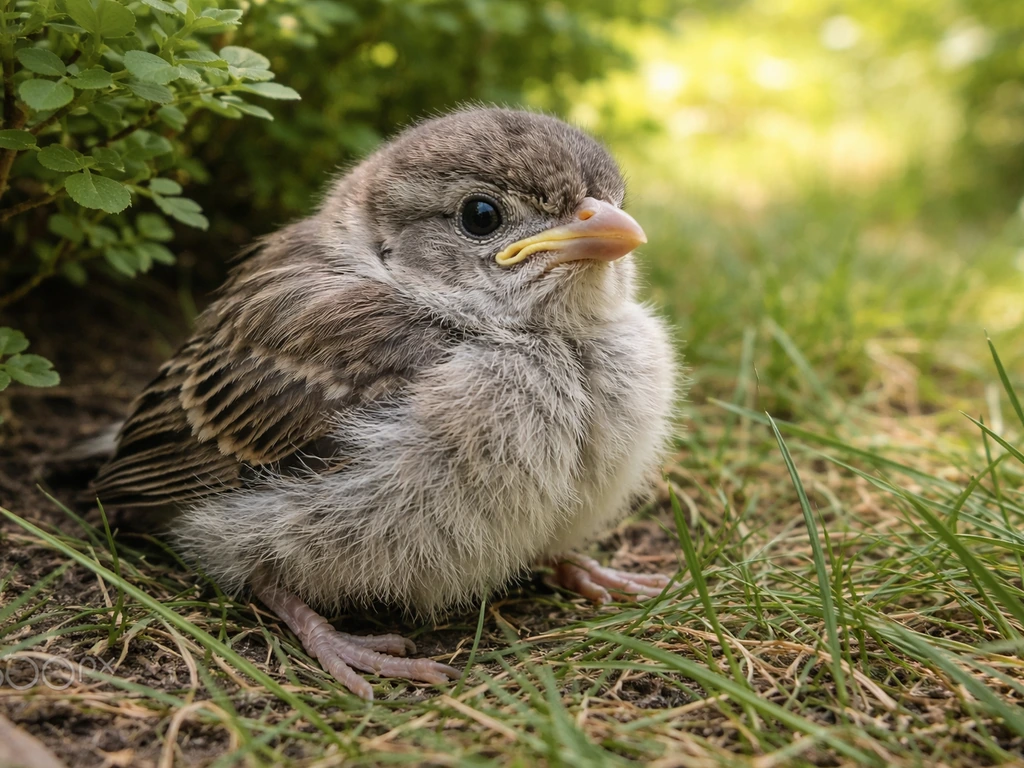
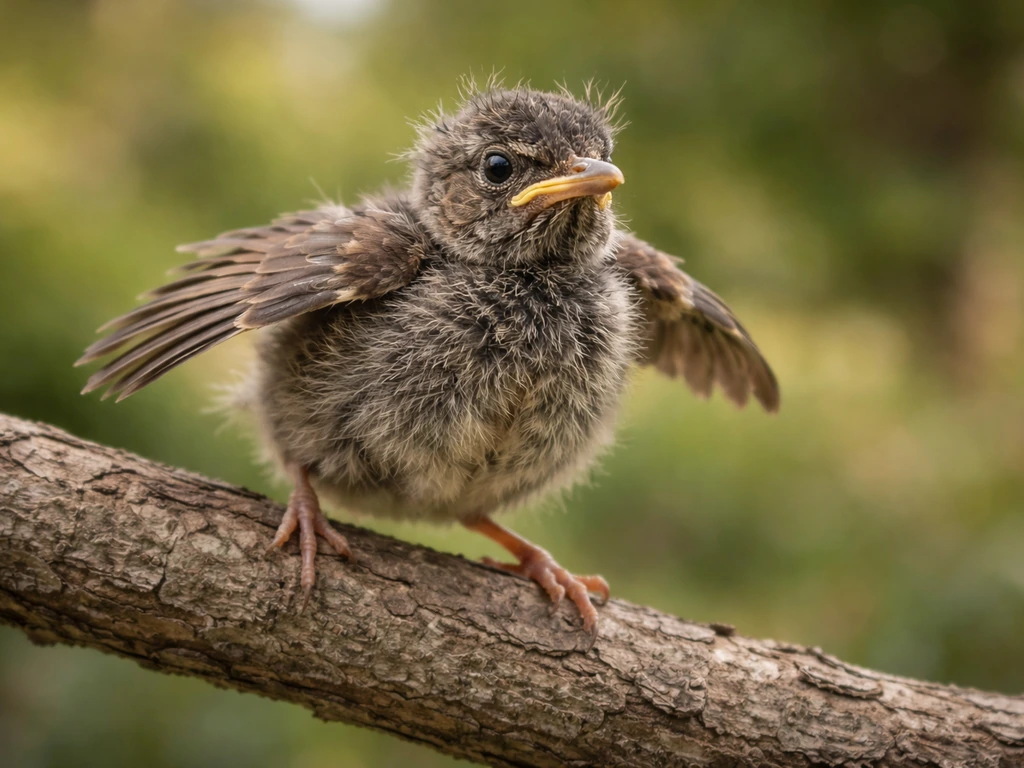
In practice, fledglings look scrappy. They have most of their feathers but may still show tufts of fluffy down sticking out, and their tail feathers are often short and stubby. They hop clumsily, flap awkwardly, and may sit on low branches or on the ground looking completely lost. They are not lost. According to Wildlife Victoria, fledglings can spend up to two weeks on the ground while parents continue to feed and protect them. The Washington Department of Fish and Wildlife describes this phase well: fully feathered young leave the nest and move around on the ground and low branches for several days before they can truly fly. It looks alarming if you don't know what you're watching.
It's worth noting that 'fledgling' sits at a specific developmental stage, distinct from a nestling (which is still in the nest and featherless or barely feathered) and from a juvenile bird (which is older and more capable). Those distinctions matter a lot when you're deciding whether to intervene.
Fledgling vs nestling: quick identification checklist
This is where most people get tripped up. A fledgling and a nestling both look like 'baby birds,' but they need completely different responses from you. Tufts Cummings Wildlife Clinic draws the line clearly: nestlings are featherless or have very few feathers and are too young to leave the nest; fledglings are almost fully feathered, able to hop, and attempting to fly. Here's how to tell them apart at a glance:
| Feature | Nestling | Fledgling |
|---|---|---|
| Feathers | Featherless or with sparse pin feathers | Mostly or fully feathered, may have down tufts |
| Eyes | Often closed or just opening | Open and alert |
| Movement | Cannot hop or walk; stays still | Hops actively, attempts to flap or fly |
| Location | Should be in a nest; on ground = problem | On ground or low branches = often normal |
| Parental care | Needs nest return if found on ground | Parents usually nearby and still feeding |
| Action needed | Return to nest if possible | Leave it alone; observe from a distance |
The nestling vs fledgling distinction is the most important call you will make. A nestling on the ground is genuinely in trouble and may need to be returned to its nest. A fledgling on the ground almost certainly does not need your help.
What fledgling behavior actually looks like
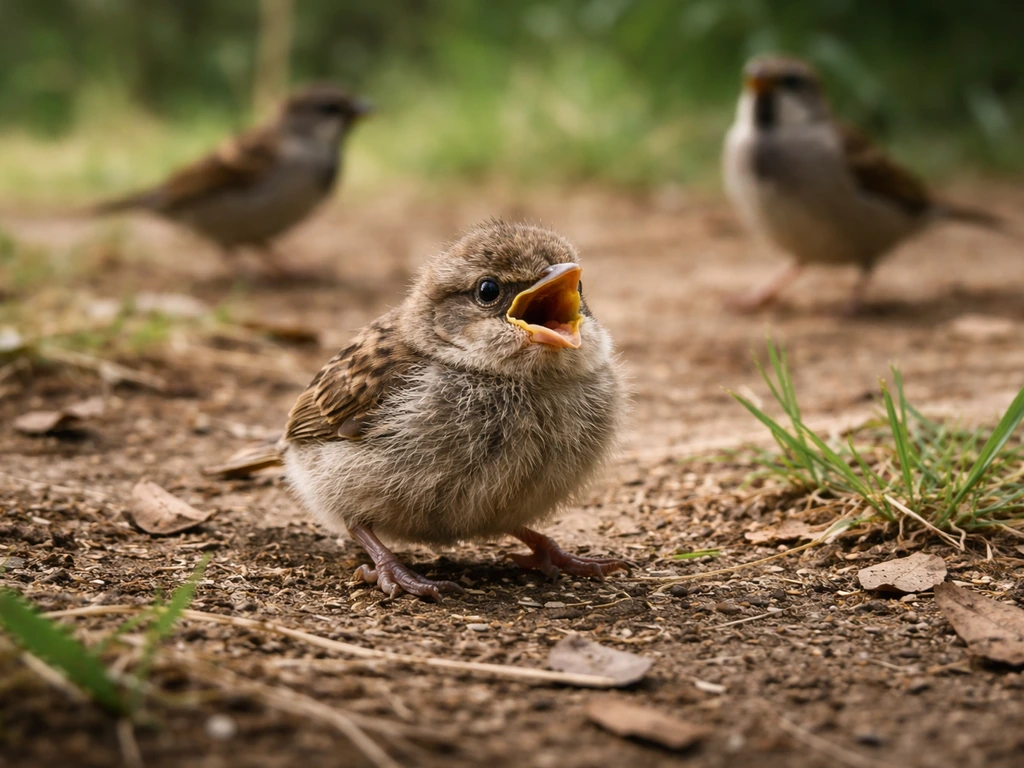
If you are watching a fledgling, here is what you are likely to see. The bird sits very still for long stretches, then hops jerkily to a new spot. It may open its beak wide (that yellow or white fleshy edge around the bill is called the gape flange, a remnant of the begging behavior from nest days). It reacts to sounds and movement. Every so often, a parent bird zips in, drops off food, and disappears again. The whole thing happens fast and the parent may not linger, which is why people assume the bird is abandoned.
The U.S. Fish and Wildlife Service is direct about this: in most cases, both parents are nearby and actively attending the fledgling. Your presence may be keeping them away. For some species, like Great Horned Owls, fledgling young (sometimes called 'owlets' or 'branchers') remain dependent on parents for several weeks after leaving the nest. For songbirds, WildCare notes that learning to fly can take up to two weeks. Parent birds may also show protective swooping behavior around fledglings, which Wildlife Victoria points out is actually a sign that the parents are present and engaged, not that the bird is orphaned.
Found a fledgling? Here's what to do (and what not to do)
The default rule: leave it alone
Every major wildlife authority says the same thing. Massachusetts state guidance, California Department of Fish and Wildlife, Washington Department of Fish and Wildlife, and Tufts Cummings Wildlife Clinic all give the same first instruction: if you find a healthy fledgling outside the nest, leave it where it is. The California wildlife guidance even uses the phrase: 'Leave them there, if you care!' A fledgling on the ground near trees or bushes is doing exactly what fledglings are supposed to do.
What you should actually do
- Step back and observe from a distance (at least 10 to 15 feet) for one to two hours. Do not hover. Your presence may be preventing parents from returning.
- Keep pets indoors or on a leash. This is the single most useful thing you can do. Cats and dogs are the number one threat to fledglings on the ground.
- If the bird is in an actively dangerous spot (like a busy road), gently move it to a nearby shrub or sheltered area. Do not take it indoors.
- If no parent bird has visited after two hours, or if the bird shows signs of injury, contact a licensed wildlife rehabilitator for guidance.
Red flags that mean the bird actually needs help
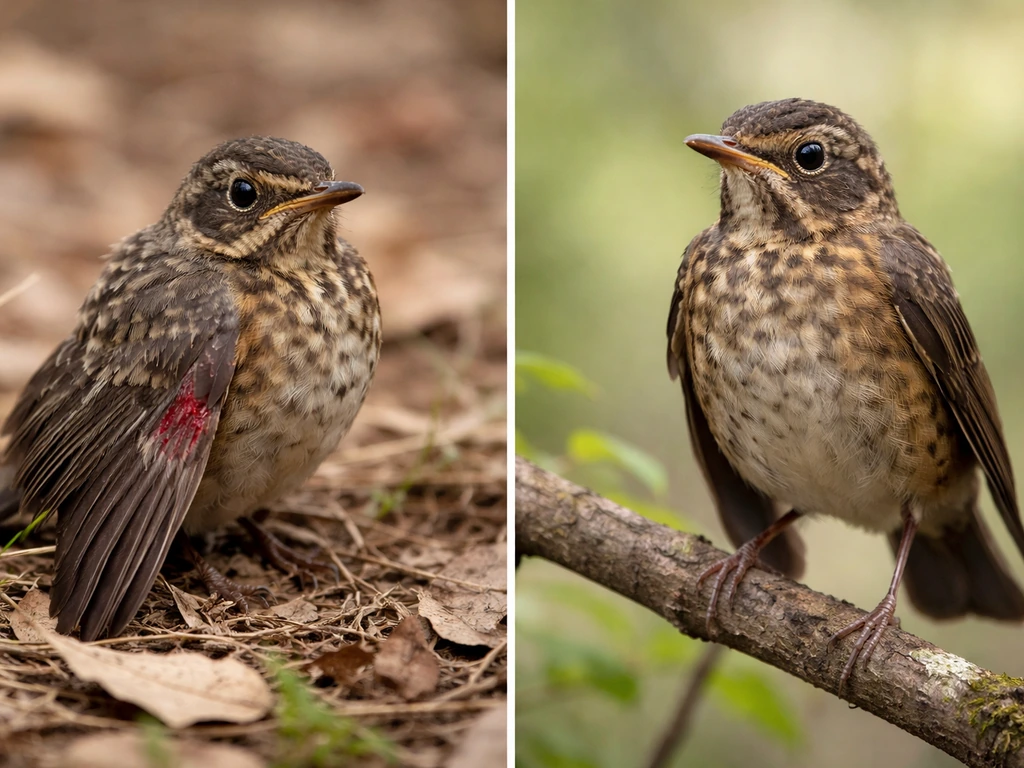
Tufts Cummings Wildlife Clinic lists specific signs that a fledgling needs professional care: obvious wounds, bleeding, a drooping or hanging wing, labored breathing, inability to stand, or apparent lameness. The Wisconsin Humane Society adds that if you see cuts, bruises, or blood, the bird is unlikely to survive without a licensed wildlife rehabilitator. In those cases, stop observing and start calling.
A quick note on the law
Most wild birds in the United States are protected under the Migratory Bird Treaty Act. The U.S. Fish and Wildlife Service is clear that it is unlawful to pursue, take, capture, or possess migratory birds without the appropriate permits. That means you cannot legally keep a fledgling you find, even with good intentions. Maine's Inland Fisheries and Wildlife department puts it plainly: possessing wildlife without proper state and federal permits is against the law. The right move, if a bird needs help, is always to contact your state wildlife agency or find a licensed wildlife rehabilitator in your area.
The figurative meaning of 'fledgling' in everyday language
Beyond the literal bird definition, 'fledgling' has a rich life in figurative English. Merriam-Webster lists its secondary meaning as 'an immature or inexperienced person,' and Cambridge Dictionary applies it to anything in an early, developing stage, like a fledgling economy or a fledgling company. The metaphor is precise: just as a young bird is fully formed but not yet capable of independent flight, a fledgling business or fledgling career has the basic structure in place but still needs time, support, and the chance to find its wings.
What makes 'fledgling' such a durable metaphor is its specific emotional register. It does not mean weak or broken. It means on the verge. There is forward momentum and genuine potential built into the word. Calling something a 'fledgling effort' or a 'fledgling talent' implies belief in where it is headed, not dismissal of where it is now. That is different from simply calling something 'young' or 'new,' and it is why the word keeps showing up in journalism, business writing, and everyday speech to describe things we want to describe with both honesty and optimism.
In the broader world of bird symbolism and bird-related language on this site, 'fledgling' sits in interesting company. It is closely related to terms like nestling (the stage just before) and juvenile bird (the stage just after), and it overlaps conceptually with ideas explored in the symbolism of bird hatching, where emergence is the central theme. Bird hatching meaning is often about new beginnings, emergence, and the moment when something is ready to take its next step symbolism of bird hatching. The transition from nestling to fledgling to fully independent bird has long been used as a metaphor for growth, courage, and the leap into the unknown, in folklore, literature, and everyday speech alike.
The bottom line
A fledgling bird is a young bird in its transition phase: feathered, out of the nest, and learning to fly, but still dependent on its parents. If you find one, resist the urge to rescue it. Hand reared bird generally means a bird that humans raised instead of its parents, often to ensure survival or because the parent birds could not care for it resist the urge to rescue it. Watch for parents, keep pets away, and look for genuine injury signs before intervening. Washington Department of Fish and Wildlife also warns that removing young animals from their natural environment can be harmful or fatal when they are not truly orphaned or injured, so careful observation is key to deciding if help is actually needed blank" rel="noopener noreferrer">careful observation to determine if help is actually needed. If help is needed, a licensed wildlife rehabilitator is your only legal and practical option. And if you hear or read the word 'fledgling' in a figurative sense, you can now hear exactly what it means: not quite there yet, but absolutely on the way. In everyday conversation, people also search for young bird meaning when they want the simple definition of a fledgling. People also search for juvenile bird meaning as a related age term when comparing where a bird sits in the fledgling to independent range young bird meaning. People also search for juvenile bird meaning as a related age term when comparing where a bird sits in the fledgling to independent range young bird meaning. If you are also curious about heirloom birds, their meaning can differ from general “fledgling” symbolism and is worth checking separately heirloom bird meaning. Imprinted bird meaning refers to a specific type of learning that happens during early development, which can shape how a bird recognizes and responds to the world.
FAQ
If a fledgling is on the ground, how can I tell it is not abandoned?
No, a healthy fledgling is often on the ground as part of normal development, not because it was abandoned. If it is fully feathered, able to sit upright or hop, and parents are nearby bringing food, the best action is to keep distance (and keep pets inside) and watch from afar for a while.
What should I do if a fledgling is in a dangerous location like a driveway or near a cat?
If it shows clear injury or cannot stand, do not try to “relocate it” yourself. Contact a licensed wildlife rehabilitator or your state wildlife agency. If you must move it to prevent immediate danger (for example, a road or a cat right next to it), use gloves or a towel and place it in a nearby safe spot while you call.
Can I feed a fledgling if it seems hungry or won’t move?
You should not feed fledglings bread, milk, or hand-made mixes. Their diet depends on the species, and wrong foods can cause malnutrition or injury (especially with improper fats and proteins). If a bird seems unwell but not visibly injured, still contact a wildlife rehabilitator rather than trying to provide “baby bird food.”
Is it ever okay to pick up a fledgling to look at it or to put it back?
Avoid handling unless there are injury signs or a clear safety risk. Even healthy fledglings can chill quickly or get stressed, and handling may delay parents from returning with food. If you notice parents are still active, wait and let them do the care.
What are the most common signs people misread when they see a “quiet baby bird”?
A common mistake is confusing a truly sick bird with a normal fledgling sitting still. Look for the combination of traits: mostly feathered, hopping or repositioning, and periodic parent visits with food. If you see labored breathing, bleeding, a hanging wing, or inability to stand, assume it needs professional care.
Why is keeping a rescued fledgling so risky or potentially illegal?
No, you typically should not re-home, keep, or “take over” care. In the U.S., most wild birds are protected, and taking or possessing them without the right permits can be illegal. The practical alternative is to call a wildlife rehabilitator, who can determine the species needs and the correct housing.
How do I distinguish a nestling that needs help from a fledgling that does not?
Start by checking whether it is actually a nestling. If the bird is mostly featherless, cannot hop, or is clearly too young to have left the nest, it may need help. If it is almost fully feathered and can hop, treat it as a fledgling, then watch for parent activity while preventing threats.
What is the safest way to “help” without interfering with parents?
If you are trying to help outdoors, the main “first aid” is environmental, not feeding or medical: bring pets indoors, block off the area, and keep people from crowding. If you can, observe from a distance for parent visits. If parents do not return after a reasonable observation period or the bird worsens, call for help.
Do all fledglings become independent quickly, or can they stay dependent for weeks?
Some fledglings, like certain owls and other raptors, may remain dependent for weeks after leaving the nest area. In those cases, the parents may be present but the young can look unusually exposed for a long time. Still, injury signs like inability to stand or bleeding are the trigger to call for professional care.
Should I cover a fledgling with a box or towel to keep it safe?
Covering the bird or trying to shelter it with a towel can backfire if it traps heat or prevents parents from locating it. A better approach is to prevent harm (pets, traffic, heavy foot traffic). If you must temporarily block a threat, do so carefully while you arrange help, and avoid long-term confinement unless directed by a rehabilitator.
Next Article
Amber Bird Meaning: Symbolism, Interpretations, and How to Use It
Learn amber bird meaning: disambiguate the phrase and interpret it using amber and bird symbolism, grounded steps includ