When someone calls you or another person a "party bird," they almost always mean a social, outgoing person who loves to celebrate, go out, and have a good time. Think of it as a lighter, slightly more whimsical cousin of "party animal." It can be a genuine compliment, a playful tease, or mild mockery depending on tone, but the core meaning is consistent: this person is at every gathering, stays the latest, and probably knows where the after-party is.
Party Bird Meaning: Slang or Literal Bird? How to Tell

Marcus Winters
21 Jun 2026
What "party bird" actually refers to: idiom, slang, or literal?
"Party bird" sits at a crossroads. It is not an established idiom in the way that "a bird in the hand" is, and it is not official dictionary slang either. What it is, practically speaking, is an informal, constructed phrase built from two very familiar pieces of language: "party" (as a verb or identity marker) and "bird" (as a loose metaphor for a type of person). Because it is casual and self-explanatory, people use it freely without needing a shared definition.
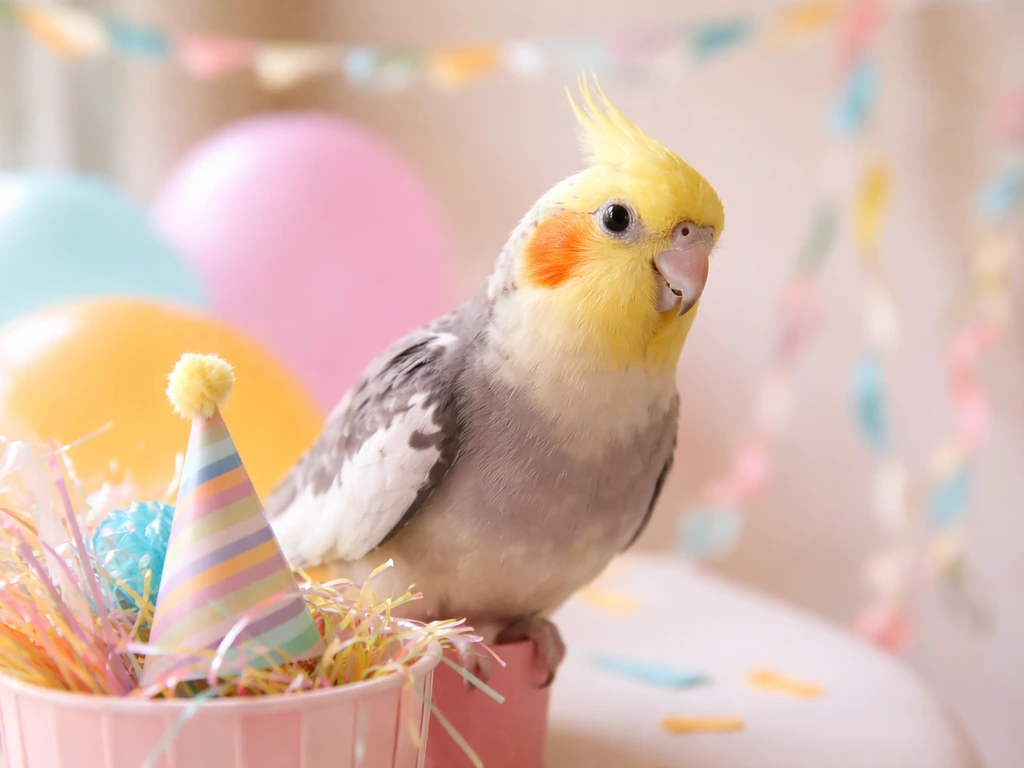
You will also run across "party bird" used completely literally, usually as a nickname for an actual pet bird that goes wild whenever music plays, or as a product name for things like pool floats and greeting cards. In those cases, the phrase leans on the fun visual of a bird dancing or celebrating rather than describing a human personality. The context almost always makes this obvious, but more on that below.
Where the phrase comes from
The phrase does not have a single traceable origin the way a classic idiom does. Instead, it grew organically from two parallel traditions. The first is the long history of using "bird" as a human descriptor in English. In British slang, "bird" has meant a girl or woman since at least the 19th century, with roots in rhyming slang ("bird lime" rhyming with "time," which evolved through prison slang). That usage spread broadly, so calling someone a "bird" with any adjective in front of it feels natural in British and Irish English. A "party bird" in that construction simply means a party-going girl or woman.
The second tradition is the broader use of bird metaphors across many cultures to describe personality types. Birds have long symbolized freedom, lightness, and social energy. Phrases like "free as a bird" or "social butterfly" (where a winged creature stands in for a certain social type) prime speakers to reach for bird language when describing someone who moves freely through social spaces. "Party bird" slots right into that pattern. It also rhymes pleasantly, which helps it stick.
There is also a music angle worth knowing. The Auckland band Shoddy released a debut single called "Party Bird, Late Worm" in 2018, a title that plays directly on the "early bird catches the worm" proverb by flipping it: the party bird stays out all night and misses the early worm. Under the Radar also covered Shoddy's 2018 premiere of their debut single “Party Bird, Late Worm,” reinforcing that “party bird” appears as a music-press title phrase debut single called "Party Bird, Late Worm". That is a neat example of how the phrase carries enough cultural weight to anchor a creative title and be immediately understood.
The figurative meaning: who is the party bird?
In everyday slang, calling someone a party bird describes a person who is enthusiastically social, especially around nightlife, celebrations, and group events. Buzzcock bird meaning is similar in that it is often used to describe someone in a lively, nightlife-oriented way, but the exact sense depends on context and local usage. It implies they are upbeat, maybe a little loud, and genuinely in their element at a crowded gathering. The vibe is closer to "life of the party" than to "reckless" or "troubled," which is where it differs slightly from "party animal," which can carry a harder edge.
The phrase has also taken hold in meme and GIF culture. The Party Parrot meme, the Reddit r/place "Comrade Party Bird" tag, and the steady stream of "party bird" GIFs on platforms like GIPHY and Tenor all reinforce the same feeling: colorful, bouncy, enthusiastic energy that is impossible to dislike. A Reddit post in r/PartyParrot also uses the caption “Raaa party bird party bird” as playful hype around a parrot/animal video “party bird” GIFs. When someone drops a party bird GIF in a group chat, they are not being ironic. They are celebrating something with maximum enthusiasm. That digital use has reinforced the phrase as a purely positive, high-energy label.
The Slack emoji world has picked it up too. The :party_bird: emoji in Slack is used as a workplace-safe reaction to celebrate wins, new hires, or project completions. That context strips away any nightlife connotation entirely and leaves only the celebratory warmth of the phrase.
Compliment, tease, or something else? How to read it in context
The same two words can land very differently depending on who is saying them and how. Here is a practical way to read the tone:
| Context / Who's saying it | Likely tone | What it really means |
|---|---|---|
| A friend describing you before a night out | Compliment / hype | You are the fun one, the social glue |
| A parent or partner commenting on your schedule | Light teasing / mild concern | You go out a lot, maybe too much |
| A coworker in a Slack reaction or office message | Celebratory, neutral | Great news, we are excited |
| Someone on social media captioning a video | Playful, non-judgmental | This person/creature is energetic and fun |
| A British speaker calling a woman a party bird | Could be affectionate or slightly dismissive | She loves socializing; tone decides which |
A few example sentences help illustrate the range. "She is such a party bird, she was still dancing at 3am" reads as admiring. A related question people ask is what a “blind bird ticket” means, since it can show up in similar slang or joke contexts party bird. "Yeah, he is a real party bird" said with a sigh from a tired flatmate reads as tired affection or mild exasperation. "Our office party bird organized the whole event" is purely complimentary. When in doubt, the surrounding words and the speaker's relationship to the subject are your best guide.
Related phrases and bird-symbolism connections
"Party bird" fits into a wider family of bird-based expressions that use birds to describe human energy and social behavior. Understanding that family makes the phrase easier to remember and use correctly. The phrase is sometimes used with the idea of a “beacon bird,” so its meaning can feel like a symbol of lively attention in a group beacon bird meaning.
- Party animal: the closest direct equivalent, but slightly more intense and associated with wilder behavior
- Social butterfly: describes someone who flits between social groups with ease, more about networking than celebrating
- Night owl: someone who stays up late, overlapping with party bird in the late-night sense but without the celebratory edge
- Early bird: the classic proverb figure, and the direct contrast in the "Party Bird, Late Worm" title
- Free as a bird: the general freedom and lightness that birds symbolize, which underlies all of these phrases
Birds carry a long cross-cultural association with joy, freedom, and lightness. That symbolism is part of why they keep showing up as stand-ins for certain human personality types. A party bird is joyful and free in its social life, which makes the metaphor feel instinctively right even to someone hearing the phrase for the first time. If you have come across related terms like the travel bird (someone who moves freely through the world) or the tick bird (a very different kind of relational metaphor), you can see how the pattern works: "bird" gets attached to a quality or behavior and immediately conjures a distinct personality type.
Does "party bird" mean different things in different places?
The phrase is used in English-speaking countries broadly, but the "bird" component does carry extra weight in British, Irish, and Australian English where "bird" as slang for a woman is still very much alive. In those contexts, "party bird" can specifically mean a woman who parties a lot, sometimes with a slightly dismissive undertone depending on the speaker and setting. The Dazed reporting on "bird" as an online insult toward women shows that this dimension of the word is not neutral in every context.
In American English, "bird" as a slang term for a person is less common, so "party bird" tends to read as purely metaphorical, in the same category as "party animal," with no gender specificity attached. In online and meme culture globally, the phrase is almost entirely positive and gender-neutral, shaped largely by the Party Parrot meme and GIF culture.
In some Caribbean and West African English communities, "bird" carries its own distinct slang meanings unrelated to gender, so "party bird" there would likely be understood through context rather than a fixed definition. When in doubt about regional meaning, listening for the speaker's background and the tone of the surrounding conversation will tell you more than any dictionary entry.
What to do when you hear (or want to use) the phrase
If someone calls you a party bird and you are not sure if it is a compliment or a gentle jab, the safest read is that it is affectionate. Lean into it or laugh it off accordingly. If the context felt pointed, a simple "is that a good thing?" opens the conversation without making it awkward.
If you want to use the phrase yourself, keep a few things in mind. In British or Irish conversation, be aware that "bird" can sound slightly gendered or dated depending on your audience. In a written or digital context like a Slack message or social media caption, "party bird" reads as warm and celebratory with almost no risk of misinterpretation. For a broader audience, pairing it with a cheerful emoji or a GIF removes any remaining ambiguity.
If you are still genuinely unsure what someone meant, the fastest fix is to look at what preceded it. Was the person being praised or described? Was the tone warm or weary? Is the speaker British or American? Those three checks will resolve the meaning in almost every case. For particularly ambiguous written uses, searching the phrase alongside the platform or community where you found it (for example, "party bird Reddit" or "party bird British slang") will surface the right meaning quickly.
- Check the tone: warmth and excitement point to a compliment; a sigh or eye-roll suggests teasing
- Check the speaker's origin: British/Irish English adds a possible gender dimension that American English usually does not
- Check the platform: in Slack, GIFs, or meme spaces, it is almost always celebratory and positive
- Check for contrast: if the conversation involves staying out late or skipping early commitments, the "party bird vs. early bird" contrast may be in play
- When genuinely unsure, just ask: the phrase is casual enough that asking "is that a compliment?" will always get a friendly answer
FAQ
Is “party bird” ever an insult, and how can I tell?
Yes, it can turn into mild mockery if the speaker sounds weary, frustrated, or is describing someone who overstays or disregards responsibilities. If it is said with a sigh, a warning, or in a complaints context (work, bills, missing plans), treat it as a gentle jab rather than pure praise.
Does “party bird” mean the same thing in American versus British English?
Not always. In British and Irish settings, “bird” can feel more gender-coded (often implying a woman), while in American English it usually reads as a gender-neutral metaphor. If you hear it from someone using lots of British slang, assume a possible gender nuance.
Can it mean someone who only loves nightlife, or can it apply to any social person?
While it is often linked to nightlife and celebrations, it can also mean generally outgoing and group-oriented, especially if the examples involve parties, events, or always being in the mix. If there is no mention of late nights or going out, it may be closer to “very social” than “party-hard.”
What if someone says “party bird” about me at work, is it safe?
Usually it is meant as a workplace-safe compliment when it appears in professional reactions, like celebrating a win or a successful event. Still, check whether it is paired with a joke about “staying out” or “midnight behavior,” since that is where it can shift from celebratory to pointed.
How should I respond if I am unsure whether it is a compliment or teasing?
Use a light, clarifying reply that keeps the tone friendly, for example, “Is that a compliment?” or “I’ll take that, if it’s good.” If you know the person well, smiling and asking for the story behind the comment works better than a serious correction.
Is it ever used for an actual pet bird or product name?
Yes. If “party bird” appears in a context about animals (pets, cages, birds that react to music) or retail (cards, floats, novelty items), it is likely literal. Human-compliment usage usually appears alongside behavior descriptions (dancing, always there, knows the after-party).
What does it imply if someone calls you a “party bird” but you did not go out?
It can be ironic or about your social presence in a different way, like being the organizer, the hype person at any gathering, or the one who keeps plans moving. If your lifestyle does not match, ask what they meant specifically, “When you say that, what do you mean?”
Can “party bird” be used ironically in online comments?
It can, but most meme and GIF usage is genuinely enthusiastic rather than sarcastic. If the comment includes negative details (no sleep, chaos, repeated mistakes) or uses other teasing cues (eye-rolls, “sure” wording), sarcasm becomes more likely.
Is “party bird” similar to “social butterfly,” or is it more specific?
It is related, but “party bird” is usually more event-focused and upbeat, especially with an implied nightlife flavor. “Social butterfly” can be broader, describing networking and friendliness without necessarily centering parties or late nights.
Should I avoid using “party bird” if I do not know the person’s background?
In mixed groups, the safest approach is to treat it like informal slang that might land differently by region. If you are unsure, use it in messages with a celebratory emoji, or choose a more neutral alternative like “life of the party” to reduce the chance of sounding awkward or gendered.
Next Article
Blind Bird Ticket Meaning: What It Really Could Mean
Learn blind bird ticket meaning with literal and spiritual interpretations, how to spot context, and quick steps to conf