
When someone searches 'travel bird,' they're usually asking one of three things: what specific birds symbolize travel or migration, what a figurative 'travel bird' means as a metaphor or spiritual concept, or whether 'Travel Bird' refers to a brand or named reference they came across. The most common symbolic meaning connects to birds as ancient stand-ins for freedom, movement, journeys, and life transitions. But pinning down the exact meaning depends entirely on where you saw or heard the phrase.
Travel Bird Meaning: Literal and Symbolic Interpretations

Marcus Winters
2 Jun 2026
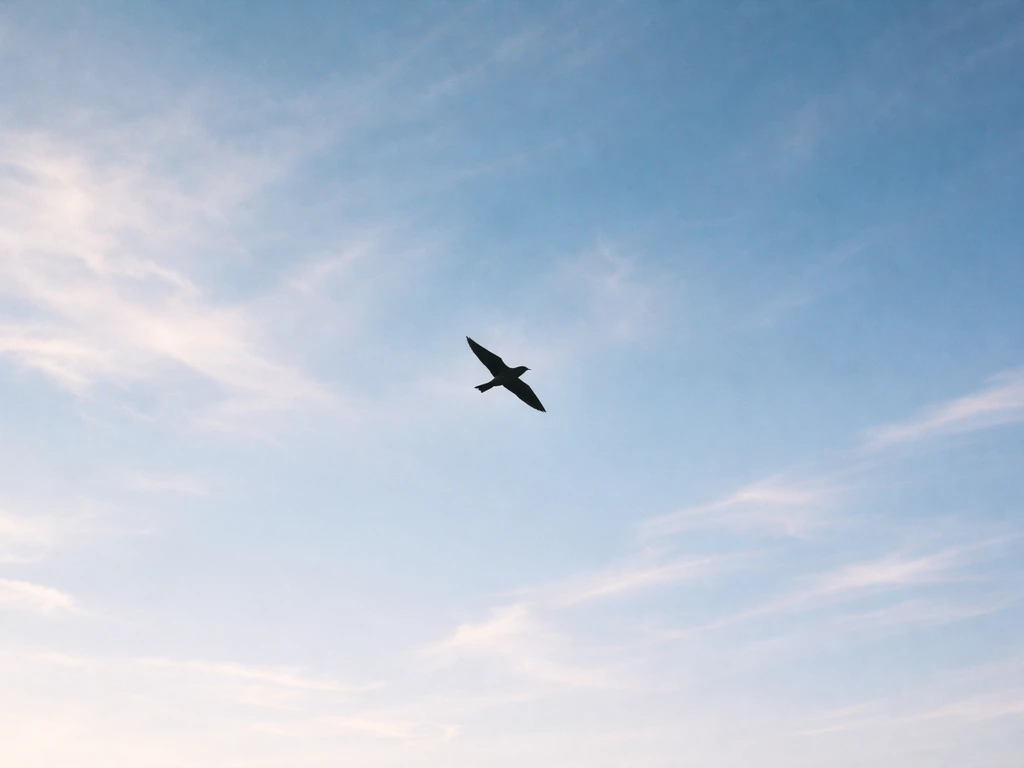
What 'travel bird' could actually mean (let's clear this up first)
The phrase 'travel bird' doesn't belong to a single clean category, which is exactly why it generates confused searches. There are at least four distinct things people mean when they use it.
- A literal migratory bird species: someone describing a specific bird that travels long distances seasonally, like a barn swallow or sandhill crane.
- A figurative or metaphorical expression: using 'travel bird' the way you'd use 'free spirit' or 'wanderer,' often in poetry, lyrics, tattoos, or casual conversation about someone who loves travel.
- A spiritual or symbolic message: in folklore and spiritual traditions, a bird appearing during a transition or journey is often read as a sign of guidance, change, or good timing.
- A brand or trademark: 'TravelBird' is a registered travel company headquartered in Amsterdam; 'Travel Bird Nepal' is a trekking and tourism company founded in 2019; 'My Travel Bird' is a vacation-package brand; and 'Travel Bird' is a registered trademark (serial number 88026106) for outdoor equipment. A lot of search traffic lands on these rather than any symbolic meaning.
There's also a minor pop-culture angle: 'traveling bird' appears as an in-game species label in Super Mario Odyssey, and some lyric-interpretation sites use 'traveling bird' as a metaphor for wanderlust and independence. So before diving into symbolism, it's worth asking: did you see this phrase on a website, in a song, on someone's tattoo, or spoken in conversation? That context alone usually narrows it down fast.
The birds most strongly linked to travel and migration
If someone says 'travel bird' and means a real bird, they're almost certainly referring to a migratory species. These are the birds that clock serious distances every year and have become cultural shorthand for journeys, movement, and seasonal change.
Barn swallow
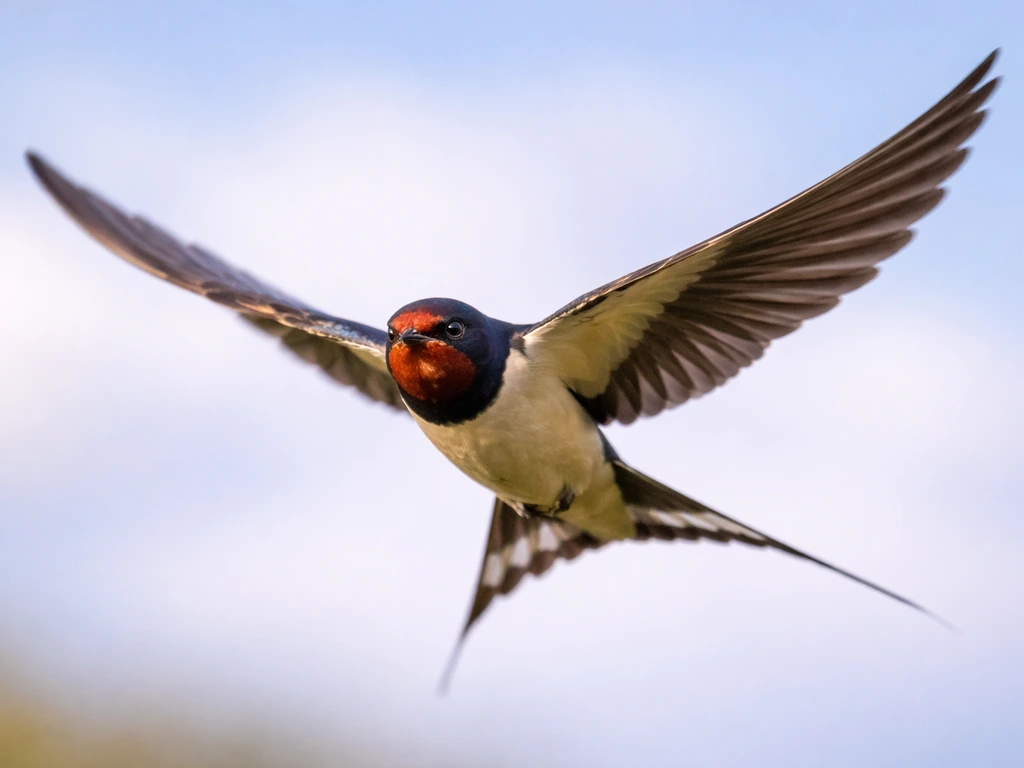
The barn swallow is probably the most globally recognized 'traveling bird' in literal wildlife terms. Cornell Lab of Ornithology classifies it as a long-distance migrant, and it covers somewhere between 2,000 and over 7,000 miles one way between breeding sites and wintering grounds. Ontario’s Barn Swallow Recovery Strategy describes barn swallows as long-distance migrants, with migration exceeding 8,000 km between breeding sites and wintering grounds Barn swallows are described as long-distance migrants. That kind of mileage has made the swallow a sailor's talisman for centuries. Traditionally, sailors tattooed swallows to mark nautical miles traveled and to symbolize a safe return home. A bird-in-flight tattoo captioned 'travel bird' almost certainly nods to this tradition.
White stork
In European folklore, the white stork is the quintessential long-distance traveler. It winters in sub-Saharan Africa and returns to Europe each spring, deliberately skirting long sea crossings by routing through the Bosphorus or Gibraltar Strait. This predictable, seasonal return made storks symbols of renewal and arrival in many cultures. The famous 'storks bring babies' folklore is rooted in this pattern: storks arrive in spring, babies follow. Beyond that, storks carrying omens and being treated with near-sacred status in some European traditions made them one of the oldest 'travel' birds in cultural memory.
Sandhill crane
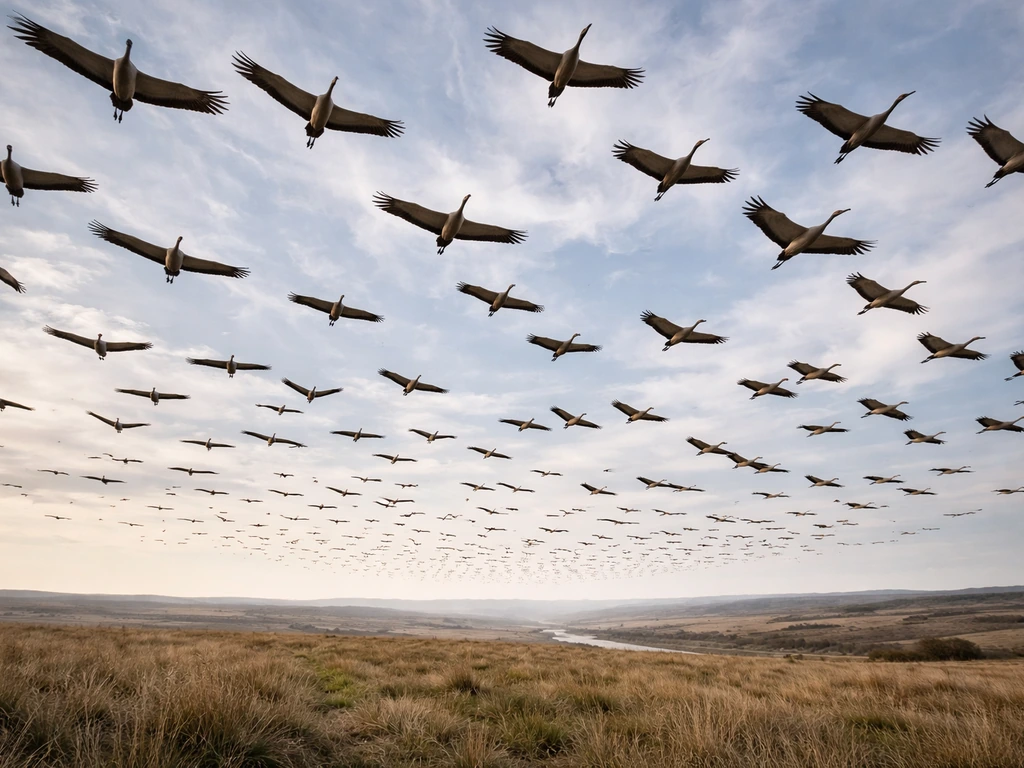
Every spring, more than 500,000 sandhill cranes funnel through Nebraska on their way north to breeding grounds in Canada and Alaska. The Nature Conservancy notes that from March to April, more than 500,000 sandhill cranes spend time in Nebraska preparing for their long journey north to breeding grounds in Canada and Alaska more than 500,000 sandhill cranes spend time in Nebraska preparing for a long journey north.
It's one of the largest wildlife migration events in North America, and it's turned cranes into icons of the journey itself. In Greek mythology, cranes were birds of omen. Across Asia, the crane represents immortality, wisdom, and independence. The Smithsonian's coverage of crane symbolism lists happiness, prosperity, and longevity as common crane associations across multiple cultures.
When someone uses 'travel bird' in a spiritual or poetic context, the crane is one of the most likely underlying images.
Geese
Most goose species are migratory, and the sight of geese flying in formation has long signaled seasonal change to people watching from the ground. Geese appear in migration-as-metaphor writing regularly, often representing community, direction, and the pull of home. They're less common as explicit 'travel bird' references than swallows or cranes, but they show up in the same conceptual neighborhood.
What 'travel bird' means figuratively in everyday conversation

In figurative language, 'travel bird' operates much like 'free spirit' or 'wanderer,' but with the added imagery of birds as creatures that are never truly tied to one place. English is full of bird metaphors that have nothing to do with actual birds: 'the early bird catches the worm,' 'eagle eye,' 'eat like a bird.' The phrase 'travel bird' slots into this tradition as a way to describe a person, a feeling, or a lifestyle defined by movement and exploration.
Lyric interpretation sites use 'traveling bird' to capture a singer's longing for independence and new horizons. Tattoo culture uses 'travel bird' as a caption for birds-in-flight designs that symbolize an adventurous identity. Teen Vogue, for example, interpreted a celebrity's shoulder tattoo captioned 'travel bird' as representing the adventurous spirit behind a bird mid-flight design, not any specific species. In these contexts, the phrase is about identity and aspiration, not ornithology.
Spiritual and folklore meanings: what a travel bird signals
Birds have carried symbolic weight in divination and folklore for thousands of years. The practice of reading omens from bird behavior, called ornithomancy, dates back to ancient Greece and Rome. Birds were observed during migrations, and their movements were interpreted as messages about timing, change, and what lay ahead. The magpie's role in the 'One for Sorrow' nursery rhyme is a well-known remnant of this tradition. Crows appearing as bad omens in everyday English usage is another. Birds were, essentially, the original message carriers.
In a spiritual reading, a 'travel bird' or the sighting of a migratory bird typically carries one of several core messages, depending on the tradition you're drawing from.
- Change is coming: migratory birds mark seasonal transitions, and their appearance is often read as a sign that your circumstances are about to shift.
- Timing is right: a bird appearing just before a journey or major decision is traditionally interpreted as confirmation that now is the moment to move.
- Guidance on the path: birds that lead or point a direction (as in many indigenous traditions) are seen as spiritual guides steering you toward your destination.
- Freedom and release: a bird in flight, especially one that travels vast distances, symbolizes the possibility of breaking free from limitations or fixed circumstances.
- A message from the beyond: in many cultures, migratory birds arriving out of season or appearing unexpectedly near a person are read as messages from ancestors or the spirit world.
- Transitions and thresholds: birds as symbols of crossing from one state to another appear across cultures, making them common imagery in rites of passage, grief, and new beginnings.
The crane's association with immortality across Asian cultures, the stork's connection to new life in Europe, and blank" rel="noopener noreferrer">the swallow's role as a safe-return omen for sailors all circle the same theme: birds mark the movement between states, places, and phases of life. That's the core of 'travel bird' symbolism in spiritual language.
How to figure out what 'travel bird' means from the context you saw it in
The fastest way to land on the right meaning is to look at three things: where you encountered the phrase, what words surrounded it, and who said or wrote it.
| Where you saw it | Most likely meaning | What to look for next |
|---|---|---|
| On a tattoo or photo caption | Figurative: adventurous identity or wanderlust symbolism | What bird is depicted? Swallow = sailor/return. Crane = wisdom/journey. |
| In a spiritual blog, horoscope, or dream journal | Symbolic/spiritual: a sign about change, guidance, or timing | What life event surrounds it? That colors the message. |
| In a song lyric or poem | Metaphorical: freedom, exploration, independence, longing | What's the emotional tone of the surrounding lines? |
| On a travel website or booking page | Brand name: TravelBird, My Travel Bird, or Travel Bird Nepal | Check the URL or company name directly. |
| In a wildlife article or nature documentary | Literal: a migratory bird species | Which bird is named? Barn swallow, sandhill crane, white stork are top candidates. |
| In casual conversation about a person | Figurative: someone who travels constantly or is restless/free-spirited | Is the speaker describing a personality type? |
One useful shortcut: if the phrase is capitalized ('Travel Bird' or 'TravelBird'), it almost always refers to a brand or trademark rather than a symbol or species. Lower-case 'travel bird' in flowing text points toward figurative or literal bird meanings.
If 'travel bird' is a quote, brand, or specific label: how to track it down quickly
If you're fairly sure 'travel bird' is part of a specific quote, brand, or named reference rather than a general concept, here's how to narrow it down without wading through irrelevant results.
- Add quotes to your search: searching 'travel bird' with quotes in a search engine filters results to exact phrase matches, cutting out pages that just happen to use both words separately.
- Add context words: if you saw it in a song, add the artist's name. If it was a company, add 'company,' 'booking,' or the country you think it's based in. This immediately separates TravelBird Amsterdam from Travel Bird Nepal from the outdoor equipment trademark.
- Check trademark databases: Justia Trademarks and Trademarkia both list 'Travel Bird' as a registered mark. If you're looking at a product or logo, trademark records give you the exact company and category.
- For tattoo or art meanings: reverse image search the design, or add 'tattoo meaning' to your search alongside the bird species you see depicted (swallow, crane, sparrow, etc.).
- For spiritual or dream meanings: add 'symbolism' or 'spiritual meaning' to your search, and note the specific bird species if it appeared in a dream or vision. Bird symbolism sites, including this one, typically index by species and theme.
- For pop-culture references: if it's from a game, movie, or show, add the title to your search. 'Traveling bird Super Mario Odyssey,' for example, immediately surfaces the in-game species context.
It's also worth noting that 'travel bird' sits in a family of bird-phrase searches that work similarly. Phrases like 'party bird,' 'tick bird,' and 'beacon bird' all carry both literal species associations and figurative meanings depending on context, and the same disambiguation approach applies to all of them. Beacon bird meaning can be figured out the same way, by checking whether it refers to a literal species or a figurative label used in a specific context. The bird itself often matters less than the context it appears in.
What you can take away and do right now
If you searched 'travel bird meaning' and still aren't sure which definition applies to your situation, here's the practical bottom line. If your search turned up a phrase like buzzcock bird, you may also want to check its buzzcock bird meaning to confirm which interpretation fits.
- The most common symbolic meaning is freedom, movement, life transitions, and guidance, drawn from migratory birds like the barn swallow, white stork, and sandhill crane.
- If it was on a tattoo or in creative writing, it almost certainly means an adventurous, free-spirited identity rather than a specific bird species.
- If it was on a website with booking or tourism content, you're looking at a brand name, not symbolism.
- If it appeared in a spiritual or folkloric context, think of it as a sign about change, timing, or a journey you're about to undertake.
- If you're still unsure, the capitalization rule is your fastest filter: capitalized equals brand, lowercase equals concept.
- To dig deeper into the specific bird you saw or dreamed about, search by species name plus 'symbolism' or 'spiritual meaning' for more targeted results.
The reason 'travel bird' generates so many different search results is that it sits at the intersection of literal wildlife language, figurative everyday speech, spiritual symbolism, and modern branding. None of those meanings is wrong. They just answer different questions. Once you know which category your encounter falls into, the meaning becomes immediate and specific. If you're specifically asking about party bird meaning, the answer depends on whether the phrase is used as slang or as a character or song reference travel bird.
FAQ
If I saw “travel bird” in lowercase on a random website, how can I tell whether it means a specific species or just a vibe?
Check whether the sentence includes birds terms like “migratory,” “flight pattern,” “nesting,” or a place name (wintering grounds, route, season). If it focuses on feelings (wanderlust, freedom, identity) without any species traits, it’s almost certainly metaphorical rather than an actual wildlife label.
Does “Travel Bird” with capitalization always mean a brand?
In most cases, yes. Capitalization usually signals a proper noun (brand, trademark, title). The exception is when it appears in a formal quoted title from a story, lyric, or caption, where it functions as a name rather than a general concept.
What if the phrase I saw was “travelling bird” instead of “travel bird”?
Spelling variation often tracks the source language (UK or AU usage) but it usually does not change the meaning category. Use the same rule as elsewhere: if it is in a quote, lyric, game label, or title case it is more likely referential, if it is in normal prose it tends to be metaphorical or literal-migratory.
How do I interpret “travel bird” in tattoo context without guessing the species?
Look for cues. Swallow tattoos commonly pair with nautical imagery (waves, compass, ships). Stork designs may include baby or arrival symbolism themes. Cranes often appear with cultural motifs. If the tattoo is just a bird in flight with no cultural props, the safest read is a general “journey and freedom” symbolism rather than a single species meaning.
I’m doing a divination reading. Is the bird behavior more important than which species it is?
Typically both matter, but if you cannot confidently identify the species, focus on behavior patterns instead (timing of the sighting, flock versus solitary, direction of flight). Many traditions treat timing and directional movement as the main “message carrier,” even when species ID is uncertain.
Could “travel bird” be mistaken for “traveler” or “wanderer” in everyday speech?
Yes, that confusion is common. If the surrounding words include “person,” “spirit,” “lifestyle,” or “restless,” it is functioning like “free spirit” or “wanderer.” If nearby words include “migration,” “season,” or geographic locations, it is more likely literal or spiritually tied to migration events.
What’s the fastest disambiguation method when the phrase appears in a quote?
Copy the exact sentence and check three items: the speaker (is it a game, brand account, or a poet), the sentence’s verb (journeying, longing, arriving, “signals change”), and whether any specific bird name appears nearby. If none appear, treat “travel bird” as the author’s general metaphor.
Does “travel bird” always imply positive meaning in spiritual contexts?
Not always. While birds are often linked with change and renewal, omens-based traditions can interpret the same motion differently depending on timing and mood of the sighting (unexpected arrival, unusual direction, or flock size). If you want a balanced read, pair the symbolism (transition) with a practical question about what change you are currently resisting.
Could “traveling bird” in a song lyric refer to a real bird?
Sometimes, but many lyrics use it to express independence and longing for horizons. A real-bird reference is more likely if the lyric also mentions traits like migration, specific habitats, or bird-specific images (e.g., stork and spring, swallow and return). If it’s purely emotional imagery, treat it as metaphor.
I saw “travel bird” next to other bird-phrase terms. Should I interpret it the same way as “party bird” or “beacon bird”?
Use the same disambiguation framework, but do not assume the meaning carries over. The shared theme is that these phrases can be both literal species references and figurative labels. The deciding factor is still context, capitalization, and whether a named character, song title, or brand-like usage appears nearby.
Next Article
Amber Bird Meaning: Symbolism, Interpretations, and How to Use It
Learn amber bird meaning: disambiguate the phrase and interpret it using amber and bird symbolism, grounded steps includ