Most people searching 'bat bird meaning' are really asking one of three different questions: Is a bat actually a bird? What does bat or bird symbolism mean spiritually? Or did I encounter a specific phrase, nickname, or saying that uses the words 'bat' and 'bird' together? A common way people ask about this is by looking up the new bird meaning in dreams, sayings, or spiritual symbolism. The answer to the first one is simple: bats are not birds at all. They are mammals, class Mammalia, while birds belong to class Aves. But the symbolic and linguistic rabbit hole goes much deeper, and which meaning applies to you depends entirely on where you saw or heard the term.
Bat Bird Meaning: Literal, Symbolic, and Slang Interpretations

Marcus Winters
28 Jun 2026
Quick clarification: bat vs bird (why the term gets mixed)
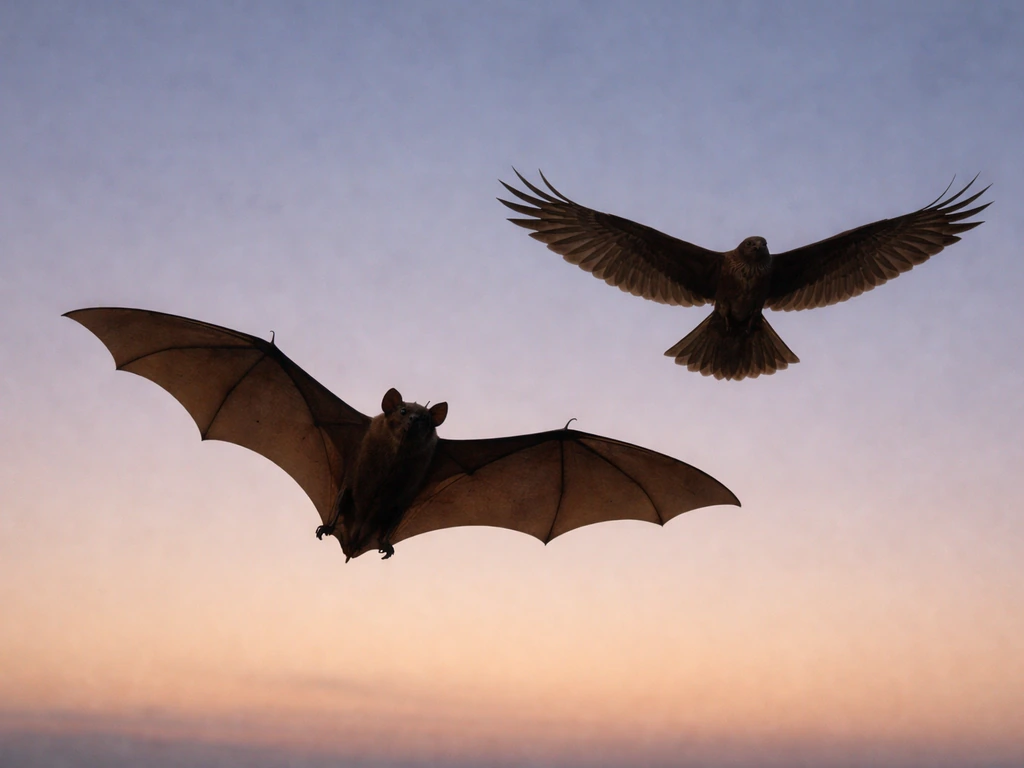
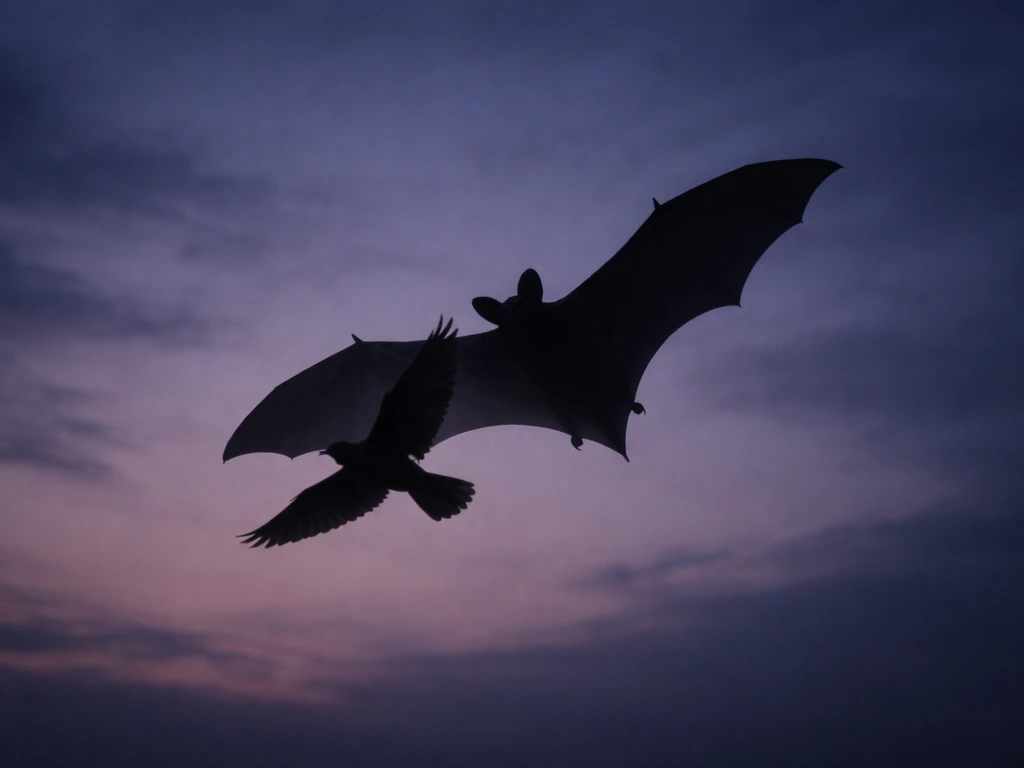
The confusion makes total sense at first glance. Both bats and birds have wings, both fly, and both can appear together in the sky at dusk doing eerily similar aerial maneuvers. The word 'bat' itself traces back to Middle English 'bakke' and Scandinavian forms meaning something close to 'night-bat,' first documented in the early 1570s as shorthand for a small, flying, mouse-like mammal. The name stuck because bats were basically defined by their flight and their nighttime presence, exactly the same qualities that define many birds in casual observation.
Here is the key structural difference: bats are the only mammals capable of true, sustained powered flight. Birds can fly, but they do it with feathered wings built on a heavily modified forelimb skeleton. Bats fly with a membrane of skin stretched across elongated finger bones, more like a hand-wing than a feathered arm. So when someone calls a bat a 'bat bird,' they are usually collapsing two very different anatomical designs into one mental category because both things fly at night. Understandable, but scientifically incorrect.
Literal meaning of 'bat bird' in context (species vs wording)
In literal, everyday usage, 'bat bird' almost always turns up in one of two ways: someone mislabeling an animal they saw, or someone using a hyphenated nickname for a specific species. The most common real-world scenario is that someone spotted something flying at dusk, thought it was a bird, later heard it was a bat (or vice versa), and typed 'bat bird' to make sense of what they saw. Nighthawks are the classic offender here.
One commonly reported cause of this everyday confusion is nighthawks’ dusk-time, erratic flight, which can resemble bat aerial foraging Nighthawks are the classic offender here. . Their erratic, swooping flight at twilight looks almost identical to a bat's aerial foraging pattern, and they get mistaken for bats regularly.
Swifts and swallows pull the same trick.
On the nickname side, 'bat bird' or 'batbird' occasionally appears as an informal label for birds that have bat-like qualities: nocturnal habits, leathery-looking features, or unusual wing shapes. The frogmouth, the nightjar, and even the potoo get this treatment in popular wildlife writing. If you saw 'bat bird' used as an animal name in a nature post or documentary, this is most likely what it refers to: a bird with distinctly bat-like behavior or appearance, not an actual bat.
Symbolism of bats and symbolism of birds (how each is commonly used)
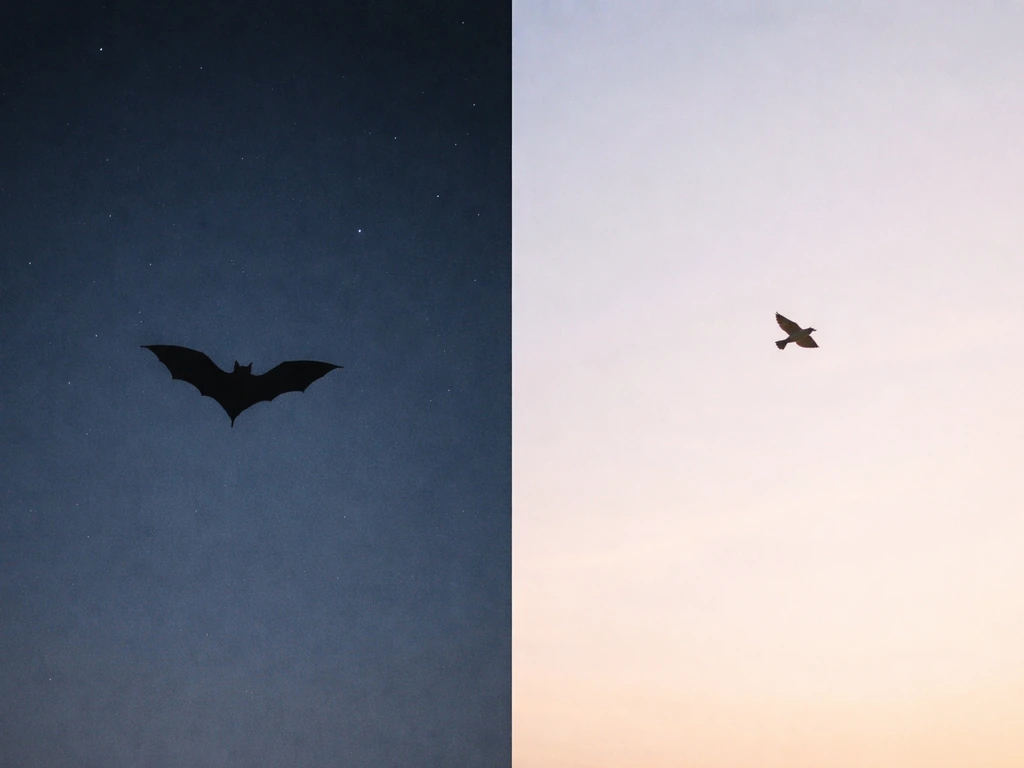
Before you can decode a combined 'bat bird' symbol, you need to know what each one brings to the table on its own. They carry very different symbolic weight across cultures.
What bats symbolize
- Intuition and the unseen: Bats navigate by echolocation, which makes them a near-universal symbol for perceiving things that others miss, especially in darkness or uncertainty.
- Rebirth and transformation: In many Indigenous American and Central American traditions, bats are associated with death and rebirth cycles, not because they are evil but because they inhabit caves (the underworld threshold).
- Good luck in East Asian culture: In Chinese symbolism, the bat (fu) is a strong luck symbol. Five bats together represent the five blessings: longevity, wealth, health, virtue, and a natural death.
- Fear and the occult in Western culture: The Gothic/European tradition flipped bat symbolism entirely, linking bats to vampires, witches, and bad omens. This is largely a post-medieval cultural construction.
- Mystery and the night: Across nearly every tradition, bats represent the hidden, the nocturnal, and what exists beyond ordinary waking awareness.
What birds symbolize
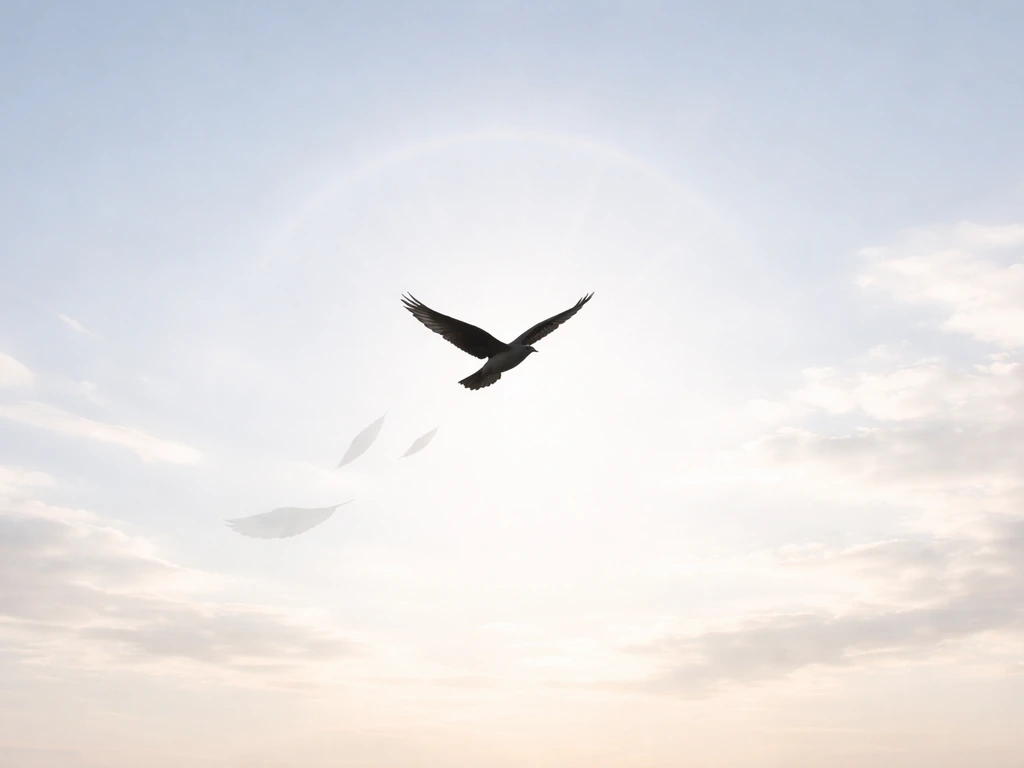
- Freedom and transcendence: Birds in flight are one of humanity's oldest symbols for the soul, liberation, and rising above earthly limitations.
- Messengers and omens: Across Greek, Roman, Norse, and many Indigenous traditions, birds carry messages between the human world and the divine.
- Specific birds carry specific meanings: Crows and ravens often signal change or death. Owls signal wisdom or warning. Swallows signal safe return and loyalty. Each species carries its own freight of meaning.
- Hope and new beginnings: In general spiritual shorthand, birds arriving, singing, or appearing at significant moments are read as positive signs of guidance or reassurance.
- The soul made visible: Many cultures, from ancient Egypt to modern spiritualism, describe a deceased person's soul appearing as a bird.
The tension between these two symbol sets is exactly why 'bat bird' as a combined image is so layered. Bats pull toward the hidden, the underworld, the mysterious. Birds pull toward the open sky, the divine, the communicative. When they appear together, you get a hybrid symbol that often signals a threshold moment: something between worlds, between night and day, between knowing and not knowing.
When 'bat + bird' appears together: possible interpretations
There are a handful of distinct contexts where bat and bird imagery actually get combined, and each one means something different.
| Context | What 'bat bird' likely means | Key signal to look for |
|---|---|---|
| Dream or vision | A threshold or transformation symbol, often tied to intuition meeting clarity, or the subconscious meeting the waking world | Did the creature shift between bat and bird, or appear as both at once? |
| Tattoo or art | Often a personal hybrid symbol of duality: dark and light, night and day, hidden self and public self | Ask the creator; personal tattoo meanings are rarely universal |
| Folklore or fable | Usually a cautionary tale about belonging to two worlds and fitting neither (see Aesop's bat fable) | Is there a story attached, or just an image? |
| Social media / meme | Could be humor, a hybrid creature design, or an ironic take on misidentification | Check the tone; most bat-bird memes are jokes about mistaking the animal |
| Spiritual or New Age content | A signal of psychic perception, navigating the unseen, or a soul-level message during transition | Is the content from a specific spiritual tradition, or generic 'signs and symbols' content? |
| Nature / wildlife post | Almost certainly a literal misidentification, a bat-like bird species, or a comparison post | Is there a photo attached? Use that to identify the actual animal |
One old and genuinely interesting cultural reference worth knowing: Aesop's fable of the bat is one of the earliest stories of a creature that is 'neither bird nor beast,' trying to claim membership in both groups and ending up belonging to neither. That fable has shaped Western symbolic thinking about bats for centuries, which is partly why bat-bird hybrid imagery so often shows up in contexts about ambiguity, dual identity, or not fitting in.
Disambiguation checklist: how to figure out what your source means

Before you settle on an interpretation, run through these questions about where you encountered the term.
- Where did you see it? A wildlife forum, a spiritual blog, a dream journal, a tattoo photo, a news article, and a meme page will each use 'bat bird' in completely different ways.
- Was there a photo or image attached? If yes, look at the actual creature. A bat has no feathers, has membrane wings connecting elongated fingers to its body, and has a mammal's face. A bird has feathers and a beak. This resolves most animal-ID questions instantly.
- What culture or tradition is the source drawing from? Chinese symbolism, Western Gothic tradition, Indigenous American cosmology, and New Age spiritualism all treat bats and birds very differently.
- Is this a specific named species being called a 'bat bird'? Search the common name plus 'bird' to see if it is a recognized nickname (e.g., 'bat falcon,' 'nighthawk').
- Is the phrase used as a compound (bat-bird) or as two separate words describing one thing? Hyphenated or compound use often signals a nickname or label; two separate words often signal a comparison or symbolic pairing.
- Is there a story, saying, or idiom structure around it? Phrases like 'blind as a bat' or 'free as a bird' are idioms. If your source has that structure, it is figurative language, not animal identification.
- What is the emotional tone of the source? Ominous and serious usually signals spiritual or folkloric use. Light and humorous usually signals misidentification or meme content.
Common misconceptions and how to verify the real reference
The biggest misconception is that every bat or bird sighting carries spiritual weight. It does not. Most of the time, a bat flying at dusk is just a bat hunting insects. A bird landing near you is usually a bird that was already there before you noticed it. The internet has turbocharged the tendency to assign heavy symbolic meaning to completely ordinary wildlife moments, and a lot of 'bat bird meaning' searches come from people who had a normal animal encounter and then went down an omen rabbit hole. Context matters enormously, and your own emotional reaction matters too: if you are going through a major life transition, everything feels like a sign. That does not mean it is.
A second common mistake is mixing bat symbolism with bird symbolism interchangeably because both involve flight. If you are specifically looking for the foo bird meaning, focus on the context where the phrase appeared and what tradition or symbolism it is drawing from. They are not interchangeable. In a dream, a bat flying toward you and a bird flying toward you carry different traditional meanings in almost every symbolic tradition. Bats suggest hidden knowledge, the underworld, or transformation. Birds suggest messages, the divine, or the soul. If you read a bat's symbolic meaning and apply it to what was actually a bird (or vice versa), you will arrive at an interpretation that does not fit your experience at all.
If you genuinely need to identify the animal itself, platforms like iNaturalist let you submit an observation with a photo and get community-confirmed identification from naturalists worldwide. This is far more reliable than a Google reverse image search when the photo is blurry or the creature is mid-flight. For symbolic verification, the most trustworthy approach is to trace the symbolism back to a specific named cultural tradition rather than relying on generic 'animal totems' websites, which often blend traditions in ways that distort their original meaning.
Practical next steps: what to do if you saw it in a post, dream, or saying
If you saw 'bat bird' in a social media post or wildlife article, start with the literal question: is there a photo? If yes, identify the animal using the physical features above. If the post is symbolic or spiritual, identify the cultural tradition it is drawing from before accepting any interpretation.
If you had a dream involving a bat or a bird (or a creature that was both), resist the urge to jump straight to a symbolic dictionary. Write down everything you remember first: what the creature was doing, how you felt, whether it was day or night in the dream, whether it approached you or flew away. Those details matter more than the creature's species when it comes to personal dream interpretation. A bat attacking you means something different than a bat resting peacefully on your hand, regardless of what any symbol guide says.
If you heard 'bat bird' in a saying, proverb, or idiom, treat it like any other figurative phrase: look for the emotional or moral point the speaker was making. In the same way, people also search for the boo bird meaning when a phrase feels like it blends symbolism with everyday language. Idioms about bats tend to cluster around blindness, the night, or erratic behavior ('going batty,' 'blind as a bat'). Idioms about birds cluster around freedom, luck, speech, and communication. The combined phrase in an idiom almost certainly signals something about two opposing qualities held in tension.
It is also worth knowing that searches around similar terms like 'boo bird meaning' (a very different phrase used in sports contexts) or terms like 'native bird meaning' (which ties into Indigenous cultural symbolism) often pull up alongside bat-bird content. If you landed here from one of those adjacent searches, the disambiguation checklist above will help you narrow down which specific meaning you are actually looking for. The core skill in all of these cases is the same: identify the source, identify the cultural context, and resist the universal-symbol shortcut.
FAQ
If I saw something labeled “bat bird,” how can I tell whether it was actually a bat or a bird?
In most real sightings, “bat bird” is a mislabel or a nickname, not a recognized species. If the animal had a hand-like wing membrane, moved in smooth flaps at night, and flew low for insects, it is almost certainly a bat. If it had feathered wings, a beak, and typical bird flight, it was a bird, and “bat” is just how it looked at dusk.
Can “bat bird” have a spiritual meaning even if the phrase is not tied to a named tradition?
Yes, but only if you can anchor it to a specific source. For example, a symbolic reading that comes from Aesop or a particular spiritual tradition should be treated differently than a generic “animal totem” entry. When a post does not name the tradition or author, the meaning is usually blended and may not match any single system.
In a dream, does “bat bird” meaning depend more on the species or on the actions and setting?
Not automatically. A lot of symbolism mistakes come from reading one detail the wrong way. Ask yourself whether the key event was approach, attack, rest, or escape, and whether it happened in darkness or daylight. Those factors usually matter more than whether the creature was bat or bird in many personal dream interpretations.
What does it mean if someone writes “batbird” as one word, is it an official name?
A hyphenated “bat-bird” or “batbird” might be a casual nickname used by a writer or in a social post, and it may refer to different animals depending on the author’s description. If you cannot find a photo, quote, or diagnostic traits from the original context, assume it is descriptive language rather than a fixed name.
How should I interpret “bat bird” when it shows up in a wildlife post or documentary?
If the post is about wildlife, prioritize physical and behavioral cues. If it mentions a specific bird with “bat-like” features (nocturnal activity, mottled camouflage, unusual wing action), it is likely describing that bird. If it has photos or a video, pause the clip at wing shape moments, because flight silhouettes can fool you at dusk.
Is it a mistake to treat a bat or bird encounter as an omen?
If you are interpreting it as an omen, use a low-commitment approach. Treat the encounter as a prompt to notice what is already happening in your life, not as a prediction. A practical rule is, if nothing specific is disrupted in your real circumstances, avoid drawing a strong conclusion from one ordinary night-sighting.
Why do bat and bird symbolic meanings get mixed up so often, and how do I avoid that?
Yes. Flying alone can mislead you because both bats and birds occupy the same visual category. The structural giveaway is wing type: bats use a membrane across elongated fingers, birds use feathers attached to a forelimb with a different bone layout. Without that, “bat bird” symbolism can become unfalsifiable.
What is the best way to verify a symbolic interpretation of “bat bird” without relying on vague sources?
It depends on what you mean by “symbolic verification.” Symbolic meaning is best validated by tracing back to a named cultural reference, not by reading multiple generic “totem” pages. If you want personal confidence, cross-check the interpretation against your own experience details (mood, timing, location) rather than collecting multiple unrelated meanings.
If I heard “bat bird” in a saying or figurative comment, how do I decode the real message?
Idioms that involve bats often cluster around night, erratic behavior, or blindness-related ideas, while bird-focused idioms often connect to luck, freedom, messages, or speech. If the “bat bird” phrase is used figuratively, identify which emotional point the speaker is making, then map that to the idiom category it most closely resembles.
What should I do first when I encounter “bat bird” online, identify the animal or interpret the symbolism?
When possible, use a two-step process: (1) identify the animal from observable traits and flight style, (2) only then decide whether any symbolic layer is intentional in the source. If identification is uncertain, do not lock in symbolism, because the bat-versus-bird distinction can flip the likely meaning.
Next Article
Boo Bird Meaning: Slang vs Literal Bird Call
Meaning of boo bird in slang or bird-call folklore, plus quick tips to tell which you’re seeing and examples.