When someone says 'high bird,' they most likely mean one of three things: a bird literally flying at great altitude, a metaphor for someone with elevated status or an untouchable attitude, or a reference to the proper name 'High Bird' as used in Crow Nation tradition. None of these is wrong. The trick is reading the context around the phrase to know which one applies to what you're seeing or hearing right now.
High Bird Meaning: Literal, Slang, and Symbolic Uses

Marcus Winters
4 Jun 2026
What people usually mean by 'high bird'
The phrase 'high bird' does not appear in Merriam-Webster or most standard dictionaries as a fixed idiom with a locked-in definition. That's actually useful information. It tells you the phrase is doing one of two jobs: it's either being used literally (describing a bird up in the sky), or it's borrowing the symbolic weight that 'high' carries in English and applying it to a bird as a metaphor. The third possibility is that it's a proper name or cultural title, which has real documented history. Understanding that the phrase is flexible, not fixed, is the fastest way to start decoding it.
Literal meaning: a bird flying high (and why that gets symbolic fast)
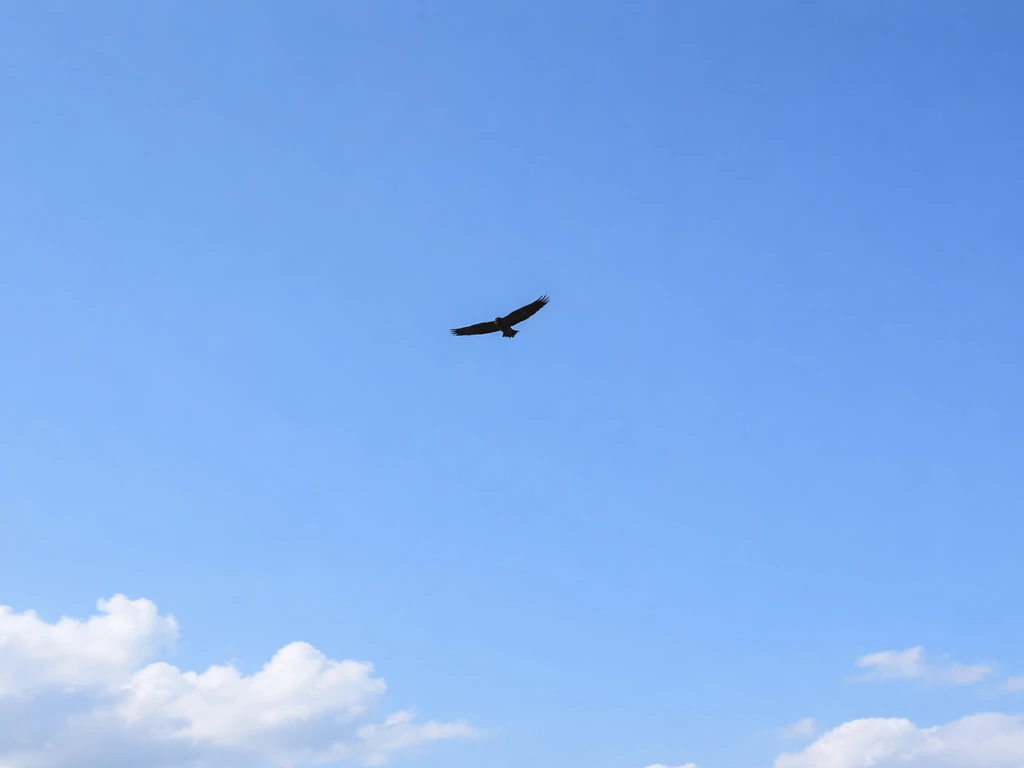
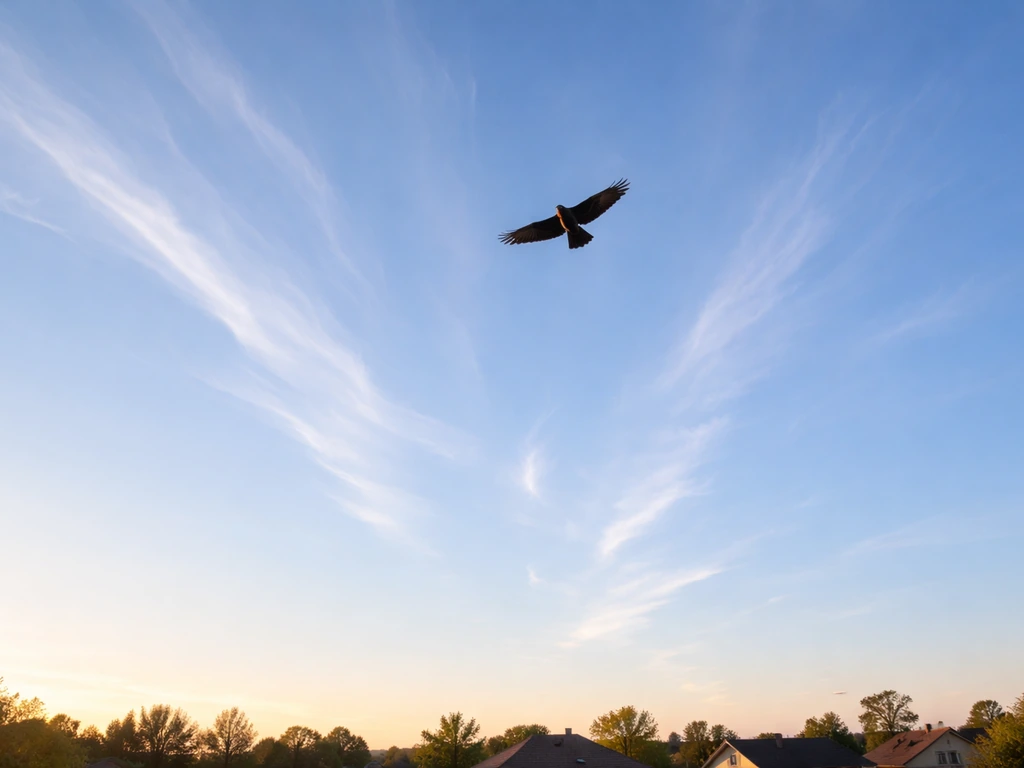
At face value, a 'high bird' is simply a bird flying at significant altitude. Eagles, hawks, falcons, swifts, and cranes are all birds people commonly associate with high flight. Observationally, watching a bird disappear into the upper sky produces a specific feeling in most people: awe, smallness, a sense of something being beyond reach. That emotional reaction is exactly why 'high' and 'bird' combine so naturally into metaphor. The literal image already carries the symbolic payload.
In wildlife and aviation contexts, 'high bird' can appear as a technical or casual descriptor. A birder might say 'there's a high bird circling at about 2,000 feet' with zero metaphorical intent. In those cases, 'high' is just an altitude modifier. But the moment you move out of a purely observational sentence and into a cultural, poetic, or social context, the phrase almost always picks up additional meaning.
Birds flying at great heights appear across folklore and spiritual traditions worldwide as symbols of transcendence, divine proximity, and freedom from earthly concerns. A bird that flies higher than others was traditionally read as closer to the heavens, closer to wisdom, or simply beyond the reach of ordinary things. That interpretive layer has been baked into language for centuries, which is why 'high bird' as a phrase naturally leans symbolic even when the speaker thinks they're being literal.
Figurative meaning: status, distance, or attitude in everyday language
In figurative English, 'blank" rel="noopener noreferrer">flying high' is a well-documented idiom meaning someone is doing exceptionally well, experiencing success, or feeling great. Think of the sentence 'she was flying high after winning the contest' and you have the core of it. 'High bird' borrows from that same register. When someone calls another person a 'high bird,' they're typically commenting on elevation in a social or emotional sense. In many discussions, the question “human bird meaning” points to how “bird” imagery gets mapped onto human traits like status, freedom, or superiority High bird. That elevation can be positive (someone accomplished, respected, or unusually capable) or pointed (someone who considers themselves above others, hard to reach, or aloof).
The attitude dimension is worth paying attention to. Calling someone a 'high bird' can carry a faint edge of criticism, the way 'high and mighty' does in English. The implication is that the person has flown so far above the crowd that they've lost connection with regular people. It's similar in spirit to phrases like 'too big for their boots' or 'riding high.' Whether it reads as admiring or critical depends entirely on tone and context.
Slang and cultural uses: how 'high' changes the vibe

In more informal and subcultural usage, 'high' carries connotations of being intoxicated or in an altered state. 'High as a bird' is a phrase some people use to describe that kind of euphoric, untethered feeling, playing on the image of a bird floating freely with no gravity pulling it down. If someone uses 'high bird' in a casual, joking, or slang-heavy context, especially in song lyrics, memes, or social media, this association is almost certainly part of the meaning. The visual of a bird drifting lazily at altitude maps cleanly onto that kind of relaxed, elevated state of mind.
There's also a proper cultural usage that's completely distinct from slang. 'High Bird' is the traditional Crow name of Joseph Medicine Crow, the Native American war chief, historian, and author.
It functions as a personal identifier and cultural title, not a descriptor or idiom. If you encounter 'High Bird' in a historical, biographical, or Native American cultural context, this is almost certainly what it refers to. If you are really asking what the “High Bird” reference means in that Crow history context, the answer is more specific than the everyday idioms High Bird meaning.
Counting Coup and other biographical sources use 'High Bird' as his name directly, and it carries the full weight of his identity and legacy within Crow Nation tradition. A Campus Store listing for Counting Coup also notes Joseph Medicine Crow was “now called High Bird,” reinforcing that High Bird functions as a personal identifier in some contexts Counting Coup and other biographical sources use 'High Bird' as his name directly.
Outside of those specific contexts, 'high bird' shows up as a nickname or screen name people adopt because of its evocative imagery. If you mean “hood bird meaning,” the safest approach is to check the surrounding context, because slang can shift how the phrase is used nickname. Someone using it as an online handle is usually drawing on the status and freedom associations, not any single fixed cultural meaning.
How to tell which meaning applies in your situation
The fastest way to decode 'high bird' is to look at the three signals around it: who's saying it, where it appears, and what else is in the sentence or post.
| Context or Signal | Most Likely Meaning |
|---|---|
| In a nature, wildlife, or birding setting | Literal: a bird flying at high altitude |
| Describing a person's success, attitude, or status | Figurative: elevated position, flying high metaphor |
| Casual conversation, memes, music, or slang-heavy text | Slang: carefree, untethered, possibly intoxicated feeling |
| Historical, biographical, or Native American cultural text | Proper name: Joseph Medicine Crow's Crow Nation name |
| Used as a nickname or username online | Symbolic: drawing on freedom, status, or elevation imagery |
If the phrase is describing a real bird in the sky, altitude is doing all the work. If it's describing a person, ask whether the tone is admiring or cutting. Admiring usually points to the 'flying high' success idiom. Cutting or ironic usually points to arrogance or being out of touch. If the context is clearly informal and relaxed, the altered-state slang reading is probably in play. In many online searches, people are really trying to get at the hot bird meaning of the phrase as used in slang or playful contexts. And if you're reading history or Native American biography, stop there: it's a name.
Related expressions people often confuse with 'high bird'
Several phrases overlap with 'high bird' enough to cause confusion, and knowing the distinctions helps you land on the right meaning quickly.
- Flying high: The closest documented idiom. It means doing very well or experiencing great success. 'High bird' often means the same thing but applied to a person as a noun rather than a verb phrase.
- High and mighty: Describes arrogance and a feeling of superiority over others. When 'high bird' is being used critically, this is the register it's borrowing from.
- Bird up high: A word-order inversion of the same image, often more literal than figurative. Used in poetry or song to describe a bird visually placed above everything else.
- High as a bird: A simile describing freedom, euphoria, or an intoxicated state. More explicit about the emotional state than 'high bird' alone.
- Free as a bird: Emphasizes freedom rather than elevation. If someone is using 'high bird' to mean unrestrained or liberated, they may be blending this idiom with the altitude image.
- Hood bird, hot bird, human bird: These are related phrase constructions in the same family of 'modifier plus bird' expressions, each with their own distinct meanings in slang and cultural usage. The modifier does the heavy lifting in every case, so reading 'high' carefully is what separates this phrase from those.
The through-line across all of these is that 'bird' in English idiom consistently functions as a stand-in for a person or for a quality of existence, and the word placed before it shapes everything. 'High' specifically pulls toward elevation, status, distance, and freedom, which is why the phrase clusters around those themes no matter which version of the meaning is active.
FAQ
Does “High Bird” always mean the Crow name (Joseph Medicine Crow)?
Not automatically. In most modern uses, “high bird” is a description or nickname, and the meaning depends on context. If it appears as “High Bird” with capitals, or alongside Crow history terms, treat it as a proper Crow name rather than a slang phrase.
How can I tell if “high bird” is about success or about arrogance?
If you can swap in “flying high” without changing the sentence’s intent, it is probably status or success talk. For example, “He thinks he’s a high bird” often means he feels above others, while “She’s a high bird today” would likely mean she feels especially confident or accomplished.
What phrases in a sentence signal that “high bird” is literal (altitude) versus metaphor?
When altitude is the point, you will usually see numbers, instruments, or observation language (feet, meters, circling, sky conditions). If you see social verbs (think, act, talk, carry yourself) instead of location details, the phrase is almost certainly metaphorical.
Can “high bird” be positive and negative at the same time?
It can be. Even when “flying high” is positive, calling someone a “high bird” can imply distance from others (like “high and mighty”). Tone markers help: enthusiastic praise reads admiration, sarcastic wording reads criticism.
Could “high bird” mean getting intoxicated, not status?
Yes, especially in informal settings. If the conversation is about being intoxicated, relaxed, or “untethered,” the “high” altered-state association may be involved. Look for nearby words like intoxicated, stoned, euphoric, party, or drug references.
Why does “high bird meaning” vary so much across posts?
Not necessarily. “High bird” does not have a single locked definition in standard dictionaries, so it can be a custom metaphor, a username, or a reference chosen for imagery. If you cannot identify who is speaking and where it appears (song lyrics, forum, biography), you should not assume one fixed meaning.
If I see “highbird” as a username, what should I assume it means?
When it is a screen name or nickname, the safest read is “evocative imagery” rather than a specific idiom. Most people choose it for the freedom, elevation, or superiority vibe, but the exact intent may be personal. If the user is active in a community tied to Crow history, that could change the reading.
What is the fastest way to decode “high bird” in a real conversation?
Do a quick disambiguation check: (1) Capitalization (High Bird versus high bird), (2) topic of the sentence (sky/aviation versus people/social behavior), (3) surrounding context (Crow history terms versus slang-heavy entertainment context). The combination usually resolves it in seconds.
What are the most common mistakes people make when interpreting “high bird”?
You can misread it by treating it like a dictionary idiom with one meaning. Another common mistake is ignoring tone. If the speaker is joking or using it as a playful jab, the phrase can flip from admiration to criticism even with the same wording.
How is “high bird” different from “high and mighty,” “flying high,” and “high as a bird”?
Yes, if you are comparing it to similar phrases. “High and mighty” emphasizes arrogance, “flying high” emphasizes success, and “high as a bird” emphasizes altered state. “High bird” tends to blend the “high” elevation image with whatever social or creative context is surrounding it.
Next Article
Hood Bird Meaning: What It Refers to and How to Respond
Learn hood bird meaning: slang for a neighborhood style or attitude, plus origins, examples, and how to respond.