
"Human bird meaning" does not point to one single definition. Depending on where you encountered the phrase, it could mean a person described with bird-like traits (freedom, intuition, restlessness), a folkloric or spiritual story where a human transforms into or bonds with a bird, a specific cultural motif like the Korean Inmyeonjo, or even a historical nickname for a performer. The phrase “The Good Lord Bird” is also the title of a novel, and its meaning connects to the story’s themes and context rather than general bird symbolism. The fastest way to land on the right meaning is to identify the context first, then narrow down the specific bird species involved, because the symbolism shifts dramatically from there.
Human Bird Meaning: What It Refers to and How to Interpret It

Marcus Winters
29 Jun 2026

What "human bird meaning" usually means

Most people searching this phrase are trying to decode something they just encountered: a quote, a tattoo, a dream, a cultural reference, or a piece of slang. The phrase sits at a crossroads of several different ideas, which is exactly why it feels slippery. At its core, "human bird" language is used to describe a human being through the lens of a bird, whether that means borrowing a bird's qualities (like flight, freedom, or sharp vision), invoking a mythological fusion, or simply applying an informal nickname. None of those are wrong interpretations. You just need to figure out which lane you are in.
One concrete example worth knowing: Joe Belmont (born Joseph Walter Fulton, 1876-1949) literally performed under the stage name "The Human Bird." He was a whistling performer and bird impressionist, and the nickname was a straightforward compliment to his vocal mimicry. That is a very different use of the phrase than, say, describing someone spiritually as a "human bird" because they seem untethered and free. Urban Dictionary also carries informal, crowd-sourced entries for the phrase, which signals that the term floats through casual online language with no fixed meaning. Context is everything here.
Breaking down all the things the phrase can mean
There are at least four distinct ways people use "human bird" language, and mixing them up leads to real confusion. Here is how to tell them apart:
- Trait-based metaphor: A person is called "bird-like" because they share qualities associated with birds, such as lightness, freedom, restlessness, sharp eyes, or a tendency to flit between ideas. This is the most common everyday use.
- Spiritual or folkloric fusion: A human becomes a bird (or vice versa) in a myth, dream, or omen. This appears across dozens of cultural traditions and often carries a message about transformation, death, rebirth, or spiritual travel.
- A named cultural motif: Creatures like the Korean Inmyeonjo (a bird with a human face) or similar hybrid figures from world mythology represent a specific, named concept, not just a loose metaphor.
- A nickname or title: Like Joe Belmont's stage name, "The Human Bird" can be a label given to a real person for a specific skill or attribute, with no deeper symbolic meaning intended.
- Slang or casual online use: Informal, often humorous or affectionate labels applied to people who remind someone of a bird in appearance, behavior, or personality.
Human traits that get described with bird symbolism
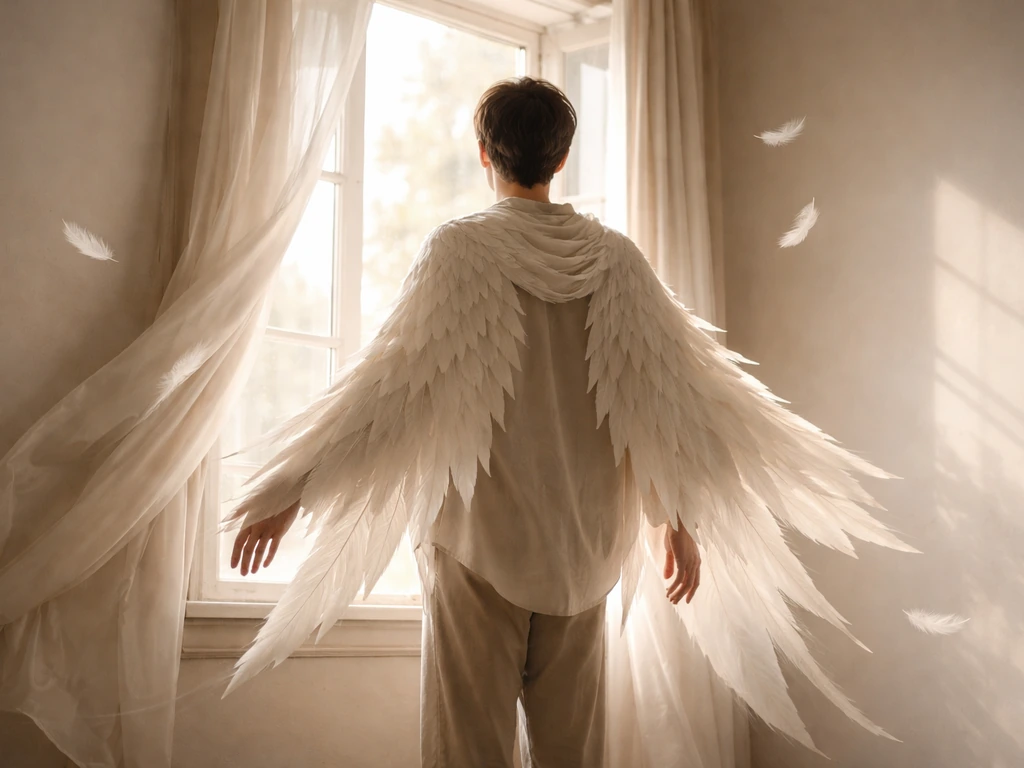
When someone calls a person a "human bird" as a character description, they are usually reaching for one of a handful of deeply rooted associations. Freedom is the big one. Birds are the most universal symbol of freedom across human cultures, because flight represents the ability to leave, to rise above, to be unconstrained. A person described as bird-like in this sense is usually independent to the point of being hard to hold onto.
Beyond freedom, birds carry strong messenger energy in the symbolic imagination. Across European, African, East Asian, and Indigenous American traditions, birds are go-betweens: they carry news between the living and the dead, between the human world and the divine. A person labeled a "human bird" in a spiritual context is often someone seen as a conduit, someone who picks up on things others miss or delivers important information at the right moment.
Intuition and watchfulness are two more common associations. Birds of prey in particular, like hawks and eagles, are linked to sharp perception and the ability to see the full picture from a high vantage point. Describing someone as bird-like in this way is a compliment to their awareness. On the flip side, some bird associations carry nervous energy: think of the skittish sparrow or the anxious wren, where "bird-like" implies quickness and alertness bordering on anxiety.
- Freedom and independence: the defining bird-human trait in most Western and many Eastern symbolic systems
- Messenger energy: sensitivity to signals, acting as a bridge between people or between the physical and spiritual
- Sharp intuition and perception: especially linked to raptors (hawks, eagles, owls)
- Lightness and transience: a person who does not stay long, who moves through life without accumulating weight
- Voice and expression: song, whistling, and communication (as with Joe Belmont's bird impressions)
- Transformation: the capacity to change, shift, or evolve, often linked to birds in spiritual contexts
Why the specific bird species changes everything
This is the part most people skip, and it leads to real misreads. "Human bird meaning" is not a single category of symbolism. People also often look specifically for the hood bird meaning, since that phrase can carry its own slang-style connotations Human bird meaning. The bird in question rewrites the meaning almost entirely. A person described as eagle-like carries connotations of power, sovereignty, and vision. A person described as crow-like carries very different weight: intelligence, trickery, omen energy, and in many traditions, a connection to death or magic. A person called a robin in British folk tradition is associated with good luck and the arrival of new cycles. These are not interchangeable.
| Bird | Core symbolic trait | Common human-bird meaning |
|---|---|---|
| Eagle | Power, vision, sovereignty | A leader, visionary, or person of high authority |
| Owl | Wisdom, mystery, night knowledge | An intuitive, perceptive, or otherworldly person |
| Crow / Raven | Intelligence, omen, trickery, magic | A cunning, liminal, or spiritually connected person |
| Sparrow | Resilience, community, simplicity | Someone humble, adaptable, or socially connected |
| Hummingbird | Joy, energy, speed, lightness | Someone vivid, fast-moving, and life-affirming |
| Swan | Grace, transformation, inner beauty | A person of elegance or one undergoing deep change |
| Hawk | Focus, messenger, sharp perception | A watchful, decisive, or spiritually alert person |
If you encountered the phrase in a specific context and you know the bird species, look up that bird's symbolism as a separate step. The species is the key that unlocks the actual meaning. Without it, you are working with a very general idea that could mean almost anything.
How different cultures read the human-bird connection
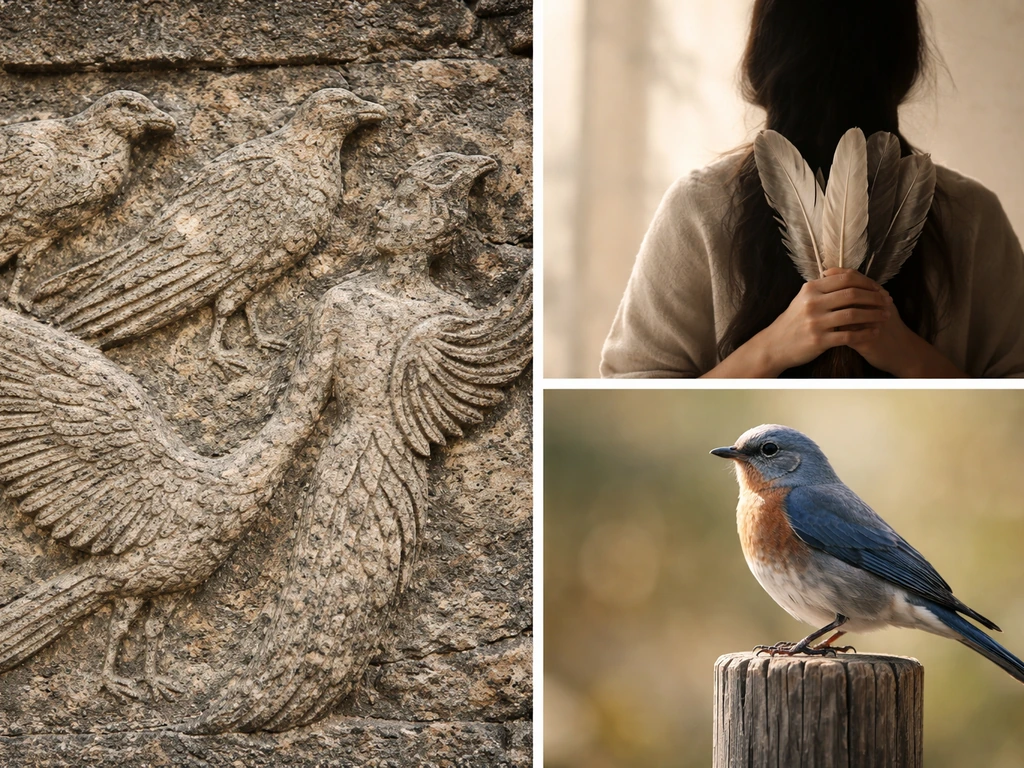
The idea of humans merging with birds is genuinely ancient and global, but it takes radically different forms depending on the tradition. One of the most striking modern encounters with this came during the 2018 PyeongChang Winter Olympics closing ceremony, when the Korean Inmyeonjo went viral. TIME reports that “Inmyeonjo” became a viral topic during the 2018 PyeongChang Olympic ceremonies, with audiences reacting with confusion or awe Inmyeonjo became a viral topic during the 2018 PyeongChang Olympic ceremonies.
The Inmyeonjo is a traditional bird with a human face, rooted in Korean mythology and art going back centuries. Audiences unfamiliar with the concept reacted with confusion and unease, which is a perfect illustration of how a culturally specific human-bird motif can collide with people who have no frame of reference for it.
In Indigenous American traditions, the idea of a human taking on bird form (or a bird taking on human form) is often central to creation stories, vision quests, and shamanic practice. The transformation is rarely just symbolic: it is a real spiritual event with real consequences. In Celtic and Norse traditions, shape-shifting into birds (particularly ravens, swans, and eagles) appears frequently in mythology, often as a marker of divine power or a punishment. In Hindu iconography, Garuda is a divine human-bird hybrid, a vehicle for Vishnu, representing speed, devotion, and the destruction of evil. Egyptian mythology gives us Thoth (ibis-headed) and Horus (falcon-headed), where bird features signal specific divine domains.
In modern Western spirituality and dream interpretation, the human-bird connection usually appears as a metaphor for the soul's desire for freedom or transcendence, or as a signal that the person is being asked to rise above their current circumstances. This is quite different from the literal mythological fusion found in older traditions, and it is worth knowing the difference when you are trying to interpret something you encountered.
| Tradition | Human-bird concept | What it typically signals |
|---|---|---|
| Korean (Inmyeonjo) | Bird with a human face | Otherworldly beauty, auspiciousness, spiritual realm |
| Indigenous American (varies) | Human-to-bird transformation | Spiritual power, vision quest, divine communication |
| Celtic / Norse | Shape-shifting into birds | Divine power, trickery, or punishment/transformation |
| Hindu | Garuda (human-eagle hybrid) | Devotion, divine speed, destroyer of evil |
| Ancient Egyptian | Thoth (ibis), Horus (falcon) | Specific divine domains: wisdom, sky, rulership |
| Modern Western spirituality | Bird as metaphor for the soul | Desire for freedom, transcendence, rising above limits |
How to figure out which meaning applies to what you saw or heard
Run through this checklist before settling on an interpretation. It will save you from reading too much (or too little) into what you encountered.
- Where did you encounter it? A dream, a tattoo, a book, a performance, a ceremony, a piece of slang? The medium narrows the likely meaning significantly.
- Is a specific bird species named or shown? If yes, look up that bird's symbolism directly. The species overrides the general "bird" meaning.
- Is there a cultural or geographic origin attached? Korean, Celtic, Indigenous American, and Egyptian human-bird concepts mean very different things. Identify the tradition before interpreting.
- Is it literal or figurative? A named historical performer like Joe Belmont used "human bird" as a literal skill-based nickname. A poet using the same phrase probably means something metaphorical.
- Is it spiritual or secular? Spiritual and folkloric interpretations involve transformation, omens, and soul symbolism. Secular uses are usually about personality traits or poetic description.
- Did you dream it? Dream birds almost always carry personal symbolic weight tied to freedom, communication, or transition. The species and the bird's behavior in the dream both matter.
- Is it slang or casual online language? Check whether the phrase is being used humorously or informally to describe someone's appearance or personality, with no deeper meaning intended.
Applying the symbolism without getting it wrong
The most common misread is assuming there is one universal "human bird" meaning and projecting it onto every encounter. Hot bird meaning is different from human-bird symbolism, so the “bird” in the phrase you saw matters one universal "human bird" meaning. There is not. What you want to do is treat the phrase as a category header, then drill down using the species, the cultural context, and the medium.
If someone calls you a bird in an affectionate or admiring way, they are probably reaching for freedom, lightness, or sharp perception. If you encountered it in a spiritual context, they may be pointing toward transformation or messenger energy. If you saw it at a cultural ceremony and had no idea what you were looking at (hello, Inmyeonjo), that is a named traditional motif worth researching on its own terms.
A few practical dos and don'ts. Do not assume a bird-related description in one cultural tradition maps cleanly onto another. Crows mean very different things in Japanese culture (guidance, family loyalty) versus some European folk traditions (bad omens). Do not jump straight to omen or superstition when a simpler personality-trait reading fits the context. And do not ignore the species. Whether the bird in question is a sparrow or an eagle is not a small detail. It is the whole meaning. Related expressions like high bird meaning or hood bird meaning follow the same principle: the modifier next to "bird" is always the clue that unlocks the specific interpretation.
If you are applying the symbolism to yourself, such as exploring what it means that you feel drawn to bird imagery or that birds appear repeatedly in your dreams or creative work, the healthiest approach is to treat it as a mirror rather than a prescription. Bird symbolism reflects something you already sense about yourself. It is a language for naming qualities like freedom, perception, or transformation that are genuinely hard to articulate otherwise. Use it as a prompt for reflection, not as a fixed verdict on who you are.
FAQ
If I saw the term “human bird” next to a performer name, what does it most likely mean?
It usually changes the meaning from symbolism to identity (nickname or stage persona). Look for clues like performance, public persona, or a literal description of whistling, mimicry, or costumes. If it reads like admiration for a talent, it is more likely an informal label than spiritual messaging.
What should I do if “human bird meaning” is used in a caption or quote, but the bird species is not stated?
Treat it as incomplete until you identify the modifier and the setting. For example, “eagle-like” or “crow-like” points to very different traits and myth themes than a generic bird reference. Also check whether the word is used as a compliment, an insult, or a myth reference, because tone strongly narrows the interpretation.
How can I interpret “human bird” when it appears in a dream without clear cultural context?
Dream interpretations often hinge on the dream’s action and your emotional state, not just the bird imagery. Ask whether you felt trapped or empowered, whether the human-bird figure was communicating, and whether flight, watching, or hiding was involved. Those details can shift the reading from “freedom desire” to “watchfulness” or “a message coming through.”
Does “human bird meaning” work the same way for tattoos and symbolic art as it does for spiritual references?
If it appears as a tattoo, the meaning may be personal symbolism rather than a universal code. Look for accompanying elements (cage, wings, a specific species, compass directions, dates, names) because those usually specify whether the tattoo is about freedom, protection, transformation, or messaging. A bird-and-human motif in particular is often chosen for identity, not prophecy.
Are “human bird,” “high bird,” and “hood bird” talking about the same symbolism?
Yes, but you need to be careful about treating it as the same thing as other “bird” phrases. The article’s key idea is that the specific bird and the wording modifier drive the meaning. If you are comparing related terms like “high bird” or “hood bird,” confirm the original phrase used and the setting where you found it.
How do I avoid over-interpreting “human bird” when I only found it in memes or casual posts?
If you are reading it online slang-style, meanings can be crowd-influenced and change over time, so you should prioritize who said it, to whom, and what the surrounding sentence is doing. Check whether it is affectionate, teasing, or describing a look or behavior. That practical tone read often prevents over-spiritualizing.
What is the best way to interpret “human bird” when it is tied to a specific culture or viral artwork?
If you know the culture or tradition, you can use that as the “primary key,” then confirm the exact motif. In cases like named mythological figures, traditions, or viral performances, the audience may be reacting to the mismatch in familiarity. Your best move is to identify whether it is a specific named concept, an artistic adaptation, or a generic metaphor.
How can I tell whether “human bird” in a text is personality description versus an omen?
A common mistake is assuming “omen energy” automatically. If the phrase is used to describe someone’s personality, it usually maps to traits like independence, sharp perception, or messenger behavior rather than fortune-telling. Only lean omen or superstition when the text explicitly frames it as warning, death magic, or ritual consequence.
What’s a reliable step-by-step method if I have a picture but no caption for what “human bird” refers to?
Because the species changes the symbolism, you may need a two-step approach: first, determine whether the “human-bird” idea is literal (myth, iconography) or metaphorical (dream, self-reflection). Then identify the bird type from visual or textual clues. Without both, you risk choosing the wrong symbolic lane.
If I keep seeing bird-human themes in my life, how should I use it for self-reflection without making it a fixed identity?
When applying it to yourself, focus on behaviors and feelings you already recognize, then test the mirror idea. For example, if bird imagery keeps showing up alongside restlessness, ask what “untethered” feels like in your life right now (work, relationships, creative constraints). If it pushes you toward shame or fixed identity labels, that is a sign to reframe it as reflection, not verdict.
Next Article
Good Lord Bird Meaning: Exclamation vs The Good Lord Bird
Meaning of good lord bird: exclamation vs The Good Lord Bird title, plus bird symbolism and how to interpret it.