When someone says 'broken bird,' they almost always mean a person who has been emotionally wounded by life, someone who carries trauma, loss, or deep hurt and hasn't fully healed from it. That's the figurative meaning, and it's by far the most common use you'll encounter in conversation, writing, social media captions, and song lyrics. The literal meaning, a bird with a physically broken wing that can't fly, is real too, and if that's what you're dealing with, the steps are different and more urgent. This guide walks through both, helps you figure out which one is meant, and tells you exactly what to do next.
Broken Bird Meaning: Literal and Figurative Uses Explained

Marcus Winters
29 Apr 2026
What 'broken bird' actually means: both definitions
The phrase has three documented meanings in English, and knowing all three helps you land on the right one fast. The first is the straightforward literal one: a bird that cannot fly because one or both of its wings are broken. The second, much less common, is an aviation slang term for a grounded or downed aircraft, an 'unflyable bird' in the mechanical sense. The third, and by far the most widely used in everyday language, is figurative: a troubled or emotionally fragile person, especially one who is still dealing with the aftereffects of personal trauma.
The figurative definition is the one you'll find in dictionaries like Wiktionary and YourDictionary, and it's the one that shows up in fiction, poetry, song titles, and casual conversations about relationships. When people call someone a 'broken bird,' they're drawing on the core symbolism of birds as creatures of freedom and lightness, and then imagining what it looks like when that freedom is taken away. The image is immediately evocative: something that should soar, grounded.
What it says about a person when you call them a 'broken bird'
The figurative use of 'broken bird' carries a lot of emotional weight. It describes someone who has been through something genuinely hard, abuse, grief, betrayal, repeated disappointment, and who shows the signs of it. That might look like withdrawal, hypervigilance, difficulty trusting people, emotional fragility in moments that seem small from the outside, or a kind of sadness that sits just beneath the surface. If you meant the figurative fragile bird meaning, notice the signs like emotional fragility, withdrawal, and difficulty trusting people. The phrase acknowledges that the hurt is real and visible, not something the person is imagining or exaggerating.
There's also an implied gentleness in the term. Calling someone a 'broken bird' usually signals empathy, not criticism. It suggests this person needs patience and care, not pressure or judgment. That said, the phrase can tip into something slightly problematic if used condescendingly, as if the person is permanently broken or defined only by their damage. Context and tone matter a lot here, which is worth keeping in mind both when you hear it and when you choose whether to use it yourself.
In relationships, 'broken bird' sometimes describes the dynamic where one partner is drawn to fixing or rescuing someone emotionally wounded. This is sometimes called the 'broken bird syndrome' in informal psychology circles, referring to the pattern of being attracted to people who need saving, sometimes at the cost of one's own wellbeing. It's a useful shorthand for that relational pattern even if it's not a clinical term.
How to tell which meaning is intended
Context does almost all the work here. A few reliable cues will get you to the right interpretation in seconds.
| Context Clue | Most Likely Meaning |
|---|---|
| Talking about a person, their feelings, or a relationship | Figurative (emotionally fragile person) |
| Found an injured bird outside, bird can't fly | Literal (physical injury) |
| Song title, poem, social media caption about emotions | Figurative |
| Aviation or military context | Slang for grounded aircraft |
| Wildlife, nature, or animal care discussion | Literal |
| Story or fiction where a character is described this way | Figurative |
Pay attention to what surrounds the phrase. If someone texts you 'she's kind of a broken bird, you know?' after talking about a friend's rough divorce, they mean it figuratively. If someone says 'there's a broken bird on my porch and it can't move,' that's literal. If you're trying to interpret the phrase in context, this guide breaks down the worry bird meaning too, including the common figurative and literal uses. The surrounding words almost always make it obvious. When you're genuinely unsure, especially in writing or a post without much context, it's fine to ask a simple clarifying question: 'Are you talking about someone going through a hard time, or did you actually find a hurt bird?'
Common phrases and variations you'll run into
The core phrase 'broken bird' has a few close relatives that share the same emotional DNA. If you are also curious about the origami bird meaning in symbolism, the details can vary by tradition and context Broken-winged bird. 'Broken-winged bird' is the more explicitly literal variant, though it gets used figuratively too, especially in poetry.
Langston Hughes used the image of a 'bird with a broken wing' in his poem 'Mother to Son' and related work to evoke dreams deferred and hope tested but not destroyed. 'Wounded bird' is a softer version of the same idea, implying hurt without necessarily implying permanent damage. 'Caged bird' shifts the metaphor slightly toward oppression and restricted freedom rather than trauma, which is its own distinct symbolism.
You might also encounter related concepts like a 'fragile bird,' which emphasizes delicacy over damage, or a 'lost bird,' which leans more toward confusion and directionlessness than emotional wounding. 'Sorrow bird' and 'worry bird' are more folkloric in feel, often tied to specific cultural traditions around grief and anxiety. Each of these variants shifts the emphasis slightly, so when precision matters, it's worth noting which word is paired with 'bird' and what emotional register the speaker seems to be in.
How 'broken' changes classic bird symbolism
Birds carry some of the richest symbolic weight in human culture across almost every tradition. Paper bird meaning can also come up as a separate metaphor, so it's worth checking the context when you see it. In most Western and Eastern contexts, birds represent freedom, the soul, hope, transcendence, and the aspiration to rise above earthly difficulties. Doves signal peace. Eagles signal power and vision. Sparrows, small and humble, often appear in spiritual traditions as symbols of God's attention to even the most ordinary lives. The nightingale represents longing and beauty in pain. The phoenix, technically a bird, stands for complete renewal through destruction.
When you add 'broken' to any bird image, you invert the dominant symbolism. Freedom becomes confinement. Aspiration becomes disappointment. The soul or spirit is wounded rather than soaring. That inversion is exactly why the phrase lands so hard emotionally. It doesn't just describe someone as sad or hurt. It uses an image we universally associate with lightness and flight to show what it looks like when that capacity is damaged. The contrast does the heavy lifting.
In literature and spiritual writing, a broken bird often becomes a symbol of hope under pressure, because a broken wing can heal. The bird isn't dead. It's grounded temporarily, and that distinction matters. Writers use it to suggest resilience alongside vulnerability, the idea that someone is hurt but not finished. This is why the phrase appears so often in stories about recovery, therapy, and redemption arcs. Compare this to phrases like 'caged bird,' which implies an external force keeping someone trapped, while 'broken bird' tends to imply internal damage from past experience.
What to say (and what to avoid) when someone uses this phrase
If someone describes themselves or another person as a 'broken bird,' the most useful thing you can do is respond to the emotional content rather than the label itself. You don't need to analyze the phrase or comment on its accuracy. What the speaker is usually communicating is that someone has been through something hard and deserves care and patience.
- Do acknowledge the pain or difficulty behind the description: 'It sounds like she's been through a lot' works better than clinical analysis.
- Do ask gentle follow-up questions if you want to understand more: 'What happened?' or 'How are they doing now?' keeps the conversation open.
- Don't dismiss it as dramatic or overly poetic, especially if the person seems genuinely distressed.
- Don't lean too hard into the 'fixing' frame: responding with 'I can help fix them' can unintentionally reduce a person to their damage.
- Don't use the phrase yourself to describe someone if there's any chance it could sound condescending or pitying rather than empathetic.
- If you're writing and want to use it, consider whether 'wounded,' 'struggling,' or something more specific fits better for your audience.
In casual conversation, you can safely receive the phrase as an expression of empathy or concern and respond in kind. In writing, it's a powerful image precisely because it's compressed and evocative, just be aware that it has become fairly familiar territory in emotional storytelling, so it works best when the surrounding text gives it specific weight rather than using it as a generic shorthand.
If it's actually a literal injured bird: what to do right now
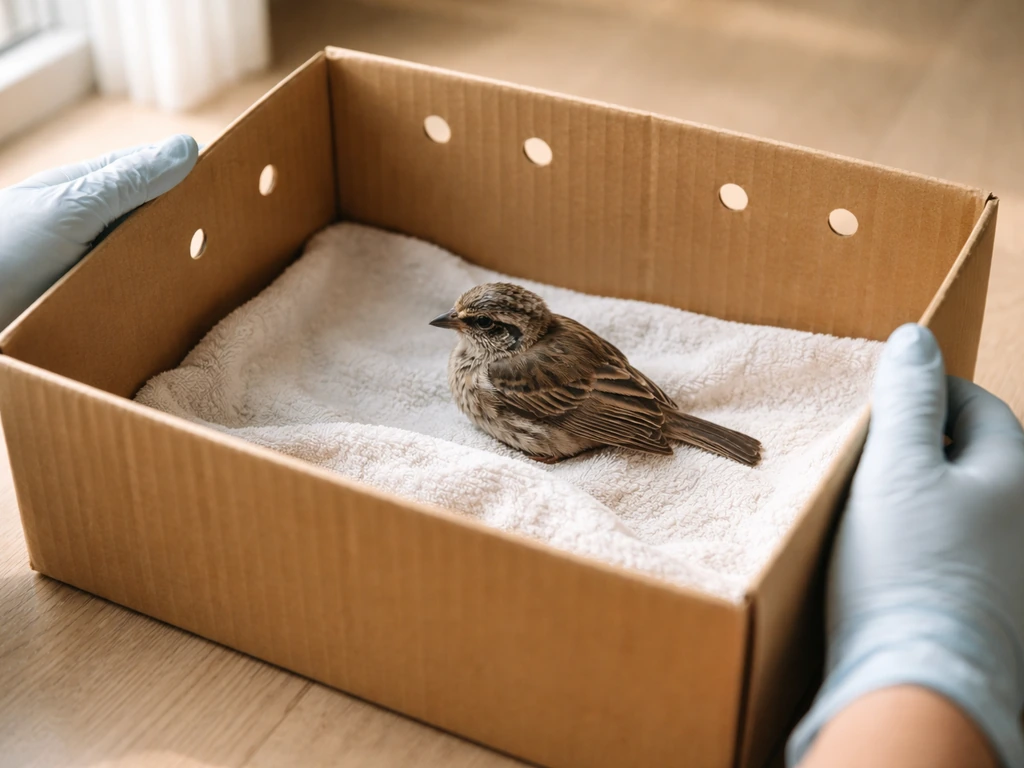
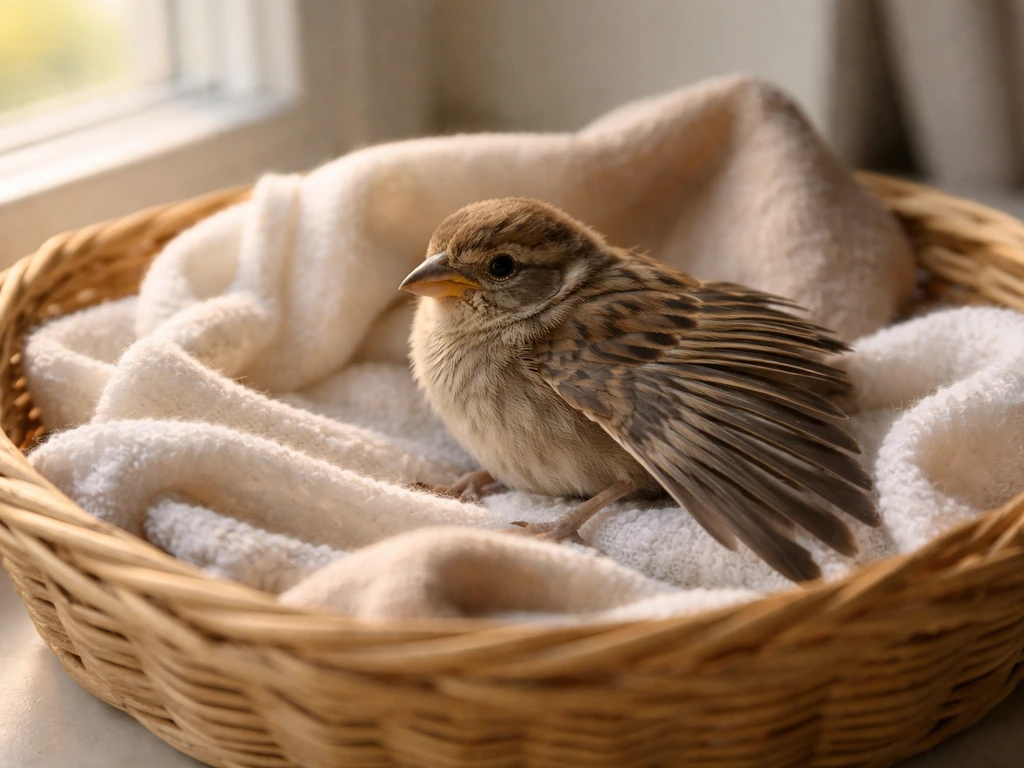
If you've landed on this page because you found a real bird with a broken or injured wing, here's what to do. Act quickly but calmly, because stress makes injuries worse for wild birds.
- Don't try to splint or treat the wing yourself. Wild birds have fragile bone structures and you're likely to cause more harm than good.
- Gently place the bird in a cardboard box with air holes. Line it with a soft cloth or paper towels. Do not give it food or water unless specifically instructed by a wildlife professional.
- Keep the box in a warm, quiet, dark place away from pets, children, and noise. Darkness helps calm the bird and reduces panic.
- Contact a licensed wildlife rehabilitator as soon as possible. In the US, you can find one through the National Wildlife Rehabilitators Association (nwrawildlife.org) or by calling your local animal control or state wildlife agency.
- Do not attempt to keep the bird as a pet. In most countries, keeping wild birds without a license is illegal, and a broken wing needs professional care to heal correctly.
- If the bird appears to be a domestic species like a parakeet or pigeon, contact a local avian vet instead of a wildlife rehab center.
Time genuinely matters with injured birds. A wing that could heal with prompt professional care can become infected or permanently damaged within hours if left untreated. The single most important step is getting the bird to a licensed rehabilitator, not trying to manage it at home.
Place the bird in a warm, dark, quiet place such as a shoebox lined with cloth or paper towel, and do not attempt to provide food, water, or first aid get the bird to a licensed rehabilitator. Mass. gov also notes that wildlife rehabilitators must have a Federal Migratory Bird Rehabilitation permit to care for migratory birds, including raptors or birds of prey, songbirds, and waterfowl [licensed rehabilitator](https://www.
mass. gov/info-details/find-a-wildlife-rehabilitator). Most rehab centers are free or low-cost for wild bird intake, so cost shouldn't be a barrier to making that call.
FAQ
If someone says “broken bird” about a person I know, how should I respond without making it worse?
Lead with care and a check-in, for example, “That sounds painful. Do you want to talk, or would you prefer distraction?” Avoid debating whether they are “broken,” and instead focus on what support they want (space, listening, practical help).
Is “broken bird” always respectful, or can it be insulting?
It is usually meant empathetically, but it can become condescending if it implies the person is permanently defined by their trauma. Watch for dismissive tone, repeated labeling, or pressure to “fix” them, which are cues the phrase is being used poorly.
What’s the difference between “broken bird” and “caged bird” when used figuratively?
“Broken bird” points to internal injury from past experiences, especially trauma or grief. “Caged bird” emphasizes restriction by external forces, like social control or oppression, so the fix often involves changing conditions rather than only offering comfort.
What does “broken bird syndrome” mean, and how do I know if it’s happening in my relationship?
It refers to a pattern where one partner is drawn to rescuing an emotionally wounded person, sometimes neglecting their own needs. Signs include resentment from overfunctioning, ignoring red flags, and feeling responsible for the other person’s healing.
Can “broken bird” be used in a positive way?
Yes, in some recovery narratives it signals vulnerability with potential for healing, implying the person is grounded temporarily rather than hopeless. The context usually includes growth language like repair, recovery, or learning to fly again.
If I’m writing and want to use “broken bird,” what context details make it land correctly?
Add at least one concrete cue tied to the emotion, such as distrust, withdrawal, grief anniversaries, or hypervigilance. Without surrounding detail, it can read vague or judgmental because the label alone does not show what the person is struggling with.
If I see a bird that looks hurt, is it safe to assume “broken bird” is literal?
Not always. Injured birds are often confused with injured-wing symbolism, but in real life you should treat any visible wing damage, weakness, or inability to fly as potentially serious. If the bird is down, prioritize getting it to a rehabilitator rather than trying to confirm the exact injury.
What should I do immediately after finding a wild bird with a damaged wing?
Keep it in a quiet, dark, secure container (ventilation required) and minimize handling. Avoid food or water attempts unless you are instructed by a rehabilitator, and keep pets and kids away to prevent stress and further injury.
How can I tell whether the phrase is literal in a message, or metaphorical?
Literal usage usually mentions physical details and location, like “on my porch,” “can’t move,” or “wing.” Metaphorical usage typically appears in relationship, grief, or mental health conversations, especially alongside words like “healing,” “trauma,” “hurt,” or “trust.”
Should I pick up a physically injured bird myself?
Generally no. Handling can worsen injuries and can also increase stress for the animal. If you must move it to safety, use thick gloves or a towel to prevent direct contact, and then contact a licensed rehabilitator as soon as possible.
Next Article
Origami Bird Meaning: Symbolism, Tattoo Meanings, and How to Decode It
Decode origami bird meaning: symbolism, bird type cues, cultural links, and tattoo interpretations with a ready checklis