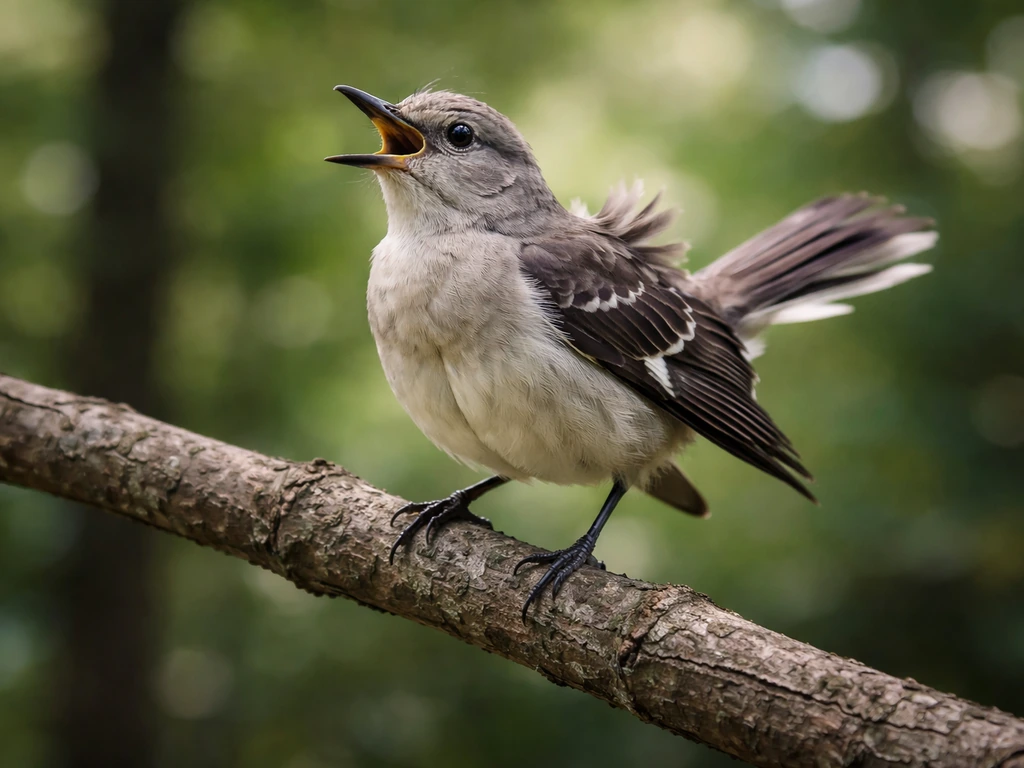
The mockingbird means imitation, voice, and innocence. Depending on the context, it can point to a real bird famous for copying every sound in its environment, a spiritual messenger tied to communication and intelligence in Native traditions, or the most famous symbol of harmless innocence in American literature. If you saw one, heard one singing at midnight, or stumbled across the word in a book or conversation, the core thread running through every interpretation is the same: this bird speaks in borrowed voices, and cultures have spent centuries deciding what that means.
Mockingbird Bird Meaning: Literal and Symbolic Interpretations

Marcus Winters
27 Apr 2026
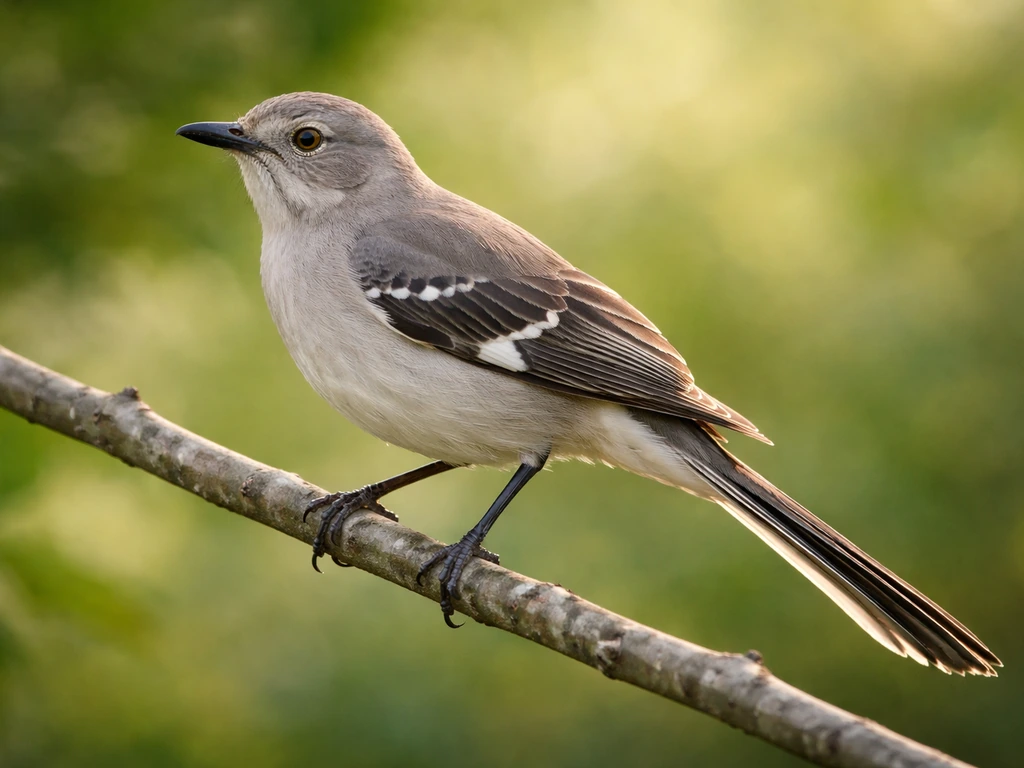
What a mockingbird actually is
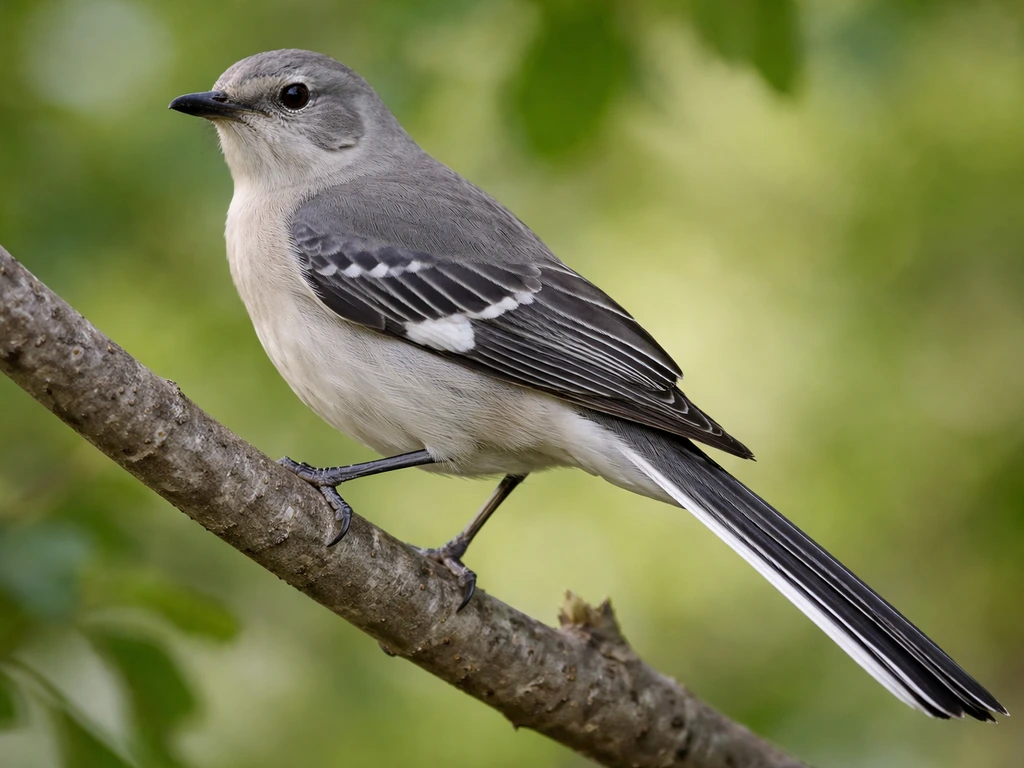
The northern mockingbird (Mimus polyglottos) is a medium-sized songbird with gray upperparts, a long black tail edged with white outer feathers, and a bright white wing patch that flashes when it flies. The scientific name translates roughly to 'many-tongued mimic,' which tells you everything. It breeds from southern Canada through the entire United States and into Mexico, making it one of the most widely encountered birds in North America. In Texas, it's practically everywhere you look.
What makes it unforgettable is the song. A mockingbird doesn't just sing a tune. It cycles through a long series of phrases, repeating each one two to six times before switching to the next, and a single bird can run through dozens of different sounds in a session lasting 20 seconds or more. It mimics other birds, frogs, insects, car horns, sirens, squeaky hinges, and musical instruments.
Males can sing almost endlessly, and not just during daylight. Unpaired males have been documented singing 24 hours a day during breeding season, and nighttime singing spikes noticeably during full moons.
When it feels threatened near a nest, it shifts to harsh, dry 'chew' calls and will fly directly at intruders, flashing those white wing patches as a warning.
The word itself comes from the same root as 'mock,' meaning to imitate or to ridicule through imitation. Etymologically, a mockingbird is literally a 'mocking bird,' named because of how it imitates other species so convincingly. Merriam-Webster defines it as a common grayish North American songbird noted for both the sweetness of its song and its imitation of other birds' calls. That dual quality, beautiful and borrowed at the same time, is exactly why the symbolism gets so interesting.
Why mockingbirds symbolize imitation, communication, and truth
The mockingbird's mimicry is what drives every cultural meaning attached to it. When you watch one sing from a rooftop, cycling through dozens of sounds in rapid succession, it raises an immediate question: is this authentic expression, or is it just copying? That tension between originality and imitation has made the mockingbird a natural symbol for communication itself, and more specifically, for the way voice can reflect something real even when it borrows from others.
In a positive reading, the mockingbird represents the power of adaptive communication. It hears, absorbs, and broadcasts. It doesn't just repeat sounds mechanically. It integrates them into a continuous performance that is, in its own way, entirely its own. Cultures that lean into this interpretation see the mockingbird as a symbol of intelligence, learning, and the ability to speak the language of many different audiences. In a more cautionary reading, mimicry without substance is hollow, and 'mockingbird' can shade into a symbol of superficiality or borrowed identity. The word 'mock' carries both meanings, and that ambiguity is part of what keeps the symbolism alive.
Spiritual and folklore meanings of the mockingbird
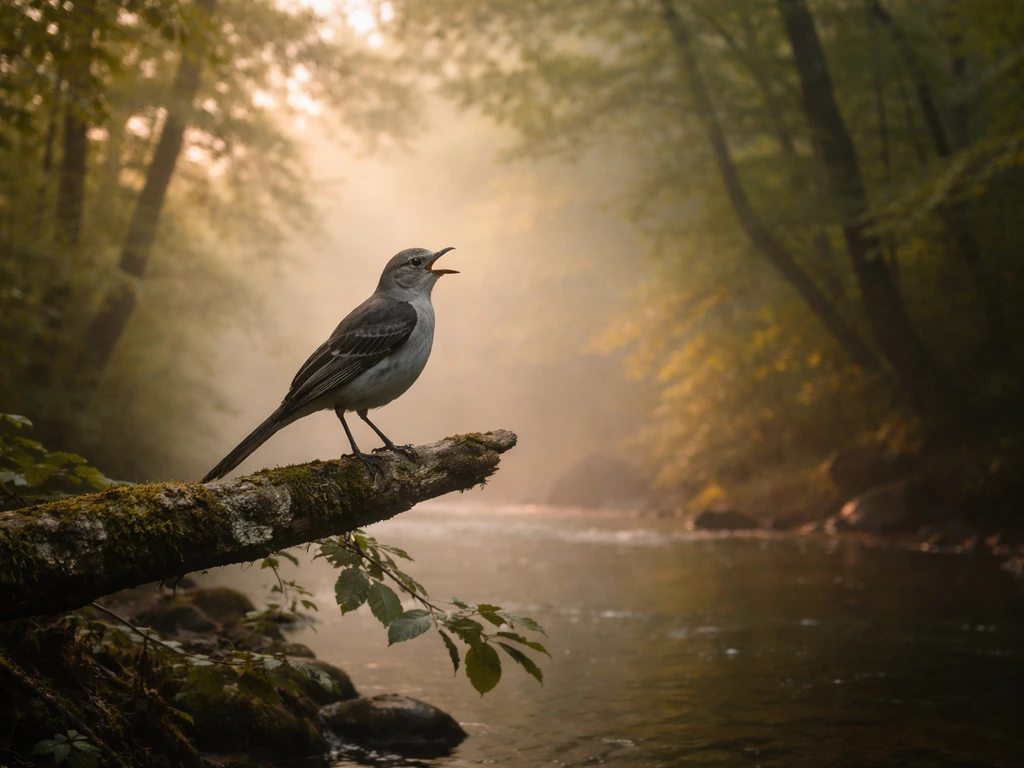
In Native American traditions, the mockingbird is treated as a figure of intelligence and voice. Among Cherokee people, there was a belief that feeding children mockingbird heads would make them clever and quick to learn, a direct connection between the bird's mimicry and intellectual ability. Different Southeast tribes attributed different specific meanings to the bird, which is worth keeping in mind: there is no single pan-Native American interpretation. Meanings vary by community, region, and tradition.
Across broader spiritual frameworks, the mockingbird is often interpreted as a messenger. Its ability to communicate across 'languages,' mimicking dozens of species and even human sounds, positions it as a bridge between worlds in some traditions. Some spiritual traditions specifically frame it as having a 'sacred voice,' meaning its song is not random noise but intentional transmission. If a mockingbird shows up persistently in your life or in your dreams, many traditions would read that as a prompt to pay attention to communication, to what you're saying and what you're hearing, and whether your own voice is authentically yours.
The mourning dimension also appears in folklore. The 1855 American song 'Listen to the Mocking Bird' features the bird singing over a grave, turning it into a symbol of loss and the persistence of memory. In this context, the mockingbird's endless, repeated song becomes something closer to a lament that won't stop, a voice that carries grief forward.
The mockingbird in literature and pop culture
The most influential literary use of the mockingbird is Harper Lee's 'To Kill a Mockingbird.' The symbolism is stated directly in the novel: it is a sin to kill a mockingbird because mockingbirds do nothing but make music and harm no one. The bird becomes a symbol of innocence and harmlessness, and the title's meaning extends to the human characters in the story who are similarly innocent and similarly destroyed. SparkNotes summarizes it precisely: 'to kill a mockingbird is to destroy innocence.' Miss Maudie's explanation in the novel connects the mockingbird's value to its total lack of harm, it gives without taking.
That literary anchor is so strong that when most English-speaking readers hear 'mockingbird,' innocence and moral wrongdoing are the first associations that surface. It's worth noting that the mockingjay in the Hunger Games series builds on this existing symbolism, adding a layer of resistance and rebellion. If you are also wondering about the mockingjay bird meaning, it is often discussed as a symbol of rebellion rooted in the same inspiration as the mockingbird.
In the Hunger Games, the mockingjay bird meaning builds on those established ideas while adding a clearer sense of resistance mockingbird meaning. The two are closely related symbols, and understanding the mockingbird's original meaning helps clarify why the mockingjay carries the weight it does in that story.
Outside literature, mockingbirds appear in song titles, album names, and idioms in ways that usually pull from either the mimicry angle or the innocence angle depending on context. Eminem's song 'Mockingbird' uses the bird as a symbol of tender, protective love, promising safety to a child in a difficult world. That's the innocence strand again, repurposed for a modern context.
Idioms and phrases involving mockingbirds
The most common phrase you'll encounter is 'to kill a mockingbird,' which, thanks to Harper Lee, has become a widely understood shorthand for destroying something innocent or vulnerable. You don't need to have read the novel for the phrase to land. It's embedded in the cultural vocabulary now.
Beyond that, 'mockingbird' in everyday use often functions as a metaphor for someone who imitates without adding anything original. Calling someone a mockingbird can be a gentle tease or a genuine criticism depending on tone, pointing to someone who echoes others' opinions, style, or words without bringing their own perspective. Merriam-Webster even uses the example 'a mockingbird was mocking a cardinal' to illustrate the verb form of 'mock,' which includes both straightforward imitation and contemptuous mimicry.
In older American folk speech, the mockingbird also appears in lullabies. 'Hush, Little Baby' (sometimes called the Mockingbird Song) uses the promise of a mockingbird as the first gift a parent offers a child, leaning into the bird's beautiful, varied song as something worth giving. This connects mockingbird meaning to comfort, care, and the soothing power of voice.
How to interpret a mockingbird sighting
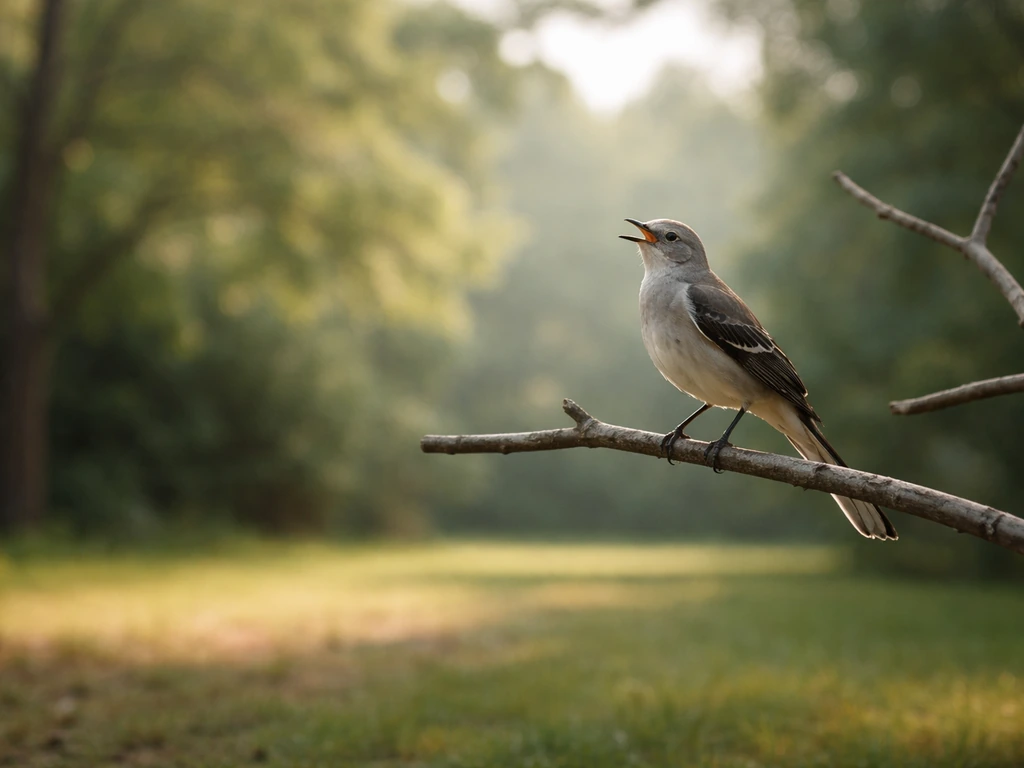
If you've seen or heard a mockingbird and want to know what to make of it, the bird's behavior and the time of day both matter. If you're searching for knock bird meaning, use the same idea: focus on context, tone, and what the phrase is doing in the moment mockingbird sighting. Here's how to read what you're actually witnessing.
| What you observed | What it likely means biologically | Common symbolic reading |
|---|---|---|
| Singing all day from a high perch | Breeding season behavior, almost certainly a male advertising territory | Voice, expression, performance, communication |
| Singing at night or near a full moon | More common during full moons; often an unpaired male still seeking a mate | Persistence, longing, a message you're meant to hear |
| Harsh 'chew' calls and aggressive display | Defending a nest from a predator or rival; mobbing behavior | Protection, warning, boundaries being asserted |
| Flashing white wing patches while flying at you | Active threat display toward a perceived intruder near the nest | A clear signal to reassess your presence or intentions |
| Appearing repeatedly in suburban or urban spaces | Highly adaptable bird; nests in parks, yards, hedges | Adaptability, finding your voice in any environment |
| Heard but not seen, song shifting rapidly | Mimicking local sounds including other birds, vehicles, insects | Layers of communication, listening beneath the surface |
The time of year also gives you context. Persistent singing and aggressive behavior almost always mean nesting is nearby. Females can start laying eggs in a second nest while the male is still caring for the fledglings from a previous brood, so you may be witnessing a bird managing an unusually complex domestic situation. That level of investment in family and territory is itself a meaningful observation if you're inclined toward symbolic readings.
Mistakes people make when interpreting mockingbird meaning
The biggest mistake is assuming there's one universal meaning. There isn't. The mockingbird means innocence in Harper Lee's novel, intelligence in Cherokee tradition, mourning in 19th-century American folk song, adaptive voice in spiritual contexts, and shallow imitation in casual speech. If you're looking for the phrase in everyday language, the mock bird meaning angle is closely related to the broader mockingbird meaning ideas, especially imitation versus innocence.
These meanings don't contradict each other, but they don't all apply at once either. The right interpretation depends entirely on the context in which you encountered the bird or the word. If you're looking for the definition and common use in everyday English, the mockingbird meaning in English is usually tied to imitation and innocence depending on context mocking bird meaning in english.
- Don't assume a nighttime mockingbird is 'mystical' by default. It is most likely an unpaired male singing because he hasn't found a mate yet. The biological explanation doesn't cancel the symbolic one, but it's worth knowing.
- Don't confuse the mockingbird with the mockingjay. The mockingjay is a fictional bird from a specific story and carries its own layered symbolism around rebellion and resistance. The mockingbird is real and carries older, different symbolism.
- Don't mistake aggressive behavior for a bad omen. A mockingbird dive-bombing you near a park bench is defending a nest, not delivering a warning about your life.
- Don't flatten Native American interpretations into a single 'spiritual animal' meaning. Different tribes have different relationships with the mockingbird, and the differences matter.
- Don't assume 'mockingbird' in a conversation or song title automatically refers to the Harper Lee symbolism. Check the context. The word also draws from mimicry, lullaby tradition, and folk mourning imagery.
If you want to interpret 'mockingbird meaning' correctly, start with the context: are you reading a novel, watching a bird in your yard, or hearing someone use it as a metaphor? Hoax bird meaning uses a different idea of what the word is supposed to suggest, so checking the context is key before you assume symbolism. Each context calls for a different framework. The real bird's behavior, its relentless song, its mimicry, its fierce nest defense, gives you the raw material that every cultural meaning is built from. Once you know what the bird actually does, every symbolic layer clicks into place on its own.
FAQ
When someone says “mockingbird” metaphorically, does it usually mean innocence or imitation?
It depends on whether you are seeing the bird or using the word. “Mockingbird” as a phrase in conversation is usually about imitation (sometimes teasing, sometimes criticism), while in American literature it most often points to innocence and harmlessness. If you are interpreting a real sighting, focus first on behavior near nests or active singing, then decide which symbolic layer fits that moment.
Is mockingjay symbolism the same as mockingbird bird meaning?
A common mix-up is treating “mockingbird” and “mockjay” as the same symbol. The mockingjay typically carries added themes like resistance and rebellion because it is built on the familiar innocence and “don’t harm” idea but redirected toward defiance. So if you want the original emotional baseline, start with mockingbird innocence and mimicry tension, then add the genre-specific meaning.
If I hear a mockingbird at night, does that always mean something bad or spiritual?
Not necessarily. Mockingbirds are known for mimicking many sounds, including harsh calls, but those noises are not automatically a “bad omen.” If the bird is singing through the night, or you see aggressive swooping near a specific spot, that’s more likely nesting defense or breeding behavior than a fixed spiritual message. Treat symbolism as a reflection prompt, not a guarantee of meaning.
How can I tell whether a mockingbird is singing for performance or because it’s threatened?
To read a real interaction, match the situation to behavior. If it is flashing wing patches and flying at you, it strongly suggests nest defense and you are close to a territory. If it is far away and simply singing, it is more likely advertising or performing. Symbolic interpretations can follow, but the bird’s actions tell you what kind of “message” is actually happening.
Is there one universal Native American mockingbird meaning?
In Native traditions, there is no single pan-Native meaning, even if some communities connect mockingbird mimicry to intelligence and learning. If you are trying to interpret respectfully, avoid assuming one generalized “Native” message applies everywhere. Use the specific community or story context when possible, otherwise treat it as one possible lens rather than the definitive answer.
Does “to kill a mockingbird” always mean the same thing in daily conversation?
The phrase “to kill a mockingbird” is culturally fixed, but its everyday use can shift meaning depending on who is speaking and what they are discussing. In most modern contexts it implies wrongdoing against someone vulnerable or harmless. If the speaker uses it for humor or exaggeration, the innocence angle may be metaphorical rather than literal to the novel.
Why can “mockingbird” sound positive in one context and insulting in another?
A lot of people assume the word only has one definition because they remember the novel. In everyday English, “mockingbird” can also be tied to the verb “to mock,” meaning imitation, and in some tones contemptuous imitation. So you’ll get a different meaning if the speaker sounds approving (beautiful mimicry) versus critical (copying without substance).
What’s a practical way to interpret a recurring mockingbird appearance without overthinking?
If you’re interpreting “mockingbird bird meaning” through dreams or repeated appearances, a practical approach is to track what your communication has been like recently (what you’re saying, what you’re hearing, and whether you feel authentic). Then ask whether your life currently fits the bird’s core themes: adapting your voice, borrowing influences, or lacking originality.
How do I decide whether mimicry is “adaptive communication” or “hollow imitation” in the symbolism?
Mimicry is not the same as dishonesty. The bird genuinely integrates sounds into its own performance, but the symbolism question people ask is about whether the “borrowed voice” has real substance. In real-world terms, look at whether the mimicry is constant and situational (like nesting season or local call-and-response) versus whether the context you’re applying it to is shallow imitation.
If I want to confirm I saw a northern mockingbird, what traits should I look for?
If your goal is pure identification, rely on field marks rather than symbolism. The northern mockingbird is typically gray with a long tail edged in white and a bright white wing patch that flashes during flight. Symbol meanings can be fun, but bird ID is separate, and misidentification can lead to wrong assumptions about behavior.
Next Article
Mockingjay Bird Meaning: Symbolism, Literal Sense, and More
Meaning of Mockingjay: literal bird term plus pop culture symbolism, mimicry, voice, resistance, and how to tell context