Why the nightingale matters in the first place
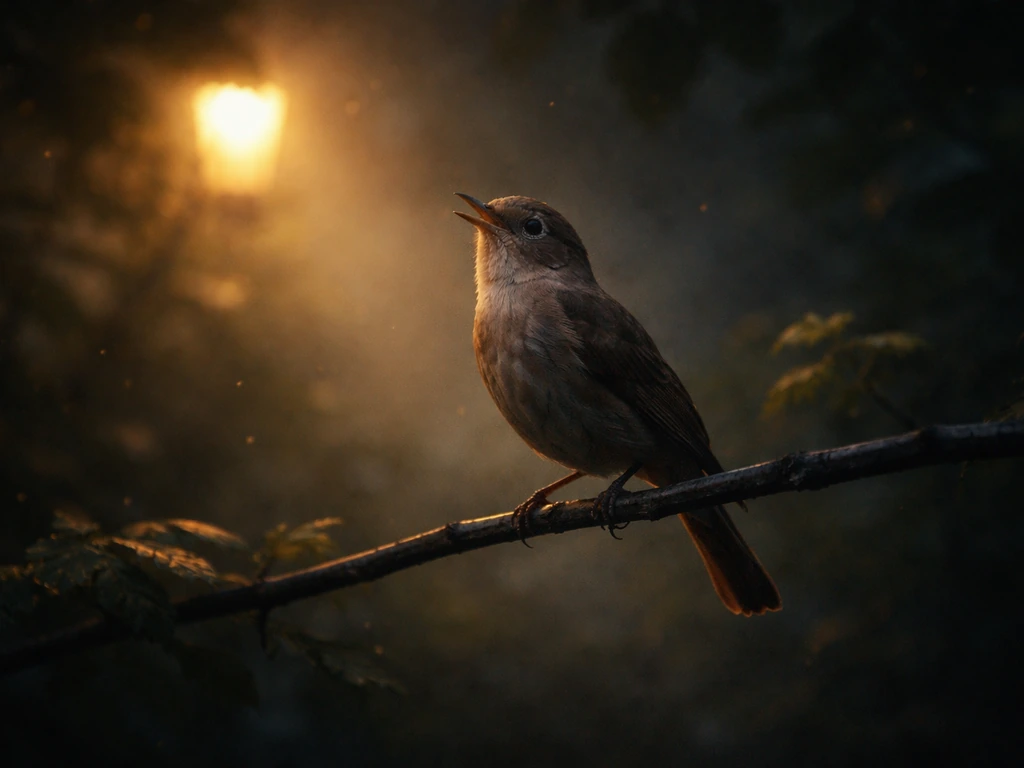
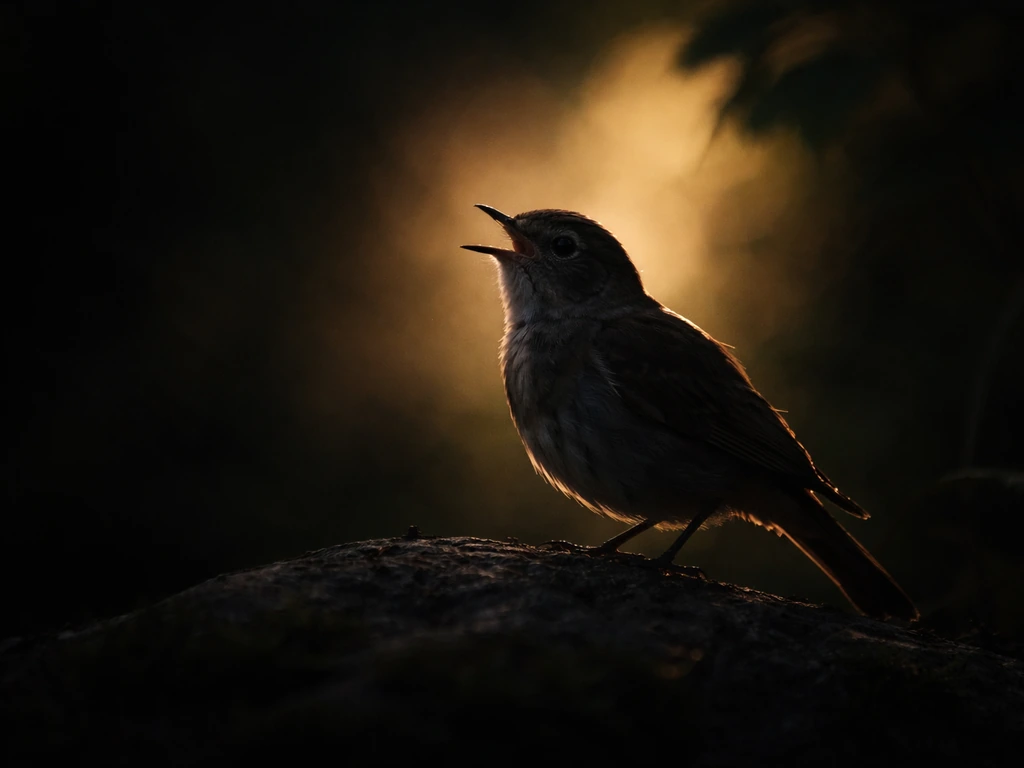
The common nightingale (Luscinia megarhynchos) is a small, fairly unremarkable-looking bird from the robin family. Its looks are not what anyone writes poems about. What sets it apart is its voice: the nightingale sings at night, and because almost no other birds do, its song stands out against complete silence in a way that feels almost supernatural. That biological fact, that one bird filling a dark, quiet night with elaborate, powerful melody, is what launched centuries of symbolism. Everything the nightingale represents culturally flows back to that one striking behaviour.
In Western literary tradition, the nightingale has been associated with creativity, nature's purity, and a kind of muse-like quality. It became a stand-in for the poet, the artist, the lover who cannot help but pour out feeling even in the dark. By the Romantic era, writers were treating the nightingale's song not just as impressive but as proof that nature itself could produce something like art. That gave the bird a second layer of symbolism: it came to represent the voice of nature itself, spontaneous and unscripted, which is exactly what Romantic poets were trying to capture in their own work.
The literary history of the nightingale is long and remarkably consistent. Two major traditions shaped how the word lands in English texts today, and knowing both makes any nightingale reference much easier to read.
The Philomela myth and the lament tradition
The oldest and darkest strand comes from Greek and Roman mythology. Philomela, a woman who was silenced through violence, is transformed into a nightingale. The story directly linked the bird's song to a woman recovering her voice, to grief, and to the idea that suffering could be transformed into something hauntingly beautiful. This is where the nightingale's association with sorrow and lament comes from. When Philip Sidney titled a poem 'The Nightingale' and used it to express grief and painful love, he was drawing straight from this tradition. When you see 'nightingale' in a poem and the mood is mournful or elegiac, the Philomela strand is almost certainly at work.
Keats, the Romantics, and ecstatic beauty
The second major literary strain comes from John Keats's 'Ode to a Nightingale,' one of the most analysed poems in the English language. A Reddit discussion similarly links Keats’s nightingale imagery to the Philomela tradition in Ovid and Greco-Roman aesthetics, framing the nightingale as a transformational escape parallel [\[OPINION\] Ovid’s Metamorphoses definitely influences Keats’s nightingale in Ode to a Nightingale](https://reddit. com/r/Poetry/comments/ulezx8).
Keats uses the bird's song as a symbol of ideal beauty and transcendence, but he also binds it tightly to human sorrow, mortality, and the impossibility of staying in that beautiful moment forever. That pairing, ecstatic beauty alongside acute awareness of loss, is now baked into what 'nightingale' means in literary English.
If you read a passage where a nightingale's song is described as both wonderful and somehow sad, the writer almost certainly has the Romantic tradition in mind, even if they've never read Keats directly.
Persian poetry and the rose-and-nightingale pairing
In classical Persian literature, the nightingale (bulbul) is one half of a famous symbolic pair: the nightingale as lover, the rose as the beloved. The nightingale sings its heart out for the rose, hopelessly devoted, eloquent, and passionate but ultimately 'doomed to love in vain.' This pairing is so well-established in Persian culture that the rose-and-nightingale motif is still widely recognised in art, architecture, and textiles originating from that tradition. If you encounter a nightingale in that cultural context, the meaning is essentially: devoted, expressive love that burns regardless of whether it's returned.
Outside formal literature, 'nightingale' functions as a simple, flattering metaphor for a gifted singer or beautiful voice. Calling someone 'a nightingale' in ordinary English is roughly equivalent to calling them a natural vocalist, someone whose voice is remarkable enough to stop you in your tracks. The Cambridge English Dictionary explicitly notes this usage. It's a warm, slightly old-fashioned compliment, the kind you might see in a theatre review or hear from an older relative complimenting a child who sings well.
Spiritual and folklore meanings
In spiritual and folklore traditions, the nightingale carries consistently positive associations, though the emotional tone shifts depending on the source. Here's how the main themes break down:
- Hope and resilience: The image of a bird singing beautifully in total darkness became a natural symbol for hope persisting through difficulty. Many spirit-animal and totem traditions interpret the nightingale as a sign that light and beauty are possible even in the hardest moments.
- Love and longing: Across European and Persian folklore, the nightingale is closely tied to romantic love, particularly love that is intense and emotionally charged rather than easy or comfortable.
- Emotional healing and expression: Because the Philomela myth frames the bird's song as a reclaimed voice, some traditions connect the nightingale with the healing power of expressing grief, writing, or speaking what has been suppressed.
- Transformation: The myth itself is about transformation, a person becoming a bird, which gives the nightingale a secondary layer of meaning around change and reinvention.
- Virtue and good works: Older Western spiritual interpretations took a simpler line. An early dream-book entry from the mystic tradition reads: 'To dream of the nightingale, signifieth good works.' Another public-domain source states: 'To hear a nightingale sing, is an omen of pleasant news.' These older readings centre virtue and positive outcomes rather than romantic longing.
- Intuition and spiritual guidance: Contemporary spirituality sources often frame hearing a nightingale (especially without seeing it) as a sign of intuitive or spiritual messaging, an invitation to listen more closely to inner guidance.
It's worth knowing that there is a genuine split in spirit-animal and dream-symbolism ecosystems between sources that emphasise 'hope and joy' and those that emphasise 'melancholy and lament.' Neither is wrong: they're reflecting different historical strands of the symbol (the Romantic ecstasy reading vs. the Philomela grief reading). If you're consulting a spirituality source and want to know which tradition it's drawing from, look at whether it references ancient myth and poetry or focuses more on the bird's song as a natural phenomenon.
How to interpret 'nightingale' depending on where you saw it
Context changes everything with this symbol. Here's how to read the clues based on where you encountered the word.
In a quote or poem
First, identify the emotional tone of the surrounding text. If the writing is mournful, elegiac, or about unrequited love, the Philomela or Persian lover tradition is most likely in play. If it's about transcendent beauty, inspiration, or the contrast between ideal experience and human limitation, the Keats/Romantic tradition is the reference point. If the nightingale is being used straightforwardly to describe a singer's voice, it's the everyday metaphor, no deeper symbolism required. The period of the text matters too: pre-19th-century English poetry often references the Philomela myth more directly; 19th-century Romantic and post-Romantic work is more likely to reference the 'voice of nature' idea.
In a tattoo
Tattoo symbolism for the nightingale usually draws on one of two main themes: voice and self-expression (reclaiming your own story, a tribute to music or creativity) or hope through darkness (the idea of beauty persisting in hard times). The design elements give you strong clues: a nightingale with a rose points toward the Persian love tradition; a nightingale in a night scene or among stars leans toward hope-through-darkness or Romantic transcendence; a nightingale near musical notes or a microphone is almost certainly a tribute to voice and song. If you're getting one or interpreting someone else's, ask about or look for those surrounding details.
In a dream
Dream interpretation for the nightingale hinges heavily on what you heard and saw, and how it felt. The most practically useful approach is to check three things: whether the bird was singing or silent (singing almost universally points to positive news, inspiration, or emotional release; silence can suggest something unexpressed or blocked); whether you heard the bird without seeing it (some traditions read this as intuitive guidance or a message you need to listen for rather than look for); and the overall emotional tone of the dream (serene and beautiful suggests hope or incoming good news; distressing or unsettling shifts the reading toward grief or unresolved emotion). Older dream traditions are clear that a singing nightingale in a dream is a good omen. Modern interpretations layer emotional nuance on top of that baseline.
In a text or conversation
If someone called you or someone else 'a nightingale' in a message or conversation, it's almost certainly the vocal metaphor: they think you (or the person they're describing) have a beautiful or impressive singing voice. It's a compliment with a slightly literary flavour. If 'nightingale' appeared in a more abstract or emotional context, check whether there's a rose mentioned nearby, whether the surrounding language is romantic or mournful, or whether the person seems to be quoting or referencing a poem or song.
When 'Nightingale' has nothing to do with the bird
This is one of the most common sources of confusion when people search for 'nightingale meaning,' so it's worth being direct: 'Nightingale' is also a surname, a place name, and a cultural reference that has nothing to do with bird symbolism. Because you might also be searching for nectar bird meaning, the safest approach is to check the exact wording and context before assuming the symbolism is the same.
In short, the wind up bird meaning is about how people describe emotions and outcomes like love, grief, or a standout voice, depending on context. Clockwork bird meaning is different from nightingale symbolism, but it can be interpreted using similar context clues. If you meant the bird specifically, the term usually points to love and longing, grief and lament, or a voice that stands out from the dark nemesis bird meaning.
Florence Nightingale

The most prominent non-bird use of 'Nightingale' is Florence Nightingale (1820 to 1910), the founder of modern nursing and a major Victorian cultural icon. She became famous under the nickname 'The Lady with the Lamp' for making night rounds to care for soldiers.
Because her persona involved night imagery and a lamp, her name can appear in contexts that superficially look like bird or nocturnal symbolism but are really about nursing history, Victorian culture, or healthcare. A practical tip: if 'Nightingale' appears capitalised alongside words like 'Scutari,' 'Crimea,' 'nursing,' 'lamp,' 'Florence,' or historical dates, you're looking at a reference to the person, not the bird. Britannica notes that during the Crimean War Florence Nightingale worked at [Scutari](https://www. britannica.
com/explore/100women/profiles/florence-nightingale) (Üsküdar) and wandered wards at night, which helped earn her the “Lady with the Lamp” title. Her family biography has even been published under the title 'Nightingales,' referring to the family name, which adds another layer of potential confusion.
Other named uses
Beyond Florence Nightingale, you'll encounter 'Nightingale' as a street name, a pub name, a character name in fiction, a school name, and a brand name. In each case, the connection to the bird is usually decorative or historical rather than symbolic. The nemesis bird meaning is often tied to themes like rivalry, consequences, and lessons that surface when something hidden comes to light.
The character or place was named 'Nightingale' because someone liked the associations of song and beauty, not because the deeper literary or spiritual symbolism is intended. To tell the difference, ask: is this a proper noun (capitalised, functioning as a name)? If yes, you're likely dealing with a named reference. Is it a common noun used descriptively (lowercase, describing a quality or feeling)?
Then the bird symbolism is in play.
Don't confuse nightingale with nightjar
One practical note: the nightjar is a completely different bird with its own cultural symbolism, and it occasionally gets conflated with the nightingale because both are associated with night sounds. If you’re trying to interpret “nightjar” as a symbol, its meanings are distinct from the nightingale’s love, lament, and voice symbolism. But the nightjar does not carry the long Western literary tradition of the nightingale. The nightjar has its own meanings rooted in folklore and superstition, quite separate from the love, lament, and voice symbolism of the nightingale. If you're researching one, make sure you haven't accidentally landed on information about the other.
A quick reference: nightingale symbolism by context
| Context | Most likely meaning | Key clue to look for |
|---|
| Persian poetry / art | Devoted, passionate love for an unattainable beloved | Rose appears alongside the nightingale |
| European Romantic poetry | Ideal beauty, inspiration, mortality, ecstasy and loss | References to transcendence, darkness, or Keats |
| Greek/Roman myth references | Voice, grief, transformation, recovering from silence | Philomela named or implied; elegiac tone |
| Everyday compliment | Beautiful singing voice | Describing a person's vocal talent |
| Dream (bird singing) | Good news, hope, inspiration, emotional release | Joyful or serene tone in the dream |
| Dream (bird silent) | Something unexpressed; listen to your intuition | Sense of waiting or something unspoken |
| Tattoo with rose | Love, longing, passionate devotion | Rose motif; Persian or Romantic influence |
| Tattoo with night sky | Hope through difficulty, resilience, inner light | Stars, moon, or dark background |
| Capitalised proper noun | A person, place, or brand named Nightingale | Surrounded by names, dates, or institutions |
How to confirm the meaning when you're still not sure
If you've seen 'nightingale' in a specific quote, image, or dream and you're still not certain which layer of meaning applies, here's the most reliable process. First, check the capitalisation: lowercase almost always signals the bird or its symbolism; capitalised usually signals a proper name. Second, look at the surrounding imagery or vocabulary: roses point to Persian love tradition; lamps or nursing point to Florence Nightingale; darkness plus beauty points to Romantic literary tradition; direct references to song or voice point to the vocal metaphor. Third, consider the cultural origin of the text or object: Persian, Middle Eastern, or South Asian contexts will almost always use the nightingale-as-lover frame; British Romantic-era contexts will use the Keats-influenced beauty-and-mortality frame; folk or spiritual contexts will use the hope-through-darkness or virtue frames.
For dream interpretation specifically, keep it simple: a nightingale singing is historically and consistently a positive omen across most traditions. The emotional register of your dream is your best guide to whether that positive signal is about love, creativity, hope, or incoming good news. If the dream felt joyful, lean toward hope and inspiration. If it felt wistful or bittersweet, lean toward longing and emotional processing. If you want to dig further, look for sources that specify which tradition they're drawing from, because the difference between 'joy' interpretations and 'melancholy' interpretations almost always traces back to whether the source is emphasising the Romantic ecstasy reading or the Philomela lament reading.