Robert Frost's "The Oven Bird" (1916) is about how life keeps going even after its peak has passed. The poem uses a bird singing in midsummer, well after the fresh bloom of spring, to ask a quiet but pointed question: when the best of something is already behind you, what do you do with what remains? Frost's answer, delivered through the bird's persistent song, is that you keep singing anyway.
The Oven Bird Robert Frost Meaning: Summary, Themes
Marcus Winters
5 May 2026
What "The Oven Bird" is in Frost's poetry
"The Oven Bird" was published in Frost's 1916 collection Mountain Interval (Henry Holt and Company). Henry Holt blank" rel="noopener noreferrer">published Robert Frost's Mountain Interval in November 1916, as described in the collection history here. It is a 14-line sonnet, which matters because the sonnet form has centuries of baggage as a vehicle for grand declarations about love, beauty, and time. Frost uses that weight deliberately, then turns it toward something quieter and almost deflationary: a lone bird in the woods making its territorial call long after the pretty season is done. The poem is neither a celebration nor a lament. It sits in that uncomfortable middle space, which is exactly where Frost liked to work.
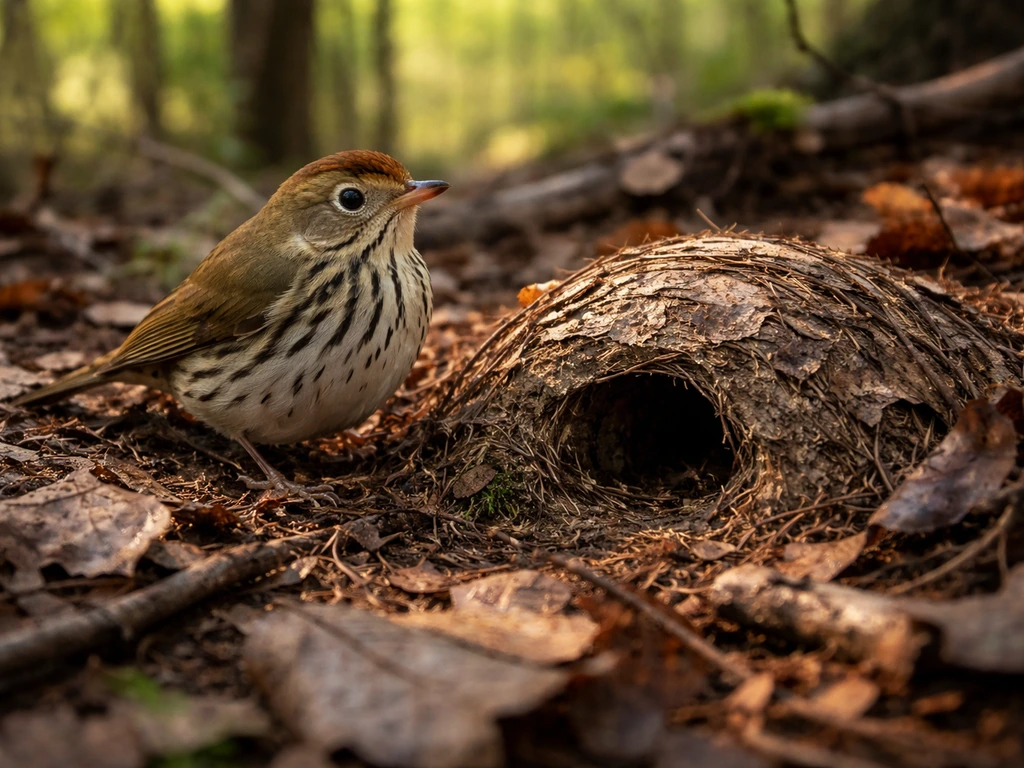
The bird itself is real. The ovenbird (Seiurus aurocapilla) is a North American warbler. Its name comes from the domed, oven-shaped nest it builds on the ground, with a side entrance like an old wood-fired oven. You hear ovenbirds far more often than you see them. They sing loudly and persistently from shaded forest understories, and their call sounds to most ears like a loud, emphatic "teacher-teacher-TEACHER." Frost knew these birds. He spent years farming and living in rural New England, and this is not a metaphor invented at a desk. It starts with a bird he actually heard.
What actually happens in the poem
The speaker describes an ovenbird singing in the woods in midsummer. It is not spring. The flowers have already bloomed and fallen. The leaves are fully out and starting to show the first signs of wear. The bird is singing loudly, almost insistently, and Frost's speaker frames the song as a kind of announcement or lesson. The bird "says" things throughout the poem, as if it is making a statement rather than just calling. By the final couplet, the poem pivots to a direct question: the bird is described as one who knows "in singing not to sing" and who frames the question of "what to make of a diminished thing."
That closing phrase, "a diminished thing," is the hinge of the whole poem. Everything before it sets up the conditions: the season is past its peak, the freshness is gone, summer is here in its full, slightly worn, less exciting form. And yet the bird is still there, still loud, still doing its work. The poem is not really narrating a scene so much as building a case, line by line, for that final question.
The poem's themes: time, cycles, and keeping going
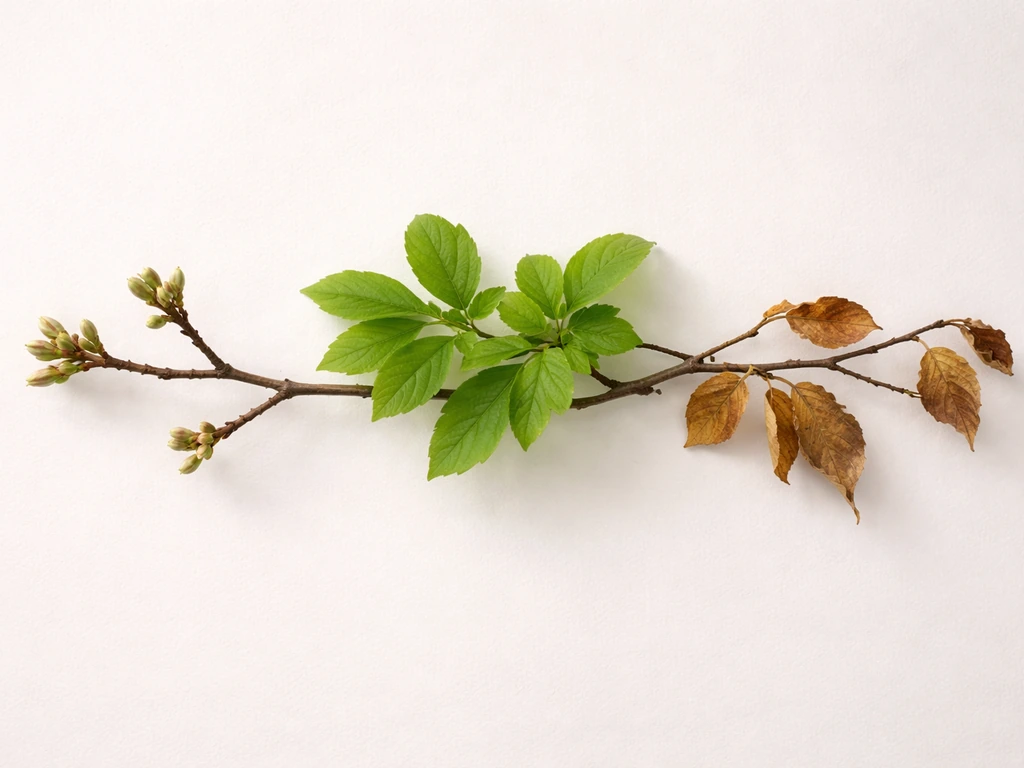
The central theme is diminishment and how we respond to it. Frost is working with the familiar human experience of realizing that the exciting, hopeful early phase of something has ended and what is left is ordinary, ongoing, unglamorous life. He maps this onto the seasonal cycle, which is one of the oldest frameworks humans have used to talk about time. Spring equals youth, possibility, beginning. Midsummer equals the middle stretch, when things are real but no longer new. The poem never mentions autumn or death directly, but the weight of what is coming is present throughout.
Survival and endurance are threaded through the poem alongside time. The ovenbird does not stop singing because the spring is over. It does not mourn the lost blossoms. It simply continues, adapting its song to the reality of the moment. There is something quietly stoic about this, and Frost seems to admire it without sentimentalizing it. The bird is not heroic. It is just persistent, and Frost seems to think that persistence, that willingness to keep making something even when the conditions are reduced, is worth paying attention to.
Sound is also a genuine theme, not just a device. The ovenbird is famous for being heard rather than seen. Its song is loud and penetrating and goes on long after other birds have quieted. Frost plays with the idea that there is a kind of honesty or even courage in making noise when others have stopped. The bird is not prettifying the moment. It is announcing things as they are.
The key symbols and what they actually mean
The ovenbird itself
The bird is both literal and symbolic, and the poem works because Frost keeps both dimensions alive at once. As a real creature, the ovenbird shows up in midsummer forests exactly as described. As a symbol, it stands for anyone or anything that keeps performing or producing after the obvious peak of vitality has passed. If you are looking at similar symbolism, you may also want to compare this with the oven bird meaning ovenbird. Frost is using the bird to think about poets, about aging, about America in a particular historical moment, and about the human condition broadly, all at the same time.
The oven metaphor
The "oven" in the bird's name carries its own symbolic load. An oven is where things are made, transformed by heat. It is not a glamorous image. It is workaday, domestic, functional. The bird's domed, roofed nest built on the forest floor earns it the name, and Frost pulls that image into the poem's atmosphere: this is a creature associated with labor and craft, not with bright plumage or a beautiful song. There is a kind of anti-romantic honesty in choosing this particular bird as the vehicle for the poem's argument.
The seasonal timing and the act of singing
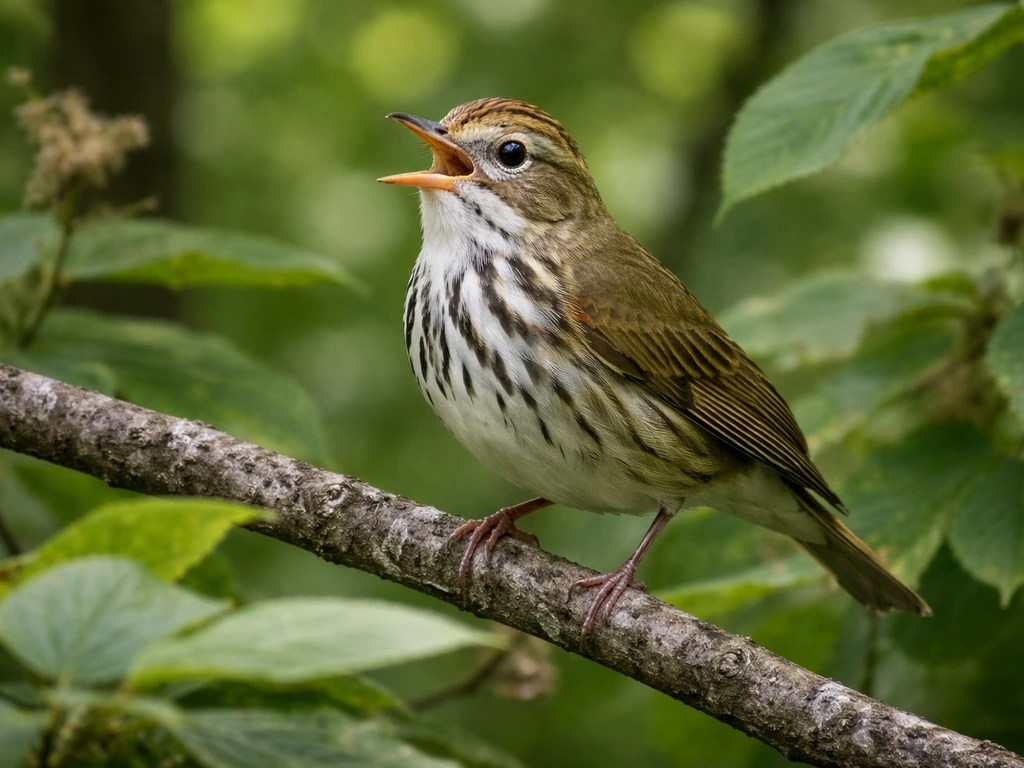
Frost is precise about when the bird sings. It is not spring. The poem specifically notes that the early flowers are gone and the year is well along. This timing is the whole setup. A bird singing in spring is unremarkable, expected, easy. A bird singing loudly in midsummer, after the beauty has passed and the work of the year is in full grinding swing, is making a different kind of statement. The act of singing at that moment is itself the argument Frost is making: it is possible, and maybe necessary, to keep making art and meaning even when the conditions are ordinary or diminished.
How to read the ending
The final couplet is where students and readers most often get stuck. Frost writes that the bird knows "in singing not to sing" and asks the question of "what to make of a diminished thing." The phrase "in singing not to sing" sounds contradictory but is actually pointing to something specific: the ovenbird's call is more of a loud, chanted announcement than what most people picture as melodic birdsong. It is vigorous and emphatic but not conventionally beautiful. Frost is saying the bird has adapted its expression to reality. It does not pretend to be a spring warbler. It does what it can with what the season offers.
"What to make of a diminished thing" is a question, not an answer, and that is deliberate. Frost does not tell you what to do with decline or endings or the less-exciting middle stretch of anything. He frames the question and then stops. But the poem itself, by existing as a carefully crafted sonnet, is already an answer of a kind. The poem is what you make of a diminished thing. You make something. You keep working. You find the form that fits the moment and you use it.
Common interpretations and how to check them against the poem
There are a few standard readings that circulate in classrooms and online, and most of them are partially right. Here is a quick comparison of the main ones, and what the poem actually supports:
| Interpretation | What it claims | Does the poem support it? |
|---|---|---|
| Poem about aging and mortality | The diminished thing is life in decline; the bird represents old age facing death | Partially. The seasonal cycle supports this, but Frost never makes it explicitly about death. The focus is on continuation, not ending. |
| Poem about artistic survival | The ovenbird is a stand-in for the poet who keeps working after early acclaim fades | Strongly supported. The sonnet form and the focus on "singing" throughout make this reading very credible. |
| Poem about America or modernity | The diminished thing is the New World after the loss of Edenic innocence or frontier optimism | Plausible but speculative. You need context outside the poem to sustain this one. |
| Poem about seasonal acceptance | Frost simply observes nature and finds peace in its cycles | Too tidy. The question at the end is genuinely unresolved and uncomfortable, not peaceful. |
The most reliable way to verify your reading is to stay at the line level. Every interpretation should be able to point to specific words or phrases in the poem as evidence. If your reading requires you to ignore the final question or explain it away, it is probably incomplete. The open-endedness of "what to make of a diminished thing" is not a flaw or an accident. It is the whole point.
A useful habit with Frost generally is to take his concrete images seriously before reaching for the abstract meaning. The ovenbird is a real bird with specific behaviors. The midsummer timing is real. The worn leaves and fallen flowers are observed, not invented. Frost builds from the ground up, and his symbolic layers ride on top of accurate natural observation. If something in your interpretation contradicts what the poem literally describes, adjust the interpretation first.
Why the oven-bird image connects to broader bird symbolism
Birds singing at the edges of seasons are one of the oldest and most widespread symbols in human language and folklore. Across cultures, a bird's song has been used as a clock, a signal, a sign of transition. The cuckoo announcing spring in European tradition, the nightingale as a symbol of grief and beauty in Persian poetry, the dawn chorus as a metaphor for renewal in folk sayings globally: birds time-stamp human experience in ways that feel both natural and inevitable.
Frost's ovenbird fits into this long tradition, but with a deliberate twist. Most bird symbolism in poetry and folklore focuses on the beginning of something: the first song of spring, the return of a migratory species, a fledgling leaving the nest. The ovenbird in this poem is notable precisely because it sings in the middle and pushes through to the end. It is a symbol of continuation rather than beginning, of endurance rather than arrival. That is a less common and more interesting use of bird imagery, and it is part of why the poem has stuck around for over a century.
The nest imagery, too, has symbolic resonance that runs through many bird-related traditions. The ovenbird's distinctive enclosed nest, built low on the ground rather than up in the canopy, suggests a kind of humble, functional shelter rather than lofty aspiration. Empty nest meaning often gets discussed in terms of transition, loss, and a shift toward a new phase of life, and the poem’s idea of diminishment connects to that same human question empty nests. If you have come across the broader meanings attached to bird nests, including the symbolism around empty nests or found eggs as markers of potential and transition, the ovenbird's ground-level, domed nest carries its own flavor: it is a workspace as much as a home, built for utility in an ordinary spot. If you are looking for the finding a broken bird egg meaning, this poem's themes of diminishment and persistence help frame how people interpret small, unexpected signs in nature found eggs. In that broader sense, finding a bird egg meaning can point to transition, fragility, and the question of what comes next empty nests or found eggs.
What Frost does that goes beyond general bird symbolism is make the act of singing, specifically singing at the wrong time by conventional standards, into the poem's core argument. In the “egg bound bird meaning” tradition, the symbolism often points to what happens when a bird cannot move on naturally oven metaphor. The bird does not wait for better conditions. It does not stay quiet until spring returns. It makes what it can from where it is and when it is, and in doing that it raises the most practical and honest question a poem (or a life) can ask: when things are diminished, when the peak is behind you, what do you make of what remains?
FAQ
Is the “oven bird” a metaphor, or is it meant to be a real bird?
It is both. Frost identifies it as an actual North American ovenbird, including the late-summer timing and its loud, emphatic call style. The symbolism grows out of those real traits, so if an interpretation ignores what the bird does at that specific point in the year, it usually drifts away from Frost’s setup.
What does “the season is past its peak” mean in the poem?
It means the poem’s mid-summer moment is already after the spring bloom and when newness has faded. The speaker points to worn leaves and fallen flowers, so “past its peak” is not a vague mood. It is a concrete seasonal marker that frames the question about what to do after early promise ends.
What does “in singing not to sing” mean, exactly?
It refers to the bird’s call not functioning like conventional “pretty” melody. The poem treats the call as a kind of announced instruction, vigorous and insistent, but not what most people picture as typical beautiful birdsong. The phrasing highlights adaptation, not silence.
Does Frost say the speaker should accept decline passively, or keep working actively?
The poem leans toward active persistence. The bird does not stop, does not mourn the lost spring, and continues producing its signal. Frost leaves the central question open, but the poem’s own careful form and its ending pivot suggest you respond by making meaning and work out of what remains.
Why is the ending question not answered directly?
Frost deliberately refuses to provide a tidy instruction. “What to make of a diminished thing” is structured as a prompt that forces the reader to supply the response based on the conditions the poem established. The poem’s existence as a shaped sonnet is a partial demonstration of how an answer can be made without spelling it out.
Is the poem about aging and growing older, or only about nature?
It includes nature as the starting evidence, but it is built to generalize. The seasonal cycle acts like an analogue for human phases, especially the shift from hopeful beginnings to an ordinary middle stretch. That is why students often read it as about aging, but the poem does not restrict itself to that single theme.
What is the role of the sonnet form in the meaning?
The form matters because it adds an organizing discipline that contrasts with the poem’s “diminished” conditions. A sonnet is a tightly engineered structure, so using it to carry a scene of worn leaves and ongoing life reinforces the idea that you can still create a finished, meaningful pattern when the moment is no longer at its most dazzling.
How should I approach the poem if I feel my interpretation is “too abstract”?
Start from the specific observations the poem supplies, especially the mid-summer timing, the fallen flowers, the worn leaves, and the bird’s distinctive style of loud call. Then, only after those details are accounted for, move to the abstract question. A good interpretation can usually quote at least one phrase that directly matches the image it claims to explain.
Do different “standard readings” conflict with each other, or can they all be true?
They often overlap but cannot all be primary at once. If two readings both fit many lines, one may still be missing the poem’s hinge in the final couplet. Treat the ending question as the test, because any reading that explains it away tends to lose what Frost is actually doing.
Is there a common mistake students make with this poem’s ending?
A frequent mistake is expecting the poem to provide a moral conclusion, like “you should do X.” Frost instead asks the question and then stops. If your notes rush past that openness, you miss the poem’s core method, which is to make the reader do the final work.
Next Article
The Oven Bird Meaning: Symbolism and Poem Explained
Understand the oven bird meaning in everyday symbolism and the oven bird poem themes, imagery, and message.