
The drongo bird meaning you are probably searching for falls into one of two very different categories: either you want to know what kind of bird a drongo actually is and what its behavior says about it symbolically, or you have heard someone called a "drongo" and want to know what that word means. Both are completely valid searches, and this guide covers both clearly. The short version: a drongo is a real bird family (Dicruridae) known for glossy black plumage, a distinctive forked tail, and a genuinely remarkable talent for deceptive mimicry. In Australian and New Zealand English, "drongo" also became a popular slang insult meaning "idiot" or "stupid person", which is almost the opposite of what the bird actually does in the wild.
Drongo Bird Meaning: Real Bird Traits and Symbolism

Marcus Winters
5 Jun 2026
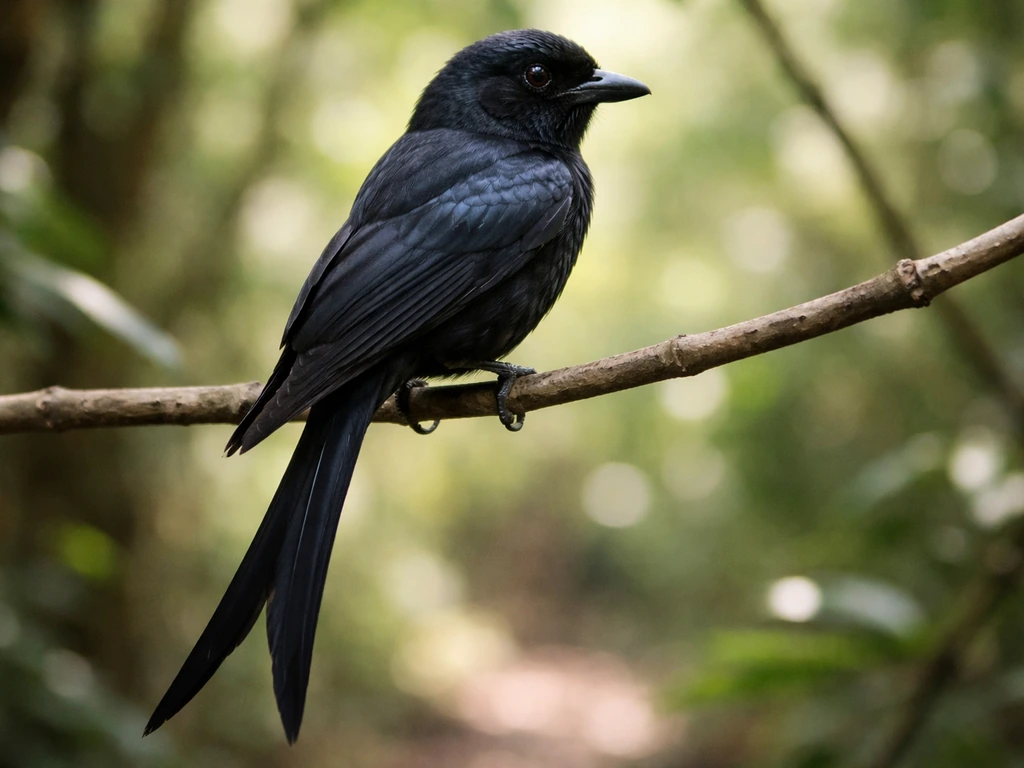
What a drongo actually is (the real bird)
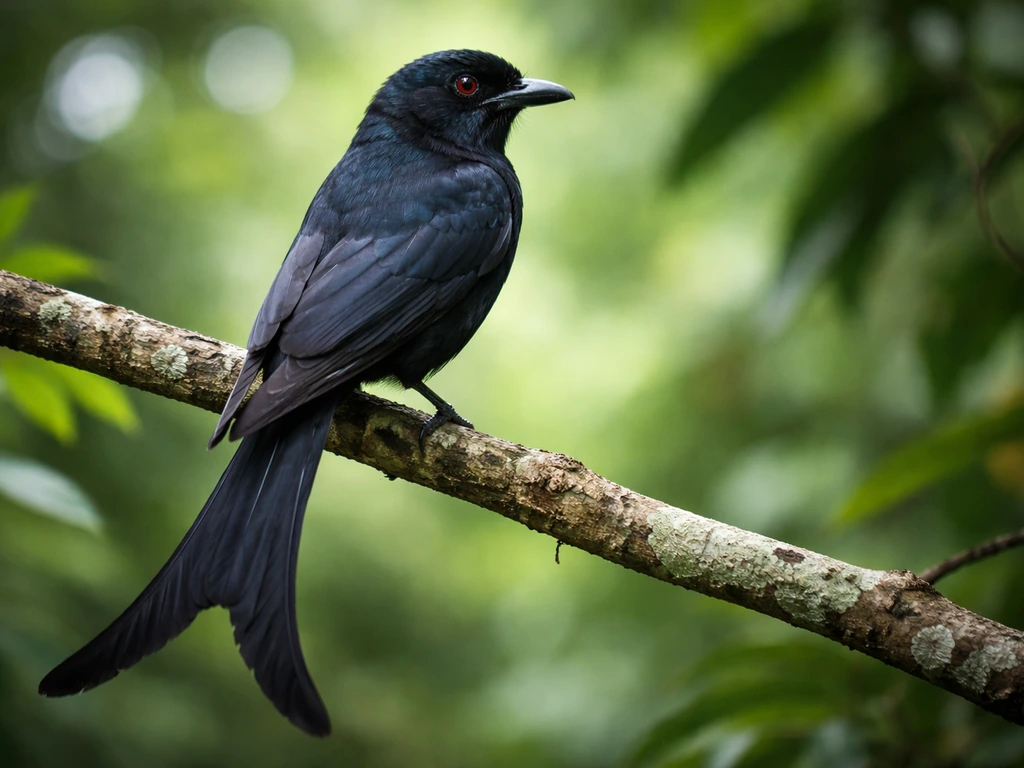
Drongos belong to the family Dicruridae and the genus Dicrurus. The species you are most likely to come across in images and wildlife articles is the fork-tailed drongo (Dicrurus adsimilis), which ranges widely across sub-Saharan Africa, from Gabon and the Congo Basin down through Angola, Botswana, Namibia, and into parts of South Africa. The greater racket-tailed drongo (Dicrurus paradiseus) is another frequently photographed species, found across South and Southeast Asia, including India, parts of China, and Indonesia, generally below about 1,500 metres in elevation.
Physically, drongos are hard to miss. They have glossy, often jet-black plumage, an upright perching posture, and that signature deeply forked tail on many species. Some species carry crests. They forage by "hawking", darting out from a perch to snatch insects mid-air before returning. They are loud, frequent callers, and some species are pugnacious nest defenders, actively chasing off much larger birds. These are not timid, retiring birds. If anything, they are conspicuous and bold.
blank" rel="noopener noreferrer">The word "drongo" itself traces back to the Malagasy language of Madagascar, where it originally referred to the crested drongo native to that island. French naturalists picked up the term in the 19th century, and it eventually became the common English name applied to the entire Dicruridae family. This Malagasy origin matters because it is also the bridge that connects the bird's name to how it eventually traveled into Australian slang.
Why people end up searching for drongo symbolism
The behavior that makes the drongo genuinely fascinating is its deceptive alarm-call mimicry. The fork-tailed drongo is documented mimicking the alarm calls of other species, including birds and even meerkats. When other animals hear what sounds like a predator warning, they drop their food and flee. The drongo then swoops in and takes the meal. This is called kleptoparasitism, and the drongo is remarkably good at it. Scientists have even noted that drongos vary their mimicry strategically, switching calls when a particular alarm is no longer believed, which shows genuine behavioral adaptability.
That behavior is the reason people start connecting drongos to ideas of trickery, cleverness, and cunning. It is also why symbolism blogs and spiritual meaning sites have latched onto the drongo as a totem figure. When you watch a bird systematically fool meerkats out of their lunch, it is hard not to read something into it. The leap from documented field biology to cultural meaning is shorter here than with most birds, which is exactly why the symbolism angle feels plausible even to skeptical readers.
Cultural and spiritual drongo bird meanings
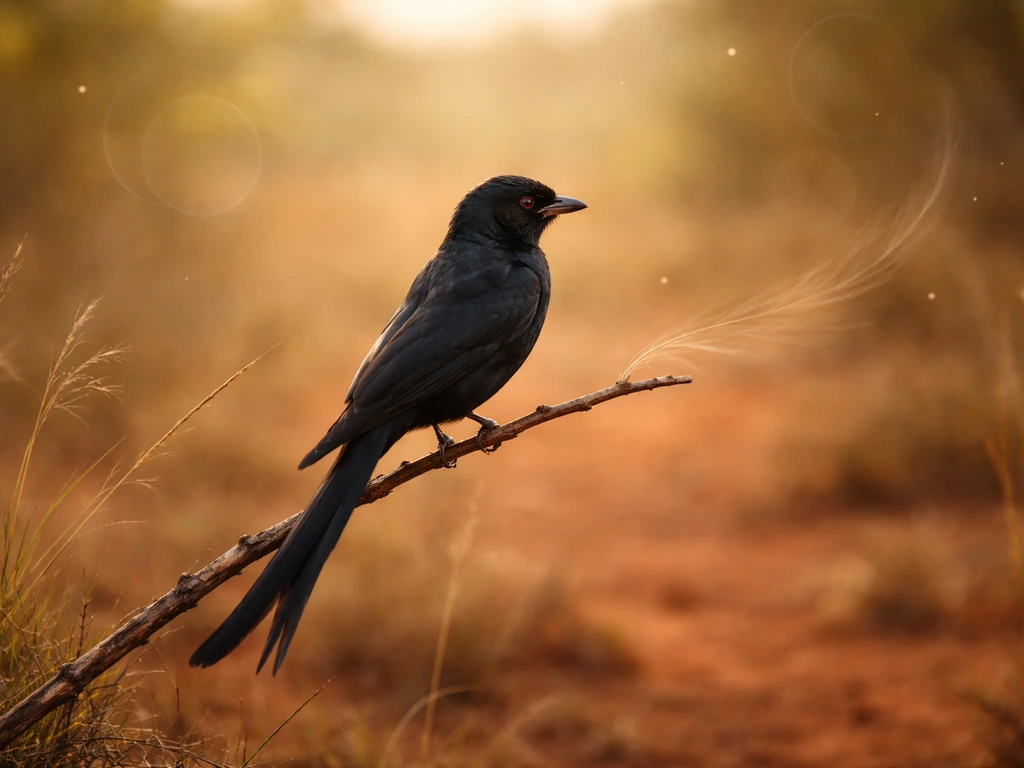
The most grounded cultural story around drongos comes from Madagascar itself. There is a folktale tradition that frames the drongo as a "king of birds" figure, which makes sense given that the bird's name originated in Malagasy culture and the crested drongo is a distinctly prominent bird on the island. The king-of-birds narrative positions the drongo as clever, authoritative, and worthy of respect rather than mockery.
In the spiritual symbolism space, drongos are frequently described as representing trickery, resourcefulness, and mimicry in a totem or spirit-animal framework. Wikipedia's species accounts, such as for the greater racket-tailed drongo, describe conspicuous loud calls that can include perfect imitations of other birds. Some interpretations extend this into ideas of adaptability and intelligence, drawing directly from the kleptoparasitism behavior. One symbolism site even maps drongo characteristics onto a protective, shepherd-like archetype, which is a creative stretch but not entirely illogical given the bird's documented habit of aggressively defending its nest and territory. These are interpretive, spiritually motivated readings rather than established folklore with deep historical roots, and it is worth knowing the difference.
The honest picture is that drongo spiritual symbolism is mostly modern and largely derived from the bird's observable behavior rather than from any ancient or indigenous spiritual tradition. That does not make it meaningless, but it does mean you should not treat a symbolism website's drongo totem description as equivalent to, say, a documented Malagasy or African cultural tradition. The behavioral inspiration is real; the ancient spiritual lineage largely is not.
Drongo as a word: slang, insult, and figurative use
In Australian and New Zealand English, calling someone a "drongo" means calling them a fool, an idiot, or a stupid person. Oxford defines it plainly as a slang term for "a stupid person," originating in the mid-19th century from Malagasy. Dictionary.com and WordWeb back that up with similar definitions. You might hear something like "I felt like a right drongo after spilling my coffee all over the report", meaning: I felt like an idiot. It is a mild insult, more affectionately dismissive than genuinely harsh, sitting in the same register as calling someone a "mug" or a "goose."
The interesting irony here is that the real drongo bird is one of the more intelligent and strategically savvy birds in its range. Calling someone a drongo as an insult does not line up at all with the animal's actual behavior. The slang meaning appears to have developed separately from any deep knowledge of the bird itself, carried along mostly by the word's sound and the fact that it had a slightly exotic, unfamiliar feel in Australian ears. It stuck as a colorful insult rather than as a meaningful commentary on the bird's character.
Common misconceptions about drongo meaning
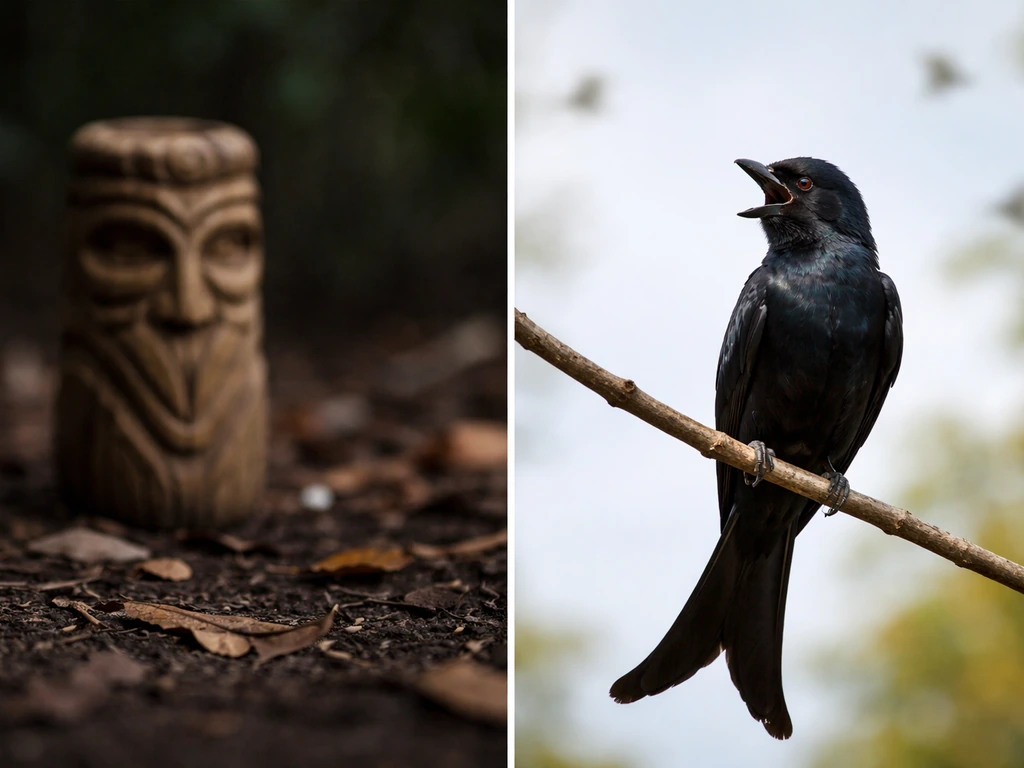
The biggest misconception is assuming that because drongos are clever and deceptive, the slang insult "drongo" must be based on that behavior. It almost certainly is not. The slang developed in Australian English as an all-purpose mild insult, and the actual kleptoparasitism science was not widely known in popular culture when the term became common. The two meanings share a word but not a reasoning chain.
A second misconception is treating symbolism website claims about drongo totems as though they reflect established folklore or indigenous spiritual practice. Most drongo "spirit animal" content online is a modern synthesis built by writers who read about the bird's mimicry behavior and then interpreted it through a totem framework. That is not inherently wrong, but it is different from a tradition that has been passed down within a specific culture over generations. If you are researching drongo meaning for spiritual purposes, know what you are working with.
A third common mix-up is confusing different drongo species. When someone says "the drongo," they might mean the fork-tailed drongo of Africa, the greater racket-tailed drongo of Asia, the black drongo common across South Asia, or the crested drongo of Madagascar. These are all different birds with different ranges and different behavioral nuances. A symbolism claim built on one species does not automatically transfer to all of them.
How to confirm which drongo meaning you actually heard
If you heard or read "drongo" and are not sure which meaning was intended, context is everything. Here is how to sort it out quickly:
- Check whether it was used to describe a person or a bird. If someone called a person a drongo, it is Australian or New Zealand slang for idiot. Full stop.
- If it appeared in a nature documentary, wildlife article, or birdwatching context, it refers to the actual bird family Dicruridae. Look for which species is being discussed, since the term covers around 30 species across Africa, Asia, and Madagascar.
- If you saw it on a symbolism or spirituality website, treat those claims as modern interpretive content based on the bird's real behavior, not as documented historical folklore unless the source specifically cites a named cultural tradition and region.
- If the Malagasy or Madagascan origin is mentioned, that is the genuine etymological root of the word. The crested drongo of Madagascar is the original referent, and the king-of-birds folktale from that region is the closest thing to a traditional cultural narrative around the bird.
- If you are trying to verify a specific "drongo symbolism" claim you found somewhere, search for the behavior it references and check whether it matches documented drongo behavior (like the alarm-call mimicry) versus a purely invented spiritual attribute with no behavioral or cultural basis.
This kind of disambiguation matters for bird-term searches in general. If you are searching for sleepy bird meaning, use the same approach and check whether you mean the literal behavior or the figurative interpretation. Terms like "lazy bird meaning," "timid bird meaning," or "shy bird meaning" can blend literal behavioral descriptions with figurative language in the same way drongo does, and sorting out which layer of meaning is actually in play saves a lot of confusion.
“Lazy bird meaning” is usually a figurative label, but it can also be tied to a specific bird’s behavior depending on the context. In contrast, the timid bird meaning usually points to shyness, caution, and a preference for safety over boldness. The key is always to locate the context first: is this a wildlife observation, a cultural tradition, a spiritual framework, or a regional slang term?
Sleep like a bird is a phrase people sometimes use when talking about light or restless sleep, and it helps to understand the exact meaning in context. With drongo, the answer changes the meaning completely.
What the drongo bird actually represents, summed up
| Meaning layer | What it refers to | Where it comes from |
|---|---|---|
| Literal bird | Family Dicruridae; glossy, fork-tailed, bold, mimicking birds across Africa, Asia, and Madagascar | Field biology and taxonomy |
| Behavioral symbolism | Trickery, cunning, resourcefulness, adaptability | Documented kleptoparasitism and alarm-call mimicry behavior |
| Cultural/folklore | King of birds (Madagascar); protective or clever figure in storytelling traditions | Malagasy folktale tradition |
| Modern spiritual totem | Cleverness, deception as strategy, vocal power, bold defense | Modern symbolism sites drawing on the bird's biology |
| Australian/NZ slang | A stupid person, a fool, an idiot | Regional English slang, mid-19th century, Malagasy word origin |
The drongo is genuinely one of the more interesting birds to look up, precisely because the word carries so many layers that contradict each other on the surface. A bird that is arguably one of the smarter foragers in its ecosystem became a slang word for idiot. A bird named in Malagasy ended up as an Australian insult. A creature with documented strategic deception became a totem for wisdom in modern spiritual writing. All of those threads are real, and none of them cancel out the others. You just need to know which one you are holding.
FAQ
How can I tell if “drongo” in a sentence means the bird or the slang insult?
If someone says “drongo” in everyday conversation, it’s almost always Australian or New Zealand slang (meaning a fool or idiot), not a reference to the bird. A bird meaning usually shows up with extra cues like “the bird,” “species,” “tail,” “Africa/Asia/Madagascar,” or a wildlife discussion.
Which drongo species should I focus on for “drongo bird meaning” claims?
When the bird is intended, the species matters. Fork-tailed drongos are Africa, racket-tailed drongos are South and Southeast Asia, and crested drongos are tied to Madagascar. If a source claims a trait but mixes up species, the meaning and range can become unreliable.
Is drongo spiritual symbolism based on ancient folklore or modern interpretations?
If your goal is the spiritual interpretation, treat it as a modern metaphor built from observed behavior, not as a documented ancient tradition. A useful check is whether the content cites specific local community history versus only general “totem” statements.
Can I trust a “drongo totem” description as accurate, or is it mostly interpretation?
Not necessarily. Many symbolism sites describe drongos as protective or wise, but those character traits are extrapolations from behaviors like nest defense and strategic calling, not a straight line from a single cultural source. If you want a grounded view, separate “behavior observed” from “meaning assigned.”
Does the Australian slang “drongo” come from the bird’s mimicry behavior?
A common mix-up is assuming the slang insult came from the bird’s mimicry or trickery. The article explains the overlap is mainly the shared word, the insult likely developed as a mild catch-all term, while the scientific deception behavior became known later to the public.
What search terms help me get the correct drongo meaning quickly?
If you search for “drongo meaning” alongside words like “idiot” or “insult,” expect the slang sense. If you add terms like “alarm calls,” “kleptoparasitism,” “Dicrurus,” or “fork-tailed,” you’re usually pushed toward the wildlife meaning.
Are drongos’ “trick” behaviors fixed, or do they change depending on the situation?
The article notes that drongos can switch mimicry calls depending on what other animals still respond to, which is a sign of behavioral flexibility. If you see one claim that sounds absolute, like “drongos always mimic X,” consider whether it’s overgeneralizing from limited observations.
Why do some drongo meaning posts conflict with each other?
If you want to avoid confusion, don’t lump all Dicruridae into one storyline. Different drongo species vary in range, call patterns, and nuances of aggression or defense, so symbolic claims that treat “the drongo” as one uniform creature can be too broad.
How do I evaluate whether a drongo symbolism claim is based on the bird’s behavior or on pure creative writing?
When trying to interpret symbolism, ask what aspect the writer is mapping, mimicry, nest defense, or bold foraging. That mapping helps you decide whether the symbolism is metaphorical (interpretation) or pretending to be a historically rooted cultural role.
Is calling someone a “drongo” always harsh, or is it more like a light joke?
People use “drongo” as a mild, dismissive insult that is often delivered in a joking or lightly scolding tone. It’s still rude in many contexts, so if you are outside Australia or New Zealand, expect it to sound unfamiliar or inappropriate.
Next Article
Shy Bird Meaning: Everyday, Symbolic, and Species Clues
Understand shy bird meaning in everyday and symbolism, plus how to identify the bird species behind the search.