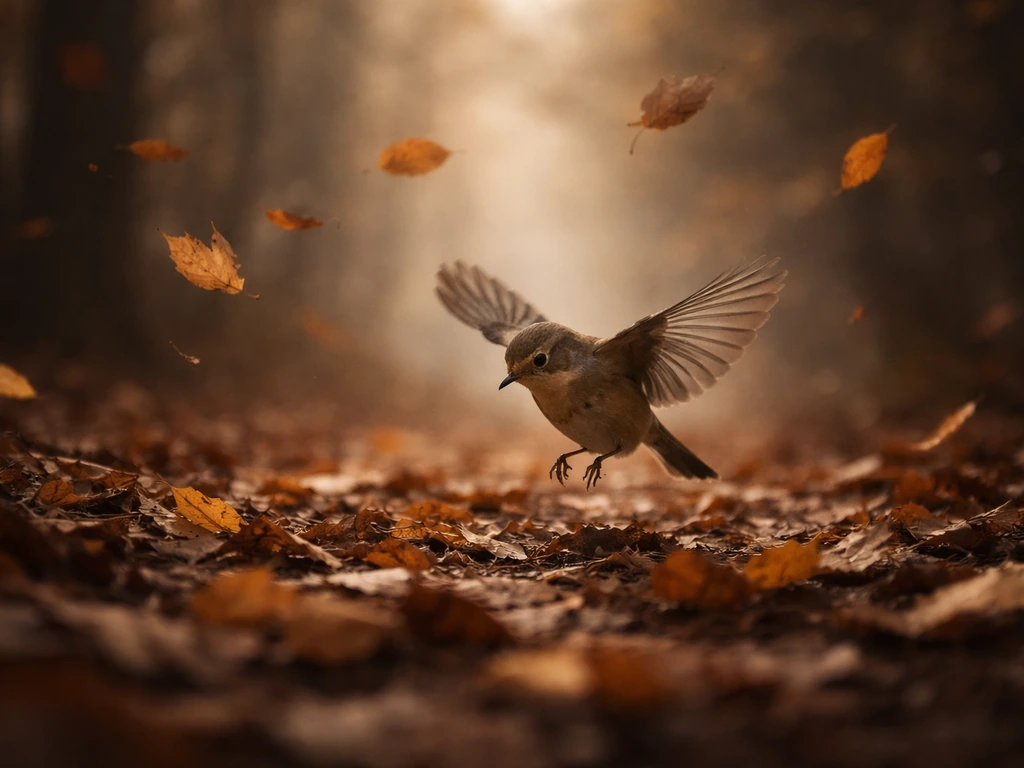
"Fly little bird" most commonly means "go freely, be brave, and don't hold back", it's a phrase of encouragement, release, or gentle farewell directed at someone (or something) you care about. It almost never refers to an actual bird. If you're wondering about the tiny bird meaning behind the words, it usually points to a gentle send-off and the hope tied to freedom.
Fly Little Bird Meaning: Literal and Figurative Uses

Marcus Winters
14 May 2026
Whether you heard it in a song, a caption, a children's book, or a quiet conversation, the phrase is almost always carrying one of three emotional loads: encouragement to grow and be independent, comfort during a hard transition, or a tender goodbye. If you are wondering about the light bird meaning behind the words, the context usually points to encouragement, comfort, or a tender goodbye.
What it means literally
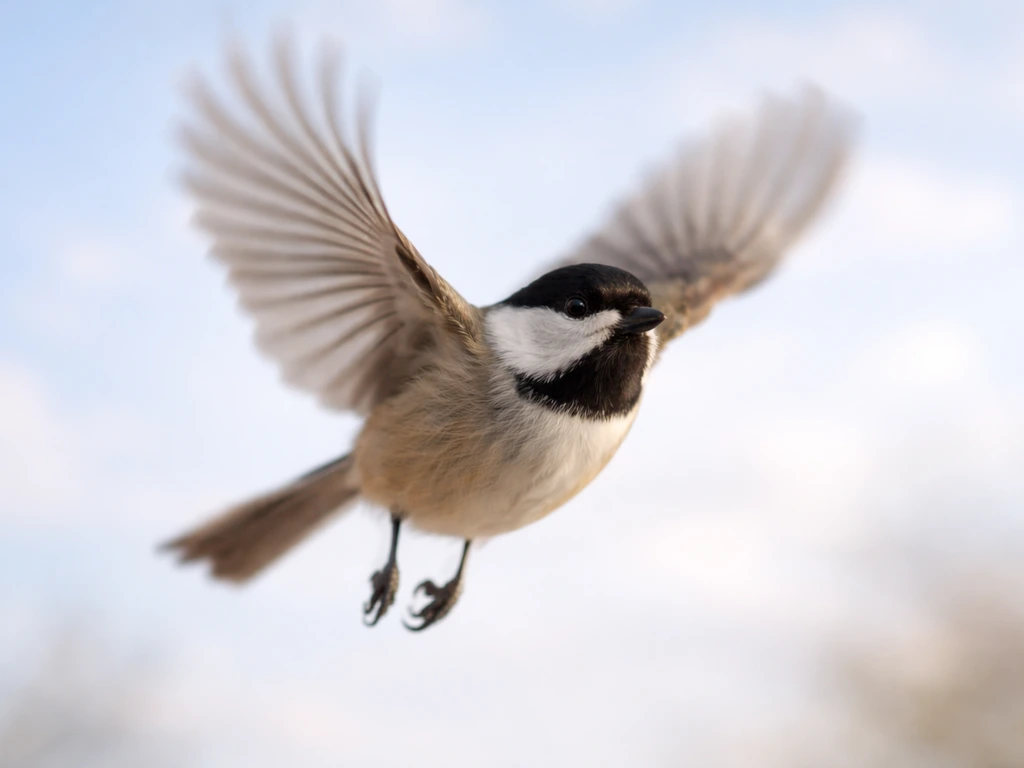
At its most basic, "fly" is an intransitive verb meaning to take flight, to launch into the air and go. Paired with the imperative form ("fly! "), it's a direct command: take off, go, move. "Little bird" in this context is an address to a small bird, literally.
So the literal image is simple: someone opens a cage or cup their hands and releases a bird, telling it to go. That image appears in old educational readers like McGuffey's Second Reader from 1848, where a child releases a captive bird with the words "Fly, little bird, go and seek your little play-mates.
" It's also the framing of simple children's songs like "Fly, little bird, up in the sky," which maps the moment of takeoff visually for young listeners. The literal scene is always the same: a small, delicate creature being sent off into open air.
The figurative meaning and where you'll actually see it
In practice, "fly little bird" is almost always figurative. The "little bird" isn't a bird at all, it's a person, a child, a soul, or sometimes even an idea. "Little bird" has a long history as a term of endearment in English (think of the phrase "a little bird told me," where "little bird" clearly isn't literal). In Collins Dictionary, “little bird” is described as a term of address and endearment in conversational use, not a literal bird reference term of address/endearment. So when someone says "fly little bird," they're typically speaking to a person they feel protective of, someone small or vulnerable in their eyes, and they're urging them forward.
The contexts where you'll run into this phrase are pretty consistent. Parents say it to children leaving home. Mentors say it to students heading out into the world. Poets use it in grief or loss, sending comfort to the recently departed. Song lyrics use it to push through fear or hesitation. You'll see it in Instagram captions on graduation photos, in children's books about growing up, and in sympathy messages when someone dies. The emotional register shifts depending on the context, but the core image, a small, beloved thing being released into freedom, stays the same.
Where this phrase comes from
There's no single origin you can pin to one moment. "Fly little bird" is what linguists might call an organic idiom, it grew from a natural human habit of addressing birds directly, which goes back centuries in poetry, fable, and folk song. Birds have been poetic stand-ins for the soul and for freedom in virtually every culture that has a written literary tradition. Once that symbolic association is in place, the leap from "fly, bird" to "fly, dear one" is obvious and inevitable.
The phrase shows up in print as early as the mid-1800s in American educational readers, and again in juvenile publications from the 1920s. It appears in a 1987 song by Israeli artist Arik Einstein ("Fly, little bird / Cut through the sky") and in more recent children's literature and folk-style songs. What's interesting is that it keeps being reinvented independently across languages and cultures, which tells you it's tapping into something universal rather than being borrowed from one specific source.
The emotional weight behind the words

The phrase carries a surprisingly wide emotional range, but it almost always lands somewhere warm. Here are the four most common emotional tones and how to tell them apart:
| Emotional Tone | Context Clues | Example Use |
|---|---|---|
| Encouragement / pride | Milestones, graduations, first steps | "Fly little bird — you've got this." |
| Letting go / release | Parenting, independence, growing up | "It's time to fly, little bird." |
| Comfort / blessing | Grief, loss, someone passing away | "Fly little bird, bring comfort to the weeping." |
| Gentle farewell / safe travels | Departures, transitions, endings | "Fly little bird, don't say goodbye — the wind will carry you high." |
The comfort/grief use is worth pausing on. In Ralph Covert's song "Fly Little Bird," the phrase is tied directly to loss: the bird is asked to "bring a message to the sleeping" and "a blessing to the weeping" as night falls.
The Shazam lyrics for “Fly Little Bird” by Ralph Covert include lines like “bring a message to the sleeping” and “a blessing to the weeping,” which is why the phrase reads as comfort in grief In Ralph Covert's song "Fly Little Bird,". In that context, the bird is almost a spiritual messenger, carrying hope or peace to those who are grieving.
That's a very different emotional register than a parent cheering on a kid at graduation, but the same three words do both jobs.
Bird symbolism: why this image lands so hard
The reason "fly little bird" works as a phrase is that bird imagery already carries enormous symbolic weight in human culture. The same idea of a small bird meaning is often used to suggest tenderness, safety, and hopeful new beginnings. Birds have been associated with the soul, with freedom, and with transcendence across nearly every tradition.
In Christian symbolism, the dove is a symbol of peace and the Holy Spirit, a connection rooted in the story of Noah (the dove returning with an olive leaf as a sign of hope) and in the New Testament (the Holy Spirit descending "like a dove"). In broader spiritual thinking, birds in flight represent the soul leaving the body or crossing into another realm.
In secular culture, a bird taking wing is one of the most universal images of freedom and possibility.
So when someone says "fly little bird," they're borrowing all of that, the soul, the freedom, the hope, the peace, and attaching it to whoever they're addressing. The phrase is emotionally efficient precisely because the symbolism does so much work on its own. You don't have to explain it. Everyone already feels it. This is also why the phrase connects naturally to related ideas about "little bird" symbolism more broadly, and why small birds especially carry meanings of vulnerability, gentleness, and hope in folklore and spiritual traditions.
How to interpret it when you hear it

If someone says "fly little bird" to you, your first move is to read the context, not the words. Ask yourself: what's happening right now? If you're leaving for college or starting a new job, it's encouragement and pride. If someone you both loved just died, it's comfort and a spiritual send-off.
If it's in a text out of nowhere, it might be a song lyric, a book quote, or even gentle teasing ("go on, get out of here"). In the Jonas Brothers song, listeners often dig into the lyric for the specific meaning behind “little bird.
If you're wondering about a specific variant like "Little Wendy Bird, fall little wendy bird fall meaning," treat it as a related phrase to decode by context and symbolism, the same way you would interpret "fly little bird. ". ” song lyric.
If the context genuinely isn't clear, it's perfectly reasonable to ask a light question. Something like "Is that a lyric? I can't place it" or "Are you sending me off somewhere?" works without making things awkward. The phrase has enough cultural spread that most people won't be offended if you ask what they meant by it, in fact, they'll probably enjoy explaining.
How to respond or use the phrase yourself
Your response should match the emotional tone of whoever said it. Here's how to handle the most common scenarios:
- If it's encouragement (milestone, new chapter): respond with gratitude and confidence. "Thank you — I will" or "That means a lot" both work. Don't overthink it.
- If it's a letting-go moment (a parent, a mentor): acknowledge the emotion. Something like "I'll always come back" or a hug speaks more than a clever comeback.
- If it's tied to grief or loss: treat it like a blessing. A quiet "thank you" or "I hope so too" is exactly right. Don't pivot to excitement.
- If it's casual or teasing: match the lightness. "Off I go" or a laughing emoji if it's a text is fine.
- If you want to use it yourself: say it when you're genuinely releasing someone into something bigger than what they've known. A graduation, a big move, a recovery, or even a memorial. The phrase earns its weight when the moment is real.
One thing worth knowing: the phrase works best as a send-off, not an opening. It's a closing gesture, a release. Using it at the start of a conversation feels odd because it's inherently about departure and freedom, it's meant to be the last thing said before someone goes. Keep that in mind and it'll always land the way you intend.
FAQ
Does “fly little bird” ever mean “escape” or “run away” in a negative way?
It can, but that reading is less common. Most uses are tender and supportive. If the speaker sounds angry, controlling, or threatening, then it may be closer to “get out” or “leave me alone,” so rely on tone and surrounding words (for example, whether there is praise, concern, or harshness).
How do I interpret it if it appears in a text message with no other context?
Treat it like a clipped line of encouragement or comfort and assume the emotional load is tied to what’s happening in your relationship. If you are not currently saying goodbye, consider that it might be a lyric quote or a joke. A safe follow-up is, “Is this from a song or are you encouraging me about something?”
What’s the difference between “fly little bird” and “little bird told me”?
“Fly little bird” is usually a send-off or encouragement to move forward, it’s action oriented. “Little bird told me” is about information coming indirectly, it is closer to “I heard it from someone.” The “bird” symbolism overlaps, but the messages are different.
Can “little bird” be romantic, not just parental or grieving?
Yes. The phrase can be used romantically as a term of endearment, especially when someone is cheering you on or trying to soften a departure. Watch for cues like “my love,” “babe,” or plans together, those suggest affection rather than grief or spiritual comfort.
Is it appropriate to use “fly little bird” when someone is not actually leaving?
Usually yes only if it matches a transition. Common cases include starting a new job, moving to a new phase, or facing a fear. If the person is staying in the same place with no transition, the line may feel random or overly sentimental, so consider swapping to a more “moment of courage” phrase.
What should I say back if someone sends “fly little bird” to me?
Mirror their intent. If it’s encouragement, a warm reply like “Thank you, I’m nervous but I’ll do it” works. If it’s grief or memorial related, “I’m sorry, it means a lot that you said this” is usually a safer tone than responding with confidence or jokes.
Could it be a threat or insult disguised as a compliment?
Rarely, but you should not ignore intent. If the message is paired with criticism, mockery, or pressure to do something, the “fly” image can be used sarcastically. The quickest check is whether they also respect your boundaries, if not, treat it as potentially hostile.
Does the phrase change meaning depending on punctuation, like “Fly, little bird!” versus “Fly little bird”?
Yes slightly. An exclamation with a comma often reads like a direct, theatrical send-off (more like a command or a song line). Without punctuation, it can feel more like a caption, a gentle wish, or a quoted fragment from something they heard.
Is it safer to ask about the meaning, or should I just respond emotionally?
If you truly cannot tell the situation, ask lightly. Your tone matters more than your wording. “What does that mean in this context for you?” signals curiosity without challenging their feelings.
Are there common mistakes people make when interpreting this phrase?
The biggest one is treating it as literal when it is clearly metaphorical. Another common mistake is assuming it is always grief related. The same words can be encouragement, comfort, or a tender goodbye, so identify what kind of transition is happening right now.
Next Article
Fall Little Wendy Bird Fall Meaning: Symbolism Guide
Decode fall little wendy bird fall meaning: symbolism of little Wendy, bird, and falling, with disambiguation steps.