When someone calls you 'little bird,' the most likely meaning is affectionate endearment. It's the kind of nickname that signals you feel small, delicate, or precious to the person saying it, in a protective and warm way. But context shifts everything. The same two words can come from a parent cooing over a child, a romantic partner being tender, a friend teasing you about being quiet and observant, or even a boss using a pet name that ends up feeling condescending. Knowing which one applies comes down to three things: your relationship with the speaker, the tone they used, and whether they paired it with 'told me' (which is a completely different phrase with a completely different job).
Little Bird Meaning: Nickname, Tone, and How to Tell

Marcus Winters
21 Apr 2026
What 'little bird' means in everyday language
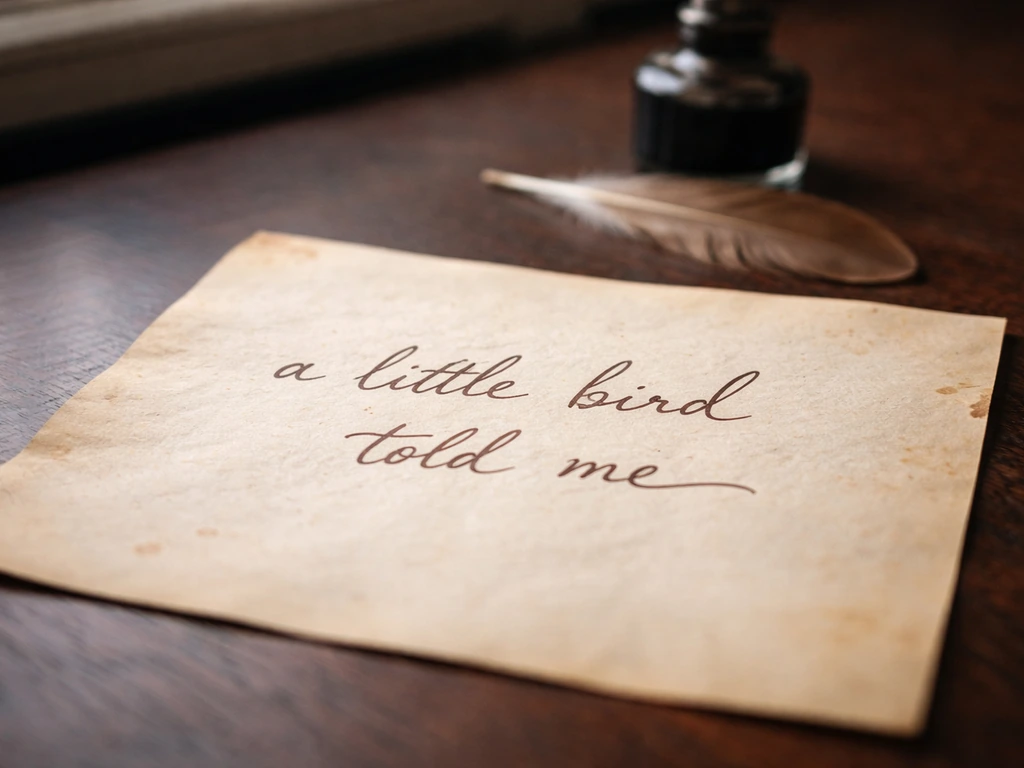
In everyday English, 'little bird' shows up in two distinct ways and it's worth keeping them separate from the start. The first is the idiom 'a little bird told me,' which means you heard something from a source you're choosing not to name. In the Cambridge English Dictionary, the idiom “a little bird told me” is defined as a way to say you heard information from someone else without naming the source [idiom 'a little bird told me'](https://dictionary. cambridge.
org/us/dictionary/english/little-bird-told-me). Collins English Dictionary defines this clearly: it signals the speaker knows something while keeping the informant's identity secret. A classic example is 'A little bird tells me that your birthday's coming up. ' That's not a nickname, that's a way of saying 'I heard through the grapevine but I'm not telling you who said it.
'
The second usage is what most people are actually searching for: being directly called 'little bird' as a term of address. 'Good morning, little bird.' 'Come here, little bird.' This is the nickname usage, and it carries a very different emotional weight. It's personal, it's aimed at you, and it says something about how the speaker sees you. These two uses sound similar but they're doing completely different things in conversation.
How 'little bird' works as a nickname
The nickname likely caught on for a few overlapping reasons. Birds have been used in language and literature for centuries to represent freedom, lightness, and a kind of spirited independence. Adding 'little' softens that image considerably. It moves the association from free-soaring creature to something more vulnerable, something that might need protecting or sheltering. That combination, delicate and free-spirited but also small, maps naturally onto how affectionate people describe someone they feel tender toward.
There's also a long cross-cultural tradition of small-bird pet names. In Czech, diminutives like 'ptáčátko' (roughly 'baby fledgling') are used as endearments for very young children. Greek speakers might use 'σπουργιτάκι μου,' which translates to 'my little sparrow,' as a natural-feeling term of affection. French speakers have 'petit oiseau.' The pattern is consistent across languages: small bird equals something loved, watched over, and a little fragile. English 'little bird' fits squarely in that tradition, even if most English speakers don't consciously know it.
Pop culture has reinforced the nickname too. 'Little Bird' appears as a song title, album title, and recurring endearment trope in English-language media, which means many people first encounter it as a romantic or tender phrase through music and storytelling before they ever hear it directed at them personally.
Why 'little' changes everything about the bird symbolism
Birds on their own are powerful symbols. In literature and folklore, they consistently represent freedom, hope, transformation, and community. A bird is something that can leave, that isn't pinned down, that sees from above. That's a strong image. It's why birds appear so often in spiritual and cultural contexts as messengers or signs of change.
But add 'little' and the energy shifts. The freedom element gets quieter. What comes forward instead is innocence, delicacy, and a kind of emotional smallness. Think of how writers use the phrase: in the context of song lyrics and poetry, 'little bird' almost always signals vulnerability, a need for help or comfort, an emotional naivety. The creature isn't soaring, it's perched, maybe uncertain, maybe recently fledged. That's the vibe the nickname carries when it's used with warmth, and it's also why the same phrase can tip into patronizing territory when the tone is wrong.
Reading the context: romantic, parental, friendly, or teasing?

This is the practical question most people actually want answered. Here's how each version tends to sound and feel.
Romantic use
In a romantic context, 'little bird' is usually soft, private, and accompanied by other signs of intimacy. It's the kind of nickname that comes out quietly, often paired with physical closeness or a gentle tone. The speaker tends to use it consistently, not as a one-off joke. If your partner calls you this, they're likely expressing protectiveness and tenderness, seeing you as someone they want to take care of and keep close. The 'my' version, 'my little bird,' amplifies that possessive warmth considerably.
Parental or familial use
Parents and grandparents have been calling small children bird names across cultures for a very long time, and 'little bird' fits naturally here. When it comes from a parent or older relative, it usually signals affection without any romantic dimension at all. It's about smallness, the child's youth and delicacy. If you were called this as a kid and you're now an adult who just came across the phrase, that's probably the frame to use: it meant you were cherished, not that it had any deeper coded meaning.
Friendly or playful use

Among friends, 'little bird' often gets used because someone is being observed as quiet, watchful, or quick to pick up information. Birds notice things. A friend might call you 'little bird' because you always seem to know what's going on, or because you're perched and listening rather than loudly participating. This version tends to come with a smile or a light tone, and it's more teasing than tender.
Teasing or condescending use
This is the version to watch for. 'Little bird' can land as patronizing when it's used by someone in a position of power, used to minimize your concerns, or delivered with a dismissive tone. A workplace example that's been documented: 'Good morning, little bird,' said by a superior in a professional setting, can make the recipient feel belittled rather than warmly regarded. The same words, different relationship and tone, completely different effect. If being called 'little bird' made you uncomfortable rather than warm, trust that reaction. It may well have been condescending.
What small birds mean in culture, folklore, and spiritual traditions
Small birds carry significant symbolic weight in folklore across many cultures, and that history quietly informs how people use the nickname today even when they don't realize it. In Celtic and European folk traditions, birds were read as omens, guides, and messengers. Small, unassuming birds like sparrows were tied to love, humility, and the idea that something fragile still carries deep value. The sparrow in particular appears across religious and folklore contexts as a symbol of the worth of small things, the idea that even the least significant creature is noticed and protected.
Robins were associated with protection and guidance. Swallows with trust and loyalty. The pattern across traditions is that small birds aren't insignificant despite their size. They're watched over, meaningful, connected to home and love. When someone calls you a 'little bird,' whether they know it or not, they're tapping into a very old set of associations that say: small, yes, but precious and worth paying attention to. In a similar way, the phrase small bird meaning can point to the same themes of affection, protection, and tenderness depending on how it is used.
The 'a little bird told me' idiom also has deep roots. Versions of the phrase appear in English going back centuries, and similar constructions exist in other European languages, including Latvian, which has 'Putniņš pačukstēja,' meaning 'a little bird whispered.' The bird as secret messenger is a near-universal folk motif. That's a different symbolic thread from the endearment use, but it helps explain why birds feel so naturally connected to knowledge, messages, and things shared between people.
Common misreadings and how to get it right
The biggest mistake people make is assuming 'little bird' is romantic when it might be something else entirely. If an older family member, a close friend, or even a teacher uses it, the tender-but-parental read is far more likely than a romantic one. The romantic interpretation tends to require a romantic relationship context to be operating. Without that, you're probably looking at warm platonic affection or playful teasing.
The second mistake is confusing the direct address with the idiom. If someone said 'a little bird told me your interview went well,' they are not calling you a little bird. They are using the idiom to say they heard something from an unnamed source. These two uses look similar in print but they're doing completely different things. Check whether 'told me' follows the phrase. If it does, the meaning has nothing to do with how they see you personally.
The third mistake is assuming the nickname is always a compliment. Tone and power dynamics matter enormously. The same phrase from a romantic partner at home and from a manager at a work meeting can produce two completely opposite experiences. If the nickname came with a dismissive wave, an eye roll, or from someone who was clearly minimizing what you said, it probably was condescending. That's a real and documented use of the phrase, not a misinterpretation on your part.
| Context | Likely meaning | Tone signals to look for |
|---|---|---|
| Romantic partner | Tender endearment, protectiveness | Private, soft, consistent, often paired with touch or intimacy |
| Parent or grandparent | Affectionate care, childlike innocence | Warm, nostalgic, used around other family nicknames |
| Close friend | Playful observation, you're a quiet 'noticer' | Teasing, light, said with a grin or laugh |
| Workplace or power figure | Potentially patronizing or minimizing | Dismissive tone, used to redirect or soften criticism |
| Stranger or casual acquaintance | Either overly familiar or culturally habitual | Depends on regional norms; can feel presumptuous |
How to figure out what they actually meant
Start by separating the idiom from the nickname. If the phrase included 'told me,' it's about information sourcing and secrecy, not about you. If you were directly addressed as 'little bird,' then move on to reading the relationship and tone. If you also mean the lyric or phrase “fall little wendy bird fall,” check the specific fall meaning in that context to avoid confusing it with the nickname usage fall little wendy bird fall meaning. Ask yourself: is this person typically affectionate with me? Did the nickname come with warmth or with a dismissive quality? Did it feel good or did it make you want to correct them?
If the tone was ambiguous and the relationship is close enough, you can simply ask, lightly. Something like 'Where did 'little bird' come from?' invites an explanation without making it a confrontation. Most people who use affectionate nicknames are happy to explain the feeling behind them. If the nickname felt diminishing and the person is a colleague or someone with professional authority over you, you have every right to address it directly. You don't need to assume good intent if the experience was the opposite.
If you're the one considering using 'little bird' as a nickname for someone else, think about the relationship and how they tend to respond to pet names generally. Studies like “Emotion in the sounds of pets' names,” published in 2006, investigate how people emotionally respond to pet-name-style sounds, supporting why endearments carry an emotional tone. It works best in close personal relationships where endearment is already established. In new relationships or professional settings, it can easily land wrong, feeling either presumptuous or condescending regardless of your intent.
One more practical note: the nickname sits in a family of related phrases worth knowing. If you're curious about variations, the meanings behind 'fly little bird,' 'tiny bird,' and 'small bird' as expressions each carry their own nuances and are worth exploring separately, especially if the phrase you encountered had a specific verb or setting attached to it.
For a closely related phrase and how the meaning can shift with the verb, see fly little bird meaning as a helpful comparison. Similarly, if you came across 'little bird' in a specific song or piece of media, the artistic context shapes the meaning significantly beyond what everyday usage would suggest.
Similarly, if you came across the phrase "little bird" connected to the Jonas Brothers, you might also look up the little bird jonas brothers meaning to compare how fans interpret it in that specific musical context.
FAQ
How can I tell if “little bird” is an idiom versus a nickname? (Do they mean me or the information source?)
Yes. If someone says “a little bird told me” (or includes “told me”) then the phrase is about unnamed information, not a nickname for you. A quick check is whether the next clause targets you as the subject (nickname) or mentions what they learned (idiom).
What are signs that “little bird” is patronizing instead of affectionate?
Watch for the pairing with dismissive content. If the speaker follows “little bird” with minimizing language (for example, “you don’t understand,” “it’s not that serious,” or “you’re overreacting”), that is more consistent with condescension than affection, even if their words are soft.
If I’m not sure whether the nickname is positive, what’s the safest way to respond?
In many cases it is safe to treat it as neutral until you confirm. Try mirroring their tone once, then decide. If it felt good, you can continue casually. If it felt off, use a boundary like, “I’m not a fan of that nickname,” or, “Please don’t call me that,” without over-explaining.
Does “little bird” mean something different when it comes from a boss or someone in authority?
Power dynamics matter most in the workplace. If the speaker is your manager, teacher, landlord, or anyone who can affect your opportunities, assume “little bird” could be used to control or undermine you, especially if you notice it happening when you bring up concerns or ask for something.
Can tone really change the meaning that much for “little bird”?
Different tones in the same relationship can mean different things. A warm, steady tone with direct eye contact often reads affectionate. A bright but detached tone, a forced smile, or speaking over you can read like teasing or dismissal. Consider not only the words but whether your reaction is usually welcomed or shut down.
If I like the person but still feel confused, how can I ask about the intent without starting an argument?
Yes. Some people use endearments because they themselves were raised with them. Others use them to sound playful or youthful. If you want to know which case it is, ask about intent, for example, “What does ‘little bird’ mean to you?” instead of “Are you trying to be condescending?”
What changes when the nickname includes “my,” like “my little bird”?
Yes, and it matters for comfort. “My little bird” usually increases intimacy or possessive warmth, while “little bird” alone can be playful, teasing, or purely habitual. “Hey, little bird,” used repeatedly in public can also feel performative, especially if others laugh at your expense.
What should I do if the nickname feels fine privately but uncomfortable in public?
If you have a consent boundary, it is okay to enforce it. You can say, “I’m okay with compliments, but I don’t want pet names,” or if it is romantic, “Please don’t use nicknames in front of others.” Clear preferences reduce future ambiguity.
What’s the best interpretation if a stranger or casual acquaintance calls me “little bird”?
If you are called “little bird” by someone you do not know well, the likelihood of it being patronizing is higher than with close friends or family. In that situation, base your judgment on behavior, not just the words. If they ignore your requests or talk down to you, treat it as a warning sign.
If someone keeps calling me “little bird” and I feel uncomfortable, how should I handle it step by step?
A practical next step is to document patterns before confronting. Note date, setting, exact wording, and your reaction. If it escalates or is repeated by an authority figure, you will have clearer context for HR or for a direct conversation.
Next Article
Little Bird Jonas Brothers Meaning: Lyrics, Symbolism, and Sentiment
Jonas Brothers Little Bird meaning decoded: endearment, lyric sentiment, and bird symbolism for love, freedom, and guida