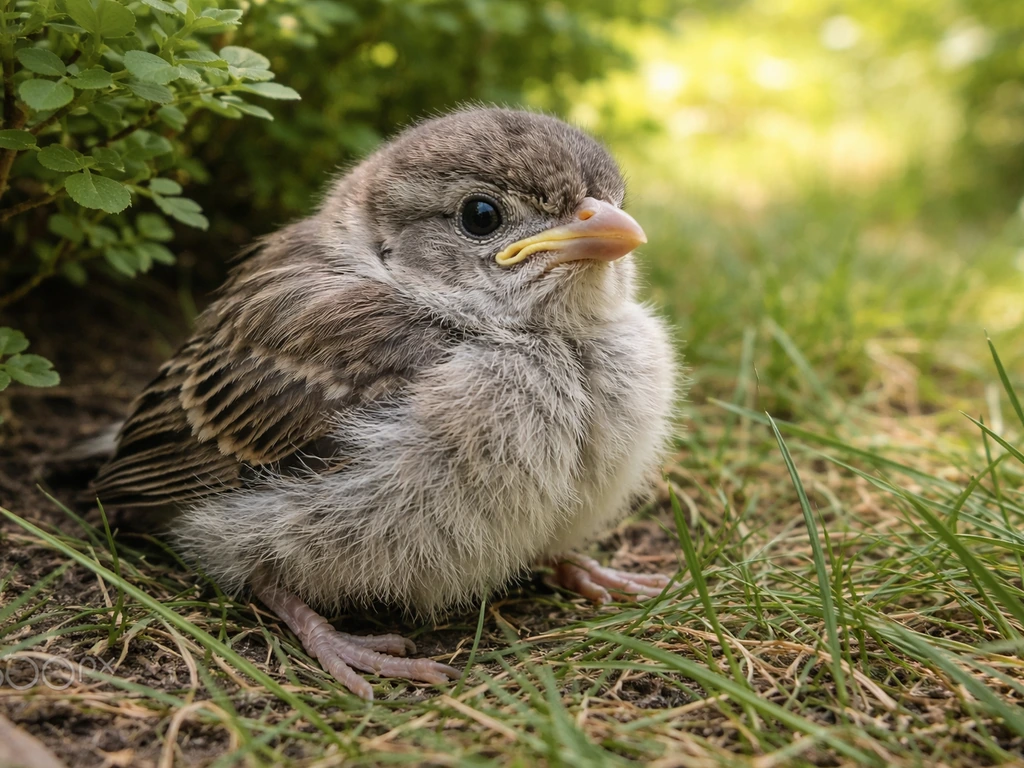
A juvenile bird is simply a young bird that has grown its first real feathers but has not yet molted into adult plumage. In everyday language and in birding, the word "juvenile" pins down a specific age stage, not just a vague sense of "young." If someone says "juvenile bird" to you, they almost always mean one of two things: they are describing a bird's literal life stage (a technical term used by birders and ornithologists), or they are reaching for broader symbolism around youth, growth, and vulnerability. Both meanings matter, and knowing which one applies changes everything about how you respond.
Juvenile Bird Meaning: Literal Age Stage and Symbolism

Marcus Winters
3 May 2026
What "juvenile" actually means as a bird age stage
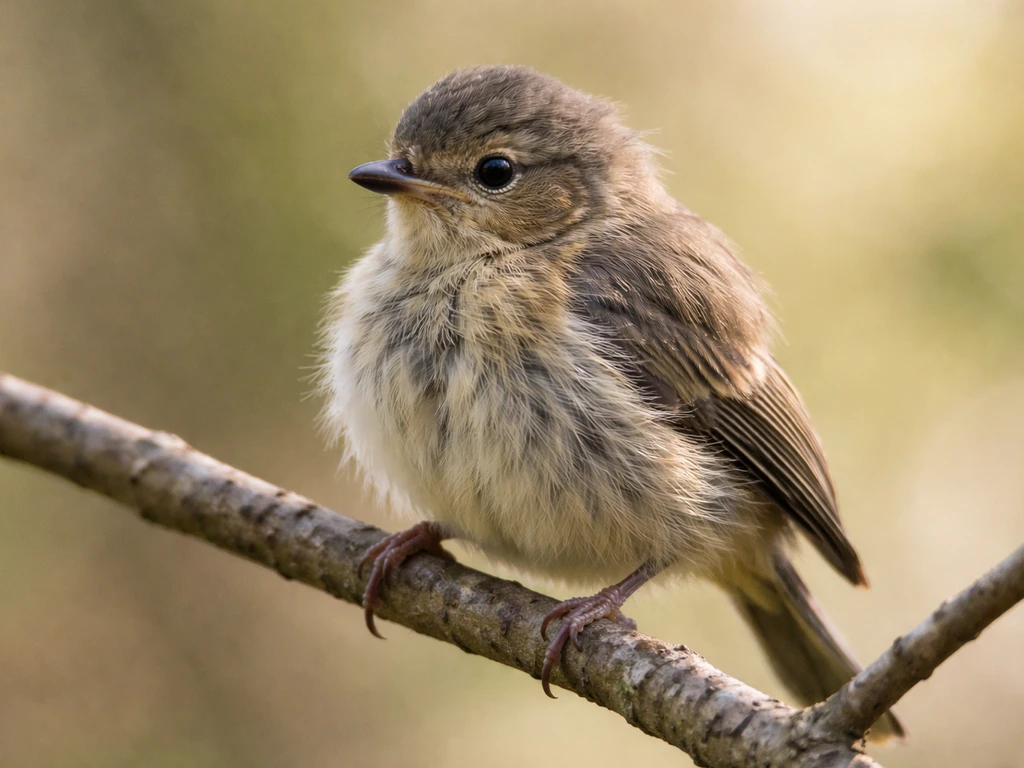
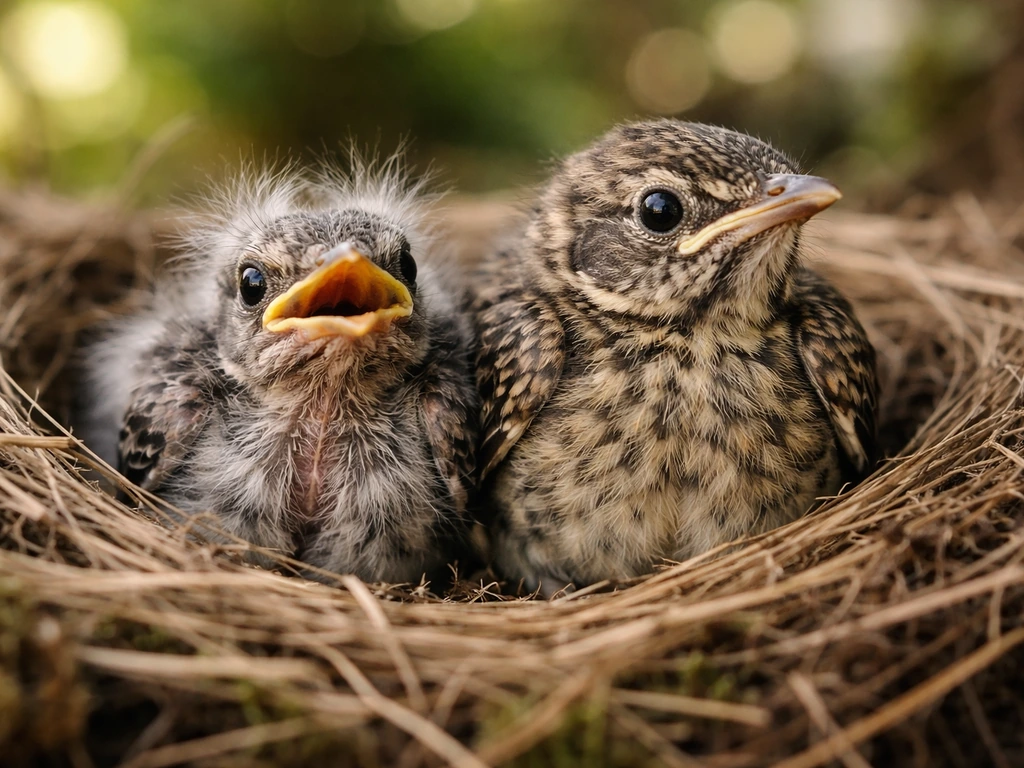
In ornithology, "juvenile" has a precise definition. It refers to a bird wearing its first true plumage, the feathering that replaces natal down after hatching. Ornithologists sometimes call this "blank" rel="noopener noreferrer">juvenal plumage," and it is the first complete set of feathers a bird grows. Before that, a hatchling is covered in soft natal down (or sometimes none at all). After that first molt, the bird moves into what birders call "immature" plumage, and eventually into adult plumage.
One distinction worth knowing: "juvenile" and "immature" are not the same thing. A juvenile is specifically a bird in that first plumage. "Immature" is a broader umbrella covering any bird that is not yet a full adult, which can span multiple years for large species like eagles or gulls. A two-year-old bald eagle wearing its second-year plumage is immature but no longer juvenile. Keeping that line clear helps you communicate precisely when describing what you are seeing.
The juvenile stage also does not map perfectly onto "nestling" or "fledgling," two other age terms that describe where the bird is in its nest-leaving journey rather than what plumage it is wearing. A nestling is still in the nest, dependent on parents for warmth and food, often with sparse pin feathers or bare skin showing. A fledgling has just left the nest and has short but functional wing and tail feathers. You can have a fledgling that is still in juvenile plumage, which is where a lot of the confusion comes from.
How people use "juvenile bird" in everyday language
Outside of strict ornithology, people use "juvenile bird" much more loosely. They mean any bird that looks young and not quite right, maybe smaller than expected, fluffier, sitting on the ground strangely, or acting uncertain. Backyard birdwatchers use it to describe a robin following its parent across the lawn, still begging for food with a spotted breast. Nature photographers use it when they spot a hawk with streaky brown plumage instead of clean adult markings.
In casual conversation, "juvenile bird" often comes up in three situations: someone has found a bird on the ground and wants to know what it is, someone is trying to identify an unusual-looking bird at their feeder, or someone is looking for the figurative or symbolic meaning of a young bird they read about or dreamed of. Each situation calls for a slightly different answer, but the starting point is always the same: is this literal or figurative?
How to spot a juvenile bird in the field
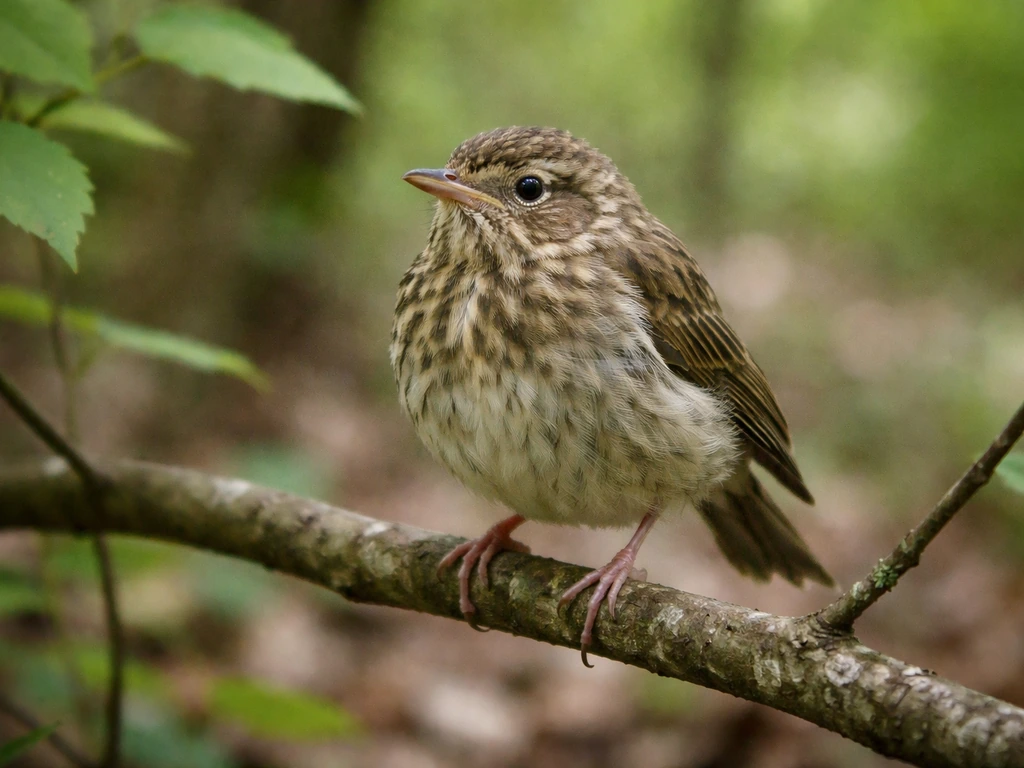
Juvenile birds give themselves away through a combination of plumage, posture, and behavior. Once you know what to look for, they are not hard to identify, even if pinning down the exact species can still be tricky.
What juvenile plumage looks like
Juvenile feathers often serve as camouflage rather than display. Many species have mottled, streaky, or brown tones in juvenile plumage that adults lack entirely. A juvenile European robin, for example, is spotted and lacks the adult's iconic orange-red breast. Juvenile gulls look nothing like the clean white-and-grey adults most people picture. The feathers themselves can look slightly uneven or fluffy at the edges because they are brand new and have not been worn smooth yet.
One detail that confuses people is that juvenile body feathers often molt into more adult-like plumage within weeks of fledging, while the wing and tail feathers stay in juvenile form much longer, often through the first winter and into the following spring. So a bird can look mostly adult-ish in body coloring but still carry telltale juvenile wing and tail feathers. That mismatch is exactly why experienced birders will flip to the wing tip or tail when aging a bird in the field.
Behavior and posture clues
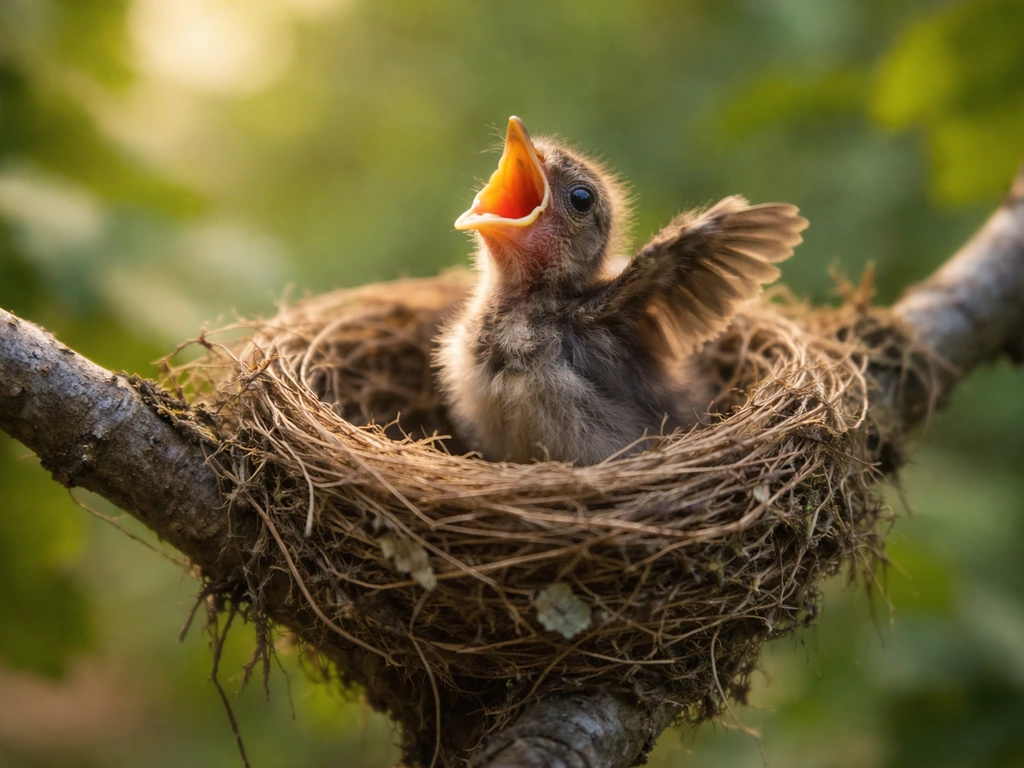
Juvenile birds often behave differently from adults in ways that are easy to read. They tend to beg loudly, fluttering their wings and calling persistently even when a parent is right next to them. On the ground, fledglings hop rather than fly, and they may look unsteady or sit in slightly odd postures. They are also more tolerant of human approach than adults, not because they are tame, but because they have not yet learned to be wary. If a bird lets you get unusually close without flying away, its age is often the explanation.
Nestling vs fledgling: the split that matters most
The single most important distinction when you find a young bird is whether you are looking at a nestling or a fledgling. Nestling bird meaning can feel similar because nestlings are also very young and dependent, but it refers specifically to being in the nest. Nestlings have bare or lightly downed skin, closed or barely open eyes, and no functional feathers. They cannot survive outside the nest without direct parental care and warmth. Fledglings, by contrast, have short but fully developed tail and wing feathers, open eyes, and can grip a branch or hop around. They look helpless, but they are actually in a normal phase of bird development, learning to fly while parents still feed and watch them from nearby.
| Feature | Nestling | Fledgling |
|---|---|---|
| Feathers | Bare skin or sparse pin feathers/natal down | Short but fully formed wing and tail feathers |
| Eyes | Closed or barely open | Open and alert |
| Mobility | Cannot move independently | Can hop, grip branches, flutter |
| Typical location | In or near nest | On ground or low branches |
| Parent presence | Depends on parents for warmth and all feeding | Parents still feed but bird moves independently |
| What to do if found | Return to nest if possible | Leave alone, keep pets away, observe from distance |
Why people read symbolism into juvenile birds
Birds have carried symbolic weight across virtually every human culture, and the stage of youth adds an extra layer of meaning that people find easy to connect with. A juvenile bird sits at a threshold: it has survived hatching and the helpless nestling phase, but has not yet mastered flight or independence. Little by little the bird makes its nest meaning connects to the idea that young birds represent growth that unfolds through steps, not instantly. That in-between state maps naturally onto human ideas about growth, learning, vulnerability, and the courage to leave something familiar behind.
In many spiritual and folk traditions, a young bird appearing at a meaningful moment is read as a sign of new beginnings, a project or relationship just getting off the ground, or a reminder that growth takes time and awkwardness before it becomes grace. The bird is not yet what it will be, and that resonates with people going through transitions. Some traditions tie the symbolism more tightly to the species: a juvenile robin might carry associations with springtime renewal, while a young hawk might suggest emerging power or sharpening vision.
It is worth being honest about where this symbolism comes from, though. A lot of what circulates online as "juvenile bird spiritual meaning" is modern, fairly generic, and not rooted in a specific cultural tradition. The deeper, older folk symbolism around young birds tends to be more practical and tied to superstition about luck or seasons rather than abstract spiritual growth. If you are researching a cultural or spiritual meaning, it helps to ask which tradition you are actually looking at, because the answer shifts considerably depending on context.
Contexts where people actually search "juvenile bird meaning"
Most of the time, someone searching this phrase falls into one of a few recognizable situations. People sometimes also search related ideas like heirloom bird meaning when they are trying to understand symbolism and wording around birds. Understanding them helps clarify what kind of answer they actually need.
- They found a bird on the ground and want to know if it is in danger or if "juvenile" explains why it looks odd.
- They heard or read the phrase in a birding or wildlife context and want to understand the technical age terminology.
- They are trying to identify an unusual-looking bird at their feeder or in their yard and noticed its plumage does not match typical field guide images.
- They came across the phrase in a spiritual, dream interpretation, or symbolic context and want to know what a young bird is supposed to represent.
- They are writing or reading something, a poem, a story, a nature piece, where "juvenile bird" is used metaphorically and want to understand the connotation.
The literal and figurative uses live in fairly separate worlds, but they share the same starting idea: a bird that is not yet fully formed, still becoming what it is going to be. Whether you are reading a field guide or a poem, that core meaning is consistent. Related concepts like the fledgling stage, nestling care, and the idea of a hand-reared or imprinted bird all orbit this same territory of youth and dependency in bird life. People also talk about the imprinted bird meaning, meaning how a bird that has formed a strong attachment after early exposure can be interpreted symbolically or in behavior.
What to do if you find a juvenile bird today
If you have found a young bird and landed here trying to figure out what to do, here is the clearest guidance available from wildlife agencies and rehabilitation experts.
- Check the feathers first. If the bird has bare skin, closed eyes, or only sparse down, it is a nestling. Look for a nearby nest and gently return it. The myth that parents will reject a baby bird touched by humans is false; most birds have a very limited sense of smell.
- If it has short but complete feathers, open eyes, and can hop or grip, it is a fledgling. This is normal. The bird is supposed to be on the ground right now, learning under parental supervision.
- Leave fledglings alone. Step back, keep dogs and cats away, and watch from a distance. The parents are almost certainly nearby and will resume feeding as soon as you move away.
- Do not take a fledgling inside or try to feed it. Removing a healthy fledgling from the wild is one of the most common well-intentioned mistakes, and it can harm the bird's development.
- Look for signs of actual injury: a drooping wing, obvious bleeding, a bird that a cat has had in its mouth (which requires immediate rehab contact even without visible wounds, due to bacteria), or a bird that is completely unresponsive.
- If the bird is genuinely injured or you have confirmed the parents are not returning after several hours of observation, contact a licensed wildlife rehabilitator. In the US, your state wildlife agency can provide referrals. In the UK, the RSPCA or a local wildlife hospital are the right calls.
The single most important thing to resist is the impulse to "rescue" a bird that does not need rescuing. A fledgling sitting on the ground looking lost and fluffy is, almost always, exactly where it is supposed to be. The RSPCA’s “Found a baby bird” guidance emphasizes that a healthy fledgling should generally be left alone and monitored rather than “rescued” unless there is danger or it is failing to thrive a fledgling sitting on the ground is usually where it is supposed to be.
How the meaning of young birds varies by region and culture
The way people interpret and respond to juvenile birds shifts noticeably depending on where you are. In parts of East Asia, young birds in art and poetry have historically symbolized filial care and nurturing, with the image of parent birds feeding nestlings carrying strong cultural weight around family duty. In many Indigenous North American traditions, young birds are woven into coming-of-age stories and seasonal cycles, tied to specific species rather than birds generally.
In European folklore, fledglings that fall from the nest in spring were sometimes read as omens, either good or bad depending on the species and the region. A young swallow found on the ground in rural Ireland might have been seen differently than one found in urban England today, where wildlife care advice dominates the response. In Australia, where species like the laughing kookaburra have their own distinct cultural symbolism, a juvenile bird carries different cultural associations than a juvenile robin would in Britain or North America.
Even the practical response to finding a young bird varies by region in a legal sense. In the US, the Migratory Bird Treaty Act means that interfering with most wild birds without a license is restricted. In the UK, the Wildlife and Countryside Act similarly protects wild birds. In Australia, native wildlife is protected under state-level legislation. So "juvenile bird meaning" in a regulatory context can also carry real legal weight depending on your location, another reason to contact a licensed rehabilitator rather than attempt care yourself.
At its core, whether you are reading the term in a field guide, a poem, a spiritual text, or a wildlife rescue pamphlet, "juvenile bird" points to the same essential idea: a creature that has crossed the first threshold of life but is still in the middle of becoming. That is a concept with staying power across languages and cultures, which is probably why the phrase carries meaning well beyond its technical definition.
FAQ
If a bird is called “juvenile,” does that mean it was born recently or just younger than an adult?
Not necessarily. “Juvenile” is about plumage stage, meaning the bird is in its first true feather set, but that can span a wider time window depending on species molt timing. A bird can look “young” and behave differently even after weeks or months from hatching.
How can I tell whether I’m seeing juvenile plumage or adult feathers with a few juvenile traits?
Check the wing and tail first. Juvenile wing coverts, primary tips, and tail feathers often retain juvenile characteristics longer than the body, so a bird may look mostly adult in the chest or back but still show juvenile details at the edges of the wings or in tail patterning.
Can two birds both be “young,” yet one is juvenile and the other is immature or subadult?
Yes. “Juvenile” is a specific first-plumage category. “Immature” is broader and can include birds in multiple year-classes that are not yet adult. So you can have a bird that is immature but not juvenile, especially in longer-lived species.
Is a fledgling always safe on the ground, or are there cases when it might need help?
Often fledglings are where they are supposed to be, but help may be warranted if the bird is in immediate danger (traffic, predators nearby, flooding) or if it cannot hop or grip normally. When in doubt, contact a local wildlife rehabilitator rather than moving it yourself.
What if the bird is outside the nest but I can’t tell if it’s a nestling or fledgling?
Use functional-feather cues. Nestlings typically have little to no functional feathers and very limited eye opening, while fledglings have usable wings and tail feathers and can grip or hop. If you still cannot confirm, treat it as potentially vulnerable and get expert guidance.
Why do juvenile birds sometimes seem oddly tame or unusually approachable?
Juveniles are often less wary because they have not learned predator avoidance the way adults have. That behavior can be misread as “abandoned” or “orphaned.” The best next step is to observe from a distance and see whether a parent is nearby or returning.
If I find a juvenile bird, should I return it to the nest?
Usually no. Returning birds to nests can cause more harm than it solves, and for many species it is also regulated. If you suspect it is a fledgling, the safer approach is to keep people and pets away and allow parents to continue care while you contact a rehabilitator if the bird seems injured or at risk.
Does juvenile “spiritual meaning” vary by culture, or is it the same everywhere?
It varies a lot. Many interpretations online are modern and generic, while older folk readings can be tied to specific regions, seasons, and bird species. If you want an accurate symbolic read, identify the tradition and the species involved, not just “juvenile bird” broadly.
When someone says “juvenile bird meaning” in a reading or dream context, what’s the most useful interpretation approach?
Treat it as a prompt about a life stage rather than a literal prophecy. A practical way to use the symbol is to ask what “threshold” you are in, what is growing but not yet fully formed, and whether you are in an awkward learning phase where support is still appropriate.
Are there common mistakes people make when using the term “juvenile bird”?
Yes, the most common are mixing up juvenile with nestling or fledgling, assuming “young” always means “needs rescue,” and overlooking species-based molt differences that affect appearance. Another frequent mistake is judging solely by size or fluffiness rather than feather stage and wing or tail cues.
Next Article
Fledgling Bird Meaning: Definition, Nestling vs Fledgling
Learn fledgling bird meaning: definition, nestling vs fledgling, how to help, and when to call wildlife rehab.