When you see or hear 'bird on the wing,' it almost always means something is in motion, moving fast, or fleeting. Figuratively, it signals freedom, transition, or a moment that won't last. Literally, it just describes a bird in flight. The phrase 'on the wing' is a well-documented English idiom dating back to the late 1400s, and depending on whether you're reading poetry, song lyrics, or casual conversation, the same words can carry very different weight.
Bird on the Wing Meaning: Literal vs Idiomatic Use

Marcus Winters
25 Apr 2026
Literal vs Idiomatic: Two Very Different Uses
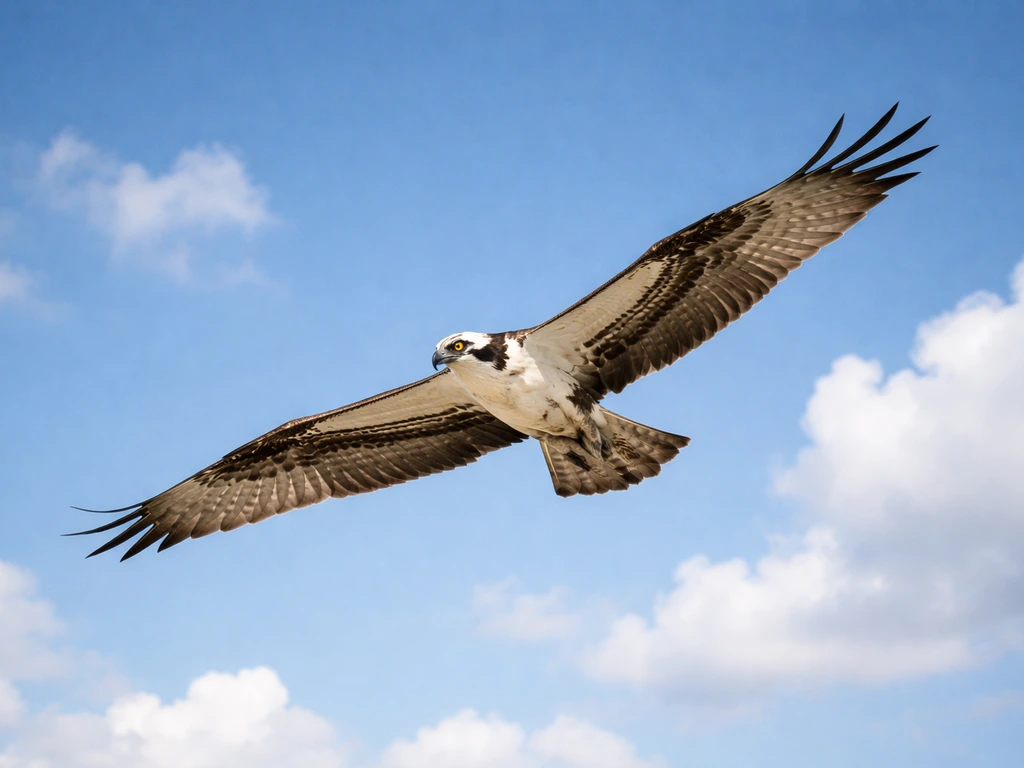
The literal use is exactly what it sounds like. If someone says 'Louise is very good at identifying birds on the wing,' they mean she can recognize birds while they're flying. No deeper meaning, no symbolism. Dictionary.com traces this sense back to the late 1400s, specifically describing a bird in flight as opposed to, say, a plane.
The idiomatic use is where it gets more interesting. Collins English Dictionary lists 'on the wing' as meaning not just 'flying' but also 'in motion,' 'travelling,' and 'about to leave.' That last sense is the figurative one. When a poet or songwriter reaches for 'bird on the wing,' they're usually pointing at something that won't stay still: an opportunity, a moment, a feeling of urgency, or the act of moving on.
One thing worth knowing before we go further: Merriam-Webster does list 'bird-on-the-wing' as a dictionary entry, but it's the name of a plant (also called gaywings), named because the flower's shape resembles a bird in flight. If you're reading a gardening or botanical text and see that hyphenated form, it has nothing to do with the idiom. Context, as always, is everything.
What 'Bird on the Wing' Actually Means (and Its Variants)
The core meaning of 'bird on the wing' is a creature or thing that is actively moving, transitioning, or beyond the point of being held. Cambridge Dictionary defines 'on the wing' as a literary phrase meaning 'a bird that is flying.' But the idiomatic extension is: something fleeting, free, or already departing.
The variants you might encounter work essentially the same way. 'Bird-on-the-wing meaning' (hyphenated) usually just signals someone searching for the phrase as a whole unit. 'Bird on a wing' occasionally appears in song lyrics or informal writing and carries the same sense of flight or barely-held freedom. 'Bird wing meaning' by itself is a looser search, and in that case the person is usually asking about symbolism: what does a wing (or a bird's wings) represent culturally or spiritually? If you want the deeper context behind bird wing symbolism, it helps to start with what the overall phrase bird on the wing meaning implies. The answer there tends to revolve around freedom, transcendence, and the ability to rise above.
| Variant | Most Likely Meaning | Where You'll See It |
|---|---|---|
| bird on the wing | In flight; or figuratively: fleeting, free, in motion | Poetry, song lyrics, idiom lists, casual speech |
| bird-on-the-wing (hyphenated) | A plant name (gaywings) OR the same idiom written as a search term | Botanical texts; web searches |
| bird on a wing | Barely sustained; in flight; sense of precarious freedom | Song lyrics, informal writing |
| bird wing meaning | Symbolism of wings: freedom, transcendence, spiritual elevation | Spiritual and cultural discussions |
Where You'll Actually Hear It: Music, Poetry, and Everyday Talk

One of the most famous literary uses comes from Edward FitzGerald's translation of the Rubáiyát of Omar Khayyám. In Quatrain VII, the lines read: 'The Bird of Time has but a little way / To fly, and Lo! the Bird is on the Wing. This wording appears in an “Atlantic Monthly” 1877 PDF reproduction of FitzGerald’s Rubáiyát quatrain the Bird is on the Wing. ' This isn't about a real bird. The 'Bird of Time' is a metaphor for time itself, and 'on the wing' signals urgency: time is already moving, already fleeting, so seize the moment now. Scholars treat this as one of the clearest examples of 'bird on the wing' meaning something is finite, transitional, and already in motion.
In music, 'The Skye Boat Song' offers another well-known example. The chorus opens with 'Speed, bonnie boat, like a bird on the wing, Onward!' Here it's used as a simile for speed and forward movement, not a comment on any actual bird. The image borrows the effortless velocity of a bird in flight to describe a boat cutting through water. That's a clean illustration of how the phrase works in songs: it's almost always a rhetorical comparison, not a literal description.
In everyday conversation, you're less likely to hear the full phrase 'bird on the wing' than you are to hear 'on the wing' alone. Someone might say 'I caught him on the wing' to mean they caught someone who was already leaving, or 'she's always on the wing' to describe a restless, constantly-moving person. The bird part makes it more poetic; the 'on the wing' core is what carries the actual idiomatic meaning.
What 'Bird on the Wing' Symbolizes
Birds in flight carry a heavy symbolic load across most cultures. The short list covers freedom, transition, transcendence, and the soul's movement between states. When you pair that with 'on the wing,' which already implies active motion, you get an image that almost universally reads as: something free, something going somewhere, something that cannot (or will not) be contained.
In Christian tradition, the bird most associated with spiritual flight is the dove. It appears at Jesus's baptism as a symbol of the Holy Spirit, and in the Noah's ark story as a sign of new beginnings and peace. The dove in flight specifically carries meaning about transition between states, which lines up directly with the 'bird on the wing' imagery. If you’re looking for the falling bird meaning in the same kind of symbolic language, it usually points to something shifting downward or losing momentum bird on the wing. In broader spiritual and religious thinking, flight motifs across many traditions are used to represent transcendence and liberation, the soul moving beyond earthly limits.
In folklore and more general cultural symbolism, a bird 'on the wing' can represent opportunity (something that will fly past if you don't act), a soul departing, or simply the beauty of something free and uncontrolled. The Rubáiyát example leans into the urgency angle: the bird is already on the wing, which means time is already running out. The Skye Boat Song leans into aspiration: be like that bird, move forward with that kind of freedom.
How to Tell Whether It's Literal or Figurative

The quickest test is to ask what kind of text you're reading and who's speaking. Three questions help narrow it down fast.
- Is it nature writing, birdwatching content, or scientific text? If yes, it's almost certainly literal: a bird physically in flight.
- Is it poetry, song lyrics, or a speech with emotional weight? If yes, it's almost certainly figurative: freedom, urgency, transition, or motion as a concept.
- Are there nearby words that suggest emotion, time, or movement of a person or abstract thing (like 'time,' 'life,' 'she,' 'he,' 'we')? Figurative. Are there nearby words about species, habitat, or observation? Literal.
Here are a few example sentences showing how surrounding words change everything:
- "She spotted the hawk on the wing before it disappeared behind the ridge." — Literal. Context is observation, a specific species, a physical action.
- "The Bird of Time is on the wing — seize this day before it passes." — Figurative. 'Time' as the subject gives it away immediately.
- "Speed, bonnie boat, like a bird on the wing." — Figurative simile. The phrase is being used to describe something else (a boat), which means the 'bird' is a comparison, not a real bird.
- "He's always on the wing, never settling in one city for long." — Figurative (idiomatic). The subject is a person, not a bird.
- "The bird-on-the-wing grows along forest edges in the eastern United States." — Botanical. This is the plant name, nothing to do with flight symbolism.
How 'Bird on the Wing' Differs from Similar Bird Idioms
It's easy to mix up related expressions, especially if you're coming at this from a search for bird idiom meanings. The most commonly confused one is 'a bird in the hand,' which comes from the proverb 'a bird in the hand is worth two in the bush.' That saying is about certainty versus risk: hold onto what you have rather than gambling it for more. 'Bird on the wing' is almost the opposite in spirit. If you are also searching for how "sore like a bird" is meant, that phrase can point to a different kind of expression depending on context sore like a bird meaning. It's about something that isn't in your hand, something already moving, free, or in motion. One idiom is about security; the other is about flux.
| Idiom | Core Meaning | Tone / Context |
|---|---|---|
| bird on the wing | In motion, free, fleeting, transitional | Poetic, literary, wistful, urgent |
| a bird in the hand | Hold onto what you have; certainty over risk | Practical, cautionary, proverbial |
| in the wings | Waiting nearby, ready to step in | Theatre, figurative readiness |
| on the wing | In flight; or actively moving / about to leave | Both literal and idiomatic |
| free as a bird | Completely free, no obligations | Casual, celebratory |
There are other related expressions worth knowing. 'In the wings' (from theatre) means waiting just offstage, ready to appear, which is about potential rather than active movement. 'Free as a bird' is a straightforward metaphor for total freedom. If you're exploring bird expressions more broadly, expressions about impaired flight, like those involving a broken or wounded wing, tend to carry the opposite meaning of 'bird on the wing': they signal limitation, vulnerability, or being grounded rather than free and moving. If you're exploring bird expressions more broadly, a "broken winged bird meaning" is often discussed as the opposite of "bird on the wing," pointing to limitation rather than freedom and forward motion. If you are trying to interpret the phrase in a metaphorical way, wounded and injured birds often symbolize vulnerability and limitation injured bird meaning. These interpretations are often connected to the idea of a broken-wing bird meaning limitation, vulnerability, or feeling unable to move forward. People also search for wounded bird meaning, which is often used to describe someone who feels hurt, vulnerable, or grounded.
Quick Reference: How to Interpret It in Real Text
If you walk away with one thing, make it this: 'bird on the wing' defaults to figurative in any literary, musical, or emotional context, and literal only in observational or scientific writing. The figurative sense almost always carries one of three meanings: something is free and in motion, something is fleeting and should be seized, or someone is transitioning or departing. Which of those three fits depends on the surrounding words, especially whether the passage is about urgency (seize the day), movement (going somewhere), or freedom (uncontained, unbound). Once you train your eye to look for those cues, the phrase becomes very easy to read.
FAQ
If someone says “on the wing” instead of “bird on the wing,” does it still mean the same thing?
Mostly, yes. In casual speech “on the wing” is often used for “in motion” or “already departing” (for example, “I caught him on the wing”). The “bird” part adds a more poetic flavor, but the idiomatic core is usually still about movement or something fleeting.
How can I tell whether a line from a poem or song is literal or figurative?
Look at whether the surrounding sentence allows physical verification. If the line gives no realistic bird-like details (species, behavior, location) and instead talks about time, opportunity, urgency, freedom, or leaving, it is almost certainly figurative. Similes and metaphors typically use nearby words like “like,” “as,” or an abstract noun (time, feeling, chance).
What does “bird on the wing” imply about timing, urgency, or “seize the moment”?
When used metaphorically, it often signals that the thing being described is already in motion and cannot be held for long. That means the emotional takeaway is usually action now (or not at all), not calm planning. If the context includes waiting, the phrase is less likely to be about urgency.
Can “bird on the wing” ever mean simply “speed” or “forward movement”?
Yes, especially in lyrics. Sometimes it functions like a comparison for velocity, where the bird image borrows the sense of effortless, airborne momentum. If the line focuses on motion through space (boats, running, travel), speed is a common emphasis.
Does the phrase relate to “in the wings” from theater?
Not directly. “In the wings” means waiting just offstage, ready to appear, which is about readiness and potential. “On the wing” suggests active motion or imminent departure, so they point in opposite directions (appearing soon versus leaving or being in motion already).
Is “bird-on-the-wing” with hyphens always the idiom?
No. Hyphenated “bird-on-the-wing” is also the name of a plant (gaywings) in botanical contexts. If you are reading about gardening, flowers, or plant morphology, treat it as the literal plant name rather than the idiom.
What’s the most common mix-up when interpreting “bird on the wing”?
Confusing it with “a bird in the hand.” “Bird on the wing” leans toward movement, risk, and what is fleeting, while “a bird in the hand” emphasizes certainty and holding onto what you already have. If the passage discusses odds, safety, or trading certainty for more, it is probably the other proverb.
Could “bird on the wing” describe a person’s behavior?
Yes. In idiomatic everyday use, “on the wing” can describe someone restless or constantly moving, even without using the word “bird.” If the sentence includes traits like restlessness, travel, or being hard to pin down, the meaning is about ongoing motion or shifting states.
Does it ever carry a negative meaning, like escape that’s harmful or instability?
It can, depending on context. The phrase is often positive or neutral (freedom, opportunity), but if the surrounding text frames the motion as loss, rejection, or inability to keep control of a situation, it can read as destabilizing or out-of-control departure rather than inspiring freedom.
How should I interpret it if the text is religious or spiritual?
It can be connected to spiritual “flight” imagery, often associated with transition and rising beyond earthly limits. If the passage specifically mentions symbols like the dove or references baptism, peace, or new beginnings, the metaphor may focus more on spiritual change than on general urgency or speed.
Next Article
Wounded Bird Meaning: Symbolism and What to Do If Found
Meaning of wounded bird in idioms and symbolism, plus safe steps to help an injured bird you find.