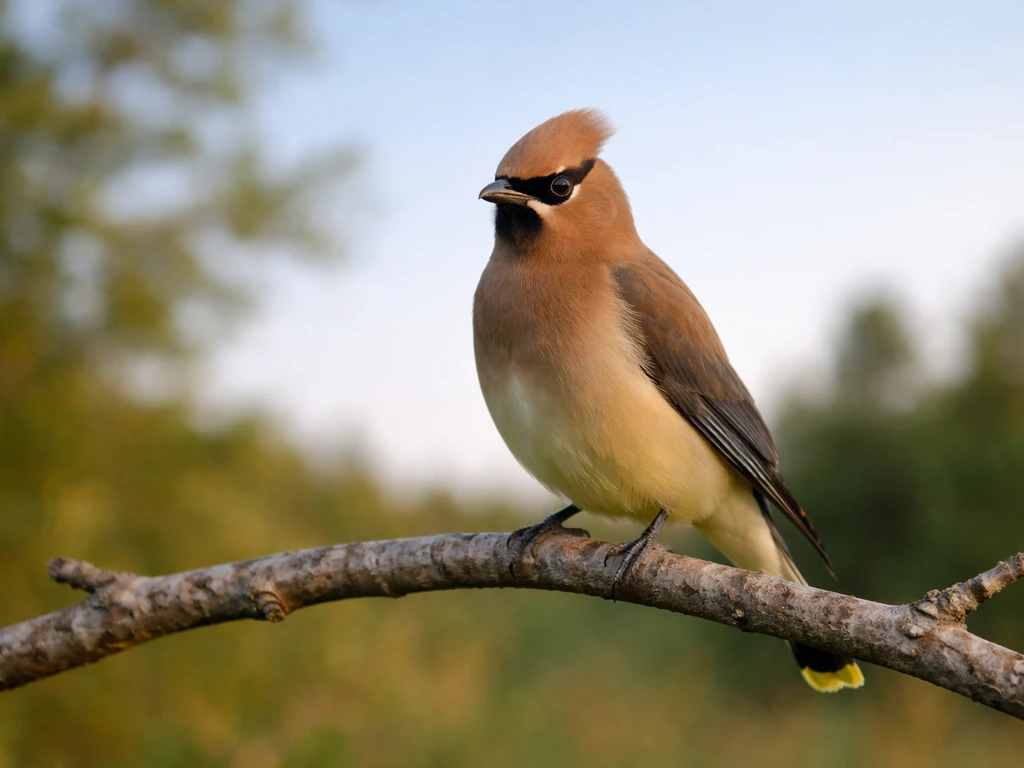
The phrase 'a bird in this world' most commonly means someone (or something) is remarkable, unique, or special in a way that stands out from everything around them. The most traceable use of it comes from The Andy Griffith Show, where 'You're a bird in this world' was used as a genuine compliment, a way of saying someone is one of a kind. Beyond that specific pop-culture origin, the phrase also floats through poetry, personal reflection, and spiritual writing as a metaphor for vulnerability, freedom, or the feeling of being a small living thing in a vast and indifferent universe. Which meaning applies depends almost entirely on context, and this guide will help you figure that out quickly.
A Bird in This World Meaning: Symbolism, Uses, Context

Marcus Winters
16 May 2026
What it means in plain English

At its simplest, calling someone 'a bird in this world' is a compliment that says they are extraordinary. Think of it like saying 'you're one in a million' but with the specific imagery of a bird standing apart from its surroundings. Linguists who studied the phrase noted it doesn't appear in standard dictionaries or dialect reference books, which tells you two things: it isn't a centuries-old proverb with a fixed meaning, and it almost certainly gained traction through Andy Griffith's usage on his show. The fact that newspapers ran explainer pieces asking 'have you ever called someone a bird in this world?' confirms that people heard it and found it genuinely puzzling, which is exactly what makes it worth unpacking.
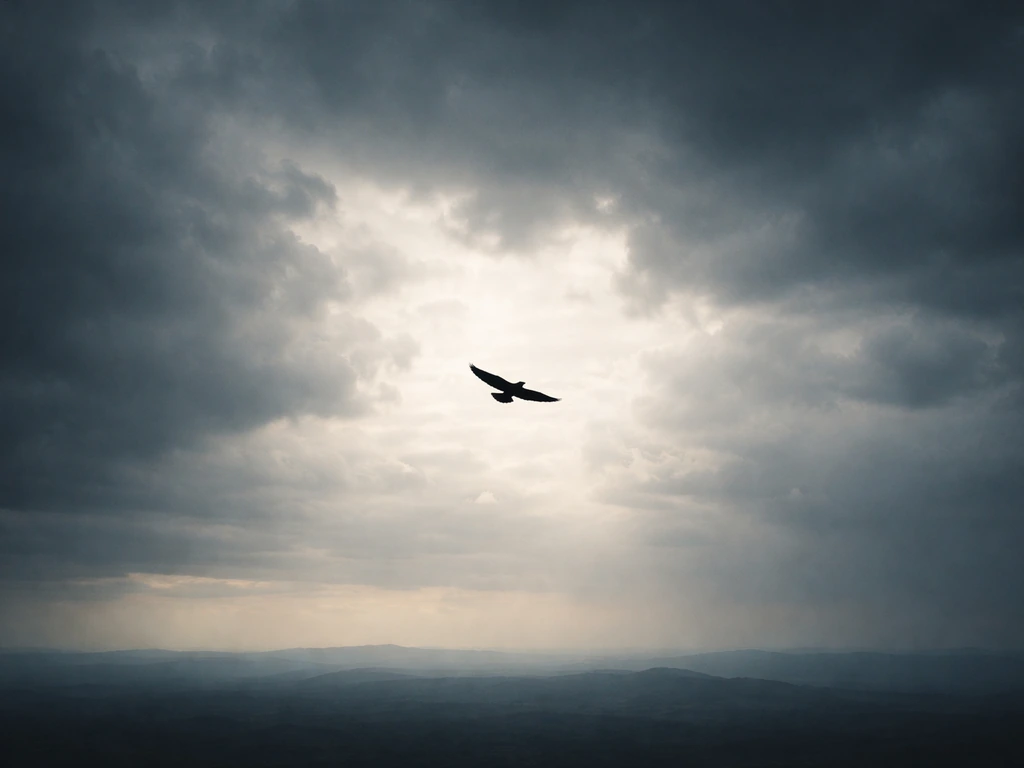
Outside that show context, the phrase takes on a softer, more existential tone. People use it (or close variations like 'a bird in the world') when they want to capture the feeling of existing as something small, fragile, and alive inside a world that is much larger. That's not a negative meaning, it's more philosophical. A bird doesn't control the weather, the sky, or the season, but it still flies. The phrase can carry that same mix of vulnerability and quiet resilience.
Where and how people actually use this phrase
The most documented use is the Andy Griffith compliment. Griffith apparently used 'You're a bird in this world' as a piece of Southern flattery, and researchers studying the show found it was essentially his own expression, not a regional dialect phrase with wide independent use. So if you've seen it in a TV context, a Southern-culture discussion, or someone quoting the show, that's the flavor you're dealing with: warm, slightly old-fashioned, high praise.
The second common context is personal reflection, especially online. Reddit threads, social media captions, and poetry often use bird-in-the-world imagery to talk about identity, isolation, or a felt sense of being out of place. One Reddit user described feeling like they 'weren't a bird in the world' as a way of saying they didn't fit or belong. Another described a bird encounter as a source of deep comfort after loss. In these cases the phrase isn't about praise at all, it's about the emotional experience of existing.
A third context is spiritual or philosophical writing. Across traditions, birds show up as symbols of the soul, of freedom, or of the link between the earthly and the divine. When a poet or spiritual writer says 'we are each a bird in this world,' they're usually pointing to both the preciousness and the brevity of life, how you are here, alive, singing, but not permanent.
The symbolism birds almost always carry
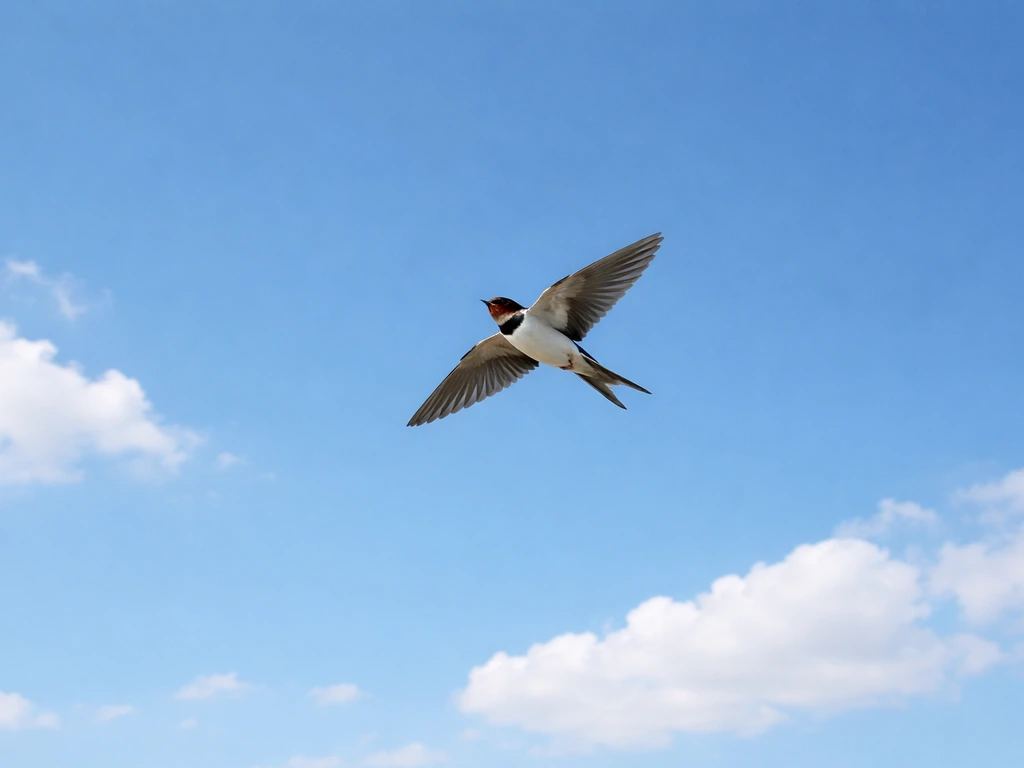
Birds have been loaded with symbolic meaning across virtually every culture on earth, and that weight transfers into phrases like this one. Birds also share a lot of common interpretations, so if you're wondering about a bird meaning in general, that cultural symbolism can help you read this phrase faster. Knowing what birds generally represent gives you a faster path to interpreting any bird-related phrase, including this one.
- Freedom and transcendence: Birds fly where humans can't, so they naturally represent liberation, perspective from above, and escape from earthly limits.
- Uniqueness and rarity: Rare or beautiful birds have long stood in for people or things that are exceptional. Calling someone a bird is often a compliment in the same vein as calling them a rare gem.
- Vulnerability and fragility: A single bird in a vast world is also a delicate thing. Small, exposed, dependent on conditions outside its control.
- Messengers and signs: Across ethnolinguistic traditions, birds are widely identified as carriers of meaning, signals from something beyond the everyday. This is why people instinctively feel a bird encounter 'means something.'
- Mortality and the soul: Birds have historically symbolized both death and the afterlife, the soul leaving the body, or a loved one's presence after passing.
- Hope and resilience: Despite all the vulnerability, a bird still sings. That combination of smallness and persistence is a core reason bird imagery keeps showing up in hopeful writing.
Sorting out which meaning is intended
Because the phrase isn't a standardized idiom with one locked-in definition, the source and context determine the meaning almost completely. Here are the most likely interpretations and what each one signals:
| Context / Source | Most Likely Meaning | Emotional Tone |
|---|---|---|
| Andy Griffith Show / Southern compliment | You are remarkable, unique, one of a kind | Warm, flattering, affectionate |
| Personal reflection or social media caption | I feel small, alive, and uncertain in a big world | Introspective, sometimes melancholy, sometimes hopeful |
| Spiritual or philosophical writing | Life is brief and precious; we are here temporarily but meaningfully | Reverent, existential, sometimes comforting |
| Poetry or literary use | The speaker as a free but fragile being, navigating existence | Lyrical, ambiguous, open to reader interpretation |
| Negative or ironic use | Out of place, constrained, not belonging (like a bird in a cage) | Uncomfortable, isolating, searching |
How to decode it when you see it in a specific sentence

The most reliable method is to work outward from the phrase into the surrounding words and tone. Figurative language teachers recommend identifying the literal meaning first, then asking what that image does emotionally or thematically in its specific setting. In the SAS module guidance, teachers are advised to evaluate vocabulary for whether it is literal, figurative, or idiomatic based on surrounding context to clarify intent in a given sentence evaluate vocabulary as literal, figurative, or idiomatic based on context. Here's a practical sequence you can run through in about 30 seconds:
- Who said it and to whom? A person saying it to a friend (especially in a warm or Southern context) almost certainly means it as a compliment. A person saying it about themselves is likely in reflective or philosophical mode.
- What words surround it? Look for emotional cues: words like 'free,' 'small,' 'alone,' 'rare,' 'special,' or 'lost' will each push you toward a different interpretation.
- What is the overall tone of the piece or conversation? A warm, storytelling tone suggests the Andy Griffith-style compliment. A contemplative or sad tone suggests existential or spiritual use.
- Is the bird imagery positive or constrained? If the bird is flying, singing, or described as rare, the meaning is favorable. If the bird is caged, dying, or trapped, the meaning leans toward vulnerability or isolation.
- Does context explain it directly or leave it open? If the writer doesn't explain the phrase, they likely expect you to feel its meaning rather than define it, which is the hallmark of poetic or spiritual use.
How this phrase compares to similar bird idioms
It helps to know where 'a bird in this world' sits relative to other bird expressions, because they each do a different job. The old proverb 'a bird in the hand is worth two in the bush' (which entered the language in the 15th century) is purely pragmatic. It's about certainty versus risk, choosing what you already have over chasing something uncertain. There's no emotional warmth or existential flavor there, just practical advice. That's a very different animal from the open-ended, emotive quality of 'a bird in this world.'
Other bird phrases in everyday use also carry distinct jobs. 'Have a bird' (as in 'she nearly had a bird') means to react with shock or agitation. The phrase “have a bird” has a different meaning, and it’s worth keeping that distinction in mind. 'Doing bird' is British slang for serving a prison sentence. If you’ve heard the term "doing bird" elsewhere, it’s a totally different meaning, referring to serving a prison sentence in British slang. 'My bird' is informal for a girlfriend or partner in certain dialects. None of those overlap with the meaning here. 'A bird in this world' is specifically about identity, presence, and worth, either yours in relation to the world, or life itself as something brief and vivid.
The closest thematic cousin might be the category of 'I saw a bird' moments, where a bird encounter in real life becomes charged with meaning, as a sign, a message, or a reminder of someone gone. If you mean the more mystical sense, look at it as part of the “I saw a bird” style of signs, messages, or reminders. That same impulse to read significance into bird imagery is exactly what makes 'a bird in this world' resonate as a phrase. Birds just carry meaning for people in a way that, say, 'a squirrel in this world' simply doesn't.
What to do with the meaning once you have it
If someone said it to you as a compliment, the most natural response is to accept it in the spirit it was given. It's high praise in the Andy Griffith tradition, old-fashioned and genuine. You don't need to decode the ornithology, just take it as 'you're something special.'
If you encountered it in a poem, a song lyric, or a personal essay and you're trying to understand it, go back to the context questions above. Then ask yourself what the image makes you feel before you try to name what it means. Bird imagery is often chosen precisely because it bypasses easy labeling and works on an emotional register first. The 'meaning' is often the feeling itself: small but alive, fragile but free, here but not forever.
If you want to use the phrase yourself, be deliberate about which version you're reaching for. As a compliment to another person, 'you're a bird in this world' lands best in a warm, personal conversation where the slightly old-fashioned quality feels charming. As a reflective statement about yourself or life in general, it works well in writing, captions, or any moment where you want to convey something about the beauty and strangeness of just being alive in a world this large.
Either way, the phrase earns its weight by doing what good bird imagery always does: it makes something abstract (uniqueness, mortality, belonging, freedom) suddenly feel tangible, like something that has wings and can fly away at any moment.
FAQ
Is “a bird in this world” ever meant as an insult or put-down?
It can be, but only if the speaker’s tone is clearly ironic or dismissive. In most uses it signals admiration, tenderness, or existential reflection. If it’s followed by criticism (for example, “so you think you’re special”), then it may be sarcasm rather than the intended compliment or metaphor.
What’s the safest way to respond if someone says it to me as a compliment?
A simple positive reply works best, like “Thank you, I appreciate that” or “That’s really kind.” You do not need to ask what they “mean” because the phrase is often meant to land emotionally, not to be decoded.
Does it mean “you stand out” or “you feel out of place” (how can I tell)?
Look at whether the surrounding words are praise or self-description. Compliment contexts pair it with respect, encouragement, or admiration. Reflection contexts pair it with loneliness, grief, identity questions, or “not belonging,” where the point is the felt experience, not your social status.
Is “a bird in this world” the same as “one in a million”?
Not exactly. “One in a million” is usually about rarity or quality. “A bird in this world” keeps the added imagery of smallness and vulnerability, so it can carry meaning about freedom, fragility, or the brevity of life, not just exceptionalness.
How should I interpret it if I only see the phrase in isolation on social media?
Assume ambiguity. Check whether the post includes context cues like a personal photo, an event (loss, graduation, breakup), or the surrounding caption. Without those signals, the most common readings are either “remarkable” (praise) or “alive, but small” (existential).
Are there spelling or wording variants that change the meaning?
Yes. “A bird in this world” usually keeps the existential or identity tone. “A bird in the world” is often a softer or more general version. If the wording shifts to comparisons with other bird phrases (like “in the hand” or “in the bush”), then it becomes a different kind of saying focused on risk versus certainty.
Can it be used for an object, a place, or an experience (not just a person)?
Often, yes. The phrase works as a metaphor for anything that feels uniquely vivid or alive in a vast setting. In that case, you should keep the grammar consistent with the intended emotional register, for example “this moment is a bird in this world,” rather than treating it like a literal description.
Is there any risk of mixing it up with other slang “bird” phrases?
Yes, but context usually prevents confusion. “Have a bird,” “doing bird” (prison sentence slang in British use), and “my bird” (partner/girlfriend in some dialects) are separate idioms. If the sentence is about identity, worth, freedom, or existential feelings, it is almost certainly the intended metaphor, not slang.
How do I tell if the “meaning” is meant to be literal, symbolic, or both?
Treat it as symbolic unless the text explicitly describes a real bird encounter. Poetic, spiritual, and reflective passages typically use it as imagery for life, soul, freedom, or mortality. In those cases the “literal” layer (a bird exists in a wide world) is only there to support the emotional takeaway.
If I want to use it in my own writing, what tone should I aim for?
Aim for warmth or quiet awe. The phrase benefits from a slightly literary, human voice. For compliments, keep it personal and straightforward. For existential use, pair it with sensory or emotional details (fragile, alive, brief, singing), so the symbolism feels earned rather than vague.
Next Article
I Saw a Bird Meaning: What It Could Symbolize and How to Know
Interpret i saw a bird meaning: identify the species, behavior, location, timing, and match likely symbolic messages.