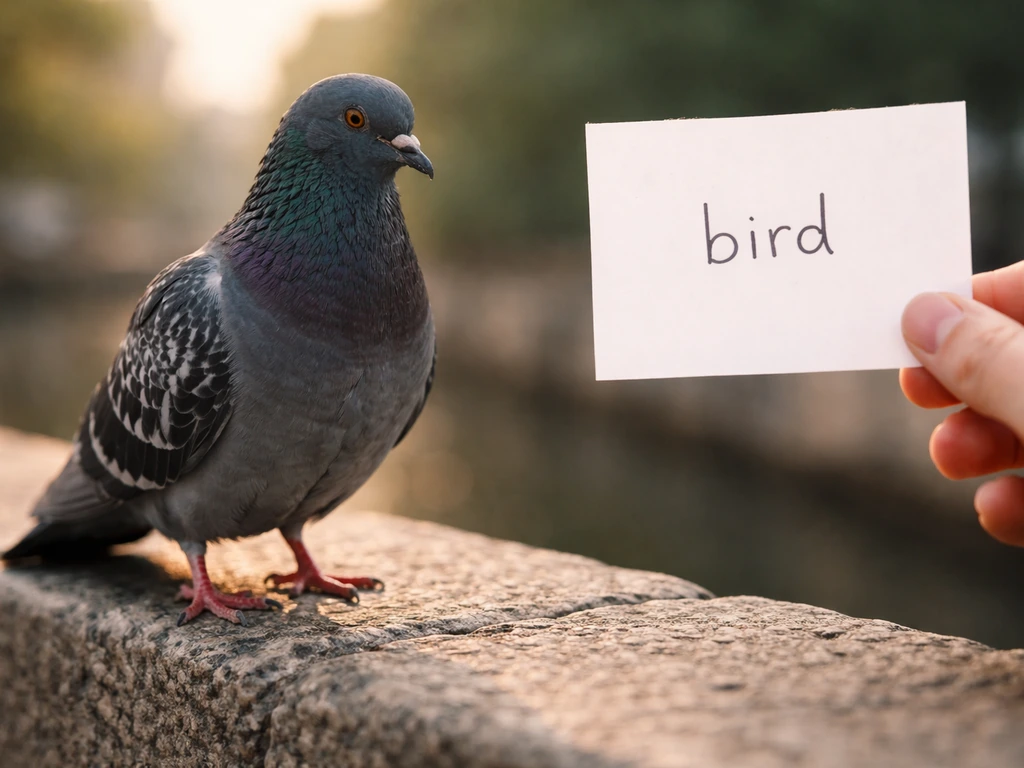
In England, 'bird' most commonly means one of two things: the actual animal, or a slang term for a woman or girlfriend. The slang sense is the one that trips people up, especially if you're not from the UK. If someone says 'that's my bird' or 'she's a nice bird,' they're almost certainly talking about a person, not a sparrow. Context does nearly all the heavy lifting here, and once you know what to look for, it becomes easy to tell which meaning is intended.
What Does Bird Mean in England? Literal and Slang

Marcus Winters
24 Jun 2026
What 'bird' means in everyday English English

English English (the kind spoken in England specifically) carries a lot of informal vocabulary that doesn't translate cleanly to American or Australian English, and 'bird' is a good example. At its most basic, it refers to the feathered animal, same as anywhere in the world. But in conversational British English, it carries a well-established slang meaning that blank" rel="noopener noreferrer">the Cambridge Dictionary, Collins, Oxford English Dictionary, and Merriam-Webster all formally recognize: a girl, young woman, or girlfriend. In the UK, “bird” is commonly used as slang for a girl, young woman, or girlfriend. This isn't new slang either. The OED traces this use back centuries, which means it's embedded in the language, not a passing trend.
So when you're trying to decode what someone in England meant by 'bird,' you're essentially choosing between two very different categories: the animal or a person. So when you're trying to decode what someone in England meant by 'bird,' you're essentially choosing between two very different categories: the animal or a person meaning of bird in English. The good news is that sentence structure and surrounding words almost always make it obvious.
The slang sense: 'bird' as a woman or girlfriend
This is the meaning you'll encounter most often in casual conversation, social media, or TV shows set in England. Collins defines it as 'a girl or young woman, especially one's girlfriend,' and that definition lines up with real everyday use. You'll hear it in phrases like 'my bird' (my girlfriend), 'some bird I met at the pub,' or 'she's a lovely bird.' Merriam-Webster even flags this as 'chiefly British,' confirming it's a distinctly UK usage.
The possessive form 'my bird' is probably the clearest signal you're in slang territory. It functions exactly like 'my girlfriend' would in standard English. You wouldn't say 'my bird' about an actual animal unless you were specifically a pet owner talking about a pet bird, and in that case, the surrounding context would make it obvious.
Is it offensive to call someone a 'bird'?
This one depends heavily on who's saying it, where they're from, and the relationship between the people involved. Reddit discussions on this exact question reveal a real split in opinion: some people, especially younger women, find 'bird' demeaning or dismissive, roughly in the same category as 'chick' or 'dame.' Others, particularly in older generations or specific regions, treat it as completely neutral or even affectionate. In the north of England, for instance, it tends to be used more freely without much negative intent. In more formal or professional settings anywhere in England, using 'bird' to refer to a woman would come across as inappropriate. Tone and familiarity matter enormously here.
When 'bird' just means a bird
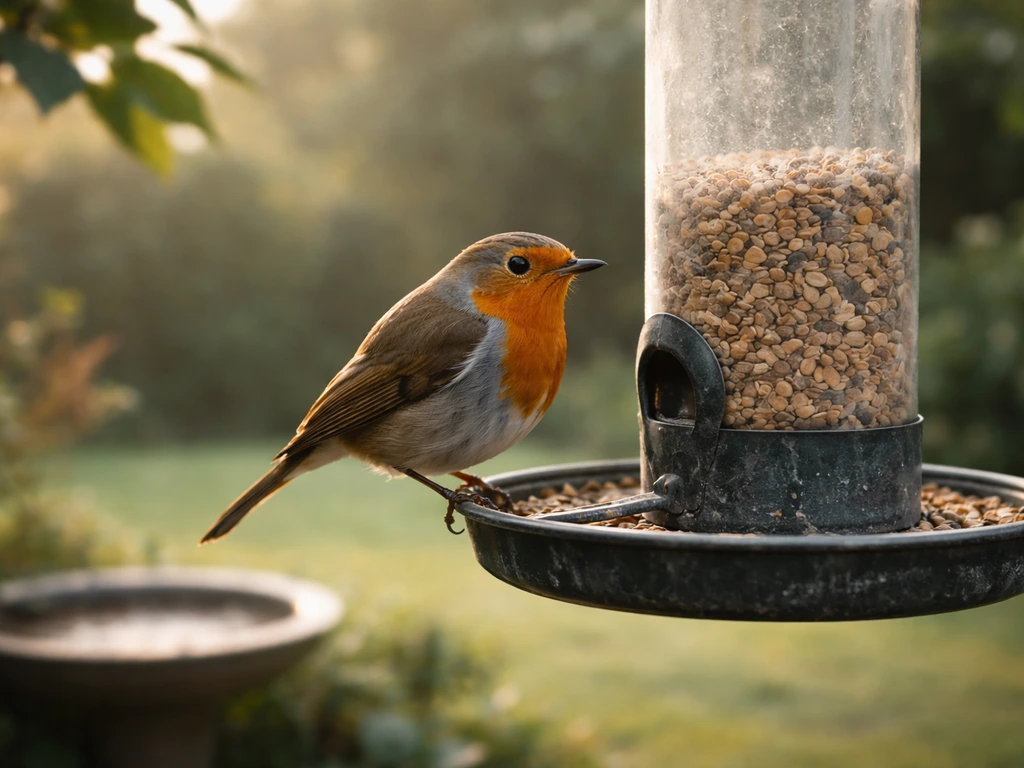
Of course, sometimes a bird is literally a bird. If someone in England is talking about wildlife, their garden, a nature documentary, or a pet, they mean the animal. Birdwatching is a genuinely popular hobby in England, and you'll hear plenty of 'bird' used in its literal sense in those contexts. The word 'birding' specifically refers to birdwatching, and terms like 'garden birds,' 'migratory birds,' or 'rare bird sighting' are all literal.
Related literal phrases worth knowing include 'bird feeder,' 'bird bath,' 'bird of prey,' and 'birdsong.' None of these have slang connotations. If the word is surrounded by nature, wildlife, or animal-related vocabulary, you can safely assume the literal meaning.
Figurative idioms that use 'bird' in England
Beyond the slang sense, English is packed with idioms that use the word 'bird' figuratively, and these have nothing to do with either the animal or the slang for women. These are set phrases with their own distinct meanings, and you need to recognize them as a group rather than trying to decode 'bird' alone.
| Idiom | Meaning | Example use |
|---|---|---|
| A bird in the hand (is worth two in the bush) | It's better to keep what you have than risk it for something bigger | Take the job offer — a bird in the hand, you know. |
| Kill two birds with one stone | Accomplish two things with a single action | I'll pick up the kids and grab the shopping — kill two birds with one stone. |
| A little bird told me | I heard something through informal or secret channels | A little bird told me you're getting a promotion. |
| Free as a bird | Completely free, with no obligations or restrictions | Now that he's retired, he's free as a bird. |
| The early bird catches the worm | People who act early get the best results | She got to the sale first thing — early bird catches the worm. |
| Birds of a feather (flock together) | People with similar characters or interests group together | Those two are always together — birds of a feather. |
| Strictly for the birds | Worthless, not worth considering (somewhat dated) | That plan is strictly for the birds. |
These idioms are used across all ages and contexts in England. If you hear 'bird' inside one of these recognizable phrases, interpret the whole phrase, not the word in isolation. None of them are commenting on either an actual bird or a woman.
Regional, age, and context nuances, and how to avoid misunderstandings
The slang use of 'bird' for a woman is more common in certain regions and generations. In northern England (Manchester, Liverpool, Newcastle), it's used more frequently and more casually. In London, you'll hear it but it can carry a more loaded tone depending on who's speaking. Older speakers tend to use it more freely; younger speakers are more mixed in their attitudes toward it.
Formality is the clearest dividing line. In professional contexts, written English, journalism, or any formal setting, 'bird' meaning a woman essentially never appears. You'll only encounter the slang sense in casual speech, texts, social media, fiction, or informal conversation. If you're reading something formal and you see 'bird,' it almost certainly means the animal or is part of a set idiom.
One more context to be aware of: 'bird' in older British slang (and still occasionally today) can also mean a prison sentence, as in 'doing bird' or 'doing bird time.' This comes from rhyming slang: 'bird lime' rhymes with 'time.' So 'he's doing bird' means he's in prison. This is a separate slang layer entirely and appears in crime dramas, older novels, and occasionally in conversation among older Londoners.
How to interpret 'bird' in real sentences
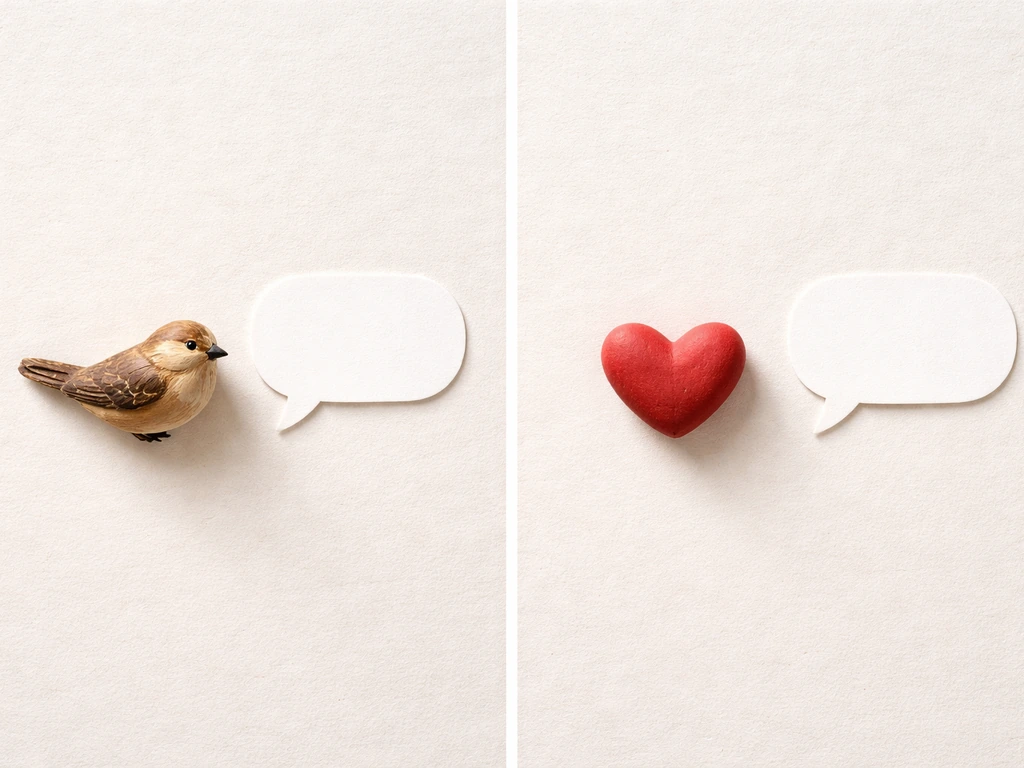
Here are concrete examples showing how the meaning shifts depending on context. If you still want a quick takeaway, focus on whether the surrounding words point to the animal or to the slang meaning bird meaning in English. Reading these will make pattern recognition much faster.
| Sentence | Meaning | Why |
|---|---|---|
| 'My bird's coming round later.' | Girlfriend | Possessive 'my' + social context = person/relationship |
| 'There's a bird in the garden.' | Animal (actual bird) | Garden setting, no personal pronoun, no slang markers |
| 'She's a nice bird.' | Woman (person) | Pronoun 'she' + no animal context = slang for a woman |
| 'Kill two birds with one stone.' | Idiom (efficiency) | Recognizable set phrase, not literal or slang |
| 'He's doing bird.' | Serving a prison sentence | British rhyming slang; 'doing' + 'bird' = prison time |
| 'A little bird told me you're moving.' | Heard informally/secretly | Fixed idiom; 'little bird' signals figurative use |
| 'She feeds the birds every morning.' | Animals (actual birds) | Habitual action + nature routine = literal |
| 'Some bird at the pub kept talking to him.' | A woman | Social setting, indefinite 'some' + casual speech |
Not sure which meaning is intended? Here's how to figure it out
If you're still uncertain after reading the surrounding sentence, run through these steps in order. They cover the vast majority of cases.
- Check the pronouns. If 'bird' is referred to with 'she,' 'her,' or 'my,' it almost always means a woman or girlfriend. If it's referred to with 'it' or paired with action verbs like 'flying,' 'singing,' or 'nesting,' it's the animal.
- Look at the setting. Nature, wildlife, pets, and outdoor contexts signal the literal animal. Social, relational, or personal contexts signal the slang person meaning.
- Check for known idioms. If the phrase matches a recognizable idiom like 'kill two birds with one stone' or 'a bird in the hand,' interpret the whole idiom, not the individual word.
- Check for 'doing bird.' This specific phrase means a prison sentence. If it appears without an animal context or relationship context, that's your answer.
- Consider the speaker's age and region. Older speakers and those from northern England use the slang more freely. Younger urban speakers may use it but are more context-dependent.
- If you have the exact phrase or sentence, look it up in context. Dictionaries like Cambridge or Collins list multiple senses of 'bird' with usage examples that match real conversations.
- If you're still unsure, share the full sentence. The surrounding words almost always resolve the ambiguity. A single word in isolation is hard to decode; three or four words of context usually makes it clear.
If you're exploring related territory, the UK meaning of 'bird' connects closely to broader questions about British English vocabulary. Understanding the literal side of the word also opens up a world of cultural bird symbolism and bird-related phrases in English that go well beyond slang. Whether you're decoding conversation or diving into British English idioms, the key is always context first.
FAQ
How can I tell quickly whether “bird” is slang or the animal in a sentence?
If a sentence uses bird with relationship language like “my”, “your”, “that”, “she’s”, or “I met”, it usually points to the slang (a girl or girlfriend). If it’s paired with wildlife or household terms like “feeder”, “bath”, “watching”, “nest”, or “migratory”, it’s almost certainly the animal.
Is “bird” mainly used for girlfriends, or can it mean any woman?
In most modern, everyday UK slang, “bird” as a woman is most common as a generic label for a girlfriend or woman you are dating or talking about. Referring to a woman as “the bird” (without “my/your/she’s”) can sound colder or more insulting depending on tone, so it’s safer to avoid copying the usage.
Could “bird” sound rude or demeaning, even if locals use it casually?
Yes, you might see “bird” used in a negative way in some conversations, even if it can be affectionate in others. If the speaker sounds angry, dismissive, or uses it in a workplace argument, treat it as potentially derogatory or objectifying, similar to other slang terms that can be rude.
Is it ever appropriate to use “bird” for a woman at work or in formal situations?
Avoid using it in professional settings. In meetings, emails, presentations, customer service, or when speaking to someone you do not know well, “bird” used for a woman would likely be perceived as inappropriate, childish, or disrespectful, even if the speaker might personally see it as harmless.
Does the phrase “my bird” always mean “my girlfriend” in England?
When someone says “that’s my bird,” the possessive “my” is a strong clue it’s slang for a partner. By contrast, if someone is talking about ownership of an animal, you would typically get a more specific phrase like “my pet bird” or a mention of species, cage, or feeding.
How do I recognize when “bird” might mean prison (rhyming slang) instead of a woman or an animal?
If you see it in a crime or prison-related context, “bird” might mean prison time or a sentence, especially in older rhyming-slang references. The surrounding words usually make it obvious, for example “doing bird”, “bird time”, or other incarceration language.
What should I do if “bird” appears inside an idiom or set phrase?
Idioms that contain “bird” do not follow the normal logic of choosing between animal vs slang person. If the phrase is fixed or idiomatic, try interpreting the entire expression. If you’re unsure, look for the “whole-phrase meaning” rather than substituting “girl” or “bird” into it.
Does regional variation in England change how safe or acceptable “bird” is to use?
Yes. Regional usage can make the slang feel more frequent or normalized in the north of England, but reaction can still vary by individual and context. If you are a non-local speaker, assume it may be sensitive and do not use it as a compliment unless you are confident the person expects that kind of tone.
What’s the best translation for “bird” when I’m not writing in slang?
If you’re translating from American or other English, don’t automatically map it to “chick” or “girl” in all cases. “Bird” is more specific in usage patterns (often partner-related), and it can carry different levels of familiarity. In translation, consider using “girlfriend” or “young woman” depending on the sentence.
If I see “bird” in writing (not casual chat), how likely is it to be slang for a woman?
When you read “bird” in a formal article, news story, or work document, treat it as literal wildlife or as part of a named phrase. The slang for a woman almost never shows up in writing aimed at a general formal audience.
What’s a good, non-awkward way to ask what “bird” means if I’m unsure?
If you can, confirm meaning with a low-risk follow-up, for example asking what they mean by “bird” in that sentence. If you’re speaking, you can also paraphrase safely, like “Do you mean your girlfriend?” rather than repeating “bird,” which can sound like you are copying the slang.
Next Article
Bird UK Meaning: What Bird Slang Means in the UK
Decode bird UK slang meaning, common contexts, example sentences, and a quick checklist to identify the right sense.