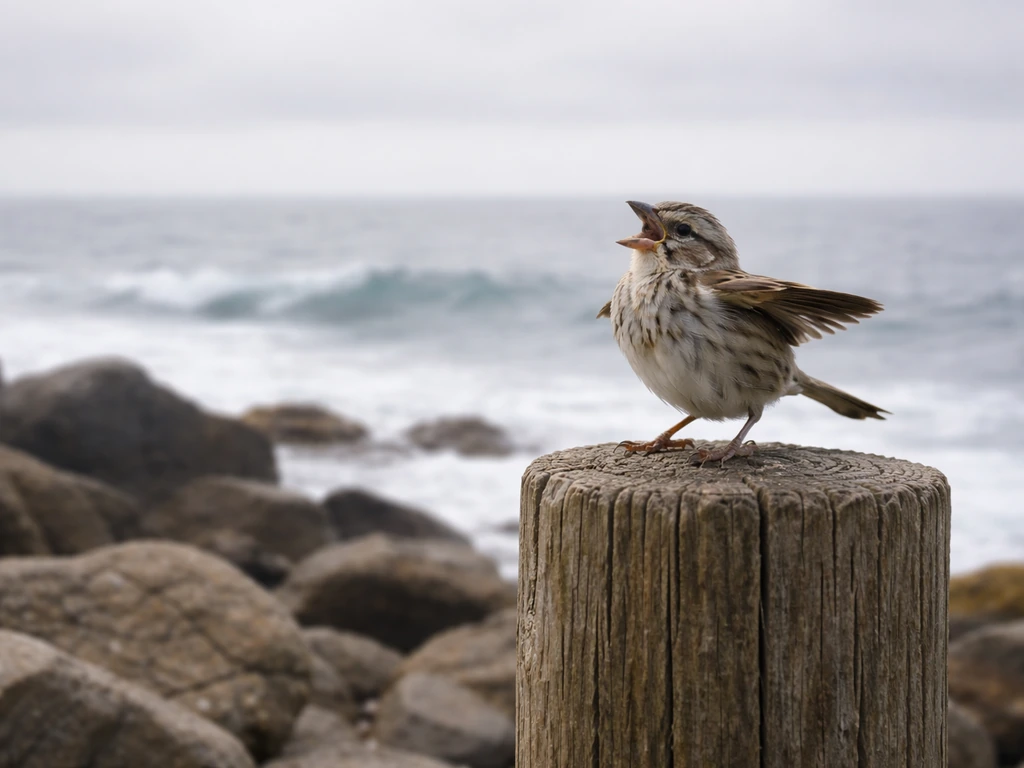
The bill of a bird is simply its beak: the hard, projecting structure that forms the bird's mouth and jaws. Merriam-Webster puts it precisely as 'the jaws of a bird together with their horny covering,' while Cambridge keeps it short and sweet: 'the beak of a bird.' Those two definitions are essentially the same thing. If you see 'bill' in an English sentence about a bird, it almost always refers to that literal anatomical structure unless the context clearly points to a metaphor.
Bill of a Bird Meaning in English: Beak vs Bill

Marcus Winters
10 Jun 2026
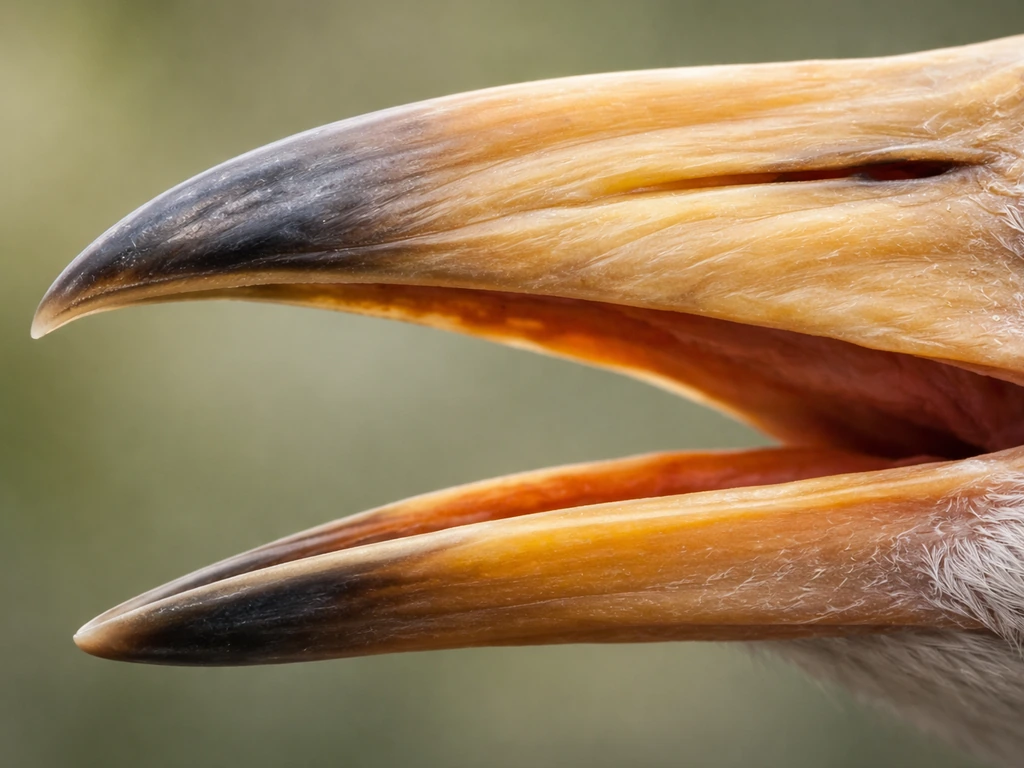
What a Bird's Bill Actually Is
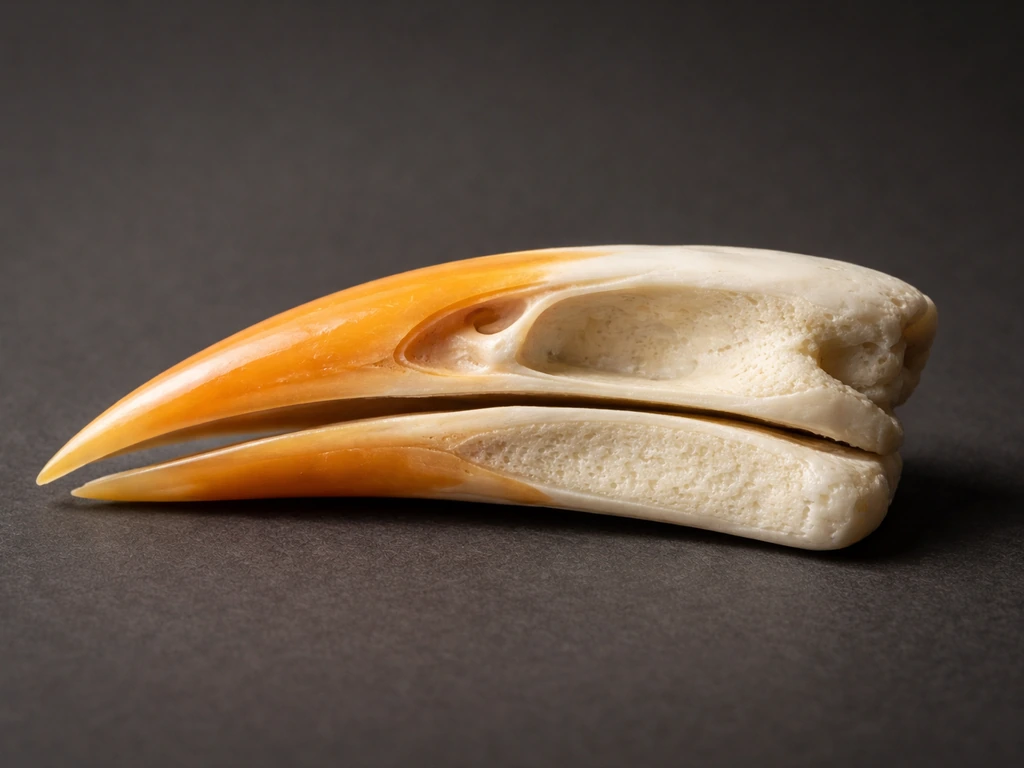
A bird's bill is the entire beak structure: the upper and lower jaw bones and the tough keratin layer (called the rhamphotheca) that covers them. It is the bird's primary tool for feeding, preening, nest-building, defense, and even courtship displays. Birds do not have teeth, so the bill does all the work that teeth would otherwise handle.
What makes bills fascinating from a language and nature standpoint is how wildly different they look across species. A hummingbird has a long, needle-thin bill for sipping nectar. A pelican has a massive, pouched bill for scooping fish. A hawk has a short, hooked bill for tearing meat. A duck's broad, flat bill filters food from water. When English speakers say 'a duck's bill,' as Merriam-Webster does in its example, they mean that wide, spatula-shaped structure you picture instantly. The bill shape tells you almost everything about how the bird lives and feeds.
Bill vs Beak: Are They Actually Different?
In everyday English, 'bill' and 'beak' mean the same thing, and the Oxford Learner's Dictionary lists them as direct synonyms. Oxford Learner's Dictionaries defines the beak as the hard pointed or curved outer part of a bird's mouth and gives bill as a synonym Oxford Learner's Dictionary lists them as direct synonyms. The difference is mostly stylistic and contextual rather than scientific. That said, there are loose conventions worth knowing.
| Term | Preferred Use | Example |
|---|---|---|
| Bill | Flatter, broader beaks (ducks, geese, platypuses); general scientific writing; softer structures | a duck's bill, a pelican's bill |
| Beak | Pointed, hooked, or curved structures (eagles, parrots, sparrows); everyday casual speech | an eagle's beak, a parrot's beak |
| Either | General reference to any bird's mouth structure; both are grammatically and factually correct | the bird's bill / the bird's beak |
Britannica notes that 'bill' is technically preferred in scientific contexts when describing birds and related animals like platypuses. But in practice, most English speakers use 'beak' more often in casual conversation and 'bill' more often when writing about waterfowl or in formal descriptions. Neither choice is wrong. If a language learner is unsure which to use, 'beak' is the safer everyday word; 'bill' sounds slightly more formal or technical.
Common Phrases and Example Sentences
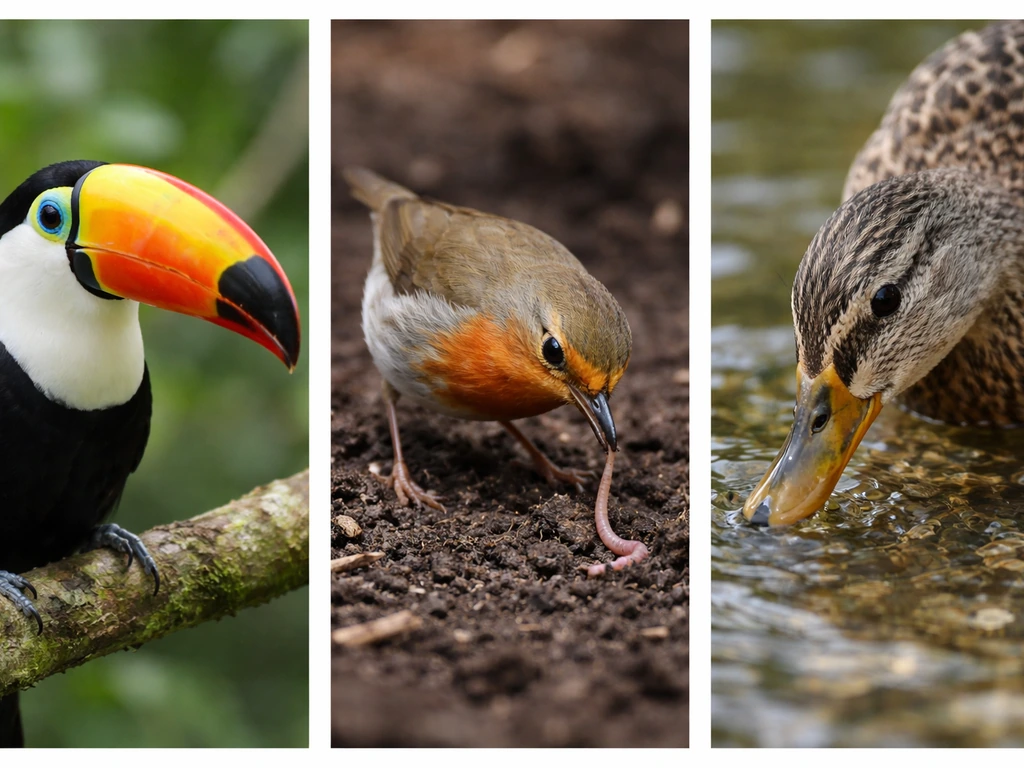
Here are practical example sentences showing how 'bill' appears in natural English when referring to a bird's anatomy:
- The toucan's colorful bill can be as long as its entire body.
- She watched the robin use its bill to pull a worm from the soil.
- A duck uses its flat bill to filter insects and plants from shallow water.
- The heron stood motionless, its long bill pointed downward toward the fish.
- Researchers measured the bill length of each finch to track evolutionary changes.
Notice that in every one of those sentences, 'bill' refers directly to the physical beak. You can substitute 'beak' in any of them and the meaning stays identical. The choice is purely stylistic.
Figurative and Symbolic Uses Involving Birds' Bills and Beaks
While 'bill' on its own rarely carries deep symbolic weight in English idioms, the broader language of bird anatomy does appear in figurative expressions. 'Beak' in particular shows up in slang and symbolism in ways that 'bill' typically does not.
In British slang, 'beak' can mean a judge or magistrate, a usage dating back centuries. If you’re wondering what a bird means in England, it can help to separate literal bird words from these kinds of British slang and figurative uses. In school settings it has been used informally to mean a headmaster. These figurative uses have nothing to do with bird anatomy but come from the same word. This is worth flagging for anyone learning English: the word 'beak' in a courtroom or school scene is almost certainly slang, not a comment on a bird.
More broadly, bird bills and beaks carry symbolic meaning in folklore and cultural imagery. The heron's long bill, used for precise, patient strikes at prey, has long symbolized focus and strategic thinking in East Asian traditions. The raven's heavy, powerful bill appears in Norse and Indigenous North American lore as a symbol of cunning and creation. The ibis's curved bill was sacred in ancient Egypt, tied to Thoth, the god of wisdom and writing. In these cultural contexts, the bill or beak is not just an anatomical feature but a visual shorthand for the bird's entire character and power.
If you are reading a poem, fable, or cultural text that describes a bird's bill in detail, pay attention to what action the bill is performing. A bill used to sing speaks to voice and expression. A bill used to pierce or hunt speaks to precision, aggression, or power. A bill used to nurture young speaks to parenthood and care. The bill as a symbol almost always amplifies the bird's broader meaning rather than standing alone.
Language-Learning Tips for Reading 'Bill' in Context
If you are learning English and came across 'bill of a bird' in a text, here is a quick framework for figuring out exactly what the writer means:
- Check the subject first. Is the sentence literally about a bird? If yes, 'bill' almost certainly means the beak.
- Look for action verbs. If the bill is pecking, preening, filtering, singing, or stabbing, you are in literal anatomy territory.
- Watch for figurative markers. Phrases like 'his beak of a nose' or 'she had a sharp beak for detail' signal metaphor, not real birds.
- Consider the register. Scientific or nature writing will use 'bill' literally. Slang, poetry, or idioms may bend the word toward figurative meanings.
- Remember that 'beak' carries more slang baggage than 'bill.' If you see 'beak' in a non-bird context (courtroom, school), it is very likely slang.
It is also worth knowing that English bird vocabulary in general can carry surprising layers of meaning depending on regional culture. British English in particular loads bird words with extra slang and colloquial meaning, a theme explored in detail when looking at how terms like 'bird' itself function differently in UK versus general English usage. In the UK, bird-related terms and phrases can carry extra slang meanings compared with general English usage bird uk meaning.
How to Use 'Bill' Correctly in Your Own English
If you want to talk about a bird's beak in English, both 'bill' and 'beak' are correct. Use 'bill' when writing about ducks, geese, swans, or platypuses; it sounds more natural in those contexts. Use either word freely when writing about most other birds. Avoid 'bill' in British slang contexts unless you mean the beak of an actual bird, since 'beak' carries the slang meanings and 'bill' does not.
For practical next steps: if you want to check a specific bird's bill usage in context, look the species up in a field guide or nature encyclopedia where 'bill' and 'beak' are used consistently and correctly. If you encounter 'bill' or 'beak' in literature, folklore, or cultural writing, use the symbolic framework above to figure out whether the writer is making a literal or figurative point. And if you are exploring broader bird symbolism in English, the meanings behind specific bird species, such as the bulbul or the vak bird, often hinge on exactly this kind of close reading of what the bird does with its bill, how it sings, how it feeds, and what that behavior has come to represent in different cultures. The vak bird meaning in English is often tied to how its bill is described in folklore and cultural texts. The bulbul bird meaning in English often depends on which bulb bird culture or context you are reading about, so look for the species and symbolism mentioned.
The bottom line is that 'the bill of a bird' is a literal anatomical term in plain English, and it means the same thing as 'beak. In English, the word “bird” generally refers to a type of animal with feathers. ' The figurative depth comes not from the word 'bill' itself but from the bird it belongs to and what that bird has come to mean across languages and cultures.
FAQ
How can I tell whether “bill” in a sentence is literal (bird anatomy) or not? (For example, when reading dialogue or novels.)
Most of the time, it is literal. However, if the sentence talks about judging, discipline, or school roles, then the word “beak” is almost certainly slang for a person (not a bird body part).
Is it ever incorrect to use “beak” instead of “bill” (or vice versa) in formal writing?
You can usually swap them, but if you are describing a broad scientific or technical topic involving multiple species, “bill” often reads more natural, while “beak” can sound more casual. If you are unsure, use “beak” in everyday writing.
When people say “bill,” do they mean just the tip, or the whole beak structure?
In wildlife writing, “bill” often refers to the whole beak structure (upper and lower jaw plus the horny covering), while “beak” commonly refers to the same idea in everyday English. Either way, avoid using “bill” to mean only the tip or only the outer covering unless the text defines it.
I’m reading British English, and I saw “beak” in a courtroom scene. Does it still mean a bird?
English bird words can shift by region, but the safest approach is context. In British English, “beak” can mean a judge or magistrate, so in courtroom or school scenes, treat “beak” as slang unless the surrounding text clearly describes an actual bird.
Are there common idioms where “bill” means something beyond a beak?
Idioms using “beak” are uncommon compared to “bird,” “fowl,” or “birdbrain,” so if you see “bill of a bird” in a figurative text, it is more likely to describe a bird’s role or behavior (focus, hunting, care) than a fixed idiom. Look for what action the bill is said to do.
What clue in the sentence tells me whether the writer is describing feeding behavior or using symbolism?
If a sentence mentions feeding methods, the bill choice is probably literal. For example, “filters,” “scoops,” “tears,” or “pokes” usually points to how that species uses the beak, so you can translate “bill” as “beak” with no extra metaphor.
What does “bill” mean in bird names like “___-billed”?
“Bill” can appear in the names of birds (like “black-billed” or “red-billed”), and in those cases it almost always means the beak color or shape characteristic. Don’t treat it as a separate feature beyond the beak.
What’s the best way to explain “bill” to beginners without confusing “bill” (money) or other meanings of “bill”?
If you want to be extra clear for language learning or translation, use “the bird’s beak” the first time, then you can follow with “bill” later. This avoids any confusion if the reader expects “bill” to be something else in their variety of English.
Next Article
Vak Bird Meaning in English: What Vak and the Bird Refer To
Discover what vak bird means in English, whether vak is slang or typo, and which bird fits the context.