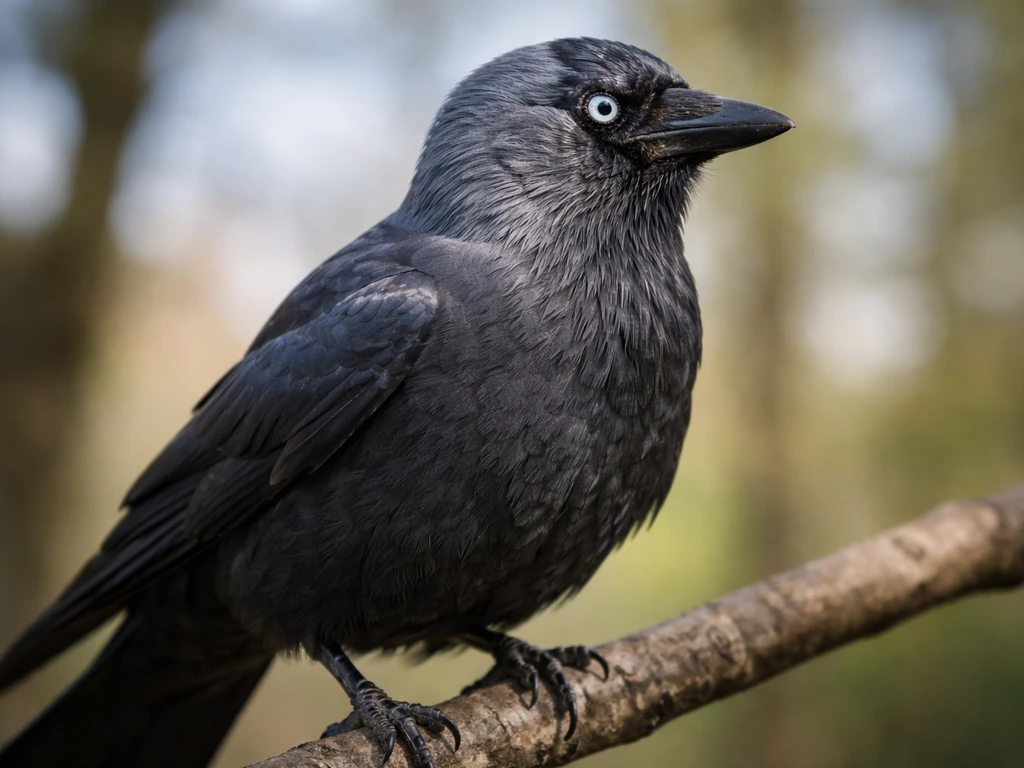
A "daw" bird is a jackdaw. Every major dictionary agrees on this: Merriam-Webster, Collins, Cambridge, and Dictionary.com all define "daw" as an archaic, dialect, or poetic name for the jackdaw, the small black-and-grey corvid famous for its sharp call and love of shiny objects. The word dates to at least the early 15th century and was simply what people called jackdaws before the compound name "jackdaw" became standard. If you've hit the word "daw" in an old poem, a nursery rhyme, a dialect text, or a bird reference book, it almost certainly means jackdaw.
Daw Bird Meaning: Literal, Figurative, and How to Tell It Apart

Marcus Winters
13 May 2026
"Daw" vs "dawn" and other easy mix-ups
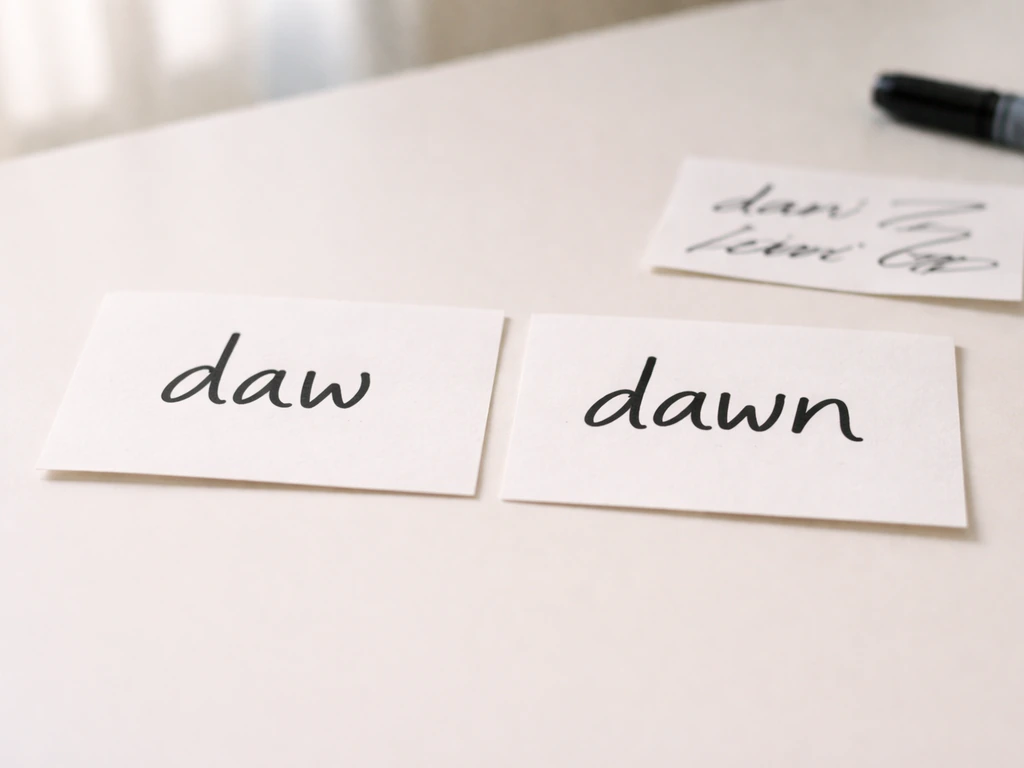
The most common confusion is simple: people misread or mishear "daw" as "dawn." They look entirely different on paper but sound close enough in quick speech or a handwritten source to get scrambled. "Dawn" refers to the time of day, sunrise, or the first light. "Daw," with no n, is exclusively a word for a bird or, in an older obsolete sense, a fool or simpleton. The two words share no meaning and no etymology. If you're looking at a text about nature, birds, or old English verse and you see "daw," it's the bird word every time.
Other words in the same neighbourhood worth separating out: "daw" is not the same as "down" (which in bird terms refers to soft underfeathers, a topic covered in the closely related down bird meaning and down definition bird discussions on this site). It's also not related to "daft" in a direct linguistic sense, though the obsolete meaning of "daw" as a simpleton does shade into the same territory as "daft bird," a slang term for a foolish person. Keep those separate. If you're wondering about the daft bird meaning, it's referring to the old idea of “daw” as a fool or simpleton.
What "daw" actually means as a bird word
"Daw" is one of the oldest recorded English names for the jackdaw (Corvus monedula), a crow-family bird native to Europe, western Asia, and North Africa. Historical folk-name dictionaries of British birds list it bluntly: "DAW: The JACKDAW." Academic sources describe it as "a daw, later commonly known as a jackdaw," which tells you exactly where it sits in the timeline of the word's use.
The name "jackdaw" itself is thought to be a compound of "jack" (a generic term for something small or common) and "daw," the original standalone bird name. So "daw" came first, and "jackdaw" was built on top of it. By the time English speakers added "jack" to the front, "daw" alone was already fading into dialect and poetic use, which is why you mostly see it in older texts today.
Where the word came from
Etymonline traces "daw" back to Middle English forms like "daue," with early attestation from the early 1400s. The word connects to Old High German equivalents used for the same bird, and there's a reasonable case that it's at least partly onomatopoeic, meaning it echoes the jackdaw's distinctive "chack" or "kaw" call. The British Trust for Ornithology has even played on this in their own writing, referencing the jackdaw as the "crow next daw," which shows the word still lives in birding circles as a recognisable shorthand. The British Trust for Ornithology highlights this idea in its own writing, describing the jackdaw as the "crow next daw".
Phrases and idioms that use "daw"
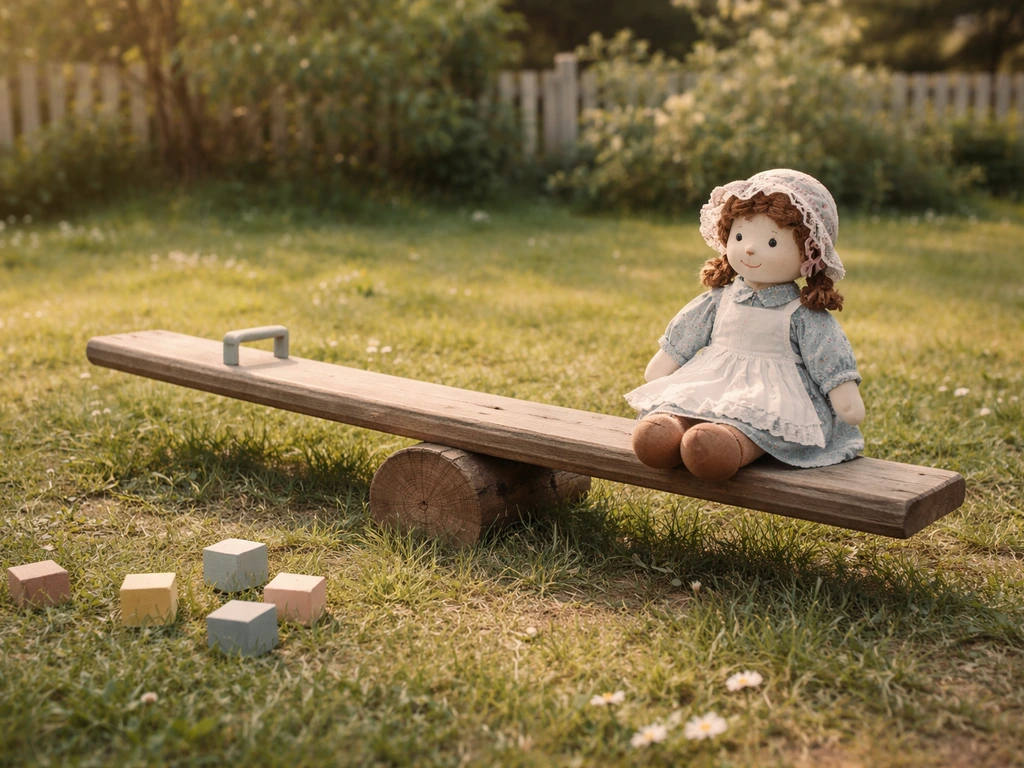
The most famous appearance of "daw" outside a nature text is the nursery rhyme "See Saw Margery Daw." Here "Daw" functions as a surname or character name, but it carries the weight of the word's secondary meaning: in old dialect, "daw" also meant a lazy, foolish, or idle person, much like calling someone a simpleton. The rhyme's "Margery Daw" is thought to invoke that sense of idleness, which fits the content of the rhyme itself, where the subject earns only a penny a day because she won't work faster. Dictionary.com explicitly lists this obsolete non-bird sense alongside the jackdaw definition.
In older literary writing, "daw" appears as a straight bird reference. Dictionary.com preserves a quotation that reads: "With them a daw is reckoned a religious bird, because it keeps a cawing from the steeple." That's the bird sense, pure and simple, the jackdaw calling from a church tower. When you see "daw" in a literary or poetic context, check whether it's being used as a bird name or as a metaphor for a fool. Both are valid historical uses, and the surrounding words will usually make it obvious.
There's also a comparison worth noting with the sibling topic "bird dawgs meaning," which is an entirely different expression in modern American slang with no connection to the historical "daw" bird word. In modern American slang, the phrase “bird dawg” is used differently, so it helps to look up what people mean by it bird dawgs meaning. If you meant the bird word “daw,” you’re looking for the down meaning bird explanation for jackdaw bird dawgs meaning. Don't conflate them. "Daw" as a bird is a British English term with medieval roots; "bird dawg" is contemporary slang built around a different concept entirely.
Folklore, symbolism, and cultural meanings tied to the daw
Because "daw" is simply another name for the jackdaw, the folklore and symbolism attached to it belongs to the jackdaw's wider cultural story. Jackdaws have a complicated reputation in British and European folklore. On one hand, their intelligence, boldness, and habit of nesting in church steeples gave them a semi-sacred association in some traditions. The literary quotation above, calling the daw "a religious bird" because it haunts church towers, captures that idea nicely.
On the other hand, the jackdaw's reputation for theft (they famously collect shiny objects), its loud and persistent calling, and its clever mimicry earned it trickster status in many folk traditions. In some parts of England, particularly in the Fens, a jackdaw landing near a wedding party was read as an omen, though whether good or bad depended on local belief. The bird's corvid family connection links it to the broader symbolism of crows and ravens: intelligence, mystery, and a foot in both the everyday and the supernatural world.
The double meaning of "daw" as both a bird and a fool is itself culturally significant. In medieval and early modern thinking, the jackdaw was seen as a chatterer, a bird that made noise without saying anything meaningful. Calling a person a "daw" borrowed that quality directly, meaning they talked a lot but were essentially empty-headed. This is the same logic behind calling someone a "jackdaw" as an insult in Shakespeare-era writing. The jackdaw meaning connects directly to the jackdaw bird meaning discussed in depth on this site. The dunnet bird meaning is closely related to traditional uses of “daw” as a bird name in older texts. For more on what the jackdaw symbolizes and how people interpret its “meaning,” see the full guide to jackdaw bird meaning. If you want the full interpretation of the duke bird meaning, follow the guide on that term next.
How to work out which "daw" you're actually dealing with
Most of the time the context makes it obvious, but here are the quick checks to run when you're not sure.
| Context clue | Most likely meaning of "daw" |
|---|---|
| Nature writing, birdwatching, or wildlife text | Jackdaw (the bird) |
| Old English poetry, medieval literature, or dialect writing | Jackdaw (bird) or fool/simpleton (check surrounding words) |
| Nursery rhyme or folk song | Idle/foolish person (Margery Daw sense), possibly bird by extension |
| Church or steeple mentioned nearby | Jackdaw (the bird nesting or calling in church towers) |
| Insult or character description in older fiction | Fool or simpleton (obsolete non-bird sense) |
| Misread or unclear handwriting | Check for missing 'n': could be "dawn" (time of day) — completely unrelated |
If the word appears with any mention of cawing, steeples, corvids, or other birds, you're in jackdaw territory without question. If it appears in a character description or as a name applied to a person, the fool/simpleton sense is more likely. And if the source is discussing sunrise, morning, or light, someone has almost certainly written "daw" when they meant "dawn," or you've misread it.
Spelling and pronunciation check
"Daw" rhymes with "caw" (as in a crow's call) and "paw." It does not rhyme with "dawn," which has a soft nasal ending. If someone says a word out loud and you're trying to write it down, the absence of any nasal sound at the end confirms it's "daw" and not "dawn." In written sources, double-check that there's no trailing letter before assuming you've got the bird word.
Quick answers and next steps if you need to confirm right now
If you found the word "daw" in a source today and need to confirm its meaning fast, here's the short version: in virtually every context involving birds, nature, or British dialect, "daw" means jackdaw. That's it. All major dictionaries agree, the historical record backs it up, and the etymology is clear.
- Check the source type first: is it a nature or bird text? Then it's jackdaw. Is it a description of a person? Then the fool/simpleton sense is in play.
- Look at the surrounding words: "cawing," "steeple," "corvid," and any other bird names confirm the jackdaw reading instantly.
- Verify the spelling: "daw" with no n at the end. If there's an n, you have "dawn" and you're in completely different territory.
- If you're reading older poetry or dialect writing and need the exact sense, Merriam-Webster, Collins, and Dictionary.com all have live entries for "daw" that confirm both the bird meaning and the obsolete fool meaning with examples.
- If the source mentions jackdaws specifically alongside "daw," treat them as synonyms — that's exactly what they are historically.
- For deeper symbolism or folklore context, look at the cultural history of jackdaws as a whole, since "daw" carries all the same symbolic weight as "jackdaw" — the trickster intelligence, the religious association with church steeples, and the chatterbox reputation that fed the word's secondary meaning as fool.
The bottom line is that "daw bird" is not a mysterious or obscure term once you know what to look for. It's an old English word for one of Britain's most familiar and characterful birds, and it left fingerprints all over the language from medieval poetry to nursery rhymes. Now that you know where it comes from and what it means, spotting it in context should be straightforward every time.
FAQ
If I see “daw” in a modern birding app, should I treat it as a different bird from a jackdaw?
“Daw” is not modern standard for a species name in birding checklists today. If you are reading a field guide or modern bird map, the likely entry will use “jackdaw” (Corvus monedula). Use “daw” mainly as an older or dialect label when you are interpreting historical texts or older poetry.
How can I tell when “daw” is meant metaphorically (a person) versus literally (a bird)?
Yes, but it depends on the surrounding context. When “daw” sits next to church steeples, cawing, crow-family terms, or bird behavior, it is the jackdaw. When it is used to describe a person’s temperament, laziness, or “empty chatter,” it is the obsolete insult meaning a fool or simpleton.
Does “daw” in a character name always mean the bird?
In many cases you can treat character names as the biggest clue. If “daw” appears as a surname or as part of a named figure (for example, in a nursery rhyme or a story cast list), it most likely invokes the older secondary meaning of “idle/foolish” rather than being a literal sighting of a jackdaw.
What are the most common transcription or scanning mistakes that make “daw bird meaning” confusing?
Check the spelling carefully for common OCR or handwriting errors: “daw” can get misread as “dawn” (added n), “day” (missing letter), or even “jaw” (shape confusion). If the source is about sunrise, timing, or light, the intent is almost always “dawn,” not “daw.” If the source discusses animals, towers, calls, or corvids, it is the bird.
Is there any reliable way to distinguish “daw” from “dawn” without a dictionary?
“Daw” and “dawn” are separate words with different endings and different meanings. A quick pronunciation test helps, but in writing the easiest method is topic-based: time-of-day language points to “dawn,” while any bird or church-related wording points to “daw” as jackdaw.
Does “daw bird” ever get confused with “down bird” terms in writing?
No. “Down” (bird down) refers to soft insulating feathers, not the jackdaw, and it comes from a different word family. If you see terms like feathers, underfeathers, insulation, or bedding, you are in the “down” meaning, even if the text also includes bird references.
Is “daw” related to “daft,” or are they only similar because of the insult meaning?
Often, but not always. Some readers may assume “daw” relates to similar-looking words like “daft,” because there is an obsolete “daw” meaning “simpleton.” Linguistically and etymologically, that resemblance can be misleading, so focus on the definition implied by the sentence rather than the visual similarity to “daft.”
What search terms should I use to confirm “daw” meaning in a historical quote?
If you are searching older quotes, you can broaden your query. Try both “daw” and “jackdaw” when you are trying to confirm a historical passage, because the text might preserve the older bird word in one line and use the newer compound in another.
Next Article
Duke Bird Meaning: What It Refers to and Symbolism
Learn duke bird meaning: disambiguate literal named bird vs symbolic duke nobility and interpret sightings or captions.