When someone says 'bent bird,' they almost certainly mean one of three things: a literal description of a bird (or bird-shaped object) that is physically warped or damaged, a figurative phrase for something that has gone badly off-course, or a reference to the For All Mankind TV episode of that name, where the phrase describes a failed rocket trajectory. There is no single fixed idiom called 'bent bird' in standard English, so the meaning depends almost entirely on context, and this guide will walk you through exactly how to work that out.
Bent Bird Meaning: Origins, Symbolism, and Decision Guide

Marcus Winters
6 May 2026
What people mean by 'bent bird' in everyday speech
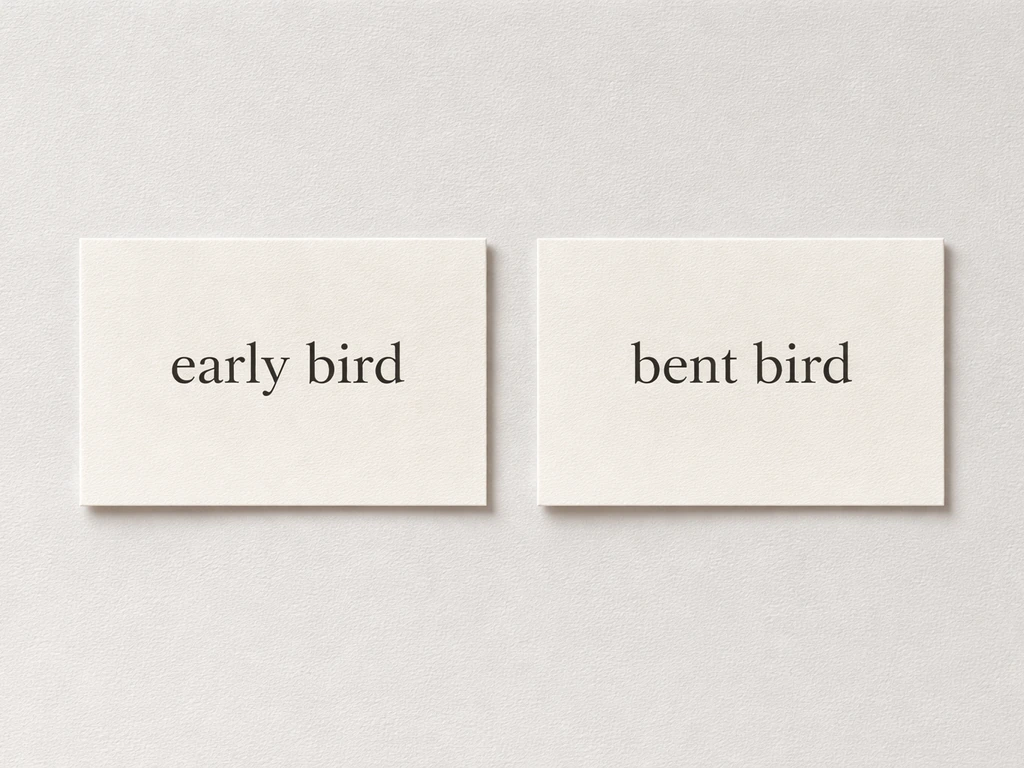
In ordinary conversation, 'bent bird' is not a locked-in idiom the way 'early bird' or 'free as a bird' are. Instead, it works as a descriptive phrase that stacks two words together literally or near-literally. A bent bird is a bird (or bird-like thing) that is warped, broken, off-angle, or forced out of its natural form. You might hear it used to describe a physically injured bird, a crooked bird figurine, a bird symbol in artwork that is curved or stooped, or, more figuratively, a person or plan that has gone sideways.
The most culturally visible use of the exact phrase comes from the Apple TV+ series For All Mankind, where 'Bent Bird' is the title of Season 1, Episode 9 (aired December 13, 2019). In that episode, characters use the term as a mission-status label after a trans-lunar injection failure sends a spacecraft on the wrong trajectory. The rocket is literally 'bent' off its planned path, and calling it a 'bent bird' (spacecraft in aerospace slang is sometimes called a 'bird') captures both the mechanical failure and the sense of something fundamentally going wrong. If someone you know watches that show, there is a real chance that is exactly what they are referencing.
Origins and likely sources of the phrase
The phrase does not have a single traceable folk origin the way proverbs like 'a bird in the hand is worth two in the bush' do. What you are really looking at is the organic collision of two common words with long independent histories. 'Bent' in English goes back to Old English 'bendan,' meaning to pull or curve, and has carried connotations of physical distortion for centuries. When Hans Christian Andersen wrote 'blank" rel="noopener noreferrer">an old, bent bird cage hung in the sunshine' in 'The Bottle Neck,' he was using the combination literally and descriptively, not idiomatically. That pattern, 'bent' plus a bird-related noun, shows up in literature and everyday speech as plain description rather than a fixed saying.
In academic contexts, 'bent bird' has appeared as an interpretive label in archaeology. A 2017 paper in Mediterranean Archaeology and Archaeometry used the phrase to describe an ancient iconographic motif thought to represent a crane or flamingo type figure depicted in a curved, stooped posture. The scholars were labeling what they saw in the symbol, not invoking a pre-existing idiom. This reinforces the idea that 'bent bird' is a descriptive compound rather than a culturally standardized phrase.
In aerospace and military slang, a 'bird' commonly refers to any aircraft, missile, or spacecraft. 'Bent bird' has informal usage in that world to mean a vehicle that is damaged or off-trajectory, which is exactly the framing the For All Mankind writers leaned into. So if you are in an aviation or aerospace community and you hear 'bent bird,' that technical-slang origin is the most likely source.
What 'a bent bird' symbolizes: injury, limitation, and deviation
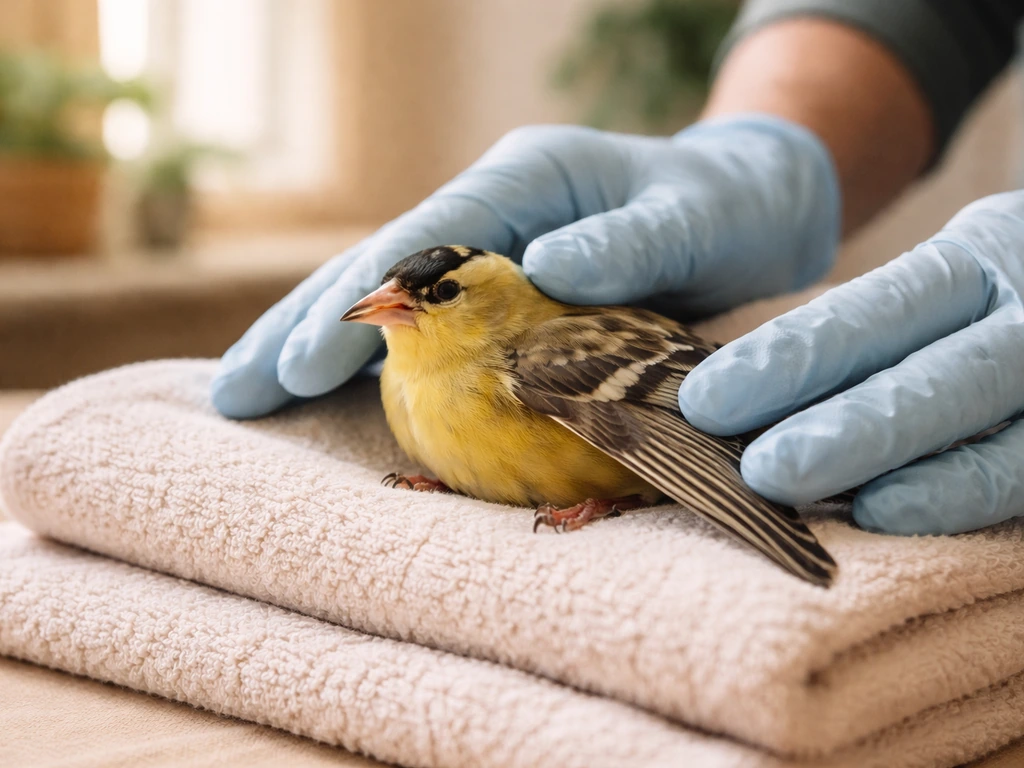
Even without a fixed dictionary definition, the symbolic logic behind 'bent bird' is consistent and intuitive. Birds in almost every cultural tradition represent freedom, flight, aspiration, and the ability to rise above. A bent bird, by contrast, is one that cannot fly properly or at all. That gap between what a bird is supposed to do and what a damaged one can do is where the symbolic weight sits.
- Injury or damage: A bird with a bent wing is grounded. The phrase naturally suggests something or someone that has been hurt and has lost their normal capacity or freedom.
- Constraint or suppression: Being 'bent' implies an external force has shaped or warped something against its nature, which can symbolize a person forced into a role or circumstance that does not fit them.
- Deviation from the right path: Just as the For All Mankind usage describes a trajectory that goes fatally off-course, 'bent bird' in figurative speech can mean a plan, a person, or a situation that has gone wrong in a fundamental way.
- Resilience despite imperfection: In some contexts, a bent bird that still tries to fly carries a different kind of symbolism, the stubborn persistence of a wounded thing. This reading is more positive and shows up in art and personal storytelling.
- Corruption or inauthenticity: In British slang, 'bent' independently means dishonest or corrupt. Layered onto 'bird' (which in British slang can mean a person, often a woman), 'bent bird' could carry a judgment about someone's character, though this is highly region-specific and informal.
Spiritual and folklore interpretations
Bird symbolism in spiritual and folkloric traditions is rich and widely documented, but 'bent bird' as a specific spiritual sign is not an established term in any major tradition I am aware of. That said, the underlying image carries real interpretive weight in several frameworks, and if you encountered the phrase in a spiritual or folkloric setting, here is how those traditions would likely read it.
In many Indigenous and animist traditions, encountering an injured bird is treated as a meaningful omen. A bird that cannot fly is often read as a message to slow down, reconsider a path, or pay attention to something being ignored. That idea overlaps with the broader pet bird meaning people read into a bent or injured bird image, especially when they are thinking about limitations and care A bird that cannot fly. The 'bent' quality adds a layer: it is not just injured but structurally altered, which some traditions would interpret as a sign that the current path has a fundamental flaw rather than a temporary obstacle.
In Christian symbolic tradition, birds frequently represent the soul. A bent or broken bird in iconography or dream imagery can suggest a soul that is burdened, constrained, or in need of healing. Medieval and Renaissance art used damaged wings or caged birds to convey spiritual imprisonment, and a 'bent bird' image sits naturally in that lineage.
In archaeological symbolism, the 2017 research mentioned earlier treated the bent bird (specifically a stooped crane or flamingo figure) as an ancient motif whose exact meaning was still being debated. Some interpretations linked the bent posture to associations with water, liminality, and transition states, birds that stand between water and sky, neither fully of one world nor the other. If you encountered 'bent bird' in a context involving ancient art or symbols, this interpretive layer is worth knowing.
In dream interpretation traditions, dreaming of a bent or injured bird is commonly linked to feelings of restriction, fear of failure, or anxiety about not living up to potential. The bird wants to fly but cannot, and that tension maps directly onto common human anxieties.
How to figure out which meaning applies to your situation

Because 'bent bird' is not a fixed idiom, the fastest route to the right meaning is paying attention to four things: who said it, where, in what sentence, and what world they move in. Here is a quick way to work through it.
- Was it in a conversation about the show For All Mankind, space exploration, or fiction? Then it is almost certainly a direct reference to that episode or to aerospace slang for a damaged/off-course vehicle.
- Was it used to describe a literal object, a figurine, a cage, a drawing, or an actual bird? Then it is plain descriptive English: something bent, something bird-shaped or bird-related.
- Was it used in British slang or British-inflected casual speech, especially about a person? Then 'bent' may be carrying its slang sense of dishonest or untrustworthy, and 'bird' its British slang sense of a person.
- Was it in a spiritual, symbolic, or folkloric discussion? Then apply the injury/constraint/deviation symbolism: something has been knocked off its natural course and needs attention or healing.
- Was it in an academic or art-historical context? It is likely functioning as a descriptive label for a motif or iconographic type, not as an idiom at all.
- Does it sound like a mishearing or variation of another phrase? Check whether the speaker might have meant 'jail bird,' 'odd bird,' 'rare bird,' or a phrase from a specific regional tradition you share.
Related phrases and bird-term symbolism that often gets mixed in
Part of the confusion around 'bent bird' is that bird-related language in English is genuinely dense, and phrases blur together. If you are also exploring budgie bird meaning, note that this kind of bird symbolism is typically learned from species-specific associations, which is a different lens than the damage-and-deviation sense used for 'bent bird'. A few that readers often mix up or connect to this one are worth separating out.
| Phrase | What it actually means | How it differs from 'bent bird' |
|---|---|---|
| Jailbird | A person who has been imprisoned or is a habitual criminal | Uses 'bird' in its 'time in prison' sense (British/slang); not about physical distortion |
| Odd bird / Strange bird | A person who is eccentric or unusual | About deviation in personality, not physical damage or trajectory |
| Rare bird | Something or someone genuinely exceptional and uncommon | Positive deviation; 'bent bird' leans toward negative distortion |
| Free bird | A person who values total independence; also a song title | About freedom of flight; 'bent bird' is the opposite, grounded or constrained |
| Fit bird / Top bird | British slang for an attractive or impressive person | Entirely about social/physical appeal; no damage or trajectory meaning |
| Broken-winged bird | A bird that cannot fly due to injury; often used as a metaphor for crushed dreams | Closest in meaning to 'bent bird' but more established in literary use (Langston Hughes) |
The 'broken-winged bird' comparison is the most important one. Langston Hughes used the image memorably in his poem 'Dreams,' describing a life without dreams as 'a broken-winged bird that cannot fly.' That poem is widely taught, and if someone is reaching for that idea but using slightly different words, 'bent bird' might be their inexact version of that same image. Context clues like a conversation about ambition, hope, or disappointment would point you in that direction.
It is also worth noting that the site covers several related bird-term expressions, including what it means to call someone a 'fit bird' or a 'top bird' in British speech, and what 'budgie' implies as a pet-bird term. Those expressions are about how 'bird' works as slang for a person, which is a distinct track from the damage-and-deviation symbolism that 'bent bird' carries. Keeping those tracks separate helps you decode any bird phrase faster when you encounter one in the wild.
The bottom line: if you heard 'bent bird' and are trying to figure out what was meant, start with the simplest explanation. Someone either described something literally warped, referenced the For All Mankind episode, used aerospace slang for an off-course vehicle, or reached for a figurative image of something going fundamentally wrong. Only in a spiritual or folkloric conversation would you need to layer in the deeper symbolic readings, and even then, the core idea stays the same: a bird that cannot do what birds are supposed to do. If you are wondering about the table bird meaning in particular, the clue is usually the context in which the phrase is used rather than a single dictionary definition bent bird.
FAQ
If someone texts “bent bird” but doesn’t mention rockets or injuries, how do I pin down the meaning fast?
Ask what topic they were discussing right before the phrase (plants and artwork, a real injury story, or a TV episode). Without that context it is almost always a descriptive phrase, so check whether they mean “damaged or off-angle” rather than a fixed idiom.
Is “bent bird” ever used as a serious insult or nickname for a person?
Less commonly. When it targets a person, it is usually figurative and about someone going off-course, not a standard slang label. If the message includes judgmental wording like “you’re bent bird,” clarify whether they mean “derailed” or whether they are referencing the show or an image.
Could “bent bird” be a misunderstanding of “broken-winged bird” or “bird that cannot fly”?
Yes, that is a common mix-up because the symbolic idea is similar. If the surrounding conversation is about ambition, disappointment, or hope, treat it as likely shorthand for that “cannot fly” theme, even if the exact wording differs.
What does it mean if I heard it in an aviation or aerospace context at work?
It likely functions as informal status shorthand for a craft that is damaged, misaligned, or on an incorrect trajectory, similar to a mission-warning label. If you need accuracy, don’t assume it is official terminology, ask what system or situation it refers to.
Does “bent bird” have a specific dictionary definition or is it always contextual?
It is contextual. Because it is not a standardized English idiom, the intended meaning shifts with who said it, the sentence structure, and the domain (everyday description, TV reference, or technical slang).
How can I tell whether someone is referencing the For All Mankind “Bent Bird” episode versus just using the words literally?
Look for references to Season 1, Episode 9, a launch or trajectory failure, “trans-lunar” language, or mission-status talk. If none of that appears, it is more likely a literal description (warped object, crooked symbol) or a generic figurative “things went wrong” remark.
If “bent bird” shows up in a dream journal, what’s the most grounded interpretation?
Start with the practical symbolism: restriction, failure to achieve a natural function, or a plan that cannot follow its intended course. If you want deeper layers, add the dream’s setting (caged, injured, flying attempt), because “bent” often emphasizes structural limitation rather than a temporary obstacle.
Is “bent bird” connected to pet-bird terms like “budgie bird meaning” or “bird” slang for people?
Usually no. “Budgie,” “fit bird,” and “top bird” operate in different slang tracks (species-specific or status slang for people). “Bent bird” is more often about damage, deviation, or symbolic inability to fly, so separate it from those other meanings.
What should I do if I find “bent bird” in archaeology or an art description?
Treat it as a descriptive interpretive label, not a proverb. Note what the figure’s posture is (stooped, curved, wing position) and what the article claims it represents, since “bent bird” may be used to describe the depicted motif while its meaning is still debated.
Could “bent bird” relate to spiritual omen meanings, and how should I approach that carefully?
It can, but there is no single widely established “bent bird” sign across major traditions. If someone frames it as an omen, ask what tradition or belief system they are using and what exact event they think it predicts, otherwise you risk over-reading a phrase that is primarily descriptive.
What are the most common mistakes when decoding “bent bird meaning”?
Assuming it is a fixed idiom with a single definition, ignoring the domain (show reference versus literal description versus aerospace slang), and connecting it automatically to other bird-term expressions. The safest path is to identify the speaker’s context and the immediate sentence meaning first.
Next Article
Fit Bird Meaning: Slang and Figurative Uses Explained
Fit bird meaning explained: slang for an attractive or healthy woman, how to read tone, regional variations, and safe re