A budgie bird is, at its most literal, a budgerigar (Melopsittacus undulatus): a small, long-tailed, seed-eating parrot native to Australia. Britannica describes the blank" rel="noopener noreferrer">budgerigar (Melopsittacus undulatus) as a small parrot native to Australia. Merriam-Webster, Cambridge, and Britannica all agree that "budgie" is simply the shortened, everyday form of "blank" rel="noopener noreferrer">budgerigar," and that is exactly how most people use the word. But if you searched "budgie bird meaning," you probably want more than a species card. You might want to know what a budgie symbolizes spiritually, what it means when someone calls another person a budgie, or what a budgie appearance in a dream is supposed to signify. This guide covers all of those angles clearly and in order.
Budgie Bird Meaning: Symbolism, Slang, Dreams, and Signs

What a budgie actually is (the literal definition)
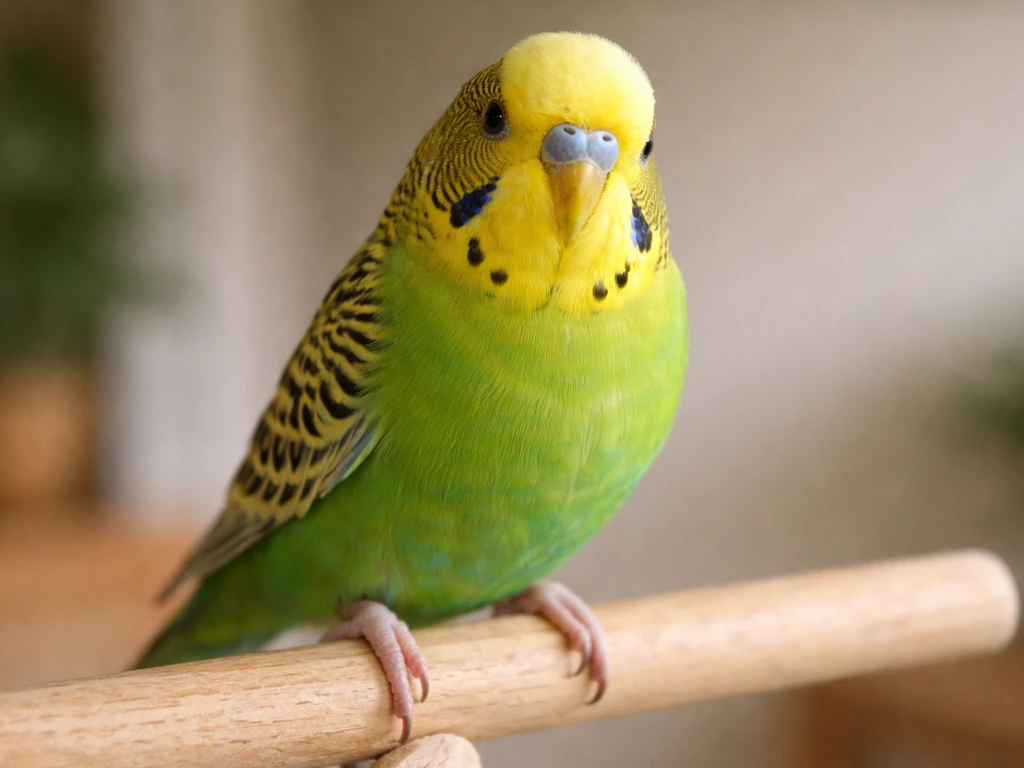
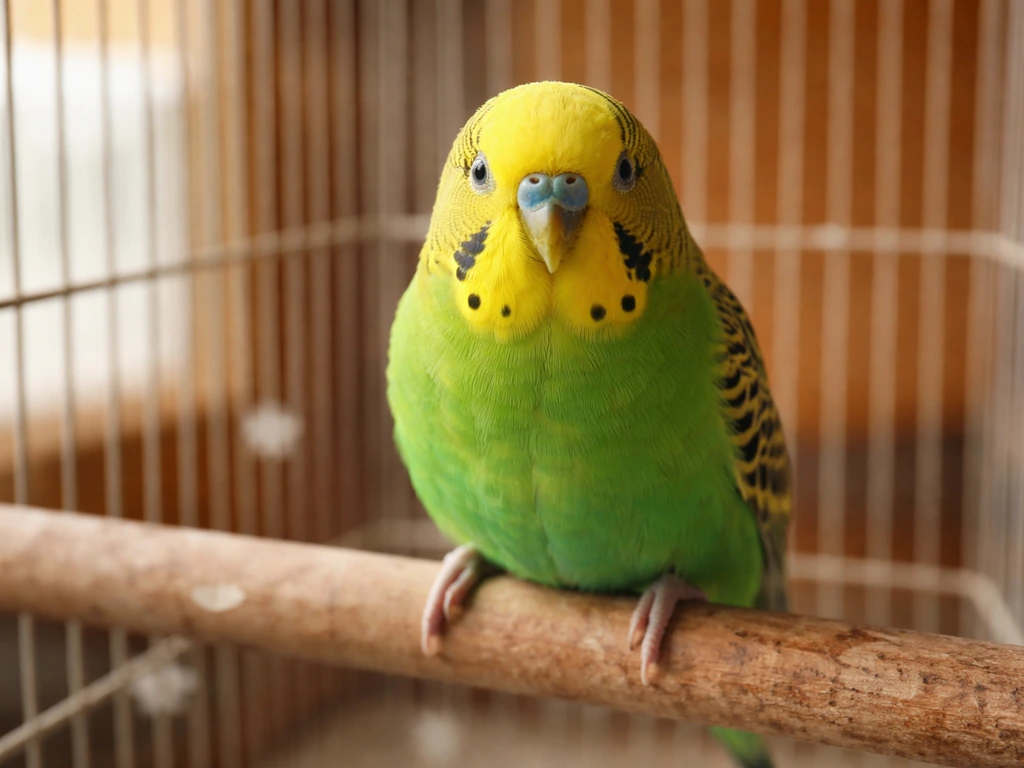
The budgerigar was first scientifically described in 1805 by George Kearsly Shaw, based on a specimen collected near Parramatta, Australia, in 1792. The name "budgerigar" comes from an Aboriginal Australian word, most likely "Betcherrygah," though linguists still debate whether it was meant to describe the bird's sound or refer to it as "good eating." Either way, British speakers shortened it to "budgie," and that nickname stuck globally. Vets, breeders, and bird owners all use the informal label interchangeably with "budgerigar" or even "parakeet," which is why one common veterinary care sheet lists the species as "Budgerigar (aka Budgies, Parakeets)."
In terms of what the bird actually is: a small, brightly colored parrot that forms large flocks in the wild, feeding primarily on grass seeds across the Australian interior. In captivity it has become one of the world's most popular companion birds, which is why the word "budgie" carries a strong domestic, pet-context association for most English speakers. If you are thinking about what keeping a pet bird means in a broader sense, the budgie is often the first species that comes to mind precisely because of how common it is as a household companion.
Figurative meanings: when "budgie" describes a person or behavior
Once a bird name becomes common enough, it tends to drift into figurative language, and the budgie is no exception. Green's Dictionary of Slang records "budgie" as British/Cockney-era slang meaning "a talkative person" and, more specifically in police usage, "a minor informer." The connection is obvious once you know the bird: budgerigars are famously vocal mimics, chattering and repeating sounds almost compulsively. Calling someone a budgie, in this context, is a pointed way of saying they talk too much or too freely, the kind of person who repeats what they hear without much filter.
This figurative use sits in the same family as other British bird-based character descriptions. It is worth comparing it to expressions like being called a top bird, which carries a very different, complimentary tone, or being labeled a bent bird, which implies dishonesty. "Budgie" leans toward the chatty-but-harmless or loose-lipped end of the scale, not a flattering label but not the most damning either.
Australian slang added another layer entirely. The term "budgie smugglers," coined by comedian John Clarke, became a widely recognized descriptor for tight men's swimming briefs, playing on the visual resemblance. Cambridge and Dictionary.com both have entries for it, which confirms it crossed from improvised joke to established usage. This shows how deeply the budgerigar is embedded in Australian pop culture. The bird's name, as one Australian Geographic piece put it, has been genuinely "enshrined in Aussie slang."
Symbolism: what the budgie represents in folklore, spirituality, and culture
Across spirituality-focused interpretations, the budgie consistently shows up as a symbol of communication, verbal expression, and social intelligence. Sources framing the budgie as a spirit animal or totem tend to emphasize traits like freedom, playfulness, and the ability to connect with others through voice. The mimicry angle feeds directly into this: a bird that learns and repeats language is naturally associated with how humans use words, for good or ill.
Birds more broadly have been used as omens and messengers across cultures for thousands of years. The practice of ornithomancy, reading meaning from a bird's behavior, flight, or appearance, is documented across ancient Greek, Roman, Celtic, and Indigenous traditions. Within that framework, a small, domestically familiar bird like the budgie tends to carry gentler, more intimate messages than, say, a hawk or raven. It is not typically a bird of prophecy in the grand sense but rather one associated with daily life, household energy, and the relationships built through conversation.
In Islamic dream tradition, classical texts such as Ibn Sirin's dream-interpretation framework treat birds as symbolic categories tied to concepts of the soul, messages, and human character. A budgie appearing in a dream would generally be interpreted through the lens of what small, tame birds represent: approachable messages, social connection, or news coming from familiar circles. The color of the bird and its behavior in the dream are treated as important modifiers in most serious interpretation guides.
Budgie in idioms, slang, and what it implies about a person
The clearest idiom-style use of "budgie" as a personal descriptor is the talkative-informer meaning from British and police slang. If someone in a crime drama or Cockney-inflected conversation is called a budgie, they are almost certainly being accused of talking when they should stay quiet. The implication is that, like the bird, they repeat things indiscriminately. There is a mild contempt in it, but also a certain affection: a budgie is not considered dangerous, just unreliable for keeping secrets.
Outside of that specific slang context, calling someone a budgie in everyday conversation usually just means they are very chatty or animated in conversation. It is softer than being called a table bird, which is a term with entirely different connotations, and it lacks the edge of some other bird-based insults. Think of it as the mild end of the chatterbox spectrum.
In Australian slang specifically, the budgie's cultural footprint is large enough that phrases built around the word are recognized even when the bird itself is not the topic. The smugglers example is the clearest case, but more generally the budgerigar functions as a kind of national mascot in Australian informal language, a familiar, slightly cheeky presence. Saying something is "as chatty as a budgie" or comparing a noisy person to one is immediately understood by most Australians without any explanation needed.
How to figure out which "budgie bird meaning" actually applies to you
The meaning you are looking for depends entirely on context. Before you land on an interpretation, ask yourself a few straightforward questions. The answers will narrow it down fast.
- Are you trying to identify the bird species itself? If yes, you are in literal territory: a budgie is a budgerigar, a small Australian parrot kept widely as a pet. No deeper meaning needed.
- Did someone call you (or another person) a budgie? If yes, look at the conversational register. In British or police slang it almost certainly means "talkative" or "loose-lipped informer." In casual everyday speech it is probably just affectionate shorthand for chatty.
- Did a budgie appear in a dream or meditation? Then you are in symbolic territory. Think about the bird's behavior: was it singing, silent, caged, or free? Color and action both matter in most dream-interpretation frameworks.
- Are you reading about budgies in a spiritual or folklore context? If someone is assigning totem or spirit-animal meaning, the consistent themes are communication, social connection, playfulness, and the creative use of language.
- Are you in Australia and heard the word used in a phrase? Check whether it is part of a named compound expression like "budgie smugglers," which has nothing to do with bird symbolism and everything to do with beachwear.
Dream interpretation specifically benefits from a systematic approach. A budgie in a dream is usually categorized alongside parrot-type symbols, and most guides frame those as messages about communication: are you speaking your truth, or are you just repeating what others say? A caged budgie might point to feeling restricted in expression. A singing one might signal positive social energy. If the dream featured a particularly striking budgie, it may also be worth considering whether you associate the bird with someone specific in your waking life, since domesticated birds in dreams often act as stand-ins for people close to us.
Common mix-ups and how to sort them out
The most frequent confusion around the word "budgie" comes from the naming overlap with "parakeet." Wikipedia's budgerigar entry specifically flags this: "parakeet" is used for budgerigars in North American contexts, while in the UK and Australia it almost always means budgie. If you are reading a spiritual or symbolic text that refers to a "parakeet," it is probably describing the same bird you know as a budgie. The ecological traits are a quick cross-check: small, brightly colored, seed-eating, native to Australia or common as a caged pet. If those match, you are almost certainly reading about the same species.
A second confusion point: budgies are sometimes grouped with larger parrots in dream guides and symbolism articles, which borrow meaning frameworks from one to the other. A parrot in most dream dictionaries means mimicry, communication, or a warning about gossip. That framework applies to budgies too, but the scale matters: larger parrots like macaws tend to attract more dramatic symbolic interpretations (bold expression, personal authority), while small birds like budgies lean toward everyday talk, social lightness, and familiar relationships.
If a guide seems to be describing a bird far more imposing than a budgie, it may be drawing on parrot symbolism broadly rather than budgie-specific meaning. This is also worth keeping in mind when comparing what it means when someone is described as a fit bird, since that phrase operates in a completely different register altogether.
Quick comparison: budgie meanings by context
| Context | What 'budgie' means | Verification tip |
|---|---|---|
| Literal / species ID | A budgerigar (Melopsittacus undulatus): small Australian parrot, common pet | Check size, coloring, seed diet, and Australian origin |
| British/police slang | A talkative person or minor informer who repeats information | Listen for the tone: is it said with mild contempt in a crime/street context? |
| Australian everyday slang | Part of cultural phrases (e.g., 'budgie smugglers'); marks familiar, casual register | Is it embedded in a phrase? Look up the full compound expression |
| Dream / spiritual symbolism | Communication, verbal expression, mimicry, social connection, playfulness | Note the bird's behavior and color in the dream for finer interpretation |
| Totem / spirit animal | Freedom, creative expression, the power of voice and language | Cross-reference with communication themes; budgie-specific vs. generic parrot symbolism |
One last thing worth checking: if you encountered the word "budgie" in a text, film, or conversation and it did not feel like any of the above categories, look at who said it and where. Regional slang shifts meaning significantly. A term that is affectionate in one community can carry a sharper edge in another. When in doubt, treat the literal meaning as your baseline and work outward from there only if the context clearly demands it. Most of the time, a budgie is just a small, cheerful, endlessly talkative bird, and the meaning someone is searching for is not far from that simple truth.
FAQ
Does “budgie bird meaning” ever refer to something other than a budgerigar?
In everyday English, “budgie” almost always refers to a budgerigar (the pet bird). The slang meanings, like “talkative person” or “informer,” are mainly British and can sound dated or overly specific outside that context. If you see “budgie” in a vet, cage, feeding, or species list, treat it as literal.
How do I interpret a caged budgie versus a flying budgie in a dream?
Yes, but it depends on the dream details. If the budgie is caged, many guides connect it to feeling you cannot express yourself. If it is flying or free, the emphasis usually shifts toward open communication or social confidence, not danger or prophecy.
If a book says “parakeet” instead of “budgie,” should I assume it means the same thing?
Check whether the text uses “parakeet” as the actual bird name. In North America, “parakeet” often functions as a stand-in for budgerigars, while in the UK and Australia it is more likely to point to parakeets as a different group. If the description mentions small Australian seed-eating pet birds, it is probably the same species.
Do budgie meanings change if a guide is talking broadly about parrot symbolism?
Yes, but the main caveat is “scale.” Dream and symbolism guides often treat all parrots as communication and mimicry symbols, but larger parrots are commonly interpreted as more authority, boldness, or major warnings. With budgies, the tone tends to be lighter, more about everyday talk and social dynamics.
Do budgies’ color or behavior matter in dream interpretation?
Color and behavior are usually treated as modifiers. For example, a calm or singing budgie commonly gets read as positive social energy or friendly news. A frantic, aggressive, or noisy budgie may be read as stress around communication, gossip, or saying things too quickly.
How can I tell whether “budgie” is slang or just the bird name when I hear it in conversation?
Try to identify the speaker and setting. If it sounds like British or Cockney-inflected dialogue, “budgie” may be the mild insult for someone who talks too much, sometimes linked to an informer. In other settings, the word may simply mean “pet budgie” or “a chatty person,” not a serious accusation.
Is calling someone a budgie usually an insult, and how severe is it?
In most uses, the tone is mild. “Budgie” as talkative often suggests chatty, animated, or loose-lipped, compared with harsher bird-based insults. The “minor informer” usage is sharper, and it is most likely when the context involves secrecy, crime, or police-style dialogue.
If I saw a budgie-like bird outside, does ornithomancy apply the same way as in dreams?
Not automatically. Ornithomancy is about patterns and context, so a budgie sighting is generally read as relating to household life, conversation, and nearby relationships. If the bird’s behavior feels unusual (for example, repeatedly landing near you or acting “messenger-like”), it gives the sighting more “signal” in that interpretive framework.
What does “budgie smugglers” mean, and is it connected to symbolic budgie meanings?
“Budgie smugglers” is a joke phrase, and it is unrelated to spiritual or dream symbolism. It is based on the visual resemblance to tight briefs, so it is more about Australian pop culture than any deeper meaning.
What quick checklist helps me avoid misreading budgie as slang when it might be literal?
If the text is unclear, revert to the literal baseline first. Ask, “Is there any mention of a cage, seeds, bird care, or a pet context?” If yes, it is the species. If not, look for social descriptors (talkative, gossip, secrets) and then for regional cues (British/Cockney or Australian slang).
Amber Bird Meaning: Symbolism, Interpretations, and How to Use It
Learn amber bird meaning: disambiguate the phrase and interpret it using amber and bird symbolism, grounded steps includ