
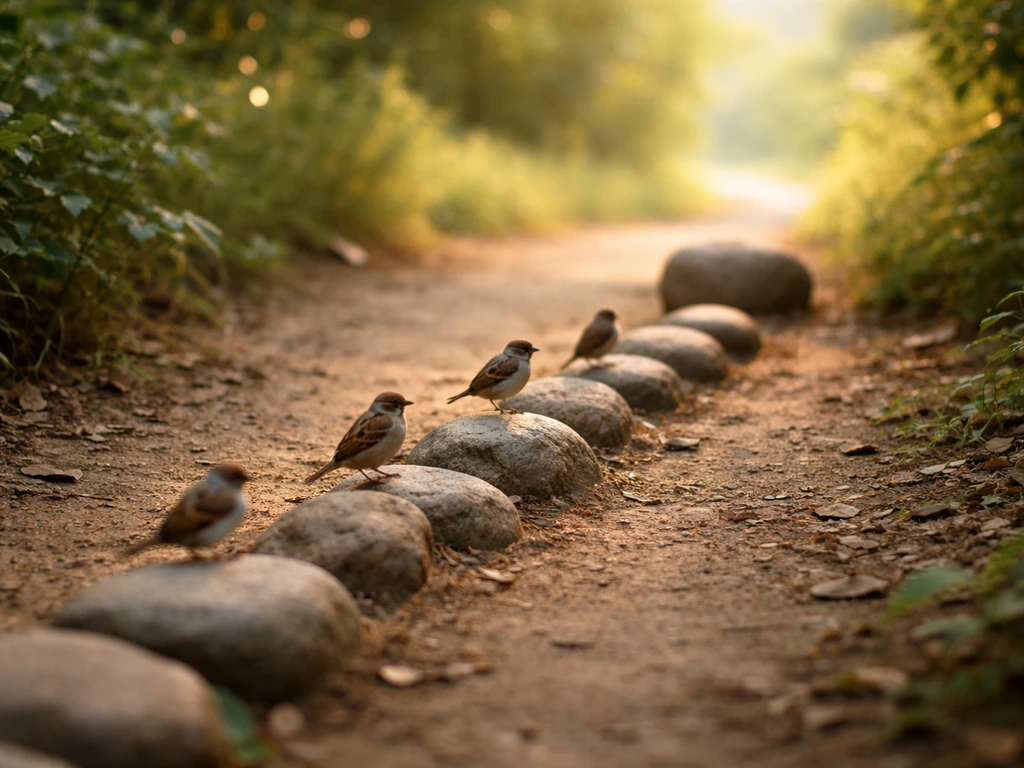
In Ted Lasso, "bird by bird" means tackling something overwhelming by focusing on one small piece at a time, not the whole impossible-looking mountain. If you're trying to understand the phrase's meaning, you can think of it as advice for taking things one manageable step at a time bird by bird. Ted says it to Coach Beard at the end of Season 2, Episode 8 ("Man City"), right after AFC Richmond gets crushed by Manchester City in the FA Cup. It's a coping prompt, a nudge to stop staring at the enormity of a problem and just deal with the next small thing in front of you.
Bird by Bird Ted Lasso Meaning: Small Steps Explained

Marcus Winters
21 May 2026
Where the phrase shows up in Ted Lasso
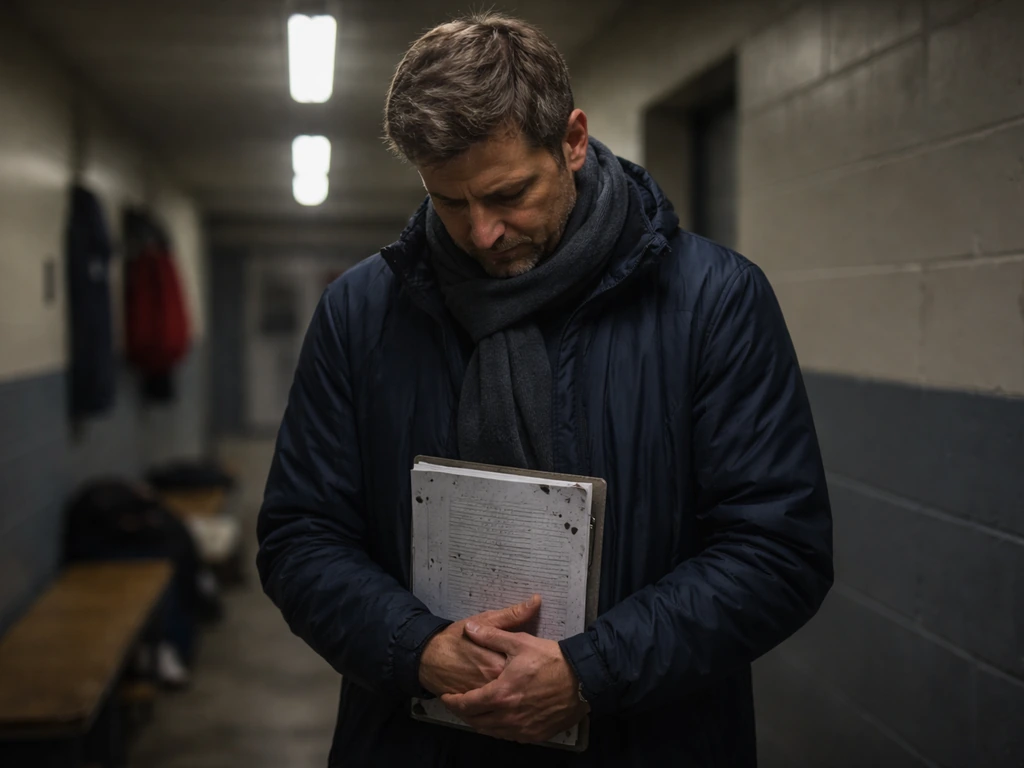
The moment happens at the tail end of "Man City" (Season 2, Episode 8). AFC Richmond has just taken a brutal FA Cup loss to Manchester City, and Coach Beard is clearly shaken. Instead of riding back with the team, he decides he needs to go off on his own to "shake this off." As Beard heads out, Ted checks in on him with a quiet, supportive line: "Hey, Coach, bird by bird. Not that kind of bird..." The show then follows Beard through his wild solo night in Episode 9 ("Beard After Hours"), which picks up directly from that moment. The CAPRADIO/NPR recap notes that "Beard After Hours" picks up at the end of "Man City" where Beard tells Ted he will go home on his own and "shake this off." picks up directly from that moment.
The writers didn't invent this phrase. It's a direct reference to Anne Lamott's book "Bird by Bird: Some Instructions on Writing and Life," and the show's "Man City" episode trivia confirms that connection. Lamott's book opens with the story behind the title: her brother, as a kid, was completely overwhelmed by a massive report on birds he'd left to the last minute. Their father sat down beside him, surveyed the chaos, and said simply, "Bird by bird, buddy. Just take it bird by bird." That's the whole origin. One bird at a time. One manageable chunk instead of the whole impossible pile.
What Ted is actually telling Beard
Ted isn't telling Beard that everything will be fine or that the loss doesn't matter. He's not handing him empty positivity. The line is more specific than that. He's telling Beard: don't try to process the whole thing at once. Don't sit with the full weight of the defeat, the frustration, the pressure, all of it together as one giant emotional object. Just deal with the next small step. Get through tonight. Then the next thing. That's it.
The follow-up "Not that kind of bird..." is the show being self-aware and a little funny, but it also serves a real purpose. It signals to the viewer (and Beard) that this isn't some offhand comment about wildlife. It's a meaningful phrase being offered with intention, and Ted knows it needs a second to land. The humor makes it feel like a human moment rather than a speech.
The life lesson: breaking big things down so they stop being paralyzing

The reason "bird by bird" resonates beyond the show is that it names something really specific about how overwhelm works. When a task or situation feels too big, the brain tends to stall out on the scale of it. You see the whole report, the whole project, the whole emotional fallout, and you freeze. Lamott's insight, and what Ted is borrowing here, is that the solution isn't willpower or optimism. It's decomposition. You shrink the unit of attention down to something you can actually handle right now.
In Lamott's book, she frames this as "short assignments." You don't write a book, you write the next page. You don't finish the report, you write about the next bird. The mechanism is the same whether you're a kid with a school project, a writer staring at a blank document, or a football coach processing a devastating loss. Focus on the smallest possible next unit, do that, and then repeat.
This is why the phrase works as both a writing concept and a general life lesson. It's not about the birds at all. The birds are just the original small unit from one specific overwhelmed kid's homework assignment. The actual lesson is about process over outcome, and trusting that doing the next small thing is enough for right now.
The misunderstandings worth clearing up
The first and most obvious misunderstanding is taking it literally, which is exactly why the writers put "Not that kind of bird" in the script. If you're searching this phrase because you thought Ted was referencing actual birds or some bird-watching metaphor, that's the show correcting course in real time. If you were searching for the meaning of the line itself, this is the show steering you toward the figurative answer: what does bird by bird mean. It has nothing to do with literal birds.
The second, trickier misunderstanding is flattening the phrase into generic encouragement, treating it as something like "hang in there" or "stay positive." That misses the actual mechanism. The point of "bird by bird" isn't that things will get better eventually. It's that you should stop trying to solve the whole problem at once and instead identify one specific small unit to handle next. The difference matters, because generic positivity doesn't actually change how you approach a task. The small-step mechanism does.
How "bird by bird" fits into the broader world of bird idioms
Because this site looks at bird-related expressions and their figurative meanings, it's worth noting where "bird by bird" sits compared to other bird idioms you might encounter. If you're also trying to understand the “bird other meaning” side of the phrase, this is where the figurative usage really shows up bird idioms. Birds show up constantly in figurative language, usually because they carry symbolic weight around freedom, perspective, and the contrast between one thing and many. "Bird by bird" uses birds as countable units, which is what gives the phrase its "one at a time" logic.
Compare it to "a bird in the hand is worth two in the bush," which is about risk and valuing what you already have over uncertain possibilities. If you are also comparing bird idioms, you might be wondering what a bird in the Bible means, and how its symbolism is interpreted a bird in the hand is worth two in the bush. That's a completely different kind of bird-thinking: cautionary and comparative rather than procedural. The two phrases aren't related in meaning at all, but they both use birds as symbolic objects to make an abstract idea concrete and memorable. That's the recurring trick with bird idioms, the bird isn't the point, but it makes the point stick.
| Phrase | What it means | Tone |
|---|---|---|
| Bird by bird | Handle one small piece at a time instead of the whole overwhelming thing | Practical / coping |
| A bird in the hand is worth two in the bush | Value what you have rather than risking it for something uncertain | Cautionary / comparative |
| A little bird told me | I heard something from an unnamed source | Playful / secretive |
| Bird's-eye view | Seeing the big picture from above | Observational / strategic |
The broader pattern across bird idioms is that birds lend themselves to figurative language because they exist in both individual and collective forms, they can represent a single clear thing or an overwhelming flock. "Bird by bird" leans into that tension directly: the problem feels like an impossible flock, but you only ever have to deal with one bird.
How to actually use this approach today

The practical application is straightforward once you see the mechanism. Whatever is overwhelming you right now, the move is to identify the smallest possible next unit and do only that. Here's how it works across a few common situations:
- Writing or studying: Don't try to finish the essay or master the whole subject. Write one paragraph, or read one section, then stop and notice you've made progress. The next unit becomes easier to start.
- Work projects: Break the deliverable into the smallest task you can name, something that takes 20 to 30 minutes or less, and start there. "Finish the project" is paralyzing. "Write the first three bullet points of the outline" is doable.
- Emotional processing (like Beard's situation): When you're dealing with a loss or setback, you don't have to resolve how you feel about all of it at once. Just get through the next hour, or the next conversation, or the next practical task in front of you.
- Learning a new skill: Instead of thinking about how far you are from competence, focus on the one next thing to practice. One chord, one technique, one concept. Repeat.
- Stress and anxiety: When your to-do list feels impossible, pick the single smallest item on it and do just that. The act of completing one thing reduces the psychological weight of the whole list.
The key is resisting the urge to keep looking at the whole pile while you're working on one piece. That's the part most people skip. "Bird by bird" only works if you actually narrow your attention to one bird and stay there until it's done. Lamott's short assignments framework is the same idea: shrink the scope of what you're trying to accomplish in this sitting, this hour, this moment, until it's small enough to start.
Ted offering this to Beard isn't a grand pep talk. It's a quiet, specific, useful thing to say to someone standing at the foot of something too big to climb all at once. And the reason it keeps resonating, in the show and outside it, is that the feeling Beard is having after that loss is one most people recognize. You've been there with a project, a setback, a deadline, a life change. The phrase doesn't promise it'll be easy. It just tells you where to start. The term “bird person meaning” can refer to how this phrase is used as a shorthand for doing one small thing at a time, rather than tackling everything at once.
FAQ
Does “bird by bird” mean I should ignore my feelings about the problem?
No. It is about changing your approach, not pretending the situation is fine. Use the line to decide what to do next while you still allow yourself to process the emotion separately, for example by doing one small action first (like making a quick plan or sending one message) rather than trying to emotionally “solve” everything at once.
What counts as a “bird,” when the task is still vague or not well defined?
Choose the smallest concrete unit you can act on without guessing. If the outcome is unclear, a “bird” might be defining the next deliverable (one outline section, one research query, one draft paragraph) or collecting one piece of missing information, then reassess before scaling up.
How long should I work on one bird before moving to the next?
There is no perfect duration, but a practical rule is to set a short session boundary (for example 15 to 30 minutes) and finish a mini-output if possible. If you complete the bird early, stop and define the next bird immediately, if you cannot, shrink further rather than switching to a different task.
What if my “bird” keeps getting bigger the more I think about it?
That usually means you are mentally trying to solve the whole project while doing one step. Force a definition limit, such as “I will only do the next 5 minutes” or “I will only draft the first attempt,” then stop when that micro-scope is done, even if it is imperfect.
Is “bird by bird” the same thing as motivation or positive thinking?
Not exactly. Motivation helps you start, but the mechanism here is decomposition, narrowing attention to one manageable unit. If you feel worse after trying to “think positively,” switch to an action-based step (one email, one page, one rep) that changes the situation rather than the mood.
How does this apply when the “problem” is a loss, not a task with clear steps?
For setbacks like grief or a defeat, the “bird” can be a stabilizing action rather than a fix. Examples include getting through the next day routine (food, sleep, shower), doing one small responsibility (one form, one call), or taking one supportive step (talk to a person) before trying to process everything emotionally.
What is the point of “Not that kind of bird” in practical terms?
It is a cue against literal interpretation and against overgeneralizing the phrase. It tells you to look for the intended figurative method (countable units, one at a time), so when you hear it, translate it into a specific next action, not a general reassurance.
Can this approach backfire if I use it to avoid hard conversations or decisions?
Yes. The strategy is meant for tasks and processing, not infinite delay. If you notice you are continually shrinking steps to avoid a necessary decision, set a time-bound boundary (for example, “I will take one step toward the conversation today, and I will schedule it by Friday”).
How do I find the “smallest next unit” in a busy schedule?
Work backwards from your constraint. If you only have 10 minutes, pick a bird that fits that slot (write one sentence, gather one link-worthy fact, make one appointment). If you have one hour, aim for one tangible output you can hand off or build on immediately.
What should I do if I start a bird and feel stuck mid-way?
Stop and diagnose the obstacle. Either (1) the bird is still too big, split it again (smaller sub-step), or (2) you lack one ingredient, like information or permission, then do the smallest step to obtain that ingredient (ask, look up, draft a question).
Next Article
Bird Other Meaning: Idioms, Slang, and Symbolic Uses Explained
Decode bird other meaning with idioms, slang, and symbolism plus tips to identify the right sense fast.