When you search 'bird other meaning,' you're almost certainly dealing with one of four things: a common English idiom that uses 'bird' figuratively, a slang term referring to a person, a cultural or spiritual symbol where a bird represents something like freedom or the soul, or a regional term that means something completely different depending on whether you're in Britain or America. The literal animal meaning is the easy one. Everything else requires a quick look at context, and that's exactly what this guide walks you through.
Bird Other Meaning: Idioms, Slang, and Symbolic Uses Explained

Marcus Winters
21 May 2026
First, let's sort out what 'bird other meaning' could actually refer to
The phrase 'bird other meaning' is genuinely broad, which tells me the person searching it saw the word 'bird' somewhere and sensed it wasn't just about a feathered animal. That instinct is usually right. English uses 'bird' in at least four distinct non-literal ways, and they don't overlap much. Before diving into definitions, it helps to know which category you're even dealing with.
- Idiom or expression: 'bird' appears as part of a fixed phrase ('a bird in the hand,' 'kill two birds with one stone,' 'early bird') with a metaphorical meaning beyond the animal itself
- Slang for a person: 'bird' is used in conversation to refer to a woman, a person in general, or sometimes someone doing prison time — especially in British English
- Cultural or spiritual symbol: a bird appears in a story, artwork, dream, or religious text and is meant to represent something larger, like freedom, the soul, or a divine messenger
- Regional or historical term: 'bird' carried meanings in older English or in specific dialects that don't map neatly onto modern standard usage
Once you know which bucket you're in, the meaning becomes much easier to pin down. The sections below cover each one in enough detail to get you a solid answer fast.
Literal vs figurative 'bird': how to tell from context
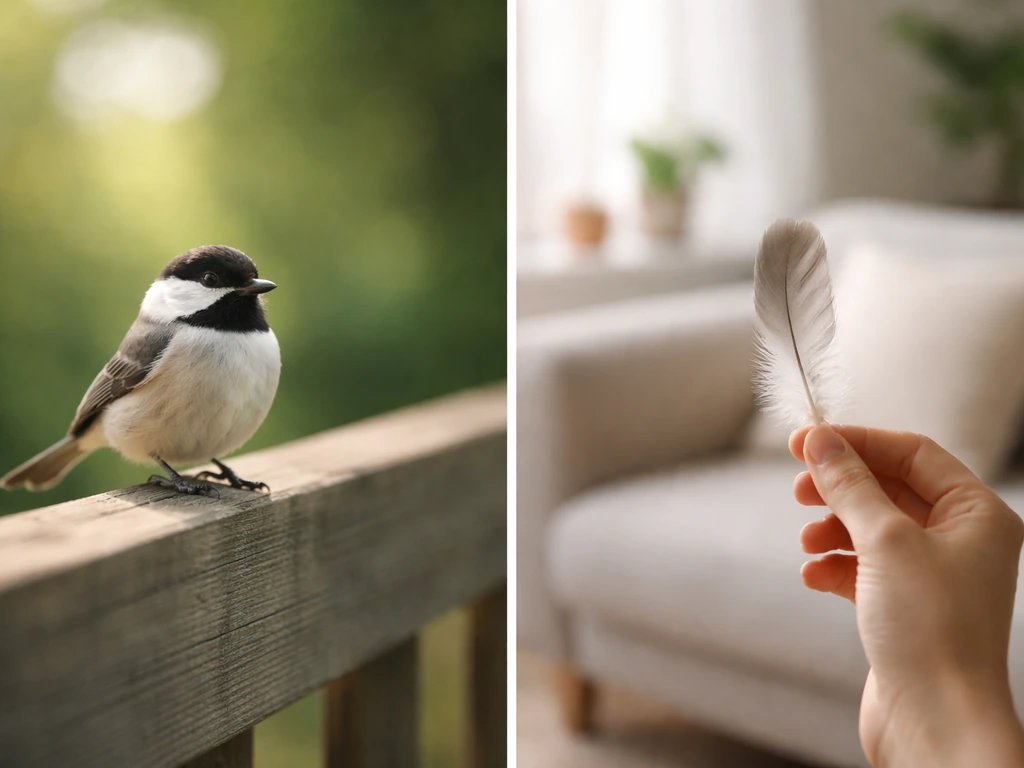
The simplest test is to ask: could a real, living bird make sense in this sentence? If someone says 'a bird landed on the fence,' that's literal. If someone says 'she's a funny old bird,' no actual bird is involved, that's figurative. The sentence structure and surrounding words almost always give it away.
Look at what verbs and adjectives surround 'bird.' Literal uses involve physical actions: flying, singing, nesting, migrating. Figurative or slang uses involve social or human actions: being, seeming, acting, calling someone. If 'bird' is the subject of a human verb ('the bird told me,' 'that bird knows what she's doing'), you're in figurative territory. If 'bird' appears in quotation marks or feels like a label someone is giving a person, it's almost certainly slang or metaphor.
Context also includes the medium. Song lyrics, poetry, religious texts, and folklore almost never mean the literal animal when 'bird' carries emotional weight. Everyday conversation or news articles are more likely literal unless the sentence structure signals otherwise.
Common idioms and expressions with 'bird' (and what they actually mean)
English is packed with bird idioms, and most of them don't require any knowledge of actual birds to use correctly. Here are the ones you're most likely to encounter, with plain-English translations.
| Idiom or Expression | What It Actually Means | Example in Use |
|---|---|---|
| A bird in the hand (is worth two in the bush) | It's better to keep what you have than risk losing it chasing something better | "Take the job offer — a bird in the hand, you know." |
| Kill two birds with one stone | Accomplish two goals with a single action | "I'll drop off your package on the way to the gym — kill two birds." |
| Early bird | Someone who wakes up or arrives early; also gets an advantage for doing so | "She's always the early bird at the office." |
| Jailbird | Someone who has been in prison | "The landlord ran a check because the last tenant was a jailbird." |
| Free as a bird | Completely free, unconstrained | "After the verdict, he walked out free as a bird." |
| Birds of a feather (flock together) | People with similar interests or traits tend to associate with each other | "They've been friends for years — birds of a feather." |
| A little bird told me | Used to say you heard something without revealing your source | "A little bird told me you're planning to quit." |
| For the birds | Something worthless or not worth bothering with | "This paperwork is for the birds." |
| Bird's-eye view | A high, wide perspective looking down on something | "The drone gave us a bird's-eye view of the property." |
Most of these idioms are stable across both British and American English, though some, especially 'for the birds', feel more American. If you're looking at a phrase that includes 'bird by bird,' that carries its own specific meaning rooted in a writing philosophy about tackling tasks one small step at a time, which is worth exploring separately.
Slang and person-references: when 'bird' means a human being
This is where British and American English split the most. In British slang, 'bird' has a long history as a term for a young woman. Cambridge Dictionary and Oxford Learner's Dictionaries both flag it explicitly as a UK slang sense, with Oxford noting it as 'old-fashioned' and potentially offensive depending on context and delivery. You might hear it in older British films, music from the 1960s and 70s, or in everyday conversation in parts of the UK today: 'She's a lovely bird' or 'his bird' meaning his girlfriend.
Dictionary.com also lists a separate slang sense: 'doing bird,' which in British slang means serving a prison sentence. The phrase comes from rhyming slang ('bird lime' = time, as in prison time). So if someone says 'he's doing bird,' they mean he's in jail, not anything related to an actual bird. Merriam-Webster covers some of these extended senses in its entry as well, reflecting how established these figurative uses have become.
In American English, 'bird' as a person reference is less common in everyday speech, though 'old bird' (referring to an older, sometimes eccentric person) survives in casual conversation on both sides of the Atlantic. 'Jailbird' is equally understood in American and British English. The difference is that in Britain, 'bird' on its own, without any modifier, can stand in for 'woman' in a way that simply doesn't happen in standard American usage.
If you encountered 'bird person' in a specific context, that phrase carries its own layer of meaning depending on whether it's being used in folklore, spirituality, or modern pop culture. In modern pop culture and online communities, bird person meaning is often discussed as a liminal figure tied to nature and spirit. The concept of a 'bird person' as a liminal figure connecting humans and the spirit world shows up in indigenous traditions worldwide.
Bird symbolism across cultures and spiritual traditions
Across virtually every culture in human history, birds have functioned as symbols, and a handful of core meanings repeat themselves with striking consistency. The most universal is freedom, largely because birds can fly and humans can't. But beyond that obvious connection, different traditions assign birds very specific symbolic roles.
Birds as messengers
In ancient Greek and Roman traditions, birds were treated as omens and divine messengers. The flight patterns and calls of birds were read by augurs (professional omen-readers) to determine whether the gods approved of a military campaign or political decision. Owls were associated with Athena and wisdom; eagles with Zeus and imperial power. This messenger role extends into Norse mythology, where Odin's two ravens, Huginn and Muninn (Thought and Memory), flew the world daily and reported back to him.
Birds and the soul
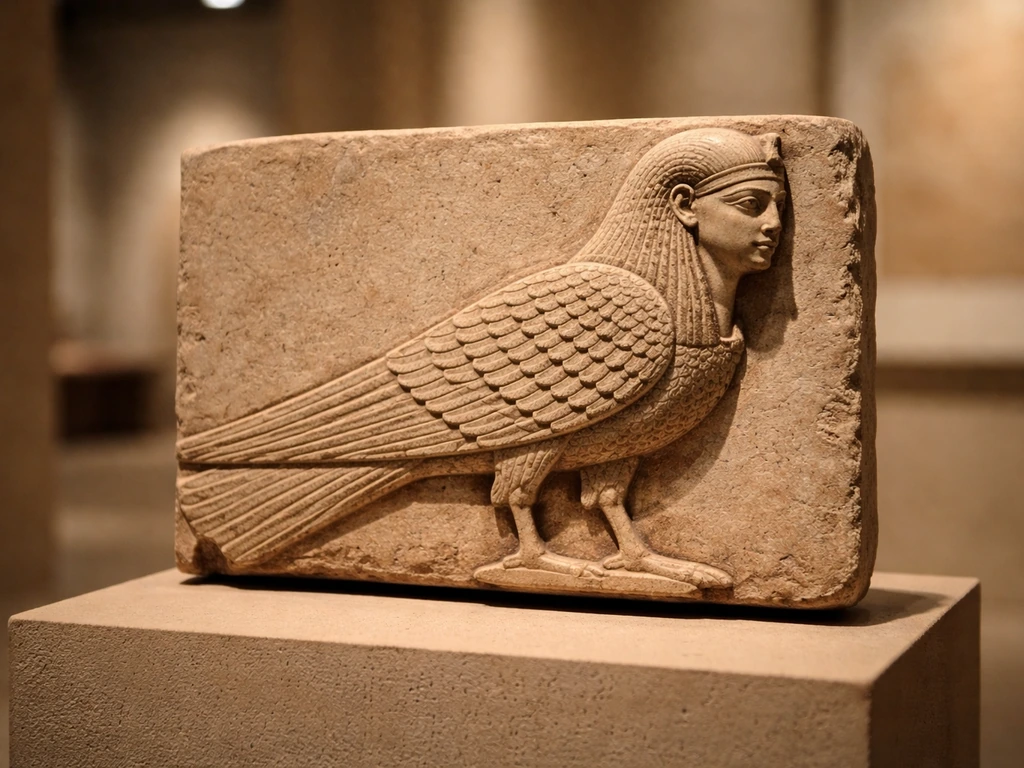
The connection between birds and the human soul is ancient and widespread. In ancient Egypt, the 'Ba', one of the soul's components, was depicted as a bird with a human head. In many Native American traditions, birds carry the souls of the dead or act as spiritual guides for the living. In Celtic belief, certain birds (particularly the wren and the raven) had direct connections to the otherworld. The Bible uses birds in multiple symbolic contexts: doves represent peace and the Holy Spirit, ravens appear as providers, and eagles symbolize divine strength and renewal. If you're specifically trying to interpret a bird reference in a biblical passage, that deserves its own detailed look.
Birds as symbols of transformation and freedom
In literature and art, birds almost reflexively represent freedom, aspiration, and the ability to transcend earthly limits. Maya Angelou's 'I Know Why the Caged Bird Sings' uses the bird as an explicit metaphor for oppression and the longing for freedom. The phoenix, a mythological bird, is the ultimate symbol of rebirth and transformation across Persian, Greek, Egyptian, and Chinese traditions. In Chinese symbolism, the crane represents longevity and good fortune; the phoenix (fenghuang) represents harmony and prosperity. In Hinduism, the Garuda is a divine eagle-like bird that serves as the vehicle of Vishnu, symbolizing speed, power, and devotion.
How to figure out which 'bird' meaning you're actually dealing with
Here's a quick process for decoding a specific 'bird' reference you've encountered. Work through these questions in order and you'll land on the right meaning almost every time.
- Is a real animal plausible? Read the sentence literally. If a physical bird makes zero sense, you're in figurative territory immediately.
- Is it part of a fixed phrase? Check if 'bird' appears alongside other words that form a recognizable expression ('bird in the hand,' 'birds of a feather,' 'early bird'). If yes, look up that full phrase — the idiom itself has the meaning, not the word 'bird' alone.
- Is it referring to a person? If 'bird' is being used as a label for someone (especially in British contexts), it likely means a woman, a person, or (with 'do bird') someone in prison.
- Is it in a symbolic, religious, or artistic context? If the 'bird' appears in a poem, a dream description, a religious text, or folklore, assume it carries symbolic weight and look at what bird species is mentioned — species matters enormously in symbolism.
- What's the origin of the text? British source? American? Ancient or modern? Historical? These narrow down the regional and temporal meaning quickly.
- Search the full phrase, not just 'bird.' If you saw 'ball bird,' 'bird and,' or any multi-word version, search that exact phrase to find the specific meaning rather than the general 'bird' entry.
For example: if you saw 'she did bird for two years,' working through the checklist gets you there fast. A real bird? No. Fixed idiom? Partially, 'do bird' is a set phrase. Person label? No, it's about time. British context? Very likely. Conclusion: 'bird' here means prison time, from British rhyming slang. Done.
When 'bird' means something different depending on where, when, and who's talking

Regional variation is one of the biggest sources of confusion with 'bird.' The table below captures the most practically useful distinctions to keep in mind.
| Context | What 'Bird' Tends to Mean | Practical Note |
|---|---|---|
| British casual conversation (modern) | A woman or girlfriend; also prison time in 'do bird' | Can be affectionate or offensive depending on tone and relationship |
| American casual conversation (modern) | Usually the literal animal; 'jailbird' and 'early bird' are the main figurative survivors | Person-reference slang for 'bird' alone is rare in American English |
| Older British/American English (pre-1950s) | 'Odd bird' or 'queer bird' meant a strange or eccentric person | Still occasionally heard; mostly in older literature and film |
| Religious texts (Bible, Hindu, etc.) | A divine messenger, symbol of the soul, or spiritual power — depends heavily on which bird species | Dove = peace/Holy Spirit; eagle = strength; raven = provision or dark omen |
| Literature and poetry | Freedom, aspiration, the soul, confinement (caged bird), transcendence | Always read for metaphor first; species and cage/flight details matter |
| Folklore and mythology | Guide, omen, shapeshifter, deity's vehicle, or ancestral spirit | Meaning is highly culture-specific; context of the tradition is essential |
| Modern slang / internet usage | 'Bird' can refer to Twitter's bird logo (now largely displaced by X), helicopter slang, or aircraft in aviation contexts | Check the platform or professional field for niche uses |
Time period matters too. 'Bird' as British slang for a woman peaked in the 1960s and is now considered dated or even offensive in many contexts, though it persists in certain dialects and older media. If you're reading something written in the last decade, that use is less likely than it would have been fifty years ago, but it's not gone.
The bottom line is that 'bird' is one of English's most flexible words. Its core animal meaning is just the starting point. Once you know what kind of 'bird' meaning you're chasing, idiom, slang, symbol, or regional term, the meaning itself is usually straightforward. If you're wondering what “bird by bird” means, use the same approach and look at the phrase as a whole, not just the word bird bird' meaning you're chasing. Use the checklist above, note the source's origin and era, and search the full phrase rather than the word alone. Use the checklist above, note the source's origin and era, and search the full phrase rather than the word alone. If you're also trying to pin down a specific 'ball bird meaning', treat it as another context-based lookup like the slang and idiom senses covered above. That approach will get you to the right answer far faster than hunting through generic dictionary entries. If you want a similar quick way to decode a specific phrase from a popular show, you can also compare it with bird by bird ted lasso meaning.
FAQ
How can I tell if “bird” is the British slang word for a woman, and is it safe to use today?
Check whether “bird” is acting like a noun that could be replaced with “woman,” such as in “his bird,” “that bird,” or “she’s a lovely bird.” In modern British contexts it may signal an old-fashioned or potentially offensive slang sense, especially if you are quoting older media or an unfriendly tone is implied.
If “bird” shows up in a longer phrase, how do I avoid mixing idioms with slang or symbolism?
Treat set phrases as one unit first. If the meaning you need depends on “bird” being paired with a specific verb or preposition, you are in idiom territory, not general slang, for example “for the birds,” “bird by bird,” or “jailbird” (which has its own stable meaning).
What clue tells me that “doing bird” means prison time rather than something literal?
Look for whether the speaker is talking about time or sentencing. “Doing bird” is a British slang pattern that points to prison time because it is built from rhyming slang, so the sentence usually includes duration or punishment context (for example, “for two years”).
When interpreting a bird reference in a poem or religious text, how do I decide between literal and symbolic meaning?
In most cases, don’t assume symbolism unless the text uses emotional or spiritual framing (metaphor, sermon-like tone, myths, or poetry). If you see action words tied to nature behavior (flying, nesting, migrating) or literal description, it’s more likely literal even if the passage is vivid.
Does “bird person” always mean the same thing in pop culture and spirituality, or can it shift?
Check for modifiers and category words. “Bird person” is often discussed as a liminal or nature-spirit concept in modern fandom and online talk, but if the surrounding text names a tribe, ritual, or character mythology from a specific source, it can shift from general symbolism to a particular tradition or storyline.
What are the biggest mistakes people make when reading older British media that uses “bird”?
Watch for regional scope and era. “Bird” as slang for a woman peaked mid-20th century and can be perceived as dated or offensive depending on speaker intent, audience, and setting, so when you must quote it, keep it clearly attributed to an older source.
How do I interpret “old bird” versus “bird” alone?
If “bird” appears as a standalone insult or label, determine whether it is slang or general metaphor by checking grammar and viewpoint. “Old bird” tends to be more widely understood than “bird” alone, and it often reads as eccentric or irritating depending on context, not a literal animal.
What should I do if I’m working from a translation and “bird” seems like a person label?
When you suspect “bird” is a person label in a non-English or translated text, verify whether the original term might have been idiomatic in another language. Then re-check English idiom coverage using the whole sentence, not the single word, since translation can map different meanings onto the same English “bird.”
Why does searching only “bird meaning” sometimes give the wrong result, and what’s a better search strategy?
Use the quick checklist, but add one extra step: search for the full phrase exactly as written, including capitalization and punctuation. Some bird-related meanings are sensitive to exact wording, and misspelling or swapping words can lead you to the wrong idiom family.
How can I interpret bird omens in mythology without overgeneralizing to “freedom”?
If you see “bird” as an omen, messenger, or divine sign, prioritize the cultural system named in the surrounding text (Greek-Roman augury, Norse ravens, Egyptian Ba, and so on). Without that anchor, you risk picking a generic “freedom” reading that fits many situations but not the specific role.
Next Article
Ball Bird Meaning: What It Refers to in Slang and Symbolism
Understand ball bird meaning: slang and symbolism, what ball and the bird likely refer to, plus how to confirm in contex