
The Indian roller bird meaning most people are searching for comes down to one core idea: in South Asian tradition, spotting this bird is considered a good omen, a signal of good fortune, renewal, and divine blessing. The bird is deeply tied to Hindu religious culture, carries the local name 'Neelkanth' (blue throat), and is linked to Lord Shiva. But there's more complexity underneath that simple answer, because the meaning genuinely varies by region, belief system, and context. Here's how to understand all of it clearly.
Indian roller bird meaning: symbolism, folklore, and what to do

Marcus Winters
22 May 2026
What the Indian Roller actually is
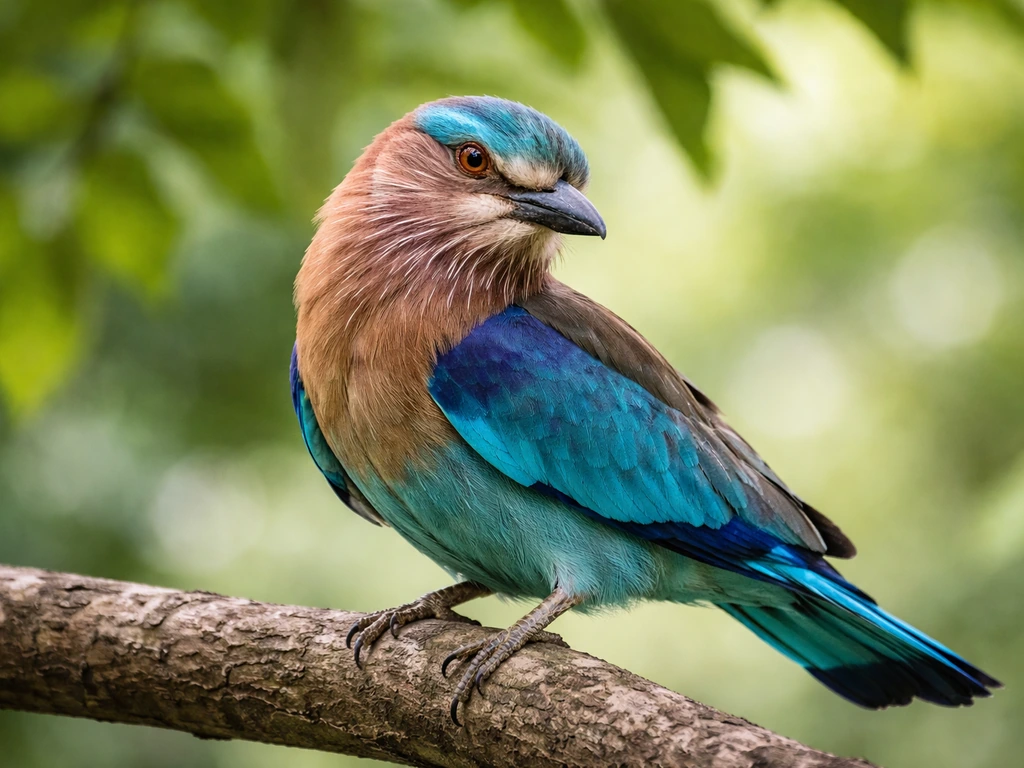
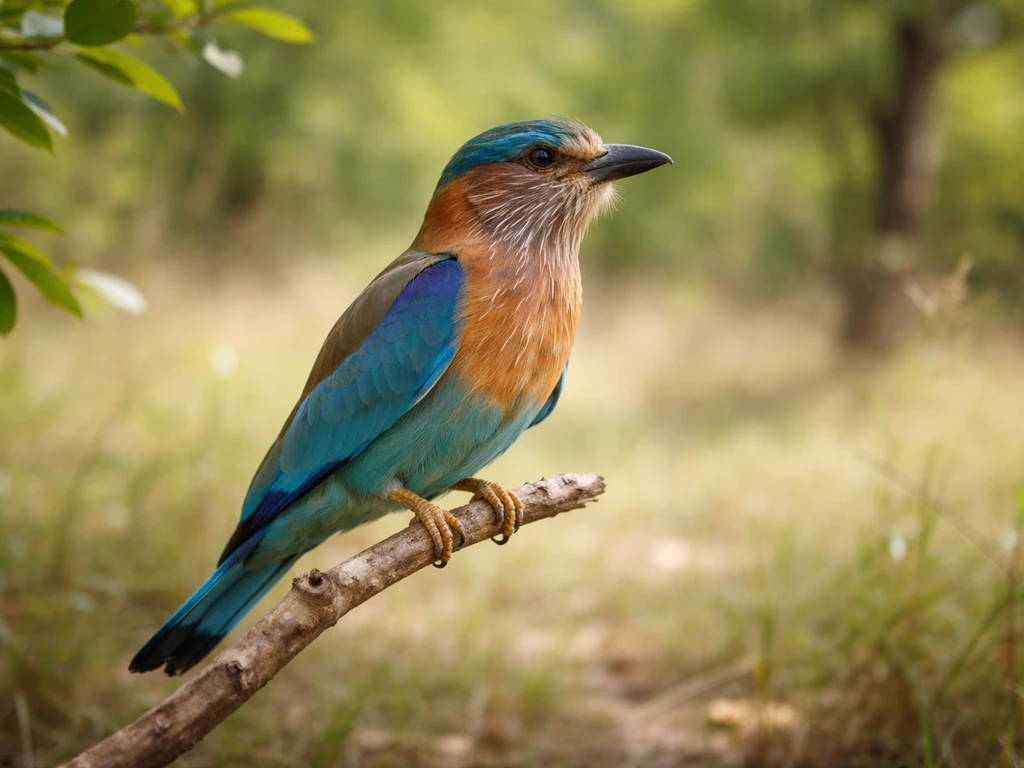
The Indian roller is the bird species Coracias benghalensis, a member of the family Coraciidae. It's found across a broad range stretching from eastern Arabia through the Indian subcontinent to Bangladesh and Sri Lanka. You'd typically spot one perched on a telephone wire or tree branch in open countryside, scanning for insects below. It's a stocky, medium-sized bird with a striking combination of brown and vivid blue plumage: a blue crown, bright blue wing patches, and blue vent area. That flash of brilliant turquoise-blue when it dives is what tends to stop people in their tracks.
The name 'roller' itself comes from the bird's behavior, not its appearance or any spiritual meaning. During courtship display flights, rollers perform aerial dives and somersaults, literally rolling through the air. That tumbling flight is where the English name originated. It's a purely descriptive, natural-history label, and knowing this helps you separate the bird's physical identity from the layers of symbolism that get attached to it.
The bird goes by several regional names across India. In Telugu-speaking regions it's called 'Palapitta' (milk bird). In Kannada it's 'Neelakanta.' In Hindi and across much of North India it's 'Neelkanth.' Each of these names carries its own cultural weight, and when you see someone asking about 'Indian roller bird meaning,' they're often actually asking about what those names and the traditions around them mean. If you’re specifically trying to pin down “roc bird meaning,” start by comparing which regional name and belief people are referring to. If you're trying to pin down reed bird meaning, it's helpful to compare how different communities connect names to birds.
Why people search 'Indian roller bird meaning' in the first place
There are two different reasons someone might land on this question. The first is practical: you saw an unfamiliar bright-blue bird and want to know what it is and why your neighbor or relative made a big deal of it. The second is more figurative or spiritual: you heard that seeing a 'Neelkanth' on a particular day is auspicious, or someone told you the Indian roller is connected to Lord Shiva, and you want to know whether that's folklore, genuine religious tradition, or modern internet mythology.
Both are valid questions. If you specifically mean the reading bird meaning behind seeing this species, focus on the local name and the tradition tied to your region Indian roller bird meaning. The tricky part is that online searches for 'Indian roller bird meaning' return a mix of confirmed cultural tradition, regional folklore, and loosely sourced spiritual claims that blend together as if they're equally authoritative. Some of it is well-documented. Some of it is highly region-specific. And some of it is the kind of meaning-making that happens when a name (like 'Neelkanth') gets attached to a bird and people project the full weight of associated mythology onto it. It helps to know which is which.
The cultural and folklore meanings that are actually documented
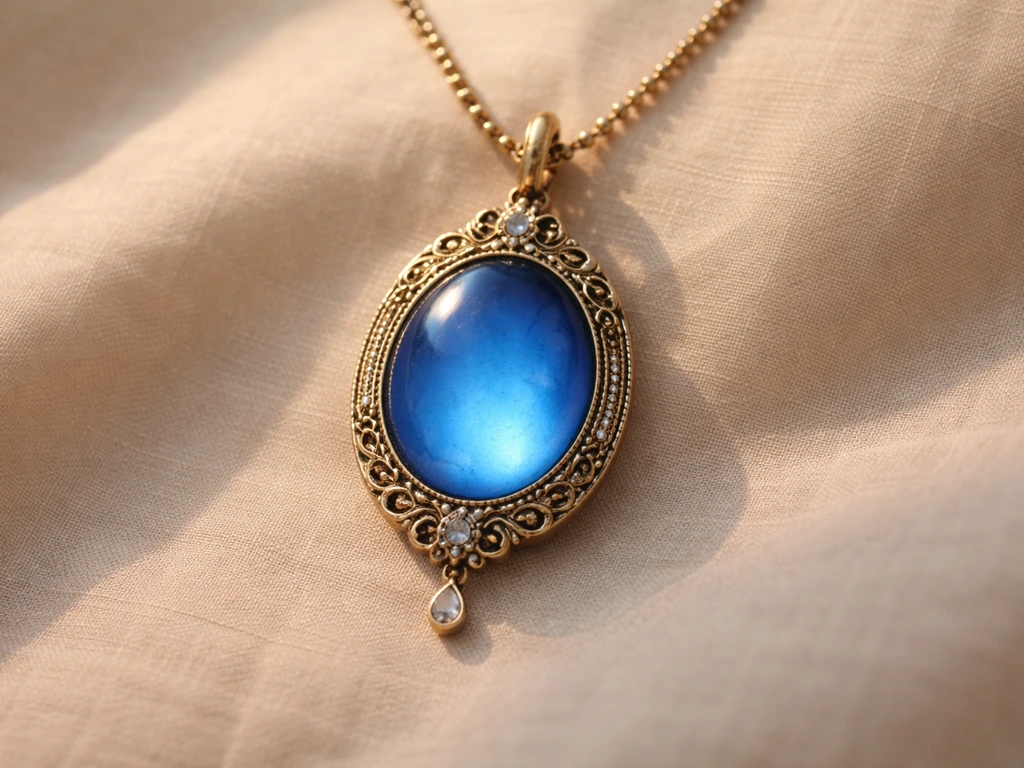
The most solidly documented cultural significance of the Indian roller centers on the name 'Neelkanth,' meaning 'blue throat.' This is one of the well-known epithets of Lord Shiva, referring to the mythological event in which Shiva swallowed a cosmic poison (halahala) during the churning of the ocean, holding it in his throat and turning it blue to protect the universe. When people see the Indian roller, with its brilliant blue coloring, and call it 'Neelkanth,' they're making a devotional association between the bird and that story. Spotting the bird, especially on auspicious days, becomes a moment of spiritual recognition.
In Bengali tradition, there's a practice of chanting devotion to Vishnu upon seeing the Indian roller. The Kol people, an indigenous community, historically regarded the bird as a good omen. During Durga Puja (the major festival centered especially in West Bengal and neighboring regions), the Indian roller has been used in rituals, a practice that has drawn criticism and legal scrutiny because the bird is protected under India's Wildlife Protection Act. Times of India also reports that despite protection laws, the Indian roller continues to be used in Durga Puja rituals, linking the practice to the bird's IUCN reassessment as near threatened Durga Puja (the major festival centered especially in West Bengal and neighboring regions), the Indian roller has been used in rituals.
In Telugu-speaking regions, particularly during the festival of Dasara, spotting the Palapitta is considered specifically lucky. This belief has been strong enough to drive a real problem: poachers and traders exploit it by capturing and displaying Indian rollers during the festival period, charging people to view the 'lucky bird.' The bird's status as Telangana's state bird (or proposed state bird in earlier discussions) reflects how this cultural symbolism has been absorbed into modern regional identity.
The name 'Palapitta' (milk bird) in Telugu points to a different layer of folklore: there was a belief that chopped Indian roller feathers, mixed into cattle feed, would increase a cow's milk yield. That's clearly a piece of old agricultural folk belief, not active modern practice for most people, but it shows how the bird's meaning was once very practically embedded in rural life.
There's also a more specific tradition from the Visakhapatnam area: members of a nomadic fortune-telling tribe wore Indian roller feathers on their heads, tied to a belief that the bird could foretell events. This connects the Indian roller to a broader pattern in South Asian folklore where vivid, unusual birds are linked to prophetic or supernatural knowledge, similar in some ways to how other traditions (like certain Bengali folklore involving named bird beings) assign fortune-telling roles to birds.
Spiritual and superstitious interpretations: what to take seriously and what to verify
The spiritual framing of the Indian roller as a harbinger of good fortune and renewal is genuinely widespread across South Asia. That's not internet mythology. It's a living tradition with regional depth. If you're in India, particularly in Telangana, Andhra Pradesh, West Bengal, or neighboring areas, the symbolic weight of seeing this bird is something many people around you will recognize immediately.
Where you need to be more careful is with very specific claims: that seeing the bird means X specific thing will happen, or that the bird is directly 'the bird of Lord Shiva' in a canonical religious sense. The Neelkanth name connection is a folk-devotional association, not a formal theological doctrine. The bird doesn't appear in the major Hindu scriptures as Shiva's vahana (vehicle) or divine bird in the way the eagle Garuda is associated with Vishnu. The meaning is real and culturally significant, but it lives in the register of folk belief and regional tradition, not official religious canon.
The responsible way to interpret any spiritual meaning is to anchor it to your own community's tradition. If your family or region has a specific belief about the Indian roller, that tradition is the relevant one. Broad online articles tend to flatten regional variation, presenting one community's practice as universal Indian or Hindu belief, which isn't accurate. The Dasara/Palapitta tradition in Telangana is not the same as the Durga Puja associations in West Bengal, even though both involve the same bird.
How the term shows up in everyday speech
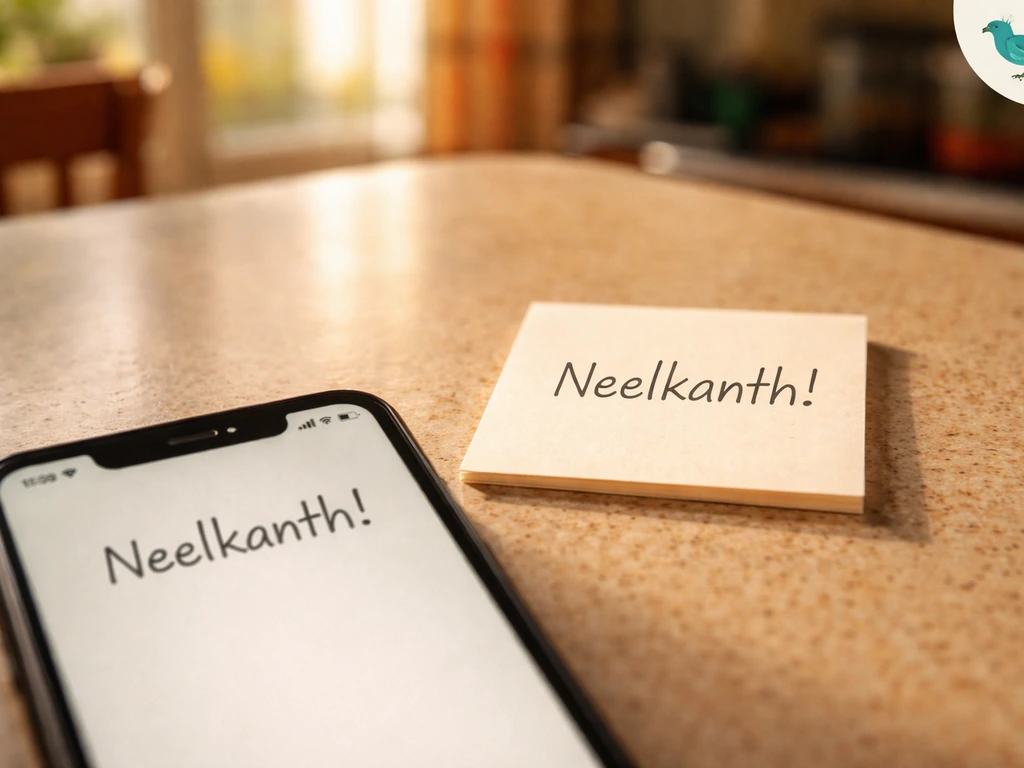
In everyday conversation in South Asia, calling out 'Neelkanth!' when you see the bird is a common exclamation, particularly among older generations. It's the kind of thing a grandparent might say on an auspicious morning trip, the way someone in a Western context might note seeing a rainbow as a good sign. The bird's name functions as a cultural shorthand for 'good start to the day' or 'good omen before an important event.'
In English, 'Indian roller' doesn't carry the same figurative weight on its own. The symbolic meaning travels through the regional-language names, primarily Neelkanth/Neelakantha, rather than through the English bird name. So if you're looking for 'Indian roller' as a standalone English idiom or expression, you won't find a rich figurative tradition there. The meaning lives in the vernacular names. This is worth knowing because it explains why the English-language search 'Indian roller bird meaning' often pulls up results that feel somewhat disconnected from each other: the bird's English name and its culturally loaded local names are operating in different registers.
Worth noting: if you've encountered 'roller' in other bird-meaning contexts, the word itself is primarily a zoological family label for Coraciidae birds. It doesn't carry figurative meaning in English idiom the way a phrase like 'a bird in the hand' does. Similarly, when looking at other bird-meaning searches, you'll often find the same pattern: the scientific or English common name is neutral, while the culturally loaded meaning lives in regional-language names and local traditions.
How to verify what the meaning means for your specific situation
The most important step is to identify which regional tradition is relevant to you. The Indian roller's symbolism is not uniform across all of South Asia, let alone globally. Here's a practical way to narrow it down:
- Identify the region and community: Are you in Telangana/Andhra Pradesh (Palapitta/Dasara tradition), West Bengal (Durga Puja/Vishnu devotion context), or another part of India or Sri Lanka? The specific meaning can differ significantly.
- Check with local elders or community members: Ask directly. Family oral tradition is more reliable for understanding what a sighting means in your specific cultural context than any generic website.
- Confirm the bird: Make sure you actually saw an Indian roller. The vivid turquoise-blue flash in flight is the most distinctive feature. It's a stocky bird, often seen perched on wires in open areas. Misidentification is common, especially for people unfamiliar with local birds.
- Distinguish the occasion: Many of the strongest omen beliefs are tied to specific festivals (Dasara, Durga Puja) or specific times of day. A sighting on a random Tuesday carries different cultural weight than a sighting on the morning of an important ceremony.
- Be skeptical of hyper-specific online claims: If a source says the Indian roller 'predicts rain' or 'means a specific life event is coming,' look for documentation of that belief in your regional tradition rather than taking it as universal fact.
What to actually do when you spot or hear one
If you've just seen an Indian roller and you're wondering what to make of it, here's a grounded way to think about it. First, appreciate what you actually saw: it's one of the most visually striking birds in South Asia, with that electric blue in its wings. The fact that it caught your attention and made you want to understand its meaning says something about how well the bird earns its symbolic status, it genuinely looks like something out of mythology.
If you're in a cultural context where the Neelkanth sighting carries meaning (and if you're reading this during or near Dasara season in Telangana, or during Durga Puja in West Bengal, there's a good chance you are), treating it as a positive sign is entirely consistent with the tradition. That's what the tradition does: it frames a beautiful, relatively rare sighting as a moment of blessing or renewal. You don't need to take that literally to appreciate the value of that framing.
If your goal is more academic or reference-focused, the key takeaway is this: the Indian roller's symbolic meaning is best understood as a convergence of the bird's vivid appearance, its distinctive regional names (especially Neelkanth), and long-standing folk devotion across Hindu communities in South Asia. It's documented, real, and culturally significant. It's also not a single unified tradition, but a collection of regional beliefs that share the same bird and a broadly positive symbolism.
One practical note: given that the bird is currently listed as 'near threatened' on the IUCN Red List and is protected under India's Wildlife Protection Act (Schedule IV), any interpretation of its meaning that involves capturing, handling, or possessing the bird (or its feathers) is both legally problematic and harmful to the species. The tradition of appreciating a Neelkanth sighting is entirely separate from practices that involve using the physical bird in rituals. This same Neelkanth link is why the phrase “frog bird snake meaning” often gets compared to broader symbolism around birds in South Asian folklore. If you encounter someone selling or displaying a captured Indian roller as a 'lucky bird,' that's worth reporting to local wildlife authorities.
| Regional name | Region/community | Core symbolic meaning | Key occasion |
|---|---|---|---|
| Neelkanth / Neelakantha | North India, Kannada-speaking regions | Divine association with Shiva; good omen, blessing | General auspicious days, festival mornings |
| Palapitta | Telangana, Andhra Pradesh | Lucky bird, harbinger of good fortune | Dasara festival |
| Neelkanth (Bengali context) | West Bengal | Good omen; prompt for Vishnu devotion | Durga Puja and general auspicious occasions |
| Indian Roller (English) | General/scientific | No figurative meaning; purely a species name | N/A |
FAQ
Does the “meaning” depend on my region or is it the same across India?
In most cases, “Indian roller bird meaning” refers to what your local community associates with that species, especially through the name Neelkanth/Neelakanta/Palapitta. The English phrase “Indian roller” alone usually does not function as a spiritual idiom, so the strongest way to interpret it is to identify the regional name you heard and the festival context (for example Dasara in Telangana, Durga Puja in West Bengal).
If I see an Indian roller, does it always mean something specific will happen?
When people make a specific prediction, like “seeing it guarantees X,” treat it as a local, story-based belief rather than a reliable cultural rule. A safer approach is the broad tradition most regions share, the sighting as an auspicious or renewed start, then let the exact details be determined by your family or community’s version.
Is the Indian roller officially considered Lord Shiva’s bird (canonical religious meaning)?
The bird is often linked to Shiva because of the “Neelkanth” (blue throat) epithet, but that connection is devotional and folk-associative, not an official statement that the bird is Shiva’s vehicle or a named figure in scripture. If someone claims a canonical, scripture-level role, check whether they are really describing folk devotion rather than doctrine.
What’s the difference between Neelkanth meaning and Palapitta meaning?
Yes, but they often mean different things. “Neelkanth” is a culturally loaded label that can trigger Shiva-related storytelling, while “Palapitta” (milk bird) points to Telugu folk explanations tied to rural life. If your question is about symbolism, match the meaning to the name you are hearing, not only to the English “roller.”
Does “roller” in “Indian roller” have a spiritual meaning?
The bird’s “roller” part comes from its flight behavior during courtship dives and somersaults. So the term “roller” should not be assumed to carry spiritual symbolism by itself, especially if you are reading about “roller bird meaning” in general English bird-meaning content.
Is it okay to use Indian roller feathers or keep the bird for rituals?
If a claim says the bird’s feathers or body are used in rituals to bring luck, be cautious. In India the Indian roller is protected, and practices involving capturing, possessing, or using feathers can create legal trouble and harm the bird. You can participate in the positive symbolism without any physical handling by focusing on the sighting or local chanting practices.
How can I respect the omen tradition without assuming it’s a guarantee?
Appreciation does not require “taking the omen literally.” A good way to respect the tradition while staying grounded is to treat the sighting as a moment to be attentive and hopeful, for example making a modest plan or starting a task, rather than expecting guaranteed outcomes.
How do I figure out which tradition applies to me if online sources conflict?
If you want to verify what a “Neelkanth sighting” means where you live, ask an elder in your community, or compare which festival tradition is relevant right now. Online articles often flatten differences between communities, so the local, lived version is usually the most accurate for “what it means” in your context.
Can the meaning change even within the same state or language group?
Yes. Even within the same broad region, people may connect the bird to different gods, festivals, or folk stories. The article’s examples show this variation across Hindu-related associations and regional customs, so treat “good omen” as the shared theme and “specific details” as variable.
What should I do if someone is selling the Indian roller as a “lucky bird”?
If you encounter someone selling or displaying captured Indian rollers as a lucky charm, do not buy or support it. Because the species is protected, report the situation to local wildlife authorities or the nearest relevant enforcement body, and you can still share the meaning in a non-harmful way.
Next Article
Reed Bird Meaning: Literal and Figurative Interpretations
Reed bird meaning explained with literal wetland birds and figurative symbolism plus context tips to spot the right sens