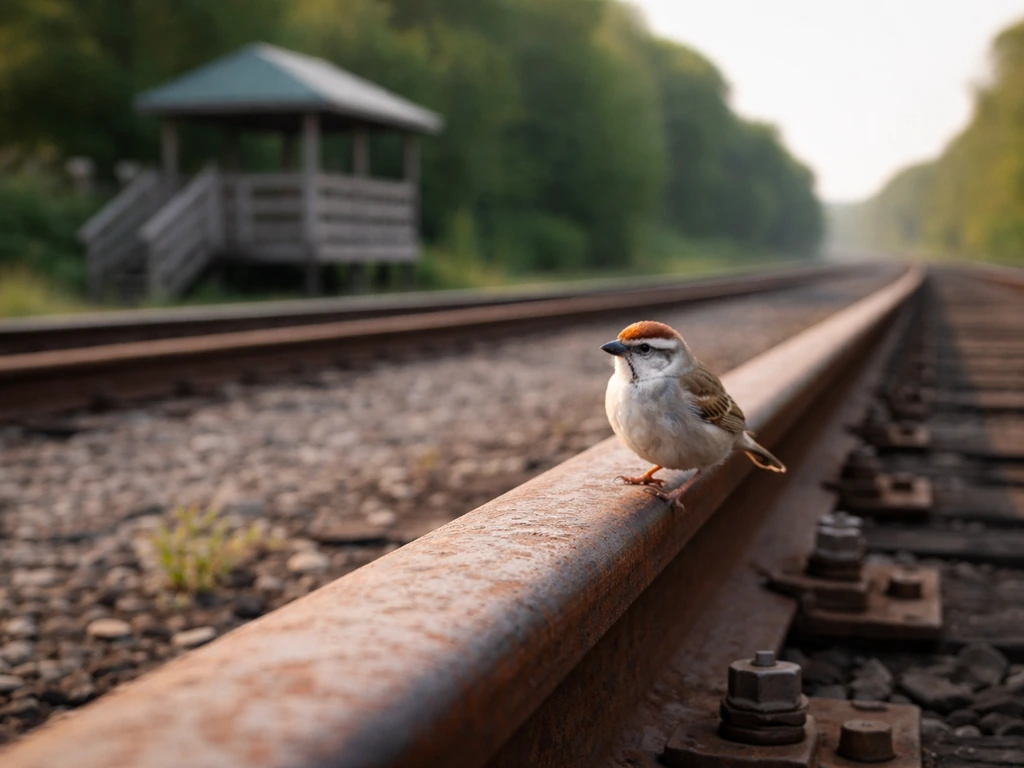
When someone says 'reed bird,' they most likely mean one of two things: in North America, especially older American English, it's a common nickname for the bobolink, specifically when the bird is flocking through marshy, reedy areas during fall migration. In British and European contexts, 'reed bird' or 'reedbird' typically points to the reed warbler, or more loosely to any small bird that lives and sings from within reed beds. Which interpretation applies depends almost entirely on where and when the phrase was used, and whether the context is regional slang, natural history writing, folklore, or poetry.
Reed Bird Meaning: Literal and Figurative Interpretations

Marcus Winters
18 May 2026
The literal meaning of 'reed bird'
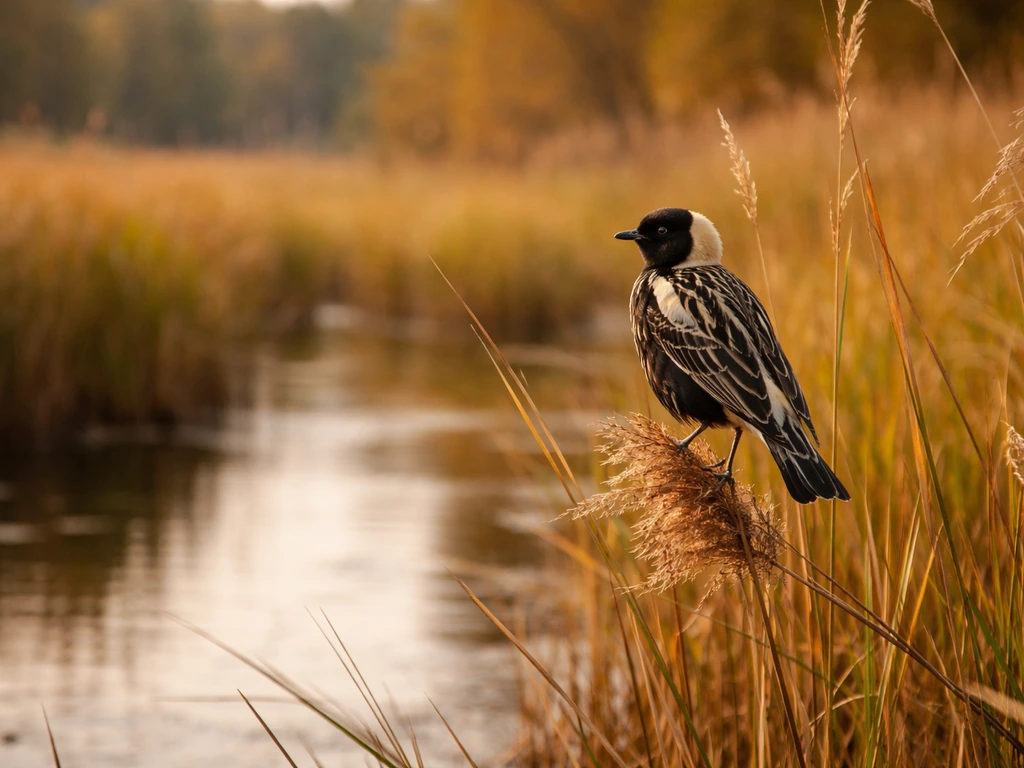
The word 'reedbird' dates back to at least 1640 to 1650, a simple compound of 'reed' and 'bird' that was practical rather than poetic in its origins. Merriam-Webster defines it specifically as the bobolink, especially when it's flocking in reedy marshes during fall and winter. The Missouri Department of Conservation makes this even more precise: the 'reed bird' nickname was attached to bobolinks in their nonbreeding plumage, the streaky brown-and-buff look they take on during migration, when they pour through coastal marshes in huge numbers. Smithsonian's National Zoo lists 'reed bird' alongside 'rice bird,' 'butter bird,' and 'skunk blackbird' as historical nicknames for the same species, reflecting how a single bird can collect wildly different names depending on where and when people encountered it.
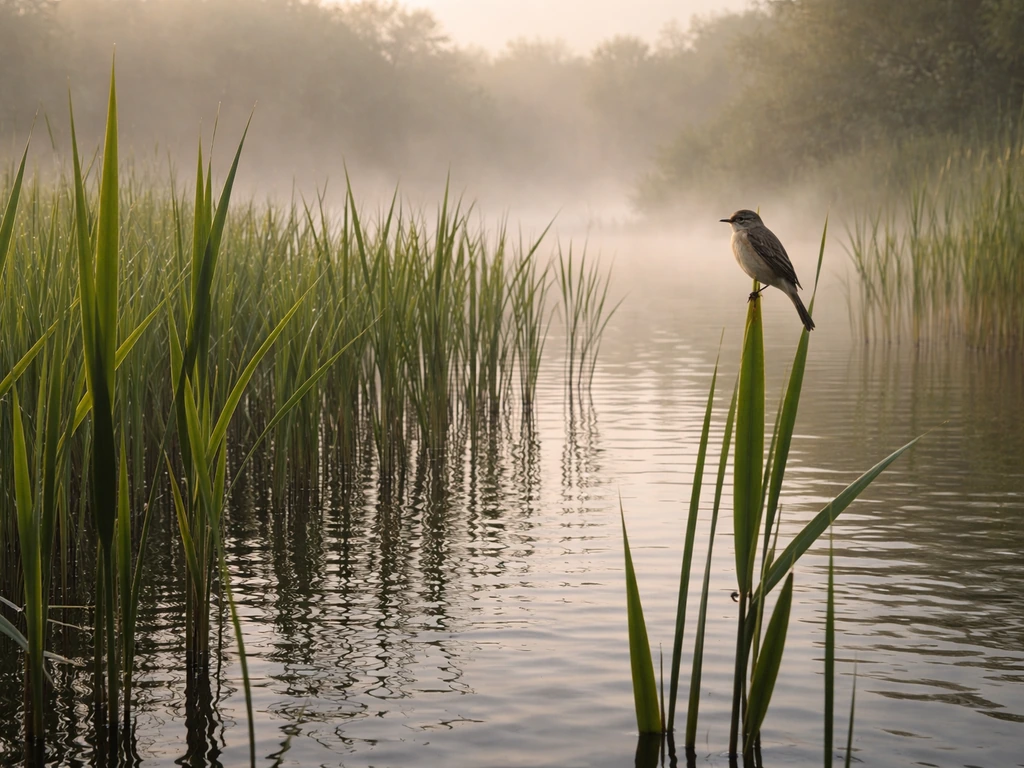
On the British side of the Atlantic, the picture shifts. Older English natural history writing, including Norfolk broadland records, used 'reed-bird,' 'reed-chuck,' and 'reed-chinker' as regional vernacular names for the reed warbler. The reed warbler is a small brown bird that the RSPB describes as spending most of its time 'hidden within the reeds,' and it's found almost exclusively in reed beds during breeding season. Wikipedia's reed bird disambiguation page stretches the term even further, listing the reed bunting, Pallas's reed bunting, Eurasian reed warbler, and Australian reed warbler as birds that have all gone by some version of the 'reed bird' label at one time or another.
Wiktionary captures both sides neatly: sense one is 'the bobolink,' sense two is 'one of several small Asiatic songbirds' in the genera Schoenicola and Laticilla. The phrase has never belonged to just one species, which is exactly why context matters so much.
Where you'll actually encounter the phrase
You're most likely to run into 'reed bird' in four distinct places, each with its own flavor.
- Regional American slang and hunting culture: Along the Atlantic coast and in Southern states, 'reed bird' was a sportsman's term for the bobolink during fall migration. Historical sources even mention 'reed bird skiffs,' small boats used to pursue birds in marsh habitats, sometimes alongside 'rail-bird boats.' If you're reading old hunting or coastal naturalist writing, this is the most likely meaning.
- British natural history and ornithology writing: In older English texts, particularly those covering Norfolk broads and similar wetland regions, 'reed-bird' appears as a straightforward common name for the reed warbler, often sitting alongside dialect nicknames like 'reed-chucker.'
- Poetry and literary writing: Reeds have a deep symbolic life in literature, and 'reed bird' carries that weight. A poem or lyrical passage using 'reed bird' is almost certainly not trying to identify a species but rather invoking the imagery of a hidden, singing creature at the edge of water and land.
- Birding and casual nature observation: Modern birders sometimes use 'reedbird' as a loose habitat label, grouping species like the sedge warbler, grasshopper warbler, and great bittern together as birds of the reed bed rather than naming a specific species.
What reed-associated birds symbolize in bird-lore
Reed beds as a habitat carry a very specific set of symbolic associations, and the birds that live in them inherit all of it. The Wildlife Trusts describes reedbeds as 'transitional habitats' found between water and land, which makes them liminal spaces in the most literal ecological sense. Birds that live there occupy the boundary between two worlds, and cultures tend to load that position with meaning.
The reed itself has a long literary and folkloric history. In Persian and Sufi literary traditions, the reed is explicitly 'the symbol of the crying,' a motif of longing and separation, most famously in Rumi's reed flute imagery. A bird living and calling from within that same reed bed steps naturally into that symbolic current, even if the person using the phrase has never consciously made that connection.
Five themes come up consistently when reed birds appear in symbolic or poetic language:
- Hidden life and protection: The reed warbler is described by the RSPB as spending most of its time hidden within the reeds. This secrecy becomes a symbol of things protected, concealed, or quietly persisting out of sight.
- Song as presence: Because reedbed birds are so hard to see, their calls become their primary identity. The RSPB frames reedbed sound ecology around exactly this idea: you hear the bird before you ever see it. In symbolic terms, the reed bird's song represents communication across barriers, a voice from a hidden place.
- Liminality: The in-between habitat, neither fully water nor fully land, maps onto transitions, thresholds, and the space between states. Reed birds in poetry often stand for people or souls in transitional moments.
- Seasonal change and migration: The bobolink in particular is a long-distance migrant, and its 'reed bird' identity was tied specifically to its seasonal appearance in coastal marshes. This makes the term naturally associated with arrival, departure, and the passage of time.
- Calm persistence: Wetland birds that stay through difficult seasons, like bitterns booming from dense reed cover, carry associations of endurance and resilience.
Spiritual and folklore interpretations
In folk traditions across Europe and the Middle East, reed-dwelling creatures are closely tied to the soul, mourning, and the spirit world. The reed is a plant that grows at the edge of the living world, rooted in water and reaching skyward, and birds that nest and sing from within it are treated as messengers from liminal realms. In some Eastern European folk belief, wetland birds in general are connected to the souls of the restless dead or to protective spirits of waterways.
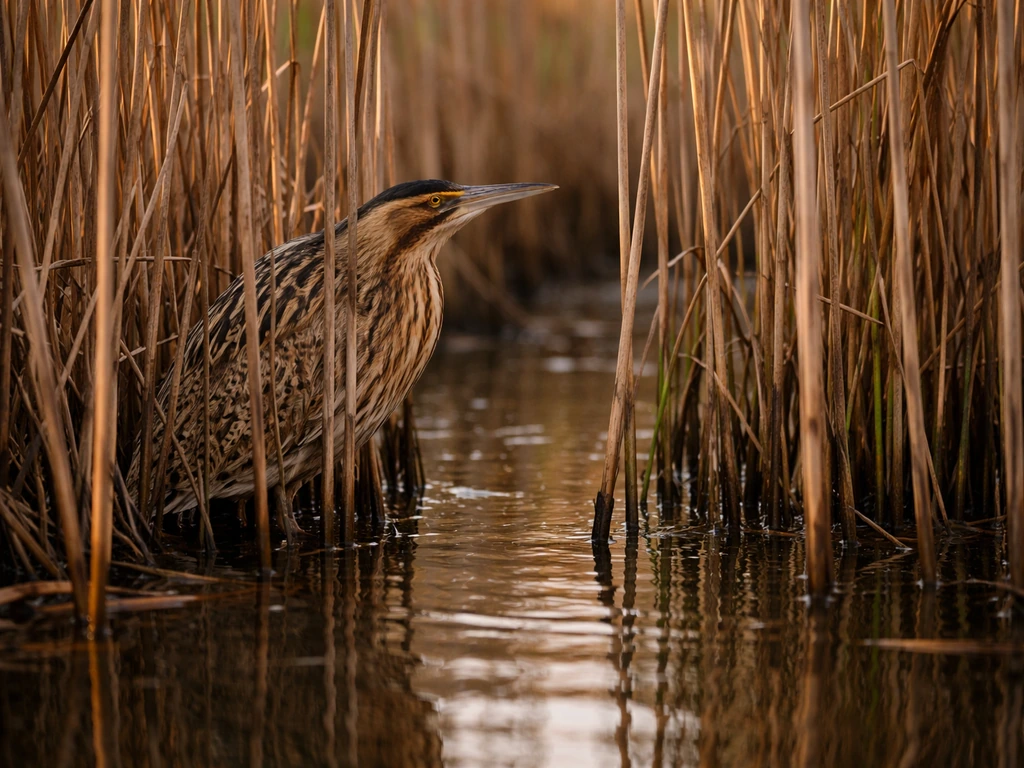
The bittern is worth singling out here. Wildlife Trusts notes that bitterns prefer wet reedbeds and that the males' booming calls in spring were famously mysterious to people who heard them without seeing the bird. Historically, the bittern's boom was sometimes interpreted as a voice from the spirit world, an omen, or a sign of something hidden and powerful nearby. A 'reed bird' appearing in folklore, especially if described as booming, crying, or calling from hidden depths, may well be drawing on this bittern tradition even without naming the species.
In more personal or contemporary spiritual contexts, people who encounter reed birds in dreams or as animal omens typically interpret them as symbols of something hidden coming to voice, a truth that has been concealed beginning to be heard, or a transition between one phase of life and another. The combination of hiddenness, song, and liminal habitat makes the reed bird a natural symbol for revelation or emergence.
How to figure out what 'reed bird' means in your specific context
Because the phrase is genuinely ambiguous, the best thing you can do is ask a few targeted questions about where you encountered it.
| Question to ask | What it tells you |
|---|---|
| Where was it written or said? | American/Southern US context points strongly to bobolink. British or Norfolk context points to reed warbler. No geographic marker suggests a generic or poetic use. |
| What century or era is the text from? | Pre-1900 American texts almost certainly mean bobolink. Pre-1900 British texts lean toward reed warbler. Modern texts may use it as a loose habitat label. |
| Is the surrounding text zoological or lyrical? | If it's identifying a bird in nature writing, it's a species nickname. If it appears in a poem, song, or spiritual passage, treat it as symbolic. |
| Does the phrase appear alongside seasonal or migration language? | Seasonal cues like 'fall flocking' or 'nonbreeding plumage' tie the term to the bobolink specifically, per Missouri DOC and Smithsonian sources. |
| Is the tone reverent, mournful, or mysterious? | If so, you're likely in symbolic or folkloric territory, drawing on reed bed liminality and the hidden-voice tradition. |
| Does it appear alongside other reed or wetland bird names? | If grouped with rails, bitterns, sedge warblers, or similar birds, it's being used as a habitat-based grouping term rather than pointing to one species. |
Common mix-ups and closely related terms
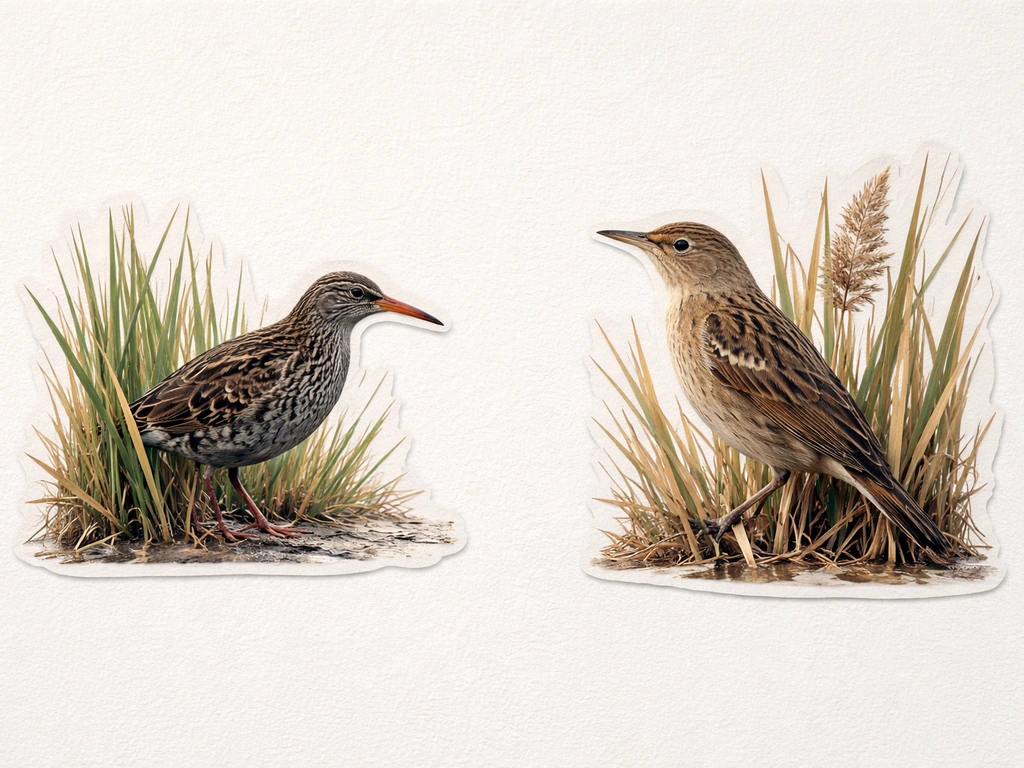
The biggest mistake people make is assuming 'reed bird' has one universal meaning. It doesn't, and that's not a flaw in the phrase, just a reflection of how regional vernacular naming works. Different communities attached the label to whatever conspicuous reed-loving bird dominated their local marshes.
A few specific mix-ups come up repeatedly. First, 'reed bird' and 'rail bird' are genuinely easy to confuse, especially in older marsh-hunting contexts where both terms appear together. If you’re wondering about rail bird meaning, it helps to compare it with how people used “reed bird” for different marsh birds in different regions. Rails are a distinct family of wetland birds, and the two terms occasionally show up side by side in historical boat and hunting records. The terms look similar in search results and older texts, but they point to completely different birds. Second, some people encounter 'reed bird' and assume it must refer to one globally recognized species, like a formal scientific name. It's never been that. It has always been a vernacular label applied loosely across regions and eras. Third, 'reedbird' (one word) and 'reed bird' (two words) are used interchangeably in most sources, so don't read significance into the spacing.
It's also worth knowing that 'reading bird' and 'reed bird' are completely unrelated phrases that sometimes get tangled in searches, one being about interpreting bird behavior or tracks and the other being a name for specific wetland species. If you meant the term “reading bird,” this guide can help you separate it from the separate “reed bird” meanings used for wetland species. Similarly, 'roc bird' is an entirely separate mythological concept that occasionally comes up in search results alongside other unusual bird terms. You may also be seeing “roc bird” in search results, but that refers to a mythological creature, not the reed-dwelling birds the phrase usually points to. If you're looking at something that feels more zoological than cultural, reed warbler and reed bunting are the formal species names most likely to be lurking behind 'reed bird' in any given text.
The short version to keep in mind
Reed bird is a flexible, context-dependent phrase with a documented history going back to the 1640s. In American English it almost always means the bobolink, particularly in its fall migration phase through marshy areas. Because of that, people often ask for the frog bird snake meaning as part of the same search for what these animal labels signify bobolink. In British English and older natural history writing it usually means the reed warbler or reed bunting. In poetry, folklore, and spiritual writing it functions as a symbol of hidden life, liminal spaces, calling out from concealment, and seasonal change. The habit of asking where and when you encountered the phrase will almost always get you to the right answer faster than any fixed definition will. If you are specifically asking about the Indian roller bird meaning, look at how the term is used in local language or birding guides.
FAQ
If I see “reed bird” in an old book, how can I tell which species it meant?
In most cases, “reed bird meaning” questions are about which bird name the phrase points to. A quick way to narrow it down is to check whether the text mentions marshes or reedy wetlands. If it describes passage in fall/winter flocks, it is often the bobolink in North American usage. If it talks about a small bird hidden in reed beds during breeding season, it is more likely the reed warbler or another reed-breeding small passerine used in British/European contexts.
What context clues in a paragraph usually reveal the right “reed bird” meaning?
Look for both the region and the bird behavior being described. American/Canadian contexts that emphasize flocking numbers and migration through “reedy marshes” typically align with bobolink. British records that emphasize being “hidden within the reeds” and singing from reed cover during breeding season align with reed warbler style descriptions. If the passage emphasizes booming calls from concealment, the bittern tradition may also be coloring the symbolism, even if the species label is not explicit.
Does “reed bird” mean a different thing in dreams or spiritual omens?
If you are dealing with a modern dream interpretation, the most reliable approach is to treat “reed bird” as a symbol rather than a specific species. In that setting, people typically read it as “something hidden starts to be heard” or “a transition into a new phase,” because reeds and reed-bed birds sit in the ecological boundary zone between water and land. If your dream includes a distinctive call type (like deep booming), you can be more specific symbolically.
Why do two sources give totally different “reed bird” meanings?
No. “Reed bird” does not function like a scientific or universally standardized name, and it has been used for different reed-loving birds across regions and time. If someone claims there is one single fixed meaning, that is usually an overreach. The better choice is to map the phrase to the likely local vernacular bird described by the surrounding text.
Does writing it as “reedbird” (one word) change the meaning?
Don’t rely on spacing differences alone. Many references collapse “reedbird” into “reed bird,” and the meaning still depends on context. Spelling variations are common in historical sources, so instead focus on what the source says about habitat (marsh vs reed bed), season (fall migration vs breeding), and region (North America vs Britain/Europe).
Can “reed bird” be confused with “rail bird,” and what should I do?
Yes, and it matters for interpretation. If “reed bird” appears alongside “rail bird” in the same older marsh or hunting context, assume they refer to different wetland birds even if they look similar in search results. Rails are a distinct group, and confusing them can lead you to the wrong species and the wrong cultural notes.
When “reed bird” shows up in folklore or poetry, how do I know if it is symbolic or literal?
If you are trying to interpret “reed bird” from imagery, art captions, or folklore, check whether the work emphasizes concealment and calling from hidden depths. That combination is the strongest overlap between reed-bed symbolism and the specific bittern booming tradition. If the piece is purely zoological and lists plumage or migration timing, it is more likely using the literal vernacular bird meaning rather than the folklore layer.
I might have searched the wrong term, what common mix-ups should I watch for?
Yes, it can. Some people search “reed bird” but actually mean a different phrase like “reading bird,” which is unrelated, or they run into myth-related terms like “roc bird.” If your context is about interpreting behavior or tracks, you may have the wrong phrase. If it is about real wetland birds, “reed warbler” and “reed bunting” are the formal species that commonly sit behind those usages in British/European writing.
What quick checklist should I use to identify the meaning fast?
Use a small set of targeted questions to avoid guessing. Ask: where was it written (North America vs Britain/Europe), when in the year (fall/winter migration vs breeding season), and what behavior is described (flocking numbers vs hidden singing). If those three don’t resolve it, treat it as “ambiguous vernacular name” and look for any mention of plumage, calls, or a nearby bird list.
Next Article
Rail Bird Meaning: Literal and Slang Usage Explained
Learn rail bird meaning: literal bird or slang for train watchers, plus origins, contexts, and how to tell which fits.