
When someone says 'roc bird,' they are almost always referring to the roc, a mythical giant bird from Arabian and Persian folklore, not any real species of bird. The roc is described in legend as so enormous it could snatch elephants off the ground and carry them through the air. Its name traces back to Arabic ruḵḵ (رُخّ), which itself came from Persian rukh, and the word first entered English around the 1570s. The English word “roc” for the mythical giant bird is recorded from the 1570s and traces etymologically to Arabic رُخّ (ruḵḵ), ultimately via Persian rukh blank" rel="noopener noreferrer">Arabic ruḵḵ (رُخّ) and Persian rukh. In terms of symbolism, the roc stands for raw, overwhelming power, awe-inspiring scale, and the kind of force that makes human beings feel very small. If you meant “reading bird meaning,” that phrase typically refers to the roc’s symbolism as a figure of overwhelming power and awe-inspiring scale symbolism, the roc stands for raw, overwhelming power. If someone used the phrase in a spiritual, literary, or cultural context, that is almost certainly the meaning they had in mind.
Roc Bird Meaning: Myth, Symbolism, and How to Tell Which They Mean

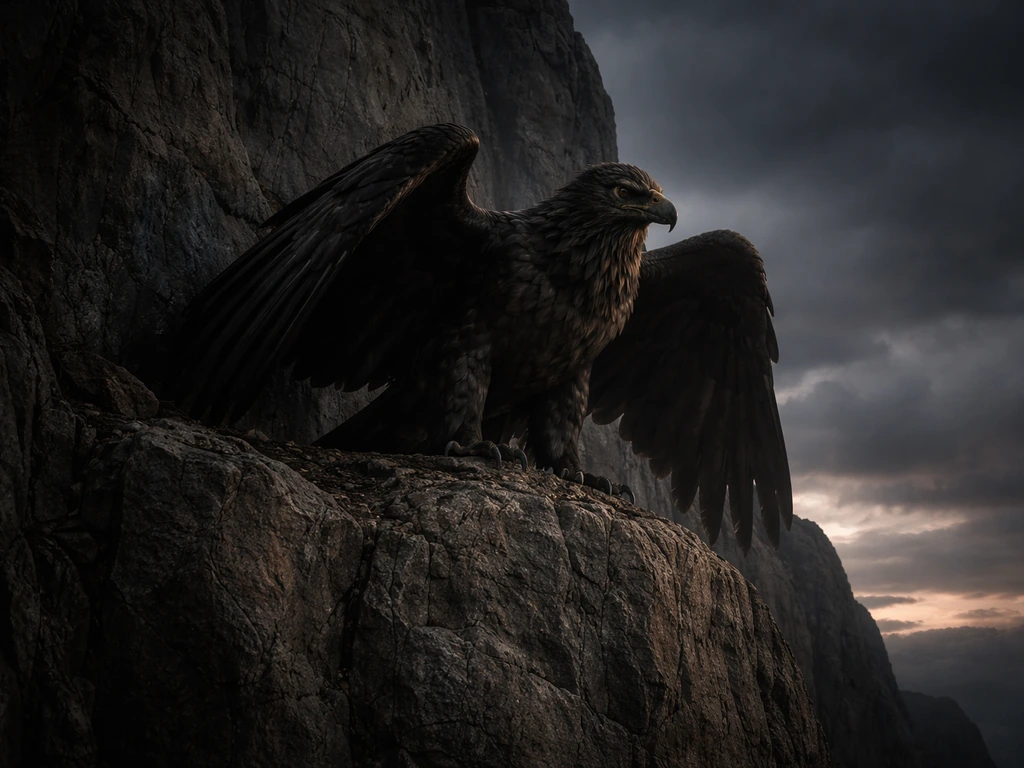
What 'ROC' actually means as a bird reference
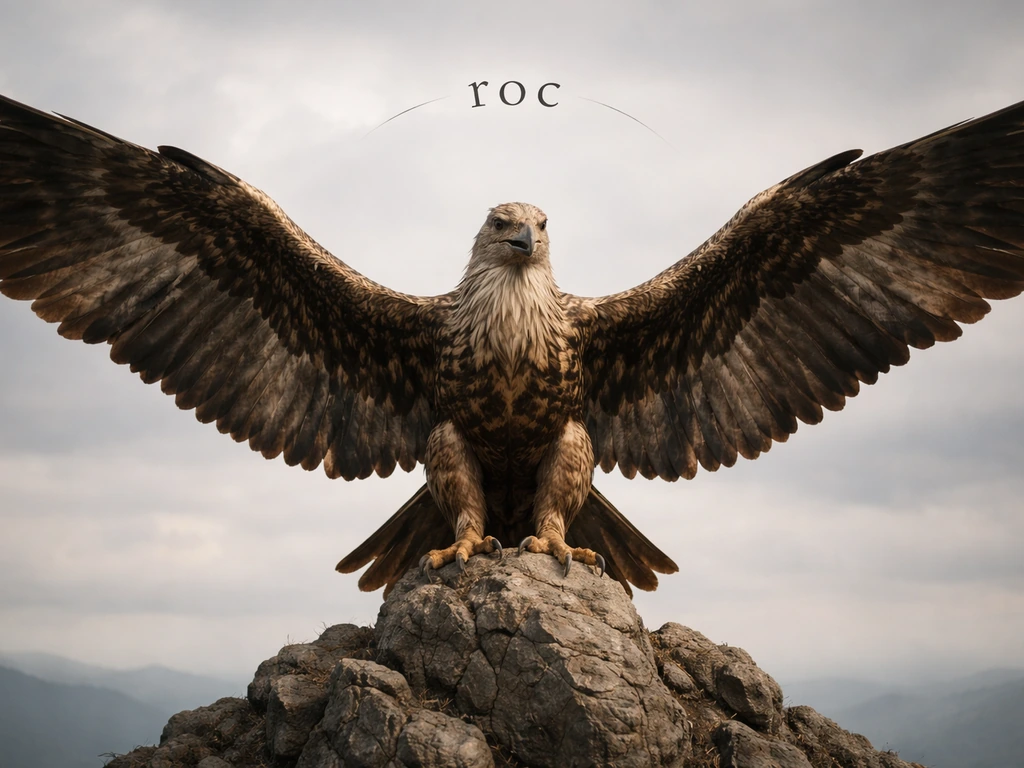
The roc is not a shorthand for any real bird. It is a specific mythological creature, one of the most dramatic in world folklore. The name 'roc' (also spelled 'rukh' or 'rukh bird') refers to a monstrous predatory bird described in Arabian mythology as capable of lifting and carrying off elephants. When you see or hear 'roc bird,' the word 'bird' is essentially just a descriptor clarifying that the roc is, indeed, a bird-type creature rather than some other kind of beast. People add it because the word 'roc' alone is unfamiliar to many English speakers today.
A secondary meaning worth knowing: the phrase 'roc's egg' entered the English language as an idiom meaning something marvelous or prodigious, something almost impossibly grand or rare. So even beyond the creature itself, the roc's name attached to the idea of something extraordinary. That gives you a hint at how strongly the roc was associated with the impossible and the awe-inducing in older English usage.
Where the roc bird comes from: mythology vs. any real bird
The roc is purely mythological, but its origins are interesting because they are tangled up with real geography and real birds. The creature appears in two major sources most Western readers would recognize: The Thousand and One Nights (also known as Arabian Nights) and the travel accounts of Marco Polo. Britannica describes the roc as a gigantic legendary bird “said to carry off elephants,” linking it to The Thousand and One Nights and to Marco Polo’s accounts of eastern Africa and nearby islands The travel accounts of Marco Polo. In Arabian Nights, the roc shows up in at least two distinct tales, one involving 'Abd al-Rahman the Maghribi's Story of the Rukh' and another in the Sinbad the Sailor stories, where Sinbad encounters the bird's enormous egg and later the bird itself. These tales are where most English speakers first absorbed the roc into their cultural imagination.
Marco Polo described a giant bird in the islands of eastern Africa, in the Madagascar region, capable of lifting elephants. Scholars have long speculated whether stories of the roc were inspired by real creatures: the now-extinct Elephant Bird (Aepyornis maximus) of Madagascar is a leading candidate, since it was genuinely enormous and laid eggs that would have looked miraculous to any traveler who stumbled across one. The Haast's eagle of New Zealand has also been suggested, since it was the largest eagle known to science. Neither of those real birds could actually carry elephants, but the memory of something huge and bird-like in remote lands could easily have grown into legend through repeated retelling. Either way, the roc in any modern or cultural reference is the mythological version, not a literal species.
The symbolism of the roc in folklore and modern culture
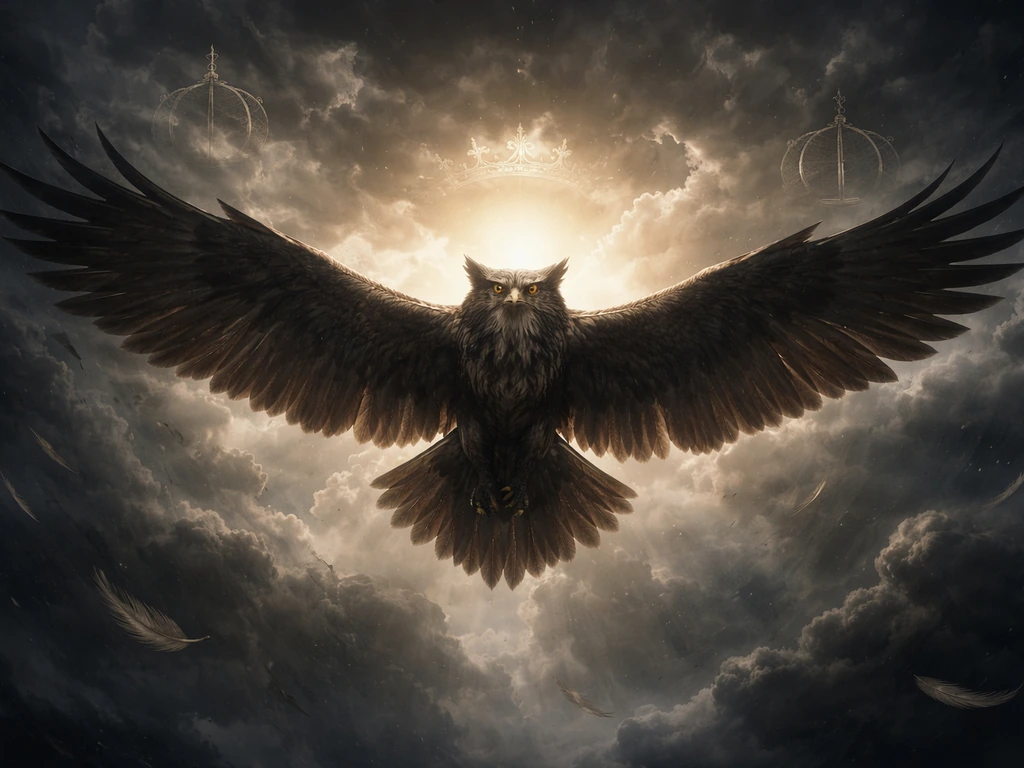
The roc carries a very consistent set of meanings across the cultures that tell its story. If you are trying to understand what someone means when they invoke the roc as a symbol, here is what that symbol communicates:
- Overwhelming power: The roc is the ultimate apex predator of mythology. It does not hunt rabbits. It hunts elephants. Invoking the roc means invoking the idea of force that is simply in another league.
- Awe-inspiring scale: The roc is so large its wingspan blocks out the sun in some versions of the legend. It represents something beyond normal human comprehension of size.
- Protection (in certain traditions): In some tellings, being under a roc's shadow or inside its egg is a form of shelter. The very thing that is dangerous to others can be a protector to those it chooses.
- Danger and unpredictability: The roc is not evil in the way a monster is evil. It is simply so powerful that it is catastrophically dangerous. This makes it a symbol of forces of nature that are beyond human control.
- The miraculous and impossible: Because the roc was associated with the marvelous and unbelievable, it became shorthand in English for something extraordinary, which is where the idiom 'roc's egg' comes from.
In modern culture, the roc shows up in fantasy literature, video games, tabletop RPGs, and film as a recognizable creature borrowed straight from folklore. In those contexts, the symbolism remains the same: it is always the biggest, most awe-inspiring flying creature in the setting. When a writer puts a roc in a story, they are signaling 'this is the most powerful aerial threat imaginable.' Rappers and musicians have occasionally used 'Roc' in brand names (most famously Jay-Z's Roc Nation) specifically to invoke that sense of power and dominance.
How people use 'roc bird' in conversation and what they likely mean
In everyday conversation or online, 'roc bird' almost always signals one of three things. In contrast, the term reed bird meaning refers to a completely different kind of bird symbolism tied to reeds and water. First, someone is genuinely curious about the mythological creature and searching for its definition or background. Second, someone encountered 'roc' in a book, game, or song and wants to understand the reference. Third, someone is using it as a metaphor for something enormous, powerful, or dominant in their world, either seriously or playfully.
You will occasionally hear someone describe a person, organization, or idea as a 'roc' or use 'roc bird energy' in casual conversation, meaning they are projecting an image of untouchable scale and dominance. It is the same impulse that leads people to call something 'a giant' or 'a titan,' just with a more specific mythological flavor. This kind of usage is especially common in creative communities, gaming circles, and hip-hop culture, where the roc's imagery has had a long run.
How to figure out which meaning someone intended

Context usually makes this straightforward, but here is a practical checklist you can run through when you are not sure:
- Check the source: Is this from a fantasy novel, a mythology article, or a game? Then it is the mythological roc, full stop.
- Look at surrounding words: If words like 'giant,' 'legendary,' 'egg,' 'Sinbad,' or 'Arabian Nights' appear nearby, you are in mythological territory.
- Check capitalization: 'Roc' with a capital R almost always refers to the mythological creature specifically. A lowercase 'roc' might be casual or abbreviatory.
- Consider the platform: Music, branding, and pop culture uses of 'Roc' lean toward the power/dominance symbolism. Academic or literary uses lean toward the mythology.
- Ask if they mean a real bird: This almost never applies, but if someone is describing an actual bird they saw or a real species, they likely mispronounced or misidentified another bird entirely. The roc is not a real species.
One useful test: if replacing 'roc bird' with 'giant mythological bird of Arabian legend' still makes the sentence make sense, then the mythological meaning is correct, which it will be in the vast majority of cases.
Where people get confused: roc vs. similar bird terms
The roc is occasionally confused with other bird terms, especially by people new to mythology or bird symbolism. A few common mix-ups worth knowing about:
| Term | What it actually is | Key difference from 'roc' |
|---|---|---|
| Roc (rukh) | Mythological giant bird from Arabian/Persian tradition | The original; purely legendary, symbol of overwhelming power |
| Phoenix | Mythological fire bird that dies and is reborn | Symbolizes renewal, not raw power; different cultural tradition |
| Thunderbird | Giant bird from Indigenous North American mythology | Different tradition, similar scale, but tied to storms and thunder rather than Arabian legend |
| Eagle (as symbol) | Real bird used widely as a symbol of power and nationhood | Based on a real species; symbolism is political and national more than mythological |
| Garuda | Giant bird-deity from Hindu and Buddhist tradition | Similar size and power themes, but tied to a completely different religious tradition |
It is also worth distinguishing the roc from more everyday bird idioms and expressions. Terms like 'rail bird,' 'reed bird,' or expressions involving real birds refer either to actual species or to grounded slang with specific social meanings. The roc sits in a different category entirely because it was never a real bird at any point. It lives purely in the realm of myth and symbol, which is exactly what gives it that sense of grandeur when people invoke it today.
If you came across 'roc bird' in a cultural or spiritual conversation and were unsure whether it connected to real bird symbolism the way, say, an Indian roller bird carries meaning in South Asian tradition, the short answer is no. If you are also looking for the broader frog bird snake meaning topic, the same idea applies: context determines which symbolism people are actually referring to bird symbolism. If you are asking about the Indian roller bird meaning, that is a different bird symbolism tradition with its own cultural references. The roc's meaning is drawn entirely from its mythological identity, not from any observed behavior or real-world association the way most bird symbolism works. That makes it a unique case in bird-related language: a creature whose entire symbolic weight rests on the stories told about it rather than on anything anyone ever actually saw.
FAQ
Is “roc bird” ever referring to a real animal?
Most of the time, yes. If you see “roc bird” in a caption, meme, fantasy setting, or lyrics, it is being used as shorthand for the mythological roc from Arabian and Persian folklore, not as a reference to any actual bird species.
What does “roc bird” usually imply in a metaphor?
Roughly, it means something like overwhelming power or an untouchably large force, often with an “awe plus intimidation” feeling. If the sentence describes a threat, a dominant brand/person, or an enormous event, the metaphor interpretation is usually the right one.
Does “roc bird” change meaning if it is mentioned with “egg” or “Sinbad”?
If the phrase is used alongside “egg,” “Sinbad,” or “Arabian Nights,” it likely points to the roc imagery related to the roc’s egg and the idea of something impossibly grand. Without those anchors, people more commonly use it for general dominance or scale.
How is “roc’s egg” different from “roc bird”?
Yes, older idiom usage can matter. “Roc’s egg” was used as a phrase for something marvelous or prodigious, so if you encounter “roc’s egg” rather than “roc bird,” expect an expression about rarity and greatness, not a direct animal reference.
Why do people say “roc bird” instead of just “roc”?
Treat “roc” as the core term. Adding “bird” is usually just clarification for readers, especially those who do not know the word “roc,” so “roc bird” and “roc” typically point to the same myth.
What are common mistakes people make when interpreting “roc bird”?
Be careful not to substitute other bird-idiom meanings. “Rail bird,” “reed bird,” and similar terms are tied to specific, grounded symbolism or slang, while the roc’s symbolism comes from folklore scale and power, not from real bird behavior.
What if I saw “roc bird” in a spiritual or motivational quote?
If you are reading it in a spiritual context, the safest assumption is that it is still metaphorical, since the roc is not based on a real species with consistent natural traits. Look for cues like “power,” “destiny,” “awe,” “overwhelming,” or “unseen force.”
What is a quick way to confirm what meaning a writer intended?
Use this quick check: if replacing “roc bird” with “giant mythological bird of Arabian legend” keeps the sentence natural, you are on the right track. If it breaks the sentence, the phrase may be functioning as general “titan-like” imagery specific to that speaker.
Does “Roc” in brand names or artist names mean the same thing?
It can, but usually as branding or name symbolism. If the context is a company, label, or stage name, “Roc” tends to be chosen to signal dominance, status, or maximum scale rather than a literal reference to mythology details.
Could it be confused with other regional “bird meaning” traditions?
Other bird mythology traditions exist, but they are separate systems. If the surrounding text mentions a different region or tradition (for example, South Asian references), do not assume “roc bird” carries that tradition’s meanings, because roc symbolism is specifically anchored in Arabian and Persian legend.
Frog Bird Snake Meaning: Symbols, Dreams, and Connections
Learn frog bird snake meaning: symbols and dream interpretations, plus how the trio links transformation, guidance, and