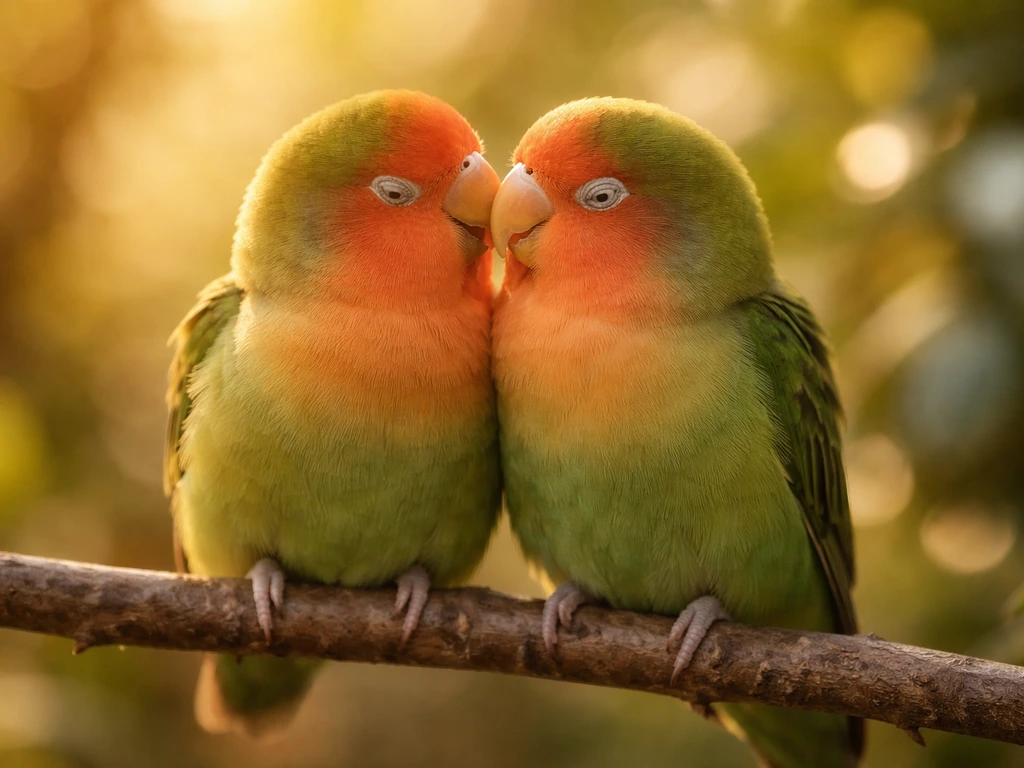
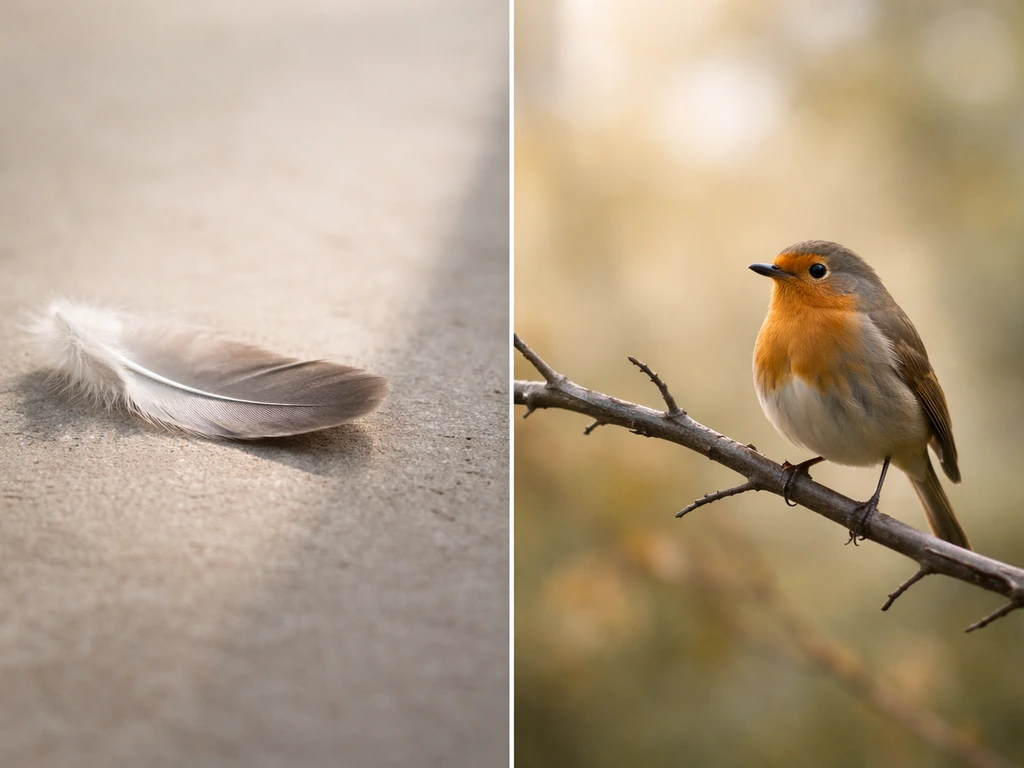
No single bird exclusively means "believe" across all traditions, but a few species come up again and again when people talk about faith, trust, and holding onto hope: the robin (commonly seen as a messenger from a lost loved one, urging you to keep faith), the dove (deeply tied to spiritual belief in Christian and broader Western tradition), and the bluebird (a widespread symbol of hope and optimism in North American folklore). Which one resonates most depends on the encounter you had, the cultural lens you're working from, and honestly, how much weight you want to give the experience. This guide walks you through all of that.
What Bird Means: Interpretations for Believe and Bird Signs

Marcus Winters
23 Jun 2026
How bird meanings actually work in language and symbolism
Birds carry meaning in two very different ways, and it helps to separate them before you go looking for what your sighting "means." The first is figurative language: idioms, proverbs, and everyday phrases that use birds as shorthand for human situations. These are fixed, broadly shared, and don't depend on belief at all. The second is symbolic or spiritual meaning: the idea that a particular bird appearing in your life is a sign, message, or omen tied to a feeling, event, or decision. This second layer varies enormously depending on cultural tradition, personal belief, and context.
Both layers are real in the sense that millions of people use them. But they work differently. An idiom like "a bird in the hand is worth two in the bush" has a stable, agreed-upon meaning that you can look up and apply. A symbolic reading, like "a robin appearing means your grandmother is watching over you," is interpretive. It depends on tradition, personal resonance, and what you're willing to accept as meaningful. Knowing which layer you're working in prevents a lot of confusion.
What "believe" changes about the question
When someone asks "what bird means believe," they're usually asking one of three things, and the answer shifts depending on which one they mean. Sorting this out first saves time.
| What the reader means | Type of answer they need | Can it be verified? |
|---|---|---|
| Spiritual/personal sign ("I saw a bird and felt it meant something") | Tradition-based symbolic meaning | No, this is meaning-making, not fact |
| Cultural folklore ("What do people traditionally say this bird means?") | Folklore or folk belief record | Partially: you can verify what people believe, not whether it's true |
| Evidence-based ("Is there a real reason this bird showed up?") | Biology, migration, behavior | Yes: ornithology and ecology can explain timing and presence |
Psychologists describe our tendency to find patterns in random events as apophenia: the brain is wired to detect structure, even in noise. That's not a flaw, it's what makes us good at reading social situations and spotting danger. But it also means that when a striking bird appears at an emotionally charged moment, the mind will naturally reach for meaning. Confirmation bias then reinforces it: you remember the times the "sign" seemed to fit, and forget the times it didn't. None of this means the experience isn't valuable. It just means you should know what kind of claim you're making when you say a bird "means" something.
Identify the bird first: how to narrow the species fast
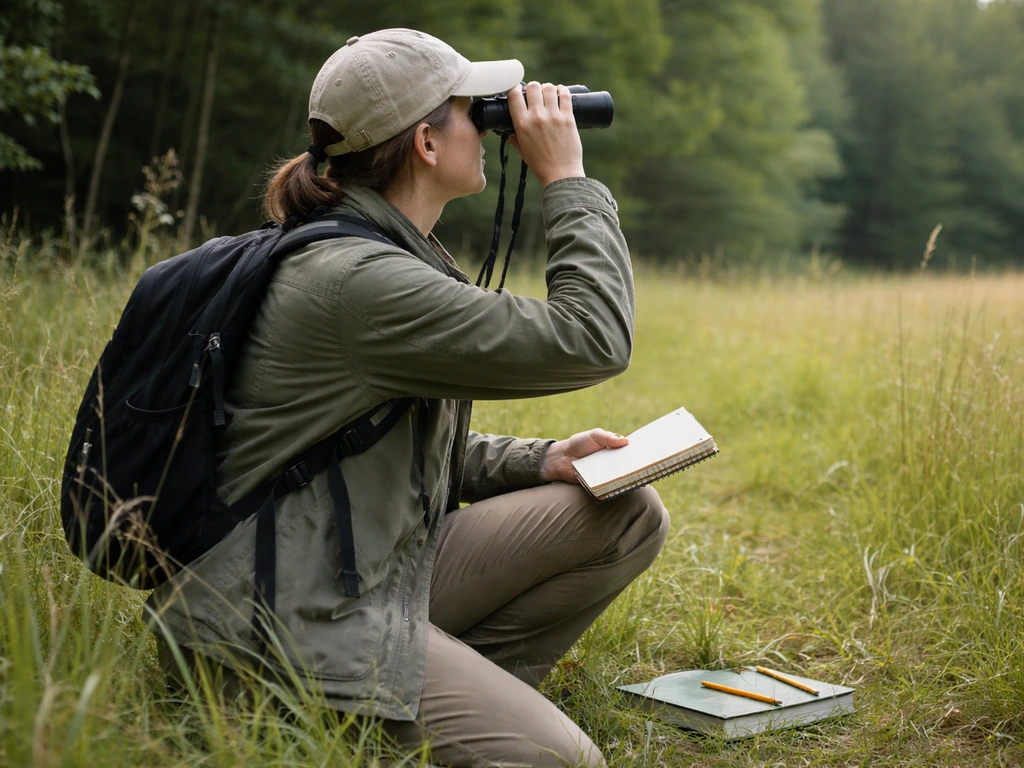
Symbolism is only as useful as the identification that precedes it. If you don't know what bird you actually saw, any meaning you assign to it is basically guesswork. The good news is that you can narrow down a species quickly using a handful of field marks, even without binoculars or a field guide app on hand. Audubon’s bird-ID guidance recommends starting with field marks such as overall size and shape, bill structure, plumage markings, and actions before drawing conclusions.
The five field marks to check immediately
- Size and overall shape: Compare the bird to something you know (sparrow-sized, pigeon-sized, crow-sized, hawk-sized). Shape in flight, especially wing and tail silhouette, is often the fastest clue.
- Bill shape: A thick, seed-cracking bill points to finches or sparrows. A hooked bill suggests a raptor. A thin, pointed bill is typical of insect-eaters like warblers. A long, curved bill narrows it to hummingbirds, ibises, or similar.
- Dominant colors and markings: Note the single most striking color or pattern first (red breast, black-and-white striping, iridescent sheen), then add secondary details.
- Behavior and movement: Was it hopping on the ground, hovering, soaring in circles, clinging to bark, or diving into water? Behavior is often more diagnostic than plumage.
- Sound: If it was calling or singing, the vocalization can confirm an ID even when the bird is hard to see. Some calls are nearly unmistakable (the phoebe says its own name; the killdeer does too).
Once you have at least three of those five, run them through a free ID tool like the Merlin Bird ID app or All About Birds. Getting the species right before applying any symbolic layer is the single most useful step you can take, because the symbolism attached to a dove is completely different from the symbolism attached to a crow, even though both might appear at your window on the same afternoon.
Common bird-sign scenarios and what they're typically said to mean
People ask about bird signs in a surprisingly consistent set of situations. Here's what the folklore and spiritual traditions most commonly say, alongside the practical explanation so you can decide where you stand.
A bird lands very close to you or on you
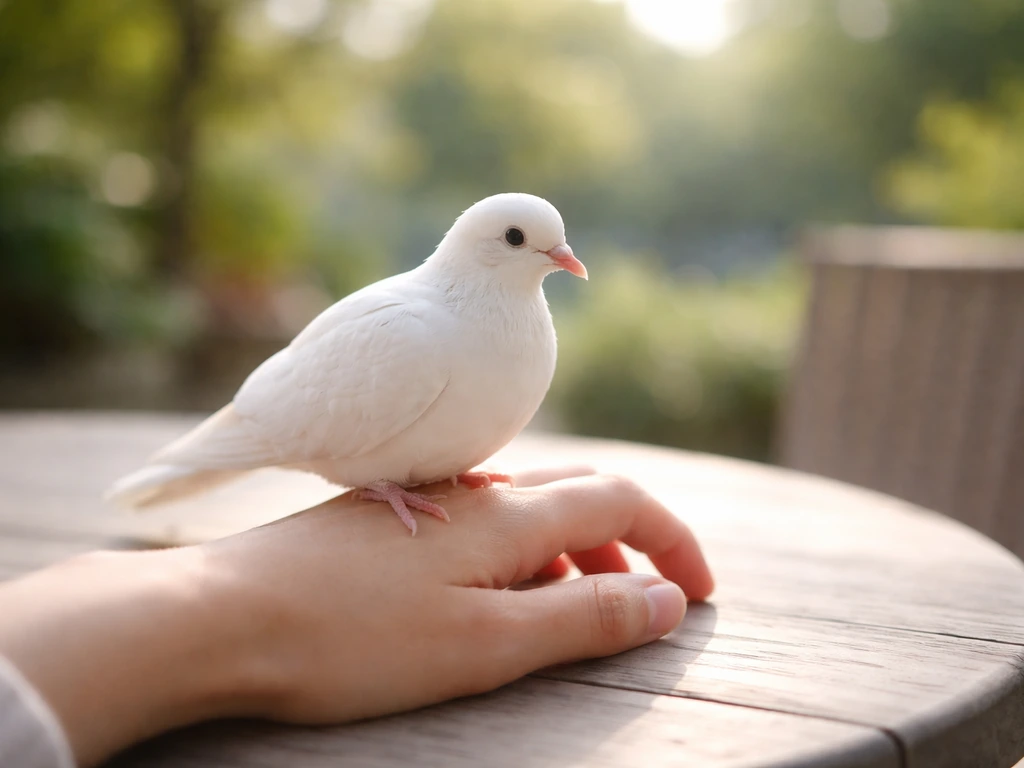
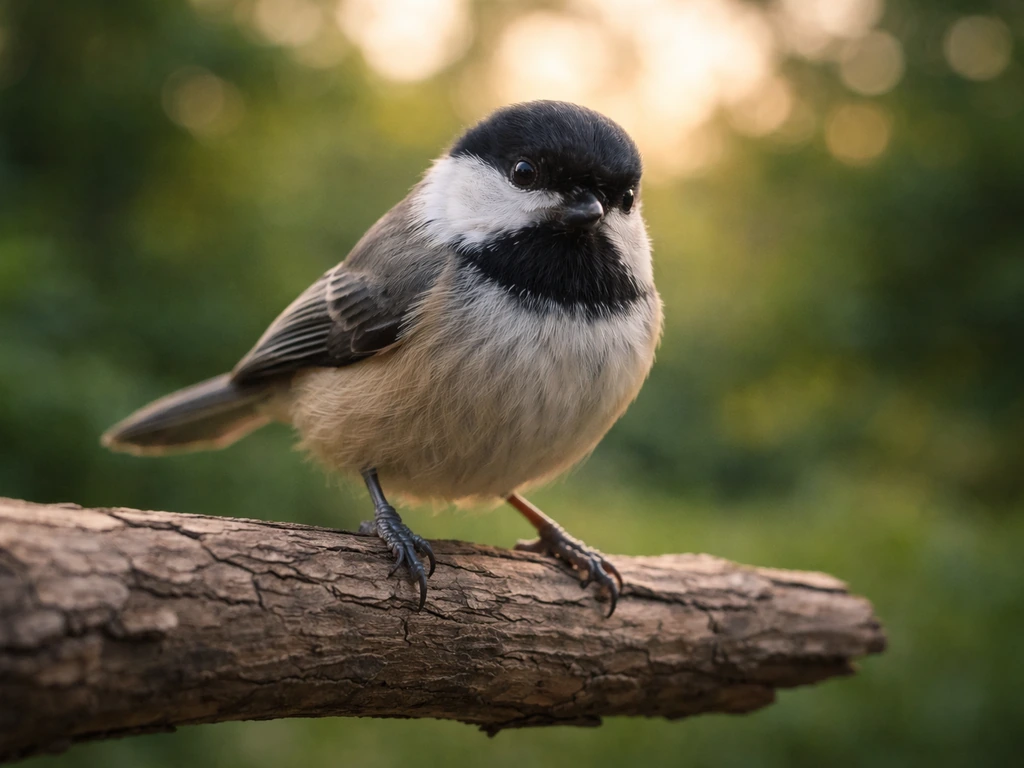
Spiritually, this is often interpreted as a message of connection, trust, or divine acknowledgment. The dove in particular carries this weight in Christian tradition, associated with the Holy Spirit. Practically, birds that approach humans unusually closely are often young, unwell, or simply habituated to people (like urban pigeons and hand-fed chickadees). Both things can be true: the moment can feel meaningful and still have a biological explanation.
A bird flies into your home
In British and European folk tradition, a wild bird entering a house is one of the most cited death omens. This belief is widespread and well-documented in folklore records. The practical explanation is simpler: birds fly toward light and get disoriented by glass and indoor spaces. Their panicked behavior once inside can feel ominous, but it reflects fear, not prophecy. If you want to be respectful of the tradition while staying grounded, treat it as a prompt for reflection, not a guaranteed forecast.
A bird sings at night
Nighttime bird sounds carry a lot of spiritual weight, partly because they're unexpected and partly because night itself is associated with mystery. Owls singing at night have omens attached across dozens of cultures. But nighttime bird sounds have clear biological explanations too: migration causes many species to call nocturnally, and some birds like mockingbirds regularly sing through the night, especially in spring. A bird singing at night in late May is almost certainly a mockingbird or a migrant, not a sign of impending change, though you're welcome to reflect on what the moment stirs up in you.
A bird appears repeatedly over several days
Repeated sightings feel intensely significant, and this is where apophenia works hardest. Wikipedia describes apophenia as perceiving patterns or meaning in random or unrelated information, which can help explain how “signs” may form from coincidence. Once you notice a bird once with emotional weight, you start noticing it every time, and the "coincidences" pile up. That said, birds are territorial and habitual: a cardinal or jay returning to your yard five days running is almost certainly the same individual bird doing what it does. The repetition is ecological, not supernatural. Still, many people find genuine comfort and meaning in this kind of recurring presence, and using it as a focus for reflection or intention is a perfectly reasonable thing to do.
A bird crosses your path
The magpie crossing your path is one of the most storied omen traditions in Britain, with direction of crossing said to determine whether luck is good or bad. Similar path-crossing omens exist for owls in many cultures. The ancient practice of ornithomancy, divination by the flight and cries of birds, treated exactly these kinds of moments as readable messages. Whether you apply that interpretive frame is entirely up to you; just know it's an interpretive overlay, not a literal message.
A bird appears in a dream
Dream-bird symbolism varies enormously by species and tradition, but the broad tendency in Western dream interpretation is positive: birds in dreams often represent freedom, spiritual aspiration, or transition. A dove in a dream typically signals peace or clarity. A crow or raven might signal change or a confrontation with something difficult. Treat these as prompts for personal reflection rather than predictions.
Bird idioms worth knowing (especially if you're decoding a phrase, not a sighting)
Sometimes people search "what bird means" because they've heard an expression and want to understand it, not because they've actually seen a bird. If you heard the odd phrase and want to understand its folklore, you can also look up looney bird meaning as a related way people attach symbolism to specific bird labels. Here are the most common bird idioms in English and what they actually communicate.
| Idiom or phrase | What it means in plain English | Closest linked idea |
|---|---|---|
| A bird in the hand is worth two in the bush | Keep what you already have rather than gambling on something better | Caution, gratitude, practicality |
| Birds of a feather (flock together) | People with similar values or interests tend to group together | Like attracts like, social identity |
| A little bird told me | I heard something through an informal or secret source | Rumor, gossip, inside information |
| The early bird catches the worm | Getting started early gives you an advantage | Diligence, timing, initiative |
| Free as a bird | Completely unrestrained or liberated | Freedom, relief, independence |
| An albatross around your neck | A burden or mistake you can't escape | Consequence, guilt, ongoing weight |
These idioms are worth separating clearly from symbolic or spiritual meanings. "A bird in the hand" doesn't carry a spiritual charge; it's a practical piece of wisdom about risk. If someone used one of these phrases at you and you're trying to decode the message, the answer is in the idiom's meaning, not in any symbolic tradition attached to the bird itself.
Picking the right interpretation for your situation
Here's the honest version of how to choose: you're the one who decides how much interpretive weight to give a bird encounter, and that's actually fine. The goal is to make the choice consciously rather than defaulting to the most dramatic or the most dismissive reading. If you are trying to understand the lovely bird meaning, start by identifying the species and then choose the kind of meaning you want to trust.
- If the encounter was emotionally charged (grief, a major decision, a moment of doubt), the symbolic reading will feel true regardless of evidence, and using it as a focus for reflection is genuinely useful.
- If you're from a specific cultural or religious tradition where bird signs carry established meaning (Chinese crane symbolism for longevity, dove symbolism in Christian contexts, magpie folklore in Britain), lean into that tradition's interpretation because it comes with shared meaning that adds to the experience.
- If you're more skeptically inclined, the biological explanation is fully available and completely honest: birds appear for ecological reasons, migration patterns, weather shifts, and territorial behavior. That doesn't make the moment less interesting.
- If you're somewhere in the middle, try this framing: "What does this encounter invite me to think about?" rather than "What is this bird predicting?" That shifts it from prophecy to reflection, which is more honest and often more useful.
- If the symbolism you found doesn't feel right for the bird you saw, check whether you've correctly identified the species. Misidentification is the most common reason symbolic readings feel off.
It's worth noting that some bird symbols cluster around related themes. If you've been researching what bird means love or what a robin means when connected to a lost loved one, you're in adjacent territory. The robin in particular sits at the intersection of belief, love, and memory in Western folklore, and the meaning shifts depending on the emotional context you bring to the sighting.
Handling ambiguous cases: when multiple birds or symbols apply
Sometimes the identification is uncertain, or the bird you saw has contradictory symbolism in different traditions. A crow means death and misfortune in some European folklore but wisdom and transformation in Indigenous North American traditions. A white bird might be a dove (peace) or an egret (patience) or an albino individual of another species entirely. Here's how to work through it.
- Go back to the field marks and tighten the ID. The more you can narrow the species, the more useful the symbolism becomes. Silhouette, bill shape, and behavior are your fastest tools.
- Ask which tradition is most relevant to you personally. If you're drawing on Christian symbolism, the dove reading will feel most resonant. If you're working within Chinese folklore, the crane or fenghuang framework applies. Choose the tradition that matches your background or intention.
- When symbolism across traditions genuinely conflicts, use the overlap. Most bird symbols carry some version of transition, message, or awareness. That's usually the core meaning worth sitting with.
- If you truly can't identify the bird, work with what you remember most vividly: its color, its behavior, the direction it flew, whether it was silent or vocal. Even partial information can point toward a likely symbol cluster.
- Accept that some encounters are unresolvable. Not every bird appearance has a clear symbolic home, and that's okay. The value isn't always in the specific answer; it's in the attention the moment asks you to pay.
Practical next steps (and when to skip the symbolism entirely)
Here's the step-by-step process to work through any bird encounter efficiently, from sighting to interpretation.
- Identify the bird: Use size, shape, bill, color, behavior, and sound. Check against a reliable ID resource. Don't move to symbolism until you have at least a probable species.
- Match to likely symbolism: Look up that species in the cultural or spiritual tradition most relevant to you. Dove, robin, crane, bluebird, crow, and owl are the species with the most developed symbolic histories in Western and East Asian traditions.
- Check the tradition context: Symbolism is not universal. A magpie means something different in Britain than in Korea. Make sure the symbolic claim you've found actually comes from a tradition that's meaningful to you.
- Decide how much you want to believe: This is an honest personal choice. You can hold a symbol as metaphorically true (useful for reflection) without claiming it as literally predictive. Most people who find bird signs valuable use them this way.
- Use it as reflection rather than forecast: Ask what the encounter is prompting you to think about: trust, change, loss, hope. That question is almost always more productive than "what is going to happen to me?"
There are also times when the right move is to skip the symbolic interpretation completely. If a bird is in your house, the priority is helping it get out safely, not decoding the omen. If a bird is behaving strangely (sitting on the ground, unable to fly, letting you approach easily), it may be injured or ill, and the practical response is contacting a wildlife rehabilitator, not assigning it spiritual significance. The biology of bird behavior is genuinely interesting on its own terms, and sometimes that's the whole story.
The Cleveland Clinic notes that superstitions feel compelling because they engage emotion, and beliefs can reinforce themselves by shaping behavior in ways that make the outcome seem to confirm the belief. That's worth keeping in mind not as a reason to dismiss the experience, but as a reason to stay curious about why it feels meaningful, rather than just assuming it predicts something. That loving bird meaning angle can be a helpful comparison point when you are trying to decide whether the message feels spiritual, personal, and interpretive rather than something you can confirm objectively. The most useful approach to bird symbolism is treating it as a tool for reflection that you pick up deliberately, rather than a system that operates on you automatically.
FAQ
If I see a robin, does it automatically mean “believe” in the same way every time?
No. Even when a species is commonly linked with faith or staying hopeful, the specific message depends on your context (what you were deciding, what emotion the sighting matched, and what your own tradition expects). Also, the same bird can show up for mundane reasons like territorial behavior or food availability, so treat the meaning as a reflection prompt, not a fixed definition.
How do I tell whether I’m interpreting an omen or just noticing an idiom?
Check whether the “meaning” is tied to a set phrase you heard (like an everyday English expression) versus an actual moment of encounter. Idioms have stable, shared meanings and usually do not require you to identify the exact bird. Omen-style symbolism depends on species identification plus the timing and circumstances of the sighting.
What if I cannot identify the bird clearly, but the moment felt powerful anyway?
You can still use the experience as personal reflection without claiming a specific species meaning. Describe it in terms you can verify (color pattern, size, behavior, location, time of day) and then choose a general theme like hope, reassurance, or transition. Avoid locking into a detailed “believe” message until you can name the species.
Is it better to trust the “bird means believe” interpretation or my rational explanation?
Aim for both. First confirm likely explanations you can test, such as seasonality, local species presence, and typical behaviors (approaching humans, glass collisions, nocturnal calls). Then decide what interpretive layer, if any, feels supportive for you. If the interpretation pushes fear or rigid decisions, it is a sign to scale back the symbolic reading.
Can the same bird mean different things in different traditions, and how should I choose?
Yes. Crow and dove, for example, can carry sharply different symbolism depending on culture. When traditions conflict, use your own framework: pick the interpretation that fits the emotion you felt and the actions you want to take. If you are unsure, choose a theme-level meaning (like peace versus transformation) rather than a highly specific prediction.
What should I do if a bird flies into my house, should I treat it as a sign?
Your priority is safety. Glass collisions and disorientation are common, especially at night or near windows. Give the bird a clear exit path (turn off indoor lights except one near an exit if possible). If you still want the spiritual layer, use it as a prompt for reflection rather than a guaranteed forecast.
Does hearing owls at night always mean something spiritual?
Not necessarily. Nocturnal calling can be driven by migration, mating, or regular species habits. If you heard an owl or other nocturnal bird, note the date and region and compare that with typical seasonal behavior. You can keep the spiritual meaning as an emotional interpretation, but avoid treating it as confirmation of a specific event.
How can I prevent confirmation bias when I think birds are “sending messages”?
Keep a simple log for a week or two. Record the bird (or best guess), the time, the exact situation you were in, and what you felt. Afterward, check how often the “meaning” you expected actually matched. This helps separate real patterns (birds returning to a yard, territorial routines) from emotionally charged guesses.
What about repeated sightings, am I just seeing the same bird frequently?
Often, yes. Many species return to consistent territories and feeding areas, so repeat sightings can be the same individual or the same local group. You can still find comfort in recurrence, but if it is impacting decisions or heightening anxiety, shift to practical steps (observe, support habitat, adjust routines) rather than assuming it signals inevitability.
Can bird dreams be taken as predictions that something will happen soon?
Treat dream symbolism as guidance for internal states rather than external timing. A dove-in-dream interpretation like peace or clarity is better used to reflect on what feels unsettled in your life, rather than to schedule or expect a specific outcome. If a dream triggers distress, grounding steps (sleep hygiene, stress reduction, journaling) usually help more than trying to “prove” the omen.
If I find a bird indoors, when should I contact a wildlife rehabilitator instead of interpreting it?
If the bird cannot fly normally, appears injured, is too tame or weak, or you see bleeding or obvious distress, seek professional help. In those cases, symbolism can distract from proper care. Even if you want the spiritual frame, pair it with action that protects the bird and reduces harm.
How do I use bird symbolism responsibly when I feel it strongly?
Use it as a deliberate reflection tool. Ask yourself what belief you want to strengthen (faith, patience, trust, hope) and what concrete next step would support that belief. If the interpretation leads to fear, dependency on signs, or refusal to make decisions, it is a cue to recalibrate toward practical factors and personal agency.
What if I heard a bird-related expression and want to decode it without worrying about the species meaning?
Focus on the idiom’s conventional message. Bird idioms in English are about human situations and risk, not about spiritual signals from a real encounter. If you are trying to decode a phrase someone said, learn the idiom meaning first, then only layer any personal symbolism if it genuinely helps you think.
Next Article
Loving Bird Meaning: What People Really Mean and Symbolism
Understand loving bird meaning in captions, tattoos, dreams, and symbolism, with likely interpretations by bird and cont