When someone calls you their "love bird," they almost certainly aren't talking about a small African parrot. But the word genuinely means both things, and knowing which one is being used comes down entirely to context. At its core, "love bird" (or lovebird, written as one word) has two distinct lives in English: a literal one referring to the genus Agapornis, a group of small, brightly colored parrots known for their tight pair bonds, and a figurative one used to describe a person who is deeply in love or a couple that seems inseparable. Both meanings are real, both show up in the dictionary, and the figurative one grew directly out of the bird's actual behavior.
Love Bird Meaning in English: Relationship and Symbolism

Marcus Winters
18 Apr 2026
The literal bird vs. the romantic nickname
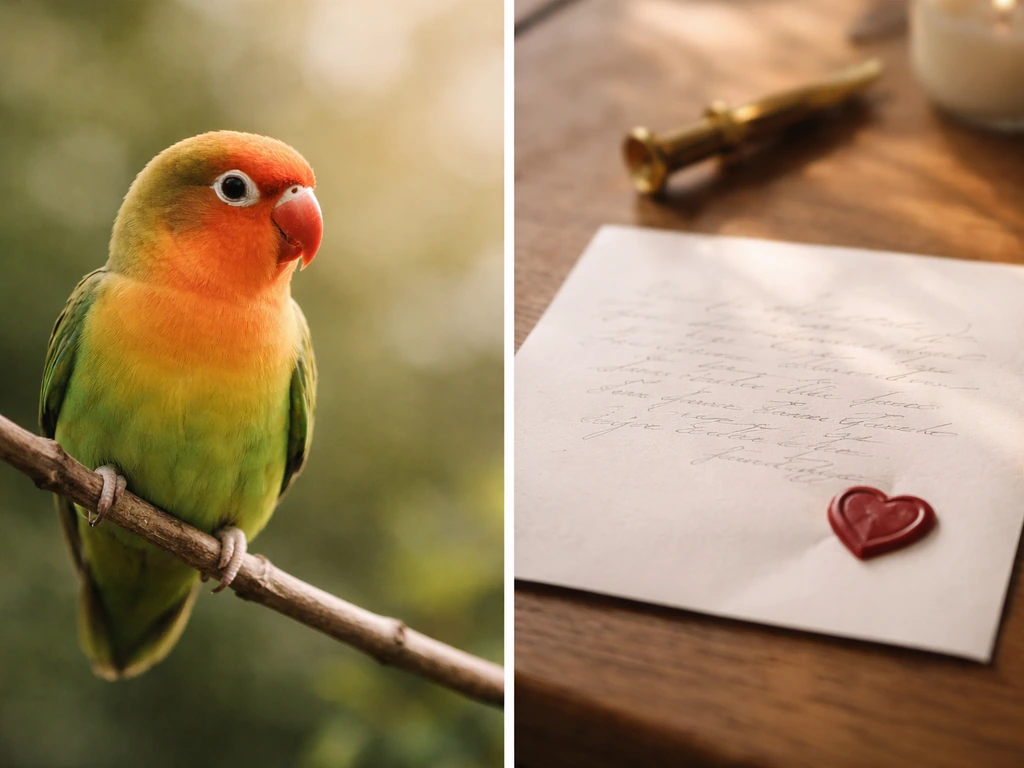
Oxford Learner's Dictionaries defines "lovebird" first and foremost as "a small African parrot" with bright feathers, and that's the baseline, dictionary-first meaning most language learners encounter. The bird itself has been called a lovebird in English since the 1590s. [Merriam-Webster, on the other hand, leads with the informal plural sense](https://www. merriam-webster.
com/dictionary/lovebird): "lovebirds" meaning people who are lovers or people who are in a romantic relationship. Dictionary. com covers both: the small parrot, a pair of lovers (especially a married couple), and even a single "lover" as an informal nickname. So the honest answer to the core question is that you have to read the room.
Is someone talking about a cage, a pet, and feeding schedules? That's the bird. Are they gushing about a couple who can't stop staring at each other at a dinner party? That's the romantic slang.
The figurative sense took its time arriving. According to Etymonline, the romantic meaning of "lovebird" as a term for a lover isn't attested until 1911, more than three centuries after the bird first picked up the name. That 300-year gap is telling. People watched these birds, noticed how bonded mating pairs were, and eventually the word made the natural jump into human relationship language. The same thing happens with sweet bird meaning, where a bird's behavior or perceived character becomes a stand-in for a human quality.
How "love bird" is used in everyday English
In everyday spoken and written English, "lovebirds" (plural) is by far the more common romantic usage. You'll hear it most when someone is describing a couple from the outside, often with a warm, slightly teasing tone. "Oh, look at those two lovebirds" is a classic sentence you'd hear at a wedding, a family dinner, or scrolling through social media captions. The word carries a sense of public display, that warmth and affection is visible to others and charming enough to comment on. It's affectionate slang, not a clinical label.
The singular "love bird" gets used differently. Someone might call a partner "my little lovebird" as a direct term of endearment, similar to calling them "sweetheart" or "darling." It's softer and more poetic than most pet names, which is probably why it tends to feel genuinely warm rather than corny. If you're curious how this kind of bird-based affectionate language works more broadly, the article on beautiful bird meaning explores how bird terms get layered with admiration and tenderness in English expression.
Context clues are your best friends for disambiguation. If the word appears next to terms like "cage," "breed," "parrot," or "pet," you're dealing with the literal bird. The moment you see "lovebirds" describing a couple, especially without any animal-care context, you're in figurative territory. Wikipedia's disambiguation page for "Lovebird" even notes that the capitalized "Love Birds" also shows up as media titles, meaning capitalization and surrounding context both matter when you're trying to pin down the meaning.
What "love bird" means in a relationship

In a relationship context, calling someone your lovebird or calling a couple "lovebirds" communicates something very specific: deep, visible, mutual affection. It's not just "they're dating." It implies warmth, closeness, and a sense that their bond is obvious to everyone around them. Dictionary.com specifically frames lovebirds as "a pair of lovers, especially a married couple" with close mutual love and concern, which captures exactly the emotional temperature the word conveys.
Psychology Today uses the phrase "lovebird relationship" to describe a dynamic that is warm, passionate, mutually supportive, and deeply satisfying. That framing tells you a lot about the connotation. Calling someone a lovebird in a relationship isn't neutral. It's a compliment wrapped in tenderness. It implies the relationship is affectionate, demonstrative, and that both people are genuinely invested. This is partly why the word works so well as a pet name. It doesn't just say "I like you." It says "you are someone worth being devoted to."
The gender angle is worth mentioning briefly. "Lovebird" is one of those rare terms of endearment that doesn't skew male or female by default. Unlike some bird-based nicknames that historically landed on one gender, "lovebird" tends to be applied to either partner in a couple, or to the couple as a unit. If you want to dig into how bird terms do sometimes carry gender coding in language, the pieces on female bird meaning and male bird meaning break that dynamic down with useful examples.
Why lovebirds became a symbol of affection in the first place
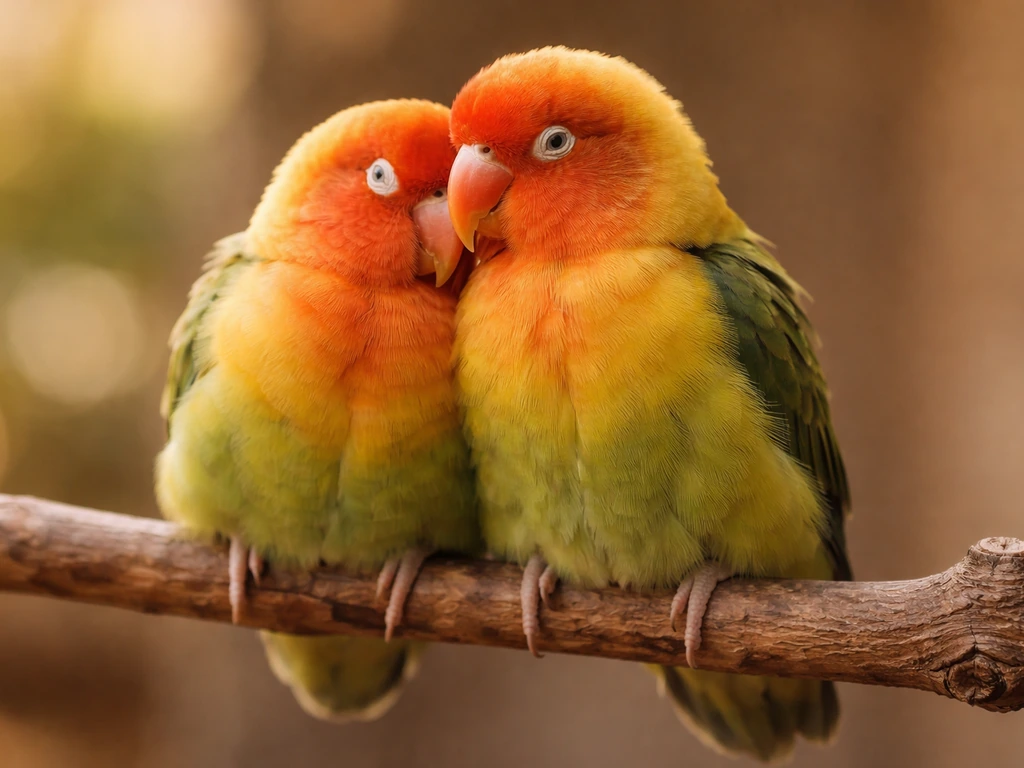
The symbolism didn't come out of nowhere. The actual birds, members of the genus Agapornis, are genuinely remarkable in their pair bonding. Wikipedia notes that lovebirds are social and affectionate animals, and their name is directly tied to the strong monogamous bonds mating pairs form. Pairs spend long stretches of time sitting close together, grooming one another, and feeding each other. Smithsonian Magazine has reported on how a lovebird that loses its mate can go through what can only be described as a complex and painful grieving process. These birds don't just look bonded; they behave in ways that genuinely mirror what humans associate with deep romantic commitment.
Etymonline puts it plainly: lovebirds were "noted for the remarkable attention mating pairs pay to one another," and that reputation is exactly what seeded the figurative meaning. When English speakers eventually started calling affectionate human couples "lovebirds" in the early 20th century, they were reaching for a comparison that their audience already understood. The birds had built the reputation; the romantic slang just borrowed it. This kind of symbolic borrowing from bird behavior into human language is a recurring pattern, and it's explored thoughtfully in the article on happy bird meaning, which looks at how bird-based positivity gets encoded in everyday English.
Petco's care guidance for lovebirds reinforces the symbolism from a practical angle: single lovebirds may bond with their owners but generally prefer to be kept in pairs. The bird's preference for partnership is so consistent that even pet care professionals build their advice around it. That behavioral reality, stretching back centuries of human observation, is what gave the word its romantic weight long before it became slang.
Literal bird vs. romantic slang: a quick comparison
| Feature | Literal Lovebird (the bird) | Figurative Lovebird (romantic slang) |
|---|---|---|
| Dictionary definition | Small African parrot (genus Agapornis) | Person in love; romantic partner; affectionate couple |
| First recorded in English | 1590s | 1911 |
| Typical usage | Pet care, bird descriptions, wildlife | Describing couples, terms of endearment |
| Common context clues | Cage, parrot, breed, feeding, pet | Couple, relationship, affection, partner |
| Singular vs. plural | Both common (one lovebird, two lovebirds) | Plural most common for couples; singular as a direct pet name |
| Tone | Neutral, descriptive | Warm, affectionate, slightly playful |
If you're choosing between readings and the context still feels ambiguous, go with the romantic meaning when people are being discussed and the literal bird meaning when animals or pets are the subject. That split handles the vast majority of real-world cases correctly.
How to read "love bird" correctly in any situation
The practical skill here is skimming for surrounding nouns and verbs. Four reliable signals point you to the literal bird: the word "pet" or "parrot" nearby, references to a cage or enclosure, mentions of a specific bird species or breed, and any number that suggests you're counting animals ("two lovebirds"). Four signals that you're in romantic-slang territory: the word is describing two people, there's emotional or relational language around it ("they're such lovebirds"), it's being used as a direct term of endearment toward a person, or it's appearing in a Valentine's Day, wedding, or anniversary context.
One genuine gray zone exists: song titles and media. Wikipedia's disambiguation entry flags that "Love Birds" and "Lovebird" appear as titles for songs and other creative works. In those cases, neither the bird definition nor the relationship slang may apply directly. You'd need to know the song or work itself to interpret the title's intent. But in everyday conversation and writing, that ambiguity is rare. Most of the time, context makes the intended meaning obvious within a sentence or two.
The expression also carries cultural staying power precisely because it isn't harsh or ironic. It belongs to the same warm register as sweet bird of truth meaning, where bird imagery is used to elevate and honor rather than diminish. Lovebird, in its romantic sense, is a genuinely flattering label. It says the relationship is visible, affectionate, and worth admiring. That's why it's persisted in English as informal slang for over a century without losing its warmth.
FAQ
If someone says “love bird” in a sentence, how can I tell whether they mean the parrot or the romantic slang?
Yes, but you can often tell by grammar. If it sounds like a noun referring to animals, it will usually pair with caretaking verbs or locations (feed, cage, enclosure). If it is endearment, it will usually attach to a person with possessives or direct address (my lovebird, you lovebird) or describe a couple with interpersonal phrasing (those lovebirds, such lovebirds).
Does the spelling difference between “love bird” and “lovebird” change the meaning?
A single word form often matters. “Lovebird” (one word) is the more standard dictionary spelling for both the bird and the slang term, while “love bird” (two words) is more likely to appear as a casual, spoken nickname. If you see “lovebird” used like a label for a couple, it is usually romantic, but checking the nearby nouns (pet, parrot vs partner, couple) is the reliable step.
When people say “lovebirds,” does it always mean the couple is married?
Not usually. “Lovebirds” as slang tends to suggest a warm, affectionate pairing, but it does not automatically specify marriage or long-term commitment. If you want a stricter read, look for qualifiers like “married,” “dating,” “engaged,” or “together,” since the term alone mainly communicates closeness and visible affection.
Is “lovebirds” always a compliment, or can it sound corny or teasing?
Yes, it can be slightly more teasing than purely sweet, especially when said by friends or family from the outside. In casual contexts, it often functions like “look at them” affection, whereas in serious or private communication, people more commonly use singular pet-name forms like “my lovebird” to sound more personal.
What if I see “two lovebirds” in a text, is it definitely about the parrot?
A good way to avoid misreading is to check whether the sentence points to countable entities. If there is a number like “two lovebirds,” or references to species or animal behavior, it is literal. If it is used for two people without animal-care context, it is figurative, even if the wording still sounds playful.
How should I interpret “Love Birds” or “Lovebird” when it appears in a song, book, or other media context?
It can be. Media titles and song names that use “Love Birds” or “Lovebird” may not match either meaning in conversation. If the sentence includes an artist name, album/track mention, or “lyrics,” interpret it as a title first. Otherwise, treat it as slang or the bird meaning based on the surrounding everyday context.
Is “lovebird” gendered, or does it work for either partner?
Sometimes, yes. “Lovebird” can overlap with other pet-name language, but it is generally neutral to gender. If you are translating, choose wording that conveys affectionate couple energy rather than a gendered label. If your target language has a gendered version of “darling,” prefer the form that works for any partner when the source sentence uses “lovebird” without specifying gender.
When is it especially easy to misinterpret “love bird” in a conversation?
One common mistake is assuming the term is romantic even in animal posts. If the text also mentions health, diet, breeding, toys, or cage setup, it almost certainly refers to the parrots and their pairing behavior. Another edge case is pet-owner talk about “my lovebird” as the nickname for a single bird, not a couple of humans.
Next Article
Amber Bird Meaning: Symbolism, Interpretations, and How to Use It
Learn amber bird meaning: disambiguate the phrase and interpret it using amber and bird symbolism, grounded steps includ