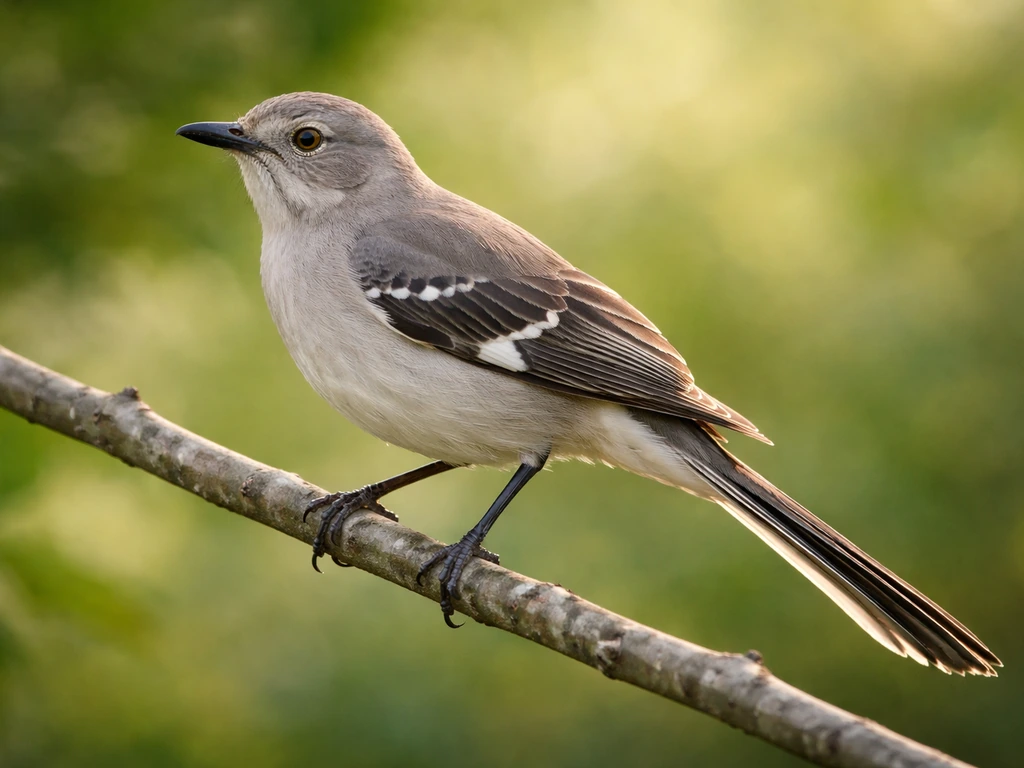
When someone writes 'mock bird,' they almost always mean 'mockingbird,' the real North American bird (Mimus polyglottos) famous for copying the songs of other species. The two-word spelling is an older variant, not a separate word or concept. That said, context matters: if the phrase appears in a sentence about ridicule or insult, the 'mock' part might be doing independent work, pointing toward mockery rather than the animal. Here's how to untangle which meaning is intended every time.
Mock Bird Meaning: Literal Definition and Figurative Use

Marcus Winters
28 May 2026
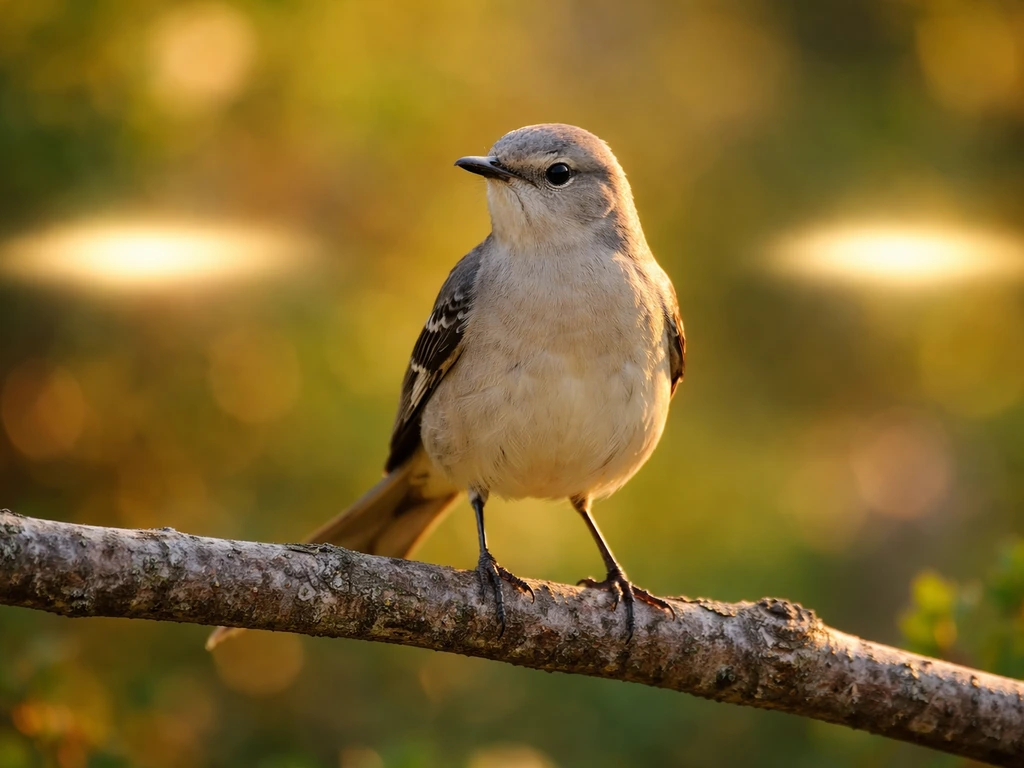
"Mock bird" vs. "mockingbird": what's actually the same word
The standard modern spelling is one word: mockingbird. Merriam-Webster, Cambridge, and every contemporary dictionary list it that way. But 'mock bird' and 'mocking bird' (with a space or hyphen) are genuinely older forms of the exact same term. Etymology Online traces 'mock-bird' back to the 1640s, built from 'mock' (the verb) plus 'bird.' Thomas Jefferson's family even wrote 'Mocking bird' with a space in 18th-century correspondence. Historical ornithological texts sometimes listed both 'Mock bird, mocking bird' together as equivalent names. So if you see the two-word version in an older book or an informal text today, it's not a different creature or a slang invention: it's just the same bird wearing an older coat.
The confusion gets compounded because 'mock' also exists as a standalone English word meaning to ridicule or imitate derisively. That double meaning is baked right into the bird's name, which is part of what makes 'mock bird' such an interesting phrase to decode.
Why 'mock' is in the name at all
The mockingbird genuinely earns its name. Oxford Academic’s “Auk” listing reflects formal research on Northern Mockingbirds’ singing behavior and repertoire size estimation, supporting studies of their vocal mimicry. The northern mockingbird can imitate the songs of 20 or more bird species within a single 10-minute stretch, according to Britannica. Cornell Lab's All About Birds describes their song as long strings of repeated phrases, each borrowed from a different source, cycling through them before switching again. The Smithsonian's National Zoo adds that their mimicry goes well beyond birds: mockingbirds have been recorded copying frogs, dogs, and even car horns, weaving them into their own vocal performance.
The word 'mock' in this context carries its older sense of 'derisive imitation,' the idea of copying something so precisely it almost makes fun of the original. Etymology Online connects the name directly to that notion: the bird's 'skill in imitation' was understood as having a derisive or taunting quality. It's not that the bird is being mean, but the act of perfect mimicry was culturally interpreted as a kind of sonic mimicry that bordered on mockery. That etymology is why 'mock bird' as a phrase feels loaded with meaning beyond simple bird identification.
The figurative life of 'mock bird': imitation, taunting, and commentary
Once you understand the bird's behavior, the figurative uses become obvious. Calling someone a 'mock bird' or comparing them to one can imply they're a mimic without original ideas, someone who copies others' styles, words, or opinions and passes them off as their own. There's a taunting edge to it: just as the mockingbird can parrot another bird so well it sounds like the original, a 'mock bird' in conversation can suggest a person who echoes and slightly exaggerates to ridicule.
In poetic or literary use, 'mock bird' can also represent the power of voice and song as commentary. The bird sings without agenda but manages to reflect the entire soundscape around it. That makes it a rich metaphor for satire, political commentary, or any act of 'holding up a mirror' through imitation. If someone uses the phrase in a creative or literary context, they're likely leaning on that layered meaning: not just copying, but copying in a way that exposes or comments on what's being copied.
Cultural symbolism: innocence, song, and the weight of mimicry
The mockingbird carries two somewhat contradictory symbolic threads in English-language culture. The first is innocence and harmlessness. Harper Lee's novel 'To Kill a Mockingbird' made this reading famous: SparkNotes and LitCharts both describe the central symbolism as the bird representing innocence, because mockingbirds 'cause no harm' and only sing. Killing one becomes a symbol for destroying something pure and blameless. That reading is so culturally embedded that most readers bring it to any 'mockingbird' reference automatically.
The second thread is mimicry as power or subversion. A bird that can perfectly copy any sound is both impressive and unsettling. Wikipedia notes the northern mockingbird appears across American book titles, songs, and lullabies, reflecting how deeply embedded the species is in the culture. Eminem's 2004 song 'Mockingbird' uses the bird's name not as a symbol of imitation but as a tender, personal title for a message to his daughter, showing how flexible the reference has become. The name carries emotional weight even when the mimicry symbolism isn't the primary point.
It's worth briefly noting that the mockingjay from The Hunger Games series is a related but distinct fictional bird. In a different context, the mockingjay bird meaning in The Hunger Games is tied to rebellion and remembering who you are. If someone references a 'mock bird' in a conversation about that franchise, they may be gesturing toward mockingjay symbolism, which carries its own layered meaning around rebellion and shifting identity, rather than the real mockingbird's associations. SparkNotes also notes that the mockingjay is a prominent Hunger Games symbol and that its meaning shifts somewhat over the story blank" rel="noopener noreferrer">mockingjay symbolism.
How to read the context and get the meaning right
The safest default interpretation of 'mock bird' is 'mockingbird, the animal.' But here are the context clues that shift the meaning:
| Context clue | Most likely meaning | Example |
|---|---|---|
| Discussing wildlife, nature, or birdsong | The actual bird (Mimus polyglottos) | "I heard a mock bird in the yard this morning" |
| Describing ridicule, insult, or teasing | Mockery or a person who mocks | "He's such a mock bird, always repeating what others say" |
| Literary or symbolic discussion | Innocence or harmless song (Harper Lee tradition) | "She was a mock bird in that situation, completely innocent" |
| Pop culture, music, or fandom context | Song title, Eminem reference, or Hunger Games adjacent | "That song sounds like a mock bird kind of vibe" |
| Historical or older written text | Older spelling of mockingbird | "The mock bird, common in these parts, imitates all sounds" |
A common misuse to watch for: people sometimes write 'mock bird' when they mean 'mockery' in a more abstract sense, especially in casual texting or social media. If you are also looking up the knock bird meaning, keep in mind the phrase may vary by context and source. That confusion can also show up as the hoax bird meaning, where the phrase is treated as if it refers to something fake or misunderstood mock bird.
If the surrounding sentence is about someone making fun of another person and there's no literal bird context, the 'bird' part is probably incidental slang or a shorthand, and the intended meaning is closer to 'taunt' or 'ridicule. ' In that case, treat it the way you'd treat any informal language: focus on the emotional intent behind the word, not the zoology.
Quick clarifications: mock bird, mockery, and related phrases
These three things get conflated but they're distinct:
- Mock bird / mocking bird / mockingbird: all refer to the same real bird, Mimus polyglottos, a North American species known for vocal mimicry. The spacing and hyphenation differences are historical variants, not different meanings.
- Mockery: an entirely separate noun meaning insulting or contemptuous speech or action (Cambridge defines it plainly as an 'insult'). If someone says the situation was 'a mockery,' they mean it was treated with contempt or ridicule, not that a bird was involved.
- Mockingjay: a fictional bird from The Hunger Games, not the same as a mockingbird. It carries rebellion and shifting-symbol meanings specific to that story.
- Mocking bird meaning in English: a search or phrase people use to look up the exact symbolism covered here, usually meaning they want both the literal definition and the figurative/cultural layer explained.
- Hoax bird or knock bird: separate bird-phrase idioms with their own distinct meanings, unrelated to mimicry or mockery in the mockingbird sense.
What to search next if you're still not sure
If you saw 'mock bird' in a specific text and still aren't certain which meaning was intended, here's a practical sequence to confirm it:
- Check the surrounding sentences for bird or nature language. If the context is about wildlife, outdoors, or animal behavior, you're dealing with the actual mockingbird.
- Look for emotional tone. If the surrounding text is angry, sarcastic, or describes someone being made fun of, the 'mock' is doing the heavy lifting and it means ridicule or imitation for laughs.
- Search 'mockingbird meaning' (one word) to get the full cultural and symbolic picture of the bird itself, including the Harper Lee symbolism and the mimicry behavior.
- If the context is a song or book title, search the exact title with the author or artist name. Many titles use 'mockingbird' as a reference that has little to do with the bird's actual behavior.
- If the text is old (pre-1900), treat 'mock bird' as straightforwardly equivalent to 'mockingbird.' The split spelling was standard then.
- If you still aren't sure after all that, the animal meaning is the safer default: it's the more common referent and the one most readers will land on first.
The deeper you go into mockingbird symbolism, the more you'll find it's one of the richer bird references in English, carrying layers of mimicry, innocence, and cultural commentary that make it appear in everything from 18th-century ornithology to 21st-century rap. Understanding why 'mock' is in the name is really the key that unlocks all of those meanings at once.
FAQ
If I see "mock bird" in a modern post, is it usually the animal or just slang for mocking someone?
In most modern writing, "mock bird" is still safest to treat as the animal name when it appears near words like bird, song, singing, or species. If it appears in a sentence about insulting, embarrassing, or imitating a person, it is more likely using "mock" in the ridicule sense and treating "bird" as incidental slang or a nickname, meaning the focus is the mockery, not any literal creature.
How can I tell whether the writer means "mock" (ridicule/taunt) versus "mock" (derisive imitation) when they say "mock bird"?
Look for whether the surrounding context is about copying. If the sentence mentions imitation, repeating, stealing ideas, parody, or style, it leans toward the derisive imitation flavor. If it is only about teasing or putting someone down, it is more likely plain ridicule without emphasizing mimicry.
Does "mocking bird" with a space always mean the same thing as "mockingbird" (one word)?
Yes. The spaced and hyphenated variants are older spellings of the same term, not a separate animal. If you want to avoid ambiguity today, using the modern one word form, "mockingbird," will match current dictionaries and most contemporary references.
Is there any situation where "mock bird" could refer to a different fictional bird like the mockingjay?
It can happen when the phrase appears in discussions of The Hunger Games, Hunger Games fan content, or related plot themes. If the topic is rebellion, districts, or identity memory, "mockingjay" symbolism is more likely, but "mock bird" alone is not enough to be sure, so check for Hunger Games specific references in the same paragraph.
What does it mean to call someone a "mocking bird" or "mock bird" in a figurative way?
Usually it suggests the person mimics others without original input, possibly exaggerating or echoing in a way that feels performative or taunting. The most common mistake is treating it as a compliment for talent, when the intent is often sharper, implying the imitation is used to expose hypocrisy or to ridicule.
Can "mock bird" ever mean something positive, or is it always an insult?
It can be positive or at least neutral when used as a poetic reference to voice, reflection, or the power of sound, not as a judgment about a person. Symbolically, the cultural innocence thread from literature can also make it feel gentle, especially when paired with language about harmlessness or singing rather than humiliation.
What should I do if I am trying to interpret a quote but only have the phrase "mock bird" with no surrounding sentence?
Without context, the article’s safest default is the real bird, the mockingbird. If you cannot find more text, treat the figurative meaning as secondary, then confirm by searching for the original passage, because figurative uses typically rely on nearby cues like ridicule verbs (tease, taunt, deride) or imitation cues (copy, echo, repeat).
Is "mock bird" related to "hoax bird" or "knock bird," and should I worry about those lookalikes?
Usually not. Those are separate phrase patterns that can become confused in searches, especially on informal platforms. Unless the original sentence explicitly signals fraud or tricking (for hoax) or uses "knock" language (for knock), "mock bird" should be interpreted according to the mockingbird or ridicule-tinged context.
If a text is clearly about the mockingbird's behavior, what details should I expect to connect to the phrase?
You will typically see references to mimicry, copying sounds, repeating phrases, or the idea of a voice that mirrors the environment. If those elements are present, the figurative meanings are usually built on the same imitation-and-exposure concept rather than the simpler idea of someone being mean.
Can the phrase be used to discuss satire or politics, and how do I recognize that?
Yes. If the writing is about commentary, exposure, or holding up a mirror, "mock bird" is likely being used as a metaphor for imitation that reveals something about the target. A practical clue is the presence of words tied to critique (commentary, satire, expose) rather than purely interpersonal insults.
Next Article
Mockingbird Bird Meaning: Literal and Symbolic Interpretations
Get literal mockingbird definition plus symbolic meanings, from mimicry to folklore, idioms, and how to interpret what y