When someone writes 'mocking bird' or 'mockingbird' in English, they are almost always referring to one of two things: the actual bird (a North American songbird famous for copying other birds' songs), or a figurative label for a person who imitates, mimics, or mocks others. The literal meaning comes first in any dictionary, but the figurative use is everywhere in lyrics, quotes, and everyday conversation. If you also came here for the knock bird meaning, use the surrounding context the same way, because figures of speech shift with tone. Knowing which one fits is usually a matter of checking the context around it, and this guide walks you through exactly how to do that. If you are also searching for hoax bird meaning, use the same context-checking idea to separate literal bird definitions from misleading or playful claims.
Mocking Bird Meaning in English: Animal vs Figurative Use

What 'mockingbird' literally means in English
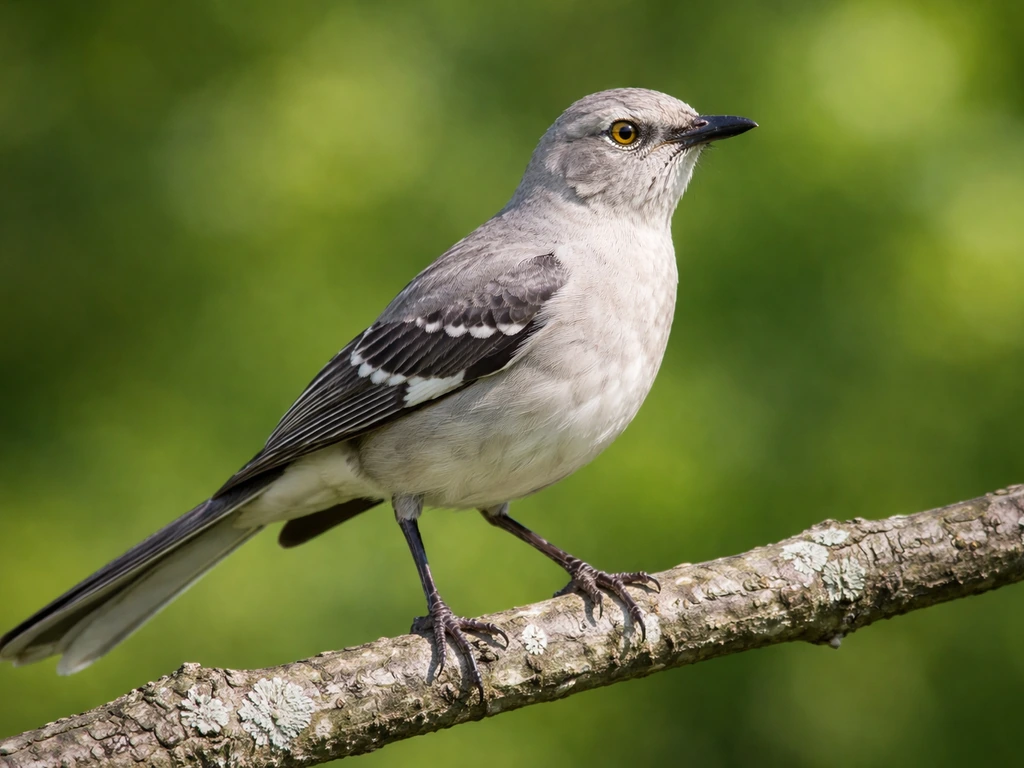
Every major English dictionary agrees on the core definition. blank" rel="noopener noreferrer">Merriam-Webster lists mockingbird as a single headword and defines it as a North American songbird in the genus Mimus, specifically known for its ability to mimic the calls of other bird species. Cambridge Dictionary describes it the same way: a bird that copies the songs of other birds. Oxford Learner's Dictionaries gives the British pronunciation as /ˈmɒkɪŋbɜːd/ and keeps the meaning squarely on the bird itself. Dictionary.com broadens it slightly by noting that 'mockingbird' blank" rel="noopener noreferrer">can also refer to other related or similar species beyond just the Northern Mockingbird, but the defining characteristic across all entries is the same: this is a bird that imitates.
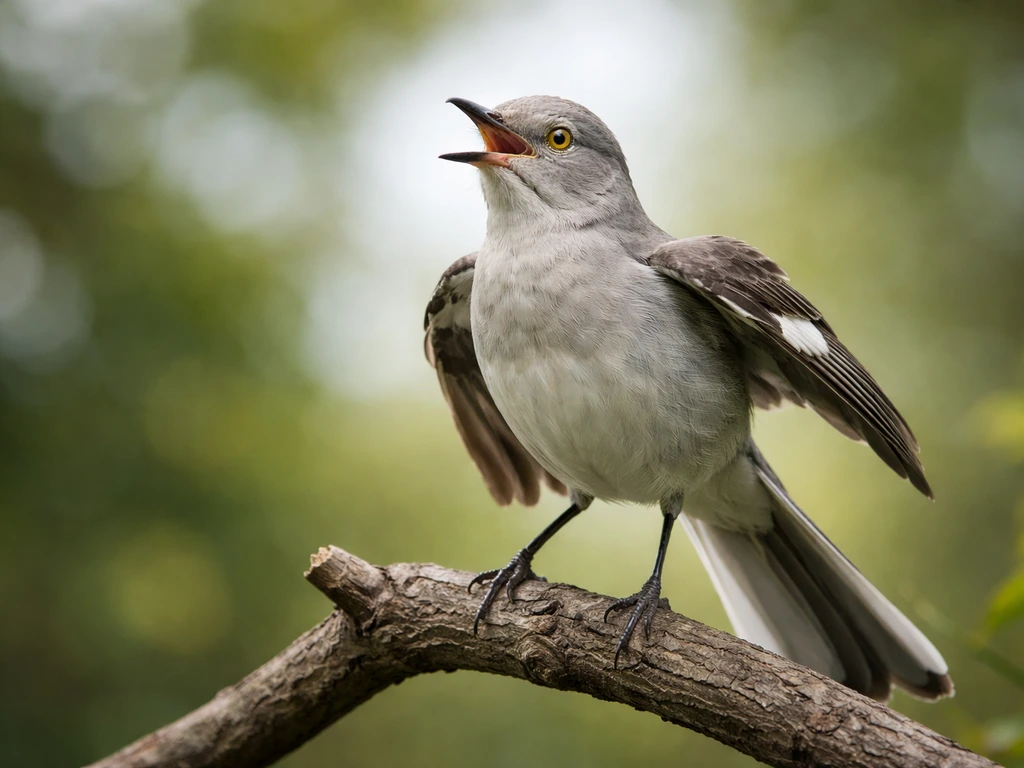
The Northern Mockingbird (Mimus polyglottos) is the most commonly referenced species. It can learn and reproduce dozens of other birds' songs, sometimes hundreds over a lifetime. That real biological behavior is the entire reason the word carries the meaning it does. When you hear someone say 'mockingbird,' the animal itself is a genuinely impressive mimic, not just a poetic invention.
One word or two? Spelling it out
All three major dictionaries (Merriam-Webster, Oxford, Cambridge) treat this as a single compound word: mockingbird, no hyphen, no space. The two-word version 'mocking bird' is an older or informal spelling you will sometimes see in historical texts, song lyrics, or casual writing, but it refers to exactly the same thing. If you search 'mocking bird meaning in English,' you are looking for the same answer as 'mockingbird meaning.' The spelling does not change the meaning.
The figurative meanings people actually mean

Outside of a literal conversation about birds, 'mockingbird' is used figuratively to describe a person (or sometimes a piece of media, an account, or a style) that imitates someone else without adding anything original. The connotation can go in a few different directions depending on tone.
- Imitation without credit: Calling someone a mockingbird can mean they copy other people's ideas, speech, or creative work and pass it off as their own.
- Teasing or mocking: The 'mock' part of the word connects directly to mockery, so a mockingbird can also mean someone who ridicules or parodies others.
- Harmless mimicry: In a gentler context, it is used affectionately for someone who picks up accents, catchphrases, or mannerisms quickly, almost like a compliment about their social intelligence.
- Innocence and vulnerability: Thanks largely to Harper Lee's novel 'To Kill a Mockingbird,' the bird also symbolizes someone who is innocent and does no harm but gets hurt anyway. In this sense, calling someone a mockingbird is sympathetic, not critical.
- A mouthpiece or echo: In political or online contexts, a 'mockingbird' can label a person or outlet that simply amplifies someone else's talking points without independent thought.
Those meanings are genuinely different from each other, which is why context matters so much. 'You're such a mockingbird' said to a friend who just adopted your slang is friendly. The same phrase in a heated argument about plagiarism carries a much sharper edge.
Who gets called a mockingbird and when
People use 'mockingbird' as a label in a few specific situations, and recognizing the pattern helps decode the meaning fast.
- Copycats in creative spaces: Artists, musicians, and writers accuse rivals of being mockingbirds when they believe their work has been imitated without credit or originality.
- Social mimics: Someone who constantly echoes group opinion or repeats what the most popular person in the room says might get called a mockingbird, usually with a hint of dismissiveness.
- Parody accounts or satirists: Online, a mockingbird account is one that deliberately mimics another account's style to mock it, similar to a parody but with a sharper edge.
- Innocent targets: In literary or symbolic usage following Harper Lee's tradition, a mockingbird is someone gentle and blameless who becomes a victim of circumstances or prejudice.
- Political echo chambers: In commentary and journalism, 'mockingbird media' is a phrase used to describe outlets seen as uncritically repeating a particular narrative or agenda.
Why English landed on 'mocking' for this bird
The word mockingbird is a straightforward compound of 'mocking' (from the verb 'to mock,' meaning to imitate or ridicule) and 'bird.' The name dates back to at least the early 18th century in American English, and it stuck because the behavior was so obvious. Early English settlers in North America heard this bird reproduce the calls of cardinals, jays, wrens, and dozens of other species in rapid sequence, and 'mocking' was the most natural description for that behavior. The Latin species name, Mimus polyglottos, means 'many-tongued mimic,' which tells you naturalists and everyday speakers landed on exactly the same concept independently.
The word 'mock' itself comes from Old French 'mocquer,' meaning to deride or make fun of. By the time English speakers were naming birds in the New World, 'mocking' had both meanings firmly in place: to imitate and to ridicule. The mockingbird's behavior fit both senses perfectly, which is why the figurative leap from 'bird that copies songs' to 'person who copies or mocks people' was so natural and lasted so long.
Related phrases and bird expressions in the same territory
Mockingbird does not sit alone in this corner of the English language. Several related bird terms and expressions deal with the same themes of imitation, deception, and mimicry, and you will often see them used in similar contexts.
- Mockingjay: A fictional hybrid bird from the Hunger Games series, the mockingjay borrows the mockingbird's mimicry theme but adds a layer of rebellion and resistance. The two terms overlap in symbolism but differ sharply in origin (one is a real bird, one is invented fiction).
- Parrot: 'Parroting' someone means repeating their words without understanding, similar to the mockingbird label but usually implying less creative imitation and more rote repetition.
- Copycat: While not a bird term, copycat and mockingbird are often used interchangeably in casual speech, though mockingbird carries more literary and emotional weight.
- Mock bird: An older or regional variant spelling of mockingbird, sometimes seen in folk songs and 18th- or 19th-century texts. It means the exact same bird.
- Hummingbird, canary, and other bird labels: Many birds carry figurative meanings in English slang and symbolism, and the mockingbird sits in a category alongside birds associated with vocal performance and personality traits rather than physical ones.
If you run across 'mock bird' in an older text, that is simply an archaic way of writing mockingbird. And if you see 'mockingjay,' that is a deliberately invented word building on the mockingbird's established symbolism. The mockingjay bird meaning is closely connected to this mockingbird idea of imitation and symbolic role. Both are worth understanding separately from the standard mockingbird entry.
How to figure out which meaning fits: examples and a quick checklist
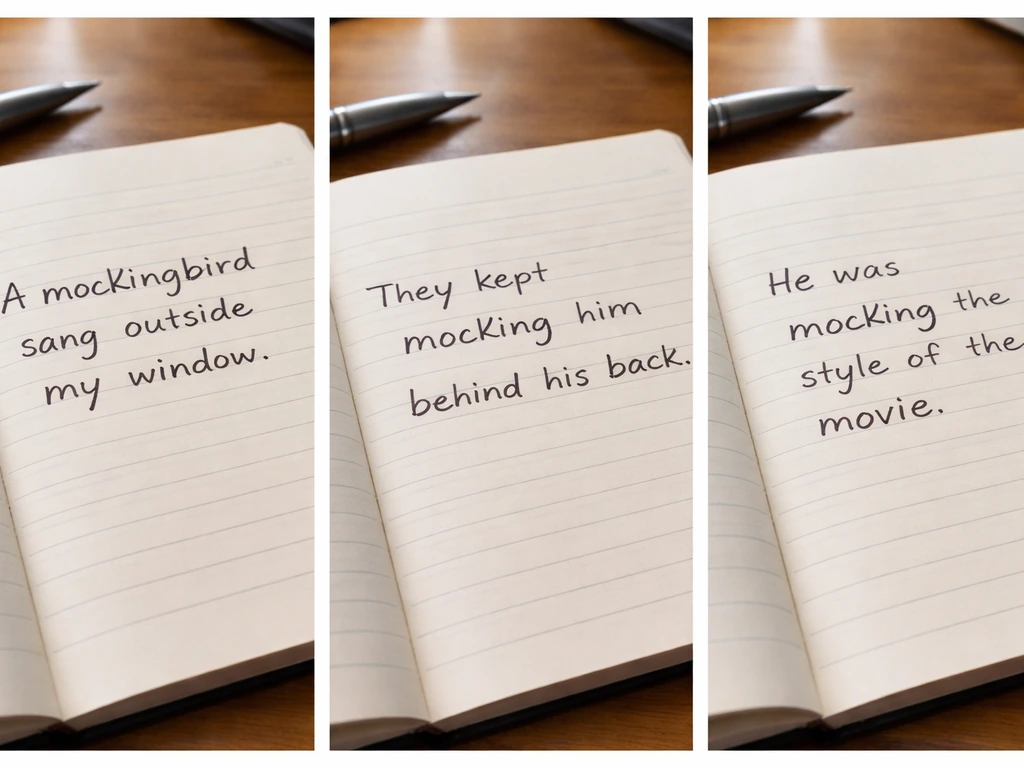
Here are three quick real-world examples showing how the same word shifts in meaning based on what surrounds it.
- 'A mockingbird was singing outside my window all night' — This is about the literal bird. There is no figurative layer here.
- 'She is such a mockingbird, she copies everything he says at meetings' — This is figurative, describing imitative behavior, with a mildly critical tone.
- 'In the novel, Tom Robinson is a mockingbird: he never hurt anyone' — This is symbolic, drawing on Harper Lee's usage where the bird represents innocence wrongly harmed.
Quick checklist for reading 'mockingbird' in context
| Question to ask | If yes, it probably means... |
|---|---|
| Is it in a sentence about nature, wildlife, or actual birds? | The literal bird species |
| Is someone being described or labeled with it? | A figurative comment on imitative or mocking behavior |
| Is the tone sympathetic and the subject seems innocent or wronged? | The Harper Lee symbolic sense: blameless victim |
| Is it attached to words like 'media,' 'account,' or 'outlet'? | A political or social critique about uncritical repetition |
| Is it in song lyrics or a title (especially older music)? | Often literal, but check if the lyrics use bird imagery metaphorically |
| Is the spelling 'mocking bird' (two words) vs 'mockingbird' (one word)? | Same meaning either way; spelling does not change interpretation |
The fastest shortcut: if a person is being called a mockingbird, it is figurative. If a bird is being called a mockingbird, it is literal. The moment a human being enters the sentence as the subject, the meaning shifts from the animal to its symbolic qualities.
One last thing worth noting: this word carries genuine emotional range. Depending on how it is used, being called a mockingbird can be an accusation of plagiarism, a gentle tease about picking up someone's habits, or a form of sympathy for someone being treated unjustly. Getting the context right is not just a vocabulary exercise, it actually tells you how the speaker feels about the person they are describing.
FAQ
Is “mocking bird” (two words) ever different from “mockingbird” in meaning?
In modern English, no. The two-word spelling usually appears in older texts, lyrics, or casual writing, and it refers to the same bird and the same figurative idea as mockingbird.
How can I tell if “mockingbird” is literal or figurative when the sentence is ambiguous?
Check whether the subject is a human or an actual bird. If a person, character, or account is doing the “mocking,” it is figurative. If the sentence talks about calls, songs, habitats, or the bird itself, it is literal.
Can “mockingbird” be used to criticize someone for bullying, or is it only about imitation?
It often points to imitation or copying, but the tone can widen it into ridicule or cruelty. If the surrounding words include “laughing at,” “making fun,” or “undermining,” it is usually more negative than “teasing.”
What does it mean if someone calls an inanimate thing a “mockingbird,” like a show or account?
Speakers sometimes use it figuratively for media, brands, or online accounts that imitate others without creating anything original. The meaning usually depends on whether the text frames it as harmless parody or intentional copying.
Does “mockingbird” ever carry a positive meaning?
Yes. With friendly wording, it can mean someone is quickly picking up others’ expressions or style. If the sentence includes compliments or warmth, the implication is more playful than accusatory.
Is there a common mistake when searching for “mocking bird meaning in english” online?
People often mix it up with other “bird” phrases that shift meaning by context, like knock bird or hoax bird. The safest approach is to interpret the expression based on the words around it, not just the standalone phrase.
How should I interpret “You’re such a mockingbird” if it’s said in a disagreement?
In a heated argument, it commonly signals that the other person is repeating ideas, copying behavior, or mocking someone else. In that setting, the emotional charge is often closer to accusation than friendly teasing.
Is there any grammatical cue that signals whether “mockingbird” is figurative?
If you see typical human-target phrasing, such as “he/she is a mockingbird,” “you’re acting like a mockingbird,” or “don’t be a mockingbird,” it is figurative. If you see noun phrases tied to animals, like “the mockingbird sings,” it is literal.
Hoax Bird Meaning: What It Really Means and How to Verify
Hoax bird meaning explained with word breakdown, context cues, examples, and steps to verify possible misinformation fas