
"A little bird told me" means you have information but you're not going to reveal your source. That's the whole thing. When someone says it, they're signaling: I know something, I heard it from someone, and I'm keeping that person's name to myself. Cambridge Dictionary puts it plainly: the phrase is used, often in a humorous or teasing way, to say that you're not going to disclose who told you something. Collins agrees: it's a way of saying you won't explain how you found out. The idiom isn't mysterious once you strip it down. It's a polite, sometimes playful way of protecting a source while still sharing the goods.
A Little Bird Told Me Meaning: Usage, Examples, and Tips

Marcus Winters
19 Apr 2026
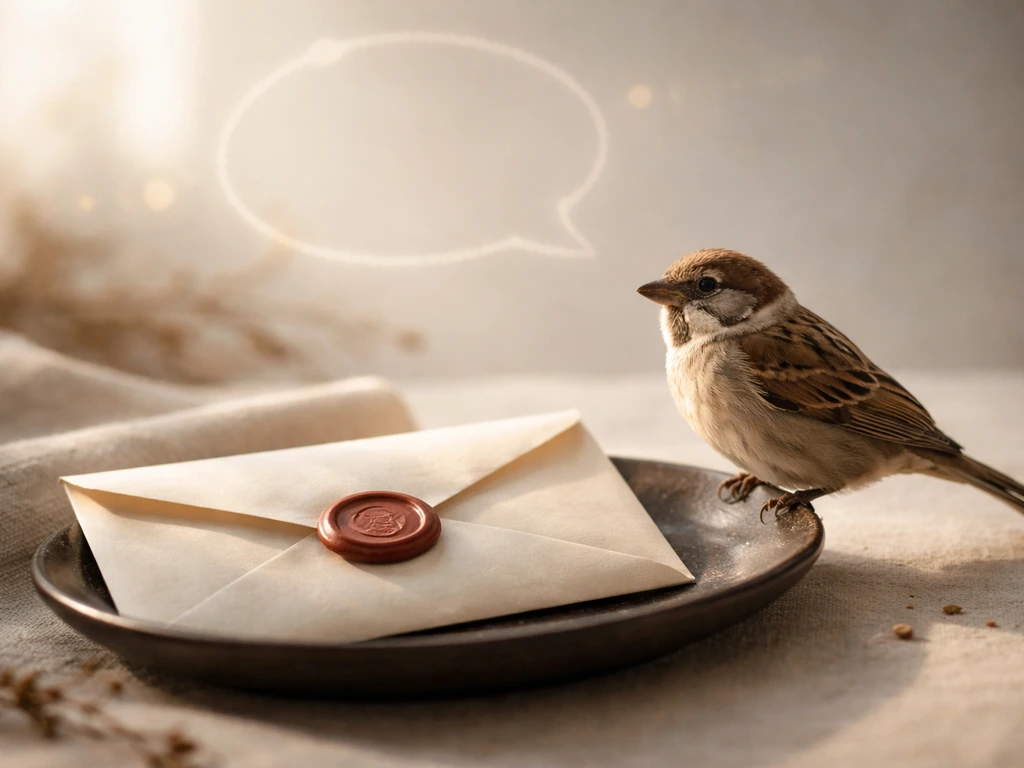
What the phrase actually means

The core meaning is simple: "I received information from a source I'm not prepared to disclose." That's Wiktionary's take, and it's a clean definition. Wiktionary explains that “a little bird told me” conveys you got information from a source you are not prepared to disclose, and that it is often used more comically than seriously Wiktionary's take. You know something, someone told you, and you're keeping that person's identity private. The "little bird" is a stand-in for the unnamed informant. It's not a literal bird. It's a rhetorical device that lets you share information while deflecting the natural follow-up question: "Who told you that?"
The phrase has been a fixed part of English for at least two centuries. One of the earliest printed versions appears in Frederick Marryat's 1833 novel Peter Simple, where the wording is "a little bird has whispered a secret to me." There are also Shakespeare-era candidates with similar bird-and-news imagery, and researchers have noted the phrase likely drew on much older traditions of birds as information carriers. By modern usage, though, its connection to any biblical or ancient origin is mostly worn away. It's become what linguists call a conventional idiom: a fixed phrase whose meaning you can't figure out word-by-word. Nobody hearing it today thinks an actual bird delivered the news.
The tone behind it: playful secrecy, not evasion
The connotation matters as much as the definition. "A little bird told me" doesn't sound defensive or suspicious. It sounds light, almost teasing. That's deliberate. The phrase carries a built-in wink. When you use it, you're acknowledging that you have insider knowledge, but you're framing the whole thing as slightly mysterious and fun rather than secretive or shifty. It often comes with a smile or a raised eyebrow.
Compare it to just saying "I can't tell you who told me." That sounds guarded and a little cold. "A little bird told me" covers the same ground but keeps the mood friendly. It's most at home in casual conversation, though it can appear in professional settings when someone wants to soften the fact that they received confidential or insider information. A language-teaching guide for business English actually uses it in exactly that context: mentioning insider knowledge about a company deal without naming the contact. The phrase does the work of protecting a source without making the conversation awkward.
When to actually use it
This idiom fits any situation where you want to share information but keep the source private. That covers a wide range of everyday moments:
- You heard from a mutual friend that someone is job hunting, but you don't want to name the friend
- You found out about a surprise party and want to tease the person planning it without revealing who slipped up
- You have informal intel at work (from a colleague, an overheard conversation, or an inside contact) and want to reference it without putting anyone in an awkward spot
- You're joking around with family or close friends, and the mystery of the source is part of the fun
- You want to let someone know they've been talked about without revealing exactly who said what
It doesn't work well in formal, high-stakes situations where people need verified sources, like a legal setting, a serious medical discussion, or any context where "who told you" is genuinely important. In those moments, the playful tone backfires. But in everyday social and informal professional conversations, it's a smooth, low-friction way to share information responsibly.
Idiom in action: example sentences

Seeing the phrase in context makes it click faster than any definition. Here are several sentence patterns, from casual to slightly more formal, that show how the idiom naturally slots into conversation:
- "Oh, let's just say a little bird told me you're thinking about quitting." (teasing, casual, mildly confrontational)
- "A little bird told me it's someone's birthday today!" (warm, celebratory, no need to reveal the source)
- "I heard you've been promoted. A little bird told me before the official announcement." (informal workplace, insider knowledge)
- "How did you know about the party? A little bird told me." (deflecting the question, keeping it light)
- "A little bird told me the deal almost fell through last week." (professional context, protecting a contact)
- "Don't ask me how I know. Let's just say a little bird told me." (explicitly deflecting, slightly dramatic)
- "A little bird told me you've been asking around about me." (playful confrontation, flirty or teasing tone)
Notice how the meaning stays consistent across all of these, but the emotional register shifts depending on context. It can be warm, cheeky, mildly confrontational, or professionally neutral. The idiom is syntactically fixed, meaning it almost always appears in the exact form "a little bird told me" rather than variations like "a small bird informed me" or "a tiny bird said." Those alternatives would sound odd and miss the idiom entirely.
Closest synonyms and how they compare
Several expressions cover similar ground, but each has a slightly different feel. Knowing the differences helps you pick the right one for the moment.
| Expression | Core meaning | Tone | Key difference |
|---|---|---|---|
| A little bird told me | I know, but I won't say who told me | Playful, light, teasing | Most idiomatic; implies deliberate source protection with a wink |
| Heard it through the grapevine | I picked it up informally, through word of mouth | Casual, sometimes uncertain | Focuses on the informal chain of information, not source protection |
| I've heard rumors | I have unverified information | Neutral to cautious | Implies the information may not be reliable; no playful tone |
| Word on the street is... | People are saying... | Casual, slightly street-smart | Suggests widespread talk, not a single private source |
| I can't say who told me, but... | Same as 'a little bird told me' but blunt | Direct, slightly guarded | Lacks the warmth and humor; sounds more defensive |
| A little birdie told me | Same meaning, slight variation | More childlike, very casual | Informal variant; slightly softer and more whimsical in tone |
"Heard it through the grapevine" is probably the closest match in everyday use. Both phrases involve informal, indirect information and a reluctance to name sources. But "through the grapevine" usually implies the information traveled through multiple people and may have mutated along the way, while "a little bird told me" suggests a single, specific (if unnamed) informant. If you want to imply precision and deliberate secrecy, go with the little bird. If you want to convey that something is general gossip or common knowledge, the grapevine fits better.
Birds as messengers: why a bird and not a person?
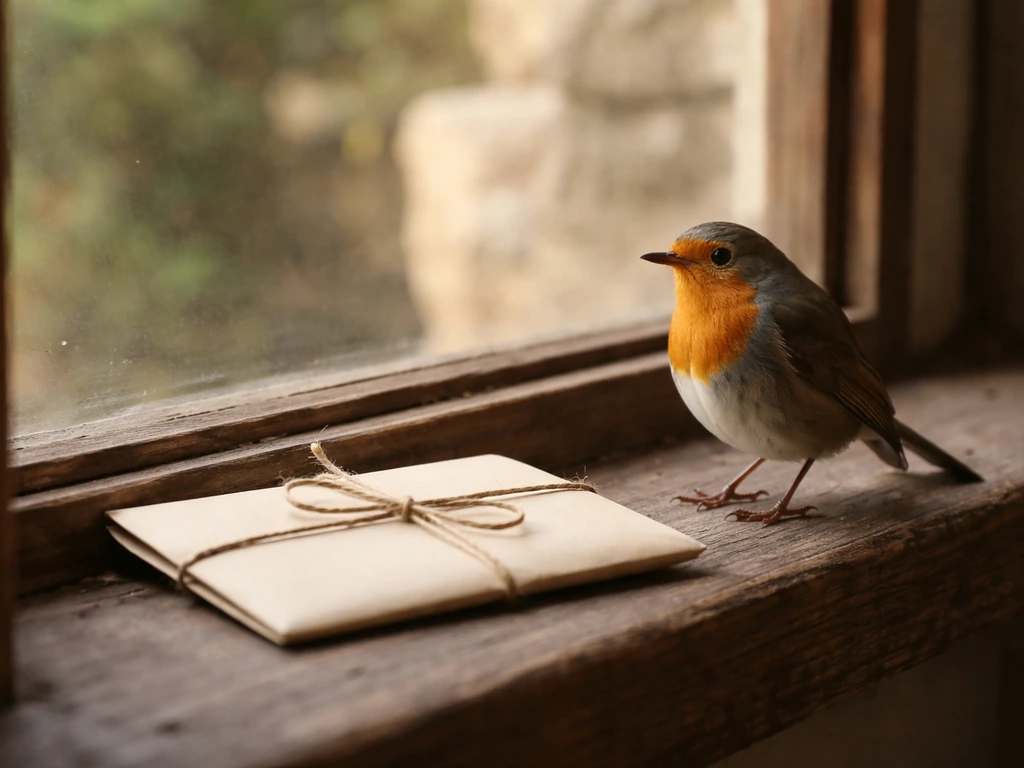
It's worth pausing on the image itself. Why a bird? Why not "a little mouse told me" or "a little shadow told me"? The answer is rooted in thousands of years of cultural history connecting birds to messages, omens, and divine communication. Birds have occupied a unique symbolic space across nearly every major folklore tradition: they move between earth and sky, they appear and vanish quickly, and their calls have long been interpreted as carrying meaning from a world humans can't fully access.
Ernest Ingersoll's classic work Birds in Legend, Fable and Folklore documents traditions from multiple cultures where birds serve as messengers, whisperers, and carriers of secret knowledge. In Norse mythology, Odin's ravens Huginn and Muninn flew across the world and returned to whisper what they'd seen. In ancient Greek augury, the behavior and direction of birds was read as divine communication. In Ecclesiastes 10:20 (King James Version), there's a line that reads "a bird of the air shall carry the voice" as a warning not to speak ill of the powerful even in private. This verse is one of the candidates scholars have pointed to as a possible root of the idiom's imagery.
PBS has also suggested that the saying might have been literally inspired by the use of carrier pigeons and messenger birds, a technology that was real and meaningful well into the 19th century. The idea of a bird arriving with information wasn't purely metaphorical to earlier generations. It was a real and sometimes urgent form of communication. That history makes the idiom feel less arbitrary. When you invoke a "little bird," you're (without necessarily knowing it) tapping into a very old cultural shorthand for winged, mysterious, untraceable information. This also shows up in name-meaning discussions, where “little bird” is often treated as a symbol of gentle communication and sweetness. If you're looking for the henry lee name version, see a little bird lit down on henry lee meaning as a related option. In some contexts, people also use “Evelyn meaning little bird” to connect the name Evelyn with the same idea of a small bird.
This same symbolism shows up across related expressions and themes. The image of a small bird as a carrier of whispered truths connects broadly to how bird language works throughout English idiom and folklore, from the idea of birds as omens to the way specific birds carry meaning in songs and poems. The "little bird" in this phrase isn't just a dodge. It's a small piece of a much larger tradition. If what you mean is the name phrase itself, the pretty little bird meaning explains the symbolism behind it. This little bird meaning is essentially about sharing information while keeping the source unnamed. If you're curious about that concept, this little bird meaning is closely tied to the idea of using a bird image to keep information discreet. This that could abash the little bird meaning is about using the idiom to indicate insider information without naming the person who told you.
How to use it today without getting it wrong
Using this idiom correctly comes down to a few practical points. Get these right and it lands well. Get them wrong and it either sounds odd or gives the wrong impression.
Use the fixed form
Stick with "a little bird told me." The phrase is syntactically fixed as a multiword unit. Variations like "a small bird informed me" or "a little bird mentioned to me" don't work as idioms. The only common variant is "a little birdie told me," which is even more casual and slightly more playful, often used with children or in very light-hearted adult conversations.
Match it to informal or semi-formal contexts
This phrase thrives in casual conversation and soft professional settings. It doesn't belong in formal writing, official reports, or situations where source credibility is being scrutinized. If your audience needs to know exactly where you got your information, this phrase will frustrate rather than charm.
Don't use it to spread unverified rumors
The phrase signals that you're protecting a real source, not that the information is uncertain or unconfirmed. Using it to float a rumor you're not sure about crosses a line. If your information is shaky, phrases like "I've heard rumors" or "I'm not sure, but I heard..." are more honest. "A little bird told me" implies you believe what you're saying.
Don't explain the bird
This sounds obvious, but: don't follow up by saying who the "little bird" was. The entire point is deliberate vagueness. The moment you reveal the source, the idiom has done its job (or failed to do it). If someone presses you with "okay, but who actually told you," the right move is to stay playful: "That's why it was a little bird, not a person with a name."
Common mistake: treating it as a literal statement

No one should need this reminder, but it's worth saying: this is not a statement about an actual bird. Non-native English speakers learning the phrase sometimes understand the words but miss the idiom, particularly because it's such a vivid and specific image. If someone responds to "a little bird told me" by asking what kind of bird, or looking confused, that's usually a signal to clarify: it means you heard it from someone but you're keeping their name private.
FAQ
Does “a little bird told me” imply the information is just a rumor?
No, it does not mean the information is unreliable. It signals that you are sharing something you believe to be true, while declining to disclose the person who told you. If you truly are uncertain, use a honesty-first option like “I heard this, but I’m not sure” instead.
Can I use “a little bird told me” if I found the info in an email or document instead of a person?
In general, it is fine when the source could be a person, email, document, or conversation, as long as you are intentionally withholding the identity. The idiom is about not naming the informant, not about how the information traveled.
Is it appropriate to use this idiom at work when the topic requires verification?
Yes, but be careful with expectations. If you’re dealing with safety, legal responsibility, medical decisions, or policy matters where verification matters, the phrase can sound like you are dodging accountability. In those cases, it is usually better to provide verifiable details (who, when, where) or say you cannot disclose but will summarize the evidence.
What wording variations are acceptable, and which ones will sound wrong?
It is usually better to keep it to the exact pattern. The most common alternative is “a little birdie told me,” which is softer and more playful. Other substitutions like “a small bird informed me” can feel unnatural and stop reading as the idiom.
What should I say if someone presses me, “Okay, but who told you?”
When someone asks for the source, you can respond with a light deflection that keeps the intent clear, for example, “I can’t share that part” or “That’s the point of the expression.” Avoid turning it into a debate about whether you are lying, if you want the tone to stay friendly.
How can I make the phrase sound more like real news and less like teasing?
It can, especially if you include extra context that suggests the information is confident, current, and specific. If you add statements like “I’m hearing this is happening this week,” it can sound less teasing and more informative. Without any extra framing, it may come off as a playful hint rather than a firm update.
Is it safe to use the idiom when confidentiality rules might apply?
It generally should not be used to imply you received personal, confidential, or legally sensitive information when you cannot legally disclose it. In sensitive contexts, consider a safer alternative like “I’m not able to comment on the source” or “I can only share the general outcome.”
What if I used the idiom but realize I’m not completely sure?
Yes. If you tell someone “a little bird told me” and then immediately correct yourself with “actually, I don’t know,” you create confusion because the idiom assumes belief in what you’re saying. If uncertainty exists, use uncertainty language upfront.
When should I choose “a little bird told me” versus “heard through the grapevine”?
If you want to share something indirectly but not emphasize secrecy, choose “heard through the grapevine.” If you want to emphasize a specific unnamed informant, choose “a little bird told me.” The difference is precision versus diffusion of the info.
Next Article
Amber Bird Meaning: Symbolism, Interpretations, and How to Use It
Learn amber bird meaning: disambiguate the phrase and interpret it using amber and bird symbolism, grounded steps includ