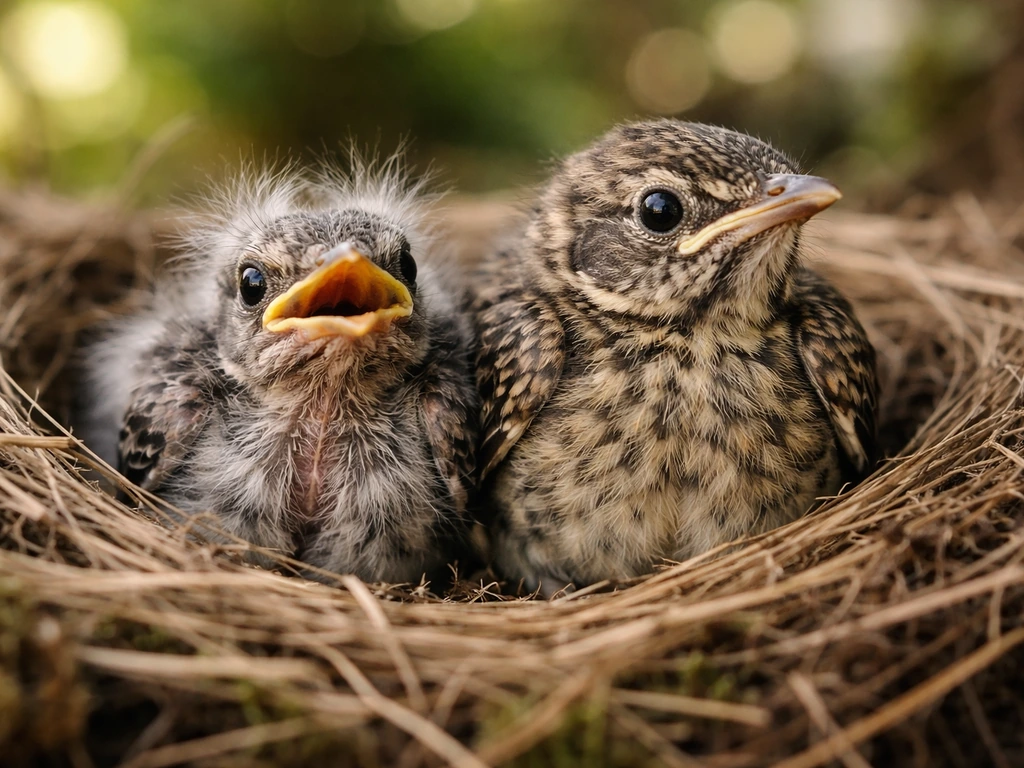
A nestling bird is a young bird that hasn't yet grown most of its adult feathers and still depends entirely on the nest and its parents to survive. In other words, a young bird meaning is often connected to helplessness, early development, and needing care before it can survive on its own. It can't fly, can't regulate its own body temperature well, and can't feed itself. That's the literal meaning. Figuratively, "nestling" carries all of that with it: when the word appears in everyday language, poetry, or cultural expression, it almost always signals vulnerability, new beginnings, complete dependence, and the kind of tender care that helpless young things require.
Nestling Bird Meaning: Real Life and Symbolism Guide

Marcus Winters
11 May 2026
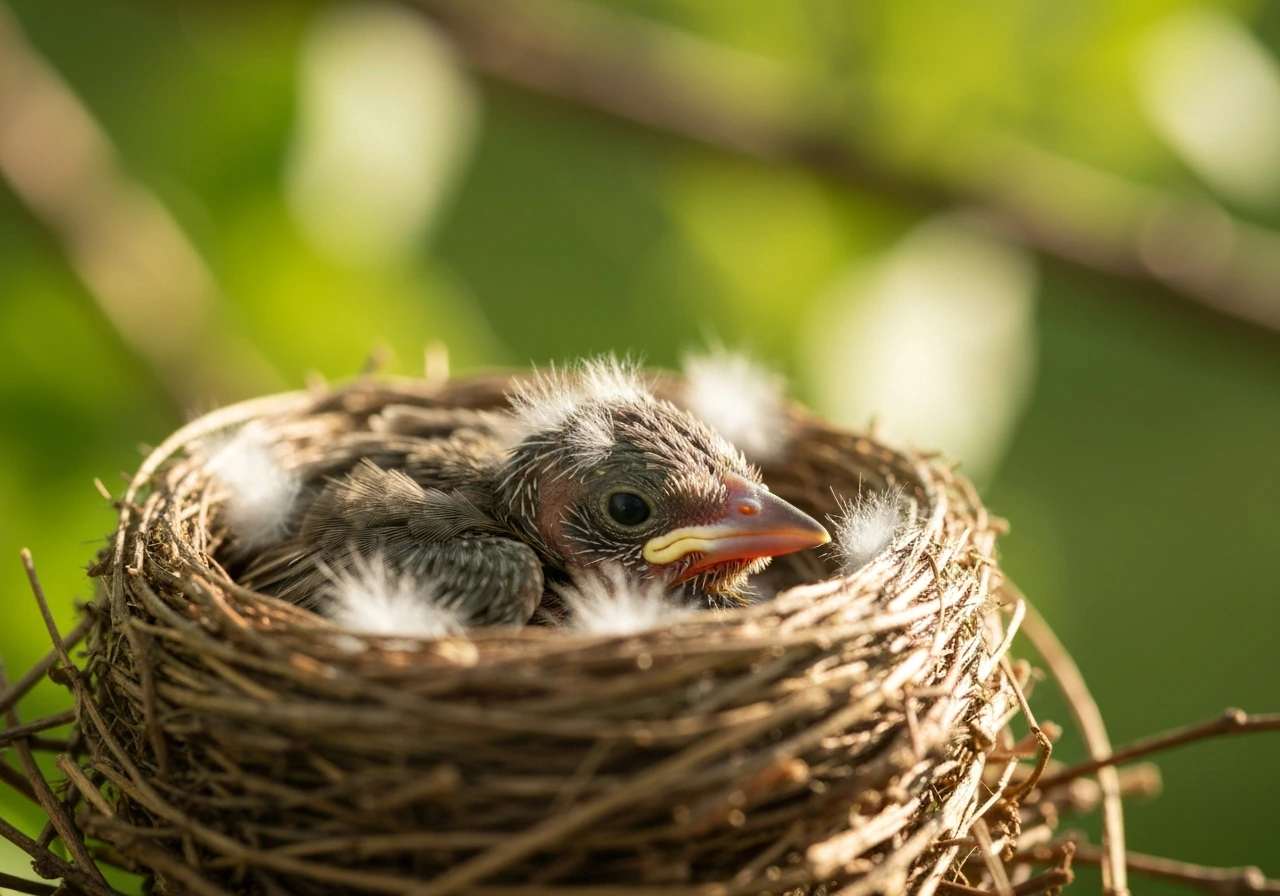
What a nestling bird actually is
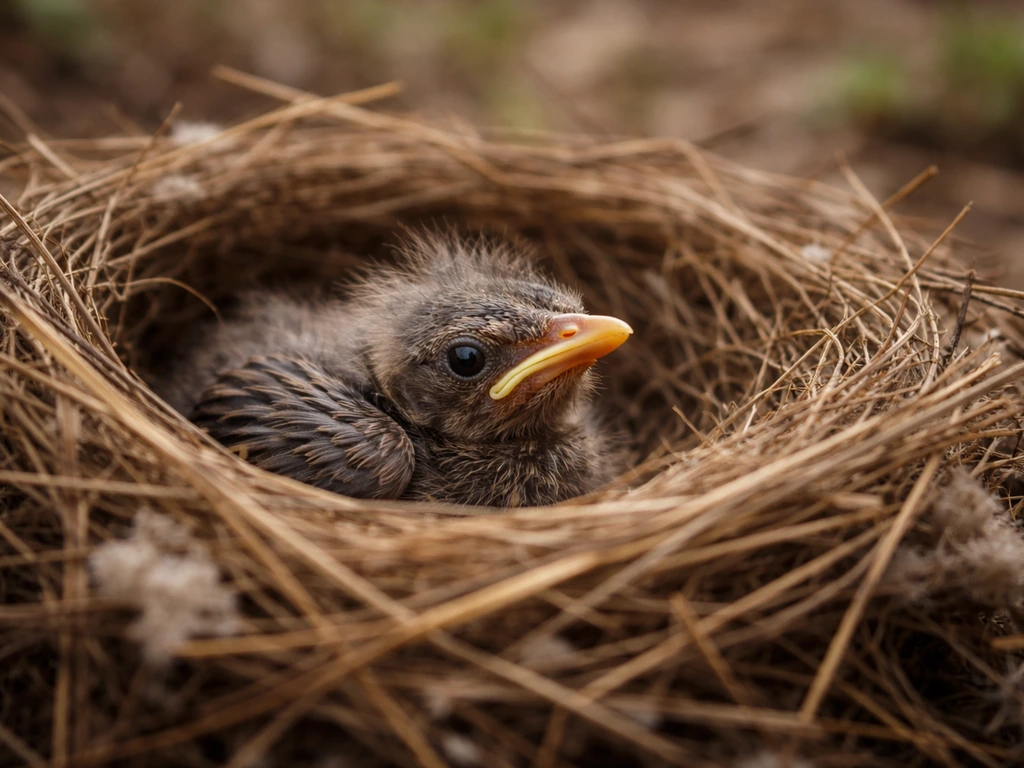
The word "nestling" has been in the English language since at least the 14th century, and its meaning has stayed remarkably consistent: a young bird that has not yet left the nest. Cambridge Dictionary defines it as "a young bird that has not yet learned to fly and still lives in the nest built by its parents." Merriam-Webster keeps it just as tight: "a young bird not yet able to leave the nest."
What makes a bird a nestling (rather than a chick or a fledgling) is primarily about feathers and self-sufficiency. A nestling either has no feathers at all or has only a sparse, patchy covering. The skin may be visible, the eyes might still be closed, and the bird is completely immobile outside the nest context. It relies on its parents for everything: warmth, protection, and every single meal. The Houston Humane Society puts it plainly: nestlings "remain in the nest and are completely dependent on the mother" while she searches for food.
Nestling vs chick vs fledgling: what's the actual difference
These three terms get mixed up constantly, and the confusion matters because it changes what you should do if you find one. Here's how they stack up:
| Term | Feather Stage | Mobility | Dependency | Where You'll Find It |
|---|---|---|---|---|
| Chick | Newly hatched, may be naked or have down | None or minimal | Total | In or just outside the nest |
| Nestling | Sparse or no adult feathers; pin feathers may be emerging | Very limited; cannot fly | Total; needs parental feeding and warmth | In the nest; on the ground only if fallen |
| Fledgling | Most adult feathers present; wings look functional | Can hop, flutter, short flights | Partially independent; still fed by parents | On the ground near bushes or low branches |
The practical test from Tufts Cummings School of Veterinary Medicine is simple: if the bird does not have most or any of its adult feathers, it's a nestling. If it looks mostly feathered and is hopping around, it's almost certainly a fledgling and is supposed to be on the ground. In contrast, the fledgling bird meaning points to a young bird that has begun to develop feathers and is starting to leave the nest.
This distinction matters enormously for what you do next, and it's also what separates the figurative meanings these words carry. A fledgling implies readiness to launch; a nestling implies not ready at all. The fledgling bird meaning and nestling meaning sit at opposite ends of the same developmental arc.
The figurative meaning and symbolism of "nestling"
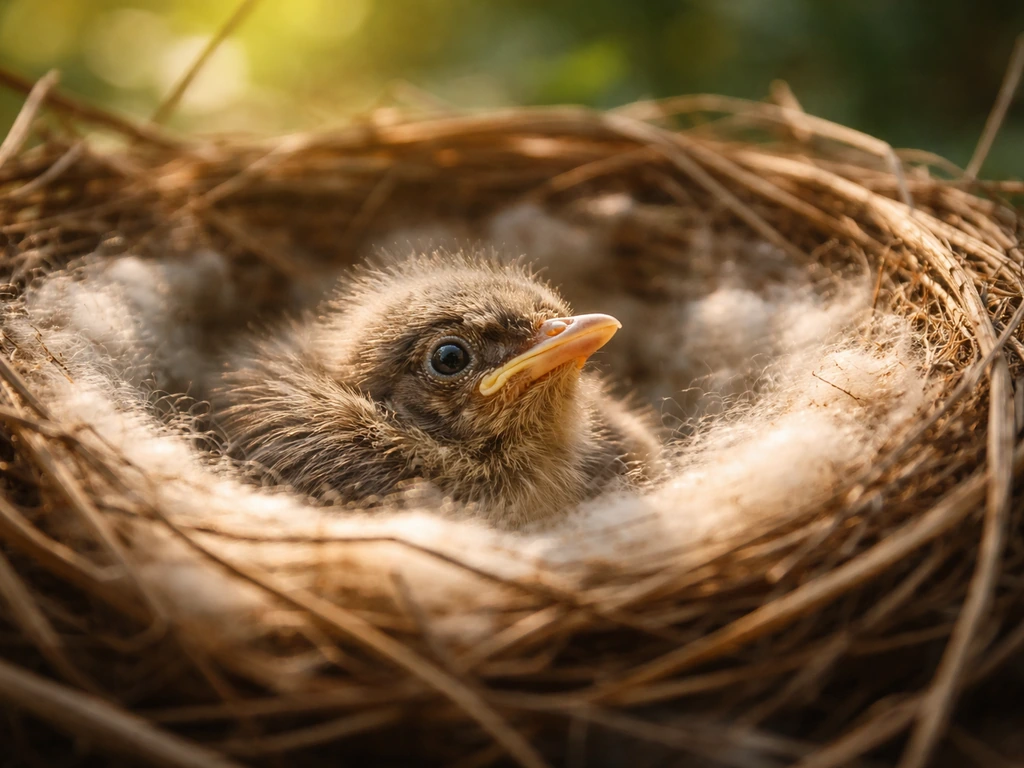
Because nestlings are so literally helpless and nest-bound, the word "nestling" has accumulated a rich layer of symbolic meaning in language and culture. When someone uses it figuratively, they're almost always invoking one of a few core ideas: innocence, vulnerability, total dependence, tender early-stage beginnings, or the safety of being held and sheltered.
Notice how the word doubles as a verb: to nestle against someone, to nestle into a space, to be nestled in a valley. That verb form is doing the same emotional work as the noun. It implies closeness, warmth, being cradled. Literary writing often uses nestling imagery to evoke intimacy and shelter, specifically because of what everyone instinctively understands about a baby bird curled in a nest: it is fragile, it is early, and it is completely held by something bigger than itself.
In spiritual and metaphorical contexts, a nestling can represent a new idea not yet ready to be released into the world, a relationship in its earliest and most tender phase, or a person who needs care before they can stand on their own. The symbolism connects directly to themes of parenthood, patience, and the ethics of care. You don't rush a nestling; you protect it until it's ready.
How nestlings appear in cultural, folkloric, and idiomatic language
Across folklore and cultural expression, the image of a bird in the nest, especially a helpless young one, has long been used to talk about protection and responsibility. Proverbs about nests often emphasize building something carefully over time, which is why expressions like "little by little the bird makes its nest" carry so much weight about patience and incremental effort. The nestling inside that nest represents what's at stake: something fragile and precious that depends on the work being done right.
In everyday idiom, calling someone a "nestling" or describing them as "nestled" under someone's wing immediately signals that they're being protected and are not yet self-sufficient. In some contexts, people also use similar language when talking about the heirloom bird meaning, so it's helpful to understand what the phrase is implying nestling. It can be affectionate or slightly condescending depending on context. A parent calling their child a nestling is tender. A boss calling an employee a nestling might imply they need more seasoning. The word carries warmth but also clearly marks a developmental gap.
In some spiritual traditions, finding a baby bird is treated as a sign: a call to pay attention to something new and vulnerable in your life, a reminder to nurture rather than rush. The symbolism tracks back to the same core qualities: a nestling represents something that cannot yet survive without conscious care and protection.
What to do if you actually find a nestling bird
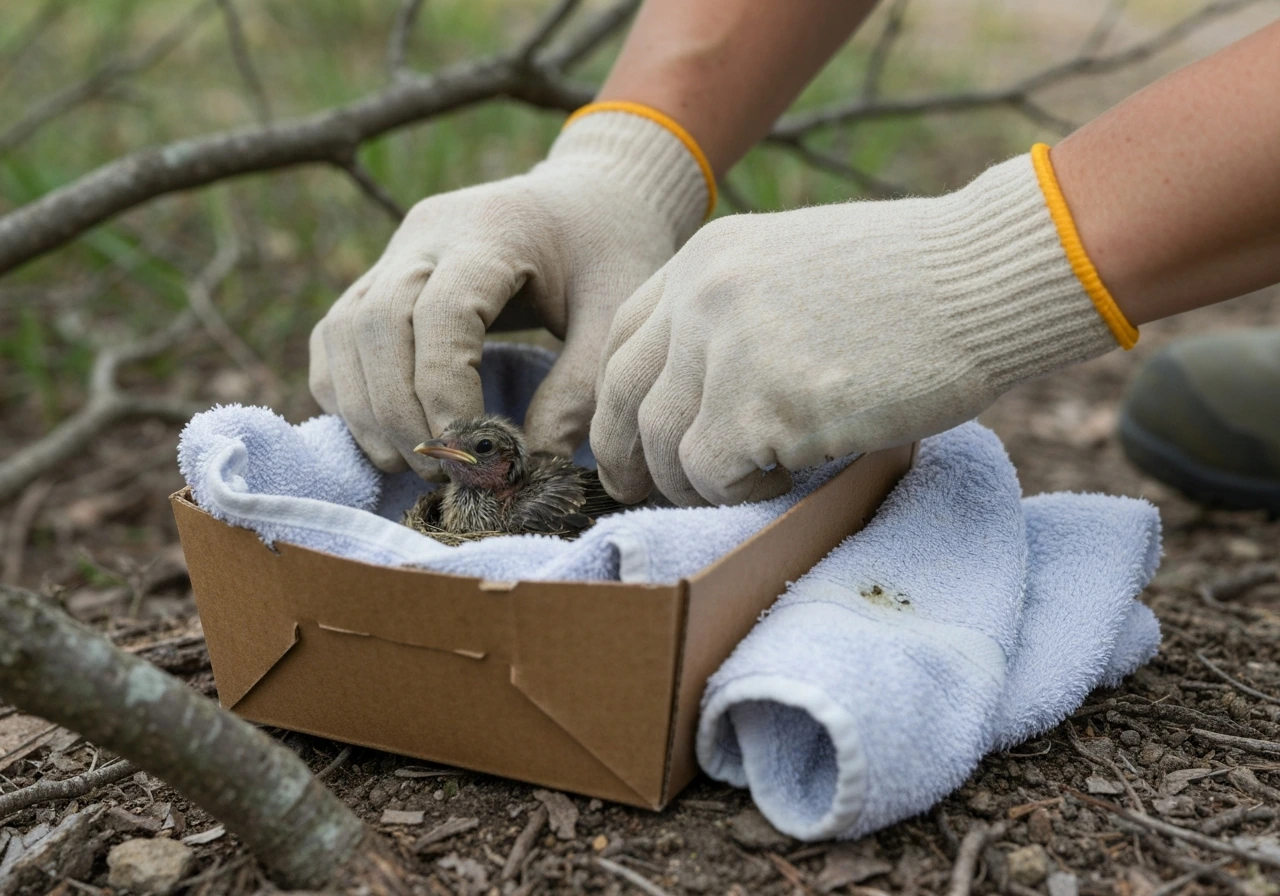
If you've landed on this article because you found a real bird and you're not sure what to do, here's the practical sequence to follow. Audubon’s FAQ explains that most birds have a poorly developed sense of smell and will not reject their young if you handle them.
First, confirm it's actually a nestling: look for sparse or absent feathers, a small size, and a bird that clearly cannot hop or flutter. If it's covered in feathers and moving around, it's probably a fledgling and likely fine where it is. If you are unsure, remember that the related terms chick and fledgling can also come up, but the phrase what does hand reared bird mean refers to a different, human-care context.
- Check the bird for obvious injury: look for a drooping wing, visible wound, labored breathing, or inability to hold its head up. If any of those are present, contact a licensed wildlife rehabilitator immediately.
- If the bird looks uninjured, look for the nest nearby. Nestlings don't travel, so it will be close, usually directly above or within a few feet.
- If you find the nest, gently scoop the nestling up and return it. Audubon explicitly recommends this. The myth that a parent will reject a baby you've touched is false: birds have a limited sense of smell and will not abandon their young because of human contact.
- If the nest is damaged or you can't find it, a small container lined with dry grass or leaves can serve as a replacement nest, placed as close to the original location as possible, ideally secured in a nearby tree or shrub.
- Back away and observe from a distance for at least one to two hours. Tufts recommends keeping watch from a distance for about an hour; Greenwood Wildlife Rehabilitation Center suggests at least two hours. You want to confirm the parents are coming back to feed.
- If parents don't return within that window, or if the bird seems injured, contact a licensed wildlife rehabilitator, a local veterinarian, or your nearest humane society. PetMD notes that you ideally shouldn't have the bird in your possession for more than 24 hours before getting professional help.
Common misconceptions and what not to do
A few well-meaning mistakes get made consistently, and some of them can seriously harm the bird:
- Don't feed it. This one is non-negotiable. The Washington Department of Fish and Wildlife explicitly states: do not give the baby bird any food or water. Tufts adds that feeding an incorrect diet can injure or kill a growing bird, and the parents are vastly better equipped to provide the right nutrition. Even water given incorrectly can cause aspiration. Don't do it.
- Don't assume it's abandoned because it's on the ground. Finding a nestling on the ground doesn't mean its parents are gone. They may be off foraging and will return. Always observe before assuming the worst.
- Don't assume touching it means it will be rejected. The "human scent" myth is persistent and false. Parents will continue to care for young that have been handled by humans. Returning the nestling to the nest is almost always the right call.
- Don't keep it as a pet or attempt to raise it yourself. Wildlife rehabilitation requires specific knowledge, diet plans, and legal permits. What seems like kindness can result in a bird that can't be released, can't self-feed, or becomes so imprinted on humans that it cannot survive in the wild. If you're curious about what imprinting means in this context, it's worth understanding separately.
- Don't leave it where cats, dogs, or other predators can reach it. If you need to observe for an hour or two, make sure pets are kept well away from the area.
How to interpret "nestling bird" when you hear it
When someone says "nestling bird" in a literal context, they mean a baby bird in the earliest, most dependent stage of life: no real feathers, unable to fly, entirely reliant on its parents and the nest for survival. Juvenile bird meaning is similar in spirit, since it also points to an early stage of development before full independence.
When the word appears figuratively, in conversation, literature, or cultural expression, it consistently signals vulnerability, innocence, tender early-stage development, and the need for protection and care. Both meanings are rooted in the same vivid image: a tiny, featherless creature that cannot survive without something holding it close. Whether you're identifying a bird you found on your lawn or unpacking a metaphor in a poem, that core image is what the word is pointing to.
In other words, the imprinted bird meaning often reflects how the bird's early life shapes its symbolic message in culture and storytelling.
FAQ
If I find what seems like a nestling, should I always put it back in the nest?
Only if you can locate the nest and the nestling was obviously removed or displaced. If you cannot find the nest, or if handling risks injuring the bird (or you suspect it is not a true nestling), the safest next step is to contact a local wildlife rehabilitator for guidance.
How can I tell the difference between a nestling and an egg that has fallen out?
A fallen egg will have a clear shell, and there is usually no living, featherless body to examine. A true nestling shows visible skin or sparse pinfeathers and may open its mouth when stimulated. If there is any uncertainty, treat it as a potentially live nestling and seek local advice.
What should I do if I can’t confirm whether it is a nestling or a fledgling?
Use “safety first.” Don’t place it outside, and don’t feed it. Keep it warm and contained in a small ventilated box while you contact a wildlife professional. The feeding and transport approach differs a lot between these stages.
Is it okay to touch a nestling with my hands?
Handling is best minimized, but occasional contact to move it to warmth or to return it to its nest is often necessary. Avoid prolonged handling, keep it calm, and wash your hands after. The bigger risk is delaying proper care or giving the wrong food.
Should I feed a nestling, especially if it seems hungry?
Do not attempt to feed unless you are following instructions from a licensed rehabilitator. Nestlings have specific dietary needs and feeding schedules, and incorrect food or force-feeding can cause choking or fatal digestive problems.
Can a nestling survive without parents for a short time?
Sometimes, but it is not reliable. Nestlings cannot regulate body temperature well and depend on frequent warmth and feeding. Even brief delays can be dangerous, so warm containment and quick expert contact matter.
Why do people say “nestling” can sound affectionate or insulting, and how do I judge which it is?
Tone depends on who is speaking and the relationship. In a family context, it often means tender protectiveness. In workplaces, calling someone a “nestling” can imply they lack skills or require supervision, so look for accompanying cues like criticism, expectations, or “teaching” language.
In symbolic writing, does “nestling” mean the same thing as “new beginning”?
Not exactly. A nestling suggests vulnerability and dependence during an early, unready stage. It can represent new beginnings, but the emphasis is usually on protection, patience, and what must be nurtured before it can stand on its own.
Does “nestled under someone’s wing” imply rescue is needed or just comfort?
It can do both, depending on context. Literally, “under a wing” means safety and protection provided by adults. Figuratively, it often highlights emotional shelter or being cared for, which may not imply an urgent “rescue,” but it does signal dependence.
What are common mistakes when someone identifies a bird as a nestling?
People often mislabel feathered birds that are hopping as nestlings, or they assume any small bird on the ground is nest-bound. Another frequent error is putting it in a cage or attempting to feed it, both of which can worsen stress and survival odds.
Next Article
Juvenile Bird Meaning: Literal Age Stage and Symbolism
Learn juvenile bird meaning: how to tell nestling vs fledgling cues, plus symbolism of young birds.