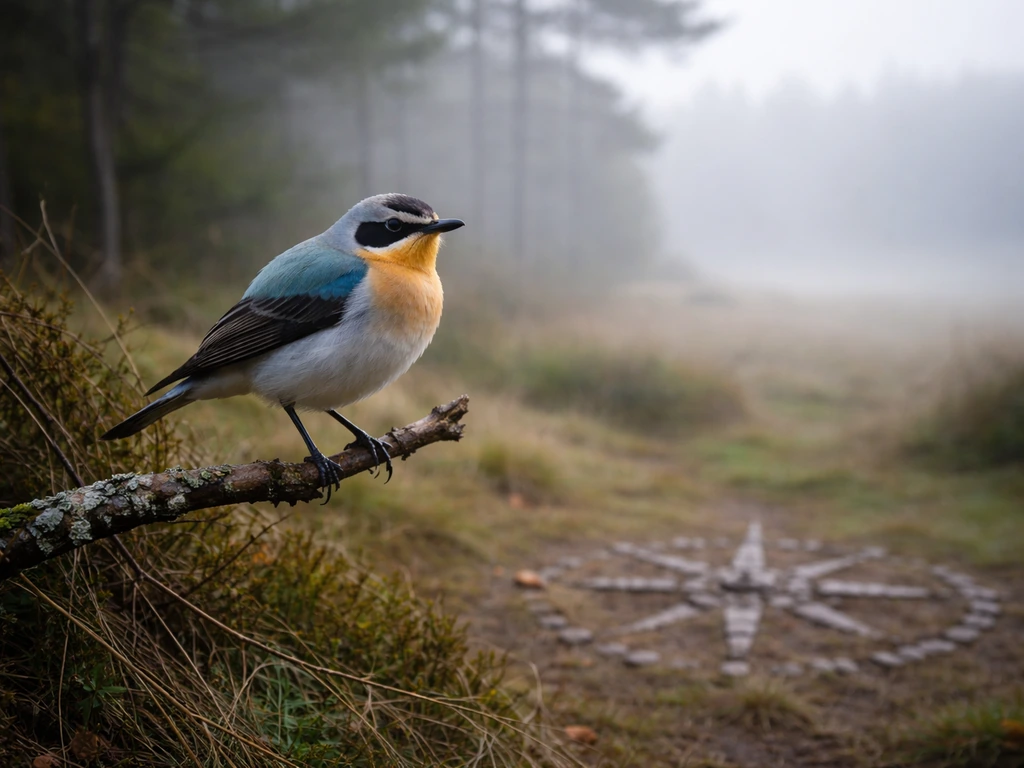
A wagtail is a small, energetic bird named entirely for one thing: the way its tail bobs up and down almost constantly. Symbolically, that restless tail motion is the whole story. People across cultures read the wagtail as a signal of alertness, movement, and change, a bird that is never still, never passive, always pointing at something. When someone searches 'wagtail bird meaning,' they are usually asking one of two things: what exactly is a wagtail, or what does it mean when one shows up. This article covers both.
Wagtail Bird Meaning: Symbolism, Omens, and Context Clues

Marcus Winters
15 May 2026
What a wagtail actually is
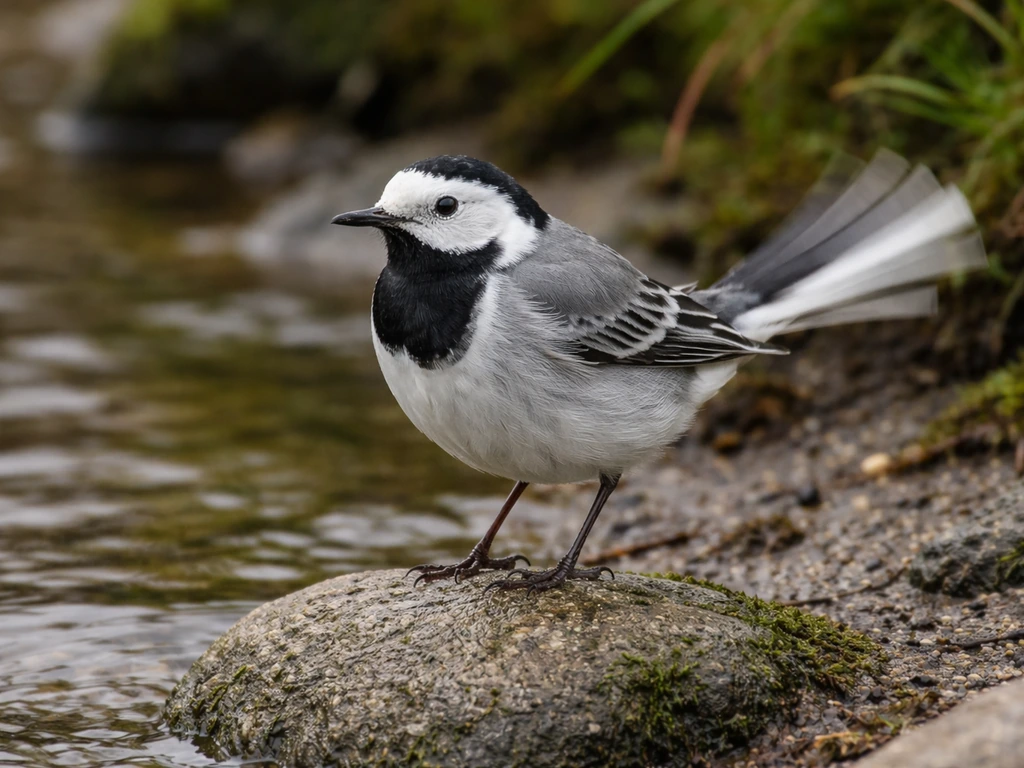
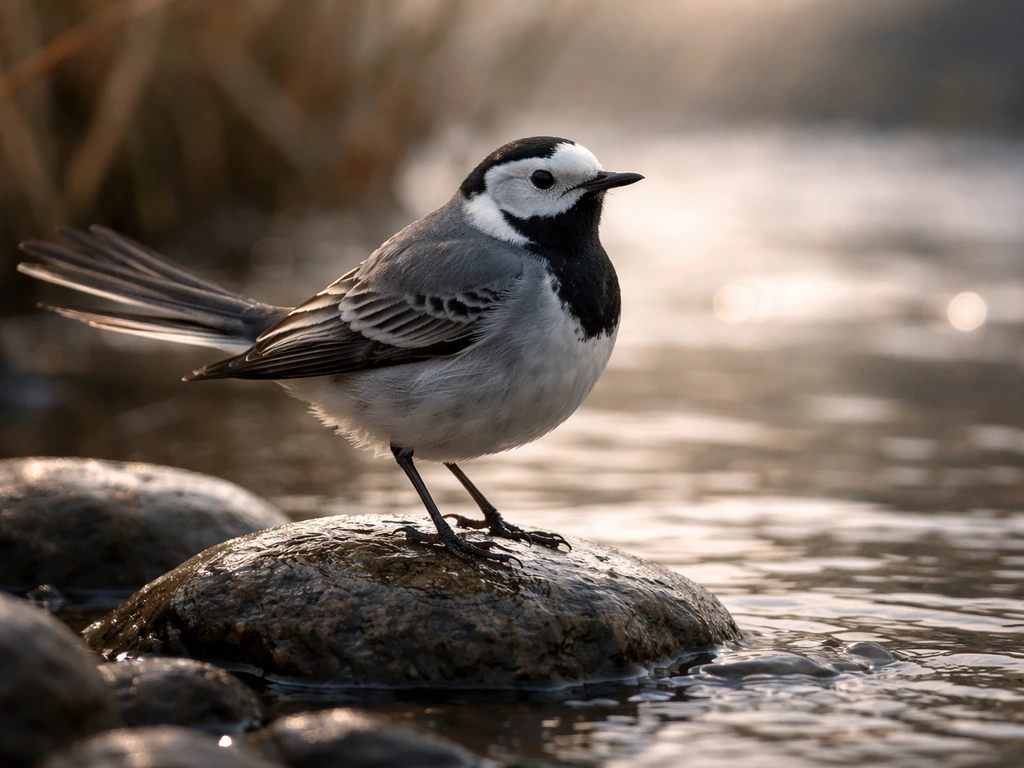
Wagtails belong to the family Motacillidae, and most of the species people encounter belong to the genus Motacilla. The one most British and Irish readers will recognize is the Pied Wagtail (Motacilla alba yarrellii), a black-and-white bird that turns up on pavements, car parks, rooftops, and riverbanks with remarkable confidence. In other parts of the world you will find the Yellow Wagtail, the Grey Wagtail, and the Forest Wagtail (Dendronanthus indicus), among others.
The name 'wagtail' is straightforwardly descriptive. These birds wag their tails, not occasionally, but almost without stopping. It is a distinctive, vertical pumping motion that you notice immediately, even at a distance. Ornithologists are still debating exactly why they do it (theories include flushing insects, signalling fitness to rivals, and communicating with flock members), but whatever the reason, the behavior is so constant that it became the bird's entire identity in language. If you are specifically asking about the runt bird meaning, context and the wording around the bird usually matter just as much as the behavior does. The name stuck across centuries because nothing else quite captures what a wagtail does the moment you look at it.
Why people 'read' a wagtail symbolically
Symbolism almost always starts with behavior, and the wagtail's behavior is impossible to miss. A bird that never stops moving its tail is going to attract interpretation. In folklore and spiritual traditions, animals that display one dominant, repeated action tend to become associated with the meaning of that action. The tail wag reads as urgency, readiness, or a kind of signalling, and those are exactly the symbolic qualities people assign to the wagtail.
The core symbolic associations you will find across most traditions cluster around a few consistent themes: alertness and awareness (the bird is always 'on'), change or transition (constant motion suggests things are in flux), messages or signals (that wag looks like it is pointing at something or trying to tell you something), and energy or vitality (a wagtail at rest still looks active). Because the bird is also found near water, roads, and human habitation, it gets layered meanings from those specific locations too.
What it means depends on how and where you see it
Context shifts the interpretation significantly. Most symbolic bird-reading traditions are not one-size-fits-all, and wagtail meanings are no exception. Here is how the common readings break down by situation.
Seeing a wagtail
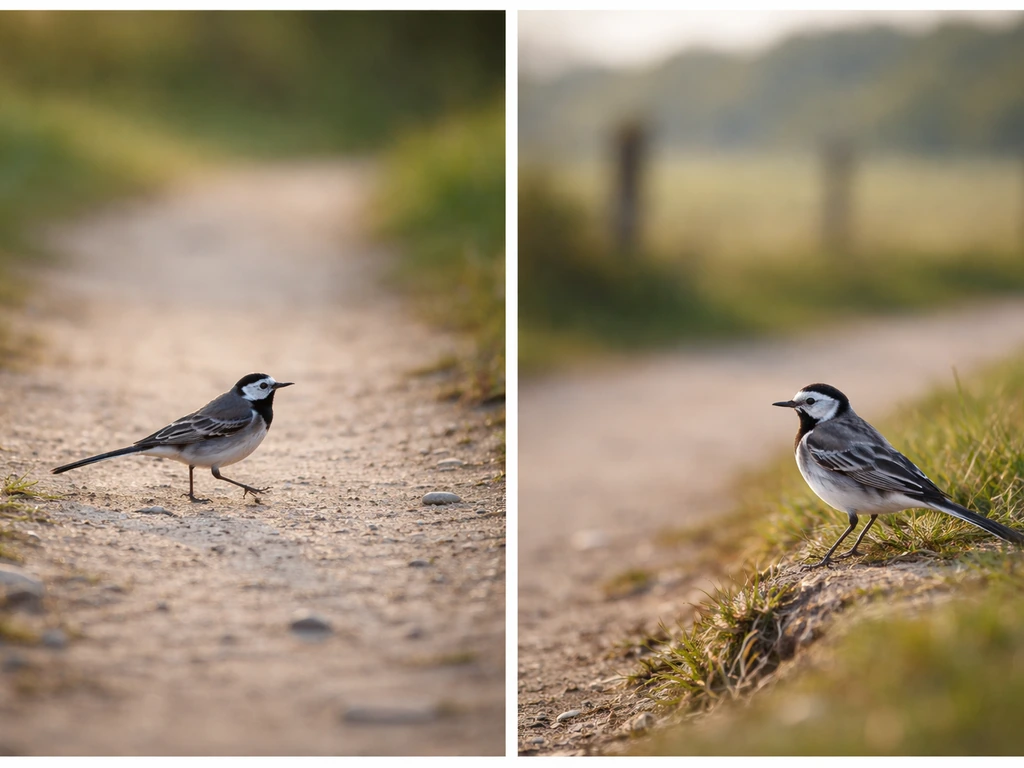
A wagtail that crosses your path or lands nearby is most commonly read as a prompt to pay attention. If you are wondering about the phrase ran over a bird meaning, it usually refers to ideas about bad luck or guilt after an accident, rather than the wagtail’s symbolism in general.
If you meant “loop track bird meaning” specifically, it is another way people describe what the bird is thought to signify based on how it moves and shows up. The tail-wagging is treated as a signal: something is moving, something is changing, or you need to be more aware of what is happening around you.
In some European folk traditions, a wagtail appearing suddenly near your home was considered a sign that news or visitors were coming, the restless bird as a kind of living telegram.
Hearing a wagtail
Wagtails have a sharp, two-note call that carries well. Hearing one without seeing it is sometimes interpreted as a reminder to listen more carefully to what is going on around you, the unseen message, the thing you have been ignoring. In some traditions, a call from a bird you cannot see carries more weight than one you can, because it demands you tune in rather than just observe.
Where you see it
| Location | Common symbolic reading |
|---|---|
| Near water (rivers, streams) | Emotional flow, flexibility, a reminder to go with change rather than resist it |
| Near your home or garden | News arriving, a visitor coming, domestic change ahead |
| On a road or path | You are at a crossroads or transition point; the bird is marking a threshold |
| At a workplace or urban setting | Alertness in a busy environment; a prompt to notice what others are missing |
| In a tree or elevated spot | A broader perspective is available to you; step back before acting |
Wagtail symbolism in folklore, spirituality, and cultural tradition

In Japanese folklore, wagtails (known as 'sekirei') carry a particularly specific role. They are credited with teaching the primordial couple Izanagi and Izanami the act of creation by demonstrating a wagging motion. This is one of the more unusual cultural readings of the bird, where the tail-wagging is literally associated with the origin of life and procreation. The sekirei also appear in Japanese literature and manga as emblems of pairing, love, and lively spirit.
In parts of sub-Saharan Africa, wagtails are considered good omens near water sources, tied to the idea that the bird's presence signals the water is clean and safe. Some West African traditions associate the wagtail's constant movement with the restless energy of ancestors who have unfinished business, not threatening, but present and active.
In British and Irish folk tradition, the Pied Wagtail in particular carries association with liminality, it turns up at the edges of things, the margins of roads, the banks of rivers, the borders between town and countryside. Liminal creatures in folklore are frequently read as messengers or threshold markers, which aligns with the 'news is coming' reading mentioned earlier. Celtic traditions sometimes grouped small, active birds near water as associated with the spirit world's thin places, and the wagtail fits that category comfortably.
In modern spiritual and 'animal totem' frameworks (which draw loosely from multiple indigenous and folk traditions), the wagtail tends to be assigned meanings around adaptability, cheerfulness under pressure, and the ability to thrive in both wild and human environments. The bird's comfort near people is treated as a sign of social confidence and openness.
Figurative language, nicknames, and slang
The word 'wagtail' has a history in figurative English usage that goes well beyond birdwatching. In early modern English (roughly the 16th to 18th centuries), 'wagtail' was used as a slang term for a prostitute or a promiscuous woman. The connection was the tail-wagging, a motion that was read, in the coarser idiom of the era, as sexually suggestive. Shakespeare used the word in this way, and it appears in period literature as a mild but clear insult. This usage is archaic now and largely out of circulation, but it is worth knowing if you encounter it in historical texts.
More broadly, 'wagtail' has been applied as a nickname or descriptor for any person who seems perpetually restless, fidgety, or unable to sit still. Calling someone a wagtail in this sense is not necessarily an insult, it simply captures that quality of constant motion and energy. You might also hear the term used affectionately for children who cannot stop fidgeting.
In some rural dialects, 'wagtail' or 'waggy' was used for the bird itself as a term of endearment, reflecting how familiar and unafraid these birds tend to be around people. A wagtail on a farm or in a village was often a welcome presence, and the nickname reflected that affection rather than any negative connotation.
It is also worth noting that the wagtail's wandering, boundary-crossing nature puts it in the same conceptual neighborhood as birds discussed under terms like 'vagrant bird' or 'wandering bird', creatures that appear where you do not quite expect them, prompting questions about what their presence means. If you have also heard the phrase "vagrant bird," its meaning overlaps with the wagtail's boundary-crossing symbolism. The difference is that wagtails are familiar and regular visitors in most of their range, so the symbolic reading tends toward reassurance rather than the more unsettled feeling a genuine vagrant species might trigger.
What to actually do when a wagtail shows up
If you are looking for practical next steps after a wagtail encounter, here is how to approach it without over-mystifying the experience.
- Identify the species first. A Pied Wagtail (black, white, and grey) behaves and appears differently from a Yellow or Grey Wagtail. Your local species matters for getting the most accurate cultural reading, since traditions are geographically specific. An app like Merlin Bird ID or a regional field guide will confirm the species in under a minute.
- Note the location carefully. Where the bird appeared — near water, near your home, on a road, in an unexpected urban spot — is the single biggest factor in which traditional interpretation applies. Write it down if you want to look it up later.
- Note the behavior beyond the tail-wag. Was it alarmed and calling? Calm and feeding? Flying away or approaching you? Agitated behavior has different symbolic weight than a bird calmly going about its day near you.
- Cross-reference your regional tradition. The Japanese sekirei reading is very different from the Celtic liminal-messenger reading, which is different again from West African water-omen associations. If you have a specific cultural background or are in a specific geographic region, look for the tradition closest to that context rather than blending them all together.
- Resist the urge to over-interpret. The most grounded way to use bird symbolism is as a prompt for reflection, not as a literal prediction. A wagtail crossing your path is a good moment to ask yourself: what am I not paying attention to? What change is already underway? That is the practical use of the symbolism, regardless of tradition.
The wagtail is one of those birds where the literal and the symbolic reinforce each other unusually well. Its actual behavior, restless, alert, boundary-dwelling, comfortable near people, maps cleanly onto everything cultures have said about it for centuries. In Britain and Ireland, the Pied Wagtail (Motacilla alba yarrellii) is described as a familiar common wagtail and is often seen running over the ground while rapidly wagging its tail up and down. You do not need to stretch to find the meaning. Watch it for thirty seconds and the symbolism writes itself.
FAQ
Does a wagtail’s meaning change if it behaves differently than normal (for example, tail not wagging)?
If the bird seems wounded, lethargic, or unusually stationary (for example, tail motion slows or stops), that’s a different signal than the usual symbolism tied to constant wagging. In that case, consider the practical possibility of stress, injury, or weather effects before interpreting it as a message about change.
How does the setting of the encounter (home, workplace, outdoors) affect wagtail bird meaning?
Many people interpret a wagtail differently depending on where you are in relation to it. A wagtail near your doorstep or along a path you regularly walk is commonly read as a prompt to notice developments in your immediate routine, while the same sighting far from home is more often treated as a general reminder about awareness and transition.
Does seeing a wagtail during a particular season or life situation make the meaning more specific?
Wagtails are often seasonal and location-dependent, so the most useful “meaning” comes from looking at timing. If you see one during a period when you have been avoiding a decision, the symbolism people associate with readiness and alertness tends to feel more relevant. If you see one during an otherwise calm, stable season, people usually treat it as reassurance rather than a warning.
What should I do if I hear a wagtail but I cannot see it?
If you only hear the call, many traditions frame it as an invitation to pay closer attention rather than a literal omen of an event. A helpful way to apply it is to do a quick scan of what you have been ignoring (messages, plans, conversations), because “unseen message” interpretations map to neglected details.
How can I interpret wagtail bird meaning without turning it into anxiety or a guaranteed prediction?
To avoid over-reading, treat the encounter as a “theme,” not a prediction. Ask what action aligns with the dominant symbolism (notice more, prepare for movement, respond to a message). If you feel anxious or fixated, scale down the interpretation and return to a concrete next step like checking schedules or addressing a conversation.
If the phrase “ran over a bird” comes up, is it still the same as wagtail bird meaning?
The article notes that “ran over a bird” readings are tied to guilt or bad luck after an accident, not the wagtail’s usual symbolism. If you are worried about an accident you caused, a practical approach is to handle responsibilities first (if applicable, assess whether the bird needed help, report where required, and move forward), then interpret it symbolically as a reminder to be careful.
How do I know whether “wagtail” in a text means the bird versus slang for a restless person?
Yes. “Wagtail” can appear as historical slang in older texts, and it can also describe a restless person. If you encounter it in a book, check whether the context is birdwatching, a location, or a person being insulted or described as fidgety, because the meaning will be very different.
What’s a practical next step I can take after seeing a wagtail?
Many “animal sign” approaches work best when you connect it to behavior you can observe in the next day or two. For example, if the symbolism emphasizes change and transition, choose one small adjustment (start the task you keep postponing, revise a plan, have the conversation). That makes the meaning practical instead of purely interpretive.
Next Article
Vagrant Bird Meaning: Literal Definition, Metaphor, and How to Verify
Vagrant bird meaning: literal vagrant birds vs metaphor, causes, ID cues, and steps to verify sightings safely.