If you just ran over a bird and you're shaken up: pull over safely, do not touch the bird with bare hands, and call your local wildlife rehabilitator or animal control. UConn Police also advise not touching injured wildlife with bare hands and to call an animal control officer for removal if the animal is still present, or 911 if the situation is an emergency [do not touch the bird with bare hands](https://police. universitysafety. uconn.
Ran Over a Bird Meaning: What to Do and Symbolism

Marcus Winters
20 May 2026
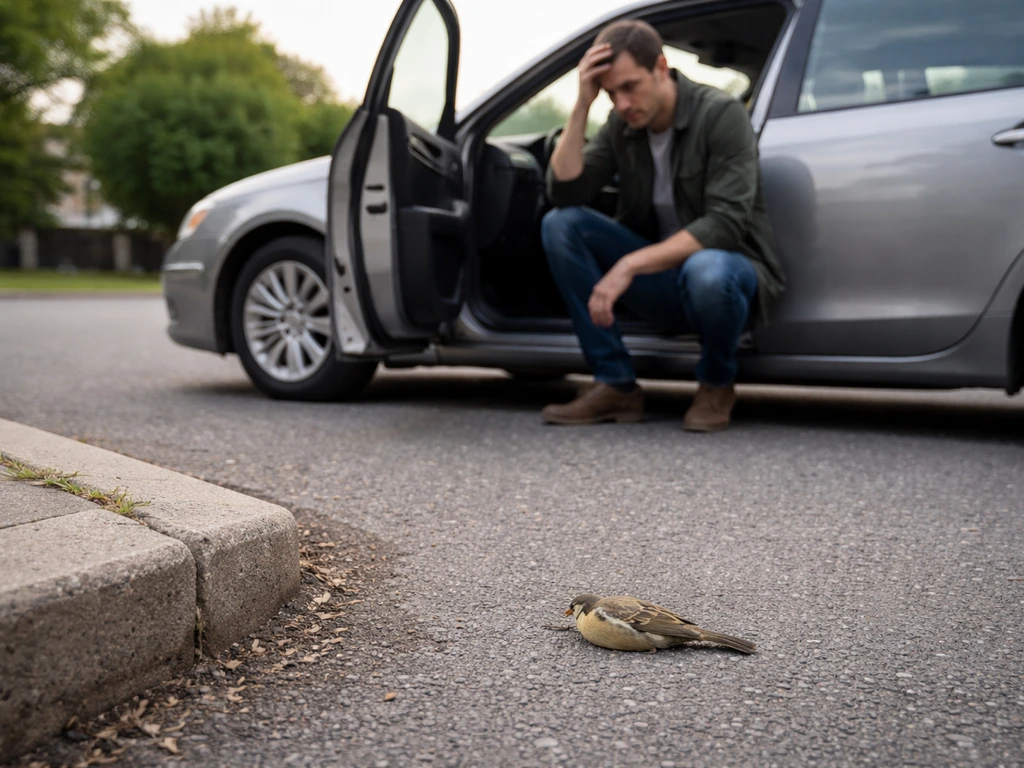
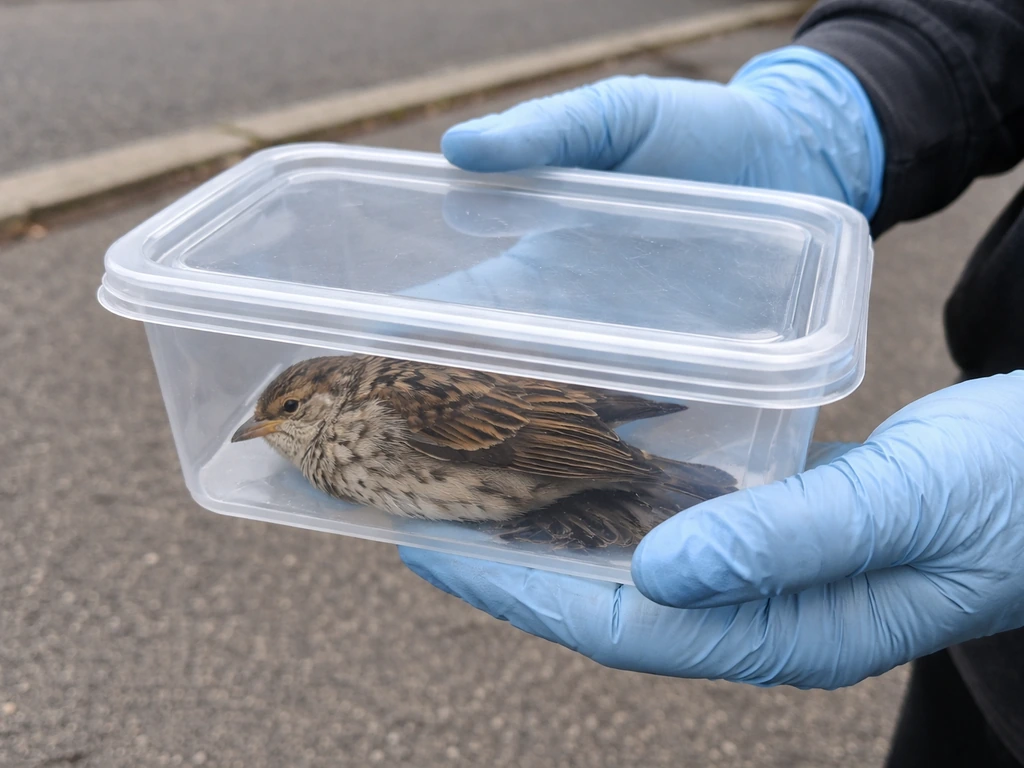
edu/animal-complaints/). If the bird is dead, use gloves and a plastic bag for disposal following local rules. If it's alive and injured, keep it in a dark, quiet container like a shoebox and get it to a wildlife rehabilitator as fast as you can. That's the practical answer.
But if you searched this phrase because you're wondering what it means spiritually, symbolically, or as a cultural expression, that's a completely different conversation, and this article covers both.
What to do right now if you actually hit a bird
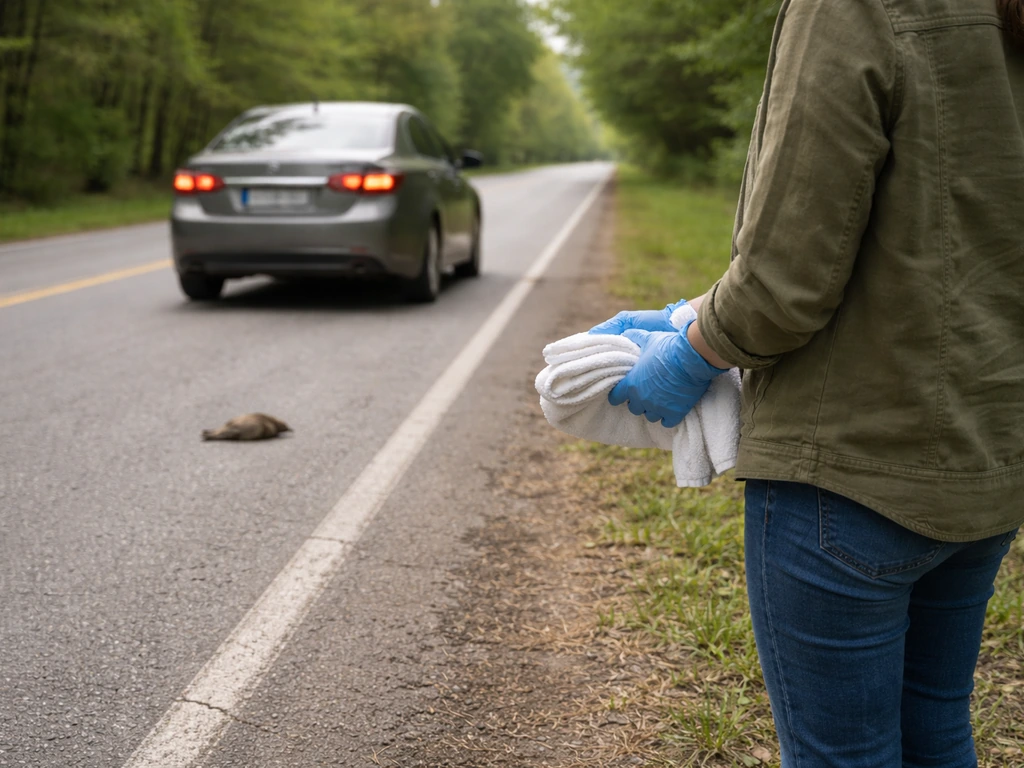
The first rule is the same one wildlife agencies repeat over and over: don't touch the animal with bare hands if you can avoid it. The CDC, Connecticut DEEP, and Arlington County all say the same thing. Sick or injured birds can carry disease, and a scared injured bird can scratch or bite harder than you'd expect. Your safety comes first.
Here's what to do based on what you're dealing with:
If the bird is alive and visibly injured
- Pull over and turn on your hazard lights. Make sure you're not creating a road hazard for other drivers.
- Do not try to feed or give water to the bird. Audubon explicitly says not to, because forcing food or water on a stunned or injured bird can cause more harm.
- If you need to move it off the road, use gloves or a thick jacket to protect your hands. Injured birds are scared and may bite or scratch defensively.
- Place it in a dark, quiet container: a shoebox or paper bag with air holes works well. Keep it away from pets, children, and direct sunlight.
- Contact a licensed wildlife rehabilitator in your area. In Connecticut, you can call DEEP Wildlife Division at 860-424-3011 (or 860-424-3333 after hours and on weekends). In Massachusetts, Mass.gov directs you to a licensed wildlife rehabilitator. Check your state's fish and wildlife agency website for your region.
- If you can't reach a rehabilitator quickly, call your local animal control officer. UConn Police guidance specifically notes that animal control can help remove injured wildlife from a scene.
If the bird is dead
- Do not move or dispose of certain protected species without checking first. Arlington County, Virginia notes that if you find a dead eagle, hawk, owl, or turkey, you should report it to the Virginia Department of Wildlife Resources at 1-855-571-9003 or [email protected]. Most states have similar rules for protected raptors.
- For common birds, wear gloves (and ideally a face mask and eye protection as Oregon State University Extension recommends), double-bag the bird in plastic bags, and dispose of it in your regular trash unless local rules say otherwise.
- Never drop it on a public road or county property. Hillsborough County, Florida treats that as illegal dumping (a misdemeanor), and many other jurisdictions have similar ordinances.
- Do not put carcasses in coolers or refrigerators used for food. Wash your hands thoroughly with soap and water after handling anything.
- If you're in a state with active bird flu or disease surveillance activity, check your state wildlife agency's site. Some areas actively want reports of dead wild birds for monitoring purposes.
What you should NOT do
- Don't handle the bird without protection, even if it looks completely still.
- Don't try to nurse it back to health yourself unless you're a trained rehabilitator.
- Don't assume it's fine just because it flew a short distance after impact. Window-collision research from Audubon shows birds can appear okay and then die from internal injuries.
- Don't ignore certain species. Raptors, migratory birds, and federally protected species often have specific reporting requirements under the Migratory Bird Treaty Act.
What the phrase actually means in everyday conversation
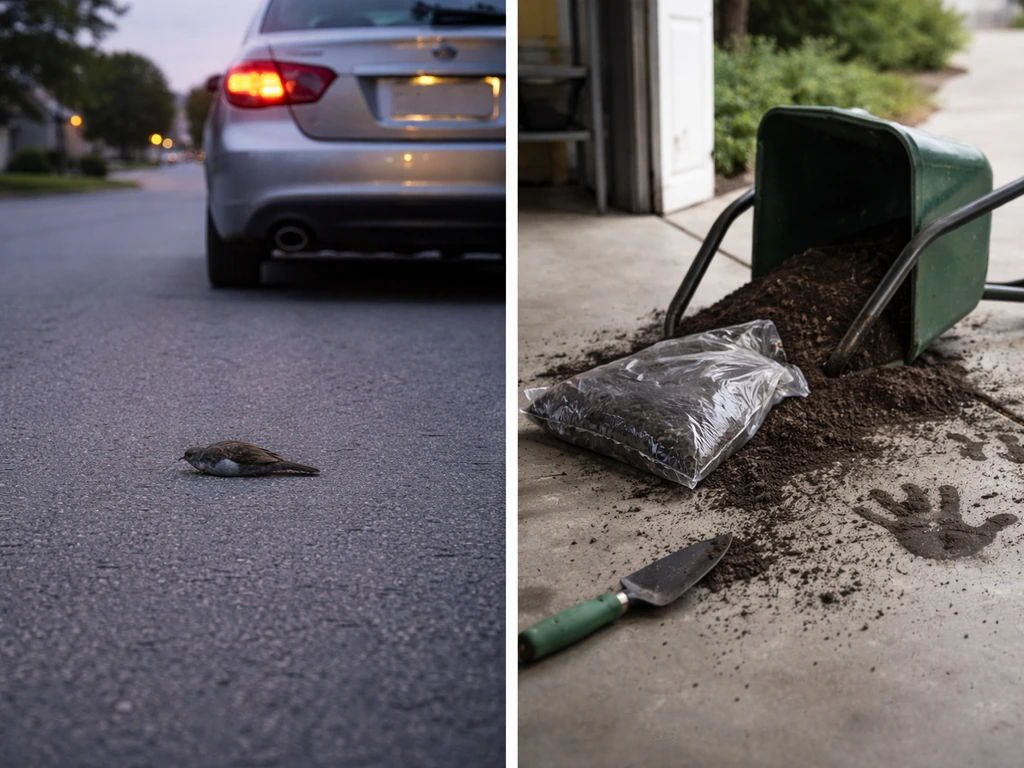
At the most literal level, "ran over a bird" means exactly what Cambridge and Merriam-Webster say it means: a vehicle hit and drove over a bird. It's one of those phrases where the literal meaning is completely transparent. You hear it and you know what happened. Merriam-Webster even uses "ran over a dog" as a usage example, showing how naturally this phrase describes roadside animal accidents.
Casually, people use it in a few different ways. Someone might say it while retelling a bad morning: "I ran over a bird on my way to work and now my whole day feels off." That's literal but loaded with emotional subtext. Other times it gets used as shorthand for an accidental, unavoidable mistake: "I didn't mean to, it just happened, like when you ran over a bird and there's nothing you could have done." In that usage, the phrase is doing figurative work as a stand-in for guilt-free accidents.
There's also a separate, non-bird use of "run over" worth knowing: "run over the speech" means to quickly review it. This shows how the same two words can carry completely different meanings depending on context. When someone says they "ran over a bird," they almost always mean the road collision, not a figurative review. But the phrase can sometimes signal emotional weight that goes beyond a simple accident report.
Superstition, bad luck, and the karma angle
If you're feeling strangely unsettled after hitting a bird, you're not alone, and there's a real cultural reason why. Birds have been treated as messengers and omens in dozens of traditions for thousands of years. The ancient Greek practice of ornithomancy, reading omens from bird behavior, flight patterns, and cries, was a formal system of divination. In that context, people also look up the wandering bird meaning to understand what they should take from the encounter. It wasn't fringe thinking for its time; it was taken seriously by generals and politicians making major decisions.
In modern folklore, the most widely repeated bird-and-bad-luck beliefs tend to cluster around disruption: a bird flying into your house, a bird hitting your window, or killing a bird accidentally. Snopes has documented the superstition around birds entering homes as a bad omen, and the Chicago Ornithological Society has noted that killing a bird carries negative symbolism in several folk traditions, most famously the albatross in Coleridge's "Rime of the Ancient Mariner." Killing the albatross brings terrible misfortune to the entire crew. You don't have to believe in omens to feel the cultural weight of that.
The guilt-and-karma angle is real for a lot of people. Running over a bird feels different from, say, running over a can. Birds are alive, they're associated with freedom and spirit, and the accident feels weirdly personal even when it's completely unintentional. That emotional texture is what drives a lot of people to search the phrase in the first place. They're not just looking for disposal instructions. They want to know if something means something. The wagtail bird meaning is often discussed in symbolism and folklore, so it helps to look at the context behind the bird sightings.
How different spiritual traditions interpret hitting a bird
Different traditions read this event in genuinely different ways, so there's no single universal interpretation. Here's a breakdown of how major frameworks tend to approach it:
| Tradition / Framework | Interpretation of hitting or killing a bird accidentally |
|---|---|
| Ancient Greek / Ornithomancy | Bird omens were directional and species-specific. A dead bird encountered on a journey could signal disruption ahead, but context (which bird, which direction, the circumstances) determined meaning. |
| Celtic / European folklore | Killing certain birds (especially robins, wrens, or swallows) accidentally was considered bad luck. These birds were often seen as carriers of souls or divine messengers. |
| Native American traditions (broadly) | Birds carry spiritual messages in many indigenous traditions, and harming one unintentionally may be seen as a disruption of natural balance, often addressed through acknowledgment and gratitude rather than fear. |
| Christian / Western folk superstition | Accidental bird death is sometimes treated as an omen of coming change or loss, though this varies enormously by region and family tradition rather than formal doctrine. |
| Modern spiritual / New Age | Many people interpret it as a sign to slow down, pay attention, or that a transition is underway in their life. The bird's species is often factored in (a crow carries different weight than a sparrow). |
| Secular / psychological | The unsettled feeling is real but internally driven: guilt, the surprise of the event, and disruption to routine. No external omen, but worth reflecting on how you're moving through the world. |
If you want to go deeper on how bird species carry different symbolic weights, the broader bird-meaning ecosystem on this site covers a lot of that ground. Terms like wandering bird meaning, vagrant bird meaning, and runt bird meaning each carry their own layered symbolism across traditions, and understanding those helps you see how birds as a category have always functioned as meaning-carriers in human culture.
How to tell if someone means this literally or figuratively
Context does almost all the work here. When someone says "I ran over a bird" right after talking about their commute, a stressful morning, or something that happened on the road, they almost certainly mean it literally. The phrase shows up in real-time accounts of what just happened.
When it's figurative, it usually appears as a comparison or hypothetical. "It was like running over a bird, it happened so fast I couldn't do anything." Or someone might use it to describe an emotional situation: a quick, accidental harm that leaves them feeling guilty even though it wasn't malicious. In those cases, the bird is a stand-in for something fragile that got hurt unintentionally.
There's also a spiritual/omen use where someone recounts the event and then asks what it means, or follows it with "do you think that's a bad sign?" That phrasing signals they're not just reporting; they're actively looking for symbolic interpretation. The question mark is usually the giveaway.
When in doubt, the cleanest move is to ask: "Do you mean that literally, or are you using it as a comparison?" People are rarely offended by that clarification, and it saves a conversation from going in completely the wrong direction.
What comes after: reporting, cleanup, and finding closure
Once the immediate situation is handled, a few practical steps round things out properly.
On the reporting side: most small common birds (house sparrows, pigeons, starlings) don't require official reporting unless your area has an active disease surveillance program. But if you hit a raptor, an owl, a hawk, an eagle, or any bird you think might be a protected or migratory species, report it. For dead animals, Arlington County advises not touching the animal with bare hands and recommends reporting certain birds to Virginia DWR (with the appropriate phone number or email) report it. The Virginia DWR contact above is one example; your state fish and wildlife agency will have equivalent guidance. This matters both legally and for disease monitoring.
For cleanup: gloves, double-bag, regular trash (for unprotected common birds). Wash your hands. Don't overthink the sanitation piece as long as you follow basic hygiene. OSU Extension's roadkill guidance reinforces this: the risk level depends on the species and your level of direct exposure, and for most healthy adults following basic precautions, the risk from a common bird is low.
On the emotional side, this is worth taking seriously even if it sounds soft. A lot of people feel genuinely bad after hitting an animal, and that feeling is worth acknowledging rather than dismissing. If you come from a tradition that has a ritual response to this (a moment of acknowledgment, a brief word of respect for the animal), do it. If you don't, just taking a breath and recognizing that you didn't intend harm is enough. The guilt response after an unavoidable accident is part of what makes us care about the living world around us. That's not a bad thing to sit with for a moment.
If you find yourself turning this into an extended worry about bad omens or incoming misfortune, that's worth noticing too. Superstitions gain power when we feed them. Most traditions that take bird omens seriously also include ways to acknowledge, neutralize, or respond to the omen, it's rarely a death sentence with no agency. You noticed something, you responded with care, and you moved on. That's about as good as it gets.
FAQ
If the bird is alive but I cannot get to a wildlife rehabilitator right away, what should I do in the meantime?
Keep the bird in a small, ventilated, dark container, minimize handling, and avoid giving food or water. Don’t put it on a heating pad or in direct sunlight, instead place it in a quiet spot and contact a rehabilitator as soon as you can for species-specific instructions.
Should I call animal control or wildlife rehab if the bird seems “just stunned,” not clearly injured?
Yes, if it can move poorly, stays low, has a visible injury, or cannot fly normally. Stunned birds may look okay briefly but can deteriorate quickly from stress or hidden trauma, and rehab guidance can help decide whether to transport or release it.
What if I accidentally touched the bird with bare hands, do I need to get medical help?
If there was no bite or scratch and you wash with soap and water right away, medical care is usually unnecessary. Focus on thorough handwashing, avoid touching your face, and monitor for unusual symptoms only if there was direct exposure like a bite, scratch, or contact with blood.
Do I have to report the incident if it was a common bird like a pigeon or sparrow?
Often you do not, unless your area runs specific disease surveillance or you’re instructed by local guidance. The safer rule is to report if you can identify it as a raptor or any bird that may be protected, injured in a way that suggests illness, or part of an unusual cluster.
How can I tell whether a bird I hit is a raptor or protected species?
Look for traits like strong, hooked beaks, broad wings, and a predatory silhouette, and note the size and coloration from a safe distance. If you are unsure, take a quick photo for identification and report to wildlife authorities, since misclassification can matter legally.
What should I do with the bird’s body if I’m unsure whether it’s legally considered wildlife?
Use gloves, place it in a sealed plastic bag, and follow local disposal rules rather than leaving it in public trash cans. If you hit a potentially protected bird or you cannot verify species, call animal control or wildlife rehab before disposing.
Is it okay to bury or keep the bird at home?
In many places it is discouraged or may be restricted, especially for protected or migratory birds. Even where legal, storing or burying can create contact and sanitation concerns, so sealed disposal or agency guidance is usually the better option.
What does “ran over a bird” mean when someone says it in conversation but no accident happened?
It’s commonly used as a figurative comparison for something minor but emotionally upsetting or unavoidable, for example “it was like running over a bird” to describe an instant mistake. If the speaker used hypothetical language, qualifiers like “it felt like,” or context about guilt without a real collision, it’s likely metaphorical.
Could the phrase be confused with “run over the speech,” and how should I interpret it?
Yes, because “run over” is used for reviewing. If the conversation is about work, meetings, or presentations, interpret it as “review quickly,” but if it appears in a commute or accident story, interpret it as the vehicle collision meaning.
I keep thinking I caused bad luck. Are there practical ways to handle the superstition without ignoring my feelings?
Try a short reality check, acknowledging it was accidental, then do one responsible action (report if needed, clean up safely, move on). If you follow a tradition, a brief moment of respect can help contain the worry, and setting a time limit on rumination (like “I’ll reassess tomorrow”) prevents spiraling.
What if I hit the bird at night and I cannot confirm whether it’s dead or alive?
If you can do so safely, approach only briefly with care, and assume it may still be injured. If it shows movement or an attempt to right itself, treat it as alive, contain it, and contact a rehabilitator; if there is no response, use gloves and seal-dispose appropriately.
Should I stay at the scene and wait, and does it matter for the symbolism question?
From a wildlife perspective, waiting can be helpful if the bird might revive or if you need to confirm safety before handling. For the meaning question, symbolism is strongly shaped by the context you feel you were in, so focusing on care and responsibility tends to ground the experience more than chasing predictions.
Next Article
Runt Bird Meaning: Literal and Figurative Uses Explained
Runt bird meaning explained: literal runt chick causes and care, plus figurative slang for the small underdog.