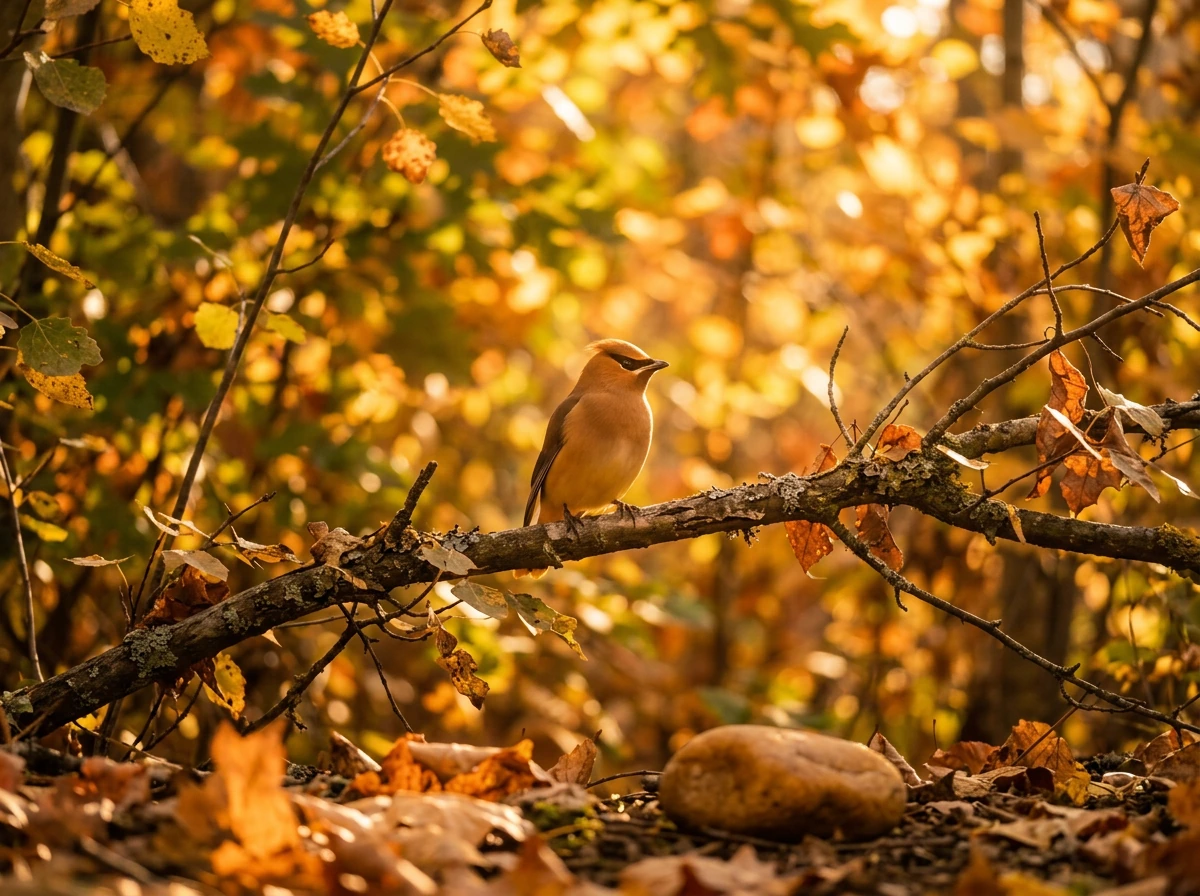
A vagrant bird is a species that shows up somewhere it has no business being, outside its normal range, and usually as a one-off or rare occurrence. That's the short answer. In formal bird ecology, the term is used precisely: BirdLife International defines a vagrant as a species recorded once or sporadically in an area where it is known not to be native. So if a bird from Siberia turns up in coastal California in October, or a tropical warbler appears in Iceland, that's a vagrant. It didn't choose that location as part of any regular pattern. It simply ended up there.
Vagrant Bird Meaning: Literal Definition, Metaphor, and How to Verify

Marcus Winters
22 Apr 2026
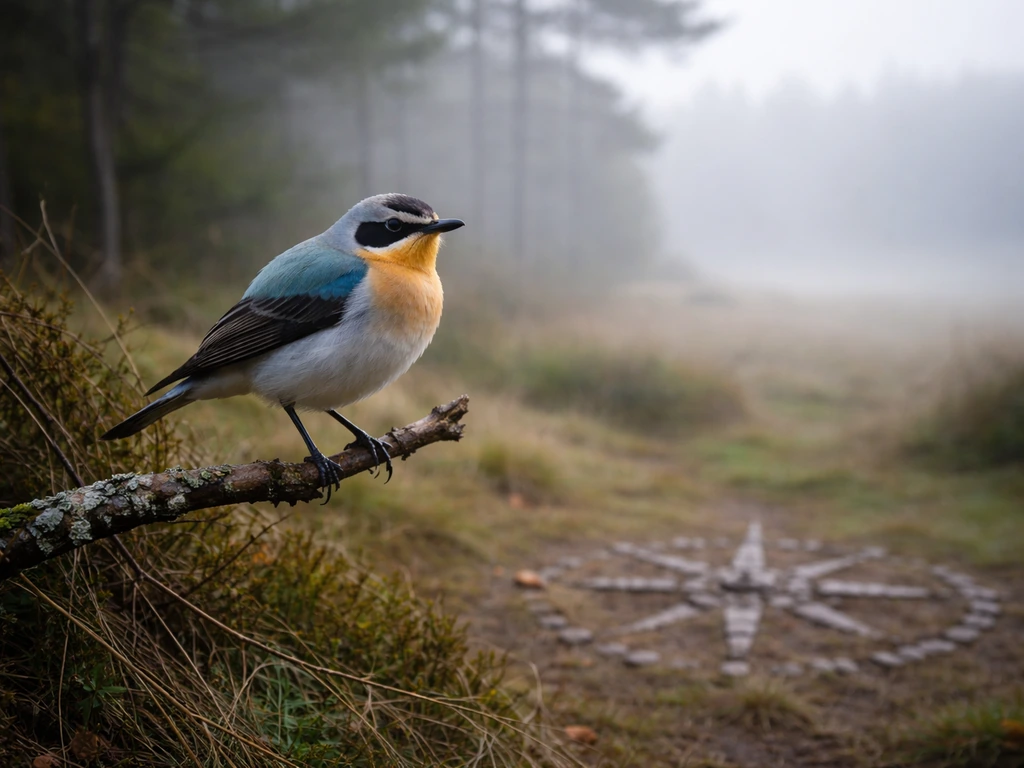
The term also carries figurative weight in everyday language, and that's where it gets interesting for people who aren't hardcore birders. 'Vagrant' comes from the Latin 'vagari,' meaning to wander, and for centuries it described rootless people with no fixed home. That wandering quality has attached itself to the bird usage in a way that feels almost poetic. In the same way, the phrase 'loop track bird meaning' gets used online to point to what people think the behavior or sighting represents. Understanding both meanings, the ecological one and the cultural one, gives you a much richer picture of why this phrase shows up in so many different conversations.
What 'vagrant' actually means in bird ecology
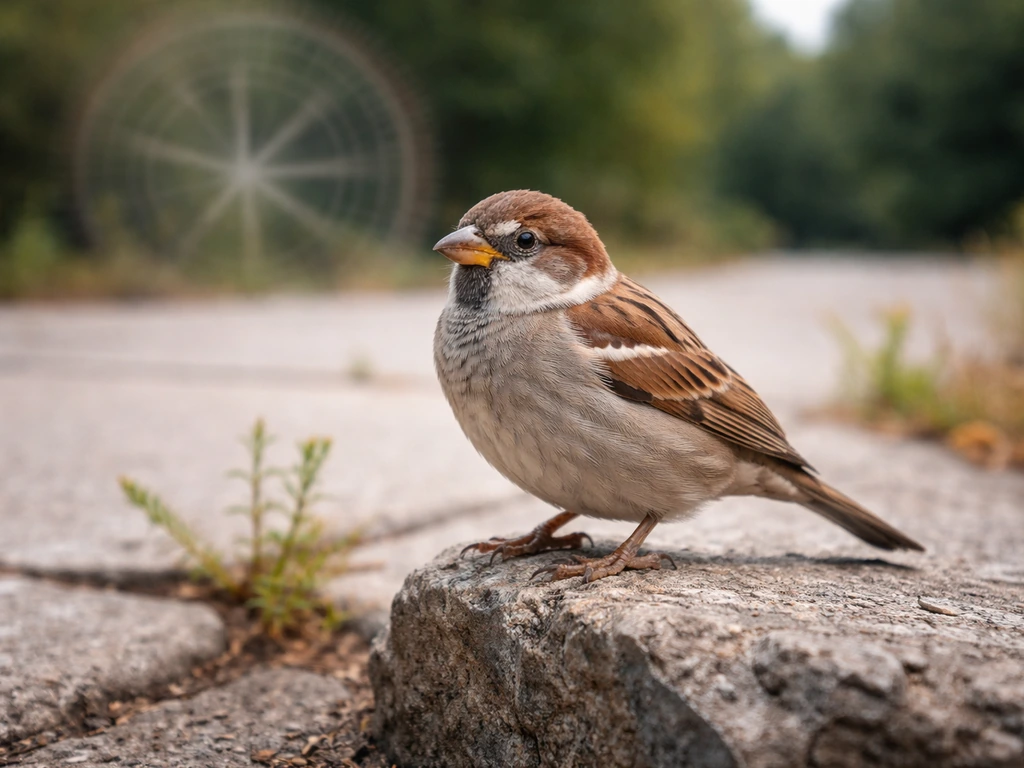
In birding and ornithology, 'vagrant' has a specific, accepted definition. It refers to an individual bird found outside the geographic range where its species normally lives, breeds, or migrates. The key word is 'normally.' Every species has a documented range, and when an individual shows up well beyond that range, often hundreds or thousands of miles away, it earns the vagrant label.
The BirdLife DataZone definition emphasizes the sporadic nature: a vagrant isn't just rare in a location, it's recorded there once or only occasionally, and crucially, it's not native to that area. This distinction matters because a species can be rare but still be a recognized native or regular migrant. A vagrant is different. It's an outlier in every sense.
The word itself traces back through Middle English and Old French to that Latin root, 'vagari,' to wander or roam. Etymologically, it's the same root that gives us 'vague' and 'extravagant.' The historical human sense, a person without a settled home or job, was the dominant meaning for centuries before ecologists borrowed it for birds. That borrowing feels natural because the behavior is so similar: a vagrant bird, like a vagrant person, has no place it firmly belongs in that location.
Vagrant vs. migrant, stray, and rare visitor: what's the real difference
These terms get mixed up constantly, and it's worth slowing down to separate them. A migrant is a bird following a predictable, seasonal route between breeding and wintering grounds. Migration is programmed behavior that happens on a schedule, and migrants are expected in specific places at specific times. A vagrant is not expected anywhere near where it's found.
A peer-reviewed study on New World warblers in northwestern California and Oregon makes the distinction explicit: researchers had to carefully separate 'relatively rare migrants' from 'vagrant species occurring outside normal range.' These are not the same thing. A rare migrant is still doing what its species does, just in smaller numbers. A vagrant has essentially broken out of the expected pattern entirely.
| Term | What it means | Is it expected? | Example |
|---|---|---|---|
| Migrant | Bird following a regular seasonal route | Yes, seasonally predictable | Warblers passing through in spring |
| Rare visitor | Species that appears occasionally but within a known range | Infrequently, but within normal range | A less common species at a regional hotspot |
| Stray | Informal term, often interchangeable with vagrant | No, off-track individual | A warbler blown off course |
| Vagrant | Species recorded outside its normal range, sporadically or once | No, genuinely out of range | A Siberian thrush appearing in coastal Maine |
| Introduced/Exotic | Non-native species released or escaped in an area | Possibly, if established | Feral parakeets in a city |
'Stray' is probably the most casual synonym for vagrant, and birders use it interchangeably in conversation. The difference is that 'vagrant' carries formal weight in records committees and official checklists, while 'stray' is more colloquial. 'Rare visitor' is a softer term that implies the species does turn up occasionally, perhaps on a multi-year cycle, whereas a true vagrant may be a once-in-a-generation sighting for that region. Wandering bird is another related concept, one that shares the rootlessness theme but applies more broadly, sometimes even to birds that regularly roam large territories without a fixed migration pattern. Many people also use the phrase wandering bird meaning to describe that same sense of being out of place or displaced.
Why vagrant birds end up so far from home

This is the part that genuinely fascinates me. There are several well-documented mechanisms, and they often work together rather than in isolation.
Weather events and storms
Severe weather is probably the most visible cause. A USGS study on Hurricane Sandy documented how the storm system flung nocturnally migrating landbirds off course, with unseasonably late eBird records suggesting birds were carried northward by the storm. Weather radar, field surveys, and wind modeling all pointed to the same conclusion: birds caught in extreme weather events can end up hundreds of miles from where they intended to be. This is especially common during fall migration when storm systems track across major flyways.
Geomagnetic disturbances
This one is less obvious but well-supported. A large-scale study published in Scientific Reports found a clear link between disruptions to Earth's magnetic field and increased vagrancy in migratory landbirds during fall migration. The dataset spanned decades and millions of bird captures. When the geomagnetic field is disturbed, the internal compass that guides migratory birds can give faulty readings, causing them to head in entirely the wrong direction. It's a bit like your GPS suddenly pointing east when you should be going west.
Navigation errors and reverse migration
Young birds on their first migration are especially prone to navigational errors. One well-studied phenomenon is 'mirror image' or reverse migration, where a bird that should head southwest ends up heading northwest instead, essentially flying a mirrored version of its intended route. These birds can travel the right distance in completely the wrong direction and end up in a location that makes no ecological sense for their species.
Habitat disruption and range expansion
Climate change and habitat loss are increasingly pushing birds into novel territories. Some 'vagrancy' events that would have been dismissed as flukes a generation ago are now being recognized as early signals of range shifts. A species edging its range northward or eastward may appear as a vagrant for several years before establishing itself as a regular presence. This is one reason ornithologists take vagrant records seriously as data rather than dismissing them as outliers.
How to tell if the unusual bird you're seeing is actually a vagrant
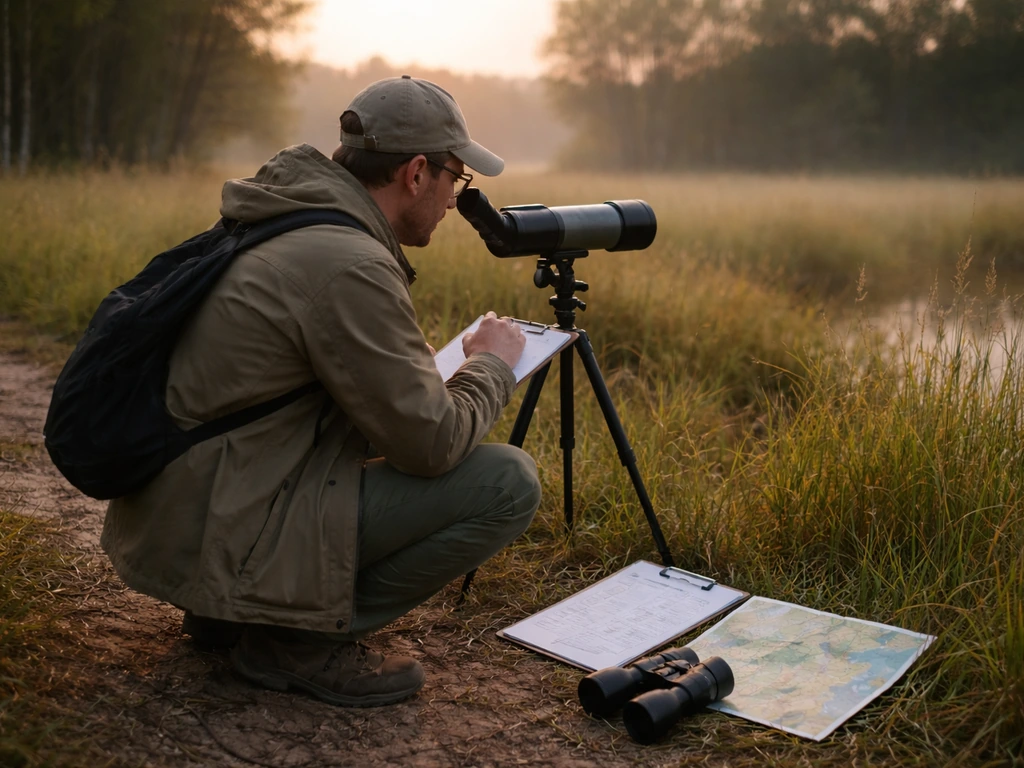
Seeing an unfamiliar bird doesn't automatically make it a vagrant. The identification process involves combining field observations with context, and it's worth being methodical about both.
Start with location and timing
The single most important question is: should this species be here, at this time of year? If you're seeing a species that has no documented range anywhere near your location, and it's showing up at an unusual time of year, that's a strong signal. Cross-reference with a regional checklist or an app like eBird to see what's expected in your area. If the species isn't on any expected list for your county or region, you're likely looking at something unusual.
Field marks: what to note carefully
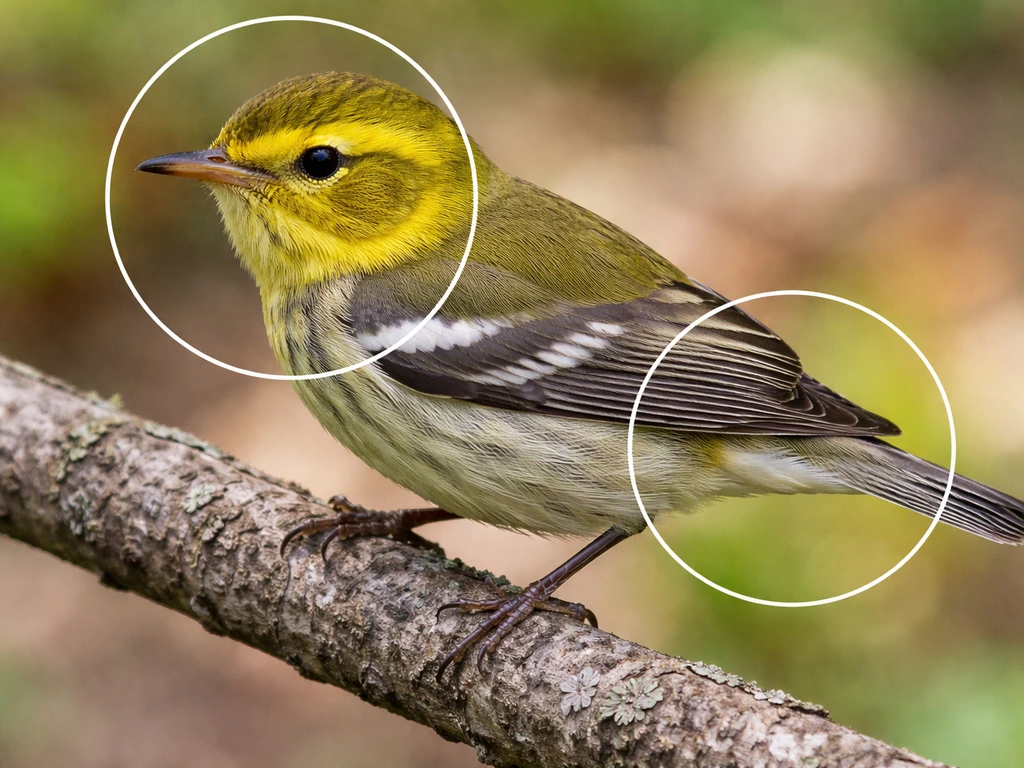
When you think you're looking at something out of the ordinary, document everything you can see. Note the overall size and shape, the color patterns on the head, breast, wings, and tail, the bill shape and length, the leg color, and any distinctive behavioral traits. [The New York State Avian Records Committee (NYSARC) specifically advises reporters](https://nybirds. org/Articles/NYSARC-guidelines2024.
pdf) to include details about parts of the bird that could NOT be seen, not just what was visible. The New York State Avian Records Committee (NYSARC) makes a Rare Bird Reporting Form available for submitting reports for species appropriate for its review NYSARC Rare Bird Reporting Form.
That level of honesty strengthens a record. Also note whether you were able to determine the bird's age or sex from its plumage.
Get photos, audio, or video if you can
eBird's documentation guidelines are clear: capture media at the time and location of the sighting. Photos, audio recordings, or video taken contemporaneously are the gold standard. What they explicitly discourage is using photos or audio taken on a different date, at a different location, or by a different person as your documentation. A live written description, even when you have a photo, is still valuable because it captures details the image might miss. And a note saying 'seen by guide' is not acceptable documentation on its own, according to eBird's policies for special birding circumstances.
Compare with lookalike species
Before concluding you've found a true vagrant, work through the realistic alternatives. Could it be a common local species in unusual plumage, such as an albino or leucistic individual? Could it be a juvenile that looks markedly different from the adult? Warblers, sparrows, and shorebirds all have species that closely resemble each other, and a careful comparison with a regional field guide is essential. The wagtail family is a good example: certain wagtail species that are common in Eurasia occasionally appear in North America, and distinguishing a genuine vagrant from a misidentified common species requires attention to fine details.
The symbolism and cultural meaning behind 'vagrant bird'
The figurative use of 'vagrant bird' draws almost entirely on the wandering and rootlessness the word has always carried. In literary and poetic contexts, a vagrant bird is often a metaphor for a free spirit, an outsider, or a soul untethered from conventional life. The image of a bird that has traveled far beyond its familiar territory resonates with themes of displacement, exile, and spiritual seeking.
In folklore traditions across cultures, birds that appear unexpectedly, especially in unusual locations, have often been read as messengers or omens. A bird showing up far from home carries an extra layer of strangeness that invites interpretation. In some traditions, a rare or unusual bird at the window or doorstep is seen as a visitor from the spirit world or a sign of impending change. The 'vagrant' quality amplifies this: it's not just any bird, it's one that shouldn't be there at all.
In modern usage, 'vagrant bird' sometimes serves as a metaphor for people who don't fit neatly into social categories, those who drift between communities or cultures without settling into one. The term 'runt bird' touches adjacent territory: the idea of an individual that doesn't fully belong to its expected group. People also ask “runt bird meaning” to describe a smaller, weaker, or undersized individual, often in relation to the rest of its group. The etymology reinforces this. 'Vagrant' has centuries of use describing marginalized wanderers, and applying it to birds that are literally displaced carries that connotation forward, intentionally or not.
It's worth being careful about reading too much spiritual significance into seeing a vagrant bird without context. Different traditions assign very different meanings to unusual birds, and there's no single universal interpretation. What one culture sees as a blessing, another reads as a warning. The meaning, if you choose to draw one, is heavily shaped by your own tradition and how you frame the moment.
What to do if you actually spot one

If you think you're looking at a genuine vagrant, here's a practical sequence to follow.
- Stay calm and observe first. Don't chase the bird or try to flush it for a better look. Vagrant birds are often exhausted from their journey and will move off if disturbed.
- Document it immediately. Take photos or video right away. Write detailed notes while the bird is still in view, covering every field mark you can see and, just as importantly, what you couldn't see.
- Note the exact location, date, and time. Be as precise as possible, including GPS coordinates if you have them. This information is critical for any official record.
- Check eBird to confirm the bird is genuinely unusual for your location and season. Enter your sighting as a checklist and add documentation in the species comments field.
- Submit a rare bird report to your local or regional bird records committee if the sighting qualifies. In the US, most states have an active records committee. NYSARC, for example, provides explicit guidance on what documentation to include.
- Alert your local birding community. Post to a local birding listserv, Facebook group, or WhatsApp group. Other birders will want to see the bird, and more observers means more documentation, which strengthens the record.
- Respect private property. If the bird is on someone else's land, ask permission before entering. Many vagrant sightings happen in gardens or farmland where the landowner's cooperation is essential.
On the safety side, there's very little to worry about with vagrant birds in terms of physical risk. Most vagrant passerines (songbirds) are small, harmless, and far more frightened of you than you are of them. The main caution is not to stress the bird further. It has already traveled an extraordinary distance under difficult conditions. Give it space to feed and rest, keep pets inside or at a distance, and don't allow large groups of birders to crowd it.
The eBird records process also involves regional records committees that may evaluate the provenance of your sighting, meaning whether the bird is genuinely wild or possibly an escaped captive. The British Birds Rarities Committee, for example, assesses provenance separately from identification: a sighting can be accepted as correctly identified but still placed in an appendix if the bird's wild origin is uncertain. In the US, eBird uses a 'Provenance Uncertain' or Provisional category for similar cases. This doesn't diminish your sighting, it's just how the formal record-keeping works.
Common misconceptions that are worth clearing up
One of the most persistent myths is that vagrant birds are somehow broken or defective navigators destined to die because they've lost their way. Scientific American has reported on this directly, citing an ecologist who points out that this misconception has led people to dismiss vagrants as scientifically unimportant. In reality, vagrancy is a normal part of the natural range of variation in bird behavior, and vagrant records have real scientific value for tracking range shifts, understanding migration mechanics, and documenting responses to climate change.
Another common mistake is assuming that any unusual or unfamiliar bird is automatically a vagrant. Most of the time, an unfamiliar bird is simply a species you haven't seen before that is perfectly within its normal range. Before leaping to the vagrant conclusion, always check what's expected in your area first. Apps like eBird make this easy by showing you exactly which species have been recorded near your location and when.
On the symbolic side, people sometimes assume that seeing a vagrant bird carries a specific spiritual meaning, a fixed omen that applies universally. If you're asking “ran over a bird meaning,” that phrase is usually being used in a symbolic or idiomatic way, not as literal wildlife identification. It doesn't work that way. Bird symbolism varies enormously across cultures and traditions. The idea that any out-of-place bird signals a specific message, good or bad, is a projection of human meaning onto animal behavior. That's not to say the experience can't feel meaningful. It often does. But the meaning comes from your own interpretive framework, not from a single agreed-upon tradition.
Finally, don't confuse vagrant birds with introduced or feral species. A flock of parakeets living year-round in a city park is not a vagrant event: it's an established introduced population. Vagrant birds are wild individuals that have genuinely traveled outside their range. The distinction matters for conservation, for records committees, and for understanding what you're actually seeing.
FAQ
If a bird shows up outside my region, does that automatically mean it’s a vagrant bird meaning situation?
Not necessarily. A bird can be outside your local area and still be on a species’ normal seasonal movement pattern, for example as a rare migrant or a predictable winter visitor. A true vagrant requires the individual to be outside the species’ expected range for that time of year, not just outside your personal “usual” area.
How do I tell “rare native” from a true vagrant when I only have one brief sighting?
Check whether the species is native to your broader country or region and whether it has documented occurrences nearby. If the species is known as a normal migrant or occasional visitor in your wider region, it may be rare-but-expected. If it is documented nowhere near you and appears at an odd time, that points more strongly toward vagrant status.
What should I do differently if the sighting is just a distant silhouette with no clear field marks?
Treat it as a provisional identification until you can rule out look-alikes. For records and even personal confidence, focus on non-negotiables you can still observe, such as overall wing shape, tail length, flight style, and bill shape if visible. If you cannot, prioritize getting media, then submit with uncertainty rather than forcing a species.
Do I need photos to verify vagrant bird meaning, or is my description enough?
A live written description is valuable, but documentation standards usually weigh media heavily, especially for rarities. If you cannot photograph, audio can help for species with distinctive calls, and detailed notes taken immediately (not later) can still be accepted. The key is contemporaneous data and honest uncertainty.
How can provenance affect whether the sighting “counts” as a vagrant?
Even if the bird is correctly identified, committees may flag provenance if there’s a reasonable chance it escaped from captivity. That means your sighting can still be valuable for ID and local awareness, but it might be categorized separately in official records (for example with wording like uncertain provenance).
Can a vagrant bird meaning change over time as more sightings happen?
Yes. A one-off vagrant can later become part of an emerging range shift if repeated occurrences occur over multiple years. When that happens, the species may move from “sporadic vagrant” toward “regular but expanding” presence, and your original record may get reinterpreted in hindsight.
Are young birds or juveniles always more likely to be mistaken for vagrants?
They can be. Juvenile plumage often differs substantially from adults, making normal individuals look unfamiliar. A practical approach is to verify whether the species’ juvenile pattern could match your sighting, then confirm that the timing and geography still conflict with expected occurrence.
What if my app says the bird is “expected” but it still feels like a vagrant bird meaning to me?
App expectations can be broad and sometimes lag behind real changes. Reconcile by checking the exact species and the local date range listed, then confirm whether your observation fits a known seasonal pattern or truly falls outside it. If you’re uncertain, submit with uncertainty and include your reasoning notes.
Is it possible for the same vagrant bird to be seen by many people in the area?
Yes, and that can actually strengthen the record if everyone’s observations are consistent. However, it can also create confusion if the group is actually observing more than one individual, or if a second, similar species is present. Keep notes on whether the bird’s appearance and behavior match across days, including age and plumage details.
How do I avoid confusing introduced feral birds with vagrant birds?
Look for signs of a resident population behavior, such as year-round sightings, predictable roost sites, and mixed-age flocks that behave like local residents rather than exhausted wanderers. Vagrants are usually single individuals or very small numbers with no established local pattern.
Next Article
Amber Bird Meaning: Symbolism, Interpretations, and How to Use It
Learn amber bird meaning: disambiguate the phrase and interpret it using amber and bird symbolism, grounded steps includ