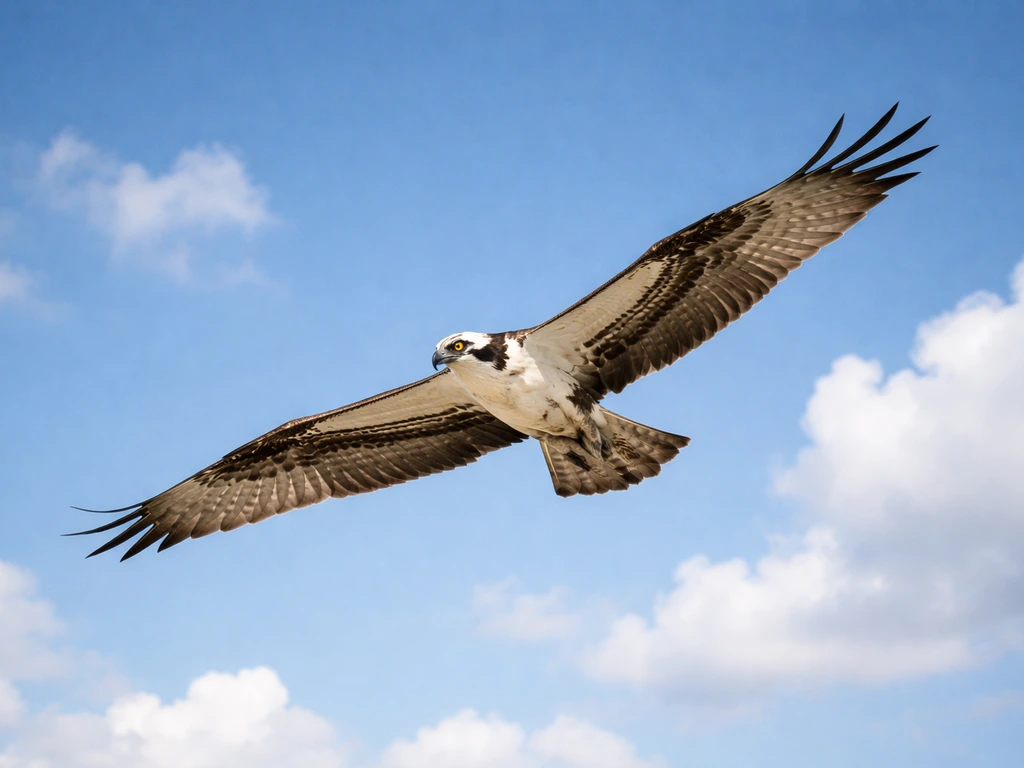
A 'winged bird' most often means exactly what it sounds like: a bird with wings, described literally. But depending on where you encountered the phrase, it can carry rich symbolic weight, pointing to freedom, the soul, divine messages, or spiritual transformation. The meaning shifts dramatically based on context: a winged bird soaring in a tattoo design means something very different from the same phrase in a religious text, a dream, or an esoteric symbol guide. Here is how to decode which one applies to your situation.
Winged Bird Meaning: Literal, Symbolic, and Spiritual Interpretations

Marcus Winters
1 May 2026
What 'winged bird' literally means in everyday language

At its most basic level, 'winged' is just an adjective meaning 'having wings.' The Oxford Advanced Learner's Dictionary defines it that way, noting it as the direct opposite of 'wingless.' So a 'winged bird' is simply a bird that has wings, which is, of course, nearly every bird. That is why the phrase shows up in descriptive settings rather than as a fixed idiom. In Merriam-Webster usage examples, you see things like 'green-winged bird,' meaning the adjective is there to specify or describe, not to signal a deeper concept.
One of the clearest examples of this literal use appears in the Bible. Many translations of Genesis use the exact phrase 'every winged bird' when listing living creatures God created. There is no symbolic code there; it is a cataloguing statement. If you are reading a nature guide, a taxonomy entry, or a plain narrative text and you see 'winged bird,' you are almost certainly looking at description, not allegory. The test is simple: does the surrounding text tell a story or classify things? If yes, take it literally.
The broader symbolism birds carry in language and culture
Once you move out of literal description and into art, poetry, spirituality, or folklore, the bird becomes one of the most symbolically loaded creatures in human culture. Across nearly every tradition studied by encyclopedias and cultural historians, birds carry a recognizable cluster of meanings: freedom, the soul or spirit, divine messages, hope, and transformation. Encyclopedia.com summarizes this as a cross-cultural constant: birds symbolize the soul released, the spirit ascending, and the self transcending its earthly limits. That cluster did not appear in one culture and spread. It arose independently in ancient Egypt, the Mediterranean world, the Near East, South Asia, and beyond, probably because flight itself is such a vivid metaphor for leaving the ground behind.
The Jewish Encyclopedia notes that because birds move through the air in a way land creatures do not, they suggested 'images of the soul' across multiple languages and traditions. That connection between flight and the non-physical self is ancient and widespread. So when you see a bird used symbolically, your starting assumption should be that it is touching on at least one of these: freedom, soul, spirit, message from beyond, or change. The question is which one, and that is where context comes in.
Is 'winged bird' an idiom or poetic imagery? It matters
Here is a distinction worth making clearly: 'winged bird' is not a fixed idiom in English the way 'a bird in the hand' is. It does not have a single agreed-upon figurative meaning you can look up in a phrase dictionary. Instead, it functions as poetic or descriptive imagery, and that means its meaning is shaped entirely by the context around it. Compare that to 'bird on the wing,' which has an established figurative sense of something in motion or in its natural, free state. The phrase “bird on the wing” is commonly used to mean something in motion, free, and unrestrained. 'Winged bird' is more open-ended.
In poetry and literature, 'winged bird' is often used for its imagery and rhythm rather than to trigger a specific symbolic code. A poet writing 'the winged bird lifts above the storm' is reaching for a feeling of transcendence, not citing a traditional idiom. In art and tattoo design, the phrase often appears as a caption or category label for bird-in-flight imagery, which does carry conventional symbolic meaning in those contexts. So the phrase itself is fluid; what anchors its meaning is the medium and the surrounding details.
Cultural and religious symbolism tied to winged birds
Across the major world religions and ancient traditions, winged birds appear repeatedly as symbols of divine communication, the soul's journey, and transcendence. Here is a quick breakdown by tradition:
Ancient Egypt
The ancient Egyptians depicted the 'Ba,' one of the elements of the soul, as a human-headed bird flying free from the tomb after death. The Bennu bird, a flying heron-like creature, was associated with resurrection and the cycles of creation. Winged bird imagery in Egyptian contexts almost always points to the afterlife, the soul's continuation, or divine power. The Biblical Archaeology Society notes just how deeply bird imagery penetrated Egyptian religious art and society.
Christianity

The Catholic Encyclopedia documents how specific bird species carry distinct meanings in Christian symbolism. For example, the Catholic Encyclopedia (New Advent) explains that, in general, the dove as a Christian emblem signifies the Holy Spirit personally or in His works blank" rel="noopener noreferrer">the Catholic Encyclopedia documents how specific bird species carry distinct meanings in Christian symbolism. The dove is the most prominent: it blank" rel="noopener noreferrer">represents peace and, in early Christian art, serves as a visual stand-in for the Holy Spirit. Birds in Christian contexts often suggest purity, divine presence, or the soul's relationship with God. A winged bird ascending in Christian art frequently signals resurrection or spiritual ascent.
Islam
The Quran includes several notable bird episodes. The hoopoe (Hudhud) acts as a messenger between Solomon and the Queen of Sheba, functioning explicitly as a divine communication agent. The Ababil birds appear as agents of God's power. In Islamic tradition, birds as divine signs and messengers carry real theological weight, not just poetic decoration.
Buddhism and Hinduism
In Buddhism, birds can appear as manifestations or epiphanies of Buddhas and bodhisattvas, linking them to enlightenment and compassion. The peacock in particular appears in Buddhist art tied to wisdom. In Hinduism, the Garuda (a divine eagle-like bird) serves as Vishnu's mount and symbolizes power, speed, and divine authority. Across both traditions, birds represent spiritual elevation rather than mere physical flight.
Greco-Roman and Norse traditions
In Greek tradition, specific birds were messengers of specific gods: the eagle for Zeus, the owl for Athena. In Norse mythology, Odin's ravens Huginn and Muninn flew the world gathering information and returning to him, making them literal divine messengers. Doves, as Wikipedia's dove-symbolism entry notes, function across Christianity, Judaism, Islam, and pagan traditions as a remarkably consistent symbol of peace and divine favor.
Spiritual and esoteric interpretations of winged birds
In spiritual and occult traditions, the wings themselves do the symbolic heavy lifting. J.E. Cirlot's 'A Dictionary of Symbols,' a widely referenced work in symbolic studies, states directly: 'Every winged being is symbolic of spiritualization.' That is a broad but powerful rule. If something has wings in a symbolic context, whether it is a bird, an angel, or a hybrid figure, the wings signal a connection to the spiritual realm, the ability to transcend the physical, or movement between the human and the divine.
In modern esoteric and New Age interpretation, winged birds are regularly read as symbols of freedom (escaping earthly limitations), messages from the spirit world or deceased loved ones, transformation (moving from one state of being to another), and ascension (the soul rising toward higher consciousness). Wisdomlib and similar esoteric reference sites generalize these meanings broadly, which is useful as a starting framework but can blur important distinctions between traditions. The core intuition, that a winged bird in flight represents the spirit moving freely and upward, holds across most of these systems.
One important nuance: the condition of the wings matters enormously in spiritual interpretation. An intact bird in full flight points toward freedom, transcendence, and unblocked potential. A broken-winged bird or clipped-wing imagery flips the meaning toward restriction, grounded ambition, or a soul that cannot yet ascend. If you want the deeper interpretation, broken-winged birds often symbolize loss of freedom and a soul that is trying to heal and move forward broken winged birds.
In that broken-winged context, the broken winged bird meaning often points to restriction or a spirit that has not fully ascended yet broken-winged bird. A wounded bird meaning in symbolism often points to restriction, hardship, or a spirit that is struggling but still searching for release broken-winged bird. This connects to themes explored in related topics like broken winged birds and injured bird symbolism, where the damage itself becomes the message.
If you are reading a symbol that involves a winged bird, always note whether it is soaring or struggling. In some cases, people use winged-bird imagery to point to an injured bird meaning like harm followed by healing and renewed freedom.
Where people most often encounter 'winged bird' imagery and what it usually means there
The meaning shifts noticeably depending on where you found the phrase or image. The falling bird meaning often comes down to whether the scene suggests loss, warning, or spiritual descent. Here is how it typically breaks down across the most common contexts:
| Context | Typical Meaning | Key Details to Check |
|---|---|---|
| Tattoo design | Freedom, transcendence, personal transformation; species-specific meanings also apply (e.g., swallow = safe return home, sailors used this for centuries) | Species of bird, soaring vs caged/injured, surrounding symbols |
| Dreams | Soaring bird = freedom or aspiration; caged or broken-winged bird = feeling trapped or blocked | Flight condition, whether the bird is free or confined |
| Religious text (literal) | Plain description of a creature with wings; no symbolic intent | Surrounding narrative: is it a list, a story, or an allegory? |
| Art and mythology | Soul, divine messenger, transcendence, afterlife journey | Tradition of origin (Egyptian, Christian, Islamic, etc.), species |
| Poetry and literature | Poetic imagery for freedom, the soul, or aspiration; not a fixed idiom | What the bird is doing: ascending, caged, wounded, or free? |
| Heraldry | Formal visual motif ('vol' for outstretched wings); meaning is tradition-specific | Specific heraldic term and context; not a general symbol |
| Spiritual/esoteric use | Spirit, divine message, transformation, freedom from earthly limits | Tradition referenced, condition of wings, surrounding symbols |
Tattoos deserve a special note here. A tattooed bird in flight has become one of the most universal symbols of freedom and transcendence in modern tattoo culture, particularly from the 20th century onward. But species still matters: a swallow tattoo carries the specific sailor tradition of safe passage home, while a phoenix carries resurrection, and a raven might signal mystery or the occult. Wing tattoos without a body (just the wings) tend to lean toward angelic or spiritual speed and ambition rather than bird symbolism specifically. Always look at the full design before settling on a meaning.
How to figure out what 'winged bird' means in your specific case

The most practical thing you can do is run through a short checklist of questions about the context where you encountered the phrase or image. These questions will quickly narrow your interpretation from 'could mean many things' to 'almost certainly means this.'
- Is the phrase being used literally or figuratively? Check the surrounding text. If it appears in a nature catalogue, a straightforward narrative, or a religious text listing creatures, treat it as description. If it appears in poetry, art captions, spiritual writing, or dream analysis, treat it as symbolic.
- What is the bird doing? A bird in full, free flight points to freedom, transcendence, and unblocked potential. A caged, falling, or wounded bird points to restriction, blocked ambition, or spiritual difficulty. Related themes like wounded or broken-winged birds carry their own specific meanings worth exploring separately.
- What species is it? A dove, a raven, an eagle, a swallow, and a phoenix all carry distinct meanings layered on top of general bird symbolism. If you can identify the species, look it up specifically.
- What tradition is the source from? Egyptian art, Christian iconography, Islamic scripture, Buddhist imagery, and New Age spirituality all use birds symbolically but with different frameworks. The tradition determines which interpretation applies.
- What surrounds the bird in the image or text? Other symbols, colors, or objects in the composition will reinforce or shift the bird's meaning. Wings with halos suggest the divine; wings over flames suggest transformation; wings with chains suggest liberation from constraint.
- Are the wings intact or damaged? Intact and outstretched wings signal spiritualization and freedom (per Cirlot's rule). Broken, clipped, or folded wings shift the meaning toward limitation, grounding, or a journey not yet completed.
- Is this a tattoo, a dream, artwork, or a written phrase? Use the table above to match the context to its most typical meaning before diving deeper.
Running through those seven questions will get you to a confident interpretation in most cases. If your image is a wounded bird, the symbolism usually shifts toward pain, grief, healing, or vulnerability rather than pure freedom wounded bird meaning. The phrase 'winged bird' is genuinely versatile: it can be a plain description of a living creature, a poetic stand-in for the human soul, a divine messenger in a specific religious tradition, or a tattoo shorthand for personal freedom.
If you are specifically asking about finding a bird wing meaning, treat it like a context clue and compare it to the symbolic themes birds represent. People sometimes search for “sore like a bird meaning” because they are looking for the emotional or symbolic interpretation implied by winged-bird imagery. None of those readings is wrong. What matters is matching the right reading to the right context, and the questions above are your fastest route to doing that.
FAQ
Does “winged bird meaning” ever refer to a specific phrase or idiom in English?
Usually no. “Winged bird” is typically descriptive imagery (a bird with wings) or a flexible poetic image, not a fixed idiom with one standard definition. If you want an idiom, look for established wording like “bird on the wing,” otherwise the meaning will come from the surrounding scene.
How do I interpret winged bird imagery when the picture shows an angel or a hybrid creature instead of a real bird?
In symbolic readings, the wings often carry the message even if the figure is angelic. If the figure is human-like with wings, the emphasis usually shifts toward spiritual ascent, divine guidance, or the soul, rather than bird-only themes like hope or flight freedom.
What if the winged bird is not soaring, for example it is perched, falling, or trapped?
Condition and action matter. Perched can suggest awaiting guidance or a moment of rest, falling often leans toward warning or spiritual descent, and trapped or caged imagery commonly points to blocked freedom, delayed transformation, or a need for release.
In dreams, should I assume a “message” meaning automatically?
Not automatically. A dream “winged bird” can be symbolic (freedom, transcendence, change), but you should prioritize your emotional response (relief, fear, grief, awe) and the dream setting. A frightening or helpless bird in a dream often points to restriction or unresolved issues, not comfort or guidance.
How can I tell whether a tattoo “winged bird” is about freedom versus something like protection or fate?
Use the design details. Birds commonly signal freedom and ascent when shown in clear flight, open sky, or upward angles. If the bird includes clocks, runes, protective motifs, a specific bird species, or directional elements, the meaning may shift toward protection, destiny, or a personal belief tied to those symbols.
Does the species matter for winged bird symbolism, or is “winged bird” enough on its own?
Species often changes the shade of meaning. For example, doves frequently connect to peace and divine favor, ravens to mystery, swallows to safe passage, and phoenix-like figures to rebirth. If the species is unclear, rely more on action (soaring versus wounded) and environment (temple, ocean, storm, cemetery).
What does it mean if the wings are damaged or the bird looks injured in a symbolic image?
Damaged wings generally shift the reading toward restriction, healing, loss of potential, or a spirit that has not fully “ascended.” In practice, look for whether the injury is fatal or survivable, because survivable injury often implies struggle with hope or a turning point toward recovery.
If someone says “winged bird” in a religious text, should I always treat it literally?
Most of the time, yes, especially in catalog-like descriptions or lists of created life. But if the passage uses it for an event tied to judgment, rescue, revelation, or resurrection, then symbolic reading may apply. The quickest test is whether the text uses the bird as a character in a theological story or as a simple description.
Is there a way to avoid “over-interpreting” winged bird symbolism?
Yes. Decide what you actually know: the exact context (where it appeared), the bird’s state (healthy, injured, falling, trapped), and your own reaction. If you only have the phrase with no image or setting, treat it as broadly symbolic (freedom or ascent) and avoid claiming a specific tradition meaning.
What’s a practical next step if I want to decode a winged bird meaning for a specific image I saw?
Write down five specifics: species (if any), action (soaring, perched, falling), wing condition (intact, clipped, broken), setting (sky, storm, tomb, church, cage), and any accompanying symbols (cross, halo, runes, flowers). Then match the meaning to that combination rather than to the general idea of “winged bird.”
Next Article
Bird on the Wing Meaning: Literal vs Idiomatic Use
Learn the bird on the wing meaning, from literal flight to idiom for readiness, freedom, and opportunity by context.