In English, a bird is a warm-blooded, feathered vertebrate animal that lays hard-shelled eggs and typically has wings built for flight. That is the core dictionary definition, and it covers everything from a sparrow in your garden to an ostrich that never leaves the ground. The word 'bird' is also one of the most active words in English figurative language, turning up in dozens of idioms, slang expressions, and cultural references that have nothing to do with actual animals. Whether you are learning English, reading a text with an unfamiliar phrase, or trying to understand why people call a person a 'bird,' this guide walks you through both meanings clearly.
What Is the Meaning of Bird in English

Marcus Winters
25 Jun 2026
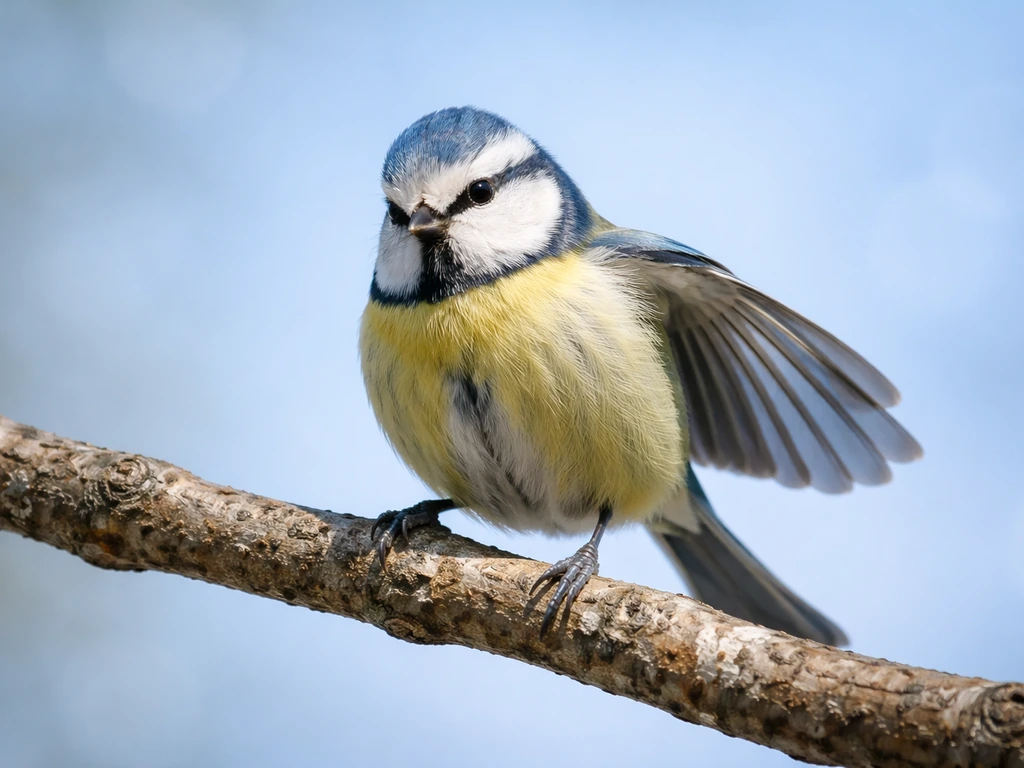
The direct English definition of 'bird'
The Cambridge English Dictionary defines a bird as 'a creature with feathers and wings, usually able to fly.' Merriam-Webster adds scientific precision, calling it 'a warm-blooded egg-laying vertebrate animal.' Both definitions are correct and complementary. Cambridge gives you the everyday mental image, while Merriam-Webster anchors it to biology. In scientific classification, birds belong to the class Aves, which groups all living bird species together under shared physical traits.
The word 'bird' itself comes from Old English 'bridd,' which originally referred to a young bird or hatchling. Over centuries, the meaning expanded to cover all members of the animal class we know today. That etymological backstory matters because it shows how fluid English words can be, and 'bird' is a perfect example of a word that grew far beyond its starting point.
What actually makes an animal a bird
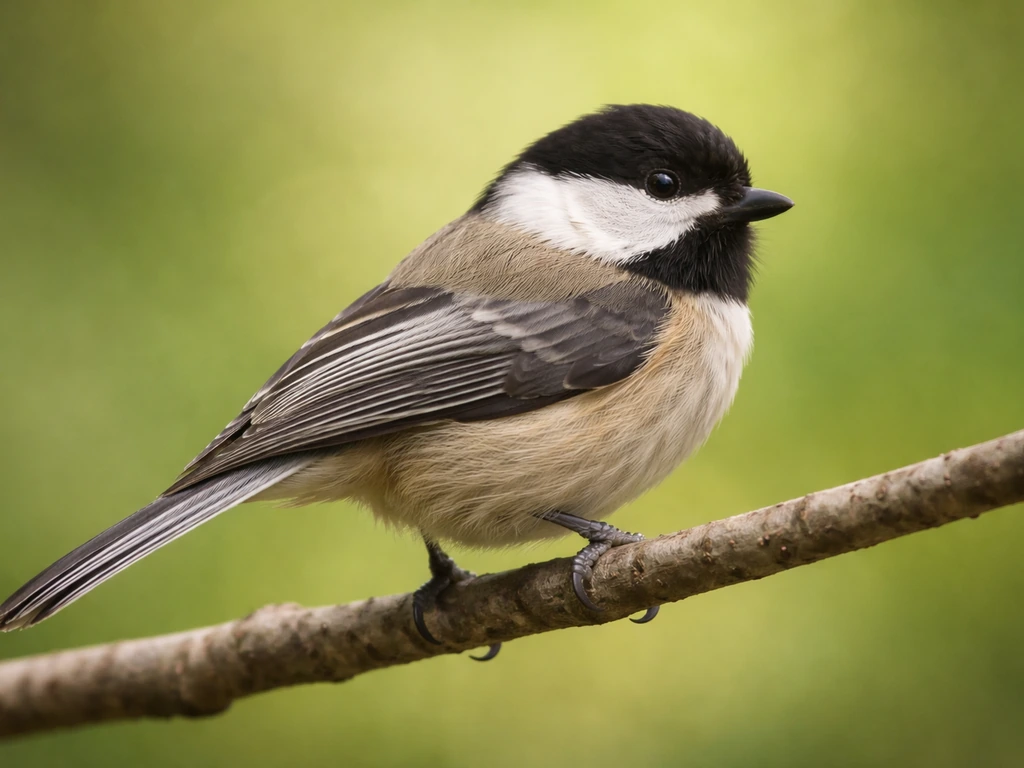
Not every flying animal is a bird, and not every bird can fly. So the defining traits matter more than the popular image of a creature soaring through the sky. According to Encyclopaedia Britannica, the features that set birds apart from all other animals are: Britannica describes birds as living species unique in having feathers, along with other distinguishing traits such as being warm-blooded and having a four-chambered heart.
- Feathers: birds are the only animals on Earth that have them, and feathers serve multiple purposes including insulation, flight, and display
- Warm-bloodedness (endothermy): birds regulate their own body temperature internally, which feathers help maintain by providing insulation
- Wings: forelimbs modified into wings, even in flightless species like penguins and ostriches
- Hard-shelled eggs: birds reproduce by laying eggs with a rigid shell, almost always incubated by the parents
- A four-chambered heart: shared with mammals, this efficient circulatory system supports a high-energy lifestyle
- A beak (bill) rather than teeth: all modern birds have a beak instead of teeth, which you can explore in more detail if you look into bill anatomy
Common confusion: bats, insects, and flying squirrels
Bats fly, but they are mammals, not birds. They have fur instead of feathers, give birth to live young, and nurse them with milk. Insects fly too, but they are invertebrates with an entirely different body structure. Flying squirrels glide but do not truly fly, and they are also mammals. The reliable shortcut: if it has feathers, it is a bird. Nothing else does.
'Bird' in common everyday English usage
In everyday English conversation, 'bird' does a lot of work across different contexts. In England, people also use 'bird' in everyday speech, but the meaning can be different depending on the context and tone. Here are the most common ways people use it literally:
| Term | What it means | Example |
|---|---|---|
| bird | Any species belonging to class Aves | 'A bird landed on my windowsill' (could be any species) |
| fowl | A bird kept or hunted for food, especially chickens, ducks, turkeys, and geese | 'We roasted a fowl for Sunday dinner' |
| poultry | Domesticated birds raised for eggs or meat as a food category | 'The supermarket has a good poultry section' |
| wildfowl / game bird | Wild birds hunted for sport or food, such as pheasants or grouse | 'He went out for wildfowl early in the morning' |
| songbird / passerine | A smaller bird known primarily for its song, like robins or finches | 'That songbird outside my window woke me up' |
Grammar note: the plural of bird is simply 'birds.' A group of birds in flight is called a flock. You will also encounter specific collective nouns for particular species, like a 'murder of crows' or a 'parliament of owls,' but 'a flock of birds' works universally. 'Bird' used as an adjective usually appears as 'avian,' as in avian flu or avian biology. If you are wondering “bulbul bird meaning in english,” it is helpful to check how the word “bird” is used in everyday English, including terms like avian.
Literal vs figurative: how to tell which meaning someone intends
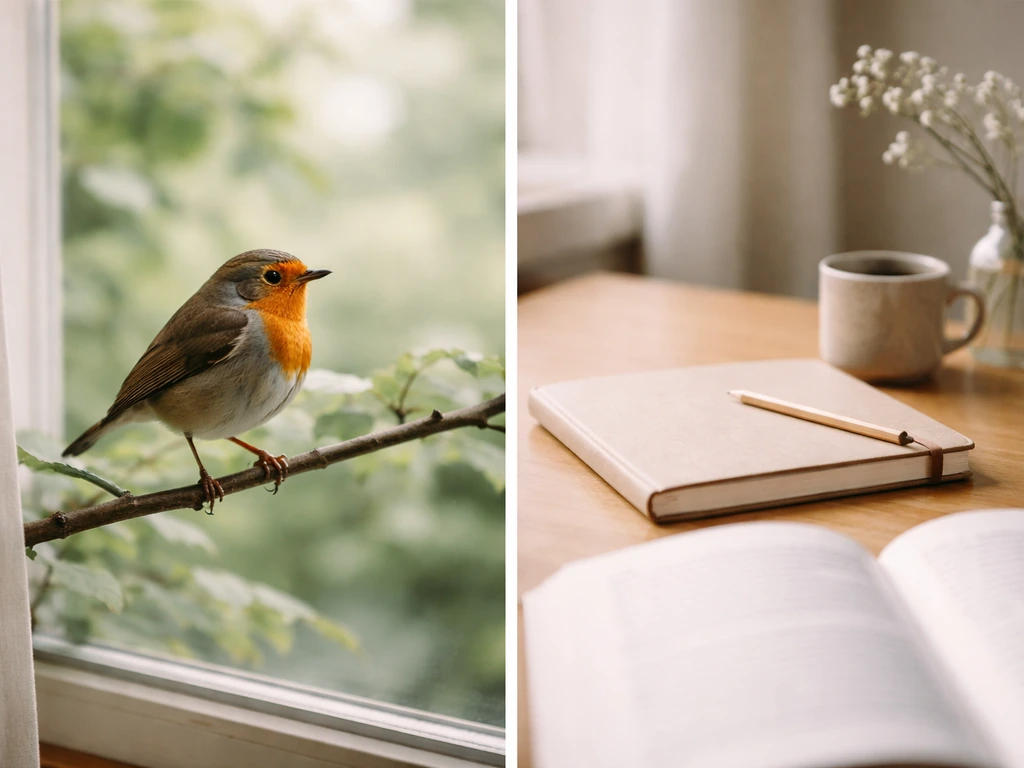
This is where English gets interesting, and where context becomes everything. If you meant the common idiom context behind “bird” in a phrase, you can use this guide to pin down the exact meaning in English bird meaning in English. When someone says 'a bird flew past the window,' they mean an actual animal. But when someone says 'she gave him the bird,' they are not talking about handing over a feathered creature. The figurative use of 'bird' is embedded deeply in English, and the clues for telling the two apart are almost always in the surrounding sentence.
Ask yourself: is the 'bird' doing something a real bird can do, like fly, nest, or sing? If yes, the speaker probably means the animal. If the 'bird' is involved in a human situation, a relationship, a decision, or an abstract concept, it is almost certainly figurative. British English adds another layer here: 'bird' is common informal slang for a young woman in the UK, a usage that has its own cultural history and is worth reading about separately if you are navigating British expressions. To get the bird UK meaning, look at the context to confirm that it is referring to a young woman rather than a literal animal British English adds another layer here: 'bird' is common informal slang for a young woman in the UK.
Everyday idioms and expressions using 'bird'
English is packed with bird idioms, and many of them are so old that people use them without thinking about the original image. Here are the most common ones you will encounter, with what they actually mean:
| Expression | Meaning | Example in use |
|---|---|---|
| A bird in the hand is worth two in the bush | It is better to keep something you already have than to risk it chasing something better | 'I was offered a good job, and a bird in the hand is worth two in the bush, so I took it' |
| Birds of a feather flock together | People with similar interests, values, or habits naturally spend time together | 'Those two are always in trouble together, birds of a feather' |
| Kill two birds with one stone | Accomplish two things with a single action | 'I stopped at the pharmacy on the way to the gym, killed two birds with one stone' |
| The early bird catches the worm | People who start early have an advantage | 'She always arrives first to the market because the early bird catches the worm' |
| A little bird told me | You heard something from a confidential or unspecified source | 'A little bird told me you're getting promoted' |
| Free as a bird | Completely free, with no obligations or restrictions | 'After finishing the project, I felt free as a bird' |
| Give someone the bird | To make a rude gesture of dismissal (US English); also to boo someone off a stage (older British usage) | 'When he cut her off in traffic, she gave him the bird' |
| Odd bird / strange bird | A person who is unusual or eccentric | 'He always shows up in a top hat. Real odd bird' |
Most of these idioms trace back to observations about actual bird behavior, which is part of why they stuck. The image of an early bird pulling a worm from the ground, or birds of the same species grouping together, was something everyone in a pre-industrial world would recognize immediately. The idioms worked as vivid shortcuts, and they still do.
How to find the exact meaning of the bird phrase you came across
If you encountered a specific phrase, expression, or bird name and are not sure what it means, here is a practical process for tracking it down.
- Write down the exact phrase as it appeared, not just the word 'bird' in isolation. Context is everything, and searching 'birds of a feather meaning' will get you a precise answer while searching just 'bird meaning' will return a broad definition.
- Check whether a specific bird species is named in the phrase. A bulbul, a vak bird, or a raven each carries distinct cultural and symbolic meanings in English and across world traditions, and those meanings are separate from the word 'bird' itself.
- If the phrase is from British English, note that 'bird' and related expressions sometimes carry distinctly UK meanings that differ from American usage. The British use of 'bird' to refer to a person, for example, has its own cultural roots.
- Search the phrase plus 'meaning in English' to find direct definitions. For idioms, adding 'origin' to your search will often give you the historical backstory, which helps the meaning stick.
- If the phrase involves a bird's body part, like a bill or a wing, that detail often carries symbolic weight of its own and is worth looking up separately.
- When in doubt, read the phrase aloud in context. If it would make literal sense describing a real animal, it probably is literal. If it sounds odd as a description of an actual bird, it is almost certainly an idiom or a cultural reference.
The word 'bird' in English sits at an interesting crossroads: it is one of the first words children learn for an animal, and at the same time one of the most figuratively active words in the language. In English, the phrase "bill of a bird" refers to the bird's beak or bill. Once you understand both the literal definition and how idioms work, you will catch the meaning correctly almost every time, whether you are reading a nature article, a novel, or a text from a British friend.
FAQ
What does “bird” mean in English when someone is talking about an idiom like “early bird” or “bird of a feather”?
In idioms, “bird” is not describing a literal animal. “Early bird” means a person who arrives or acts early, and “bird of a feather” means people who are similar in interests or character tend to associate.
How can I tell if “bird” in a sentence is literal or figurative?
Look for signals of real animal actions versus human situations. If the sentence mentions flight, nesting, singing, feathers, or a location outdoors, it is usually literal. If it involves dating, decisions, money, emotions, or behavior toward a person, it is usually figurative or slang.
What does “bird” mean in the phrase “a bird flew past the window” versus “give me the bird”?
“A bird flew past the window” is literal, meaning an actual feathered animal passed the window. “Give me the bird” is not a literal offer, it is commonly a reference to making an insulting gesture, depending on context and exact wording in the conversation.
Is “bird” used as an adjective in English, and what word should I look for instead?
Yes, English typically uses “avian” as the adjective form, as in avian species or avian flu. “Bird” itself is not commonly used directly as an adjective in standard formal writing.
What is the plural of “bird,” and are there any tricky collective noun cases?
The plural is “birds.” A generic group is “a flock of birds,” but some species have special collective nouns (like “a murder of crows”). If you are unsure, “a flock of birds” is safe and widely understood.
Are bats or insects ever called birds in English?
No. Even if something flies, English uses “bird” specifically for feathered, egg-laying, warm-blooded vertebrates. Bats are mammals, insects are invertebrates, and they are not described as birds in standard English.
What does “bird” mean in British English slang, and how do I avoid misunderstanding it?
In informal UK English, “bird” can mean a young woman. To avoid confusion, check whether the sentence includes relationship or social context, like “that bird,” “my bird,” or tone among friends, rather than any mention of feathers or nature.
If I see a term like “avian biology” or “bird flu,” are they always the same meaning?
They are related but not identical. “Avian” describes the category of birds in general, while “bird flu” is commonly used for a specific disease context that affects birds (and sometimes spreads to other animals or people depending on the strain and situation).
How do I interpret “bill of a bird” or “beak” in English?
“Bill” and “beak” both refer to the front mouthpart of a bird. “Bill” is often used when talking about many bird groups in a more general or detailed way, while “beak” is very common in everyday language.
If I’m learning English, what should I check first when I encounter an unfamiliar “bird” phrase?
First, identify whether it is an idiom or slang by checking the surrounding words. Then search for the whole expression, not just “bird,” because the meaning usually depends on the full phrase and the speaker’s intent (humor, insult, admiration, or literal description).
Next Article
What Does Bird Mean in England? Literal and Slang
Meaning of bird in England English: literal bird or slang for a person, plus key idioms and how to tell context.