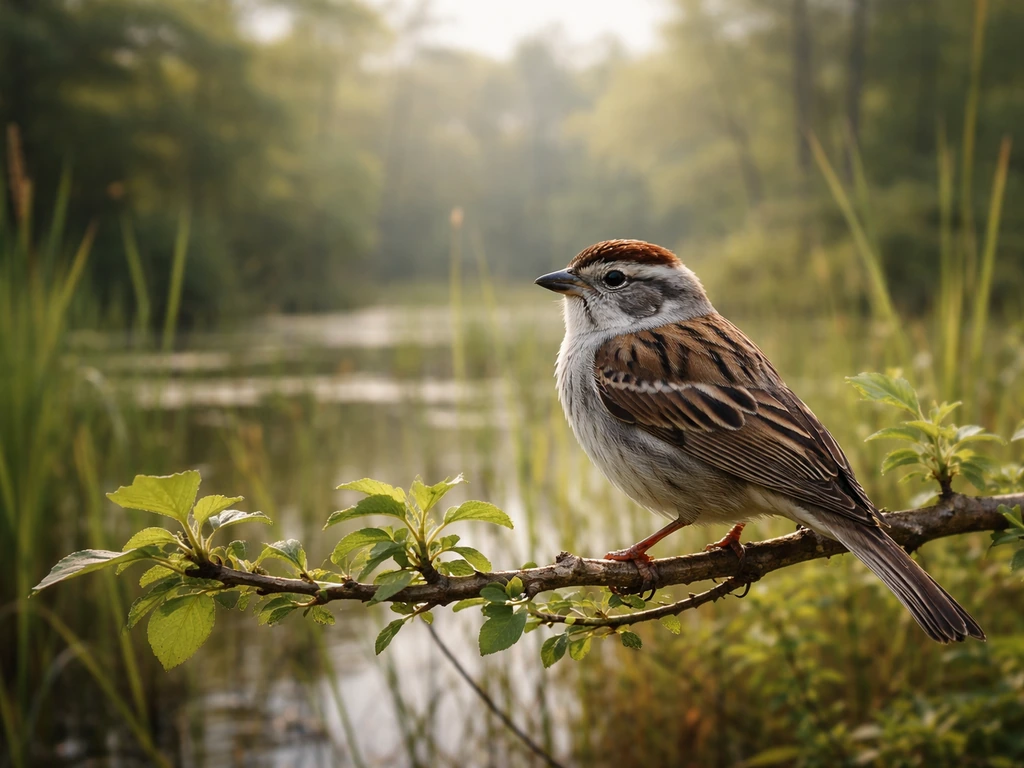
A water bird is any bird that swims, wades, or dives in fresh or salt water habitats, and when people search for the meaning of water birds, they are almost always asking something bigger: what does this bird symbolize, what does the phrase mean, or what is the universe trying to tell them through a sighting, a dream, or a tattoo?
Water Bird Meaning: Symbolism of Duck, Swan, Goose, Heron

Marcus Winters
4 Jun 2026
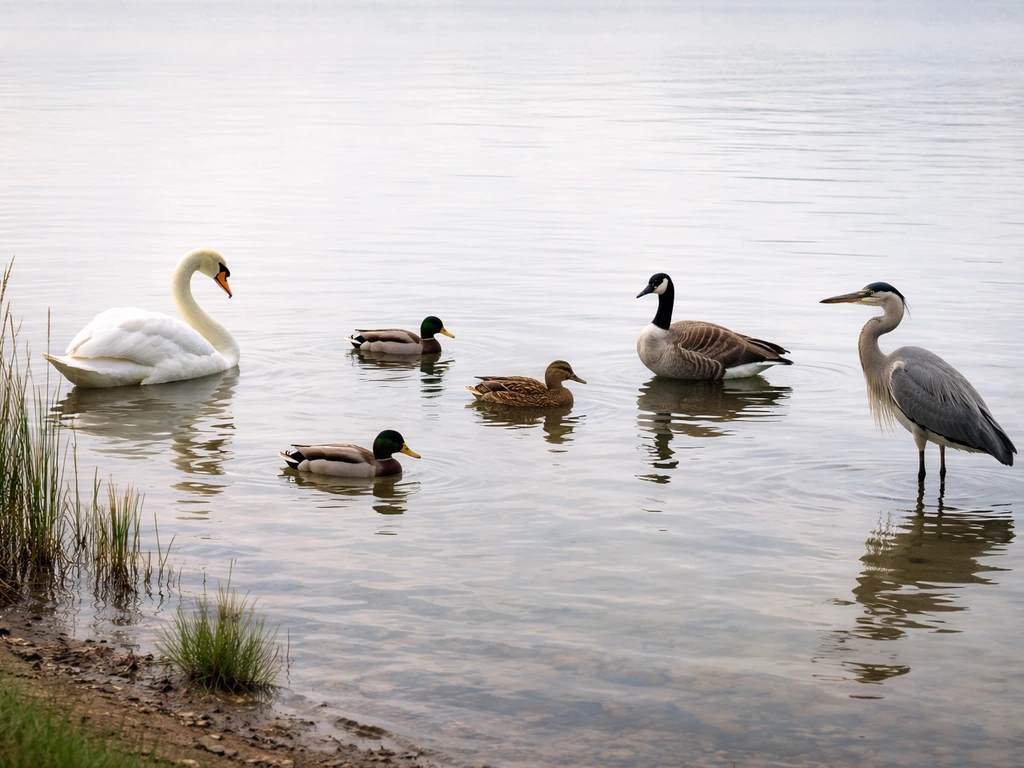
The short version is that water birds as a group carry themes of emotional depth, adaptability, calm, transition, and intuition, but the specific meaning shifts considerably depending on which bird you are actually talking about. A swan means something very different from a seagull, and a heron means something different from a goose. Once you pin down the species and the context, the meaning gets much sharper.
If you are specifically wondering about the droplet bird meaning, focus on the species and the cultural context you are using it in.
What 'water bird' actually means in plain English
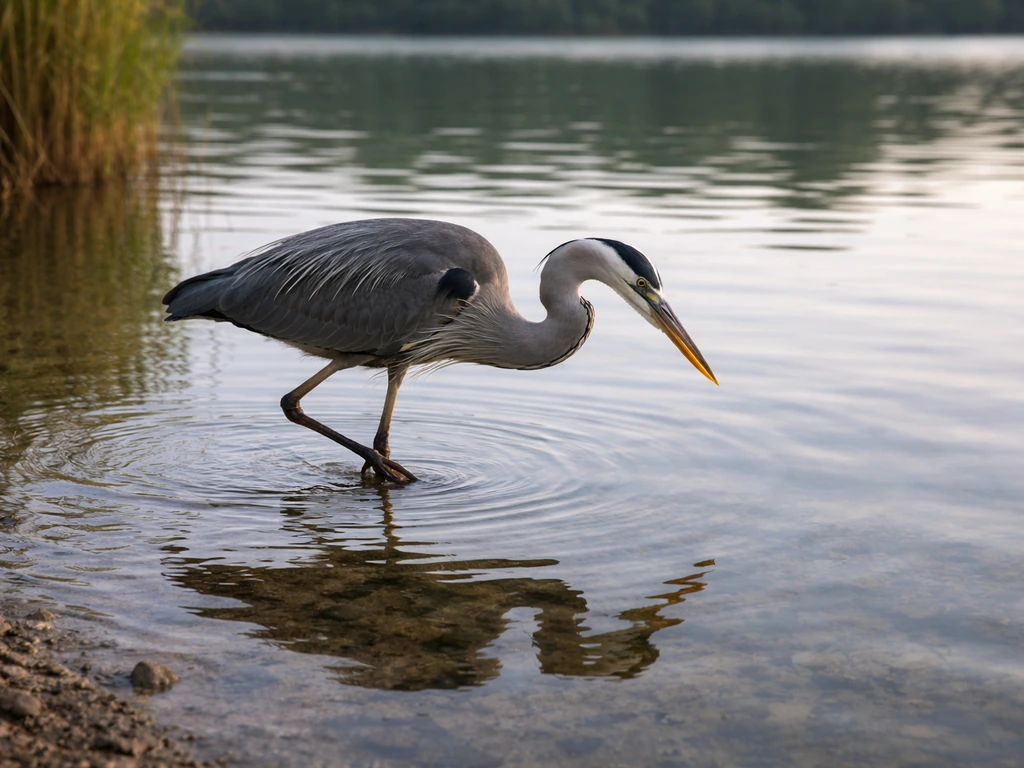
Merriam-Webster defines a waterbird simply as a swimming or wading bird, and that covers a lot of ground. Vocabulary.com broadens it a bit further to birds that wade, swim, or dive in fresh or salt water, so the category includes everything from ducks on a pond to pelicans on the coast. Under the Ramsar Convention (the international wetlands treaty), waterbird and waterfowl are used almost interchangeably, and the defining feature is ecological dependency on wetlands rather than any strict taxonomic family. Collins English Dictionary treats waterbird as a standard everyday word used in both casual conversation and conservation writing.
The practical upshot is that 'water bird' is a broad umbrella, not a single species. When someone uses the term, they usually mean one of the recognizable birds you associate with water: ducks, geese, swans, herons, cranes, pelicans, gulls, or loons. The symbolic meaning you are after almost always lives at the species level, not the umbrella level. So if you saw a specific bird, heard a specific name in a phrase, or got a tattoo of a specific water bird, that species is where you should look.
The big symbolic themes water birds share
Even though species meanings vary, water birds as a group have gathered a remarkably consistent set of symbolic associations across cultures and traditions. The reason makes intuitive sense: these birds live at the boundary between water and land, between surface and depth, between sky and sea. That in-between quality is exactly what makes them powerful symbols.
- Emotional depth and intuition: Water birds move through water, which across most symbolic traditions represents the unconscious, emotions, and hidden knowledge. Seeing a water bird, especially one that dives, tends to get read as a nudge toward your inner life.
- Adaptability and balance: Birds like ducks move effortlessly between swimming, walking, and flying, which is why they so often stand for the ability to handle change without losing composure.
- Calm and peace: The image of a still lake with a lone bird standing in the shallows is practically a universal shorthand for tranquility, and many water birds (especially herons and swans) carry that association directly.
- Transition and transformation: Water itself symbolizes change in many cultures, so birds associated with water often become symbols of life transitions, whether that is birth, death, spiritual awakening, or a major personal shift.
- Purity and grace: The physical beauty of birds like swans, cranes, and egrets has made them natural stand-ins for purity, elegance, and divine beauty across many traditions.
- Family, loyalty, and community: Geese in particular, with their tight formations and mate-for-life behavior, have long been symbols of teamwork, fidelity, and commitment to a group.
- Vigilance and patience: Herons and cranes stand perfectly still for extended periods before striking, which is why they became symbols of watchful patience and strategic thinking.
Quick meaning guide by bird type
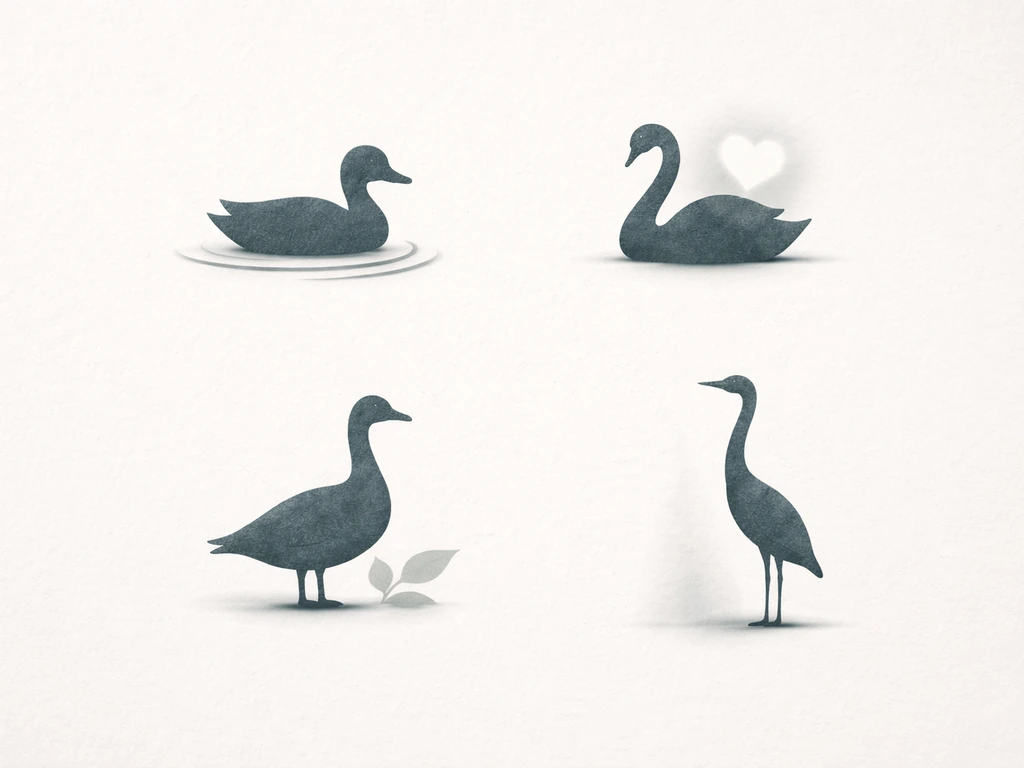
Here is a species-by-species breakdown of the most commonly searched water bird meanings. Think of this as a first-pass reference, not a definitive verdict, since cultural context always adds nuance.
| Bird | Core Symbolic Themes | Watch Out For |
|---|---|---|
| Duck | Adaptability, emotional balance, serenity, nurturing, going with the flow | Dream color and condition matter: a dead or injured duck can flip the meaning toward loss or stagnation |
| Goose | Loyalty, teamwork, seasonal change, family bonds, marital fidelity | In some European folklore, geese carry connotations of gossip or foolishness, so context matters |
| Swan | Purity, grace, transformation, love, spiritual awakening, beauty, finality (swan song) | The 'swan song' idiom specifically points to endings and final acts, not just beauty |
| Heron | Patience, wisdom, vigilance, self-reliance, stillness, grace under pressure | The heron is often solitary, so sightings lean toward independence rather than community |
| Crane | Longevity, fidelity, wisdom, good fortune, changing seasons, divine connection | Meanings shift a lot between East Asian and Western traditions; check your cultural context |
| Pelican | Sacrifice, parental care, protection, generosity, selflessness | The sacrifice meaning comes primarily from Christian and medieval bestiary traditions |
| Gull (Seagull) | Freedom, opportunism, resourcefulness, also linked figuratively to being easily duped (see 'gullible') | Gulls often carry a more ambivalent or even negative figurative meaning compared to other water birds |
| Loon | Intuition, creativity, inner strength, transformation, but also eccentricity ('crazy as a loon') | The 'crazy' meaning is a completely separate cultural use from the spiritual/omen meaning |
How water bird names show up in everyday language
Water bird names have worked their way into English idioms and figurative speech in ways that often have nothing to do with the bird's spiritual symbolism. Knowing these figurative uses matters because they come up in writing, conversation, and pop culture constantly.
The most well-known is probably the swan song. Britannica and Merriam-Webster both define it as a final performance or last great work, the idea being that a swan sings beautifully just before it dies. It has nothing to do with literal swans now; if someone says an album or a speech was an artist's swan song, they mean it was their farewell, their last hurrah.
Then there is the wild-goose chase, which Dictionary.com and Etymonline both trace as an idiom for a futile, pointless pursuit, the kind where you keep chasing something you will never catch. The goose here is not a symbol of loyalty or family; it is just an animal that was once used in a type of horse race where riders had to follow a lead horse erratically, like geese flying in formation. The meaning has drifted from the activity, but the futility stuck.
Ducks give us the expression 'like a duck to water,' meaning someone takes to something naturally and immediately, without effort or awkwardness. Collins and Wiktionary both document this as a fixed figurative construction. If someone says you took to coding like a duck to water, they mean you adapted instantly and effortlessly.
Gulls and the word 'gullible' share a real etymological connection. Etymonline and Merriam-Webster both trace 'gull' to an old meaning of a person who is easily duped or cheated, which is the direct ancestor of 'gullible.' This is worth knowing because the figurative meaning of a gull as a dupe or fool is quite separate from any spiritual symbolism the bird might carry in other contexts.
The loon gives English the phrase 'crazy as a loon,' which Alaska Department of Fish and Game education materials trace to the loon's eerie, laughing call. Britannica and Merriam-Webster both list 'loon' as an informal word for an eccentric or crazy person, entirely because of that haunting sound. When you see 'loon' used that way, it is the idiom talking, not the spiritual symbol.
Spiritual meanings, folklore, dreams, and omens
Water birds appear in spiritual and folklore traditions across virtually every culture that lives near water, which is most of them. The meanings are rich but they are also tradition-specific, so this section is organized to show you where a meaning comes from, not just what it is.
Swans in mythology and folklore
Swans carry one of the most cross-culturally consistent symbolic profiles of any bird. In Hindu and Sanskrit tradition, the swan (hamsa) is associated with spiritual knowledge and the divine, often linked to the soul's ability to discern truth from illusion. In Greek mythology, swans were sacred to Apollo, god of poetry and prophecy, reinforcing the connection to beauty and artistic finality.
The 'swan maiden' folktale motif, documented across European and Asian traditions, features a figure who transforms between human and swan form using a feathered cloak, making swans a powerful symbol of transformation, the supernatural, and the liminal space between worlds. Dream dictionaries tend to frame swan dreams around purity, transformation, and serenity, though they also note that the swan song motif can color a dream toward endings or culmination.
Cranes across East Asian and world traditions
In Chinese mythology and culture, cranes are closely tied to longevity and divine status, sometimes depicted as the mounts of immortals. Japanese culture adopted and built on these ideas, and the thousand origami cranes tradition is the most globally recognizable version of the crane-as-longevity symbol. Academic and encyclopedic sources on crane symbolism describe them as carrying themes of fidelity, filial piety, wisdom, vigilance, and seasonal change across multiple cultural contexts. The crane's habit of dancing elaborate courtship rituals also makes it a symbol of beauty in motion and joyful ceremony in many traditions.
Pelican and the sacrifice tradition
The pelican's symbolic meaning of sacrifice and parental devotion comes directly from medieval bestiaries, the illustrated moral encyclopedias that shaped Christian art and symbolism for centuries. The bestiary tradition described pelicans as wounding themselves to feed their young with their own blood, which made the pelican an allegory for Christ's sacrifice. Whether or not pelicans actually do anything like this (they do not), the image became so powerful that it is still used in Christian iconography, heraldry, and charitable symbolism today. When you see a pelican in a spiritual or religious context, protection and selfless sacrifice are almost always the intended reading.
Geese in Chinese poetry and European folklore
Wikipedia's notes on geese in Chinese poetry show that their symbolic meaning shifts based on whether they appear alone or in a flock. A lone goose can signal loss, longing, or the grief of separation, because geese are meant to travel in pairs or groups. A flock of geese in formation tends toward themes of seasonal transition, the passage of time, and the idea of a journey undertaken together. In some European traditions, geese have been associated with gossip, foolishness, or naivety, which sits in direct contrast to the loyalty and teamwork reading, and is another good reminder that the tradition behind the symbol matters.
Dreams: what the context in the dream changes
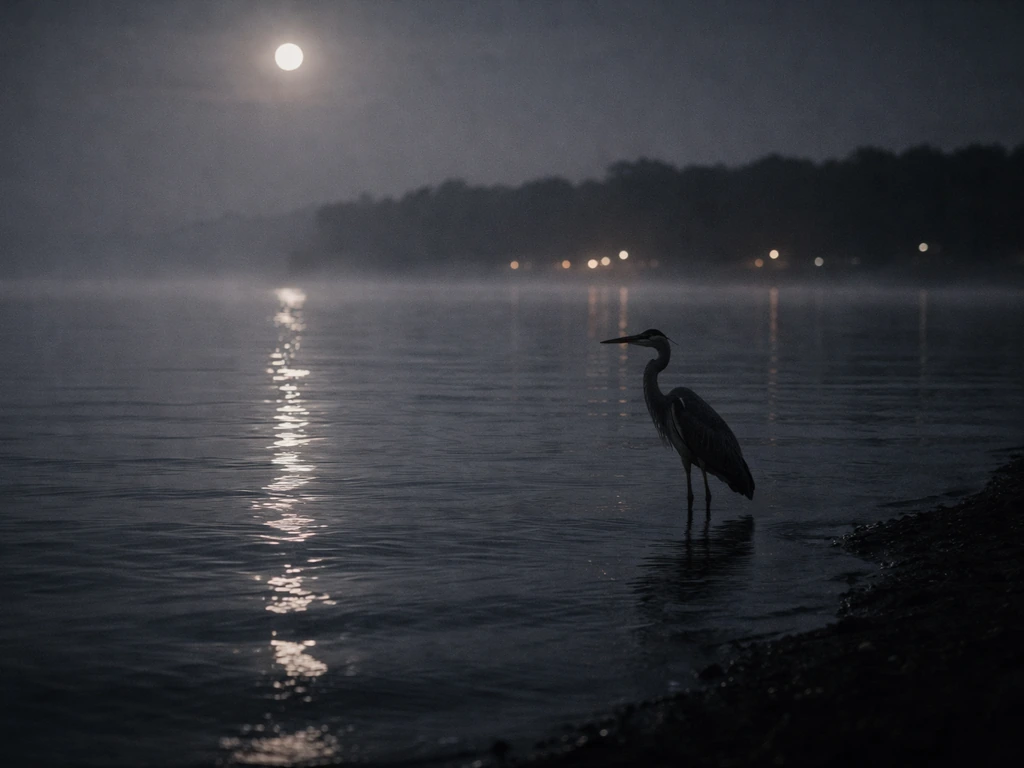
Dream dictionary traditions, which trace back to 19th-century dream-book authors like Gustavus Hindman Miller, generally frame water bird dreams around the emotional register of the dream itself. A duck dream is typically read as being about adaptability or emotional serenity, but the color and condition of the duck in the dream shift that meaning, with a dead or injured duck leaning toward stagnation or loss. A heron dream leans toward patience, insight, and stillness. Astrology.
com likewise frames heron symbolism around patience, grace, wisdom, and calm, collected stillness [Astrology. com frames heron symbolism around patience, grace, wisdom, and calm, collected stillness. ](https://www. astrology.
com/spiritual-meaning-animals/heron). A goose dream tends toward loyalty, guidance, and abundance, though again, the solitary-versus-flock distinction can pull the meaning in different directions. The most consistent advice from reputable dream reference sources is that the action, emotion, and setting inside the dream are more important than the bird species alone.
How to figure out what your water bird sighting, phrase, or symbol actually means
If you are standing at the point of needing to interpret something right now, whether it is a real bird you saw, a phrase you came across, a tattoo you are considering, or a spiritual message you received, here is a practical way to work through it.
- Identify the exact species. Do not stay at the generic 'water bird' level. Duck, goose, swan, heron, crane, pelican, gull, or loon: each one has its own meaning cluster. If you are unsure what bird you saw, a quick image search of the habitat and physical features will narrow it down fast.
- Pin down the context type. Is this a real-world sighting, a dream, a phrase or idiom, a tattoo, a piece of art, or a spiritual/religious symbol? Each context type draws on a different meaning tradition, and crossing those wires leads to misreadings.
- Check the emotional tone or setting. A heron standing motionless in a still pond reads differently from a gull fighting over food scraps. A swan gliding reads differently from a pair of geese honking overhead. The behavior and setting of the bird (or the emotional tone of the dream or phrase) gives you the interpretive register.
- Match to the most likely cultural tradition for your situation. If you are working in a Christian or Western art context, the pelican means sacrifice. If you are in an East Asian cultural context, the crane means longevity. If someone used 'swan song' in a sentence, it is an English idiom about endings, not a mythological reference.
- Hold the meaning loosely. Water bird symbolism is layered and culturally variable. The goal is to find the most plausible interpretation for your specific situation, not a definitive cosmic verdict. If two meanings seem equally valid, both may be relevant.
- Check whether the phrase is an idiom first. Before you assign spiritual meaning to a water bird reference in language, confirm it is not one of the well-documented idioms: 'wild-goose chase,' 'swan song,' 'like a duck to water,' 'crazy as a loon,' or the 'gullible' connection to gulls. These carry their own fixed meanings that override symbolic readings in conversational English.
Meanings vary by culture, and it is worth double-checking
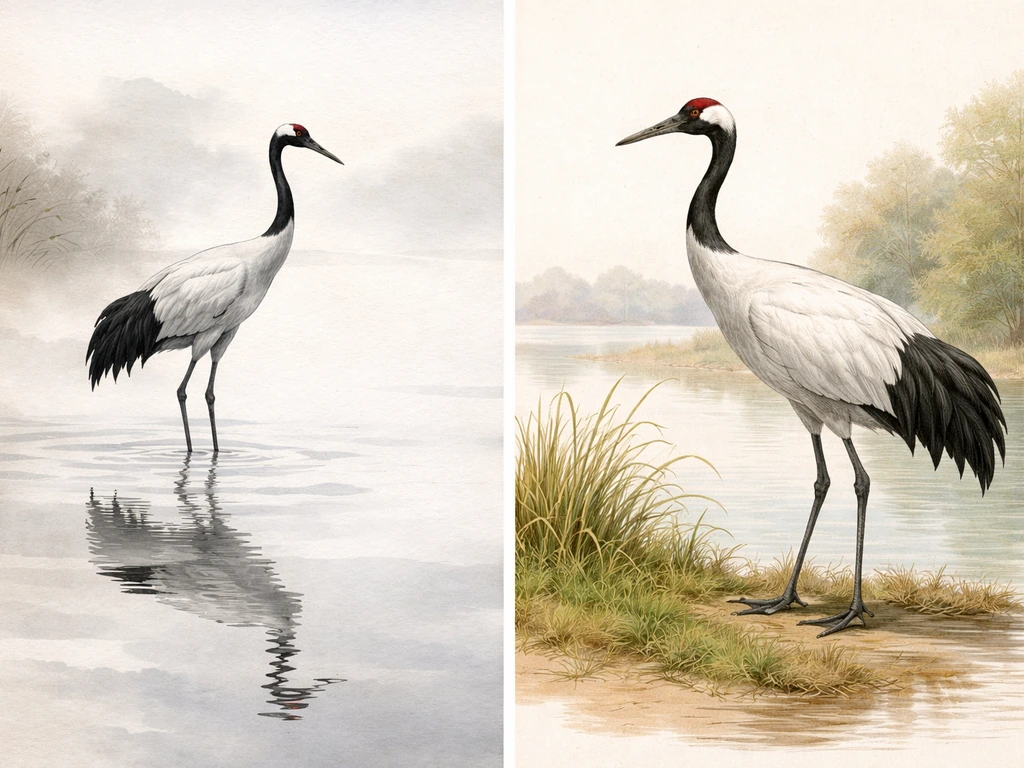
One of the most common mistakes people make with bird symbolism is treating a meaning they found on a single website as universal truth. It is not. The crane is a perfect example: in East Asian traditions it is a divine symbol of longevity and good fortune, but in some Western contexts a crane is just a large bird with no particular spiritual weight. The goose symbolizes loyalty and community in one tradition and foolishness in another. Even the swan, which has unusually consistent positive symbolism, is linked to death and finality through the 'swan song' idea in Western literary tradition.
Technically speaking, the word 'waterbird' itself is partly a classification convention. Ramsar's operational definition groups birds by wetlands dependency, not by any cultural or symbolic category, so 'water bird' as a classification tells you about habitat, not meaning. The symbolic meanings come from specific cultures, specific periods, and specific traditions, which means they deserve to be treated with that specificity rather than blended into a single universal message.
Modern spirituality websites, dream dictionary apps, and tattoo meaning guides tend to blend meanings from multiple traditions without flagging the differences. That is fine as a starting point, but if the meaning you are researching matters to you personally, say for a tattoo that will be on your skin permanently or for understanding a piece of cultural art, it is worth tracing the meaning back to an actual tradition: which culture, which time period, which context. The difference between a crane in a Chinese scroll painting and a crane in a 19th-century European poem is real and significant.
This is also why closely related searches, like the meanings of sea birds, wild birds more broadly, or birds specifically associated with water and rain, benefit from being looked at on their own terms rather than assumed to share a single symbolic vocabulary. If you are comparing water birds with other wildlife symbols, this wild bird definition also helps set clear boundaries for what the term includes. If you are looking up sea bird meaning, focus on the specific species and the tradition it comes from meanings of sea birds. A seagull on a coastal cliff and a heron in a mountain stream are both water birds by definition, but the cultural meanings attached to each are their own distinct conversation.
FAQ
If I only know the phrase “water bird meaning,” but I do not know the species, how should I interpret it?
Treat it as an umbrella reference first (emotion, calm, transition, intuition), then narrow it by any extra clue you have, like the bird’s color, posture (standing versus flying), behavior (diving versus wading), and where you saw it (dream, tattoo, artwork, real life). Without the species, the most honest read is “themes,” not a single definitive message.
Does “water bird” symbolism differ for freshwater versus saltwater birds?
Yes, often in practical reading even when traditions do not explicitly separate them. Freshwater scenes are frequently framed as cleansing, home, and emotional processing, while saltwater contexts are more likely to be read as vastness, uncertainty, and spiritual distance. Use the setting as a secondary modifier if you cannot identify the exact tradition.
How can I avoid misreading a water bird meaning when it appears in a common idiom?
Separate literal symbolism from idiomatic usage by asking whether the bird term is doing a descriptive job in the sentence (for example, “like a duck to water” describes easy adaptation). If it is a fixed phrase with a known meaning, do not overwrite it with spiritual interpretations meant for the bird itself.
Do dream interpretations depend more on the bird species or on what happens in the dream?
In most dream traditions, what happens and how you feel matters more than the species alone. Focus on the action (flying, chasing, being attacked, drowning, nesting), your emotion (calm, fear, grief, awe), and the outcome (safe landing, injury, disappearance), because those elements usually steer the interpretation.
What if my dream includes multiple water birds, not just one?
Use a “dominant theme” approach. Identify which bird or action carries the strongest emotional weight or repeats, then interpret the others as supporting signals (for example, one bird for patience, another for transition). If the emotions conflict, treat it as an internal tension rather than a single, unified prophecy.
How should I interpret a water bird tattoo if I am mixing meanings from different cultures?
If you are combining traditions, make the choice intentional rather than accidental. Pick one primary tradition for the overall theme (for example, longevity, transformation, sacrifice), and only add secondary details if you can explain why they belong. Otherwise, you risk creating a meaning that does not match what any culture would recognize.
Is it safe to use a “water bird meaning” guide from a single website for a personal decision like a tattoo?
Use it as a starting point, not as final authority. Confirm the meaning in at least one other reference and, if possible, in the original tradition’s context (time period, region, artwork style). This is especially important for birds whose meanings shift by culture, like cranes and geese.
Can the same water bird have both positive and negative meanings depending on context?
Yes. A common example is tone and condition, not just species. A calm, healthy bird tends to be read as stability or serenity, while an injured, dead, trapped, or stranded bird often shifts toward stagnation, loss, or an ending. In real-life sightings and dreams alike, the bird’s state is a major decision point.
What should I do if a “water bird meaning” conflicts with a phrase I already know (like swan song or wild-goose chase)?
Trust the idiom first when you are dealing with everyday language. If the phrase is clearly part of an expression, the intended meaning is usually the idiom’s established figurative sense, not the bird’s symbolic role. Use bird symbolism only when the bird is not functioning as part of a fixed expression.
Does “waterbird” in ornithology or conservation writing have any symbolic meaning?
Usually no. In scientific or conservation contexts, “waterbird” is mainly a habitat-based classification (wetlands dependency and water use), not a symbolism category. If you are reading it in an academic text, interpret the term literally, and reserve symbolism for cultural or personal contexts.
Next Article
Wild Bird Definition: Meaning, Types, and What to Do
Clear wild bird definition, differences from pets and game birds, real-world identification tips, and common figurative