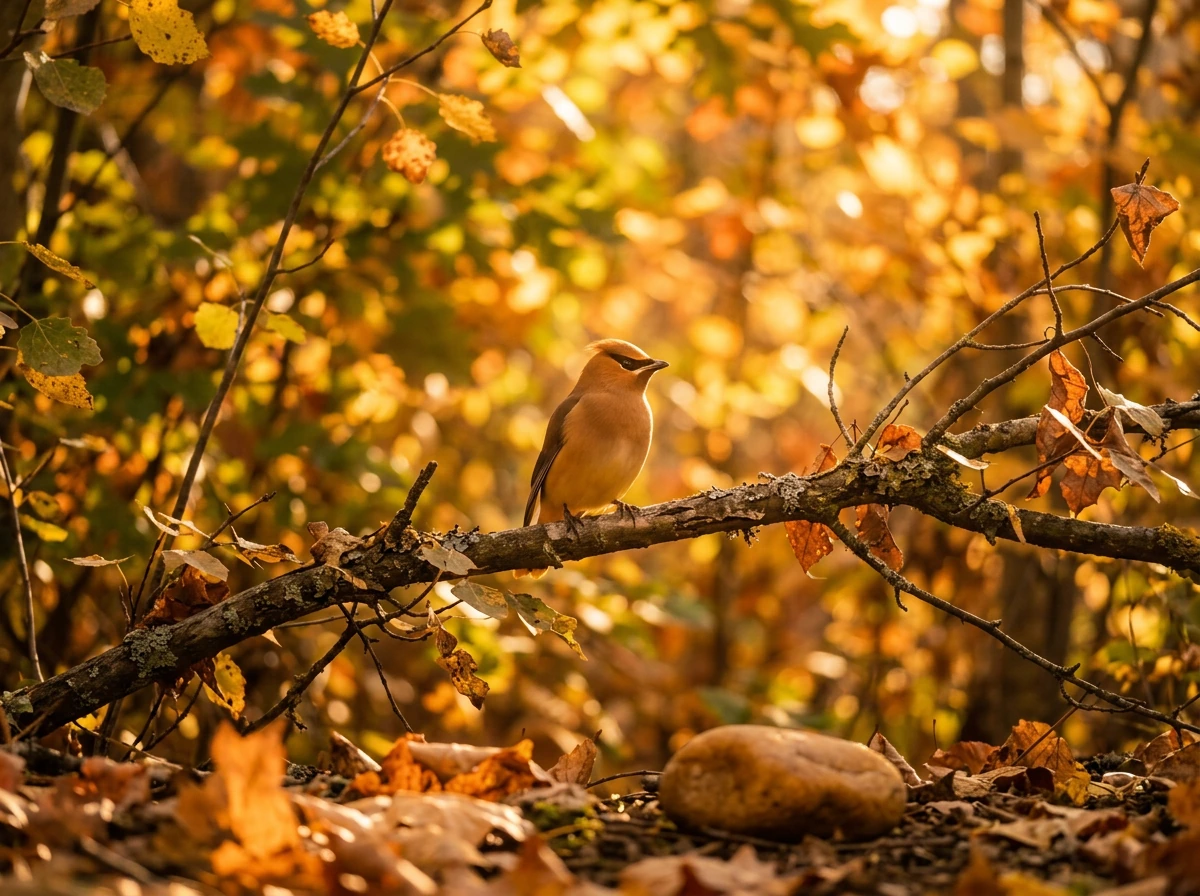
A wild bird is any bird living freely in nature, not kept, tamed, or dependent on humans for survival. If you have run across the phrase "droplet bird," the droplet bird meaning usually refers to the symbolic or metaphorical role that small birds of water and mist imagery can carry. It was born into, or returned to, a life governed by instinct and environment rather than a cage, a backyard feeder, or a breeder's hand.
Wild Bird Definition: Meaning, Types, and What to Do

Marcus Winters
2 Jun 2026
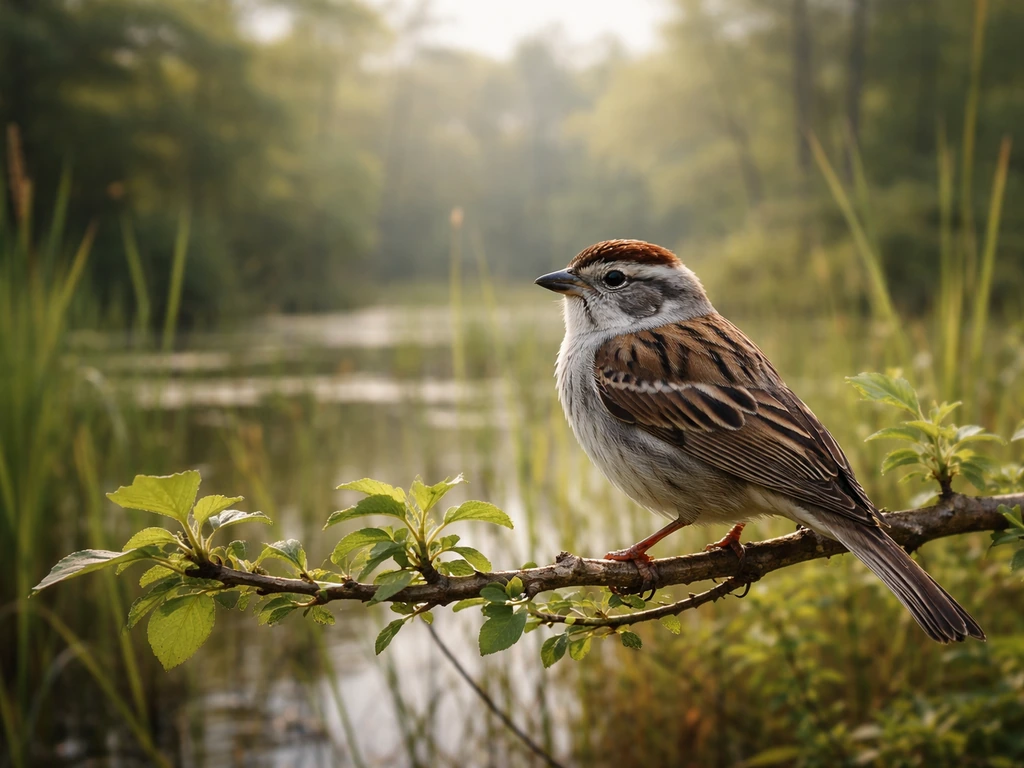
That's the plain-English core of it. Whether you're watching a hawk circle overhead, trying to figure out if that pigeon on your stoop counts as wildlife, or wondering what a law means when it says 'wild bird,' the definition always comes back to one central idea: no human ownership, no human control.
The literal definition of 'wild bird'
The word 'wild' is doing all the heavy lifting here. Cambridge Dictionary defines wild animals as those 'living in the natural environment and not being looked after by people.' Merriam-Webster says wild means 'living in a state of nature and not ordinarily tame or domesticated.' Oxford Learner's Dictionaries phrases it as 'not controlled by people,' and gives a telling example: a bird that has become 'too tame now to survive in the wild.' Put those together and a wild bird is simply a bird living on its own terms, finding its own food, choosing its own roost, and answering to no one.
Legal definitions follow the same logic but sharpen the edges. In the UK, the Wildlife and Countryside Act 1981 defines a 'wild bird' as any bird of a species ordinarily resident in or visiting the UK or EU territory 'in a wild state,' explicitly excluding poultry and, with some limits, game birds. In the United States, federal wildlife law (50 CFR § 10.12) takes a notably broad approach: it defines fish or wildlife as 'any wild animal... whether or not bred, hatched, or born in captivity,' which means a legally protected species doesn't lose its wild status just because it was raised in a zoo or rehabilitation center. The common thread across these definitions is state of being, not origin.
What 'wild' actually means compared to pet, captive, and feral birds
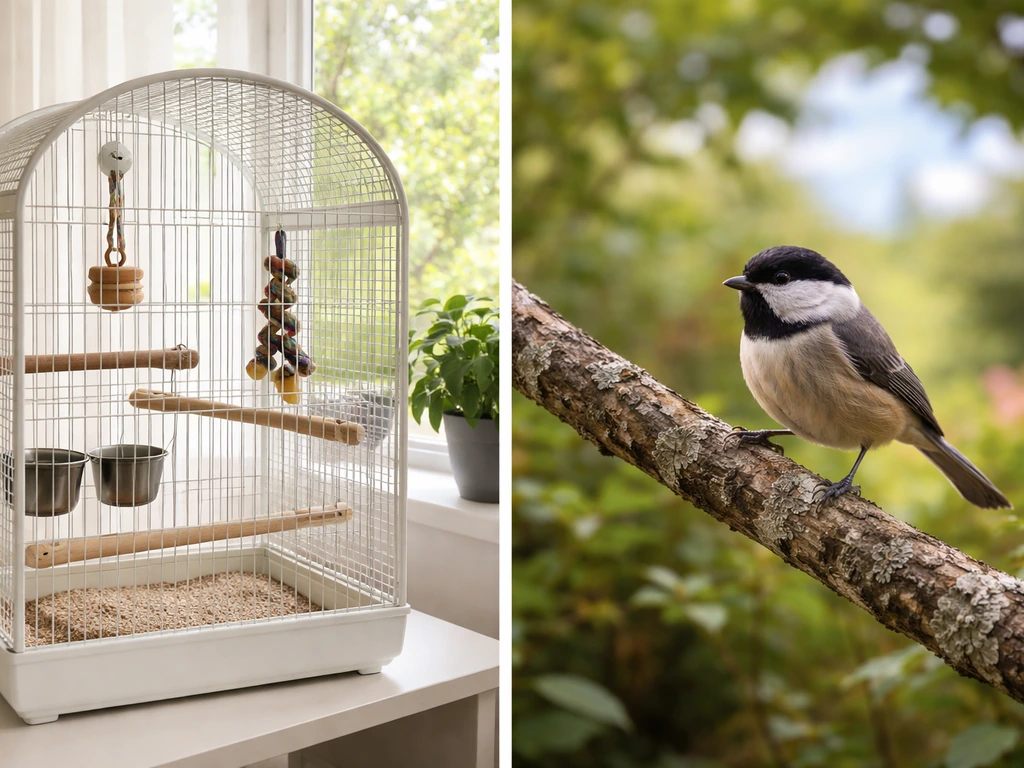
The word 'wild' gets blurry fast when you start comparing categories. Here's how the main distinctions actually work in practice.
Wild vs. pet or domesticated birds
A pet bird (a parrot, a canary, a budgie) has been bred for human companionship over generations and is legally owned. A wild bird is not. It has no owner, no license, and in most countries you cannot legally keep one without a special permit. The behavioral difference is equally clear: a wild bird actively avoids humans, forages independently, and maintains instincts tuned for survival in nature. A pet bird has had those instincts dulled or replaced by dependence on a human caretaker.
Wild vs. captive birds
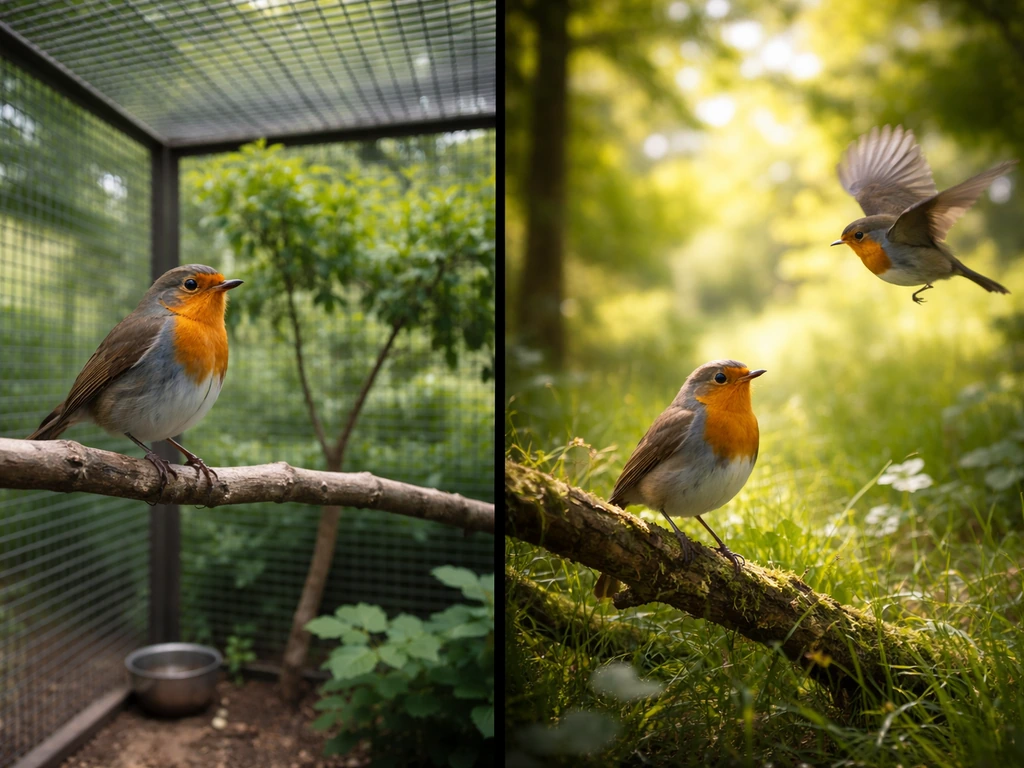
A captive bird is physically held, whether in a zoo, a research facility, or a wildlife rehabilitation center, but it may still belong to a legally protected wild species. That's the nuance U.S. federal law captures by saying a species can be 'wild' regardless of whether it was 'bred, hatched, or born in captivity.' A red-tailed hawk being treated at a rehab center is still a wild bird under the law. It cannot be owned, sold, or kept once it recovers. Captivity is a temporary or institutional condition, not a change in the bird's fundamental status.
Wild vs. feral birds
Feral is where people get genuinely confused. A feral bird is one descended from domesticated stock that has escaped or been released and now lives without human care. National Geographic describes feral animals as 'descended from domesticated stock' but living wild, which separates them from animals that were never domesticated in the first place. The classic example is the feral pigeon: it descends from domesticated rock doves but now lives freely in cities. Legally and practically, feral birds often fall into a gray zone. They are not owned, but they are not native wildlife either, and they typically receive fewer legal protections than truly wild species.
| Category | Human ownership | Legal protection (general) | Survives independently |
|---|---|---|---|
| Wild bird | None | High (protected species laws) | Yes |
| Pet/domesticated bird | Yes | As property | Often no |
| Captive wild bird | Institutional custody only | Still protected as species | Yes (when released) |
| Feral bird | None | Variable / often lower | Yes |
Related terms people commonly mix up with 'wild bird'
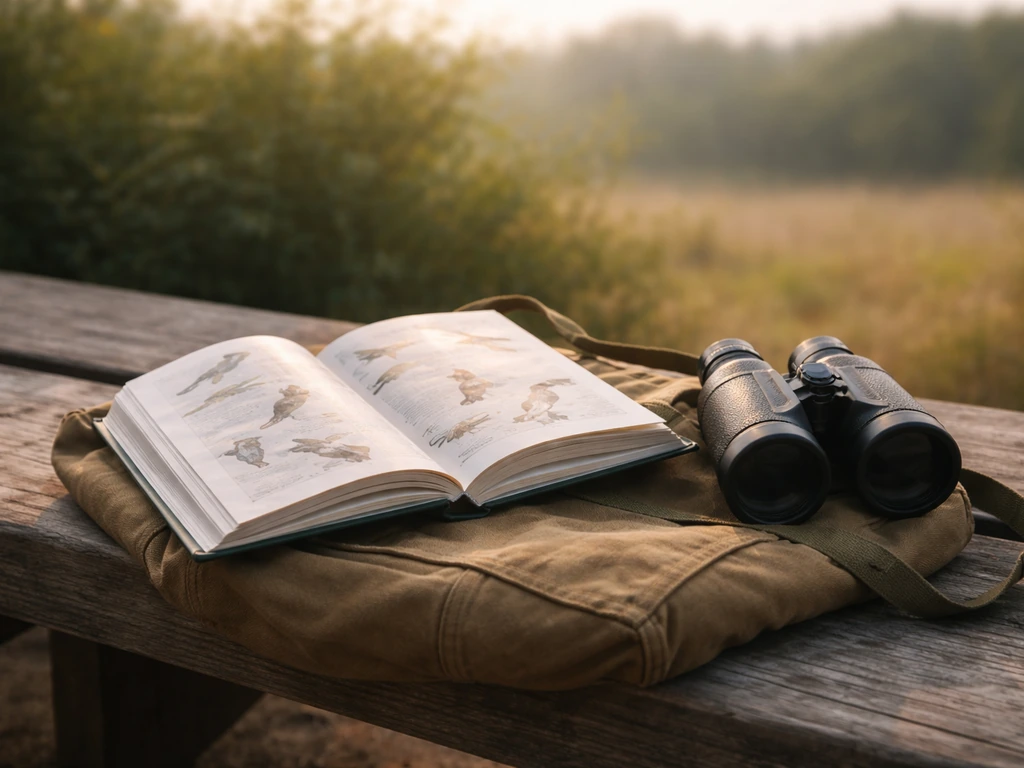
Several common bird terms overlap with 'wild bird' but mean something more specific. Knowing the distinctions saves confusion, especially in birdwatching, legal, or conservation contexts.
- Game bird: A bird legally hunted for sport or food, such as pheasant, grouse, or quail. Game birds can be wild, farmed, or released for hunting. In the UK, the Wildlife and Countryside Act 1981 specifically carves them out from the 'wild bird' definition in certain contexts, which shows how the legal category and the common-sense category don't always line up.
- Songbird: An informal and sometimes technical term for birds known for musical calls, often overlapping with the passerine order. Not all wild birds are songbirds, and the term says nothing about whether a bird is wild, captive, or feral.
- Native bird: A bird that naturally occurs in a specific region without human introduction. A native bird is almost always wild, but a wild bird is not always native. An escaped exotic parrot living freely in Florida is wild in behavior but is not a native bird.
- Migratory bird: A bird that seasonally moves between regions, often crossing national borders. In U.S. law, migratory birds get specific federal protection under the Migratory Bird Treaty Act, and 50 CFR § 10.12 defines them broadly to include 'whatever its origin and whether or not raised in captivity.'
- Waterfowl: Ducks, geese, swans, and similar water-swimming birds. Merriam-Webster defines them as distinguished from upland game birds or shorebirds. Waterfowl can be wild, farmed, or kept as pets, so the term is a habitat and type category, not a wild-vs-captive distinction.
How 'wild bird' shows up in everyday language and metaphor
Outside of biology and law, 'wild bird' pops up in everyday speech as a shorthand for something untameable, unpredictable, or beautifully free. You hear it in phrases like 'she's a wild bird, you can't hold her down' or in descriptions of an idea that 'flew in like a wild bird, fast and impossible to catch.' The metaphor draws on the same qualities the literal definition points to: independence, instinct, and a resistance to being caged or controlled.
The expression also carries a wistful edge in some contexts. Calling someone a wild bird isn't always a compliment and isn't always a criticism. It can acknowledge that a person or thing operates by its own rules, which can be admirable or frustrating depending on the situation. In poetry and song lyrics, the wild bird image almost always signals freedom and longing, especially when the bird is pictured against an open sky or escaping a cage. The contrast between the caged bird and the wild bird is one of the oldest metaphors in literature, used by poets from ancient Greece to Maya Angelou.
Related terms like 'wet bird,' 'sea bird,' and 'water bird' also carry their own symbolic weight in language and folklore, often playing on the bird's environment to suggest emotional states or journeys, which shows how bird vocabulary in general tends to attract layered meanings beyond the literal. To dig into that idea further, it helps to look at sea bird meaning and how it differs from other bird terms like wet bird or water bird. If you are looking up water bird meaning, the same idea applies: in language, the bird's habitat is often used to shape the symbolism. If you have heard the phrase “wet bird” and wondered what it means, it typically points to a bird that is soaked or drenched, often in a literal sense.
Cultural, folklore, and spiritual meanings tied to wild birds
The wild bird as a symbol is ancient and nearly universal. Across cultures, wild birds represent the soul, freedom, divine messengers, and the boundary between the earthly and the spiritual. In many Indigenous North American traditions, wild birds are seen as carriers of messages from ancestors or the spirit world, with specific species holding specific meanings (the eagle for strength and vision, the crow for intelligence and mystery, the owl for wisdom or warning). The key symbolic word is always 'wild': a caged bird in these traditions loses its power as a messenger because it has lost its connection to the free world.
In European folklore, wild birds appearing at a window or behaving unusually were read as omens, good or bad depending on the species and circumstances. A wild bird flying into a house was widely seen as a sign of coming change or death, precisely because wild birds do not enter human spaces voluntarily. The strangeness of a wild creature crossing into a domestic one is what gives the omen its power.
Celtic traditions associated wild birds with the Otherworld and with shape-shifting. Many stories feature humans transformed into wild birds, or wild birds that are actually enchanted people, reinforcing the idea that the wild bird exists at the edge of what is known and controlled. In Chinese culture, wild birds frequently appear in poetry and painting as symbols of virtue, freedom, and the natural order, often contrasted with the corruption of court life or human ambition.
Spiritually, the wild bird appears across traditions as a symbol of the soul in flight, the part of a person that cannot be owned or confined. This is why the image of releasing a bird is a recurring ritual in cultures from the Middle East to East Asia: it enacts freedom, blessing, or the release of something held too tightly. The wild bird's capacity to disappear into the sky is the core of its spiritual symbolism: it goes where humans cannot follow.
Quick checks to tell if a bird you see is a wild bird
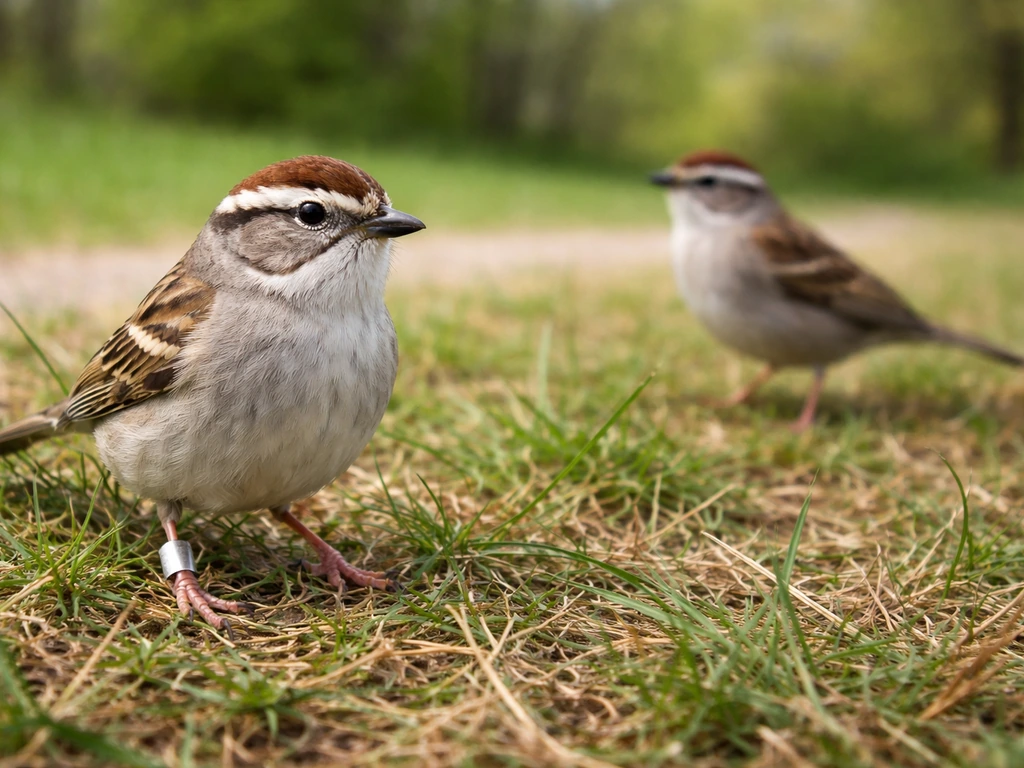
If you're looking at a bird and genuinely unsure whether it's wild, feral, or somebody's escaped pet, a few simple observations usually settle it.
- Check for leg bands or tags. A band on the leg almost always means the bird has been banded by researchers, wildlife managers, or breeders. A metal USGS band on a wild-looking bird suggests it's a tracked wild species. A colored plastic band or ring can mean it's a racing pigeon or escaped pet. USGS advises reporting banded birds through their Bird Band Reporting system.
- Watch how it reacts to you. True wild birds maintain a consistent 'flight distance,' moving away when you get too close. If the bird lets you walk right up to it or seems to seek your attention, it may be tame, injured, or an escaped pet.
- Look at the species. Most native songbirds, raptors, shorebirds, and waterfowl you encounter outdoors are wild. Brightly colored tropical birds in a non-tropical climate, or birds that look like obvious cage species (cockatiels, parakeets), are likely escaped pets.
- Notice where it's living. A bird nesting in trees, cliffs, marshes, or undeveloped land is almost certainly wild. A bird that has been hanging around a specific house or yard and seems to expect food from a particular person is more likely feral or an escaped pet.
- Check its condition and behavior. Wild birds are generally alert, reactive, and capable of flight. One that is lethargic, has drooping wings, is shivering, or appears disoriented may be injured or ill rather than tame.
What to do if you find or encounter a wild bird
The most important thing to know upfront: in most countries, wild birds are protected by law, and interfering with them without proper authority can get you into legal trouble. This section is practical guidance, not legal advice, and exact rules vary by region.
If the bird seems fine
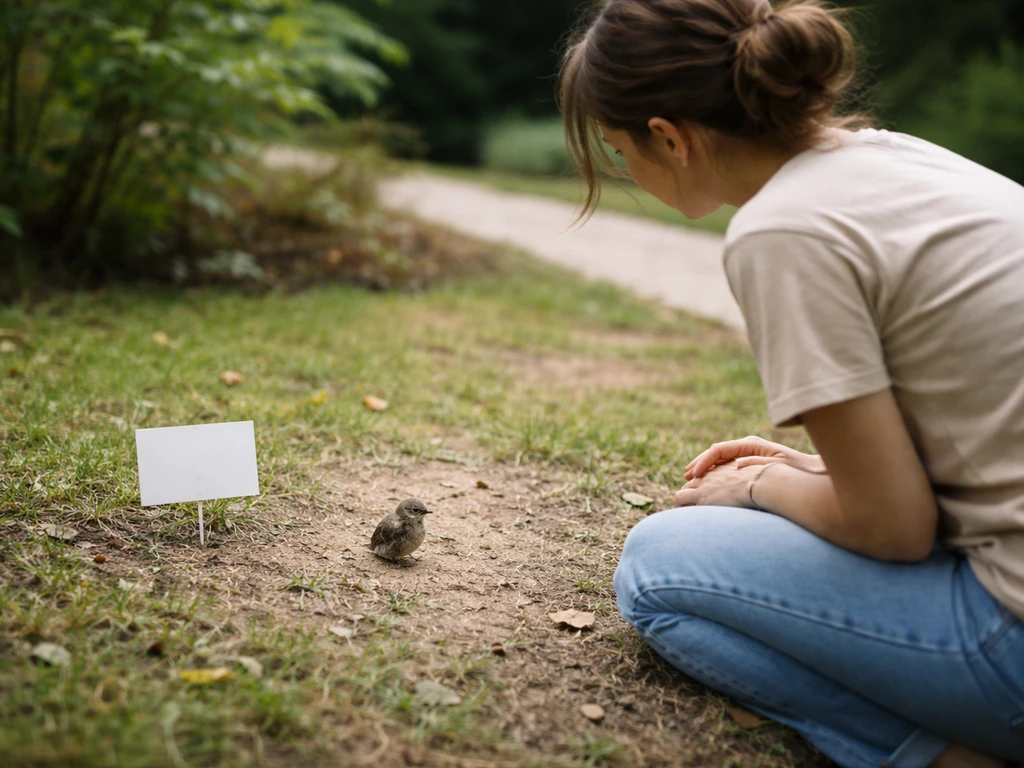
Leave it alone. The U.S. Fish and Wildlife Service points out that a baby bird on the ground doesn't automatically need help. If it has feathers and its eyes are open, it's likely a fledgling learning to fly, and its parents are almost certainly nearby. The best thing you can do is keep pets and people away and let the process happen.
If the bird appears injured or truly orphaned
This is when you do need to act, but carefully. Audubon recommends not offering food or water to an injured or orphaned bird and contacting a licensed wildlife rehabilitator instead. The Wildlife Center of Virginia and the Washington Department of Fish and Wildlife both explicitly say 'do not give the baby bird any food or water,' because the wrong food or improper technique can cause serious harm or death. The CDC guidance for the general public is similarly clear: leave injured or orphaned wildlife alone unless you are getting professional help.
If the bird needs to be moved to safety while you wait for a rehabilitator, the Washington Department of Fish and Wildlife suggests keeping it in a warm, dark, quiet place in a ventilated box. Handle it as little as possible and wear gloves if you can. Then call a permitted wildlife rehabilitator right away and follow their instructions.
Your practical next steps, in order
- Observe first. Before you touch anything, watch the bird for a few minutes to assess whether it actually needs help.
- Do not feed or give water. This applies to injured adults and baby birds alike. Well-meaning feeding often causes more harm than help.
- Call a professional. Search for a licensed wildlife rehabilitator in your area, or contact your state or national wildlife agency. In the U.S., the USFWS and state fish and wildlife departments can point you to local resources.
- If you must contain it temporarily, use a ventilated cardboard box lined with a soft cloth. Keep it somewhere warm, dark, and quiet, away from pets and children.
- Report banded birds. If the bird has a leg band and you can read it, report the information to USGS through their Bird Band Reporting process so researchers can track it.
- Know the law. You generally cannot keep a wild bird, even temporarily, without authorization. If in doubt, call your local wildlife authority before doing anything beyond basic containment.
The impulse to help a wild bird you find in distress is a good one. If you’re asking, “what does wet bird meaning refer to,” it’s usually about how the phrase connects to wild bird traits like independence and state of being. Acting through the right channels, meaning trained rehabilitators and wildlife authorities rather than DIY care, is what actually gives the bird the best chance. That's as true of the symbolic wild bird as it is of the real one: sometimes the most respectful thing you can do for something wild is to let the people who understand it best take the lead.
FAQ
If I find a baby bird on the ground, does that always mean it is orphaned and needs help?
Yes, but with limits. If you see an apparently healthy fledgling (feathers present, eyes open, alert), it is often meant to be on the ground temporarily, and you should watch from a distance. If it is cold, wet, bleeding, unable to stand or keep its head up, or in immediate danger (traffic, cats), contact a permitted wildlife rehabilitator or local wildlife authority for guidance.
Can I feed or water a wild baby bird while I wait for help?
In most places, feeding a potentially wild bird can create legal and health problems. Many species need specific diets, and giving seed, bread, milk, or “homemade” mixtures can cause fatal digestive issues or malnutrition. Also, routine feeding can increase human dependence, which can make release harder, so the safer default is to avoid offering food and use a licensed rehabilitator’s instructions.
What should I do if I want to help a wild bird but I do not have a permit?
Do not keep it as a pet or “temporary foster.” For many protected species, possession without the right permit is illegal even if your intention is care. The correct step is to contact a permitted wildlife rehabilitator or your local wildlife agency, then follow their instructions for what to do between discovery and pickup.
How should I transport a wild bird safely if it looks injured?
If the bird is injured but responsive, the priority is containment and temperature, not treatment. Place it in a ventilated box or carrier, keep it warm and dark, minimize handling, and reduce stress by keeping the area quiet. If you suspect injury severity (broken wing, heavy bleeding, inability to perch), still call a rehabilitator promptly rather than trying to splint or “set” anything yourself.
A bird is inside my house, is it okay to catch it, or is there a safer way to get it out?
If it is a healthy bird, you should avoid catching it unless there is an immediate hazard. Trying to grab, chase, or corner a wild bird often causes additional injuries and makes future release less likely. If a wild bird is stuck indoors or at a window, use lights and pathways to guide it out (turn off indoor lights near an exit, open a door or window, close curtains on other sides), and only intervene physically if it cannot leave safely.
What if I think a fledgling is being targeted by my cat or dog?
Yes, but only as a last resort when it is preventing harm. In many situations it is safer to let parents continue caring if the bird is a fledgling and you are not actively endangering it. If the bird is being attacked by pets, or it is in a location where it cannot survive (roadway, underfoot areas), you may need to move it a short distance to a safer spot, then contact a rehabilitator if there is any doubt about its status.
If it is a common bird in my city, is it still considered a wild bird legally?
For some situations, a “wild” bird can be protected even if it looks familiar, such as pigeons or common songbirds. The legal status is based on species and local rules, not how tame the bird seems. If you are unsure whether it is wild, treat it as protected wildlife until a local authority or rehabilitator confirms otherwise.
How can I tell whether a “wild” bird is actually an escaped pet?
If the bird has been clearly living with humans or wearing human-associated conditions (collar tags, leg bands that look like domestic ownership identifiers, visible owner-contact hardware), it might be an escaped pet rather than a wild bird. In that case, contact animal control or your local humane society, and do not assume it is wildlife that needs rehab. If it has no owner indicators and appears to be surviving independently, contact a wildlife rehabilitator.
If the bird seems feral, does that change what I am allowed to do?
Feral birds often live on their own, but they are not treated the same way as native wild species in many legal frameworks. If the bird is a species that is protected as wildlife in your area, you may still be restricted from capturing or relocating it. The practical next step is to identify the species and contact the appropriate local authority (wildlife agency vs animal control) for the correct category.
What is the fastest way to give a distressed wild bird the best chance of survival and release?
If you want the bird to be released successfully, start by preserving its ability to be reared appropriately. That means no DIY feeding, minimal handling, keeping it in a ventilated, quiet space, and contacting a licensed rehabilitator quickly. Rehabilitators can also advise on how to document the situation (time, location, photos) without keeping the bird longer than necessary.
Next Article
Amber Bird Meaning: Symbolism, Interpretations, and How to Use It
Learn amber bird meaning: disambiguate the phrase and interpret it using amber and bird symbolism, grounded steps includ