When someone says 'wet bird,' they almost always mean one of three things: a bird that is literally soaked through, a figurative put-down describing a droopy or pathetic person, or (less commonly) a reference to the old English dialect name for the chaffinch, a bird whose cry was believed to foretell rain. Which meaning is intended depends almost entirely on context, tone, and whether the speaker is talking about an actual bird or using the phrase as a label for a person or situation. This guide will help you pin down the right meaning in seconds.
Wet Bird Meaning: Literal vs Slang Uses and Context

Marcus Winters
6 Jun 2026
What 'wet bird' literally means
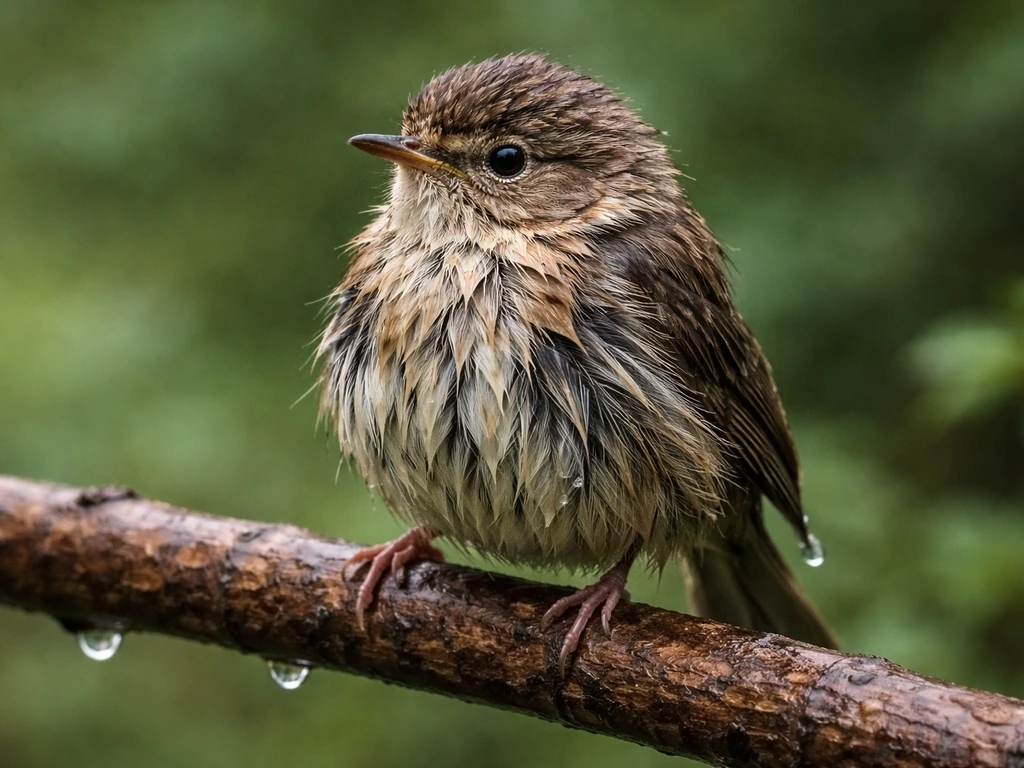
At its most basic, a wet bird is exactly what it sounds like: a bird whose feathers are saturated with water, to the point where moisture has reached the skin. This matters more than it sounds. Birds rely on their feathers for insulation and flight, so a truly wet bird is in physical distress.
Alberta's poultry handling standards actually use 'wet bird' as an official operational term, defining it as a bird wet enough that moisture has reached the skin and can affect the animal's welfare. In scientific literature on wild bird mortality, water immersion and drowning are treated as serious, documented causes of death. If you need to interpret the term accurately in a wildlife context, see the wild bird definition for the baseline meaning.
So in any conversation about animal care, poultry farming, or wildlife, 'wet bird' is a plain, descriptive, literal phrase with real practical weight.
There is also a second, historically rich literal meaning. In Northern England and Scotland, 'wetbird' (sometimes written as one word) was a genuine dialect name for the chaffinch. The Century Dictionary documents this, glossing 'wet-bird' as the chaffinch (Fringilla species) and noting that the name came from a folk belief that the bird's call foretold rain. Wiktionary confirms the same etymology. So 'wetbird' as a name for the chaffinch is not a metaphor or an insult at all; it is a piece of real regional natural history tied to weather folklore. If you ever encounter 'wetbird' in older British texts or regional nature writing, that is almost certainly what is meant.
The figurative meaning: when 'wet bird' becomes a put-down
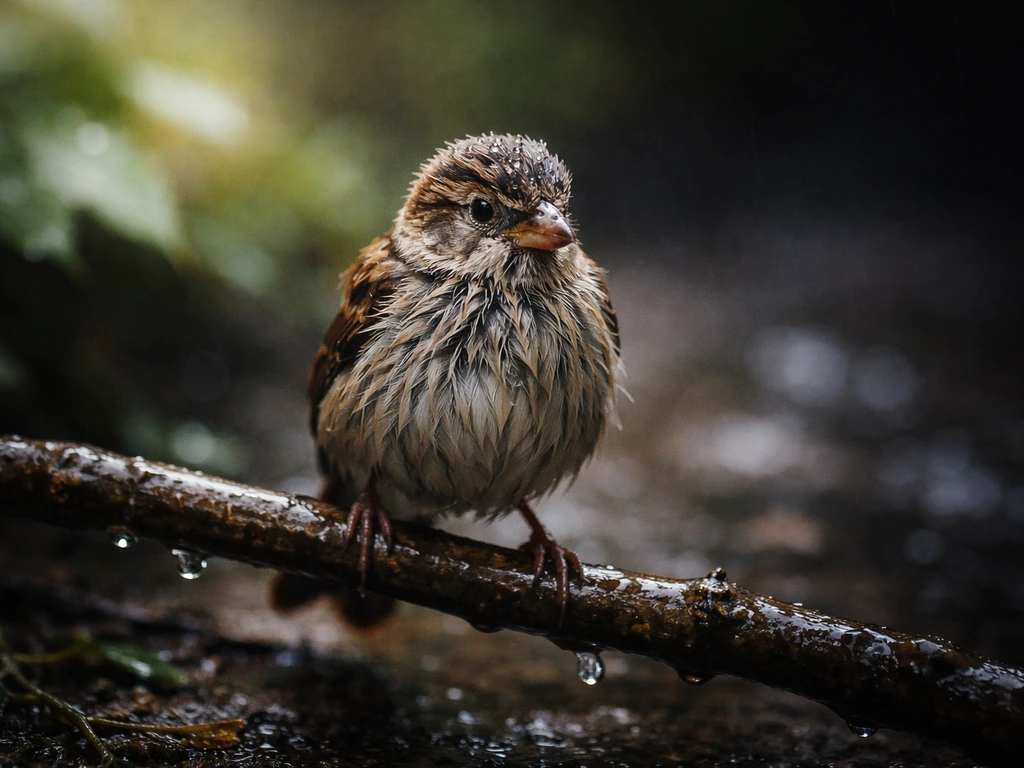
Outside of literal bird contexts, 'wet bird' is used figuratively to describe a person or thing that is limp, dejected, ineffectual, or just generally pathetic-looking. The image being invoked is vivid: think of a bird caught in the rain, feathers plastered flat, looking miserable and helpless. That visual is exactly the emotional tone the phrase carries when applied to a human. It overlaps in feel with terms like 'sad sack' (an inept, unfortunate person) or 'damp squib' (something that fizzles and disappoints). The insult is not usually vicious or aggressive; it tends to be more dismissive or mockingly pitying. Someone called a 'wet bird' is being painted as deflated, not threatening.
In terms of who uses it and when: the phrase appears more often in informal, spoken British and regional American English than in formal writing. It can be aimed at a person who seems defeated or sulky, at a situation that turned out to be a letdown, or at something that simply looks worse for wear. Urban slang usage sometimes extends this to phrases like 'flappy wet bird,' which leans even harder into the image of something awkward, bedraggled, and a bit ridiculous. The emotional intent ranges from gentle teasing among friends to a sharper, more contemptuous dismissal, depending on tone and relationship.
How to tell which meaning someone intends

Context is everything with this phrase. A few reliable signals will tell you which meaning is in play within seconds of reading or hearing it.
| Context clue | Likely meaning |
|---|---|
| Speaker is talking about an actual bird, animal care, or wildlife | Literal: the bird is physically wet |
| Older British regional text or nature writing, chaffinch mentioned nearby | Dialect name for the chaffinch, rain-forecasting folklore |
| Phrase is applied to a person, a mood, or a situation | Figurative: droopy, pathetic, or deflated put-down |
| Tone is mocking, dismissive, or exasperated | Figurative insult, likely mild to moderate in sharpness |
| Used in a joke about food, cooking, or a failed plan | Often literal-humorous, playing on the image of a soaked bird vs. a cooked one |
| Paired with words like 'look,' 'seem,' or 'act' | Figurative description of appearance or behavior |
A few example sentences make this easier to recognize instantly. 'The rescue team found a wet bird tangled in the net' is purely literal. 'Don't be such a wet bird about it' is a figurative nudge telling someone to stop being miserable or defeatist. 'In local dialect, the chaffinch was called the wet bird because its song brought rain' is the folkloric usage. And 'Instead of a cooked chicken, you got a wet bird?' is a humorous literal reference, playing on the contrast between what was expected and what showed up.
Related phrases people often mix up
The most common phrase people confuse with 'wet bird' is 'mad as a wet hen' (also 'madder than a wet hen'). This is a well-established idiom in Southern, Appalachian, and West Texas English, and it means furiously angry, not dejected or pathetic. An English Language & Usage Stack Exchange question reports that in West Texas family usage, “[madder than a wet hen](https://english. stackexchange.
com/questions/105655/what-is-a-person-if-they-are-described-as-a-wet-hen)” means furiously angry. The image here is a hen that has been dunked in water and is agitated and sputtering about it. Wiktionary even has a separate entry for 'miserable as a wet hen,' which shows how the 'wet hen' construction can shift between anger and misery depending on the exact wording. Dictionary.
com cross-references the phrase under its 'hen' entry, and Phrases. com has a dedicated page for it, which tells you just how fixed this idiom has become in everyday usage.
It is worth keeping 'wet bird' and 'wet hen' mentally separate because the emotional meaning is different. 'Wet hen' almost always points toward anger or agitation. 'Wet bird' leans toward looking or acting dejected, limp, or pathetic. Both draw on the same visual source (a water-soaked bird in distress) but land in different emotional territory. If someone says 'wet chicken,' they are usually invoking the same cluster of meaning as 'wet hen,' just with slightly more generic wording.
Two other phrases float in the same neighborhood. 'Wet behind the ears' is a completely separate idiom meaning inexperienced or naive, documented in both Cambridge Dictionary and Merriam-Webster. It has nothing to do with birds but is sometimes conflated when people are sorting out 'wet' idioms. And 'damp squib' covers similar emotional ground to the figurative 'wet bird' (something disappointing, fizzled, underwhelming) but comes from a completely different image. Knowing these distinctions stops you from misreading the phrase in context.
Wet bird in folklore and spirituality: what's real, what's not
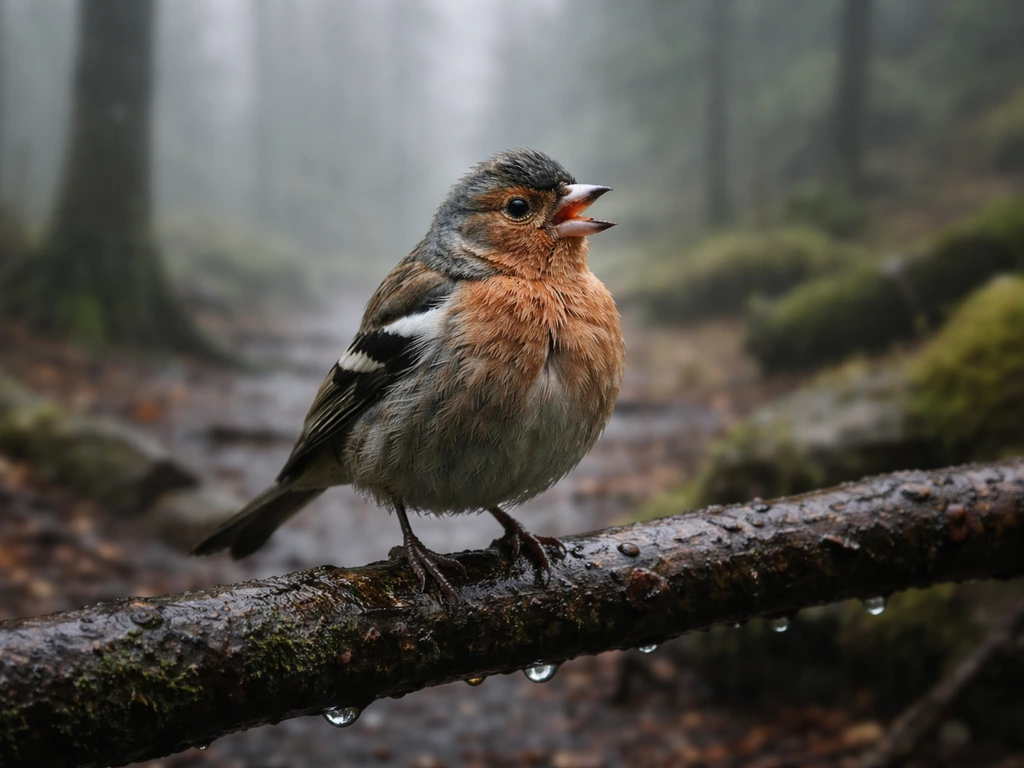
The only well-documented folkloric use of 'wet bird' as a specific, named concept is the chaffinch connection. In Northern England and Scotland, the chaffinch's call was interpreted as a rain forecast, and the bird earned the folk name 'wet bird' or 'wetbird' as a result. This is a genuine piece of British regional folklore with etymological backing in multiple historical dictionaries. It is not a universal omen or a cross-cultural spiritual symbol; it is a localized, charming piece of weather lore from a specific region.
Beyond the chaffinch connection, 'wet bird' does not appear as a widely recognized symbol in established spiritual traditions, omen systems, or global bird mythology. Bird symbolism as a whole is a rich area (water birds, sea birds, and birds in general carry deep meaning across many cultures), but 'wet bird' as a standalone spiritual concept is not something that shows up with consistent, documented meaning across traditions. If you have encountered the phrase in a spiritual or superstitious context, it is most likely a regional or personal usage rather than a universal symbol. Be cautious about sources that assign sweeping omen meanings to 'wet bird' without grounding it in a specific named tradition.
How to figure out what someone meant and what to do next
Here is a straightforward process for decoding 'wet bird' in any situation you encounter it.
- Ask: is an actual bird involved? If the sentence is about a real bird, an animal situation, or wildlife, take it literally. A wet bird is a wet bird.
- Ask: is the text older British writing or does it mention the chaffinch or rain-forecasting? If yes, you are dealing with the dialect name rooted in rain folklore.
- Ask: is a person, mood, or situation being described? If so, the phrase is figurative, and the tone is dismissive or pitying rather than angry.
- Check the surrounding words. 'Mad as a wet bird' or 'madder than a wet bird' is borrowing from the 'wet hen' anger idiom. 'Acting like a wet bird' or 'being such a wet bird' points toward the dejected, limp meaning.
- Check the regional context. Southern and Appalachian speakers are more likely to use wet-bird/wet-hen constructions as anger expressions. British speakers may use 'wet bird' as a mild put-down for someone who seems pathetic or feeble.
- If the phrase came up in a text conversation and felt like an insult, it almost certainly was one, aimed at someone's attitude or behavior rather than their physical wetness.
- If you still cannot tell, just ask. The phrase is informal enough that asking for clarification will not seem strange, and most speakers will explain exactly what they meant without any awkwardness.
The bottom line is that 'wet bird' is a small phrase doing several different jobs depending on who says it and why. Most of the time in everyday modern conversation, if it is applied to a person, it is a gentle-to-moderate put-down about being sad, droopy, or ineffectual. If it is about an actual bird, it is literal.
And if it shows up in British nature or dialect writing, there is a good chance you are looking at old chaffinch lore. Once you know those three lanes, the phrase stops being confusing and becomes surprisingly easy to read. Related expressions like water bird and sea bird carry their own layers of meaning and symbolism worth exploring if you want to go deeper into how wetness and birds intersect in language and culture.
When people ask about the droplet bird meaning, they are usually referring to what the phrase suggests in context rather than a single universal definition. If you are also wondering about sea bird meaning, it helps to look at the particular species and the culture or tradition where the symbolism comes from. If you are curious about related terms, learning the water bird meaning can add useful context to how people use bird imagery in language.
FAQ
How can I tell if “wet bird” is literal or an insult in a text message?
Look for cues like an object noun next to it (for example “found a wet bird,” “in the net,” “feathers”), which signals the literal animal meaning. If it appears with a person’s mood or behavior (for example “don’t be such a wet bird,” “after the meeting,” “you’re being a wet bird”), it is almost certainly figurative.
Is “wet bird” always a negative put-down when used for people?
Not always. The phrase often lands as dismissive teasing or mock pity rather than a harsh attack, especially among friends. Tone markers help, like joking wording, emojis, or softer phrasing such as “come on, stop being a wet bird about it.”
Can “wet bird” be used in the US as slang, or is it mostly British?
It appears more often in informal British English, but it does show up in regional American English too. Expect it to feel more casual, spoken, and image-based in the US, and you may also see related variations like “flappy wet bird.”
What does it mean if someone says they “got a wet bird” instead of a chicken or meal?
That’s typically a humorous literal contrast, meaning the food you received was ruined or wrong in a way that makes it seem water-soaked or mishandled. It is not usually about someone’s personality, it is about the disappointing outcome.
Is “wet bird” connected to “mad as a wet hen”?
People often confuse them, but they point to different emotions. “Wet hen” is about anger or agitation (furious, sputtering), while “wet bird” usually points to looking or acting deflated, limp, or dejected.
What if I see “wetbird” as one word in older writing, is that different from “wet bird”?
Yes, likely. “Wetbird” (one word) in older Northern England or Scottish dialect contexts commonly refers to the chaffinch, tied to the folk belief that its call foretold rain. As modern slang, people usually write it as “wet bird.”
Does “wet bird” have any spiritual or universal omen meaning?
Generally no consistent, widely documented spiritual system uses it as a standalone symbol. If someone claims it predicts events in a broad way, treat it as personal, regional, or internet folklore unless they cite a specific named tradition.
If I’m writing about wildlife care, should I use the phrase “wet bird” casually or define it?
Define it. In animal handling and welfare contexts, “wet bird” is tied to whether moisture has reached the skin and affects the animal’s welfare. If your audience might interpret it as slang, add a quick literal definition the first time you use it.
Are there common mix-ups with other “wet” idioms beyond “wet hen”?
Yes. “Wet behind the ears” is about inexperience, not sadness or distress. “Damp squib” is about something disappointing or fizzled, which is closer to “wet bird” in outcome but not in the bird-specific image.
What should I do if I’m unsure which “lane” the speaker means?
Ask a clarifying question or re-check surrounding details. For example, ask “Do you mean a literal wet bird, or are you saying someone is being dejected?” In many conversations, a single nearby noun (bird versus person versus situation) resolves it quickly.
Next Article
Water Bird Meaning: Symbolism of Duck, Swan, Goose, Heron
Understand water bird meaning in idioms, dreams, omens and tattoos with duck, swan, goose, heron symbolism and context c