
A bird in a gilded cage describes someone who appears to have a comfortable, even enviable life but is actually trapped, unfree, or deeply unhappy. The luxury is real, but so is the confinement. Think of a person in a lavish but loveless marriage, or someone with a high-paying job they can't leave because of the salary. On the surface, everything looks golden. Underneath, they're not free.
Bird in a Gilded Cage Meaning: Definition and Usage

Marcus Winters
25 Apr 2026
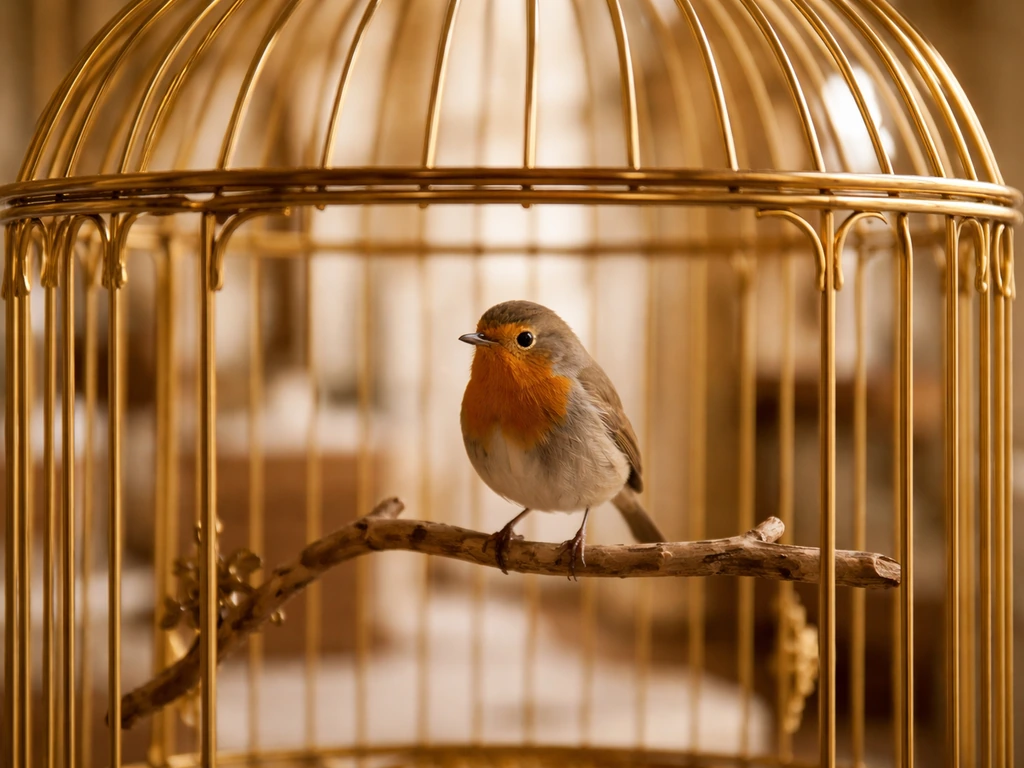
The exact meaning of the idiom
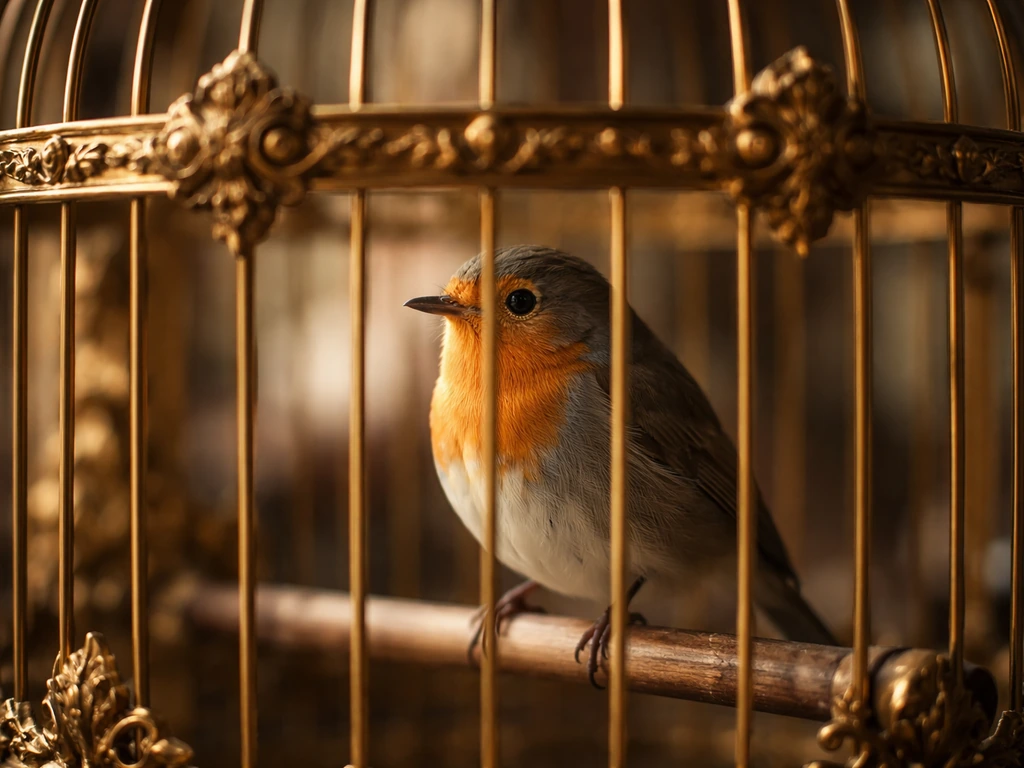
The idiom captures a specific emotional truth: material comfort and personal freedom are not the same thing. When you call someone a bird in a gilded cage, you're saying their privilege or wealth has become the very thing that confines them. It's not a straightforward complaint about being poor or suffering. The cage is gilded, meaning it's beautiful, expensive, enviable from the outside. That's exactly what makes the situation so poignant and, frankly, so relatable.
The phrase was cemented in popular culture by the 1900 ballad 'A Bird in a Gilded Cage,' with lyrics by Arthur J. The 1900 ballad “A Bird in a Gilded Cage” was written with lyrics by Arthur J. Lamb and music by Harry Von Tilzer [a 1900 ballad with lyrics by Arthur J. Lamb and music by Harry Von Tilzer](https://en.
wikipedia. org/wiki/ABirdinaGilded_Cage). Lamb and music by Harry Von Tilzer. The song tells of a woman who married for money rather than love.
Its refrain makes the meaning unmistakably clear: 'She's only a bird in a gilded cage... You may think she's happy and free from care. She's not. ' That line does a lot of work.
It tells you directly that appearances lie, that the cage can look like a palace, and that the bird inside it still can't fly.
Dictionary.com defines the phrase as living in luxury without freedom, which is the cleanest one-sentence version. Collins adds the idea of being 'trapped' despite comfort or prestige, which gets at the emotional weight a little better. Both are right. The idiom lives in that gap between how a life looks and how it feels.
Gilded vs. golden: does the wording matter?
You'll hear both 'a bird in a gilded cage' and 'a bird in a golden cage,' and they mean exactly the same thing. 'Gilded' means coated or covered in gold, which technically implies something underneath that isn't gold at all. That's actually a slightly sharper image for the idiom, since the cage isn't pure gold through and through. It just looks that way. 'Golden' is the more common word in everyday speech, so people use it interchangeably and no one blinks.
If anything, 'gilded' carries a faint hint of illusion or veneer that makes it the more precise choice for writers who want the word itself to do extra symbolic work. But in conversation, either version lands the same meaning. Don't get too hung up on the distinction. The core idea, that something appears precious while hiding a form of imprisonment, is identical in both phrasings.
How to read it depending on context
The phrase shifts slightly in emphasis depending on where you encounter it. Here's how to interpret it across a few common contexts:
In relationships
This is where the idiom originated, and it still fits best here. A partner in a wealthy but controlling relationship, a spouse who gave up career or independence in exchange for financial security, a person kept comfortable while being isolated from friends, community, or choices. Sometimes people use similar wording, and a "jail bird" can point to someone locked up, misunderstood, or under harsh control jail bird meaning. When someone describes their relationship as a gilded cage, they're telling you the comfort isn't worth the cost.
At work

You'll often hear 'golden handcuffs' in workplace conversations, and it overlaps directly with the gilded cage idea. The phrase like a bird on a wire meaning follows the same idea: comfort can hide real constraint golden handcuffs. A high salary, great benefits, and a prestigious title can make it almost impossible for someone to leave a job they hate or that damages their wellbeing. The cage is the compensation package. The bird is the person who stays because they can't afford not to.
In social or political commentary
Writers and scholars have used the phrase to describe broader social structures. Cambridge University Press used the framework to analyze how people who are technically 'freed' can still live inside conditions that function like confinement. Oxford Academic applied it to discussions of constrained agency and embodiment. In these contexts, the gilded cage becomes a metaphor for any system that grants surface-level comfort or status while maintaining underlying control.
In quotes and literature

When you see the phrase in a quote or a novel, look for the tension between what the character has and what they've lost. The idiom almost always signals that the narrator or author wants you to feel sympathy for someone whose life looks enviable. It's a quiet signal to look beneath the surface of apparent success.
What 'white bird in a golden cage' adds to the picture
The phrase 'white bird in a golden cage' appears in song lyrics and creative writing, most notably in the song 'White Bird' where the line appears almost word for word. It's not a separate idiom with its own dictionary definition, but the word 'white' does add a layer of symbolism that shifts the emotional tone.
White birds carry long-established associations: purity, innocence, peace, and spiritual aspiration. Think of doves as symbols of peace, or white birds in religious imagery representing the soul. When you place a white bird inside a golden cage, you're not just describing confinement. You're amplifying the sense of something pure and free being held captive. The innocence of the bird makes the cage feel even more cruel by contrast.
So 'white bird in a golden cage' isn't simply a decorative variation. It deepens the emotional register. The core meaning, trapped despite comfort, stays the same. But the white bird brings in vulnerability, purity, and the specific tragedy of something untainted being confined. If you see this phrase in a poem or a song, the writer is usually trying to make you feel the captivity more acutely than the standard idiom would.
What the bird and cage each symbolize
Birds are one of the oldest symbols of freedom, aspiration, and the human spirit. They go where we can't, they leave the ground, they navigate by instinct and wing. In folklore and spiritual traditions across cultures, birds have stood in for the soul itself, the part of a person that wants to transcend limitations. When you put a bird in a cage, you're not just describing physical confinement. You're describing the suppression of everything the bird represents.
The cage carries its own symbolic weight. In dream symbolism and cultural analysis, cages represent control, restriction, and social constraint. They can also represent protection, which is part of what makes the gilded cage idea so complicated. A cage that's built from gold or gilded to look like gold doesn't just confine. It tempts. It offers safety, warmth, material comfort. The person inside might even have chosen to enter. That ambiguity is exactly what gives the idiom its lasting power.
Put the two symbols together and you get the full emotional weight of the phrase: a creature built for freedom, held in something that looks like a gift. That's a genuinely painful image, and it's why the phrase has stayed alive in the language for over a century.
How to use it correctly (and what people get wrong)
The idiom works best when both elements are present: there's genuine comfort or privilege, and there's genuine lack of freedom. If either piece is missing, the phrase doesn't quite fit. Here are some examples of correct and incorrect use:
| Example | Correct use? | Why |
|---|---|---|
| 'She has everything she could want, but she can never leave him. She's a bird in a gilded cage.' | Yes | Both privilege and confinement are present. |
| 'He earns a fortune but the job is slowly killing his creativity. Classic gilded cage.' | Yes | The salary is the gilded cage; the cost is personal freedom. |
| 'She's poor and miserable. A real bird in a gilded cage.' | No | There's no gilding here. The cage without the gold is just a cage. |
| 'He's trapped in a terrible apartment with no money.' | No | This is plain hardship, not a gilded cage situation. |
| 'The celebrity seemed to have it all, but couldn't go anywhere without security, approval, or scrutiny. A gilded cage.' | Yes | Fame and comfort exist alongside real constraints on freedom. |
The most common misread is using the phrase to describe any kind of unhappy or trapped situation, even when there's no comfort or privilege involved. Remember: the 'gilded' part is not decorative. It's the whole point. Remove the luxury and you just have a cage, which is a different concept entirely.
Another misuse is applying it to people who are merely comfortable but not actually constrained. Someone who loves their high-paying job and feels fulfilled isn't in a gilded cage. The confinement has to be real, even if it's self-chosen or hard to see from the outside.
Related idioms that share the same idea
The gilded cage theme shows up across a whole family of phrases. If you want to understand it more fully, or find the right expression for a slightly different situation, these are worth knowing:
- Golden handcuffs: A workplace-specific term for financial benefits (bonuses, stock options, high salaries) that make it almost impossible to leave a job, even a miserable one. The closest sibling to the gilded cage idea in professional settings.
- Trapped but comfortable: Not a formal idiom, but a common way of expressing the same tension in plain language.
- Bird in a cage: The simpler version without the 'gilded' modifier. It suggests confinement without necessarily implying privilege or comfort. The emotional stakes are different.
- Bird on a wire: This expression leans more toward the idea of precariousness and freedom that hasn't quite arrived, rather than comfortable confinement. There's overlap in the bird symbolism, but the focus is different.
- Gilded prison: A direct variant that swaps 'cage' for 'prison,' making the confinement feel more explicit and institutional.
- Riches can't buy happiness: The philosophical underpinning of the gilded cage idea, stated outright. Less vivid, but the same moral.
- Jailbird: A completely different direction on the bird-plus-captivity theme. Where the gilded cage is about hidden confinement beneath privilege, 'jailbird' describes someone who has been through the formal criminal justice system. No luxury implied.
There's also a striking inversion worth mentioning: the phrase 'I am a cage in search of a bird,' attributed to Franz Kafka. Where the gilded cage idiom describes a bird trapped by an external structure, Kafka's image flips it entirely, suggesting the confinement is internal, that the person or thing doing the confining is itself incomplete without something to hold. It's a fascinating contrast that shows just how much symbolic territory the cage image can cover.
The gilded cage idiom has lasted because it captures something true about human experience that doesn't age out: the fact that security and freedom can work against each other, and that a beautiful life from the outside can feel like a trap from the inside. When you hear the phrase, or want to use it yourself, that tension is always what it's pointing at.
FAQ
Can you use “bird in a gilded cage” to describe someone who chose their situation, even if it looks restrictive from the outside?
Yes, the idiom can fit self-chosen confinement, as long as the lack of freedom is real. “Gilded” often implies a tradeoff the person accepted because it was comfortable, prestigious, or safer, but they are still constrained in meaningful ways (options, autonomy, or ability to leave).
What’s the difference between “bird in a gilded cage” and “golden handcuffs”?
They overlap, but “golden handcuffs” is more specific to employment and compensation structures that make leaving costly. “Bird in a gilded cage” is broader and can cover relationships, social control, or any system where comfort coexists with real constraint.
Is it correct to say “a bird in a gilded cage” when someone is simply stressed or unhappy?
Usually no. The idiom requires both visible privilege (the “gilded” part) and genuine confinement (limited freedom, restricted choices, or control). If there’s no meaningful constraint, the image shifts from “caged” to just “unhappy,” which is a different claim.
Does the phrase apply only to romantic relationships?
Not at all. Common uses include isolating social environments, coercive family dynamics, controlled living situations, or any role where someone is financially or socially comfortable but cannot truly act independently.
Can “bird in a gilded cage” be used for organizations, not people?
Yes, but you should keep the symbolism consistent. For example, an organization or system can be described as a “gilded cage” when it offers benefits and safety while restricting agency (membership rules, dependency, surveillance, or limited exit options).
Is “a bird in a gilded cage” the same as “a bird in a golden cage,” or is one more formal?
They mean essentially the same thing. “Golden” is more common in everyday speech, while “gilded” can feel slightly sharper or more literary because it suggests a deceptive surface, where something isn’t actually fully gold underneath.
How do I know if I should use “gilded cage” vs just saying “cage” in my writing?
Use the full idiom when the contrast matters, meaning the person has something attractive to outsiders that is part of what traps them. If the situation lacks comfort or privilege, “cage” is the better, more accurate image.
What tone does the idiom usually carry, and can it be neutral?
It typically carries sympathy and critique, pointing out the pain hidden under a flattering exterior. If you want a neutral tone, consider rephrasing so it’s clear whether you’re criticizing the system, the tradeoff, or the observer’s assumptions.
If I quote the idiom, should I mention “bird,” “cage,” or the “gilded” idea explicitly?
Usually yes for clarity. In a quote or analysis, briefly flag what “gilded” signals (comfort or prestige paired with restricted freedom), because readers may interpret “cage” metaphorically but not automatically connect it to the luxury side of the contrast.
Next Article
Bird in a Cage Meaning: Confinement vs Freedom Explained
Meaning of bird in a cage: confinement, trapped potential, and longing for freedom, plus how to tell the exact sense.
